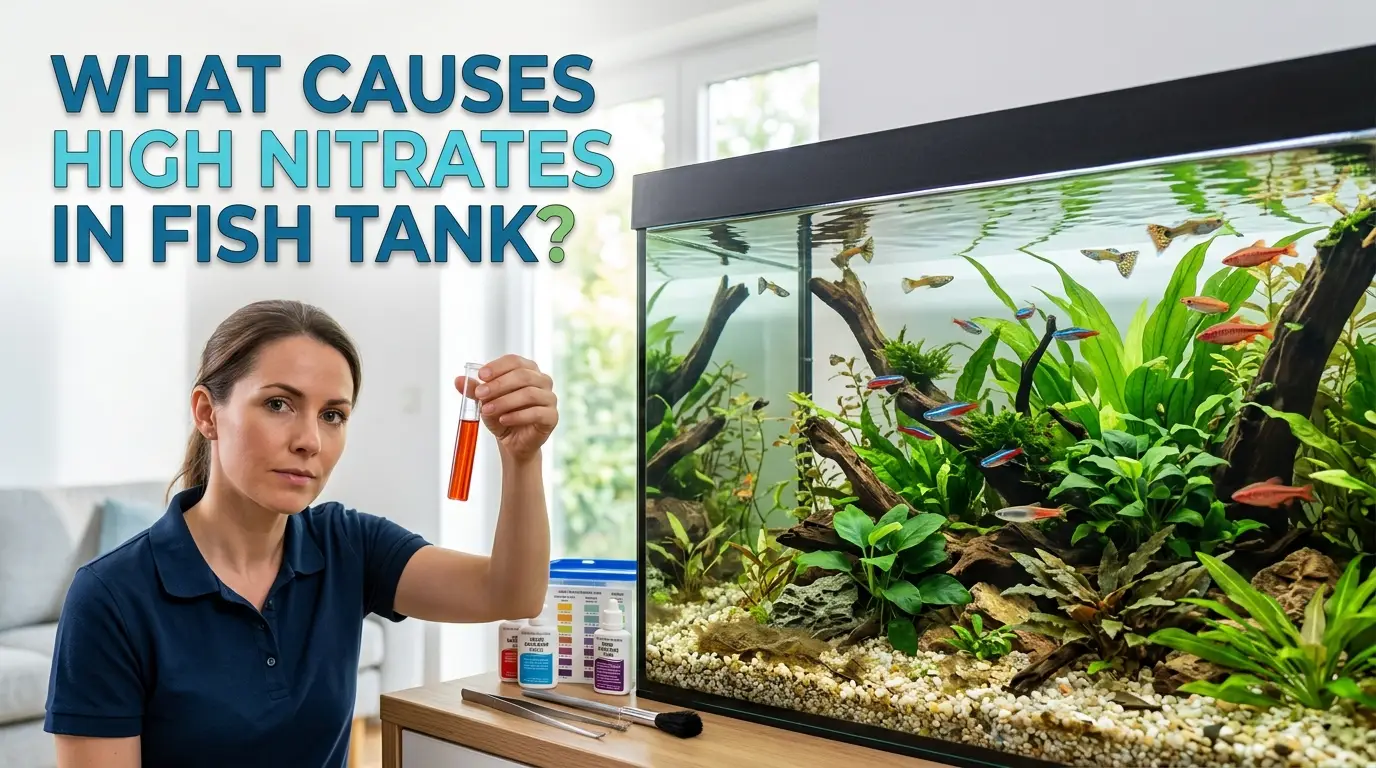
High nitrates build up from excess waste, overfeeding, infrequent water changes, and weak filtration.
I’ve helped many hobbyists solve what causes high nitrates in fish tank setups, from nano betta bowls to packed cichlid displays. In this guide, I’ll break down the science in plain English, show you real fixes that work fast, and map out simple habits to keep nitrates low for good. If you want clear answers and easy steps, you’re in the right place.
What Are Nitrates and Why They Matter
Nitrate (NO3−) is the end product of the aquarium nitrogen cycle. It is far less toxic than ammonia (NH3) and nitrite (NO2−), but it still harms fish and inverts at high levels. It also fuels algae blooms.
Most community tanks stay healthier with nitrate under 20 ppm. Hardy fish often do fine under 40 ppm, though lower is better. Sensitive species, shrimp, and fry prefer well under 20 ppm. Long-term high nitrate weakens the immune system, reduces growth and color, and can lead to poor breeding results.
Plants and water changes are the main ways to export nitrate. Filters do not remove nitrate on their own; they mainly convert ammonia to nitrite and then to nitrate.
The Nitrogen Cycle in Your Aquarium
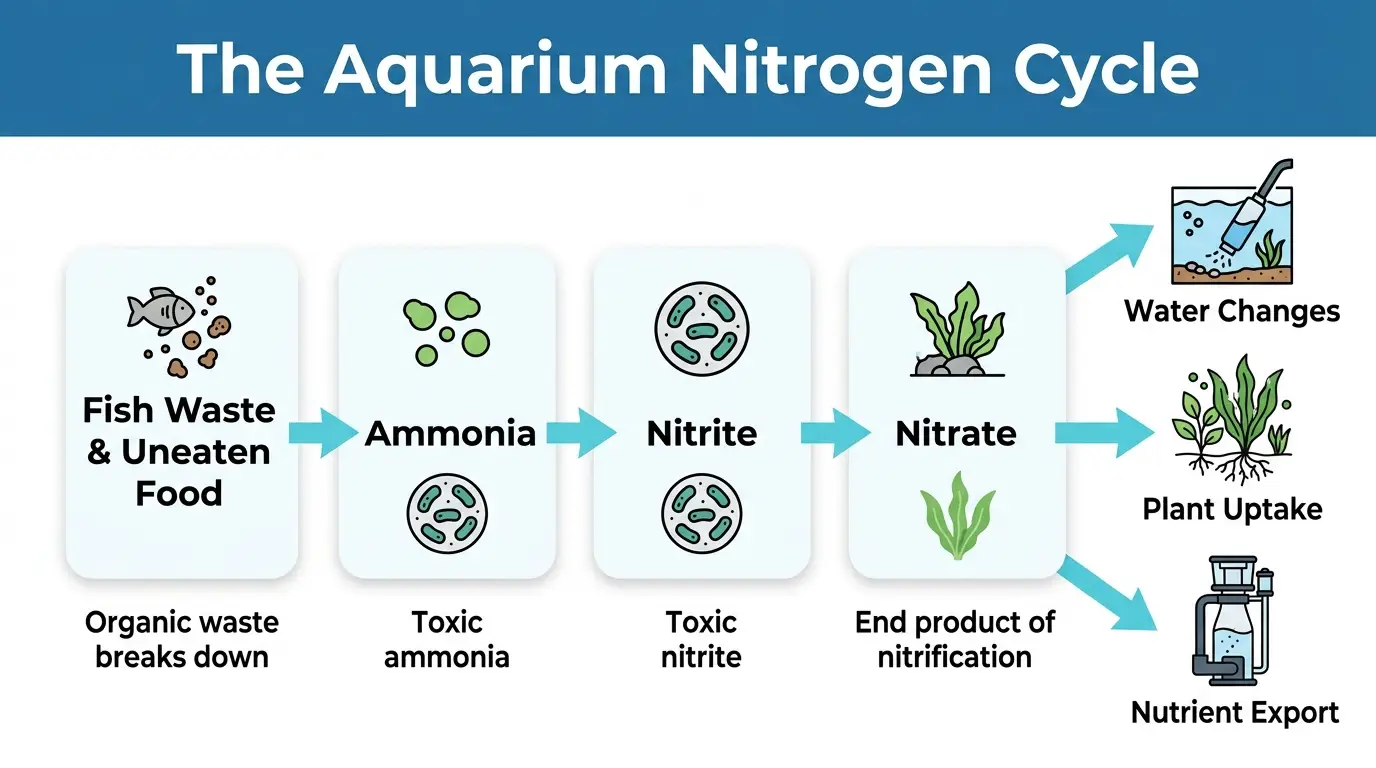
Here is the simple path:
- Fish waste, excess food, and plant debris break down into ammonia.
- Nitrifying bacteria convert ammonia to nitrite.
- Other bacteria convert nitrite to nitrate.
Nitrate rises as your biofilter does its job. That is normal. The problem starts when export lags behind production.
How fast do nitrates build up? It depends on stocking, feeding, and maintenance. In a busy tank, nitrate can climb 10–40 ppm in a week if you do not change water or remove debris.
Main Causes of High Nitrates in a Fish Tank
You might ask, what causes high nitrates in fish tank water day to day? It comes down to waste in, waste out.
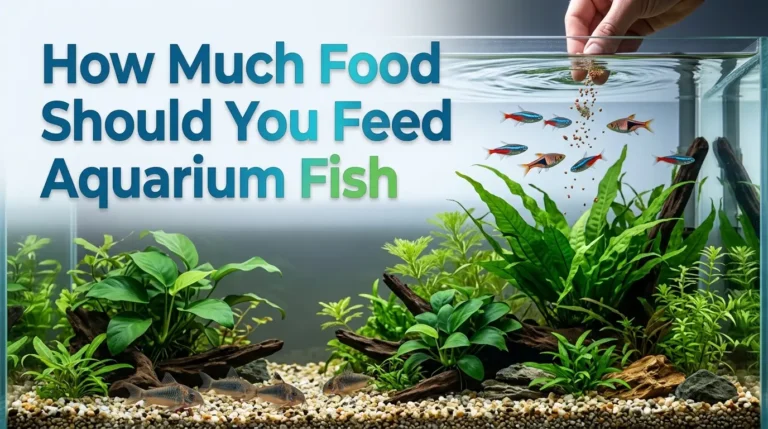
- Overfeeding. Extra food rots. Protein-rich foods become lots of ammonia and then nitrate.
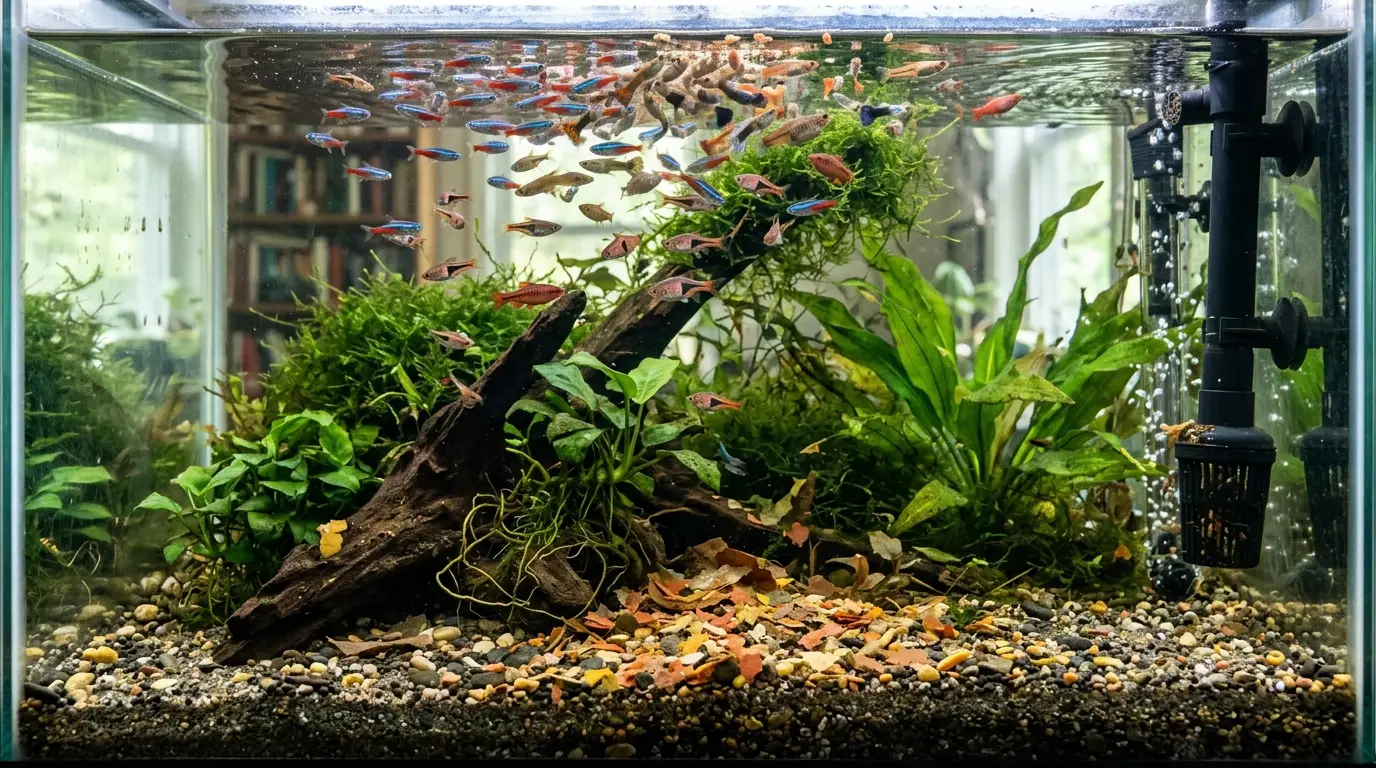
- Overstocking. Too many fish for the tank size and filter means nonstop waste.
- Infrequent or small water changes. Nitrate only drops when you dilute it or use export methods.
- Dirty filters. Clogged media traps mulm. That mulm decays into nitrate. Rinse mechanical media often.
- Old, dirty substrate. Deep layers of detritus raise nitrate. Vacuum it in sections.
- Tap water with nitrate. Some city and well water start high. Always test source water.
- Dead plant leaves and uneaten food. They break down fast. Remove them daily.
- Limited live plants. Few or slow-growing plants cannot use the nitrate your fish create.
- High-oxygen trickle filters or bioballs with no denitrification. They do great nitrification but can drive nitrate up if you do not export it.
If you want a quick summary of what causes high nitrates in fish tank systems: too much input, not enough export. Balance those, and nitrates fall.
Hidden Sources and Overlooked Factors
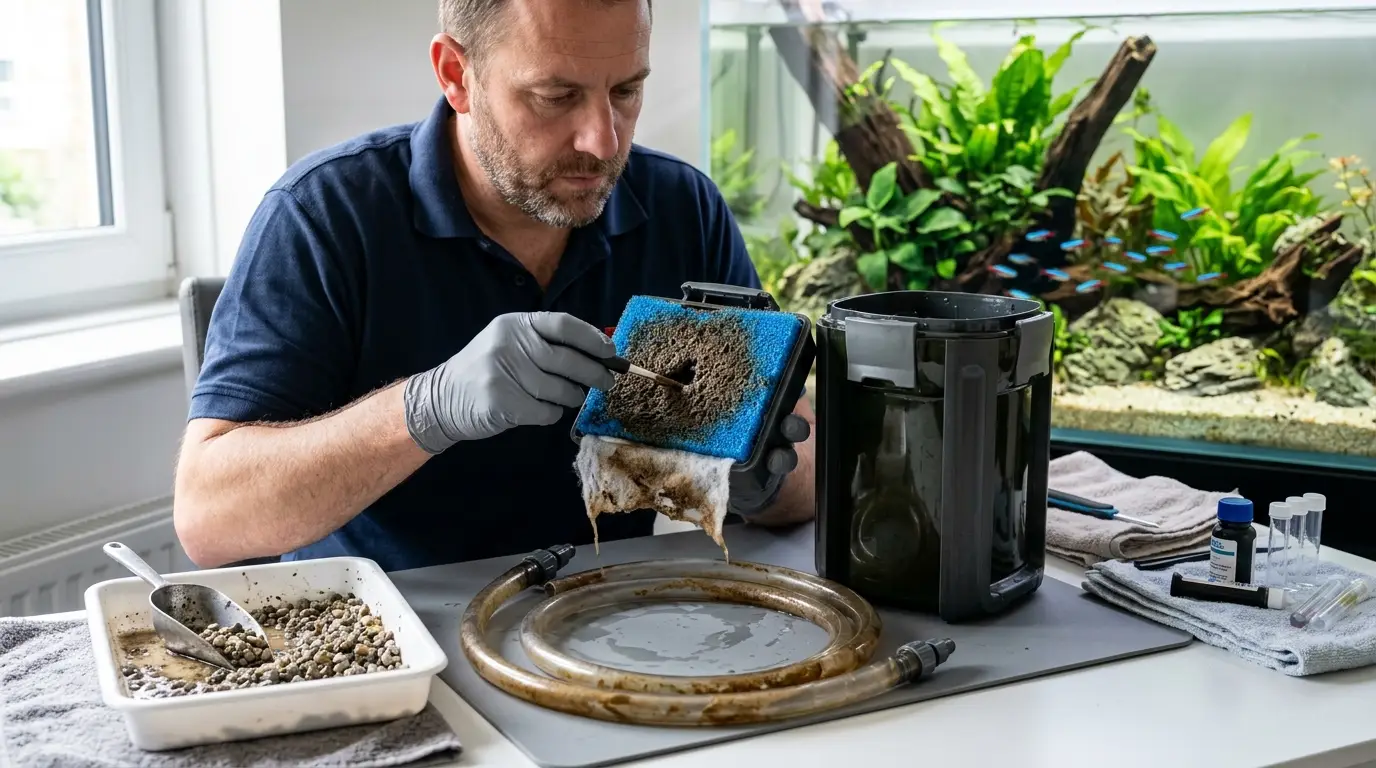
Some causes fly under the radar. Here is where I often find the “leaks”:
- canister filters. They are great, but they collect gunk. Clean pre-filters weekly and the canister monthly.
- Filter floss and pads. Replace or rinse often. Old floss is a nitrate factory.
- Old tank syndrome. As tanks age, KH drops, pH drifts, and waste piles up. Nitrate creeps higher.
- Medications and power outages. These can hurt your biofilter and trigger mini-cycles, which spike nitrate later.
- Frozen foods. The thaw water is full of nutrients. Strain and rinse before feeding.
- Chloramine-treated tap water. Conditioners break chloramine into chloride and ammonia, which your filter then turns into nitrate. Use enough conditioner and do not overload the filter right after big changes.
If you are still asking what causes high nitrates in fish tank water when you do “everything right,” look at these hidden traps first.
Testing, Safe Levels, and Symptoms
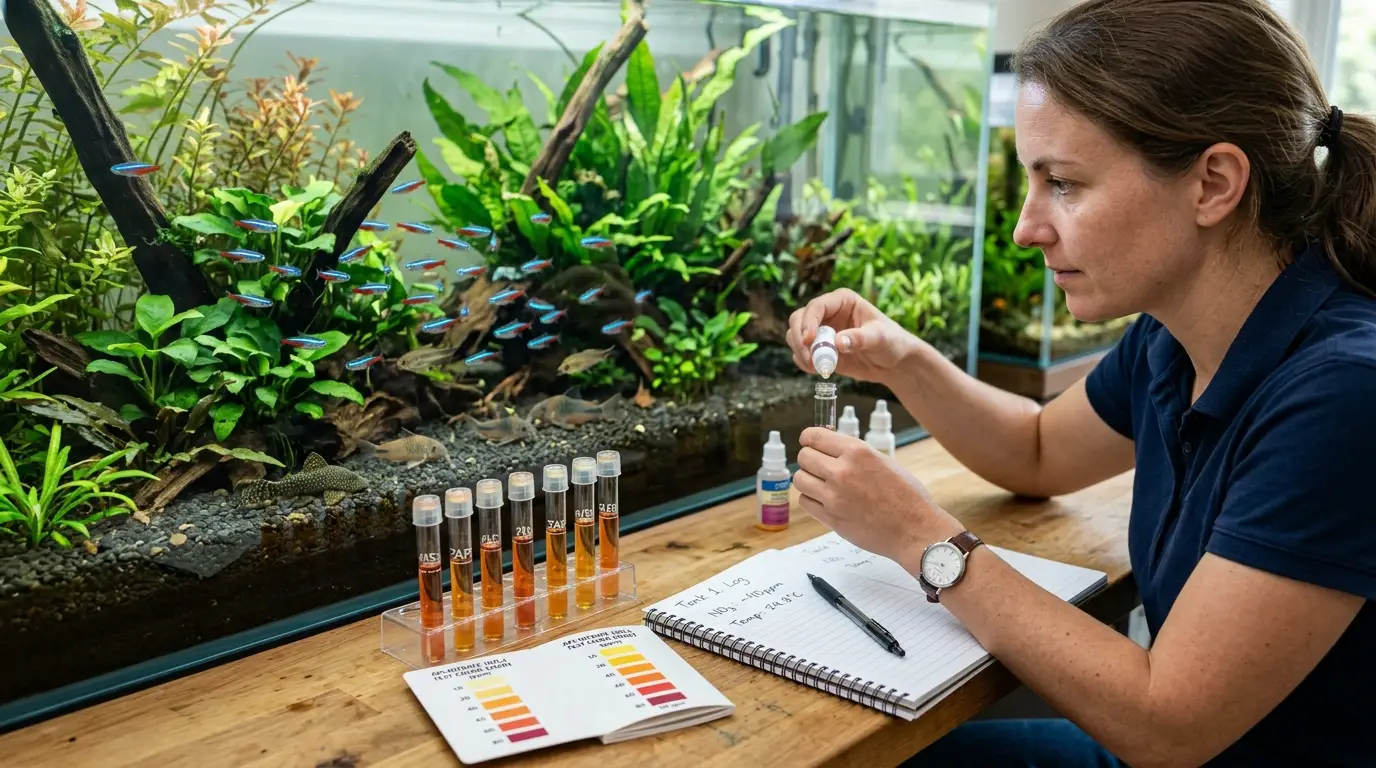
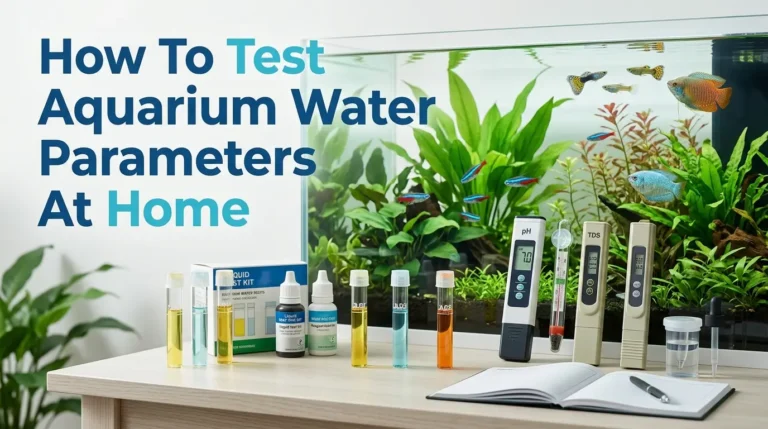
Use a good liquid nitrate test kit. Strips are faster but less precise. Test both tank water and your tap or well water so you know your baseline.
Watch for warning signs:
- Sluggish fish, poor appetite, faded color, clamped fins
- Algae blooms, cloudy water, or dirty glass soon after cleaning
- Shrimp deaths or weak molts
- Stunted growth in juveniles
As a rule, keep nitrate under 20 ppm for sensitive setups and under 40 ppm for community fish. Do not let it drift up week after week. If you wonder what causes high nitrates in fish tank cases that “look fine,” the test kit will tell you the truth.
How to Reduce High Nitrates Fast and Safe
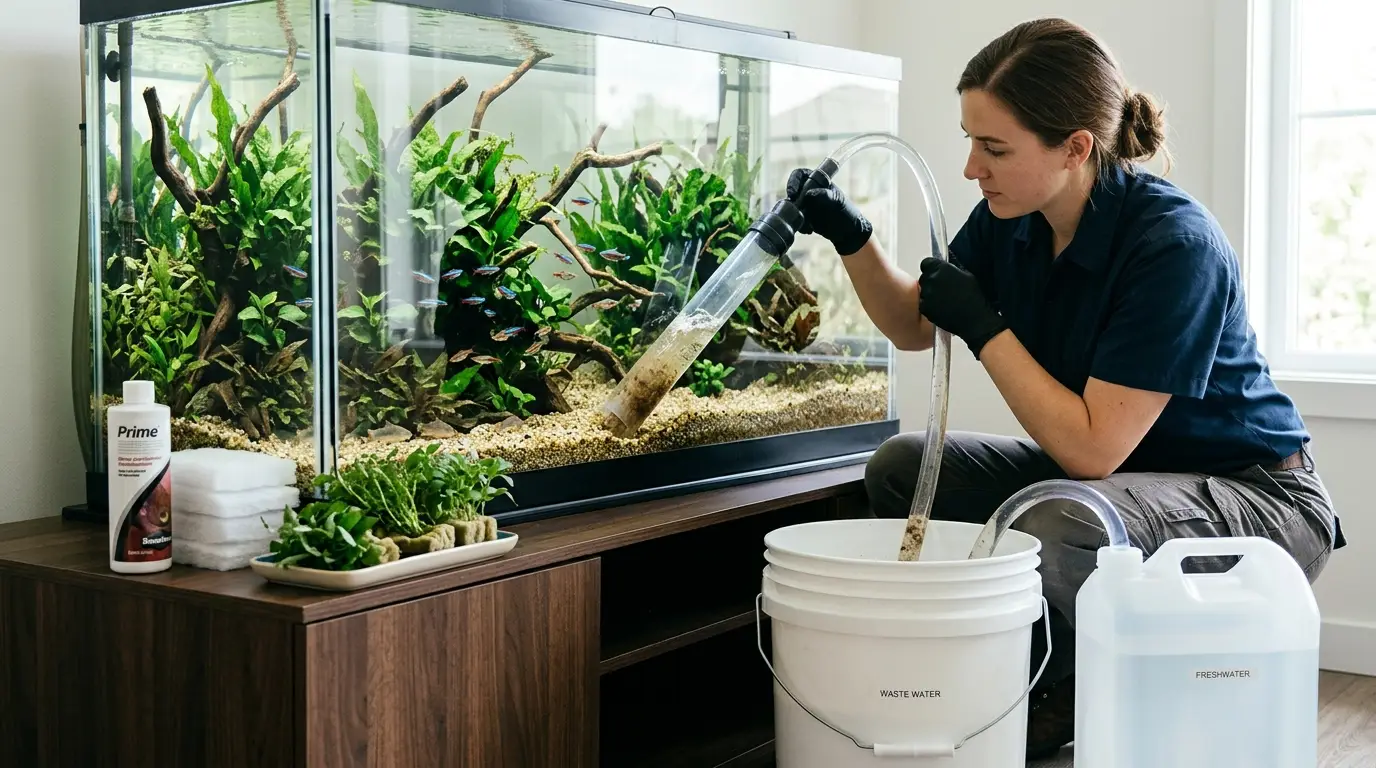
Follow this plan to bring nitrate down without stressing your fish.
- Pause feeding for 24 hours. Healthy fish can skip a meal. You cut input right away.
- Do a large water change. Start with 30–50%. If nitrate is above 80 ppm, repeat 30–50% changes 24 hours apart until you reach target levels.
- Deep-clean the substrate in sections. Vacuum half the tank this week and the other half next week.
- Service the filter. Rinse mechanical media in tank water. Replace floss. Do not let biomedia dry out.
- Add fast growers. Floating plants, hornwort, water sprite, and pothos roots drink nitrate fast.
- Improve flow and oxygen. Better flow helps bacteria and plants work well.
- Use chemical media if needed. Nitrate resins, denitrifying media, or products like Purigen can help. Replace or recharge as directed.
- Consider a denitrator or refugium. Low-flow denitrators or planted sumps export nitrate in high-load systems.
- Fix your source water. If tap water starts high, blend RO/DI water or use a nitrate-removal cartridge.
Water change math helps set goals: New nitrate = Old nitrate × (1 − fraction changed). If you have 80 ppm and change 50%, you land near 40 ppm. Repeat to reach your target.
If you keep asking what causes high nitrates in fish tank setups even after big changes, you likely need to reduce feeding and clean the filter and substrate more often.
Long-Term Prevention and a Simple Maintenance Schedule
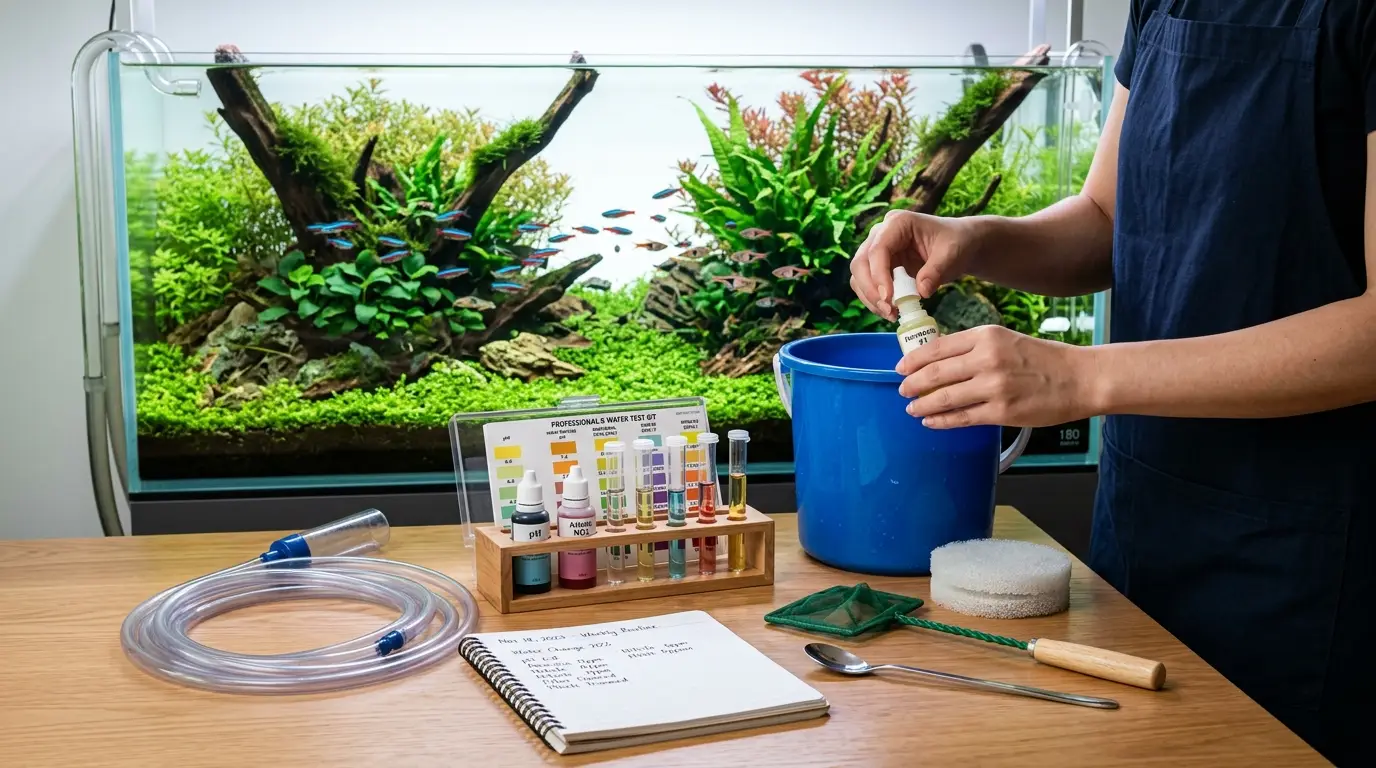
Prevention beats crisis every time. Here is the plan I give new aquarists.
- Stock smart. Lighter stocking is easier. Big messy fish need big filters and more water changes.
- Feed less, but better. Offer what fish eat in 2–3 minutes. Strain frozen foods. Skip one feeding per week.
- Water changes. Do 25–50% every week. Test monthly and adjust the schedule if nitrate drifts up.
- Clean routine. Vacuum the substrate weekly. Rinse pre-filters weekly and service canisters monthly. Replace floss often.
- Plant power. Use fast growers and floaters. Prune dead leaves. Balance light and nutrients.
- Test source water. If tap nitrate is high, blend RO/DI or use nitrate-removal media.
- Log your care. Track feeding, tests, and changes. Patterns reveal what causes high nitrates in fish tank conditions over time.
These habits keep nitrate steady and make your tank look great.
Real-World Examples and Lessons Learned
From my own tanks and client calls:
- A 55-gallon African cichlid tank hit 160 ppm. What caused it? Overfeeding pellets, rare vacuuming, and a stuffed canister. We paused food, did two 50% changes, rinsed pads, added a big pre-filter sponge, and set weekly vacuums. Nitrate now stays under 25 ppm.
- A 10-gallon shrimp nano sat at 35 ppm even with weekly changes. The tap water tested 25 ppm. We switched to a 50/50 RO blend and packed in floating plants. Nitrate dropped to 5–10 ppm, and shrimplets thrived.
These simple fixes show what causes high nitrates in fish tank setups and how small habits make a big difference.
Frequently Asked Questions of what causes high nitrates in fish tank
What causes high nitrates in fish tank water the most?
Overfeeding and poor maintenance are the top drivers. Extra food and waste break down into nitrate, and without regular export, levels rise fast.
How often should I test nitrates?
Test weekly until your tank is stable. After that, testing every 2–4 weeks is fine, and always test after big changes in stocking or feeding.
Are 80 ppm nitrates dangerous for fish?
Yes, 80 ppm is risky for many species, especially long term. Aim to drop it to under 40 ppm soon, and under 20 ppm for sensitive fish and shrimp.
Do live plants remove nitrate?
Yes. Fast-growing plants and floaters use nitrate as fertilizer. More plant mass means faster nitrate uptake, but you still need water changes.
Can large water changes shock fish?
Large changes are safe if temperature and dechlorination are correct. If nitrate is very high, do back-to-back changes 24 hours apart to ease the shift.
Why are my nitrates high after a filter clean?
If you over-cleaned or let media dry, you may have hurt the biofilter. Feed lightly and monitor while bacteria rebound.
Does tap water add nitrate?
In many areas, yes. Test your tap. If it is high, blend with RO/DI water or use nitrate-removal media before the water enters the tank.
Conclusion
High nitrate is a simple math problem: too much waste in, not enough export out. Now you know exactly what causes high nitrates in fish tank life and how to fix it with better feeding, smart cleaning, strong plant growth, and steady water changes. Test today, make one small change this week, and watch your fish perk up.
Want more practical aquarium tips? Subscribe for updates, ask a question in the comments, or share your nitrate win with the community.