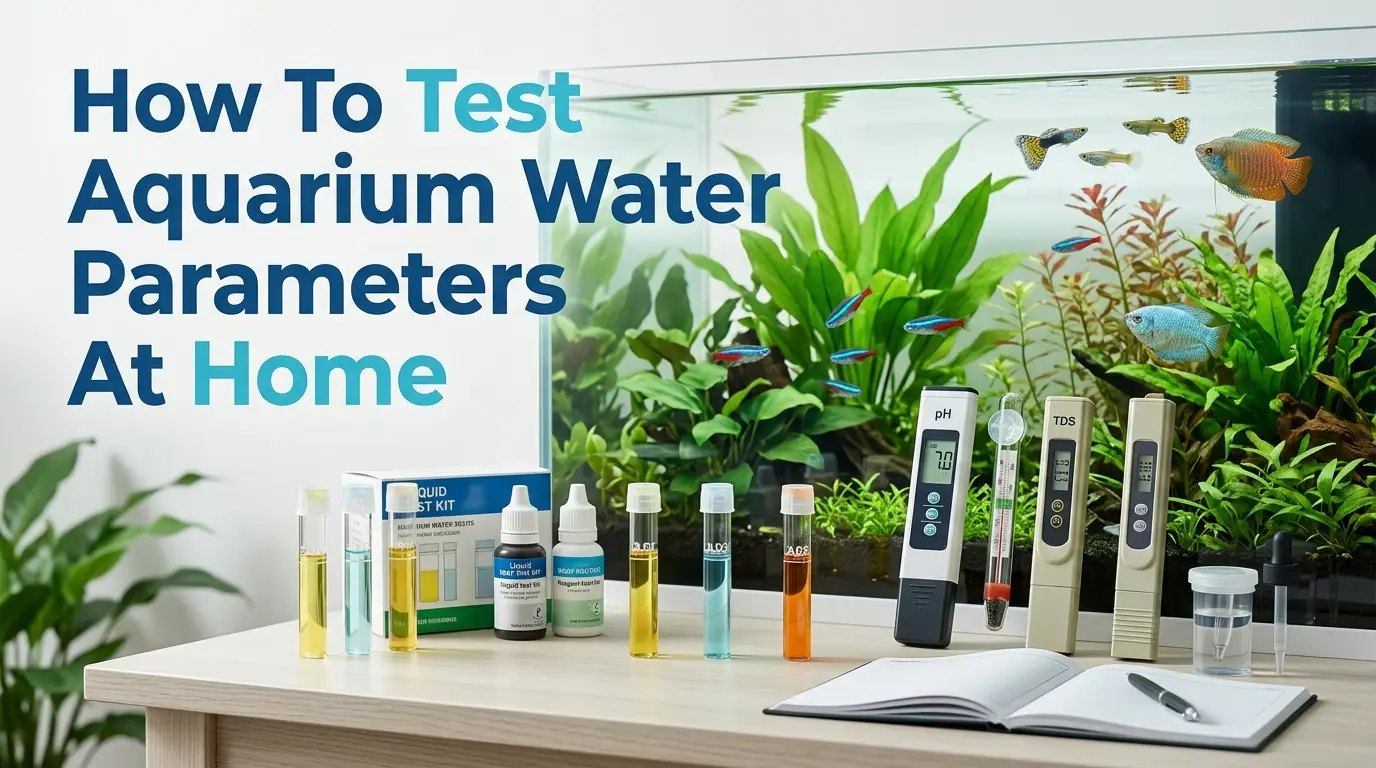
Use simple test kits and meters, follow steps, and log your results.
If you keep fish, shrimp, or corals, your water is the life support system. I’ve spent years helping hobbyists fix problems that started with hidden water issues. In this friendly guide on how to test aquarium water parameters at home, you’ll learn what to check, how to do it right, and how to act fast when numbers drift. Follow along and you’ll test with confidence, read results like a pro, and keep your tank stable.
Why water testing matters
Water looks clear but can still be unsafe. Ammonia, nitrite, and shifts in pH hurt gills fast. Swings in hardness can stress shrimp. Low oxygen can wipe out fish at night. Good testing prevents these surprises.
Learning how to test aquarium water parameters at home puts you in control. You spot trends early. You make small fixes before they become big problems. Healthy water means steady behavior, strong color, and longer lives.
Testing also teaches you the rhythm of your tank. You will see how feeding, water changes, and filters affect your numbers. That feedback loop helps you tune your care with less guesswork.
Essential parameters you must test
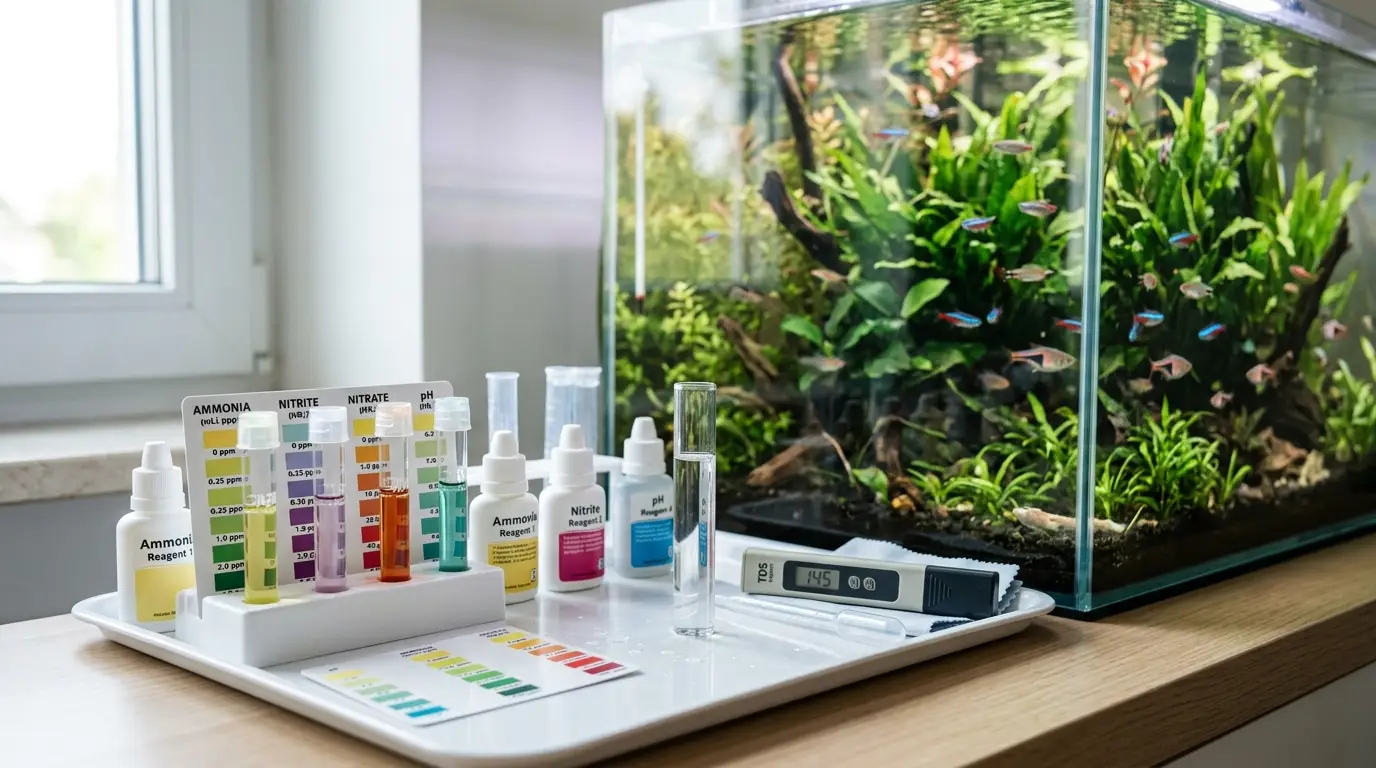
Focus on the basics first. Add more only when your tank needs it.
- Ammonia NH3/NH4+: Target 0 ppm. Any ammonia can burn gills and slow growth.
- Nitrite NO2−: Target 0 ppm. Nitrite blocks oxygen in the blood.
- Nitrate NO3−: Keep under 20–40 ppm for most freshwater. Reef tanks do best under 5–10 ppm.
- pH: Match the species. Community tanks like 6.5–7.5. African cichlids like 7.8–8.6. Marine tanks like 8.0–8.4.
- KH (carbonate hardness): Buffers pH. Freshwater 3–6 dKH works for most. Marine 8–12 dKH is common.
- GH (general hardness): Minerals for osmoregulation. Many community fish like 4–8 dGH. Shrimp and livebearers may need more or less.
- Phosphate PO4: Keep low to control algae. Under 0.5 ppm for most freshwater. Reefs often aim under 0.1 ppm.
- Temperature: Keep stable. Many tropical tanks hold 75–79°F. Reefs often 77–79°F.
- Salinity (marine): 1.025 specific gravity for most reefs.
- TDS (freshwater): Use as a trend number. Many tanks sit at 100–300 ppm.
- Chlorine/chloramine: Always 0 after conditioning.
As you learn how to test aquarium water parameters at home, start with ammonia, nitrite, nitrate, and pH. Add KH, GH, and phosphate as your tank matures or if plants and corals demand it.
Tools you need at home
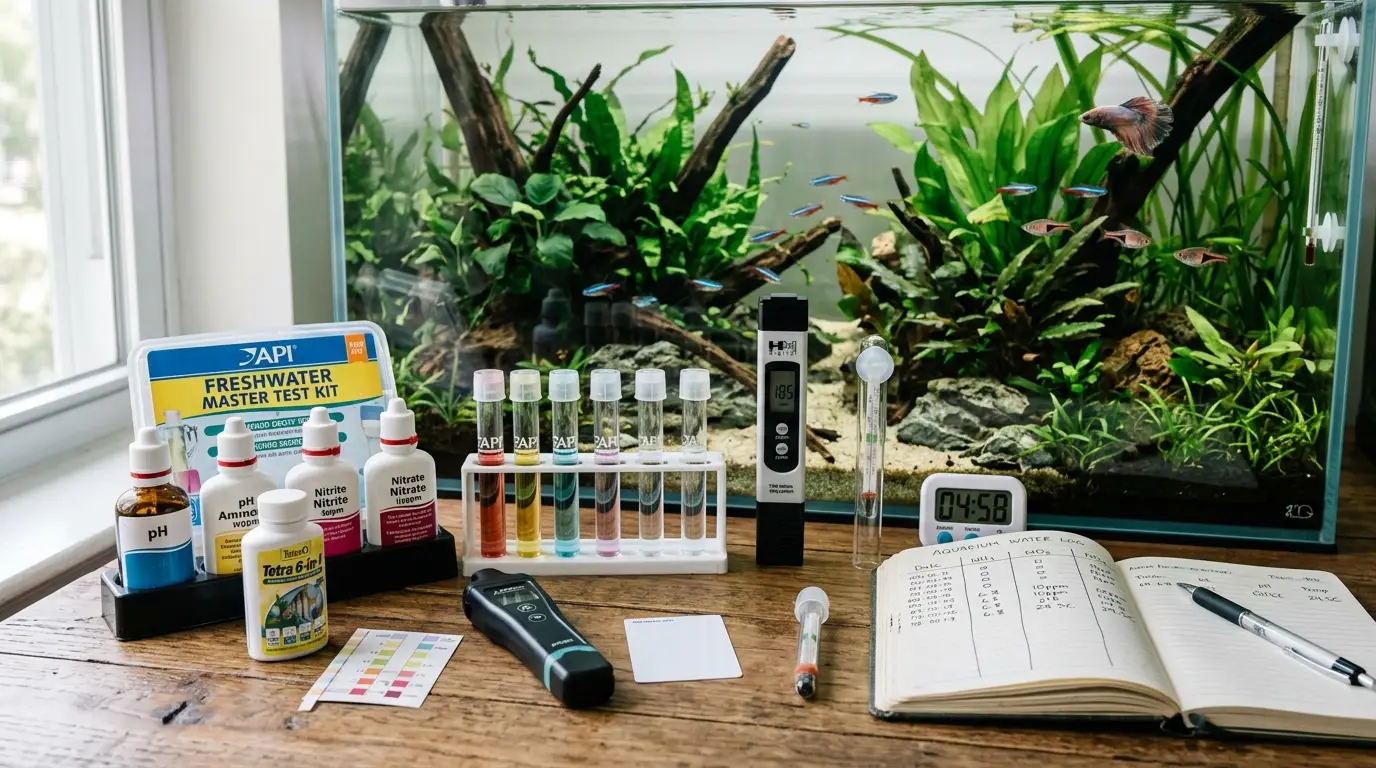
You can test with simple kits or digital meters. Each has pros and cons.
- Liquid test kits: Drop-count kits are cheap and accurate when fresh. They need timing and color reading.
- Test strips: Fast and easy. Good for quick checks. Confirm key results with a liquid kit.
- Digital meters: pH pens, TDS meters, and salinity refractometers give clear readings. Calibrate them.
- Colorimeters: These read color for you. Great for phosphate and nitrate in planted or reef tanks.
- Extras: Clean vials, a timer, a white background, and a logbook or app.
If you ask me how to test aquarium water parameters at home on a budget, I suggest a liquid master kit, a TDS meter, and a refractometer for saltwater. That trio covers most needs.
Step-by-step: how to test aquarium water parameters at home
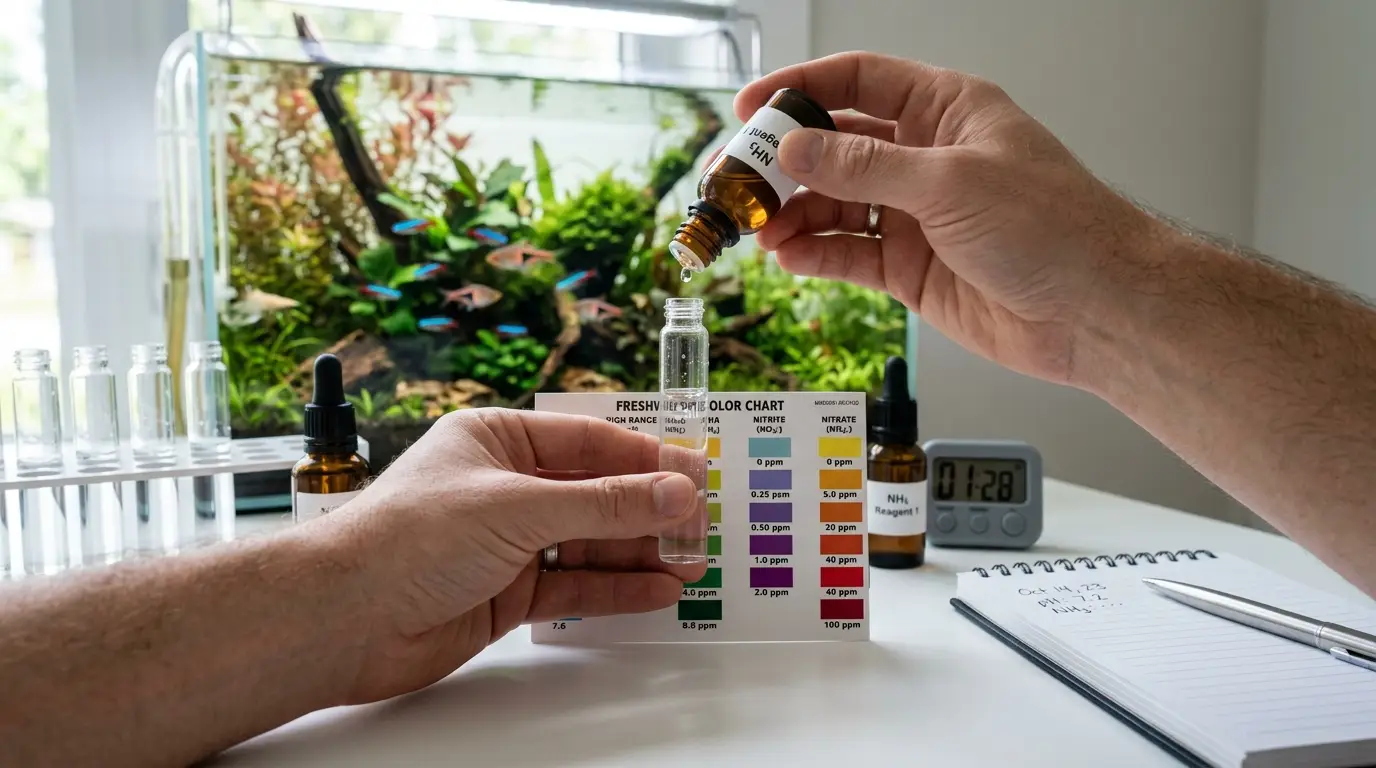
Follow this simple flow. Keep it the same each time.
- Prepare
- Wash hands. Rinse vials with tank water. Set a white sheet under them.
- Turn off blue reef lights. Use room light so colors read true.
- Sample
- Dip or scoop mid-water. Avoid surface films and substrate dust.
- Test at the same time of day for patterns.
- Run tests
- For liquid kits: Add drops as directed. Cap. Shake well.
- Start a timer. Read only at the stated minute mark.
- For strips: Dip and hold flat. Read fast per the label.
- For meters: Rinse probe. Calibrate often. Stir gently. Wait for a stable number.
- Record
- Write date, time, and results. Note any changes you made, like a water change or dose.
- Snap a photo of color cards under the same light. It helps track small changes.
- Act
- If ammonia or nitrite is above 0, change water now and add bacteria.
- If nitrate is high, reduce feeding and increase water changes.
- If pH is unstable, adjust KH slowly.
This is the core of how to test aquarium water parameters at home. Keep it calm and repeatable.
Interpreting results and what to do next
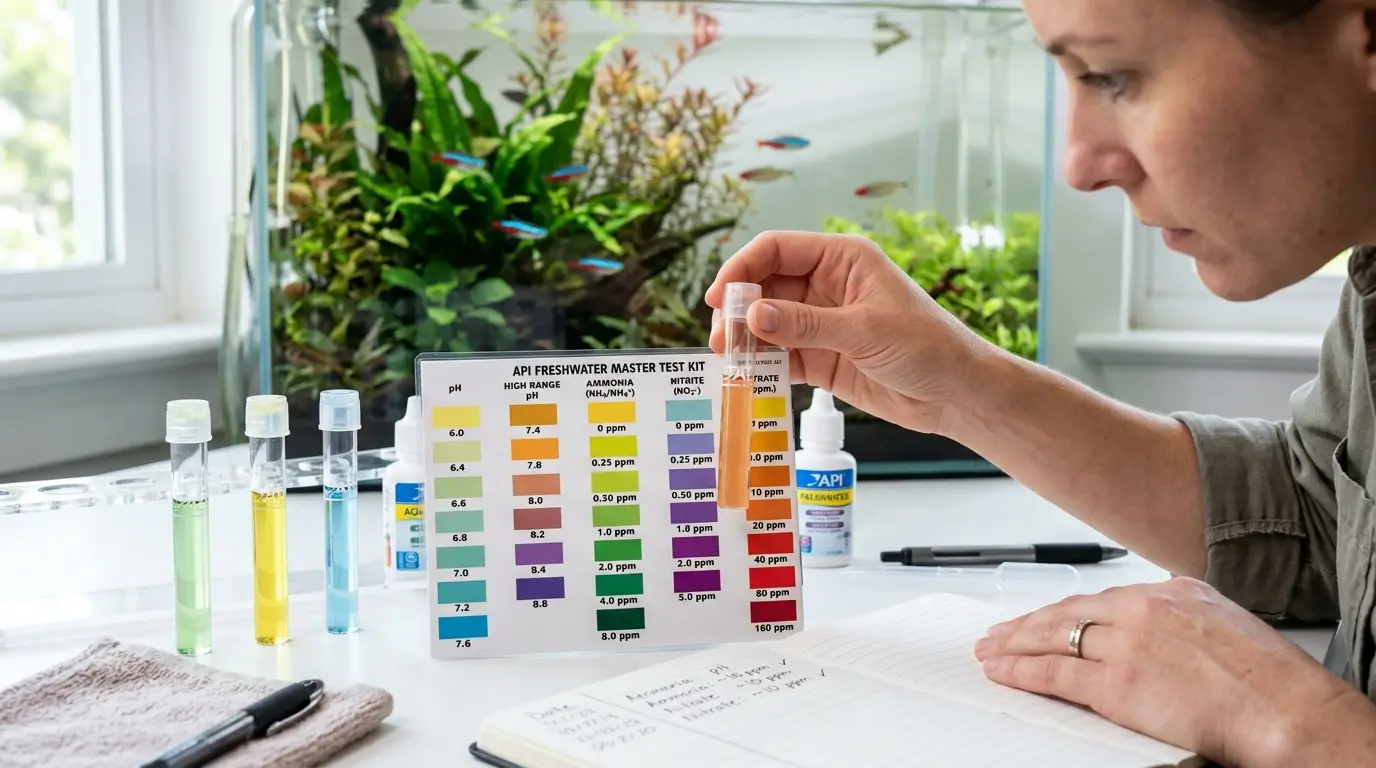
Your numbers tell a story. Read them in context.
- Ammonia or nitrite above 0: Your biofilter is stressed. Do a 25–50% water change. Add bottled bacteria. Reduce feeding for a few days.
- Rising nitrate: Your export is low. Increase water changes. Clean filter pads. Add fast plants or a refugium.
- pH swings: Raise KH with baking soda in tiny steps for freshwater. Use reef buffer in saltwater. Aim for steady more than “perfect.”
- Low GH: Remineralize. Use crushed coral or a GH booster. Match your livestock needs.
- High phosphate: Rinse foods. Use phosphate media. In planted tanks, balance NPK and light.
- Salinity drift: Top off with fresh RO/DI for evaporation. Only replace salt lost during water changes.
As you master how to test aquarium water parameters at home, you will see trends before trouble starts. Small steady tweaks beat big sudden moves.
Weekly, monthly, and emergency schedules
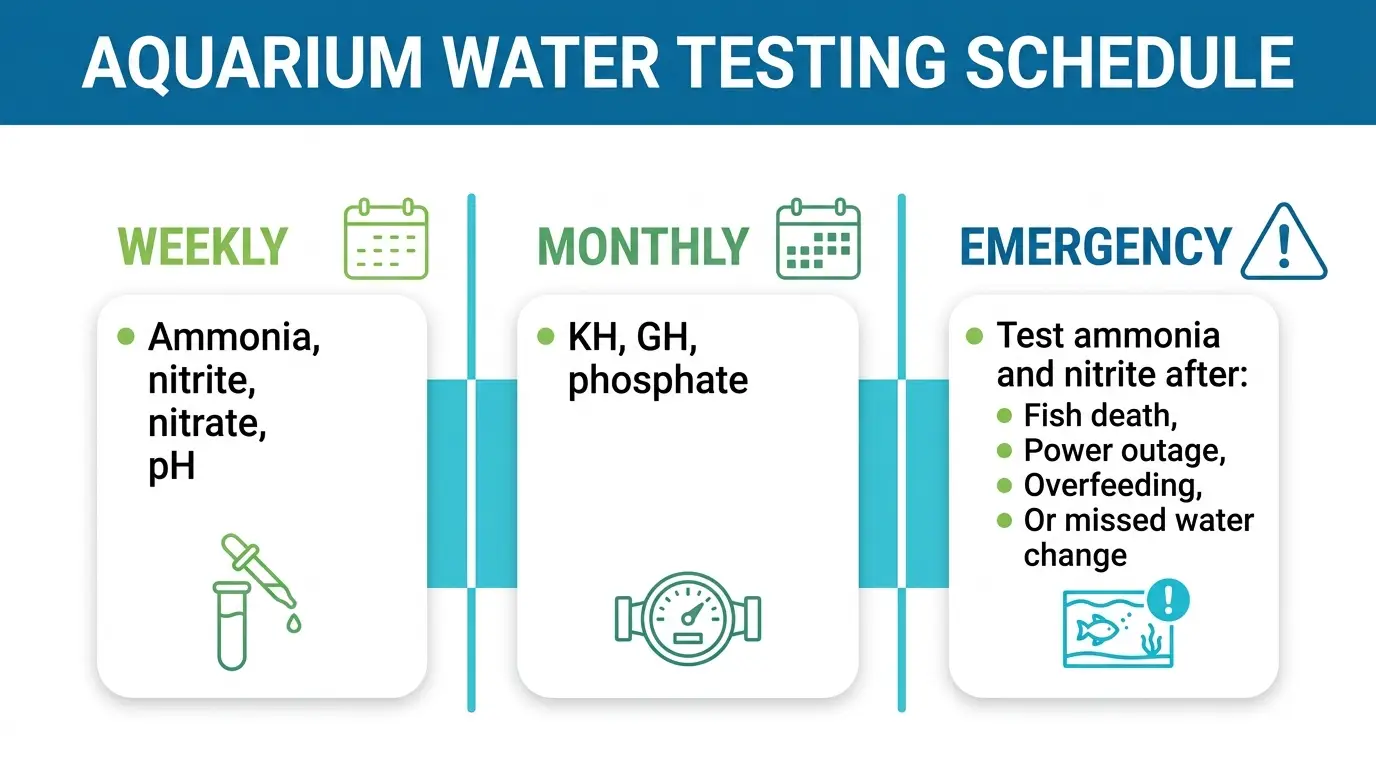
Use a simple plan. Adjust for your bio-load and tank size.
Weekly
- Test ammonia, nitrite, nitrate, and pH.
- For reefs, add alkalinity and phosphate.
- Log results. Do your water change based on nitrate trend.
Monthly
- Test KH, GH, and phosphate for freshwater plants.
- For reefs, test calcium, magnesium, and alkalinity together.
- Deep clean pre-filters. Check meter calibration.
Emergency
- After a fish death, power outage, overfeeding, or a missed water change, test ammonia and nitrite right away.
- If anything smells off or fish gasp, test now. Add air and do a partial change.
This routine locks in how to test aquarium water parameters at home without stress.
Common mistakes and how to avoid them
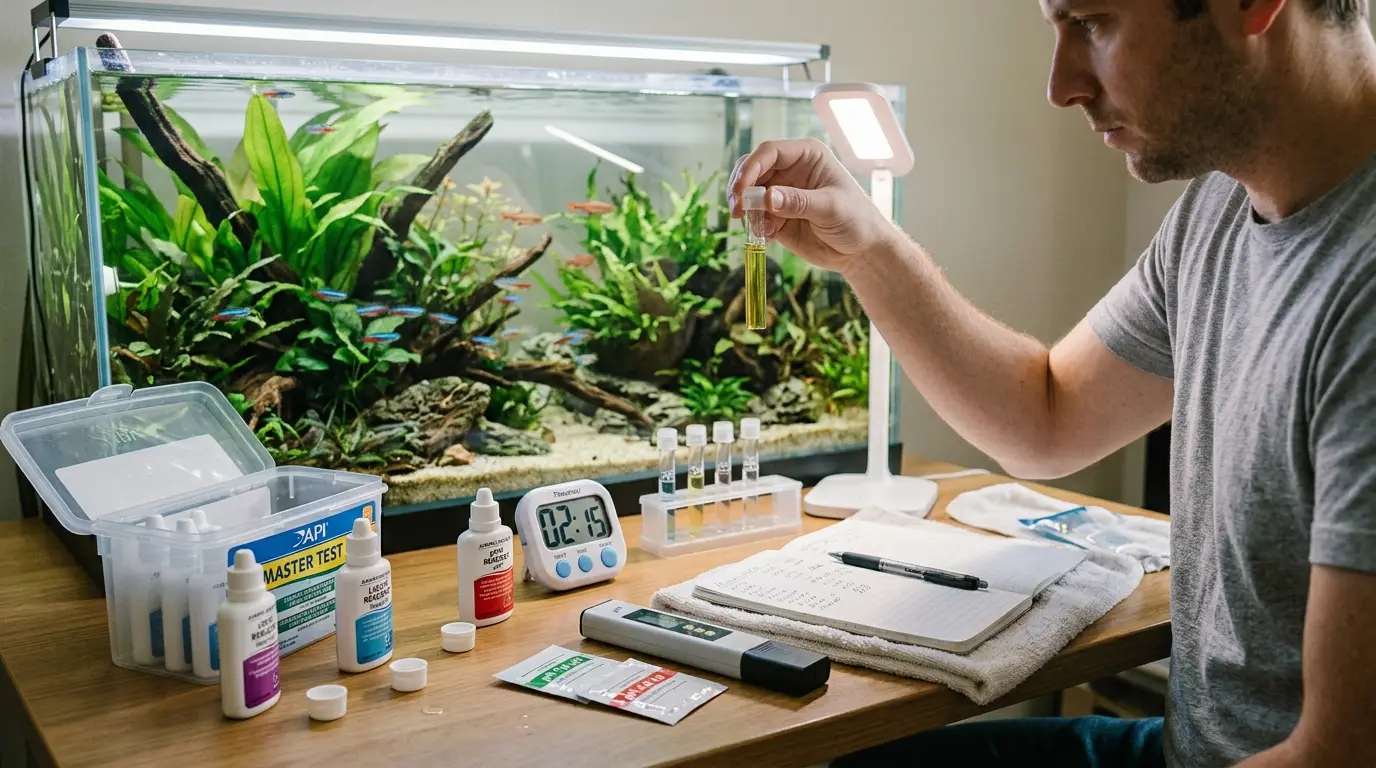
I have made these mistakes. Learn from them.
- Old reagents: Replace kits yearly. Write the open date on the box.
- Bad lighting: Read colors under white light only.
- Cross contamination: Rinse vials between tests. Use separate syringes for saltwater and freshwater.
- Wrong timing: Use a timer. Reading early or late skews results.
- Skipping calibration: pH and TDS meters drift. Calibrate monthly or per maker notes.
- Chasing numbers: Stability beats perfection. Move slow and verify with a second test.
Avoid these traps and how to test aquarium water parameters at home becomes fast and reliable.
Troubleshooting: real-world scenarios from my tanks
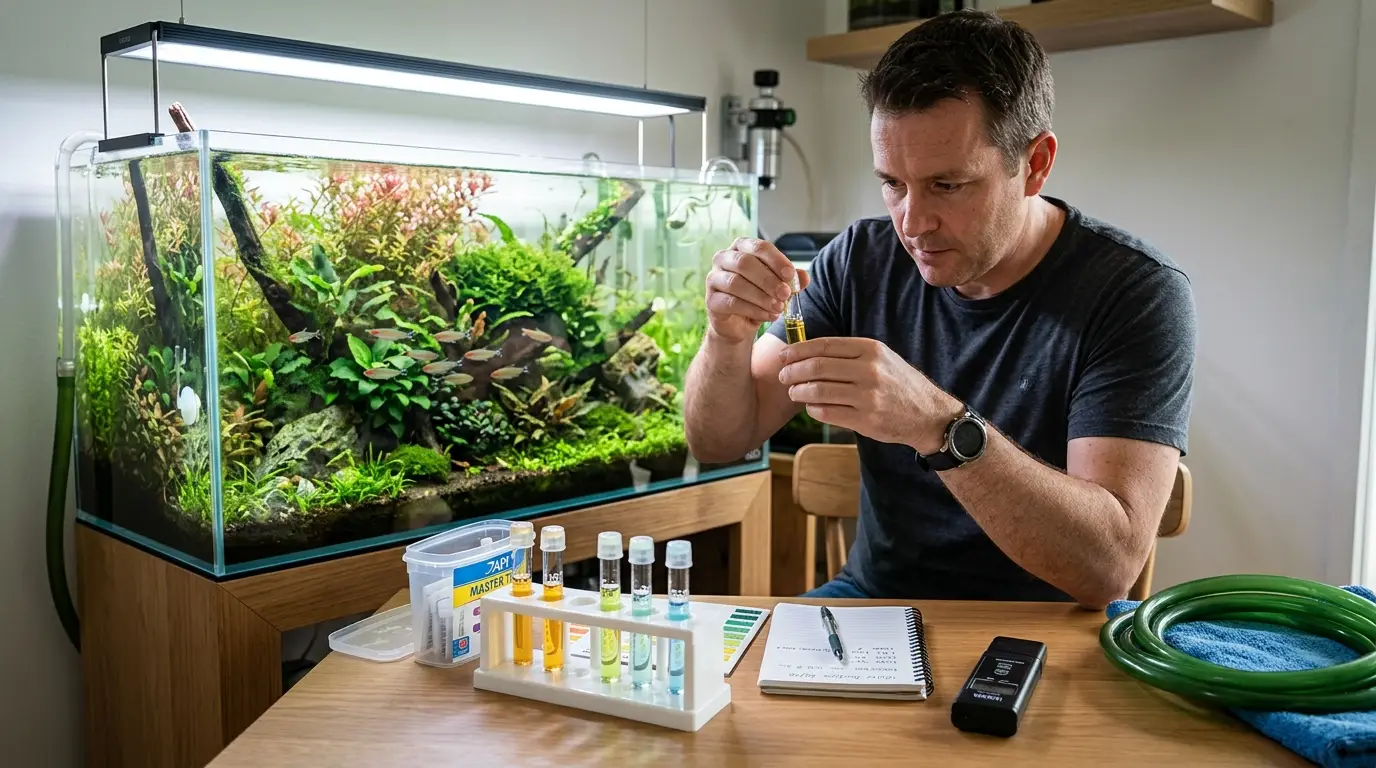
Planted 29-gallon
- Problem: Nitrate at 40 ppm and algae on glass.
- Fix: Cut feeding by 20%, trimmed plants, and added a 30% water change twice that week. Nitrate held near 15 ppm after.
Shrimp nano
- Problem: Molting issues and low survival.
- Test story: GH was 2 dGH and KH near 0. pH swung daily.
- Fix: Remineralized RO water to GH 6, KH 2. Stable pH stopped losses.
Reef mixed coral
- Problem: Coral tips receding.
- Test story: Alkalinity fell from 9 to 7 dKH in three days.
- Fix: Matched water change dKH, then set a slow dosing schedule. Growth returned.
Each case started with how to test aquarium water parameters at home, then a small, targeted fix.
Budget vs premium kits: what I recommend
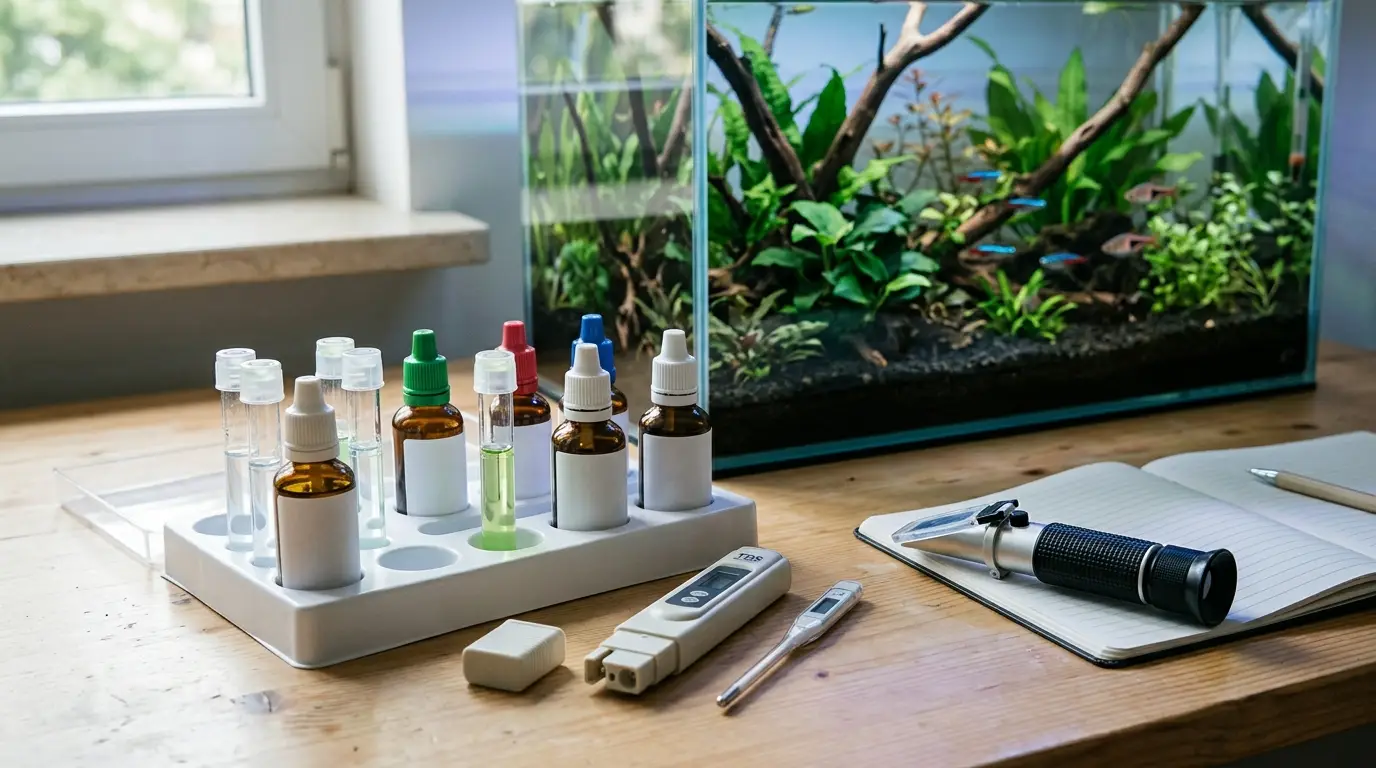
If you are new
- Get a liquid master kit for ammonia, nitrite, nitrate, and pH.
- Add a TDS meter for quick trends.
- For saltwater, add a refractometer and an alkalinity kit.
If you run planted or reef systems
- Add phosphate and KH for plants.
- For reefs, add calcium and magnesium. A colorimeter for phosphate is worth it.
Why this mix works
- You cover the core of how to test aquarium water parameters at home.
- You can confirm strip results with drops.
- You spend where precise reading matters most.
Frequently Asked Questions of how to test aquarium water parameters at home
How often should I test a new tank?
Test daily during cycling for ammonia and nitrite. Once both hit zero for a week, move to a weekly schedule.
Are test strips accurate enough?
Strips are fine for quick checks. Confirm key results like ammonia and nitrate with a liquid kit.
Do I need RO/DI water to get good results?
No, but RO/DI gives stable baselines. It helps if your tap water has high nitrate, phosphate, or unstable pH.
What is the best pH for most fish?
Most community fish like 6.5–7.5. Keep it stable rather than chase an exact number.
How do I read color tests if I’m color-blind?
Use a colorimeter for tricky tests like phosphate. Or take a photo under white light and use an app that matches hues.
Can Prime or other conditioners affect test results?
Yes, some conditioners can skew ammonia and nitrite tests for a short time. Test before dosing, or wait 24 hours after use.
Do I need to shake reagent bottles?
Yes, shake reagents well, especially nitrate bottles. Poor mixing can cause false low or high readings.
What should I do if ammonia shows 0.25 ppm?
Do a partial water change, add bacteria, and reduce feeding. Re-test in 24 hours to confirm the drop.
Conclusion
Testing is your superpower. When you know how to test aquarium water parameters at home, you catch problems early, act with calm, and keep your pets safe. Start with simple kits, build a steady routine, and log every result.
Use what you learned today. Run a test this week. Make one small change based on your numbers. If this helped, subscribe for more home-tested tips, or drop a comment with your latest reading.