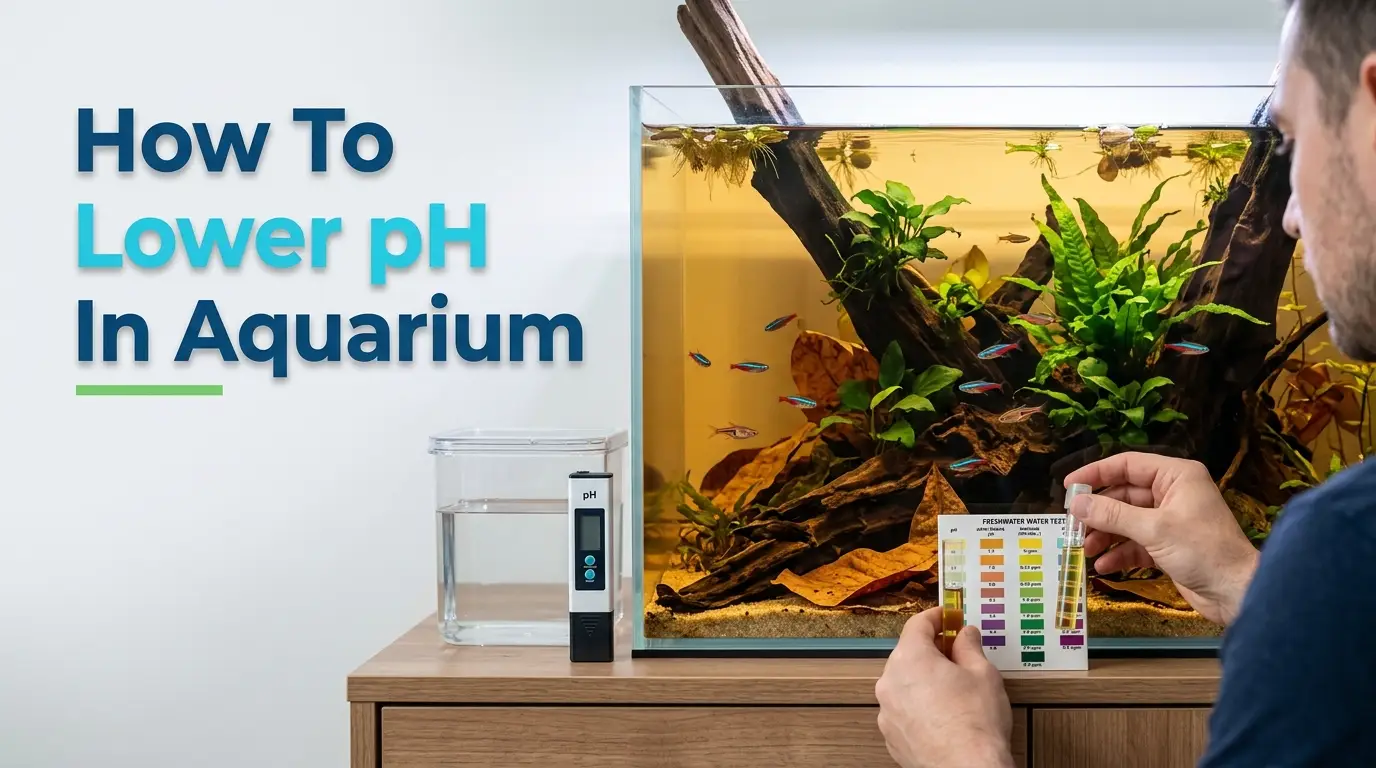
Lower pH with RO water, peat, driftwood, CO2, and slow changes.
If you want to know how to lower ph in aquarium water without stressing fish, you are in the right place. I’ve tuned blackwater tanks, bred soft-water species, and fixed many “mystery” pH swings. This guide explains how to lower ph in aquarium systems the safe way, with clear steps, real examples, and science you can trust.
Understanding pH and Aquarium Chemistry
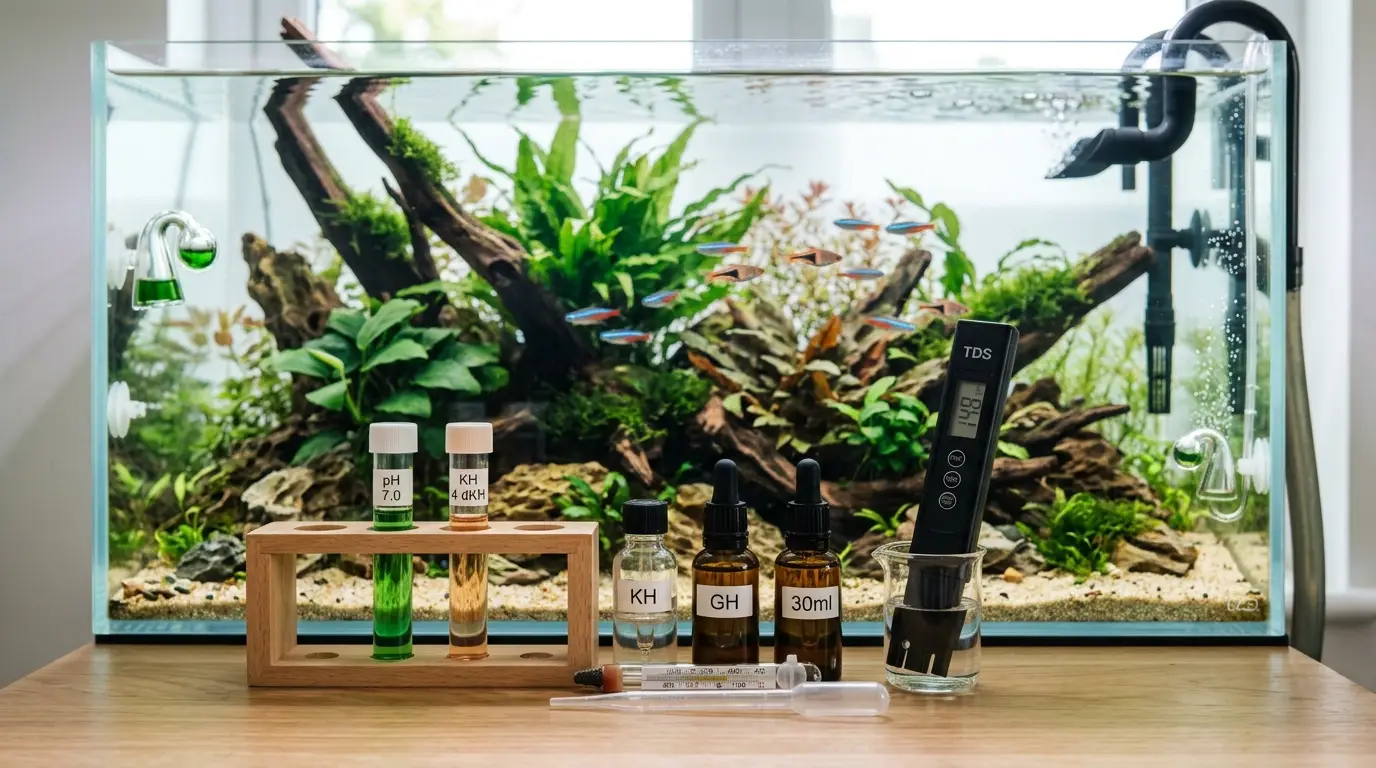
pH measures how acidic or basic your water is. The scale goes from 0 to 14. Seven is neutral. Lower numbers mean more acidic water.
Carbonate hardness, or KH, is your buffer. It resists changes in pH. General hardness, or GH, is calcium and magnesium. It affects fish health but does not set pH.
CO2 changes pH too. More CO2 lowers pH. Less CO2 raises it. Light and plants shift CO2 across the day. Morning pH is often lower than evening pH.
Why lower pH at all? Many soft-water fish do better with a lower pH. Think neon tetras, rasboras, apistogramma, discus, and many shrimp. Tannins and humic acids help these fish feel at home. They also support color and calm behavior.
Healthy biofilters prefer pH above 6. Below that, some nitrifying bacteria slow down. Plan for that if you run very soft, acidic water.
Before You Lower pH: Test, Targets, and Safety
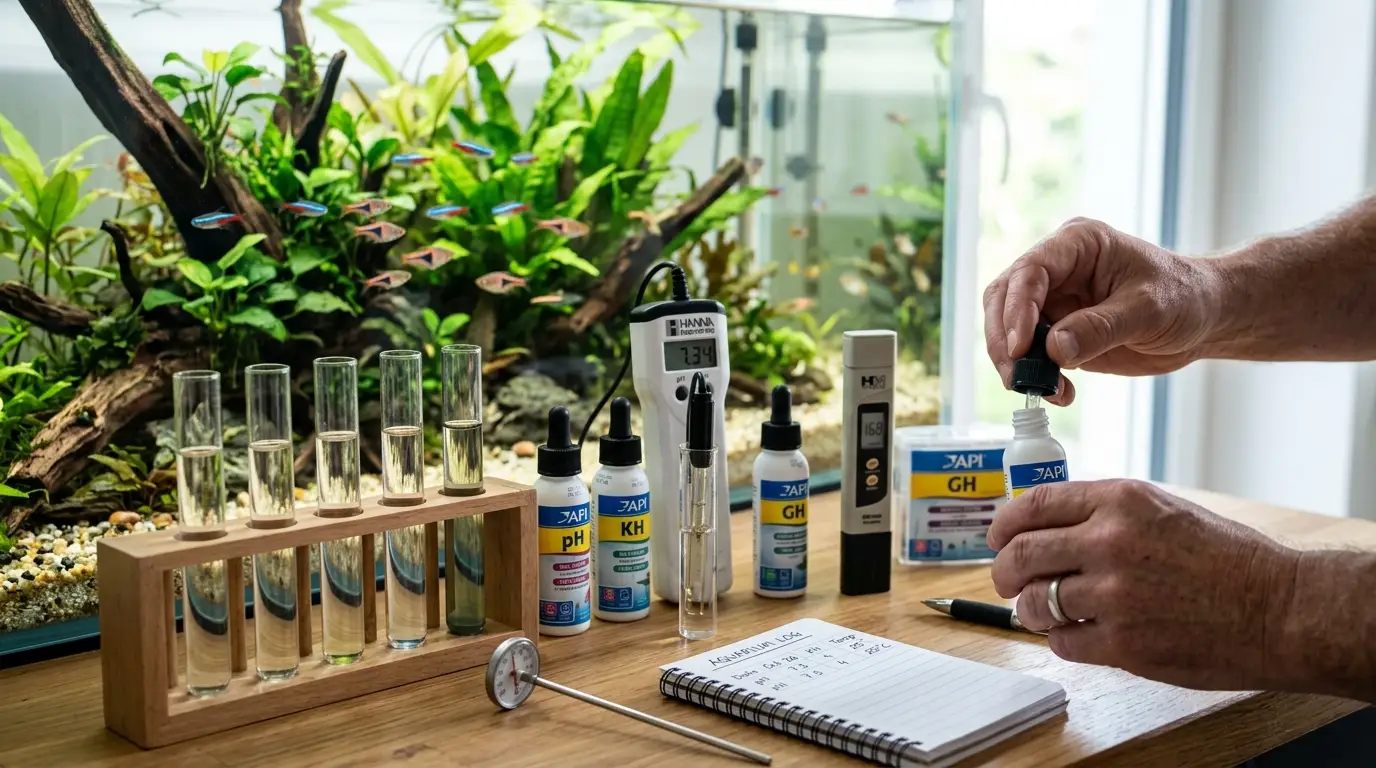
Start with a test plan. Do not guess.
- Use a liquid pH test or a well-calibrated pH pen.
- Test KH and GH. A basic test kit is fine.
- A TDS meter helps track total minerals.
- Log readings for a week to see daily swings.
Set a target that fits your fish.
- Amazon fish like 5.5 to 6.8.
- Bettas do well around 6.5 to 7.0.
- Livebearers prefer 7.2 to 8.2. Do not lower for them.
- African rift cichlids like 7.8 to 8.6. Do not lower.
Follow safe pace rules.
- Change pH slowly. Aim for 0.2 to 0.3 per day.
- Treat new water outside the tank. Match pH, KH, and temperature.
- Keep oxygen high during changes. Add surface ripple.
A quick note on goals. If you ask how to lower ph in aquarium setups for breeding, go slower. Fish eggs and fry need stable water more than adults.
How to Lower pH in Aquarium Naturally
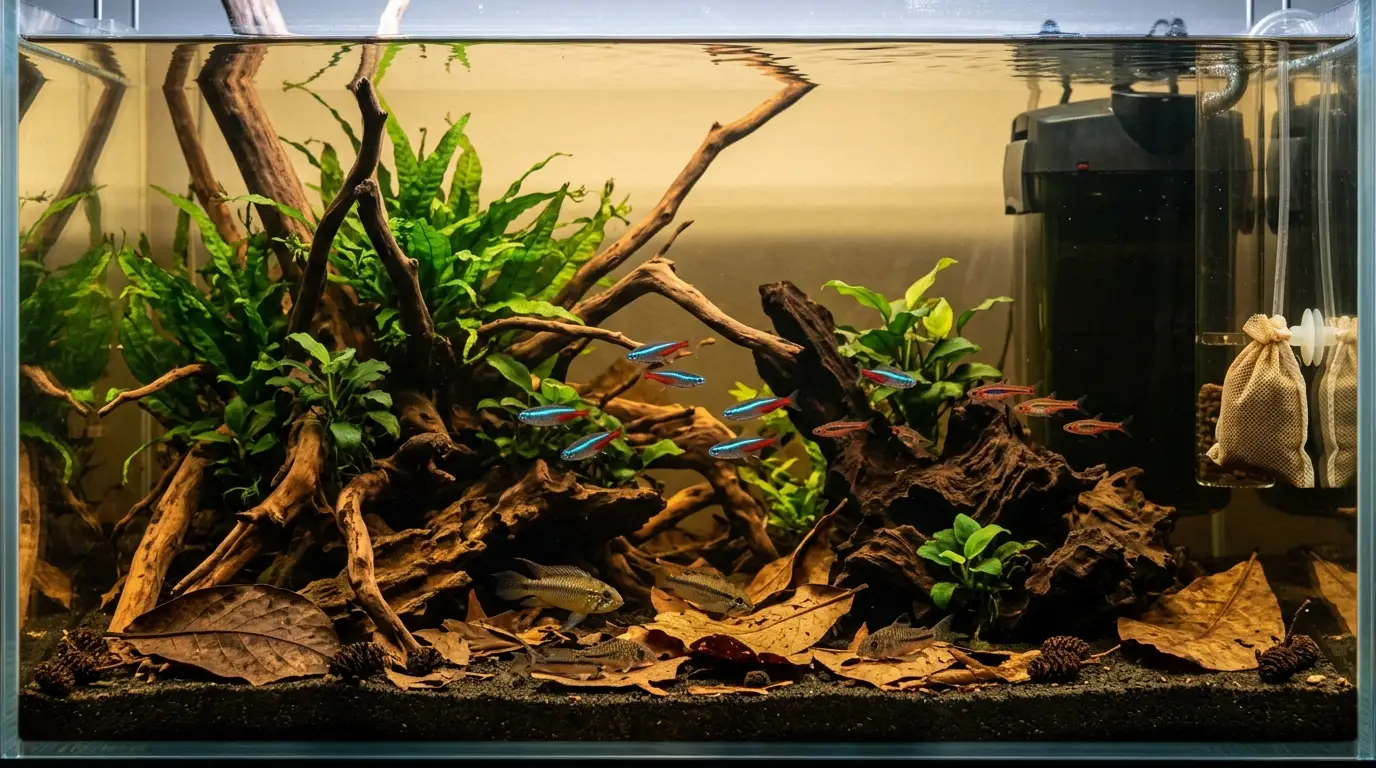
Nature first. These methods are gentle, stable, and look great.
Use reverse osmosis or deionized water.
- Blend RO or DI water with your tap water.
- This lowers KH. Lower KH allows pH to drop.
- Start with a 50 to 70 percent RO mix. Test and adjust.

Add botanicals that release tannins.
- Indian almond leaves (catappa) add tannins and humic acids.
- Start with one large leaf per 10 gallons.
- Replace every 2 to 4 weeks as it breaks down.
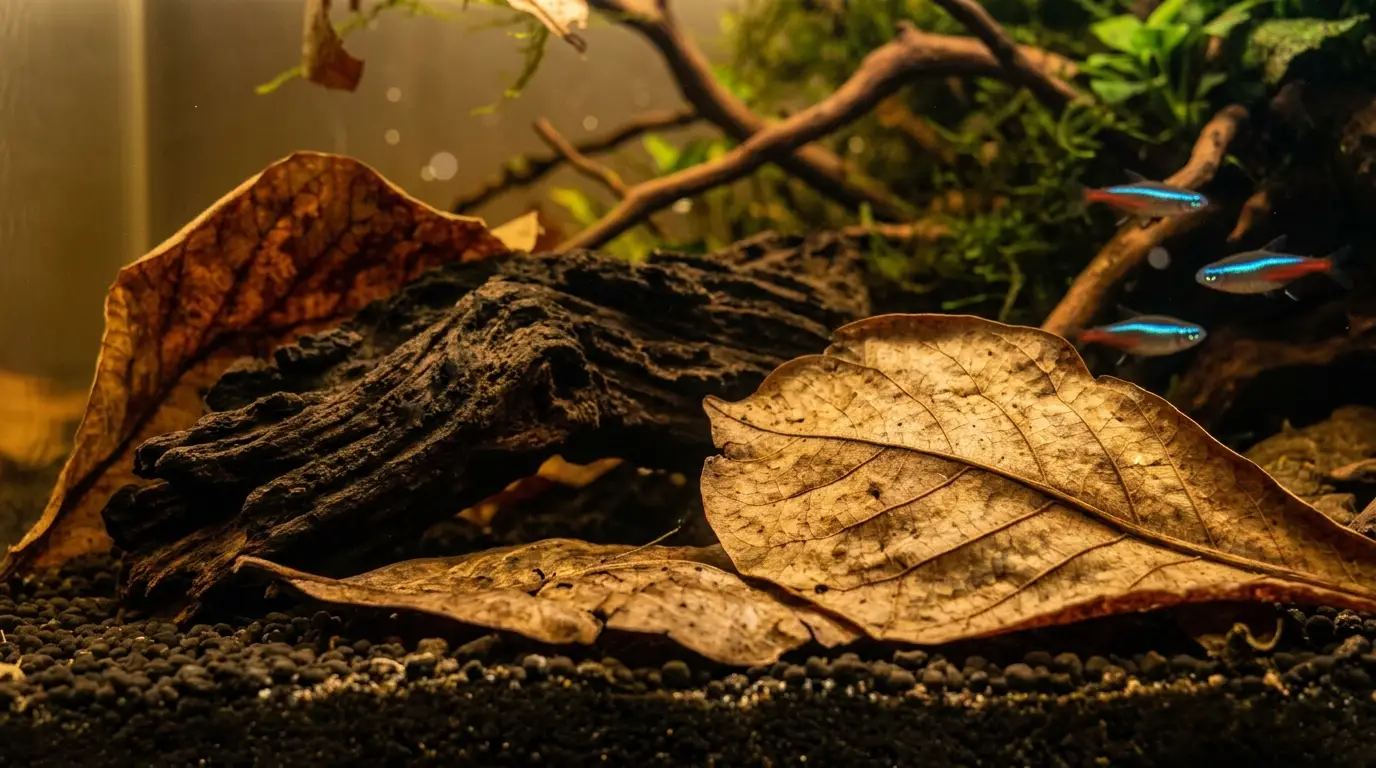
Use driftwood.
- Mopani and spider wood release mild acids.
- Boil or soak first to remove excess tannins.
- Expect amber water. Fish love it.
Peat in the filter.
- Use aquarium-safe peat in a fine bag.
- Start with a small amount in the filter basket.
- Peat softens water and binds minerals. It can drop pH.
- Test often. Adjust dose as needed.
CO2 injection in planted tanks.
- CO2 lowers pH in a steady way.
- Keep CO2 safe for fish. Watch drop checker color.
- CO2 also boosts plant growth and reduces algae.
Real-world tip from my fish room. I held a 40-gallon blackwater tank at pH 6.6. I mixed 60 percent RO water, ran a small peat pouch, and used two catappa leaves. pH fell from 7.6 to 6.8 in 10 days. Fish colored up. Spawning followed.
If you still wonder how to lower ph in aquarium water without chemicals, this is it. Use RO water, botanicals, and time.
Using Chemical Methods (With Care)
Chemical methods work. But they can swing pH fast. Use them with skill.
Acid buffers and “pH down” products.
- Common options are phosphoric or sulfuric acid blends.
- They consume KH and can cause bounce if you do not fix KH.
How to dose with care.
- Treat water in a bucket, not in the tank.
- Add a tiny amount, mix for 10 minutes, then test pH and KH.
- Repeat until you hit your target pH. Then add to the tank slowly.
- Aerate the bucket so CO2 off-gasses. This gives a stable reading.
What to watch.
- If KH is high, acids may not budge pH. Lower KH first.
- Large, fast drops can stress fish and the biofilter.
- Never pour acids into a stocked tank in one shot.
I only use acids for small, precise tweaks. They help when I must match breeder water. Most of the time, I lean on RO water and botanicals instead.
If your goal is how to lower ph in aquarium setups fast, pause. Fast is often risky. Stable and slow wins.
Control Alkalinity (KH) to Keep pH Down
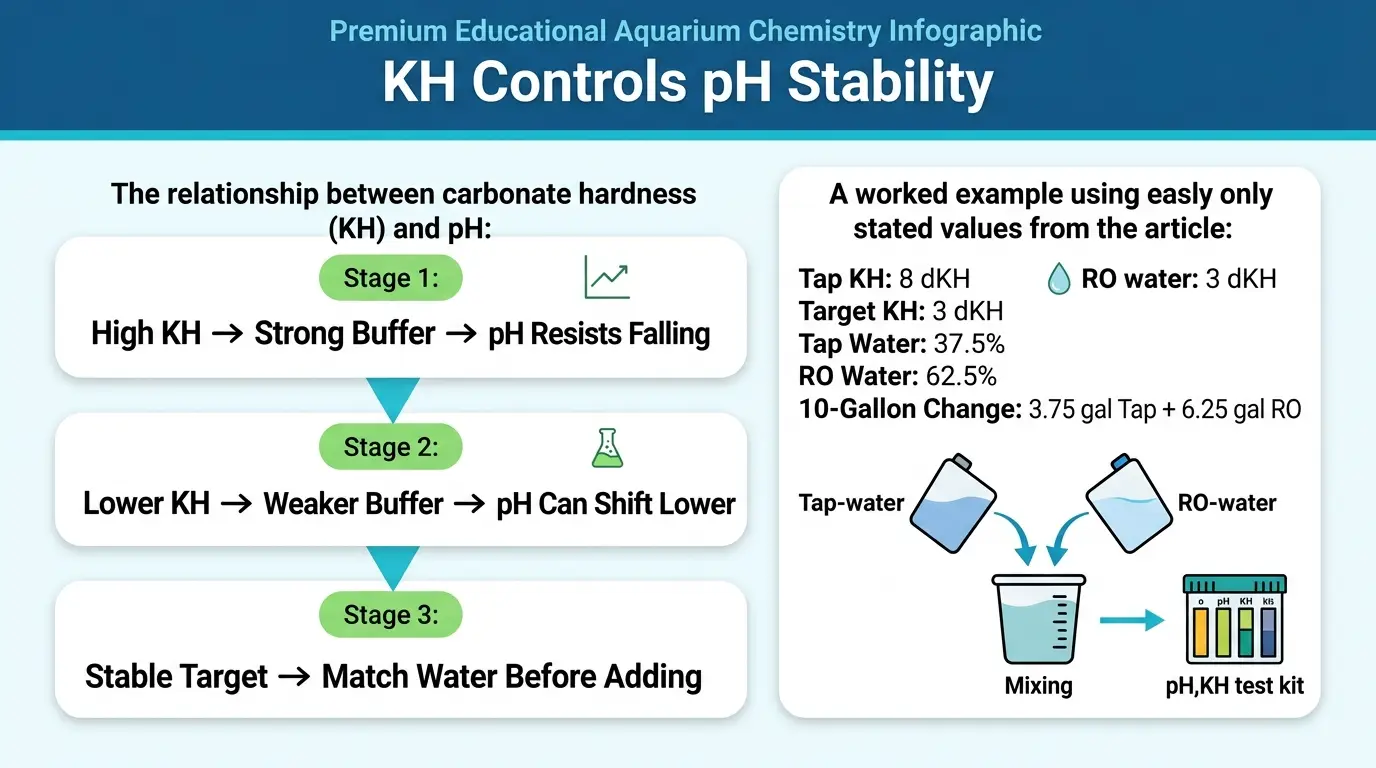
KH is the key to stable pH. If KH is high, pH will rise back up. Fix KH first, then pH holds.
Reduce KH by blending RO water.
- Test your tap water KH.
- Pick a target KH. Many soft-water tanks run 1 to 3 dKH.
Use this simple blend math.
- Fraction of tap water needed equals target KH divided by tap KH.
- Example: Tap KH is 8 dKH. Target KH is 3 dKH.
- 3 divided by 8 equals 0.375. So use 37.5 percent tap water and 62.5 percent RO.
- For a 10-gallon change, that is 3.75 gallons tap and 6.25 gallons RO.
Remineralize if needed.
- Use GH-only salts for shrimp and soft-water fish.
- Add minerals back so osmoregulation stays safe.
Avoid hidden KH sources.
- Skip crushed coral and aragonite substrates.
- Be careful with limestone and shells in decor.
This is the backbone of how to lower ph in aquarium water the right way. Control KH, then pH falls and stays low.
Long-Term Stability: Maintenance, Filtration, and Substrate Choices
Good habits lock in gains.
- Keep water changes small and regular. Think 10 to 20 percent weekly.
- Pre-treat new water to match tank pH, KH, GH, and temperature.
- Rinse or replace peat and leaves on a schedule. Test after swaps.
- Increase surface ripple at night. This helps oxygen when pH is low.
- Feed light. Extra waste raises alkalinity over time.
Substrate and rock choices matter.
- Use inert sand or plant soils that buffer down.
- Many active soils hold pH near 6 to 6.8 for months.
- Avoid calcareous rocks unless you want higher pH.
Plants help, but timing counts.
- CO2 lowers pH by day. At night, pH may climb a bit.
- Log morning and evening pH. You will see the daily swing.
If you are learning how to lower ph in aquarium water for the first time, keep a journal. It helps find patterns fast.
Common Mistakes to Avoid When Lowering pH
- Chasing numbers every day. Stability matters more than a perfect number.
- Dropping pH too fast. Fish hate shocks.
- Trying to lower pH while KH is high. Lower KH first.
- Using vinegar or lemon juice. Results are short and messy.
- Dosing acid straight into the tank. Always pre-mix and test.
- Ignoring oxygen. Low pH and low oxygen is a bad mix.
- Forgetting that low pH slows nitrifiers. Watch ammonia and nitrite.
- Letting rocks or substrates raise KH again. Check your decor.
These traps can undo all your work on how to lower ph in aquarium systems. Slow down. Test more. Win.
Step-by-Step Plan: How to lower ph in aquarium safely
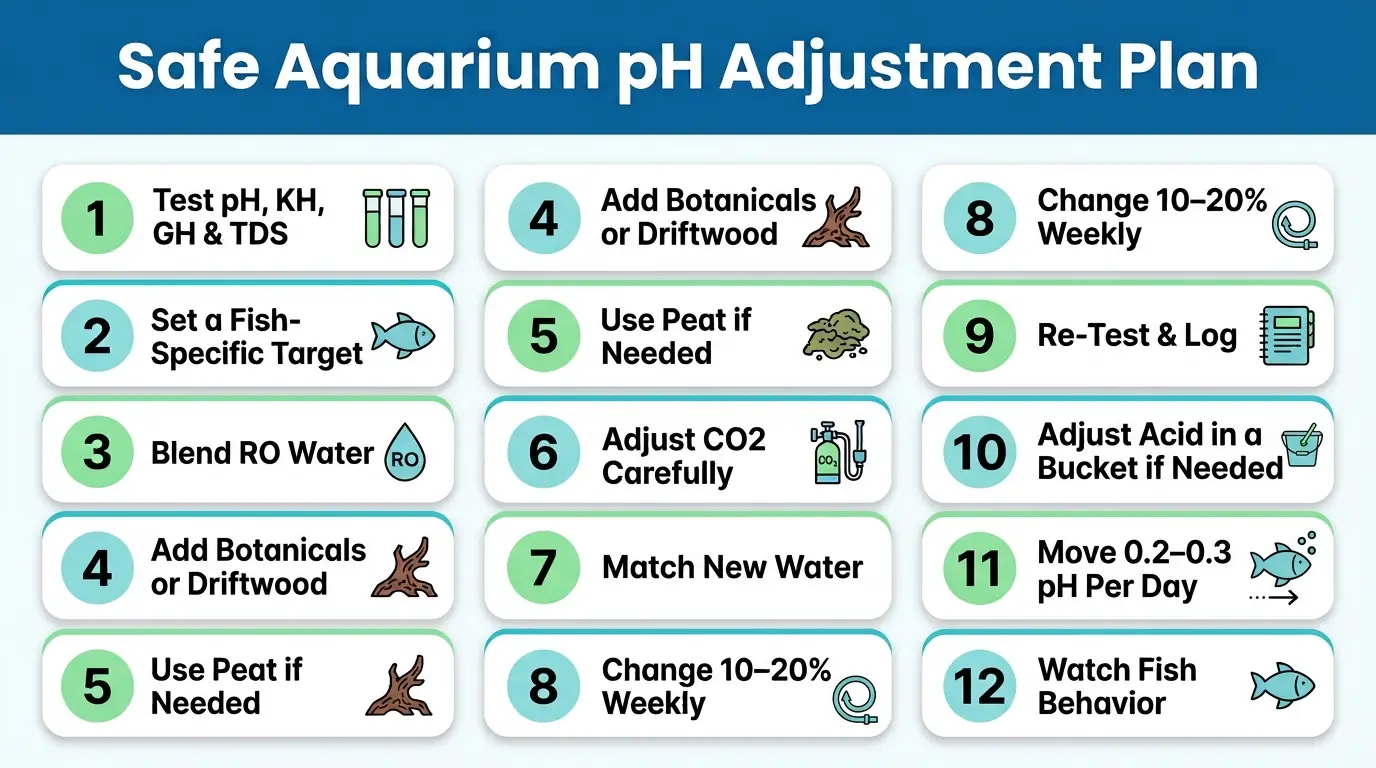
- Test pH, KH, GH, and TDS for one week.
- Pick a target pH and KH based on your fish.
- Blend RO water to reach your target KH.
- Add botanicals like leaves and driftwood.
- Use peat in the filter if you need more help.
- For planted tanks, dial in CO2 with care.
- Treat new water in a bucket to match the tank.
- Change 10 to 20 percent of water per week.
- Re-test pH and KH after each change. Log results.
- If needed, use a small acid dose in the bucket.
- Hold changes to 0.2 to 0.3 pH per day.
- Watch fish behavior. They tell you when it is right.
Follow this plan if you are serious about how to lower ph in aquarium water with confidence.
Frequently Asked Questions of how to lower ph in aquarium
How fast can I lower pH without harming fish?
Aim for a change of 0.2 to 0.3 pH per day. Slow, steady moves keep stress low and biofilters happy.
Why does my pH keep bouncing back up?
Your KH is likely too high. Lower KH with RO water blends, then adjust pH again.
Can I use vinegar or lemon juice to lower pH?
Do not. The effect is short and unstable, and it can shock fish. Use RO water, peat, or proper buffers.
Will low pH hurt my nitrogen cycle?
Below about pH 6.0, nitrifiers slow down. Keep oxygen high and test ammonia and nitrite more often.
Do Indian almond leaves and driftwood really work?
Yes. They release tannins and mild acids that lower pH gently. The effect depends on your KH and the amount used.
Do water changes raise pH?
If your source water has higher pH or KH, then yes. Pre-treat new water to match your tank.
Why is pH lower in the morning and higher at night?
CO2 builds up overnight and drops during the day as plants use it. This daily cycle shifts pH.
Conclusion
Lowering pH is not magic. It is a clear process. Test your water, lower KH with RO, add safe natural acids, and move at a calm pace. That is the heart of how to lower ph in aquarium water that stays stable and safe.
Pick one method today and log your results this week. Your fish will thank you with color, calm, and maybe even a surprise spawn. Want more guides like this? Subscribe, share your tank details, or drop a question in the comments.