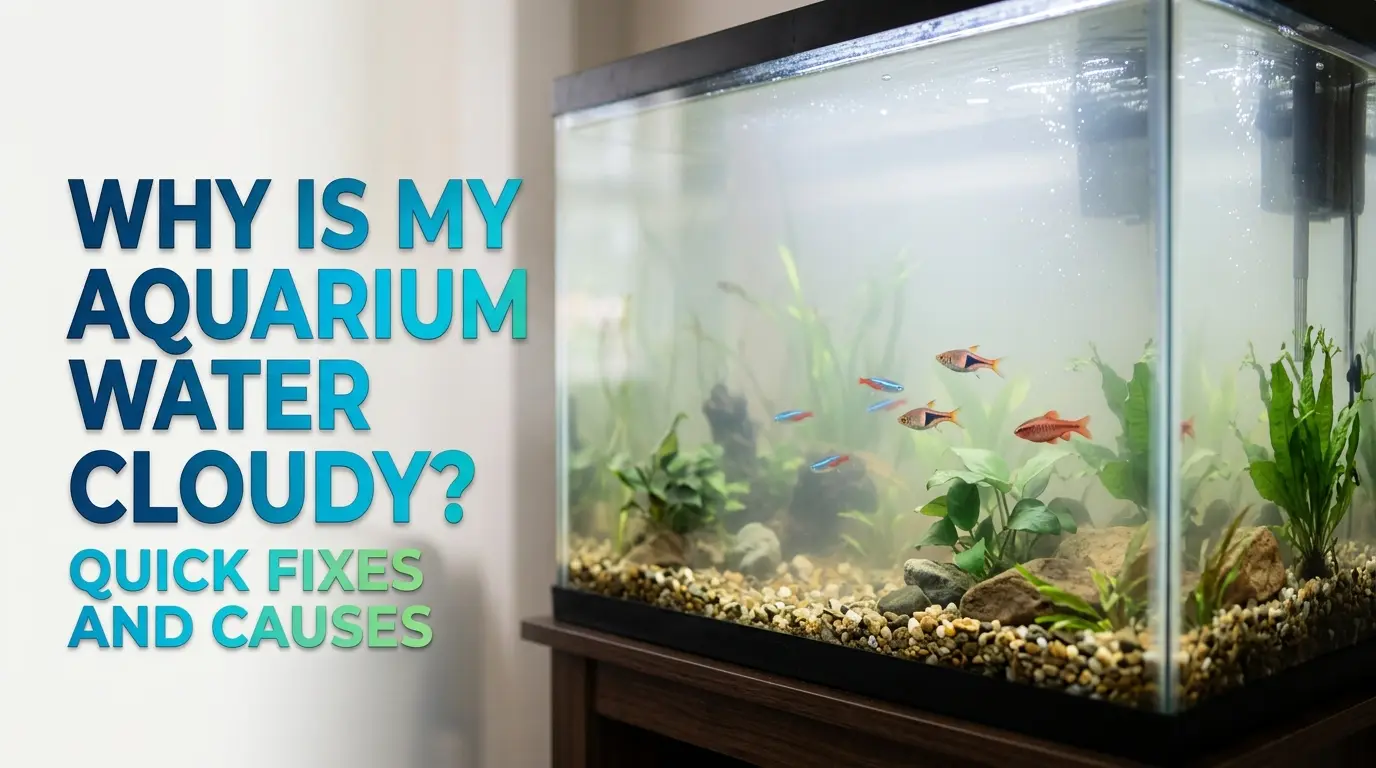
Cloudy aquarium water usually comes from bacterial blooms, algae, debris, or dissolved minerals.
If you have asked yourself why is my aquarium water cloudy, you are in the right place. I have set up, crashed, and rescued more tanks than I can count. This guide explains why is my aquarium water cloudy in plain English and shows you how to fix it fast and for good. You will learn causes, simple tests, and safe steps that work in real life.
Understanding cloudy aquarium water
Clear water is not always clean. Cloudy water is not always dirty. The look, timing, and smell tell you a lot. Why is my aquarium water cloudy? It depends on the color, the age of the tank, and what you did last.
Types you will see:
- Milky white haze. This is often a bacterial bloom or a mineral snow.
- Green water. This is free algae floating in the water.
- Yellow or tea tint. These are tannins from wood or leaves.
- Gray-brown fog. This is dust or silt from disturbed substrate.
When is it normal? New tanks often get cloudy. This is the nitrogen cycle waking up. It can last a few days to two weeks. If fish gasp or you smell rot, act fast.
I will show you how to tell each type apart. You will know why is my aquarium water cloudy and what to do next.
Top reasons your aquarium water is cloudy

Bacterial bloom after a change
A white, milky haze is classic. It shows up after you add fish, clean the filter too hard, or do a big water change. The cause is a spike in food for bacteria. They multiply in the water column. This is part of the cycle. It looks bad, but it often passes.
What to watch:
- Ammonia and nitrite may rise.
- Fish may breathe fast if levels spike.
Free-floating algae
Green water looks like pea soup. It means too much light and nutrients. A sunny window or long light hours feed it. Nitrates and phosphates give it fuel.
What to watch:
- Glass gets green fast.
- Tests show nitrate or phosphate is high.
Disturbed substrate and debris
If the tank turns gray after you move rocks or add sand, it is dust. New gravel sheds fine silt. Fish that dig can kick it up.
What to watch:
- It clears in hours if the filter is strong.
- A fine polishing pad helps a lot.
Dissolved organics and tannins
Brown or yellow tint is common with driftwood. Leaves also add tannins. This is not bad for many fish. It can lower pH a bit.
What to watch:
- Water is clear but tinted, not murky.
- Activated carbon or a special resin can clear color.
Overfeeding and decay
Extra food rots. A dead snail or fish can do it too. The water gets cloudy and may smell bad.
What to watch:
- Uneaten food on the substrate.
- Ammonia rises. Snails race to the mess.
New tank syndrome and cycling
A brand new tank often clouds. The biofilter is not ready yet. This is why is my aquarium water cloudy in many first setups.
What to watch:
- Ammonia or nitrite above zero.
- Haze appears 1 to 7 days after setup.
Hard water and precipitation
a sudden white cloud can be mineral snow. It happens after adding buffers or mixing salts wrong. A pH and KH jump can make calcium fall out.
What to watch:
- GH, KH, or pH changed fast.
- Glass and heater get white dust.
Filter issues
Low flow, clogged pads, or wrong media order keep fines in the water. The tank looks dull.
What to watch:
- Weak filter output.
- Gunk bypassing the pads.
These are the main roots of why is my aquarium water cloudy. The fix flows from the cause.
How to diagnose the cause step by step
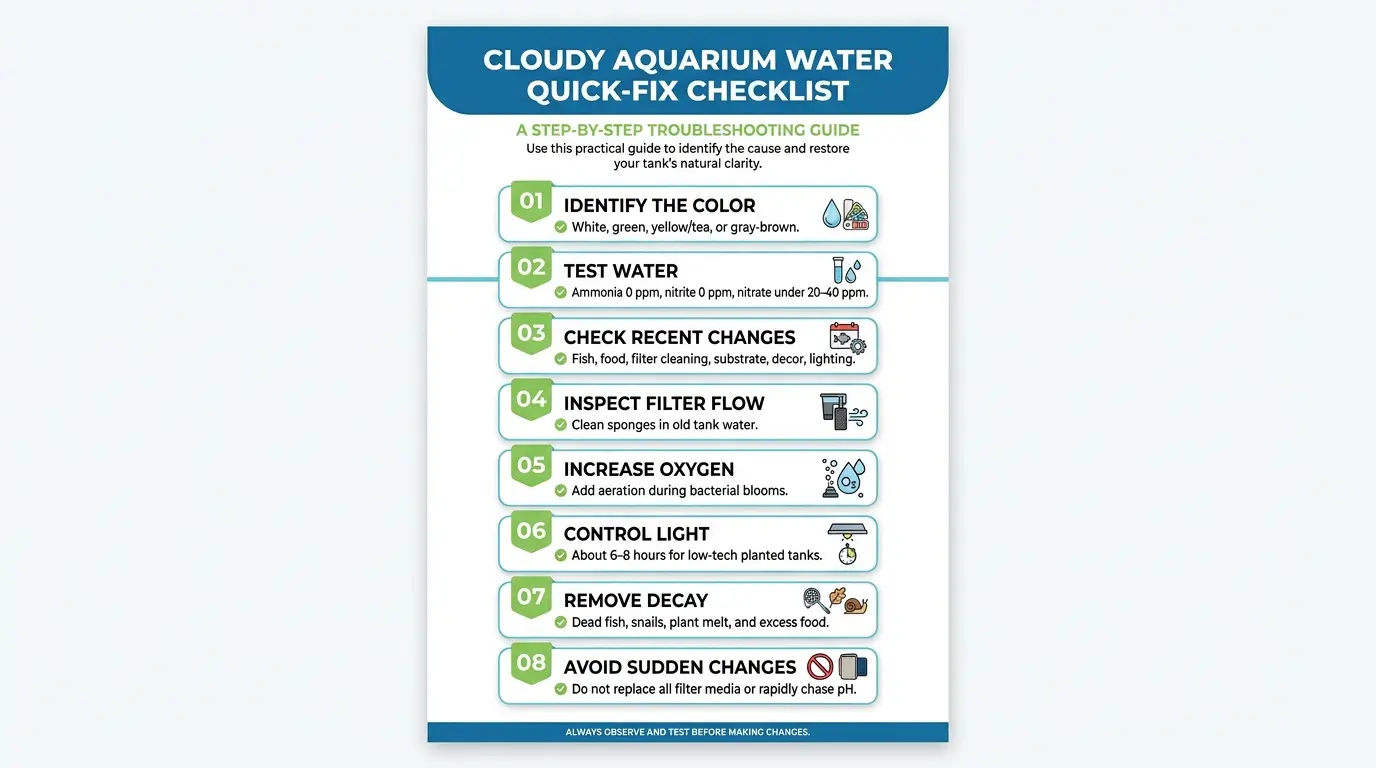
Use this simple plan. It takes 10 minutes.
- Look at the color in daylight.
- White haze suggests bacteria or minerals.
- Green means algae.
- Yellow tea means tannins.
- Gray dust means silt.
- Do the paper test.
- Scoop water in a white cup over white paper.
- If the water looks clear in the cup but tank looks tinted, it is tannins.
- If the cup looks hazy, it is particles or bloom.
- Smell the cup.
- Clean or earthy is fine.
- Sour or rotten egg smell is trouble. Check for decay.
- Test water.
- Ammonia should be 0 ppm.
- Nitrite should be 0 ppm.
- Nitrate should be under 20 to 40 ppm for most tanks.
- Check pH, KH, and GH if you changed buffers or salts.
- Review the last 72 hours.
- Did you add fish or food?
- Did you deep clean the filter?
- Did you change substrate or decor?
- Did you change light hours?
- Check filter flow.
- You want 5 to 10 times tank volume per hour for most community tanks.
- Clean sponges in tank water, not tap.
- Check light.
- Keep 6 to 8 hours for low tech plants.
- Avoid sun rays on the glass.
This fast path helps you answer why is my aquarium water cloudy without guessing.
How to fix cloudy water fast and safely

Start with the least risky steps first.
For bacterial bloom:
- Do small water changes. Twenty percent daily for a few days helps.
- Do not deep clean bio media. Rinse sponges in old tank water.
- Add more air. Use an airstone to boost oxygen while bacteria bloom.
- Feed less for a week.
- Seed with mature media if you have it.
For green water algae:
- Shorten light to 6 hours for now.
- Do a three day blackout. Cover the tank. Keep the filter and air on.
- Do a big water change after the blackout.
- Use a UV sterilizer if you have one. It clears green water fast.
- Balance nutrients for plants if you grow them.
For substrate dust:
- Run fine floss or a polishing pad for 24 to 48 hours.
- Gently gravel vac the top layer.
- Rinse new substrate well before use next time.
For tannins:
- Add fresh activated carbon or a special resin.
- Do weekly water changes until tint is where you like it.
- Or enjoy the tea look if your fish prefer it.
For decay and overfeeding:
- Remove dead fish, snails, or plant melt.
- Gravel vac the waste.
- Feed less. Offer only what fish eat in 30 seconds.
For mineral precipitation:
- Stop adding buffers for now.
- Match your GH, KH, and pH to your tap slowly.
- Mix salts in a bucket before adding to the tank.
Useful tools:
- Fine filter floss.
- UV sterilizer for algae blooms.
- Water test kit for ammonia, nitrite, nitrate, pH, KH, GH.
- Bacterial starter from a known, healthy tank.
What to avoid:
- Do not replace all filter media at once.
- Do not chase pH fast.
- Do not add flocculants with sensitive fish or shrimp without a test. They can bind gills.
These steps fix the common roots of why is my aquarium water cloudy. Go slow. Watch your fish. Keep oxygen high.
Prevent cloudy water long term
Good habits beat quick fixes.
Set a simple routine:
- Test weekly for ammonia, nitrite, nitrate, pH.
- Change 25 to 40 percent of water every week for most tanks.
- Gravel vac a section each week. Rotate spots.
- Rinse filter sponges in old tank water every 2 to 4 weeks.
Feed and stock with care:
- Feed small amounts once or twice a day. Skip a day each week.
- Aim for a light bioload. The one inch per gallon rule is rough. Think in terms of waste load, not length.
- Add new fish slowly. Let the biofilter adjust.
Tune your filter:
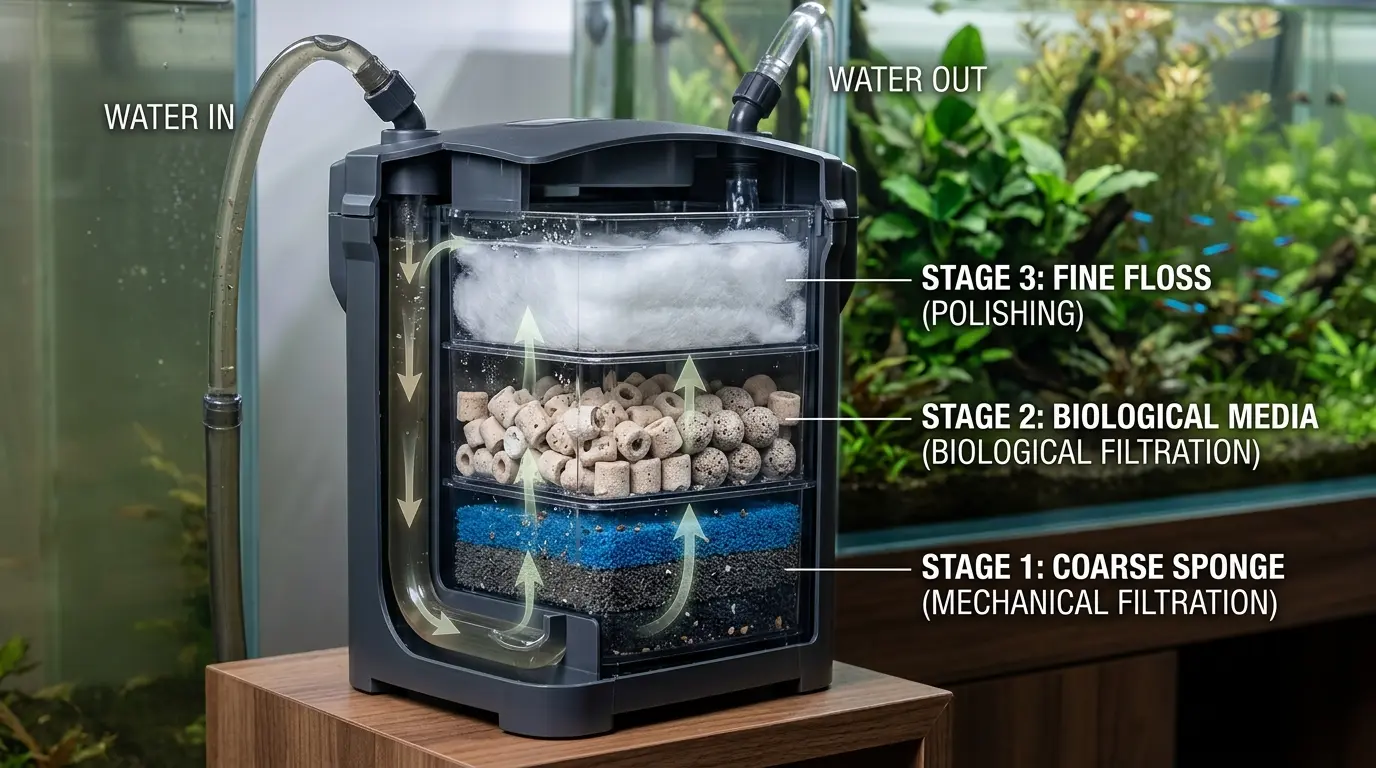
- Use a flow of 5 to 10 times tank size per hour for most community fish.
- Stack media from coarse to fine. Coarse sponge, then bio, then fine floss.
- Do not overpack. You want water to flow, not bypass.
Manage light and nutrients:
- Keep lights on a timer. Six to eight hours is enough for low tech.
- Block sun on the glass.
- If you grow plants, balance light, CO2, and nutrients. Healthy plants beat algae.
Treat your water right:
- Dechlorinate every change.
- Match temperature.
- In hard water, avoid big KH or GH jumps.
Quarantine new fish and plants:
- Stop pests and disease from entering.
- Dip plants to avoid algae spores.
Do these and you will stop asking why is my aquarium water cloudy. Your water will stay clear and your fish will thrive.
Real-world examples and lessons learned
My first 20 gallon tank turned milky white a week after setup. I had asked myself why is my aquarium water cloudy many times in those days. I had cleaned the new filter too well and fed heavy. Ammonia rose. I did 25 percent water changes, added an airstone, and stopped feeding for two days. It cleared in four days. Lesson learned: never wash bio media under the tap.
A client’s tank went green after they moved it by a bright window. They also left the light on 12 hours. We did a three day blackout, then a 60 percent water change. We set the light to 7 hours and added floating plants. It never came back. Lesson: light control wins.
Another time, a sudden white cloud hit after a large buffer dose. Tests showed KH had jumped. We stopped the buffer and did small, daily water changes. The haze settled on the glass and we wiped it off. Lesson: mix buffers in a bucket and change slow.
These cases shaped how I answer why is my aquarium water cloudy. The fix is simple once you see the cause.
Frequently Asked Questions of why is my aquarium water cloudy
Why is my aquarium water cloudy in a new tank?
This is often a bacterial bloom during the nitrogen cycle. It can last a few days to two weeks and clears as the filter matures.
Why is my aquarium water cloudy after a water change?
You may have stirred the substrate or shocked the biofilter. Fine dust or a small bloom can follow a big change or a deep clean of media.
Why is my aquarium water cloudy but tests are fine?
If ammonia and nitrite are zero, it may be dust, tannins, or a mild bloom. Check color and recent changes to pinpoint the cause.
Why is my aquarium water cloudy and smells bad?
That points to decay or a serious ammonia issue. Remove waste, increase aeration, and do water changes while you test and stabilize.
Why is my aquarium water cloudy green?
That is free-floating algae from too much light and nutrients. Shorten light hours, reduce nutrients, and consider a UV sterilizer.
Why does my aquarium water stay cloudy even with a filter?
The filter may be clogged or set up wrong. Add fine floss, boost flow, and clean media in tank water so bacteria survive.
Will activated carbon clear cloudy aquarium water?
It helps with color like tannins and some organics. It does not fix dust or bacteria blooms but can be part of the plan.
Is cloudy water dangerous for fish?
Mild blooms are often safe, but ammonia or low oxygen is not. Always test, add air, and act if fish show stress.
Conclusion
Cloudy water is a clue, not a mystery. Color, timing, and tests reveal the cause. Fix the root and the haze goes away. Now you can answer why is my aquarium water cloudy in minutes and act with confidence.
Start today. Test, tune your filter, feed less, and set a steady routine. Your fish will thank you with bright colors and clear glass. Want more tips like this? Subscribe, share your tank story, or drop a question in the comments.