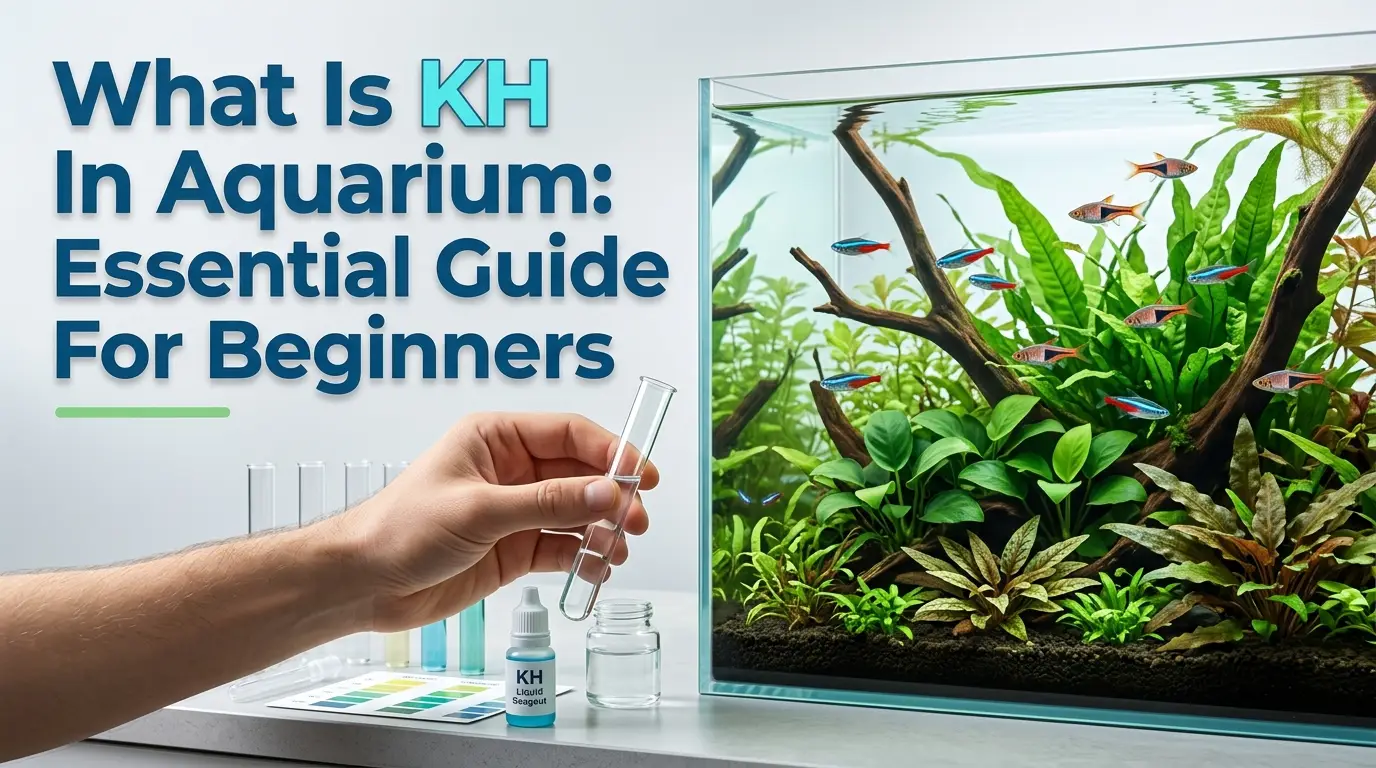
KH in aquariums is carbonate hardness, the pH buffer that prevents swings.
If you have ever wondered what is kh in aquarium and why it matters, you’re in the right place. I’ve balanced tanks from nano shrimp jars to reef systems, and KH has always been the quiet hero. In this guide, I’ll explain what is kh in aquarium water, how it affects fish and plants, and how to manage it with calm, simple steps that work.
What is KH in an aquarium?
KH, short for carbonate hardness, measures how much bicarbonate and carbonate is in your water. These minerals act like a cushion against sudden pH changes. That cushion is called buffering capacity. Without it, pH can crash or spike, and fish can suffer fast.
When people search what is kh in aquarium, they often confuse KH with GH. They are not the same. KH is about pH stability. GH is about calcium and magnesium for bones and shells. KH is measured in dKH or ppm. One dKH equals about 17.9 ppm as CaCO3.
In simple terms, if pH is the mood of your tank, KH is the mood stabilizer. Stable KH keeps pH steady and your livestock relaxed. If you are still asking what is kh in aquarium health, think of KH as your tank’s shock absorber.
Why KH matters for fish and plants
A steady KH means a steady pH. Fish breathe easier. Plants grow without stress. Good KH also helps with CO2 use in planted tanks. If KH is near zero, pH can drop fast when CO2 is on.
Here is what happens when KH is off:
- Low KH can lead to pH crashes. Fish may gasp, clamp fins, or hide.
- High KH can lock pH high. Soft-water fish may fail to breed or may look dull.
- Swinging KH leads to stress, poor growth, and disease risk.
From years of keeping community tanks, I learned that the answer to what is kh in aquarium care is simple: it is your main tool for pH control. Keep it steady, and your tank stays calm.
KH vs GH vs pH: clear differences

It helps to sort the big three:
- KH or carbonate hardness: Buffers against pH swings. Main ions are bicarbonate and carbonate.
- GH or general hardness: Calcium and magnesium. Affects osmoregulation, shells, and molts.
- pH: How acidic or basic the water is.
When people ask what is kh in aquarium chemistry, the key is this: KH prevents pH from moving too fast. GH supports biology. pH reflects the current state. They work together, but each is unique.
How to test KH accurately
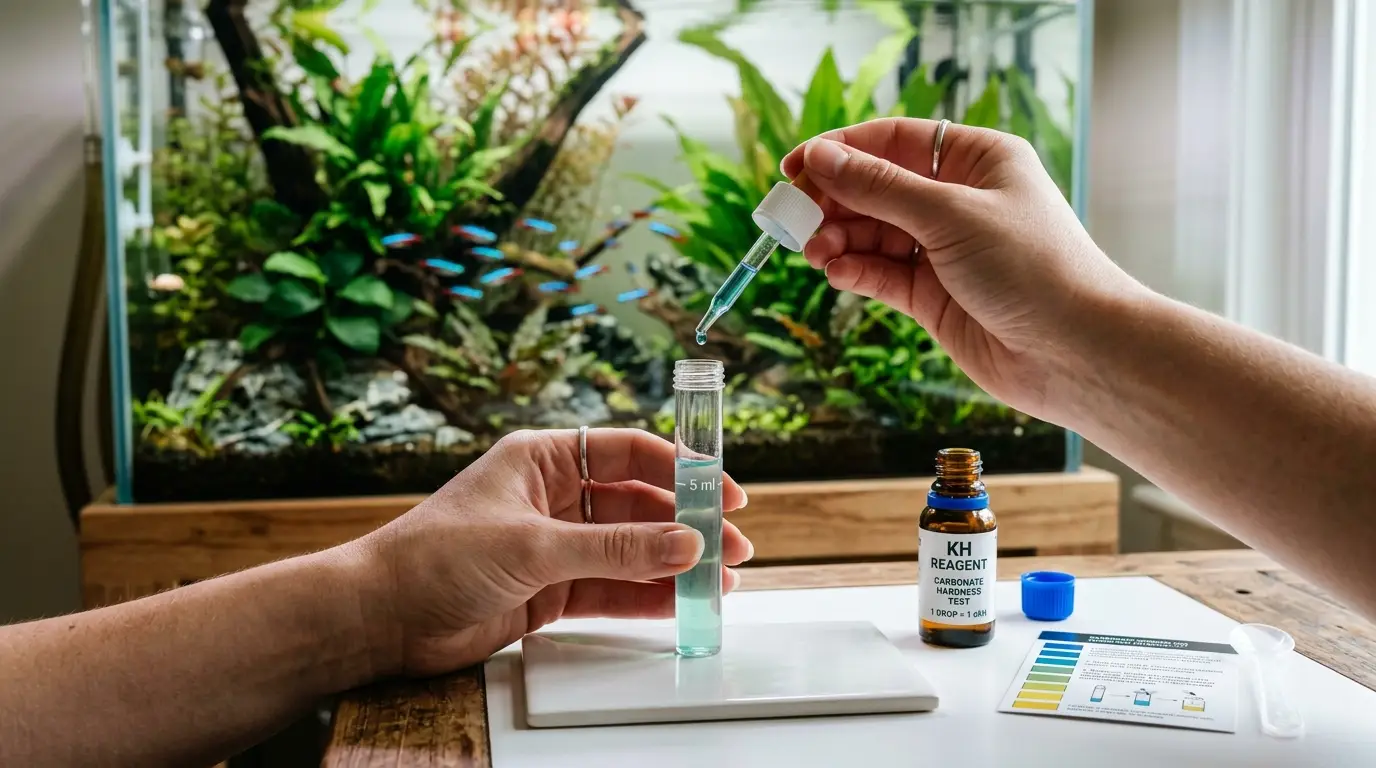
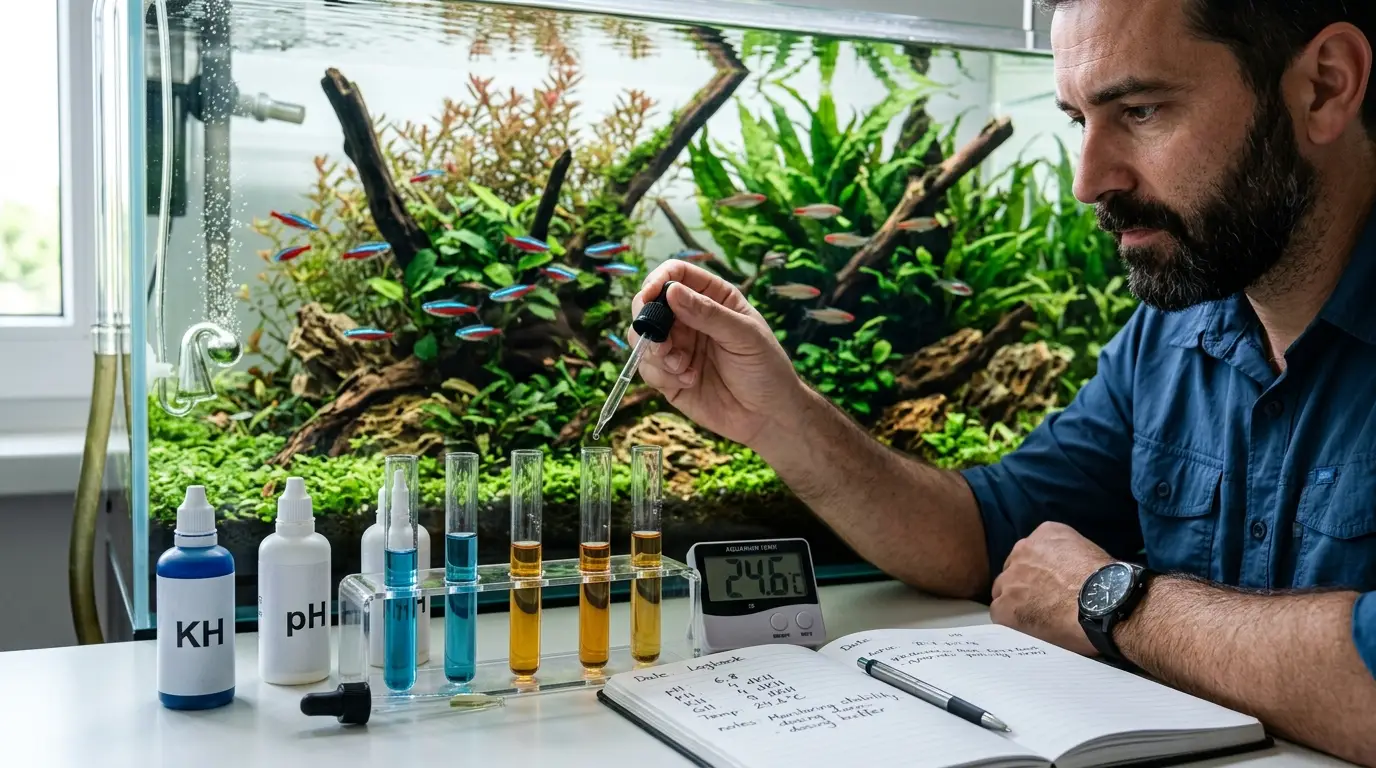
Testing KH is easy and low cost. I recommend drop-count titration kits. They are more precise than paper strips.
Steps I follow:
- Take a clean water sample from mid-tank, not the surface.
- Add drops and swirl until the color changes. Count the drops.
- Each drop often equals 1 dKH. Check your kit’s guide.
- Test weekly at first, then monthly once stable.
- Log results so you see trends.
If you wonder what is kh in aquarium testing terms, it is a quick, five-minute task that can save your tank from a bad day.
Ideal KH ranges by aquarium type
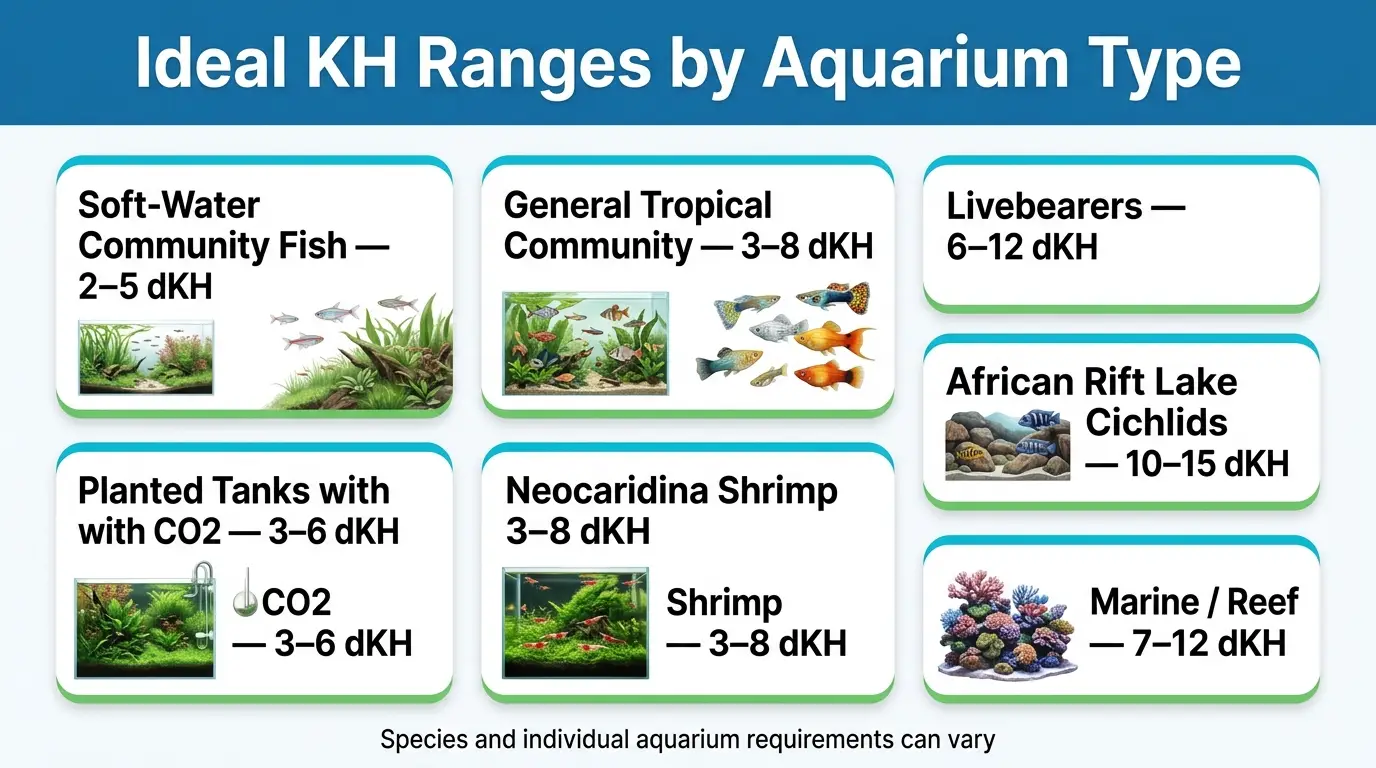
Target ranges can vary by species and setup. Use this as a simple guide:
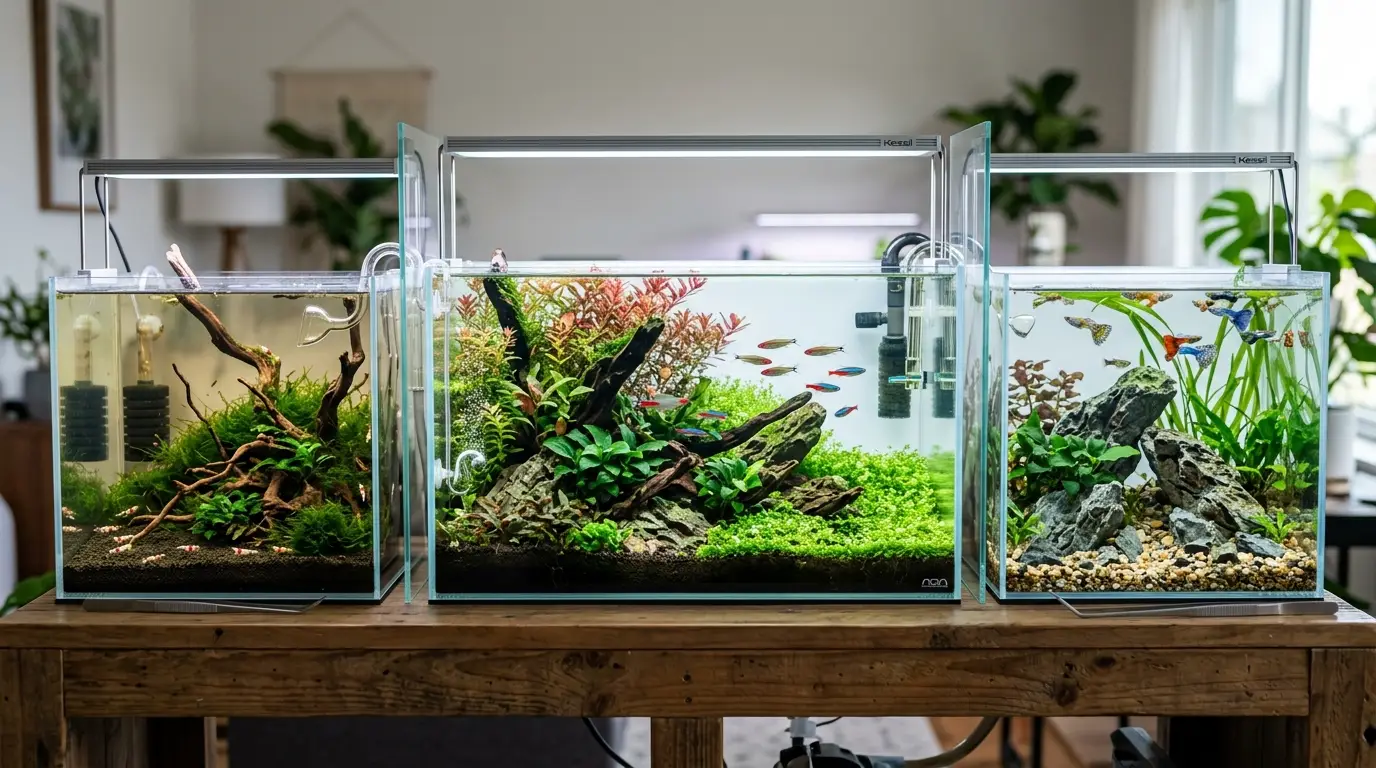
- Soft-water community fish like tetras, rasboras, and bettas: 2–5 dKH
- General tropical community: 3–8 dKH
- Livebearers like guppies and mollies: 6–12 dKH
- African rift lake cichlids: 10–15 dKH (often higher with matching GH)
- Planted tanks with CO2: 3–6 dKH for stable pH control
- Shrimp (Neocaridina): 3–8 dKH; Caridina often prefer low KH with careful pH control
- Marine/reef: 7–12 dKH, stable is key
When asking what is kh in aquarium targets, aim for the needs of your fish first. Then match plants and decor.
How to raise KH safely
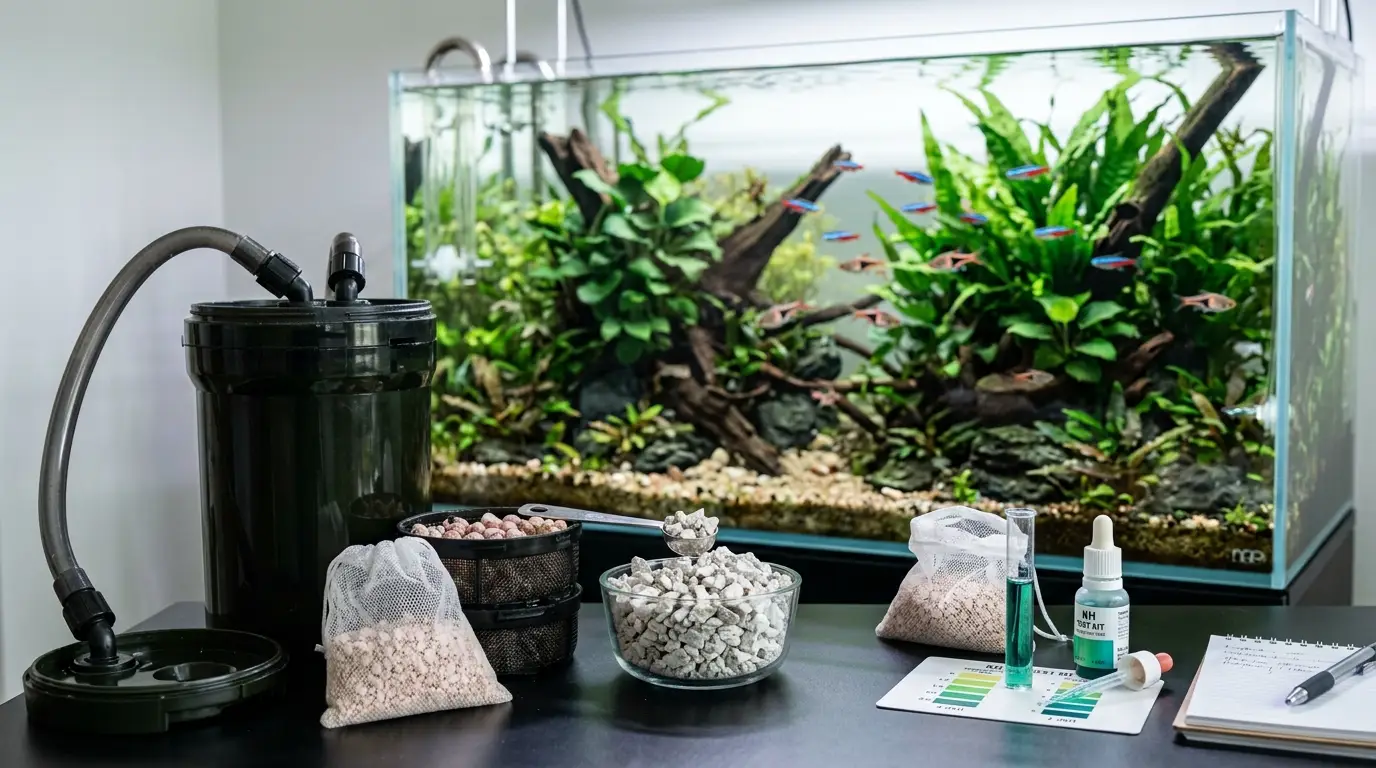
If KH is low, raise it in small steps. Large jumps can shock fish. Always test between doses.
Safe ways:
- Crushed coral or aragonite media. Place in a filter bag. Start small and test weekly.
- Limestone, Texas holey rock, or similar decor. These dissolve slowly and lift KH and pH.
- Commercial alkaline buffers. Follow the label. Dose over several days.
- Baking soda (sodium bicarbonate). Use with care. Add small amounts, wait an hour, and test.
My rule from practice: never raise more than 1–2 dKH per day. If you still wonder what is kh in aquarium buffer use, it means slow, steady changes, not big swings.
How to lower KH safely

Lowering KH needs patience. Quick drops can crash pH and stress fish.
Safe ways:
- Mix reverse osmosis or distilled water with tap water. This is the most stable method.
- Use peat in a filter bag. It can soften water and add tannins. Test often.
- Add driftwood or Indian almond leaves. Mild effect, gentle over time.
- Use a commercial acid or KH-lowering buffer. Dose slowly and test between steps.
If you ask what is kh in aquarium reduction strategy, it is about blending softer water in and letting the tank settle.
Troubleshooting KH problems
Common issues I see:
- KH keeps dropping: Heavy bio-load, lots of nitrification, and acidic substrate can eat buffer. Add small amounts of coral or buffer, increase water changes, and review feeding.
- KH very high and pH stuck: Hard tap water or calcareous rocks. Switch to RO mix. Replace or reduce rock and coral.
- pH swings morning to night: Normal day-night cycle, worse with low KH. Raise KH to 3–6 dKH in planted tanks.
Signs of trouble include gasping, flashing, pale color, and slow growth. If you still ask what is kh in aquarium stability terms, it means “how well your tank resists chaos.”
Real-world examples and lessons learned
From my early days, I lost a few shrimp after a weekend pH drop. KH was near zero. I learned to keep KH at 3 dKH for that tank and to test before trips. It never happened again.
In a planted 40-gallon with CO2, I kept KH at 4 dKH. pH stayed steady all week. Algae fell back, and growth looked lush. That taught me that what is kh in aquarium success comes down to a calm buffer.
For a hard-water guppy tank, tap KH was 10 dKH. Fish thrived. I used decor that did not raise KH further. What is kh in aquarium practice? Match the source water to the fish you choose.
Frequently Asked Questions of what is kh in aquarium
What is KH in aquarium water?
KH is carbonate hardness. It measures how much bicarbonate and carbonate buffer your water has.
How often should I test KH?
Test weekly when setting up or fixing issues. Once stable, test monthly or before big changes.
Can I keep fish with zero KH?
It is risky. With near-zero KH, pH can crash fast and harm fish or shrimp.
Does KH affect plants?
Yes. Plants like stable pH. With CO2, a moderate KH helps keep pH steady through the day.
How fast can I change KH?
No more than 1–2 dKH per day. Slow changes protect fish from stress.
Is KH the same as alkalinity?
In aquariums, KH is a practical way to measure alkalinity from carbonates and bicarbonates. They are closely related.
Will crushed coral raise both KH and GH?
Often yes. It can lift KH and add calcium, which raises GH. Test both.
Conclusion
KH is the backbone of pH stability. When you understand what is kh in aquarium systems, you gain control over stress, growth, and health. Keep changes small, test often, and match KH to your fish and plants.
Your next step is simple: test your KH this week, set a target range, and make one small change. If you found this helpful, subscribe for more practical tank tips or share your own KH wins in the comments.