
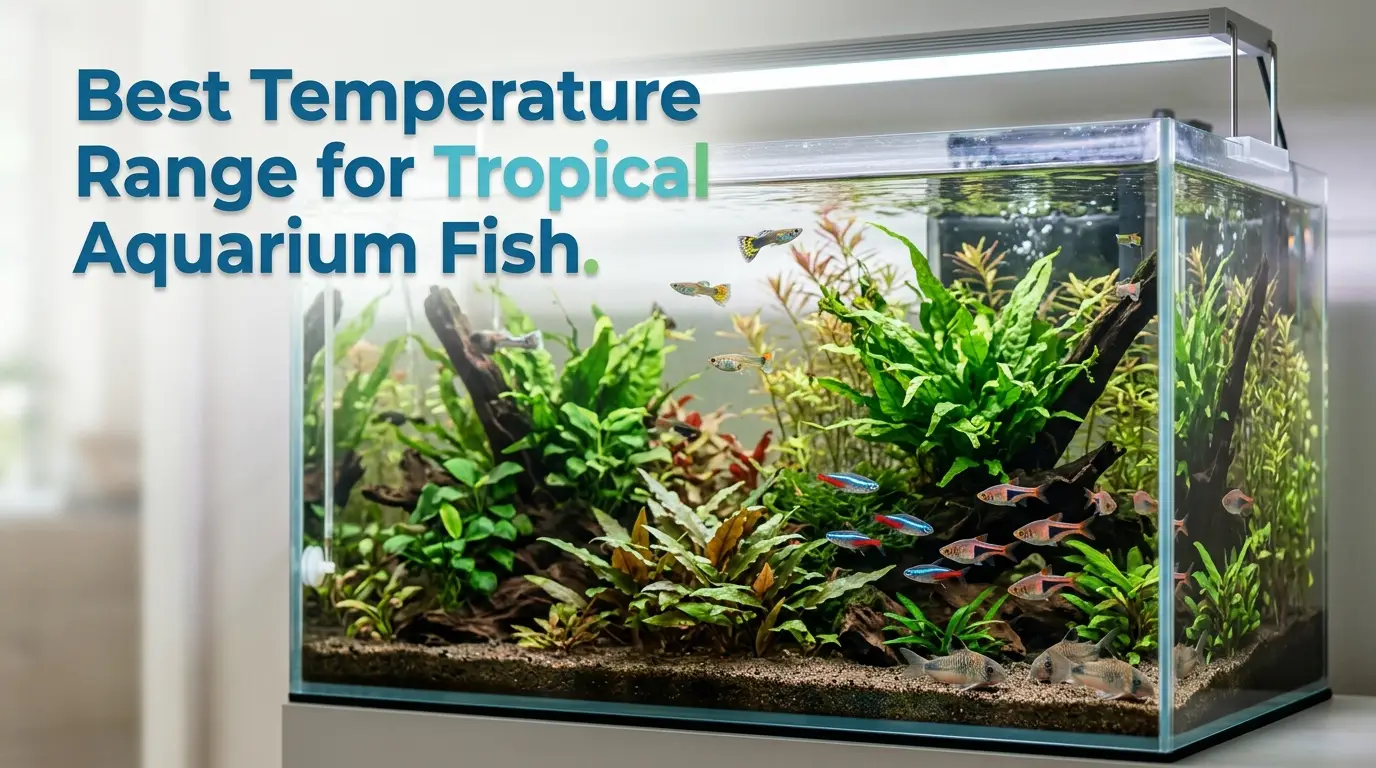
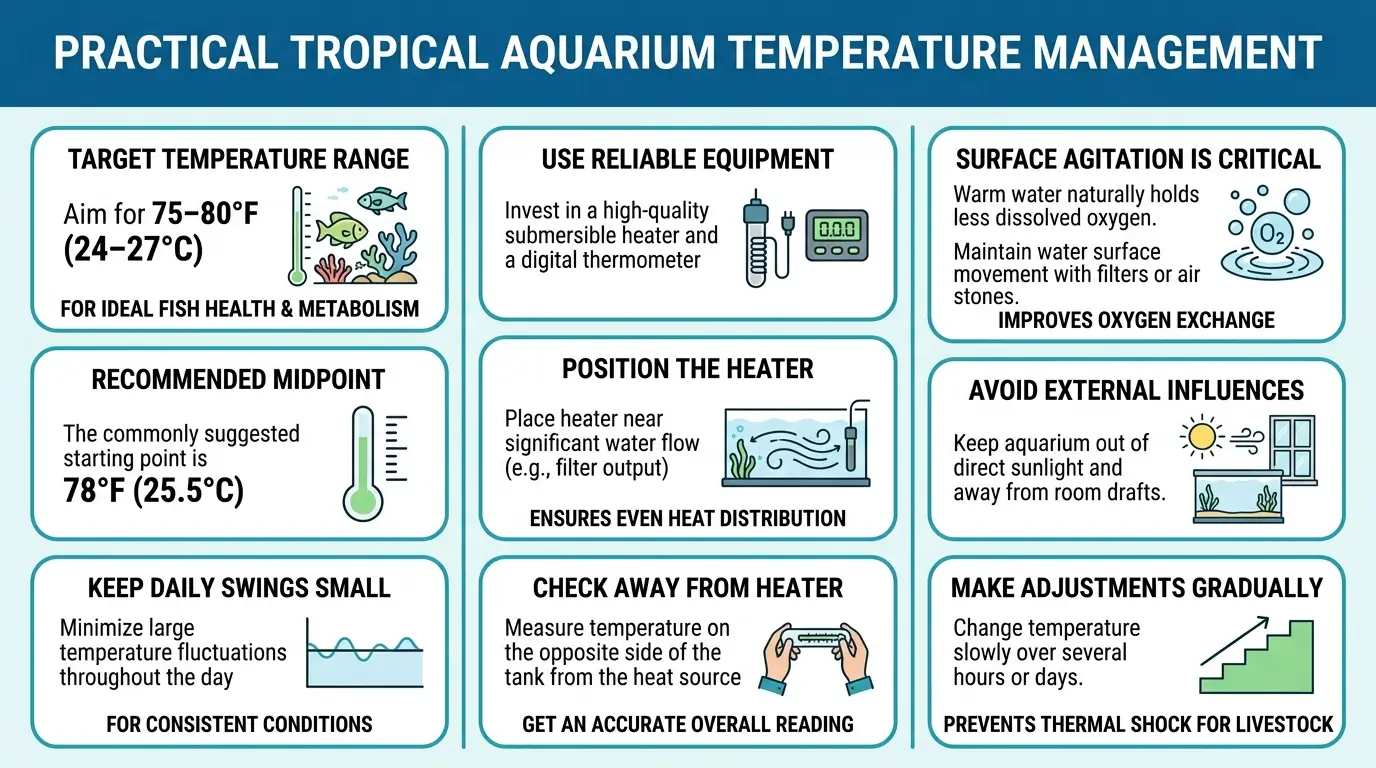
Most tropical aquarium fish thrive at 75–80°F (24–27°C) with steady, small changes.
Keeping water in the right zone is the heartbeat of a healthy tank. In this guide, I’ll show you the Best Temperature Range for Tropical Aquarium Fish, why it matters, and how to hold it steady like a pro. I’ll share data, hands-on tips from years of fishkeeping, and clear steps you can use today.
Why Temperature Matters For Tropical Fish
Water temperature shapes every life process in your tank. It drives metabolism, oxygen demand, immune strength, and breeding. Even sturdy fish can crash when temperature swings fast.
Here’s the simple truth I’ve seen again and again. Stable beats perfect. A steady 76°F is safer than a heater that swings from 74 to 80°F each day. Rapid changes stress fish, open the door to disease, and can wipe out a community.
Warm water holds less oxygen. That’s why tanks feel “tight” during heat waves. Cool water slows digestion and can bloat some species. Aim for a stable middle ground that fits your fish.
The Best Temperature Range for Tropical Aquarium Fish
The Best Temperature Range for Tropical Aquarium Fish is 75–80°F (24–27°C) for most community setups. This window supports active behavior, bright color, and strong immunity for many popular species.
When people ask about the Best Temperature Range for Tropical Aquarium Fish, I suggest one number: 78°F (25.5°C). It is a safe target for mixed groups like tetras, rasboras, guppies, and corys. Keep daily swings under 1–2°F. Use surface agitation to offset lower oxygen at higher temps.
Key principles:
- Stable beats exact. Hold one number well.
- Match the range to your most sensitive species.
- Warmer water speeds growth and breeding but needs more oxygen and clean water.
Species-Specific Temperature Ranges
Not all fish like the same heat. Pick your set point based on the species that need the narrowest band.
Community and nano favorites:
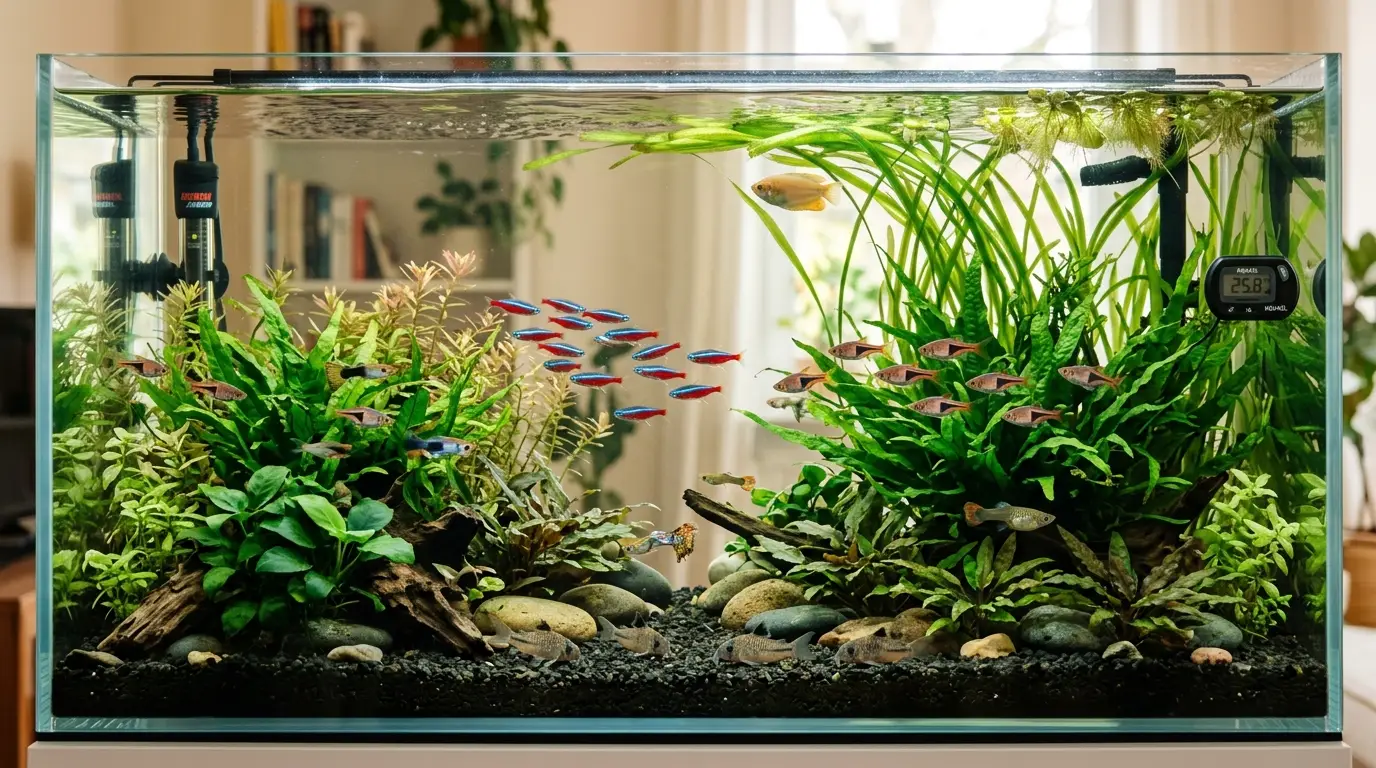
- Neon tetra: 72–76°F (22–24°C). Cooler edge of tropical. Keep steady for bright color.
- Cardinal tetra: 76–82°F (24–28°C). Slightly warmer than neons.
- Harlequin rasbora: 75–80°F (24–27°C). Very tolerant, great for beginners.
- Guppy: 74–82°F (23–28°C). Warmer water speeds breeding; watch oxygen.
- Platy and molly: 75–80°F (24–27°C). Mollies like hard, clean water too.
- Betta: 78–82°F (25.5–28°C). Cooler water can cause lethargy and fin issues.
- Angelfish: 78–82°F (25.5–28°C). Stable warmth helps growth and pairing.
- Dwarf gourami and honey gourami: 76–80°F (24–27°C). Calm flow helps.
- Corydoras (most common species): 74–78°F (23–26°C). Avoid sudden changes.
- Cherry barb: 74–79°F (23–26°C). Undemanding and peaceful.
Specialists:
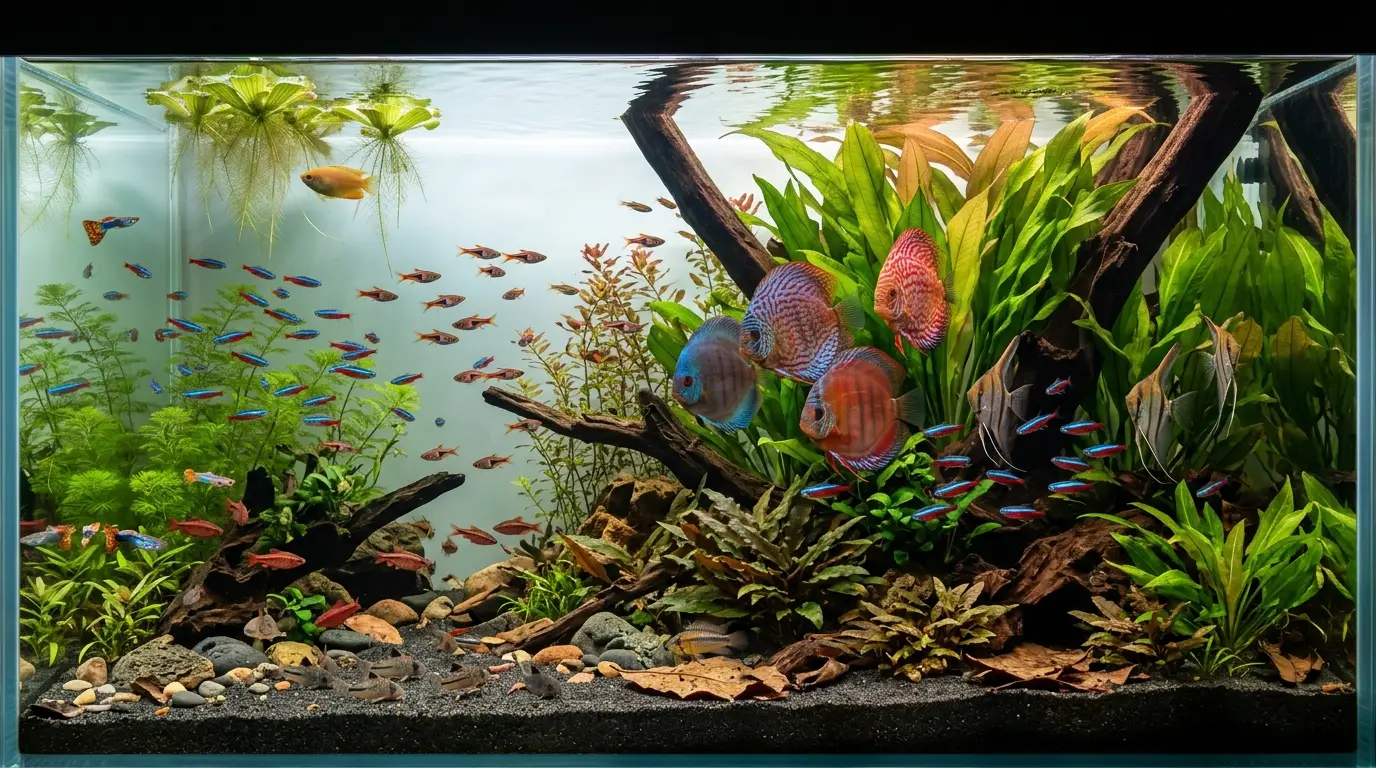
- Discus: 82–86°F (28–30°C). Demands pristine water and extra oxygenation.
- Apistogramma dwarfs: 78–82°F (25.5–28°C). Prefer soft, stable water.
- Kribensis: 75–80°F (24–27°C). Good in many community tanks.
Knowing the Best Temperature Range for Tropical Aquarium Fish helps you choose tank mates that overlap. If ranges clash, stress wins.
How To Measure And Maintain Stable Temperature
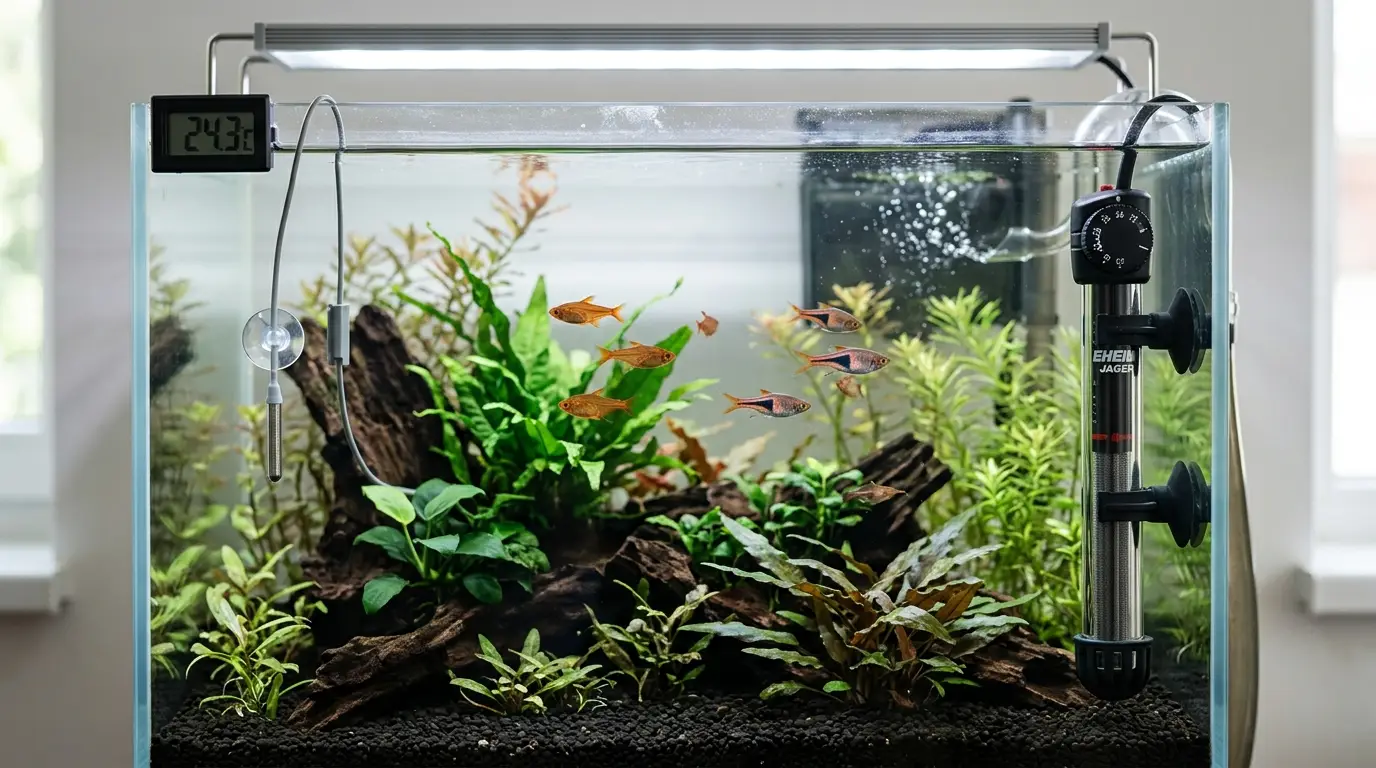
Great gear and smart placement make stability simple. To keep the Best Temperature Range for Tropical Aquarium Fish, focus on accuracy first, then control.
Tools that help:
- Digital thermometer. Place it where water flow is good, not right next to the heater.
- Reliable heater with a thermostat. Use 3–5 watts per gallon as a guide.
- Heater controller for safety. A secondary cutoff can save your tank if a heater fails on.
- Small backup heater. Two smaller heaters reduce risk vs one large unit.
- Powerhead or filter return. Even flow spreads heat and avoids hot or cold spots.
Simple setup steps:
- Set the heater 1–2°F below your target. Let the controller manage the final degree.
- Place the heater near flow. Hiding it in a filter return helps even distribution.
- Check with a second thermometer monthly. Cheap sensors drift.
- Log your numbers morning and night for a week. Confirm your daily swing stays tight.
Seasonal Shifts And Room Factors
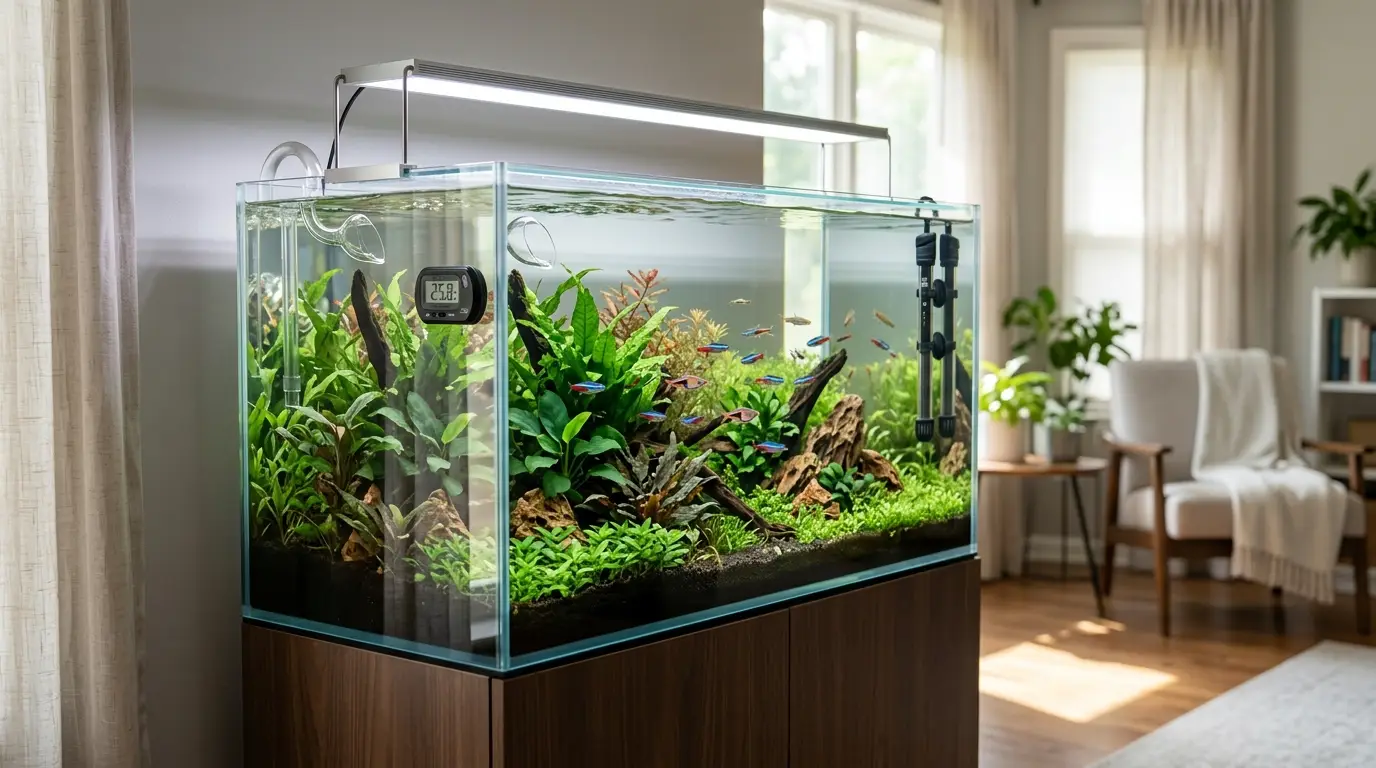
Rooms change. Tanks feel it. Summer can push you out of the Best Temperature Range for Tropical Aquarium Fish, while winter chills can stall fish.
Smart seasonal tips:
- Heat wave plan. Increase surface agitation, lift the lid slightly, shorten light hours, and float sealed ice packs if needed.
- Cold snap plan. Add insulation behind the tank, close drafts, and warm the room. Two smaller heaters help hold the line.
- Avoid sunny windows. Sun spikes heat fast and grows algae.
- Use a lid. It slows evaporation and temperature swings, and it keeps fish from jumping.
Night drops of 1–2°F are normal. Big swings are not. Keep your daily curve smooth.
Signs Of Temperature Stress And What To Do
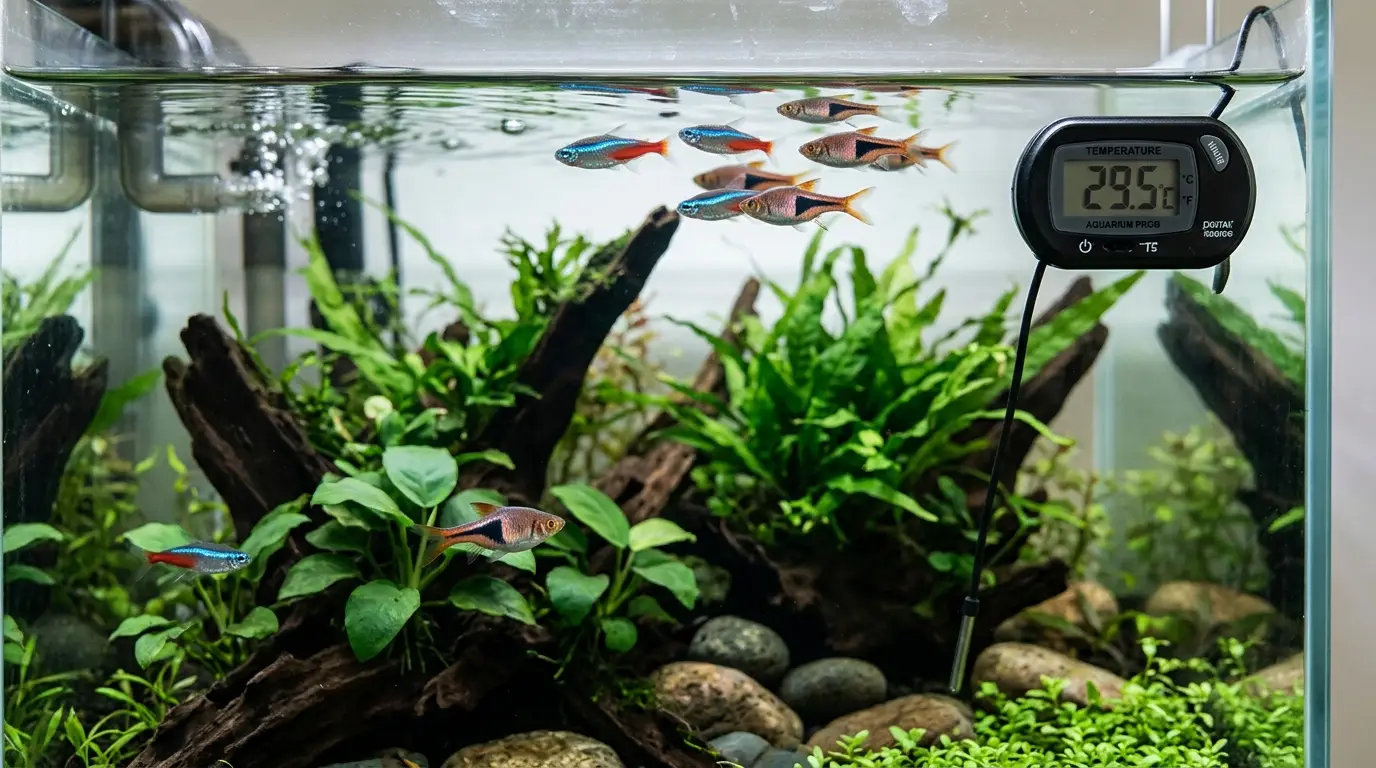
If you drift far from the Best Temperature Range for Tropical Aquarium Fish, the tank will tell you. Watch for clues and act fast.
Common signs:
- Gasping at the surface. Warm water plus low oxygen. Add air, lower temp slowly.
- Lethargy or hiding. Often too cold. Warm up 1°F per hour until you reach target.
- Rapid gill movement or flashing. Sudden change. Stabilize and test water.
- Faded color, clamped fins, poor appetite. Chronic stress. Review heater, flow, and parameters.
Emergency moves:
- Overheat. Dim lights, aim filter output at the surface, and use a fan over the tank.
- Chill. Wrap the tank with a blanket, warm the room, and raise temp slowly.
Community Tanks, Breeding, And Special Cases
Mixed tanks need compromise. Set your community around the Best Temperature Range for Tropical Aquarium Fish that fits most species in the group.
Practical rules:
- Build around the hardest species first. For example, cardinals over neons if you want warmer water.
- Skip “almost tropical” species that prefer cooler water in warm tanks. It avoids long-term stress.
- For breeding, small changes can trigger spawning. Raise or lower 1–2°F with clean water to simulate seasons.
- Plants care too. Most common plants like 72–80°F. Very warm discus tanks may need hardier species.
If you plan discus or high-temp species, boost oxygen with extra air stones. Warm water and heavy bioloads need more gas exchange.
My Lessons Learned And Common Mistakes To Avoid
I have kept bettas, tetras, rasboras, and discus across small and large tanks. Here are lessons that saved me time and fish.
What works:
- Pick a target and stick to it. I aim for 78°F in most mixed tanks.
- Use two heaters. If one fails, the other buys you time.
- Calibrate thermometers. I compare against a lab-style digital probe twice a year.
Mistakes to avoid:
- Chasing exact numbers all day. Fish hate swings more than small offsets.
- Ignoring room temperature. A hot office or cold basement will beat any cheap heater.
- Hiding the thermometer. If you cannot see it, you will not check it.
- Forgetting oxygen. Warmer water plus bright lights plus heavy feeding can starve your tank of air.
Big swings are worse than missing the Best Temperature Range for Tropical Aquarium Fish by 1°F. Keep it steady, and most fish will thrive.
Frequently Asked Questions
What is the Best Temperature Range for Tropical Aquarium Fish in a community tank?
Aim for 75–80°F (24–27°C), with 78°F as a safe middle. Hold swings under 1–2°F per day.
How fast can I adjust temperature if it is off?
Change no more than 1°F per hour. Slow changes prevent shock and protect gills and immunity.
Do I need a heater in a warm room?
Usually yes. Rooms swing more than you think. A heater stabilizes night drops and protects during cold snaps.
Are stick-on thermometers accurate?
They are decent for a quick read but can lag. Pair with a digital probe for accuracy.
Can discus live with other tropical fish at 82–86°F?
Yes, but choose warm-tolerant partners and increase oxygenation. Many common tetras and corys will not enjoy long-term life that warm.
What happens if the tank gets too warm?
Oxygen drops and stress rises. Add surface agitation, shorten light time, and cool the room or tank slowly.
Should I turn off the heater in summer?
Usually no. Set it to your target so it only kicks in when nights dip. Use fans and surface movement to manage heat.
Conclusion
Most tanks shine when you lock in a stable 75–80°F, with 78°F as a reliable target. The Best Temperature Range for Tropical Aquarium Fish protects health, color, growth, and breeding, but stability is the real secret. Match your set point to your species, control swings, and give your fish the steady world they need.
Ready to dial in your tank? Pick your target, calibrate your thermometer, and log temps for one week. If this helped, subscribe for more practical aquarium tips or share your setup and questions in the comments.
One Comment