
Use gentle tools, diluted bleach or peroxide, and rinse with dechlorinator.
If you want a clear, healthy tank, learning How to Clean Aquarium Decorations Safely is a must. I’ve kept freshwater, planted, and reef tanks for years, and I’ve tested every method you’ll see here. This guide shows you How to Clean Aquarium Decorations Safely with clear steps, safe chemicals, and pro tips you can trust. Read on to avoid mistakes, protect your fish, and keep your tank looking new.
Safety basics before you start
To master How to Clean Aquarium Decorations Safely, start with safety. Never use soap, detergent, or scented cleaners. Even a trace can harm fish and shrimp. Work in a clean area. Keep pets and kids away from chemicals.
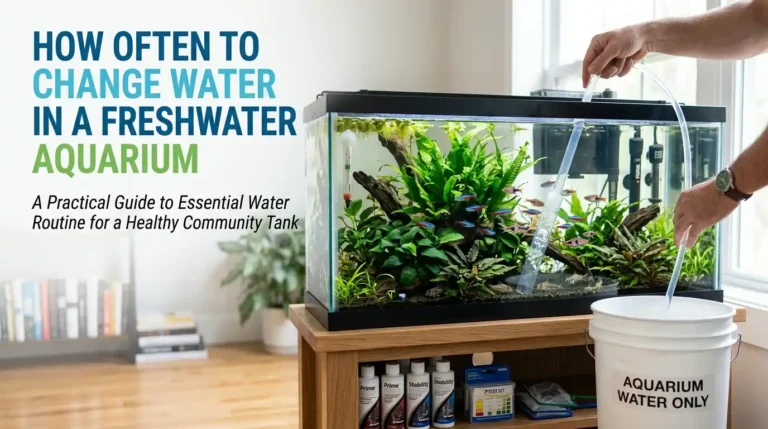
Prepare two buckets. One bucket is only for tank water. The second is for cleaning solutions. Label them. Cross-use can cause issues.
Unplug heaters and equipment before you reach in. Move slow so you do not spook fish. Remove one piece at a time to avoid big stress.
Veterinary and aquaculture guidance supports diluted bleach and hydrogen peroxide for disinfection. Both must be rinsed and neutralized. When in doubt, rinse again. Your nose is a good tool. If you smell chemicals, keep rinsing. This is how you respect How to Clean Aquarium Decorations Safely.
Tools and supplies checklist
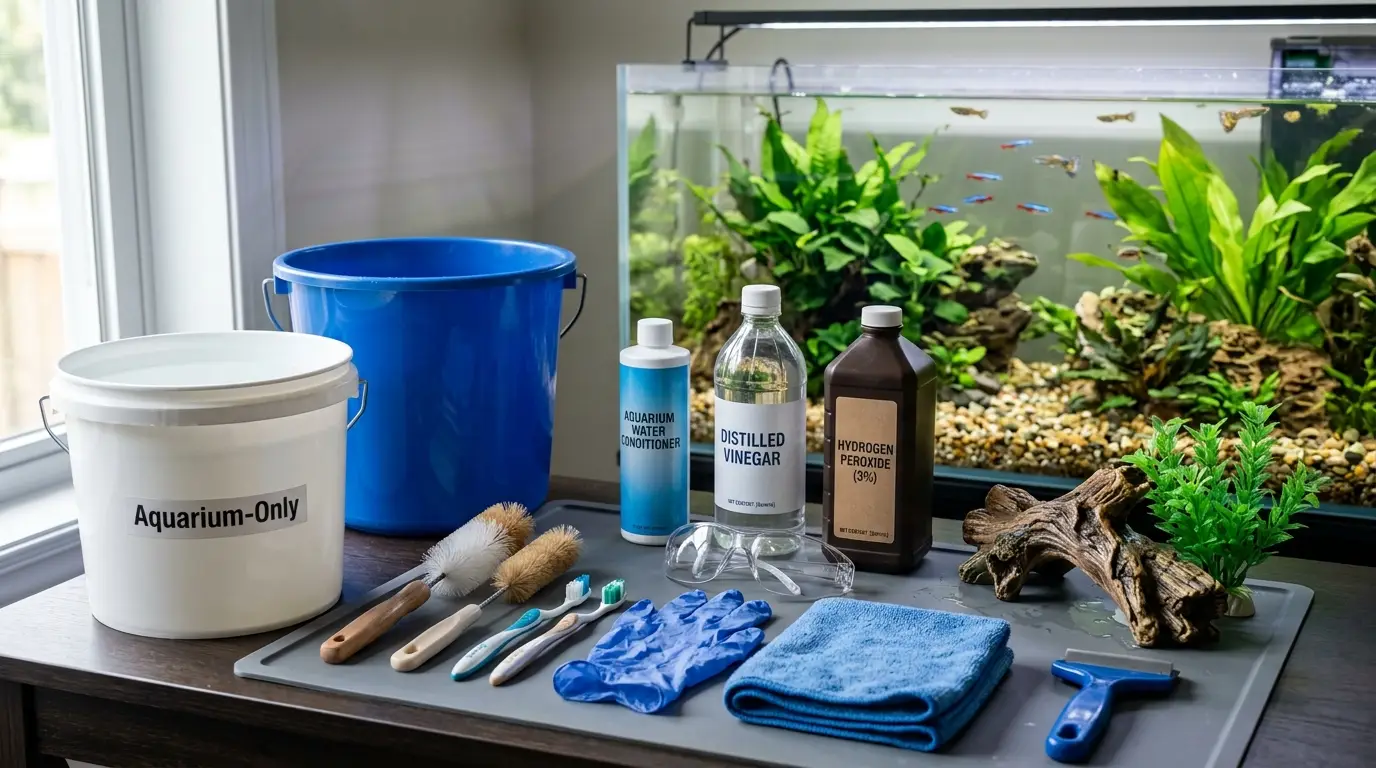
Here is a simple kit that supports How to Clean Aquarium Decorations Safely.
- Soft toothbrushes or aquarium brushes gentle on seams and paint
- Dedicated buckets labeled for tank water and for cleaning solutions
- Dechlorinator to neutralize chlorine and chloramine
- White distilled vinegar for limescale
- Unscented household bleach at 5–6% for disinfection
- 3% hydrogen peroxide for spot work and algae
- Microfiber cloths or paper towels for drying
- Nitrile gloves and eye protection for chemical dips
- Old credit card or plastic scraper for flat surfaces
Keep these items only for aquarium use. Do not bring kitchen soaps near them. This habit alone is a big win in How to Clean Aquarium Decorations Safely.
Step-by-step: routine cleaning without chemicals
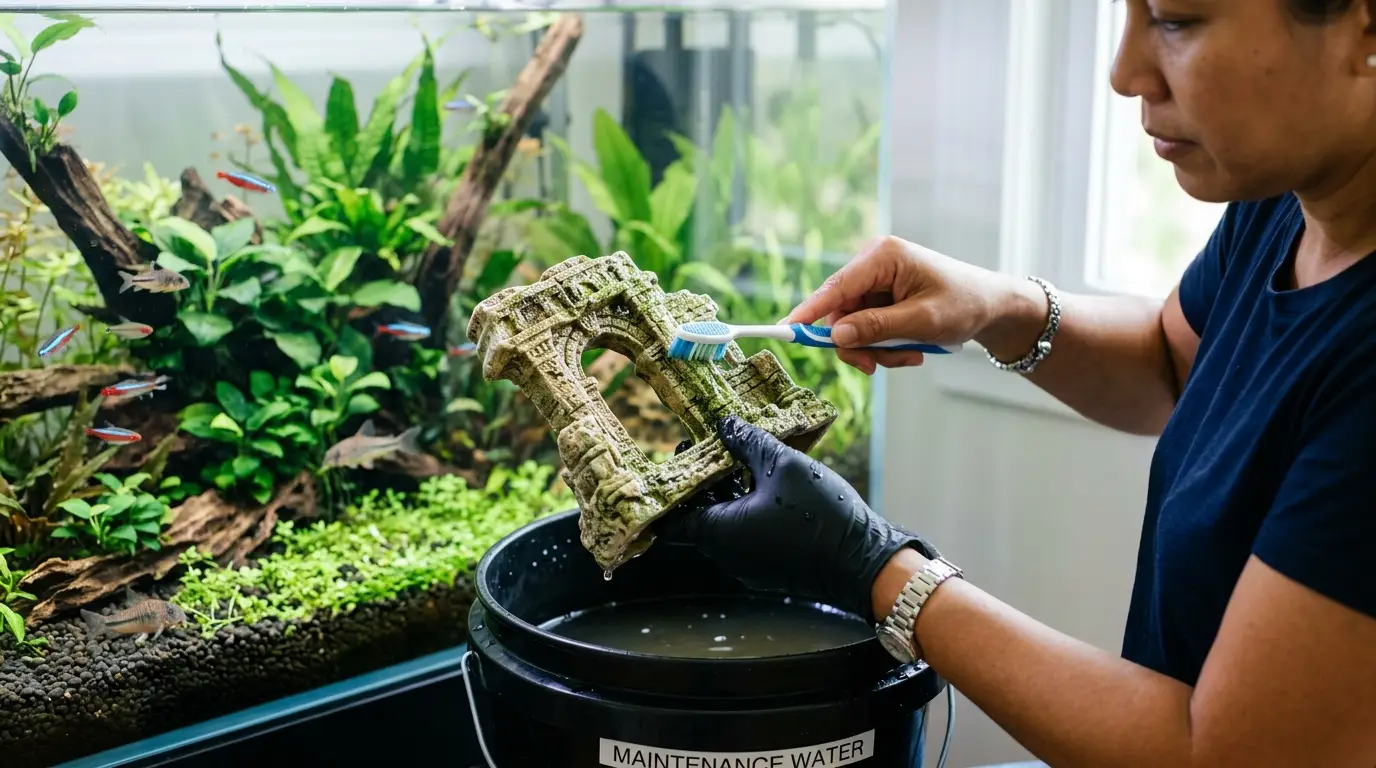
Use this routine each month or when you see light algae.
- Wash your hands and put on gloves. Unplug gear near the tank.
- Fill one bucket with tank water. This is for gentle rinsing that will not shock bacteria.
- Lift one decoration at a time. Keep biofilm in the tank by not removing everything at once.
- Swish the item in the tank-water bucket. This knocks off loose gunk.
- Scrub with a soft brush. Focus on crevices and seams. Use steady, light strokes.
- Rinse under tap water if needed. Then soak in fresh water with dechlorinator for a few minutes.
- Let it air dry until no odor remains. Return the item to the tank.
This plan is simple, fast, and kind to fish. It is also the core of How to Clean Aquarium Decorations Safely.
Deep cleaning methods that stay fish-safe
Sometimes stains stick. Here is How to Clean Aquarium Decorations Safely when routine scrubbing is not enough.
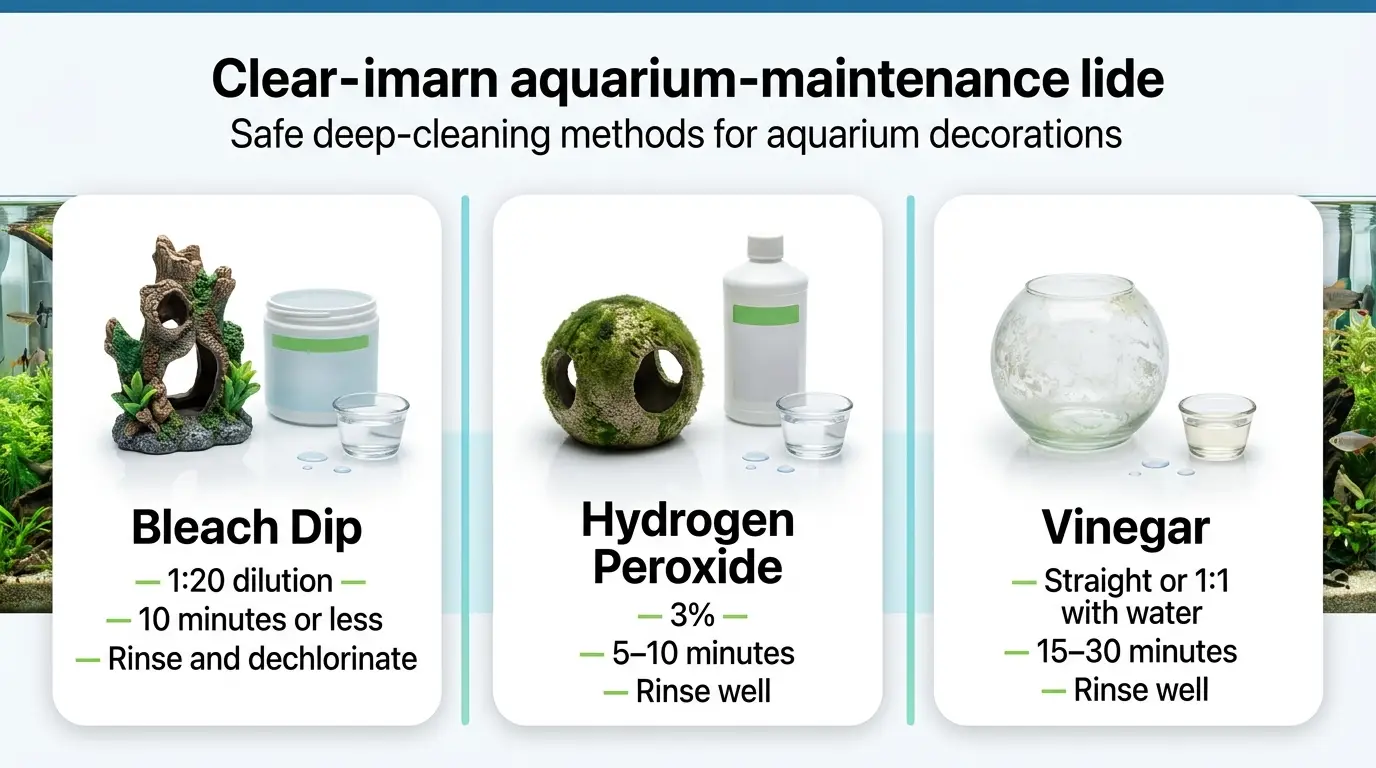
Bleach dip for tough algae and pathogens
- Mix 1 part unscented bleach to 20 parts water.
- Soak non-porous items for 10 minutes or less.
- Rinse well. Then soak in water with extra dechlorinator for 5–10 minutes.
- Air dry until you smell no bleach at all.
Hydrogen peroxide for spot work and black beard algae
- Use 3% hydrogen peroxide.
- Soak for 5–10 minutes or spray on spots.
- Expect fizzing. Rinse well and dechlorinate if you are unsure.
- This is my go-to for black beard algae on resin and plastic.
Vinegar for hard water stains and limescale
- Use straight vinegar or a 1:1 mix with water.
- Soak 15–30 minutes. Scrub and rinse until the smell fades.
- Do not use on limestone or shells if you want stable pH in soft-water tanks.
Boiling or hot water pour for rocks and ceramic only
- Do not boil resin, plastic, or painted items.
- Instead, pour boiling water over safe rocks in a bowl. Let sit 10–20 minutes.
- This helps loosen debris without chemicals.
Sun-dry to finish
- Sunlight can help off-gas chlorine and add a mild UV effect.
- This is a nice extra step after a bleach dip.
These proven methods fit the science and the craft of How to Clean Aquarium Decorations Safely.
Material-specific tips and cautions
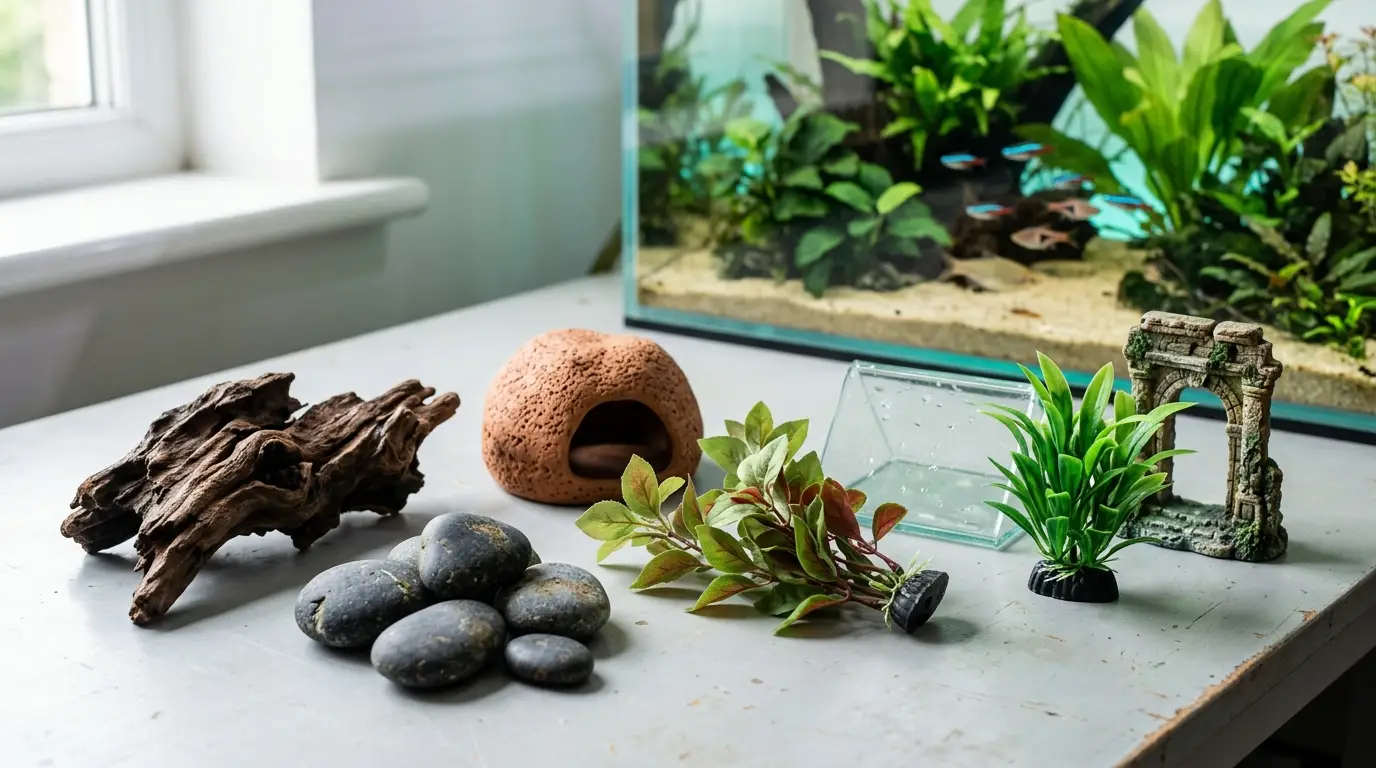
Matching methods to materials is key to How to Clean Aquarium Decorations Safely.
Plastic and silk plants
- Use warm water and a soft brush.
- Peroxide dip for algae. Avoid long bleach dips that can fade color.
Resin ornaments and ceramic caves
- Quick bleach dips are fine. Scrub seams well.
- Check for flaking paint. If it peels, replace the item.
Glass and acrylic decor
- Use vinegar for limescale on glass.
- For acrylic, avoid hard scrapers that cause scratches.
Natural rocks
- Avoid unknown limestone in soft-water tanks. It can raise pH.
- Hot water pour and brush. Bleach is okay if followed by heavy dechlorination and full dry time.
Driftwood
- Do not bleach. Wood soaks it up.
- Peroxide spot treatment, then soak in fresh water. Repeat until clear of algae.
- Expect tannins. They are not dirt. They just tint the water.
Metal and shells
- Avoid metal unless it is aquarium safe. Many metals rust and can poison fish.
- Shells raise hardness and pH. Good for some cichlids. Not great for soft-water species.
I once ruined a fake plant with a long bleach soak. The color bled, and seams split. Short dips save gear. That lesson shaped how I teach How to Clean Aquarium Decorations Safely today.
Protect the biofilter and set a smart schedule
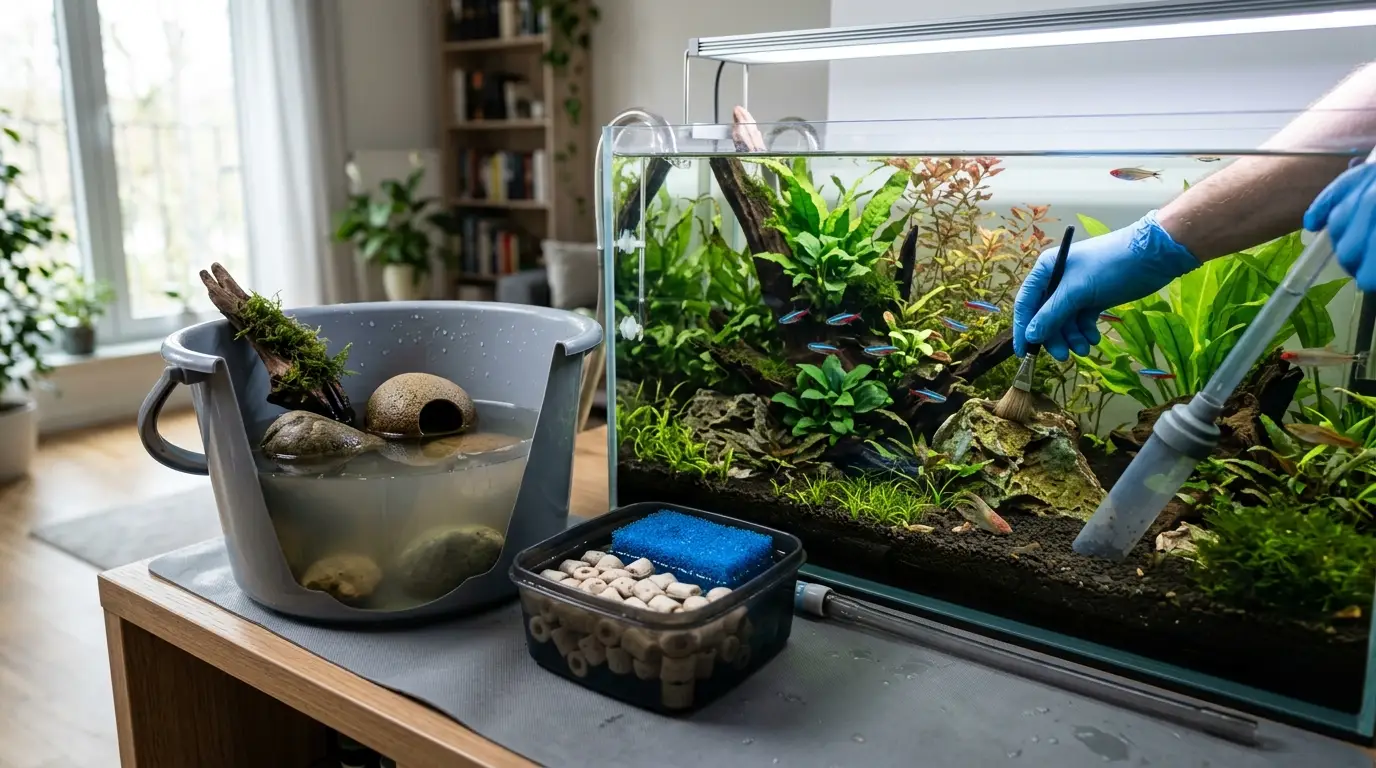
Here is How to Clean Aquarium Decorations Safely without hurting the nitrogen cycle.
- Do not scrub everything in one day. Clean 25–50% of decor at a time.
- Keep filter media wet with tank water if you must rinse it. Never rinse sponges under the tap.
- Test ammonia and nitrite after big cleanups. Be ready for a water change if numbers rise.
- Aim for light cleaning every 2–4 weeks. Do small work often. Skip marathon days.
This pacing protects bacteria, reduces stress, and keeps the tank stable. It is a quiet secret of How to Clean Aquarium Decorations Safely.
Prevent buildup: simple habits that work
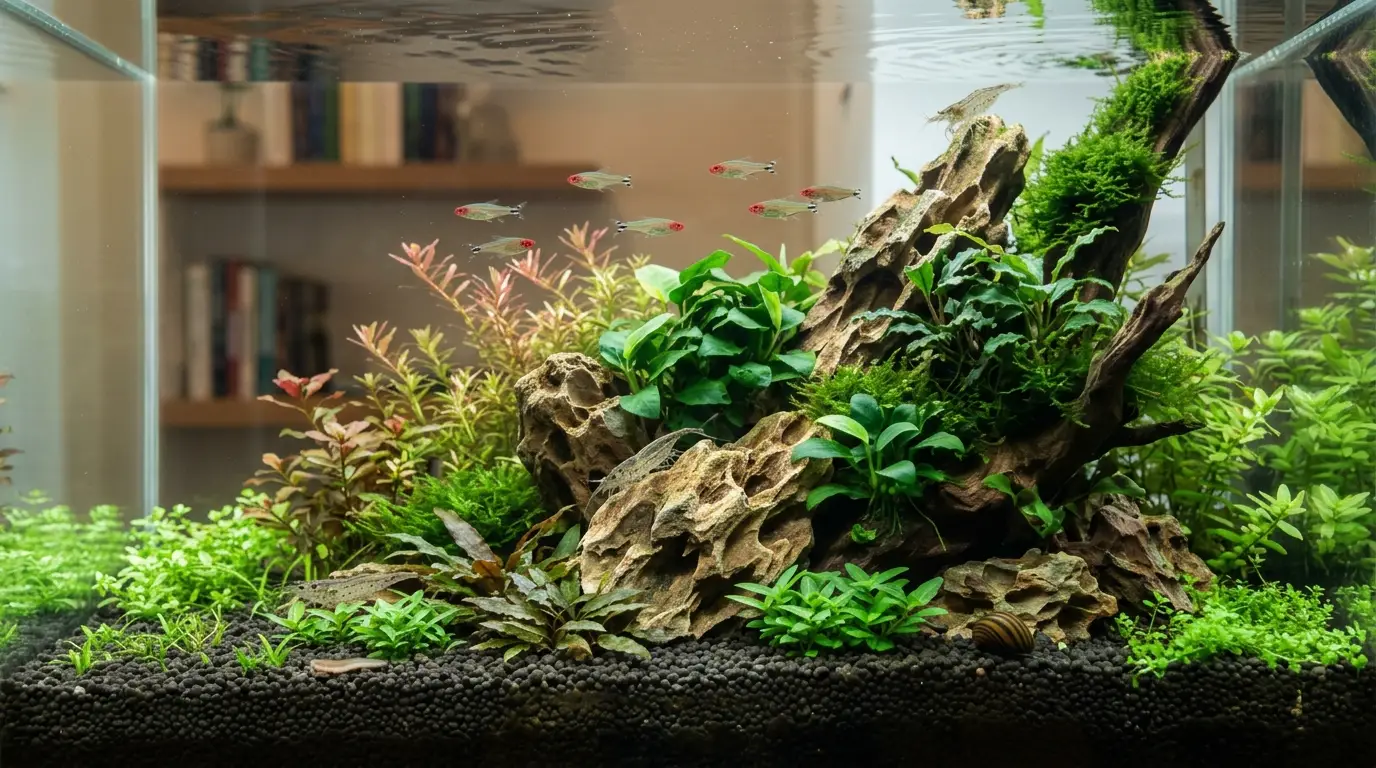
Prevention makes cleaning easy. It is part of How to Clean Aquarium Decorations Safely that many skip.
- Manage light. Keep lights on 6–8 hours if algae grows fast.
- Feed less. Extra food fuels algae and biofilm.
- Add flow. Dead spots invite slime and cyanobacteria.
- Use cleanup crews that fit your tank. Nerite snails, Amano shrimp, or true Siamese algae eaters help.
- Wipe decor during water changes. A quick brush now saves a deep scrub later.
These small habits save time and protect fish health.
Troubleshooting stubborn algae and stains
Stubborn growths call for targeted moves. This section helps you dial in How to Clean Aquarium Decorations Safely.
- Brown diatoms show up in new tanks. Wipe off. They fade as the tank matures.
- Green hair algae likes long light and high nutrients. Shorten light and try peroxide dips.
- Black beard algae loves low CO2 and flow. Spot treat with peroxide. Improve flow.
- Cyanobacteria smells earthy and peels in sheets. Increase flow, reduce organics, and try a blackout for 3 days.
If problems keep coming back, test water. Check nitrate and phosphate. Fix the cause, and cleaning gets easy.
Frequently Asked Questions of How to Clean Aquarium Decorations Safely
Can I use soap or dish detergent?
No. Even tiny traces can harm fish and inverts. Use water, vinegar, peroxide, or a diluted bleach dip instead.
How often should I clean decorations?
Light cleaning every 2–4 weeks works for most tanks. If algae grows fast, add a quick brush during weekly water changes.
Is bleach safe for aquarium decorations?
Yes, if used right. Use a 1:20 bleach mix, rinse well, then soak with dechlorinator until no bleach smell remains.
Will hydrogen peroxide hurt my fish?
Used outside the tank and rinsed, it is safe. Keep it at 3%, limit contact to 5–10 minutes, and rinse well.
Can I put decorations in the dishwasher?
Do not. Heat and soap leave residues and can warp or leach plastics. Hand-clean with safe methods only.
How do I remove black beard algae from ornaments?
Use a 3% peroxide dip for 10 minutes, scrub, and rinse. Short bleach dips also work on non-porous items, followed by heavy dechlorination.
Should I clean all decorations the same day?
No. Clean in batches to protect your biofilter. Aim for 25–50% of items per session.
Conclusion
You now know How to Clean Aquarium Decorations Safely, from fast touch-ups to deep, safe disinfection. Use the right tool, pick the right method for the material, and protect your biofilter with a calm pace. These small choices keep water clear and fish stress low.
Start with one section of your decor this week. Build a simple kit, label your buckets, and set a 2–4 week reminder. If this guide helped, subscribe for more tank care tips, or drop a comment with your toughest algae story.
2 Comments