
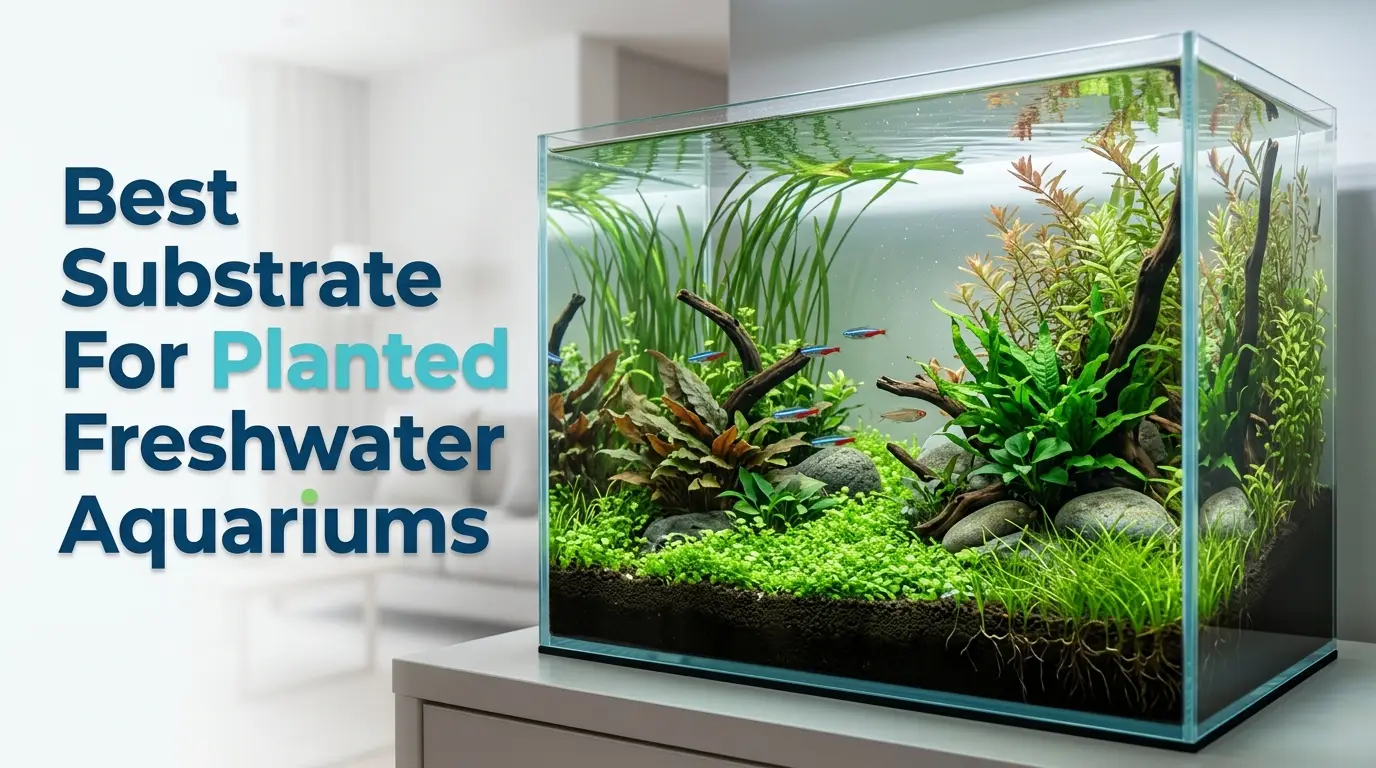
The best substrate for planted freshwater aquariums is nutrient-rich aquasoil capped or supported with root tabs.
If you want lush, healthy plants that root fast and stay vibrant, your substrate choice matters more than you think. In this guide, I break down the Best Substrate for Planted Freshwater Aquariums with clear advice, real test results, and simple steps you can follow today. You will see what works, what fails, and how to pick the right base for your aquascape goals.
What Substrate Does in a Planted Tank
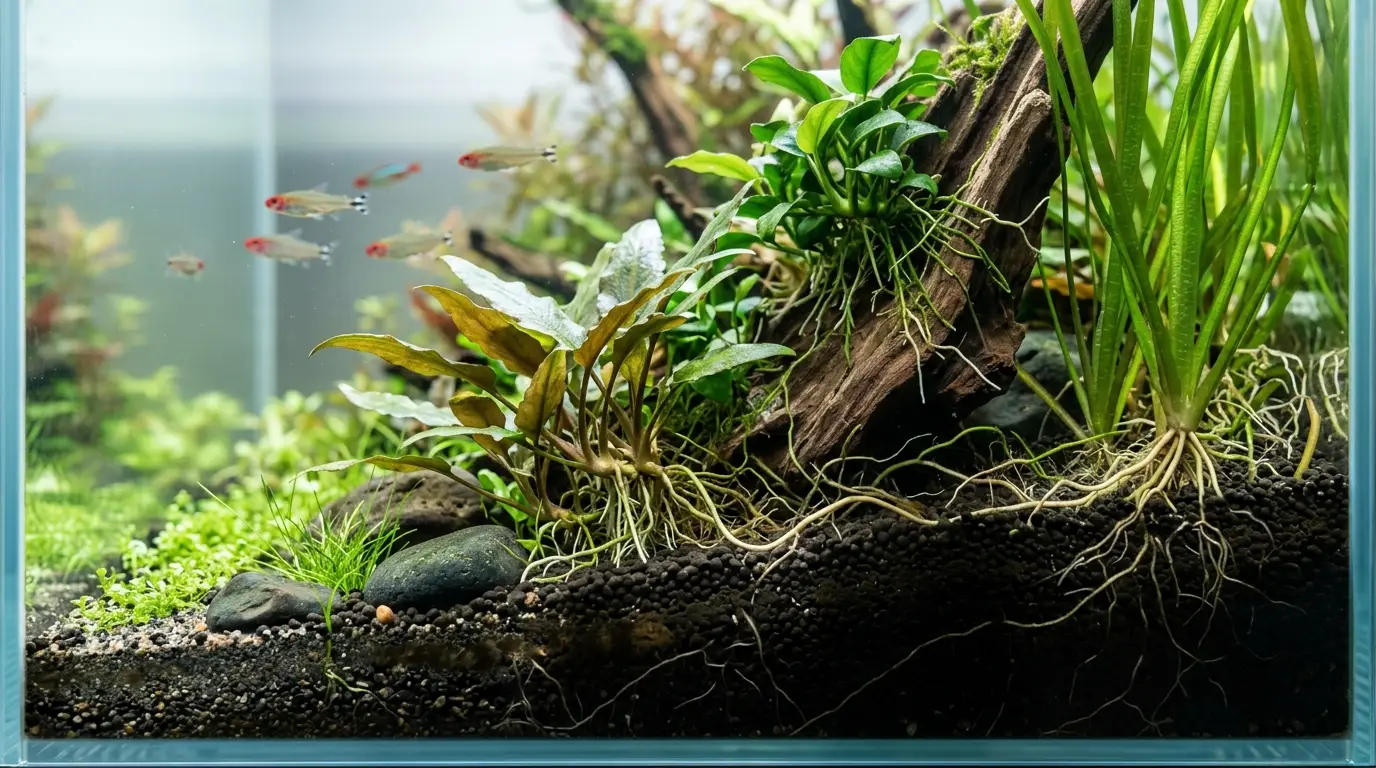
Substrate is the foundation of your planted tank. It holds roots, stores nutrients, and feeds plants over time. It also hosts helpful bacteria and can shape pH and hardness.
A good substrate does more than look nice. It supports strong roots, smooth growth, and stable water. Done right, it turns a tank into a living system.
Types of Substrate for Planted Freshwater Aquariums
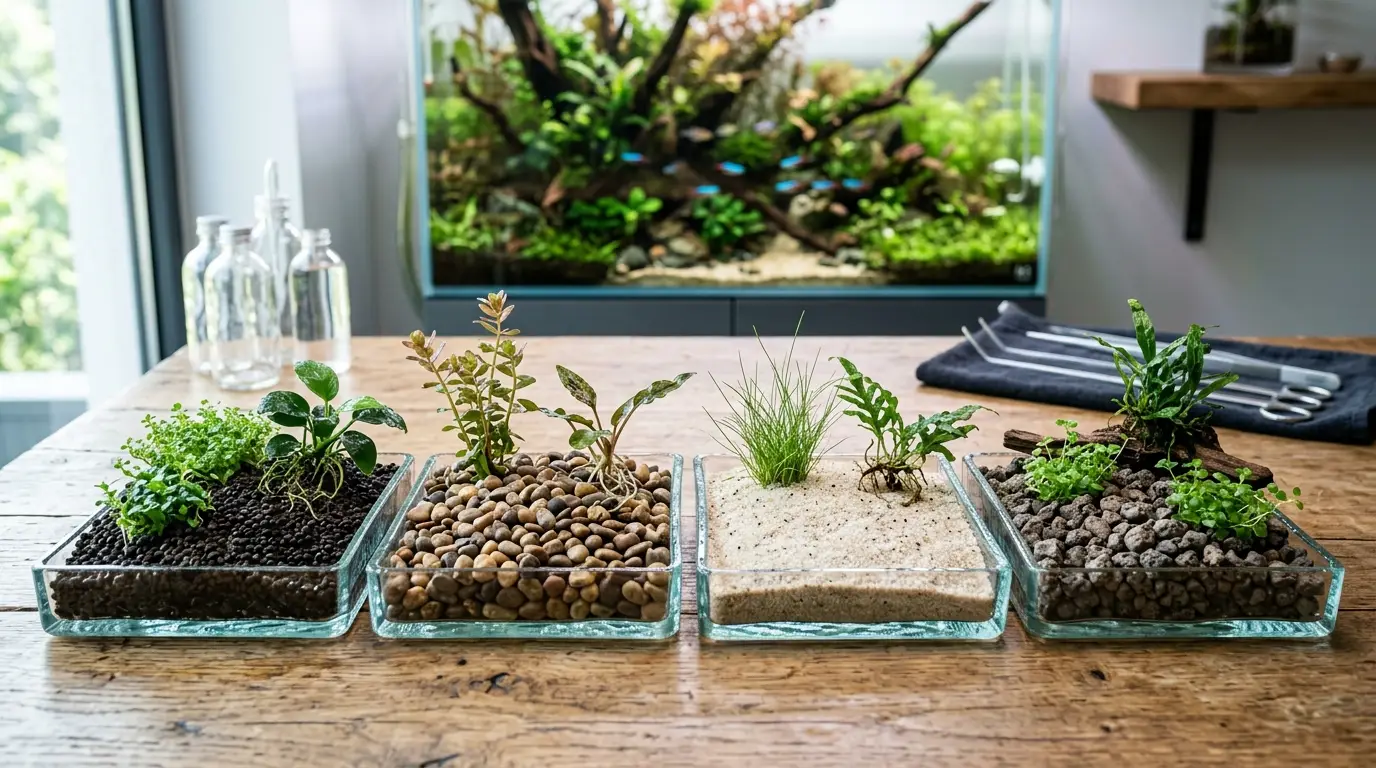
Not all substrates grow plants the same way. Each type has trade-offs for cost, care, and growth.
- Nutrient-rich aquasoil. Granules made from baked soil or volcanic ash. High nutrients and good cation exchange capacity. Great for heavy root feeders and carpeting plants.
- Inert gravel. Safe, easy, and long lasting. Needs root tabs and water column fertilizer to feed plants.
- Sand. Smooth for bottom dwellers and looks clean. Can compact if too deep. Works well with root tabs and strong root plants.
- Fired clay or porous media. Think baked clay, lava rock blends, or similar substrates. High porosity helps bacteria. Some have trace nutrients.
- Dirted or mineralized topsoil capped with sand. Very budget friendly and strong growth when set up with care. Needs a clean cap and patience.
- Additive layers. Laterite, clay, peat, or pumice under a cap or mixed in small amounts. Used to boost iron, porosity, or root health.
For many hobbyists, the Best Substrate for Planted Freshwater Aquariums blends two ideas. You pair active soil or additives for nutrition with a cap that suits your fish and style.
Nutrient-Rich Aquasoils: Are They the Best Substrate for Planted Freshwater Aquariums?
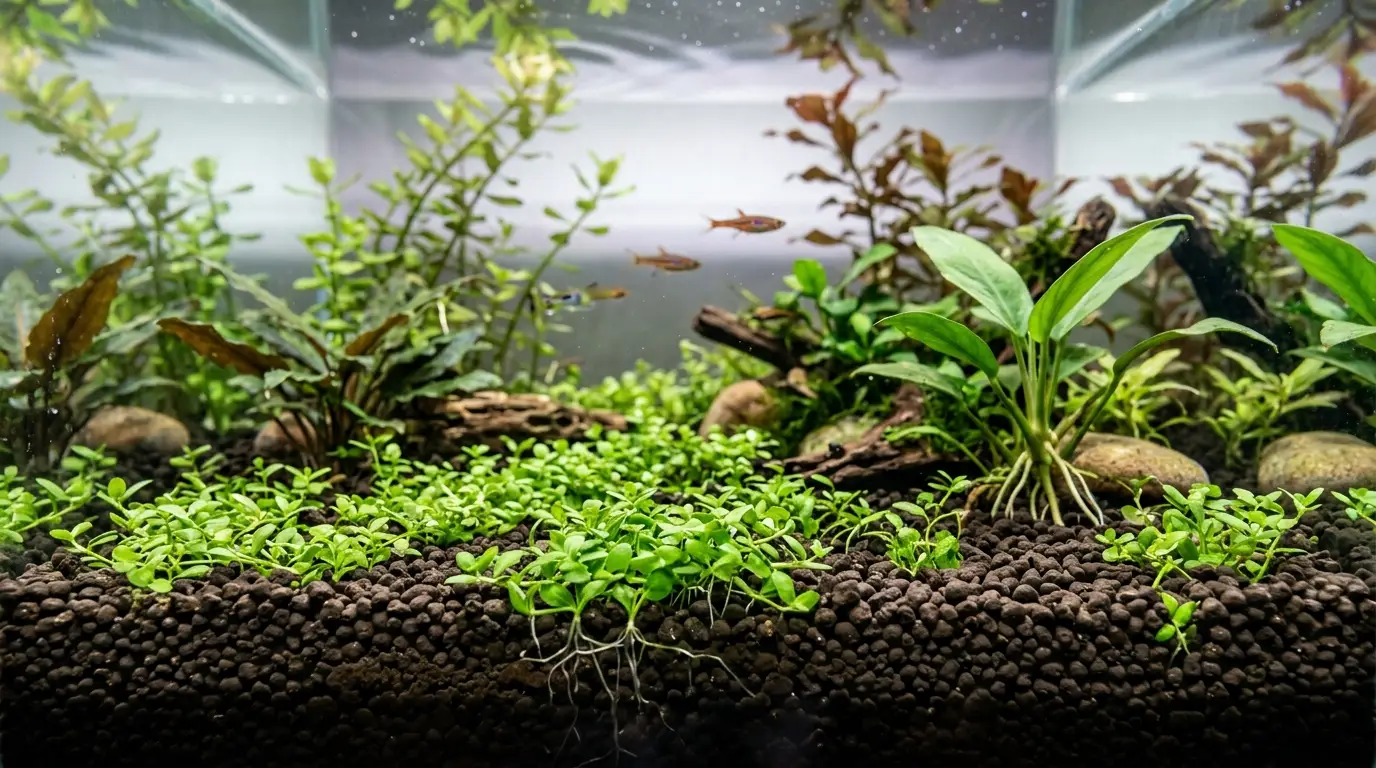
Aquasoils are popular because they work fast. They feed roots, hold nutrients, and often lower pH slightly. This helps many aquatic plants take off within weeks.
Pros:
- Strong early growth and fast root set
- High cation exchange capacity that holds nutrients
- Great for carpeting plants and red stems
Cons:
- More expensive than sand or gravel
- Can release ammonia at first and need big water changes
- Nutrients drop over time, so you still dose or add tabs later
Are aquasoils the Best Substrate for Planted Freshwater Aquariums? For many scapes with carpets, yes. For low tech tanks with easy plants, inert options plus root tabs can match success at lower cost.
Using Inert Substrates Right: Gravel and Sand
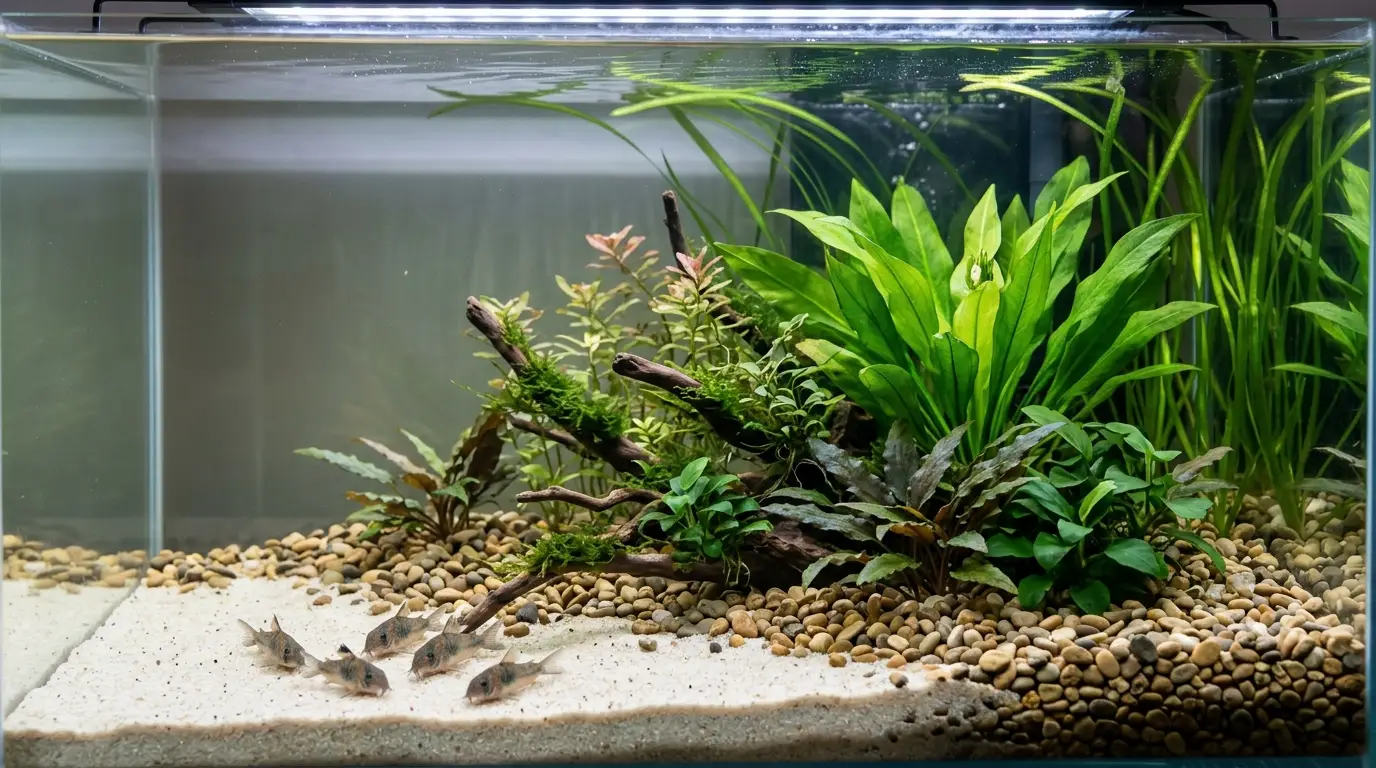
Gravel and sand can grow great plants with good support. The key is simple. Feed the roots and keep the substrate oxygenated.
Tips that work:
- Pick medium gravel or fine sand for strong root spread
- Use root tabs near heavy root feeders like swords and crypts
- Dose liquid fertilizer for stem plants and mosses
- Add gentle flow so detritus does not smother roots
- Vacuum the surface, not deep into planted zones
I have grown lush crypts and val in play sand with tabs under each plant. It took three weeks to see clear new growth, then it exploded.
Additives and Layering Strategies
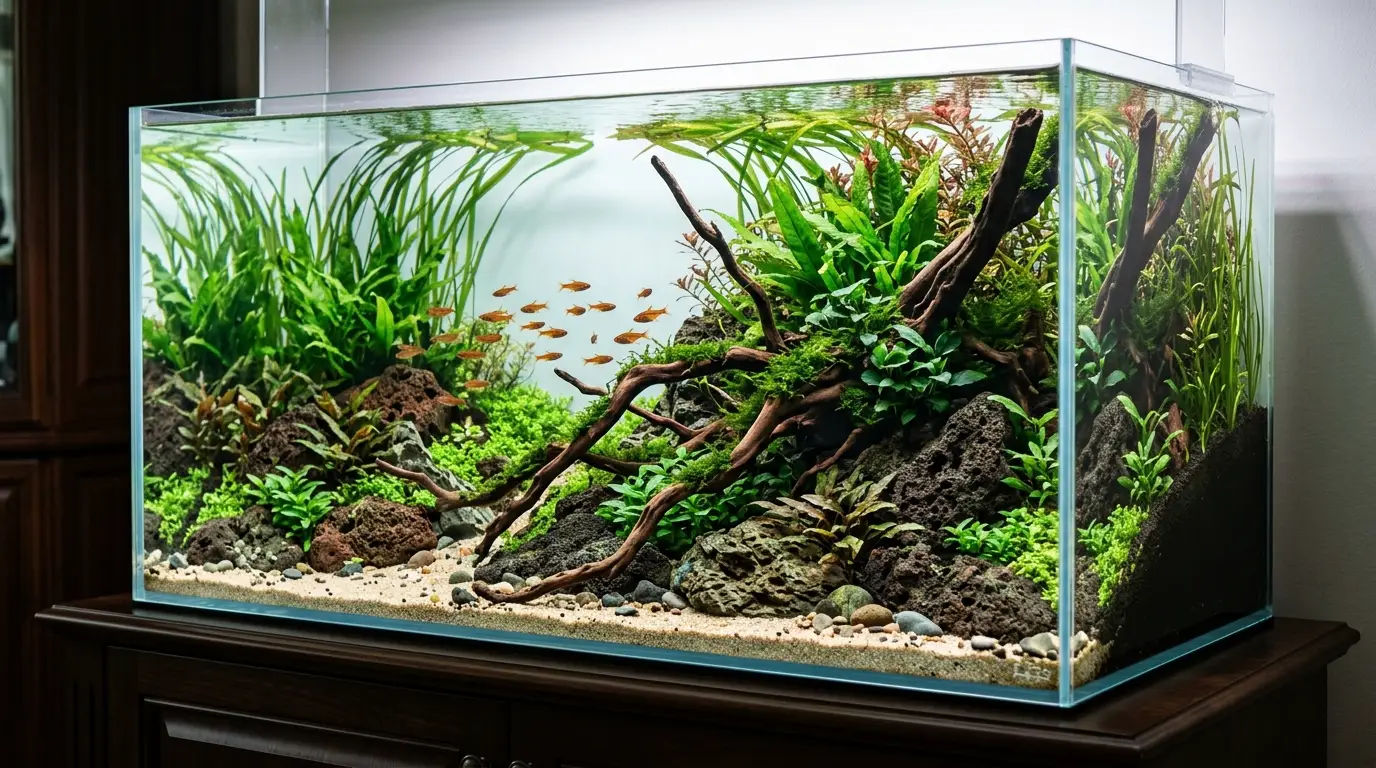
You can boost inert beds with simple layers. This brings you close to the Best Substrate for Planted Freshwater Aquariums without high cost.
Smart options:
- Laterite or clay under gravel for iron and trace elements
- Pumice or lava rock below for porosity and good bacteria
- Root tabs placed where plants feed the most
- A slope front to back for depth and better scape lines
- Front: 1.5 to 2 inches for easy planting
- Back: 3 to 4 inches to anchor tall stems and hardscape
Avoid mixing very fine sand with coarse gravel. It can compact and trap waste.
How to Choose the Best Substrate for Planted Freshwater Aquariums
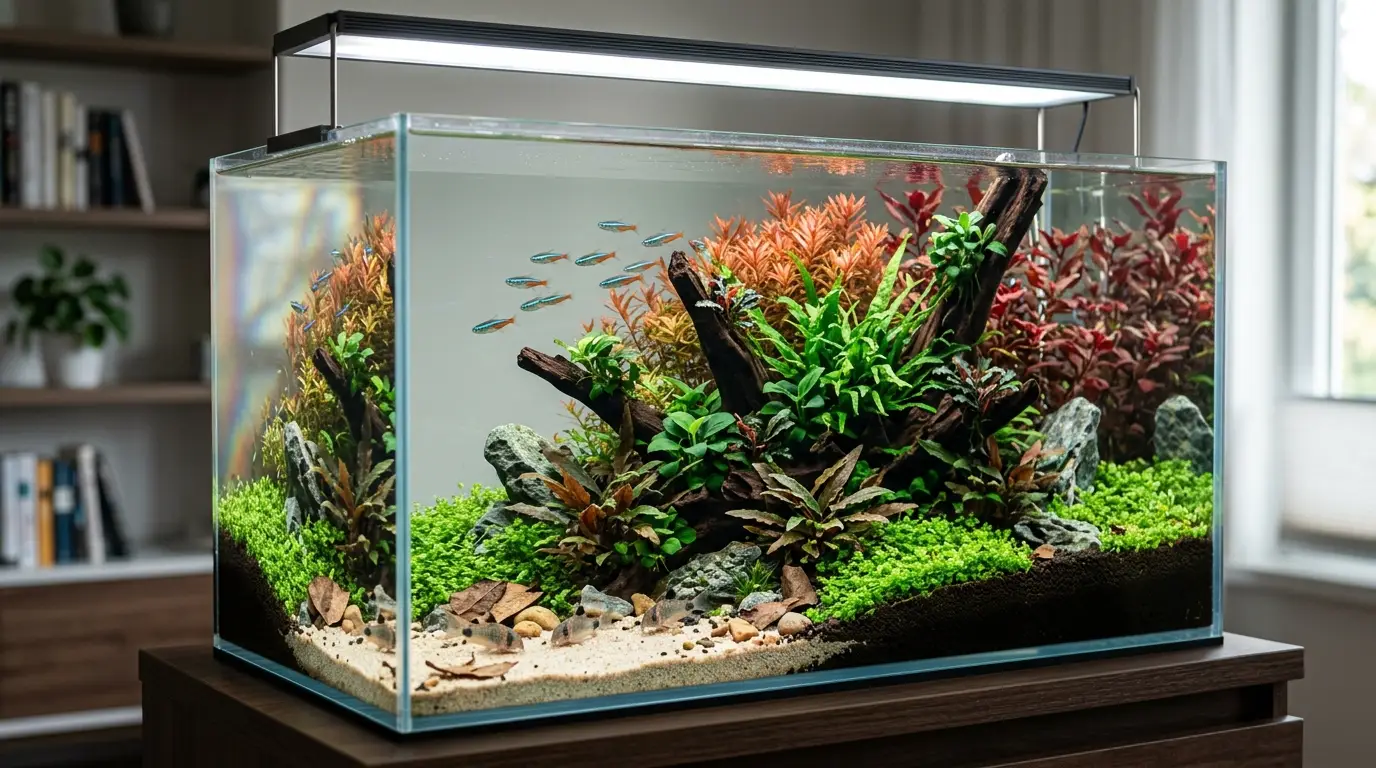
Pick based on your plants, water, fish, and budget. The Best Substrate for Planted Freshwater Aquariums is the one that fits your goals and time.
Use this quick framework:
- Your plants. Carpets and heavy root feeders love aquasoil. Epiphytes do not care much.
- Your water. Very hard water may be tamed by aquasoil buffering. Very soft water may need remineralization.
- Your fish and inverts. Corydoras and loaches like soft sand. Shrimp do well with stable, clean beds.
- Your budget. Sand or gravel with tabs is cheap and works. Active soils cost more but speed results.
- Your style. Black soils make greens pop. Natural sand looks like a river bed.
If you want fast carpet and color, the Best Substrate for Planted Freshwater Aquariums is usually aquasoil. If you want simple care and low cost, go with sand or gravel plus root tabs.
Setup Steps, Rinsing, and the First 30 Days
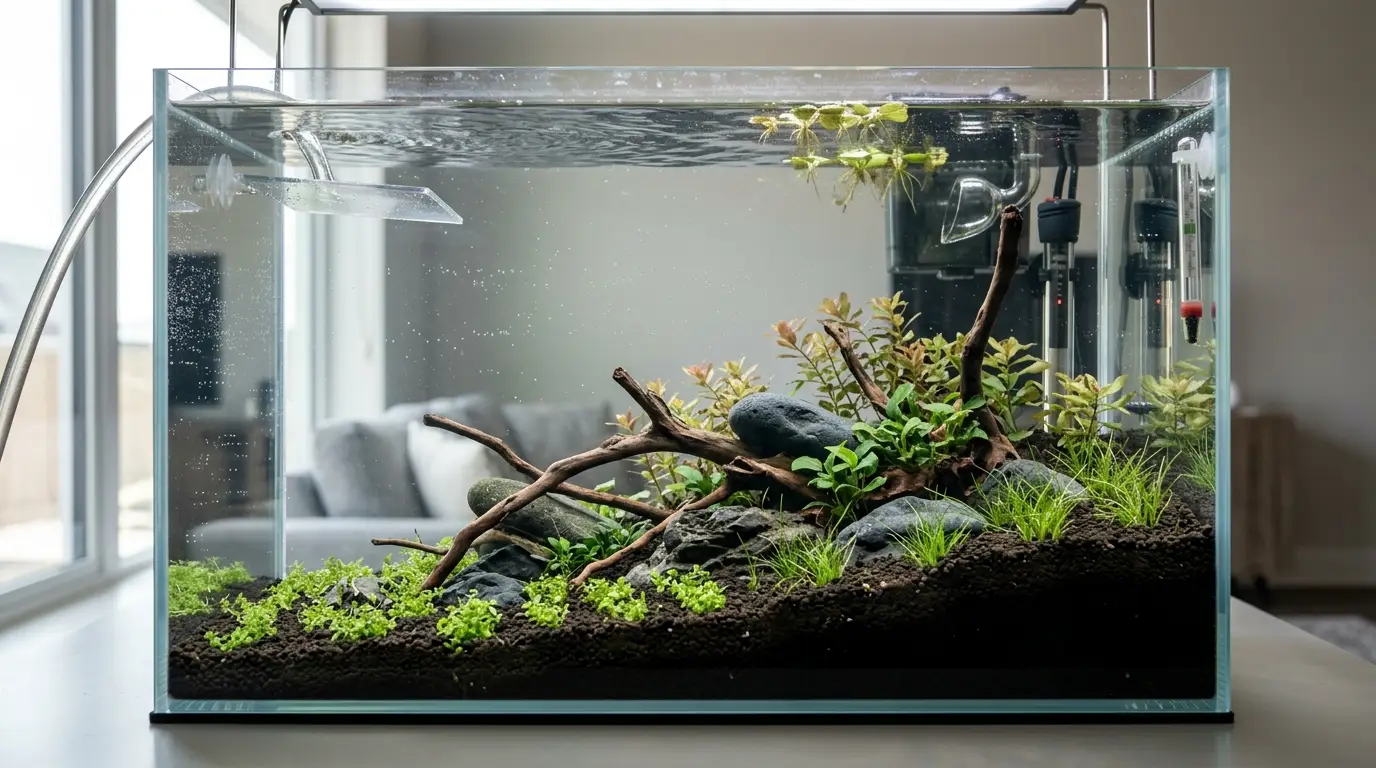
Set the base right to avoid headaches later. Most issues happen in week one.
Simple steps:
- Rinse inert sand and gravel until water runs clear
- Do not rinse aquasoil; only pre-wet it to reduce dust
- Lay your slope, plant heavy from day one, and mist as you go
- Place a plastic bag or plate, then fill slowly to avoid clouds
- If using aquasoil, test ammonia and nitrite and change water often
First month plan:
- Week 1 to 2: 30 to 50 percent water changes every two to three days if soil is active
- Week 3 to 4: switch to weekly changes and begin light dosing
- Start with low to medium light to prevent early algae
These steps help you get the Best Substrate for Planted Freshwater Aquariums off to a clean start.
Maintenance and Long-Term Care
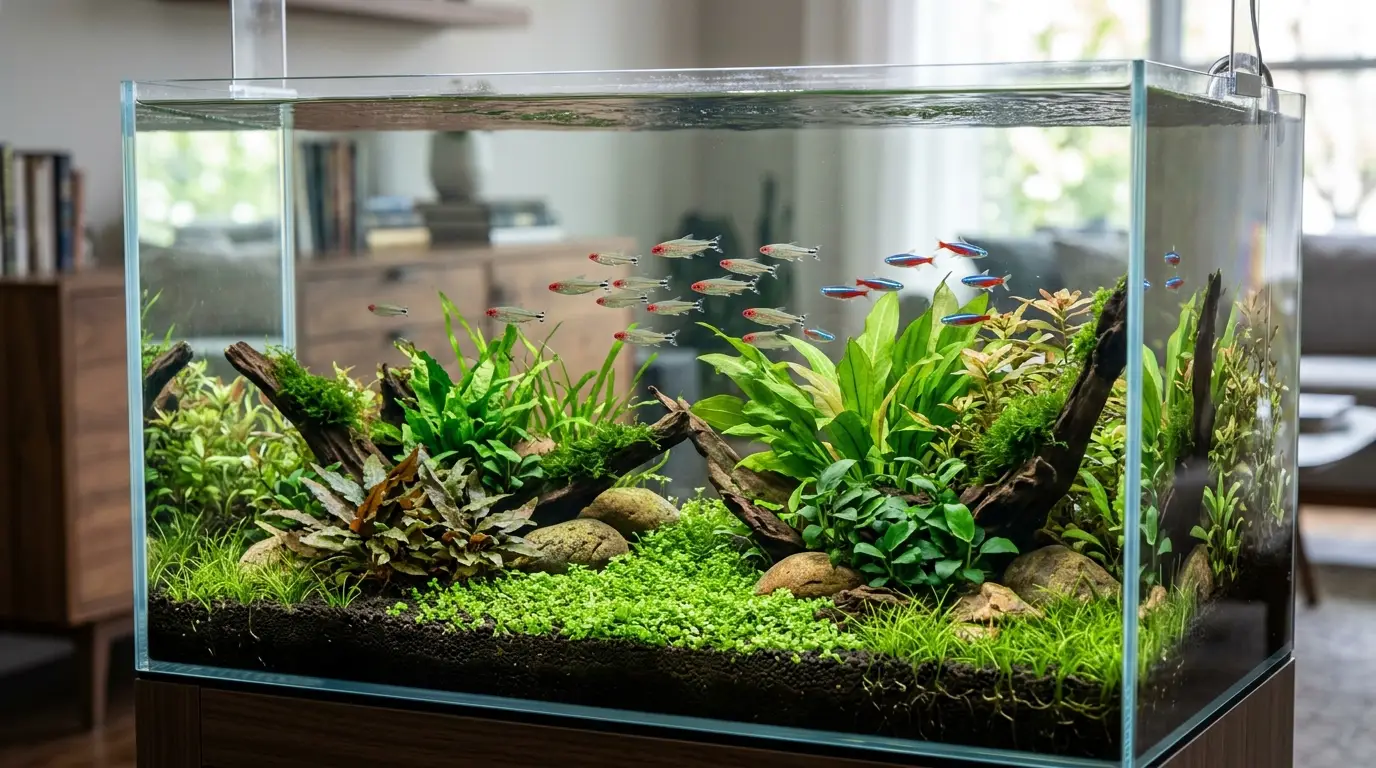
A stable bed needs gentle care. Think light touch, not deep cleaning.
What works long term:
- Vacuum the surface only where debris collects
- Push new root tabs near hungry plants every two to three months
- Trim often so light reaches the substrate and prevents melt
- Watch KH and pH if using buffered soil, and remineralize if needed
- Refresh part of the soil when it breaks down after a few years
Most aquasoils feed well for six to twelve months. After that, they still hold roots but need dosing. This is normal and easy to manage.
Common Mistakes to Avoid
A few traps can ruin growth fast. These are easy to dodge.
- Making the substrate too deep with fine sand and no plants
- Mixing random grain sizes that compact and trap waste
- Over-vacuuming active soils and pulling out nutrients
- Ignoring ammonia spikes from fresh aquasoil
- Planting thinly and letting algae take over early
- Forgetting fish needs when picking grain size
Avoid these and you get closer to the Best Substrate for Planted Freshwater Aquariums with far less stress.
Real-World Examples and Lessons Learned
I have tested many layouts over the years. Here are three quick wins and lessons.
- High-energy carpet tank. 20 gallons with aquasoil and CO2. Dwarf hairgrass rooted in one week and formed a full carpet in six weeks. Needed heavy water changes at first, but growth was stunning.
- Low-tech community with sand. 55 gallons with pool filter sand, lots of root tabs, and moderate light. Amazon swords and crypts thrived and sent runners. Corydoras enjoyed the soft bed and stayed active.
- Nano office scape with fired clay. 7 gallons with porous clay substrate and slow-growing plants. No CO2, light dosing. Very stable and clean look with minimal vacuuming.
These cases taught me that the Best Substrate for Planted Freshwater Aquariums is not one-size-fits-all. Match it to your plants, your water, and your time.
Frequently Asked Questions of Best Substrate for Planted Freshwater Aquariums
What is the Best Substrate for Planted Freshwater Aquariums for beginners?
Aquasoil is the most forgiving for fast plant growth. If you are on a budget, sand or gravel with root tabs is a great second choice.
Will aquasoil harm shrimp or delicate fish?
Fresh aquasoil can release ammonia. Cycle the tank first, do extra water changes, and add shrimp after levels are safe.
How deep should my substrate be?
Aim for 2 inches in front and up to 4 inches in the back. This gives roots space and makes slopes hold their shape.
Can I mix sand and gravel?
It is better to layer than mix. Mixed grains can compact and trap waste, which hurts root health.
Do I need root tabs with aquasoil?
Not at first. Add tabs later near heavy feeders once soil nutrients drop, usually after six to twelve months.
What plants do best in inert gravel?
Cryptocoryne, Amazon swords, vallisneria, and many bulbs grow well. Just add root tabs under the crown and dose the water for stems.
How long does aquasoil last?
Structure can last several years, but nutrients fade in the first year. Keep growth strong with dosing and root tabs.
Conclusion
Substrate is the quiet engine of a planted tank. Choose it with care, set it up well, and your plants will reward you with steady, vivid growth. For speed and color, aquasoil often wins. For value and ease, sand or gravel with root tabs can match results with a little patience.
Use the tips here to select and maintain the Best Substrate for Planted Freshwater Aquariums for your goals. Start small, watch your plants, and adjust as they guide you. Ready to build your best scape yet? Share your plan or questions in the comments, and subscribe for more hands-on aquascaping guides.
2 Comments