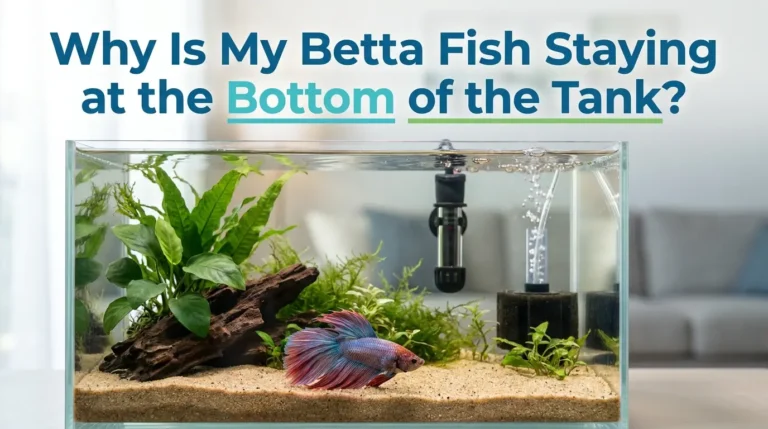
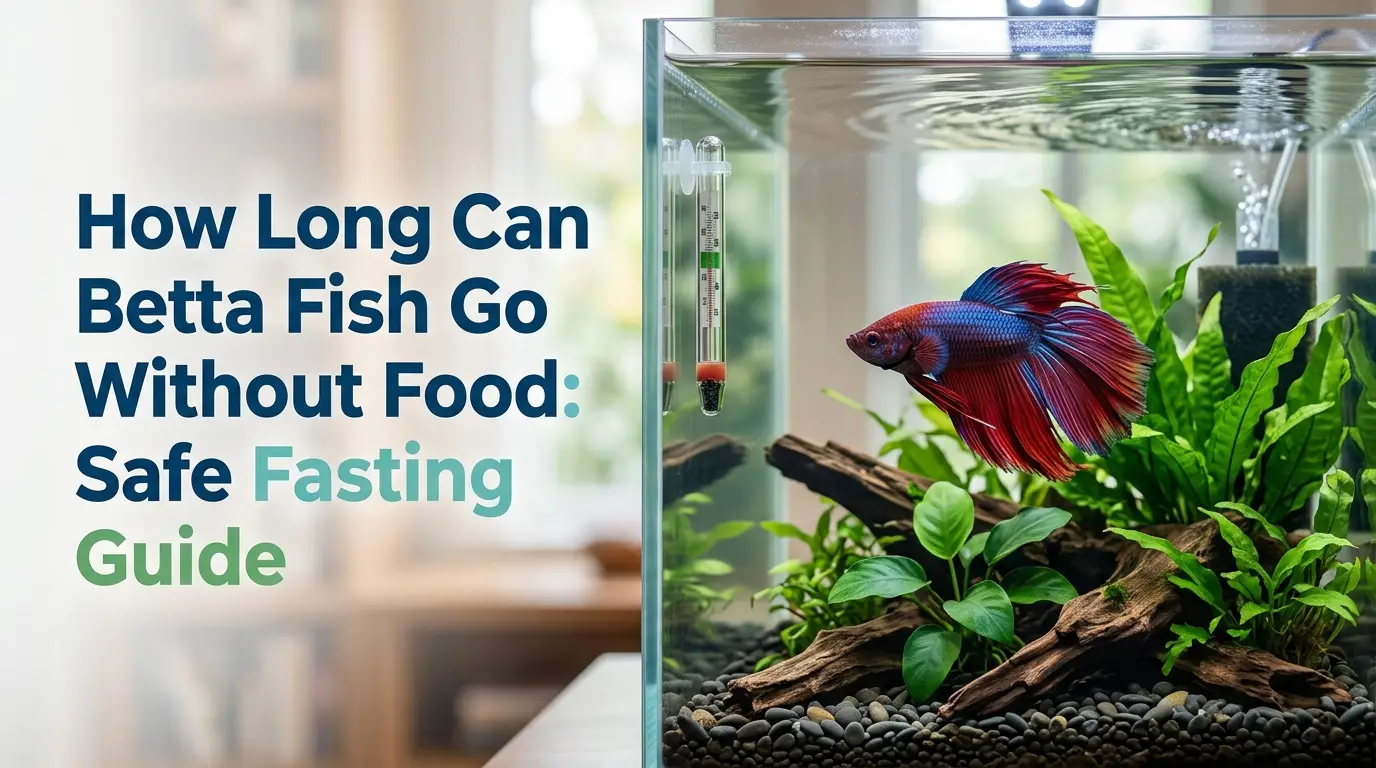
Most healthy adult bettas can survive 7–14 days without food, but it’s risky.
That said, how long can betta fish go without food is not a simple number. It depends on age, health, tank setup, and prep. I’ve kept bettas for years and tested safe fasting windows, feeders, and travel plans. In this guide, I share what works, what fails, and how to protect your fish. If you want a clear, expert take on how long can betta fish go without food and how to plan time away, you’re in the right place.
What actually determines how long a betta can go without food
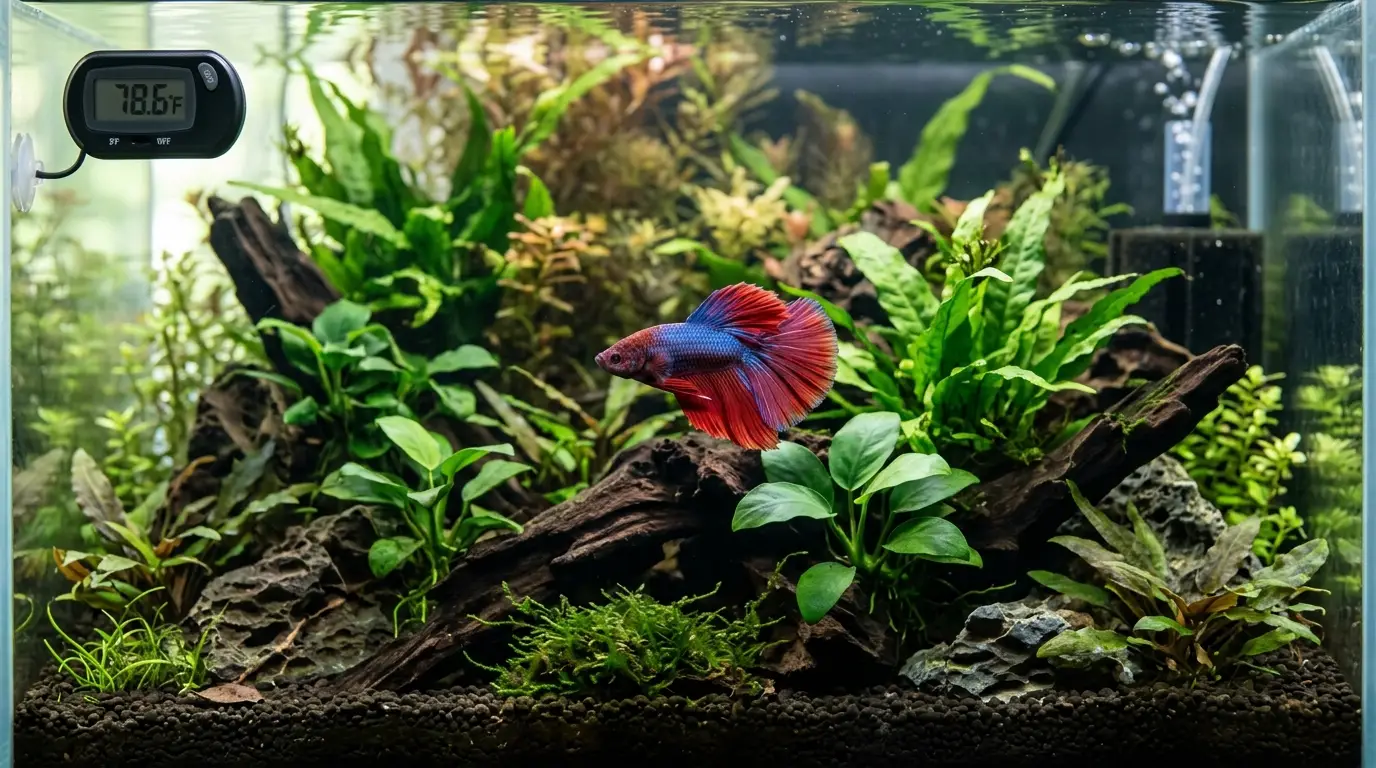
Betta fish are tropical fish with a fast metabolism. Warm water speeds that up. Cool water slows it. A stable heater is key.
Age and health matter. Young bettas and sick fish need food more often. Healthy adults handle short breaks best.
Tank stability is huge. Clean water, a working filter, and low stress help a betta cope. Poor water turns a short fast into a health risk.
As a rule, how long can betta fish go without food varies with:
- Water temperature. Warmer water means higher energy use.
- Body condition. A well-fed, lean fish copes better than a skinny one.
- Stress level. Moves, bullying, or current drain energy.
- Disease load. Ill fish burn energy faster and need support.
Safe timelines: how long can betta fish go without food?
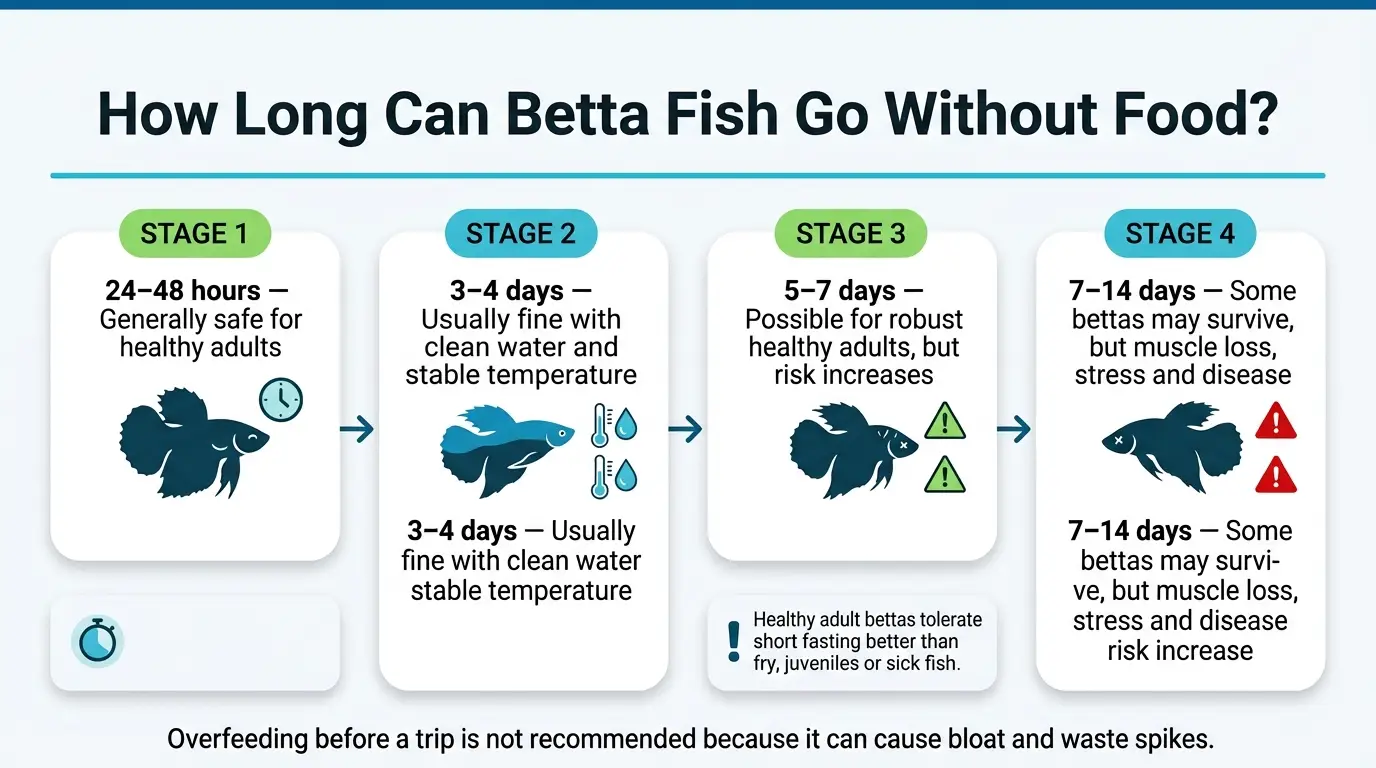
Here is the simple scale I use for how long can betta fish go without food:
- 24–48 hours. Safe for healthy adults. I often do this once a week to guard against bloat.
- 3–4 days. Usually fine if water is clean and temp is steady.
- 5–7 days. Possible for robust fish, but risk rises. I only do this with prep and checks.
- 7–14 days. Many bettas survive, but it is not kind. Muscle loss, stress, and disease risk go up.
A betta does not need extra food before a fast. Overfeeding before a break causes bloat and waste spikes. Keep normal meals or even fast the day before to clear the gut.
Warning signs your betta needs food now

Watch your fish. Behavior speaks louder than a calendar.
Common red flags:
- Sunken belly and sharp-looking face
- Lethargy, clamped fins, or hiding more than normal
- Faded color or ragged fins from poor immunity
- Snapping at anything that moves from pure hunger
If you see two or more signs, end the fast. Feed small, easy meals and test water.
Smart feeding plan before, during, and after time away
How long can betta fish go without food depends as much on your plan as the fish. Use this simple flow:
Before you go:
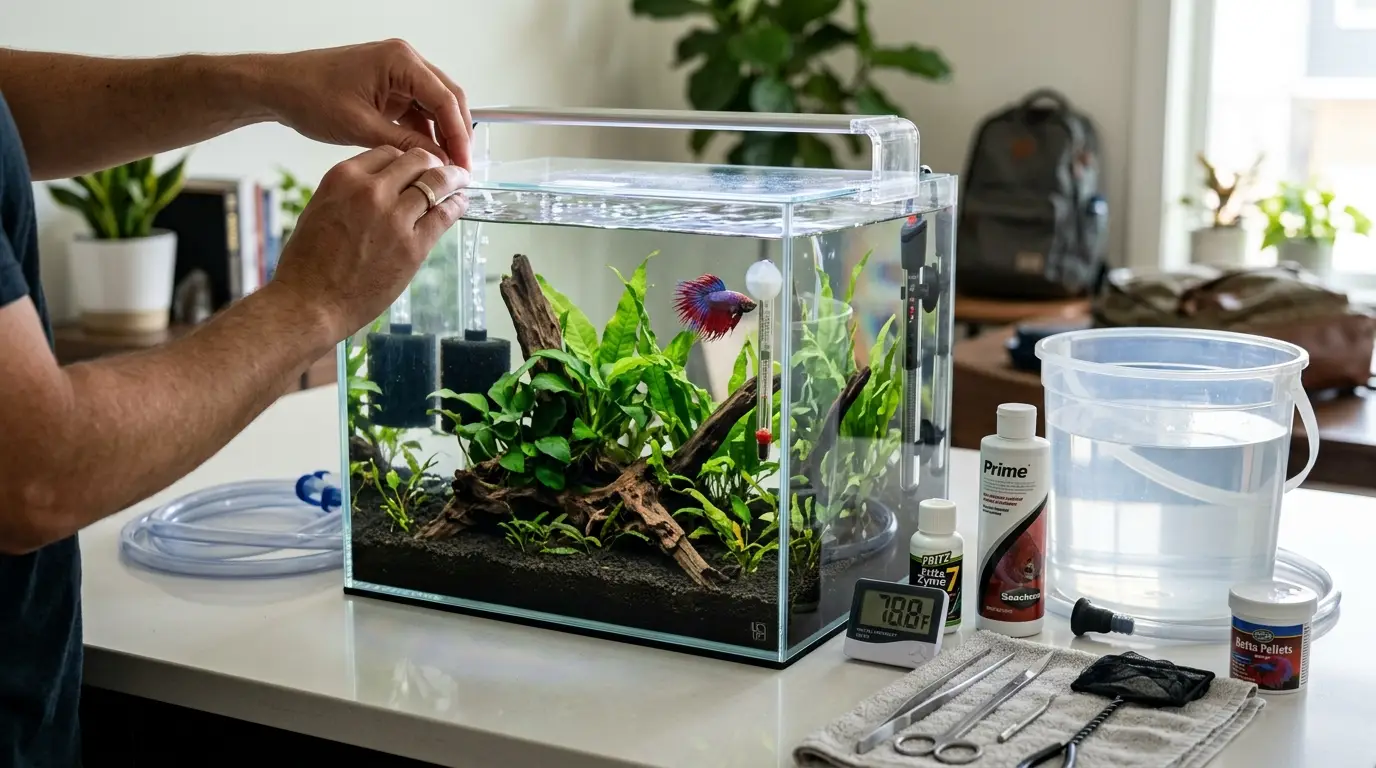
- Do a 30–50% water change 24–48 hours before.
- Clean the filter intake and wipe the glass.
- Fast the fish the day before you leave.
- Check the heater and thermometer are accurate.
While you are away:
- For 3–4 days, skip feeding if your fish is healthy.
- For more than 4 days, use a sitter or a reliable auto-feeder.
When you return:
- Feed a small meal first. Wait a few hours. Offer a second light meal if the belly looks normal.
- Use easy foods at first. Soaked micro-pellets or thawed frozen daphnia work well.
- Resume normal feeding over 2–3 days to avoid bloat.
vacation feeding solutions that really work
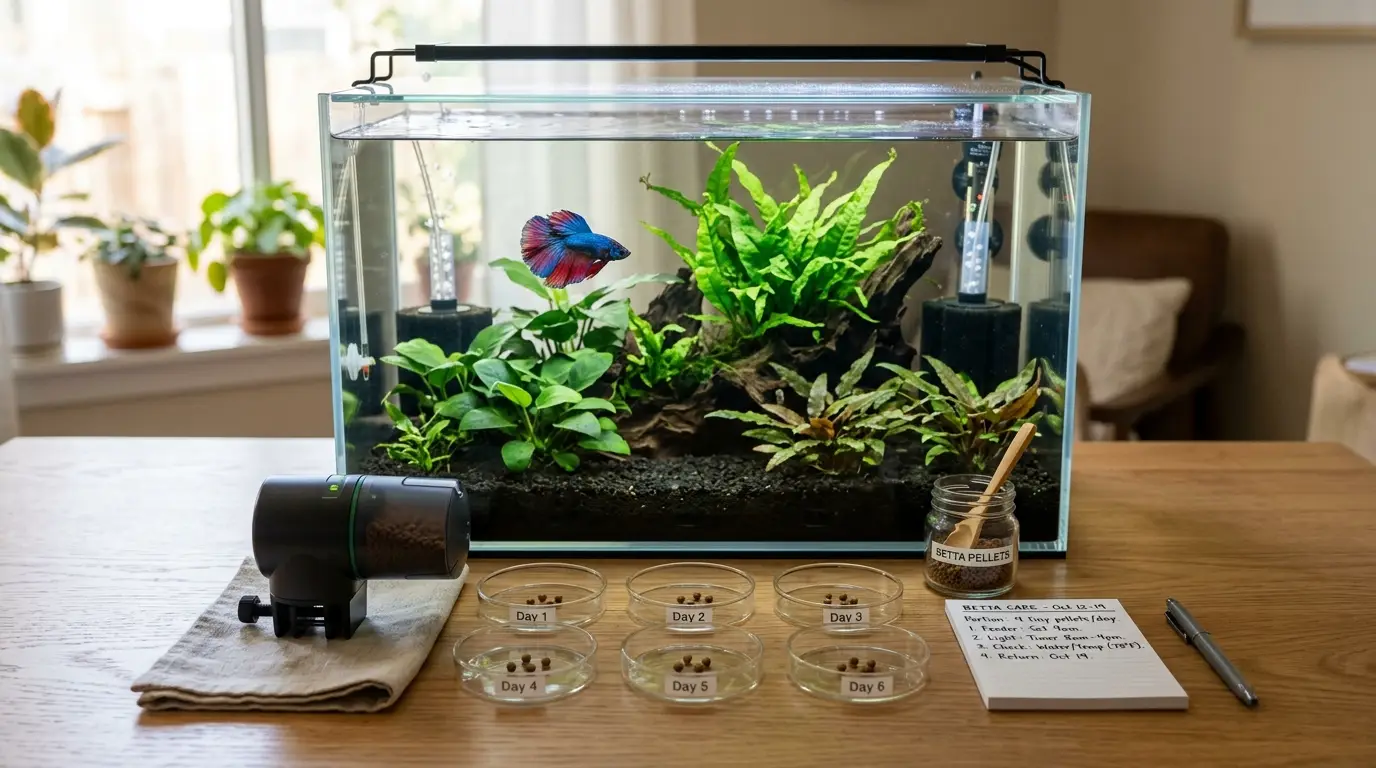
Not all solutions are equal. Some are risky.
Best options:
- Trusted sitter. Pre-portion meals in labeled cups so they cannot overfeed.
- Quality auto-feeder. Test it for a full week before you leave. Betta pellets are tiny, so adjust the slot.
Use with caution:
- Vacation feeder blocks. These often pollute water and are not made for bettas.
- Live plants. Bettas do not eat plant roots for protein. This is a myth.
Small extra aids:
- Put lights on a timer to keep a normal day–night rhythm.
- Add a lid or cover. It cuts drafts and heat loss.
Water quality and temperature matter more than you think
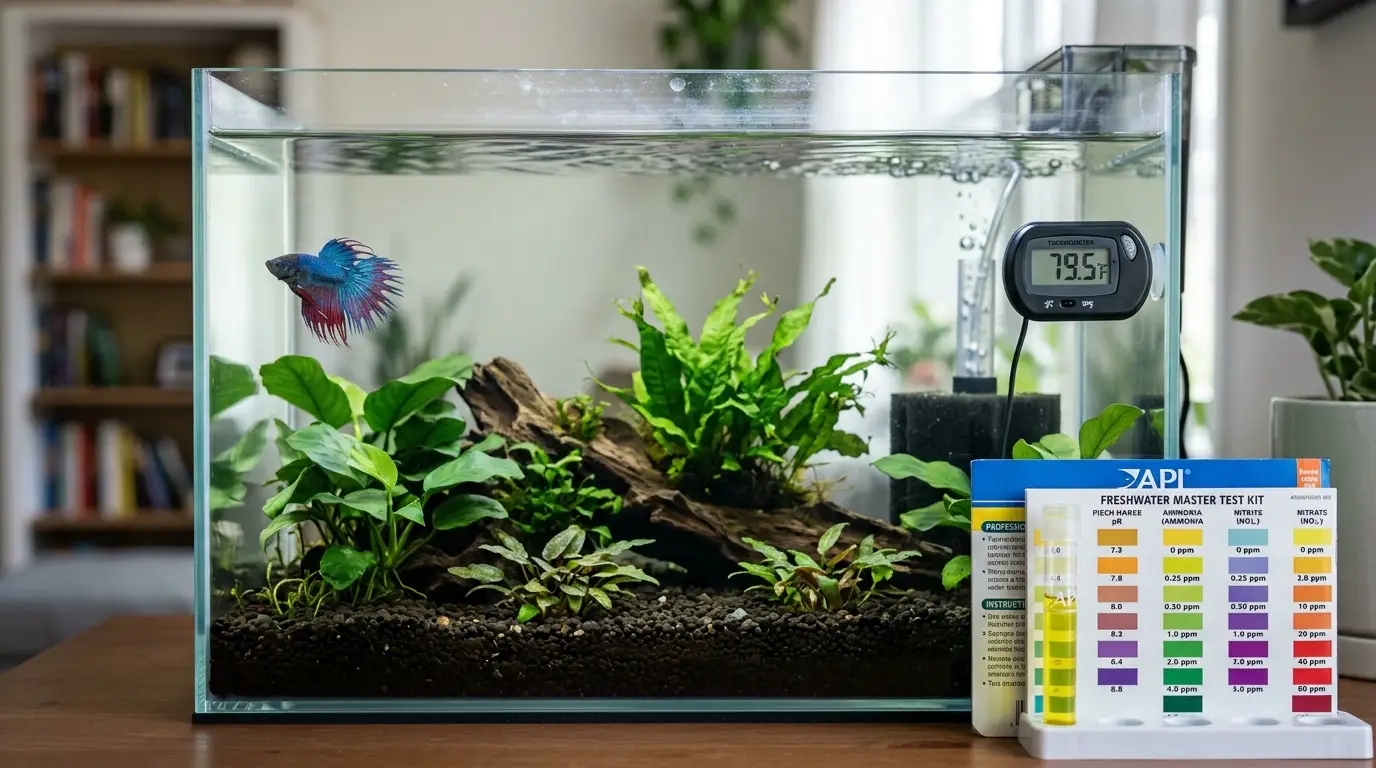
Food is only part of the story. Water is the whole stage. When I plan how long can betta fish go without food, I focus on clean, warm water first.
Keep the water stable:
- Temperature. Aim for 78–80°F. Sudden drops stress your fish.
- Ammonia and nitrite. These should read 0 ppm. Nitrate should stay low with water changes.
- Gentle flow. Bettas like calm water. A baffle on the filter can help.
Good water helps your fish hold energy. Bad water forces your fish to burn it.
Special cases: fry, juveniles, seniors, and sick fish
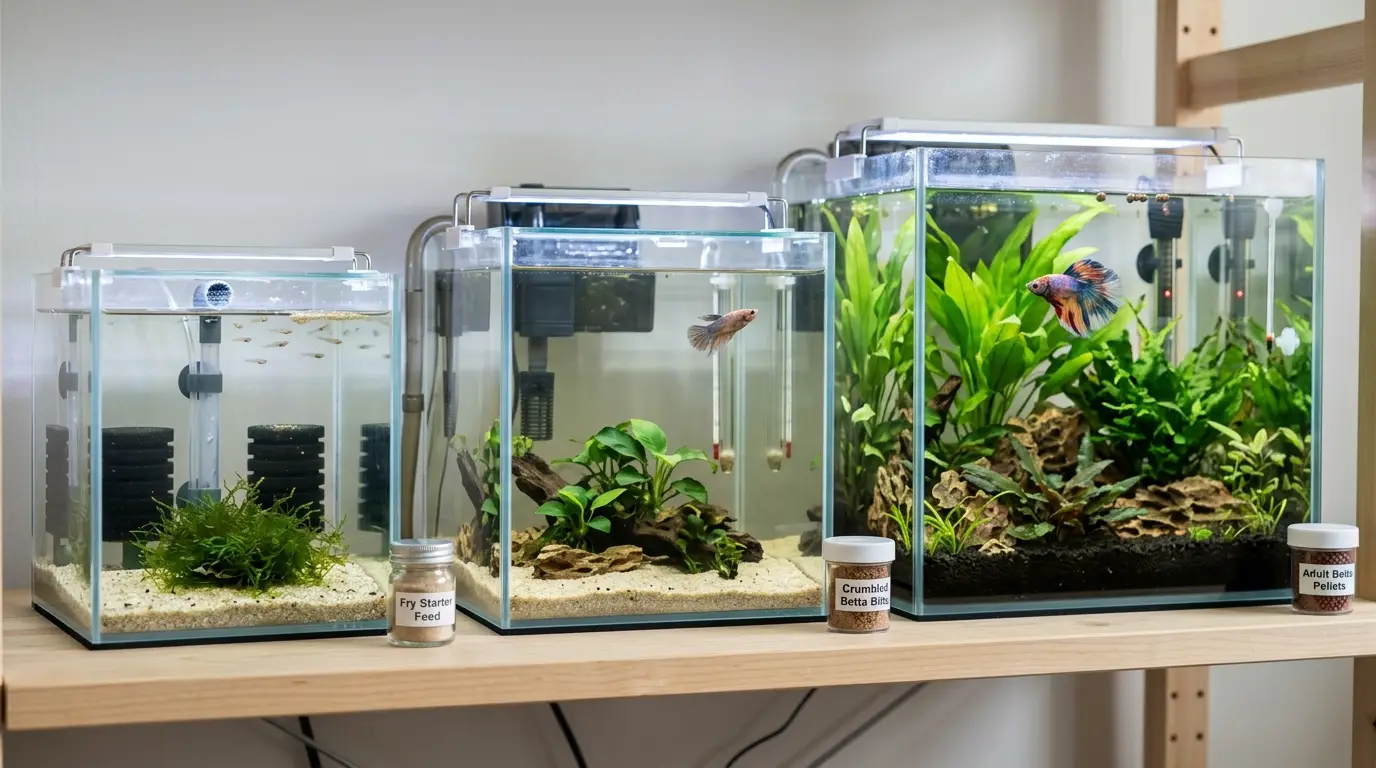
Some bettas should not fast for long. In some cases, not at all.
- Fry and small juveniles. They need tiny meals several times per day. Do not leave them unfed.
- Seniors. Older fish often have weak digestion and less stored energy. Keep breaks short.
- Sick fish. Ill fish need stable meals, clean water, and often medicated care.
For these cases, how long can betta fish go without food is very short. Line up a sitter or use a careful auto-feeder.
Simple betta feeding schedule and portions
A steady plan reduces guesswork about how long can betta fish go without food.
Daily routine for most adults:
- Morning. 2–3 high-quality betta pellets, soaked for a few seconds.
- Evening. 2 pellets or a tiny portion of thawed frozen food like daphnia or brine shrimp.
- One fasting day each week. This prevents constipation and clears the gut.
Tips that help:
- Adjust for pellet size. Larger pellets mean fewer pieces.
- Watch the belly. A slight curve is fine. A big bulge means too much.
- Remove uneaten food after a few minutes.
Lessons from my own betta care
I have left healthy bettas unfed for three-day weekends many times. With clean water and steady heat, they did great. No color loss. No stress signs.
On a seven-day trip, an auto-feeder worked, but only after a full week of tests. The first model dumped too much food. The one that worked had a very fine slot. Pre-testing saved my fish and my filter.
From my notes, how long can betta fish go without food without harm is 3–4 days for a fit adult in a stable tank. Past that, I always add human eyes or a tested device.
Myths and facts about betta feeding breaks
Let’s clear up common claims.
- Myth: Bettas can live off plant roots. Fact: They need animal protein. Plants do not meet that need.
- Myth: More food before a trip helps. Fact: It risks bloat and a dirty tank.
- Myth: Vacation blocks are safe. Fact: They often crumble and spike ammonia.
- Myth: Cold water slows them so fasting is safer. Fact: Cold water weakens immunity and stresses the fish.
If you plan how long can betta fish go without food, base it on care, not myths.
Overfeeding risks vs short fasting risks
A short, planned fast is often safer than daily overfeeding. Overfeeding causes bloat, constipation, and swim bladder issues. It also fouls the water.
Short fasts can help digestion reset. They also reduce waste. For a healthy adult, a weekly 24-hour fast is a simple, safe habit.
When you weigh how long can betta fish go without food, remember this balance. A little less is often more.
Frequently Asked Questions of how long can betta fish go without food
Can a betta go a weekend without food?
Yes, a healthy adult can handle 2–3 days with no food. Make sure water is clean and the heater is steady.
Is 7 days without food too long for a betta?
Many survive seven days, but risk is real. Expect weight loss, stress, and higher disease risk.
Do betta fry or juveniles tolerate fasting?
No. Fry and young fish need tiny meals several times a day. Arrange a sitter or skip the trip.
What should I feed after a fasting period?
Start light with soaked pellets or thawed daphnia. Give small portions, wait, then repeat if the belly looks normal.
Will plants or feeder blocks keep my betta fed?
No. Plants do not provide the protein bettas need, and feeder blocks often foul water. Use a sitter or a tested auto-feeder instead.
Conclusion
Healthy adult bettas can survive a short break, but planning is everything. Keep water clean, heat steady, and portions small when you return. For longer trips, use a sitter or a tested feeder to avoid stress and waste spikes.
If you remember one thing, let it be this: focus on stable water first, then plan food. Want more care tips like this? Subscribe for new guides, or share your travel setup in the comments so others can learn from your experience.