
Most tanks can skip food for short trips; plan longer absences well.
If you are feeding aquarium fish while on vacation, you want simple, safe steps that actually work. I have managed community tanks, reefs, and nano setups through weekends and month-long trips. In this guide, I share what to do, what to avoid, and how to keep fish healthy without stress or guesswork. Stick with me for a friendly, expert plan you can copy and trust.
How Long Fish Can Safely Go Without Food
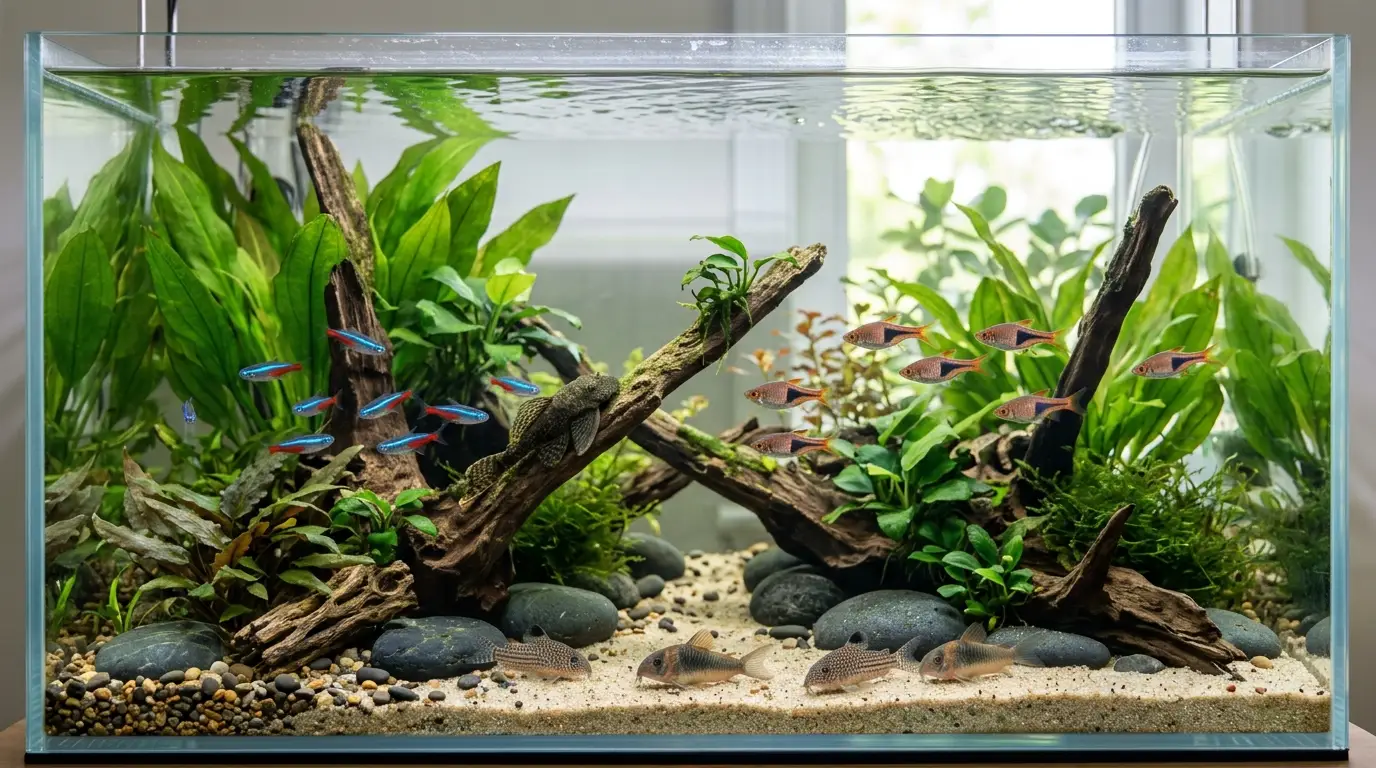
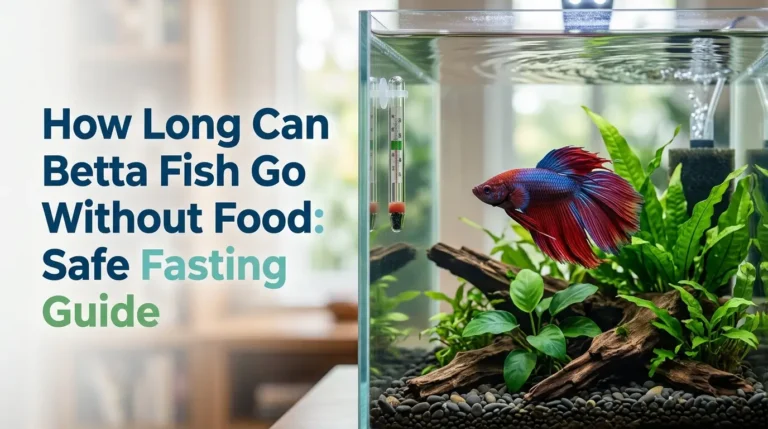
Healthy adult fish can fast for several days with no harm. Many community freshwater fish handle 5 to 7 days. Larger, slow-feeding species often go 10 to 14 days.
Small, high-energy fish need more care. Fry, very young fish, and species like anthias may need daily feeding. Shrimp graze all day and do fine with biofilm. Do not “tank-stuff” food the night before. That causes cloudy water and can trigger ammonia spikes.
If you are feeding aquarium fish while on vacation for a week or less, fasting is often safest for stable tanks. Longer trips call for a plan with automation or a sitter.
Vacation Feeding Options Compared

Each method has trade-offs. Pick what fits your tank, fish, and trip length. Here is how I rank the common choices when feeding aquarium fish while on vacation.
- Do nothing for short trips Best for mature tanks and healthy adult fish. Simple and safe for 3 to 7 days.
- Automatic fish feeder Best all-around for pellets. Reliable with a dry setup and test run.
- Gel-based vacation blocks Safer than chalk blocks. Use only after a trial week at home.
- Live plants and algae Great for grazers like mollies, plecos, and many snails. Think of it as a snack bar.
- Fish sitter Ideal for picky eaters, fry, or long trips. Requires clear prep and limits.
Avoid chalky “holiday” blocks in small tanks. They dissolve fast, swing water chemistry, and can foul filters. When feeding aquarium fish while on vacation for longer than 10 days, I like a hybrid plan: auto feeder plus a light sitter check once a week.
Prepare Your Aquarium Before You Leave
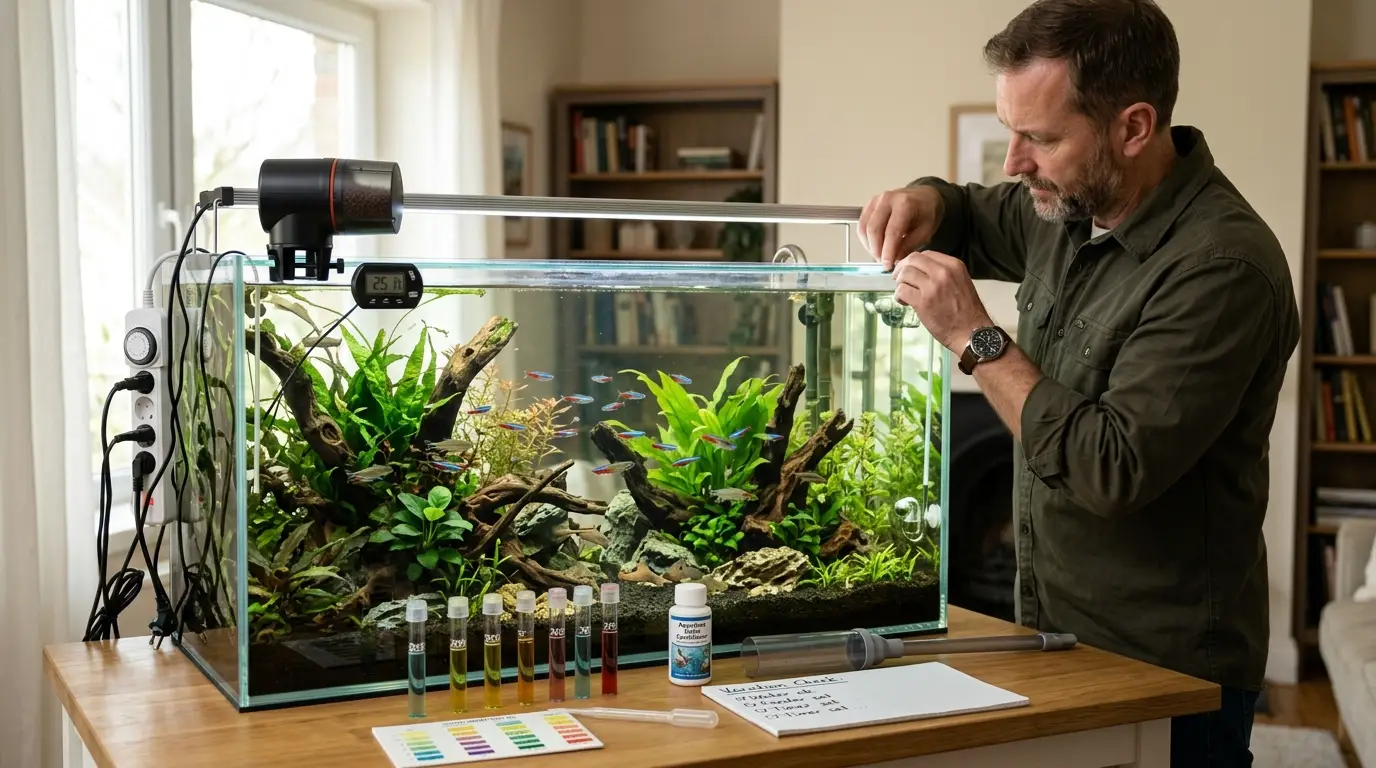
Stable water beats extra food every time. Do these steps to keep fish safe and calm.
Seven days before you go:
- Test water and fix problems first Check ammonia, nitrite, nitrate, and pH.
- Clean filter media lightly Rinse in tank water, not tap, to save bacteria.
- Trim plants and remove detritus Reduce rot and trapped waste.
- Set lights on a timer Keep day and night cycles steady.
- Taper feeding a little Reduce portions by 10 to 20 percent.
One day before you go:
- Do a 25 to 35 percent water change Match temperature and dechlorinate.
- Wipe lids and check airflow Reduce humidity and salt creep near feeders.
- Top off and secure cables Lower risk of pump or heater failure.
If you are feeding aquarium fish while on vacation with an auto feeder, run a full rehearsal for 3 days before you leave. Watch how food falls and how fish respond.
Automatic Fish Feeders: Setup That Actually Works
Auto feeders shine with pellets and granules. Flakes clump and dose unevenly. Here is my field-tested setup for feeding aquarium fish while on vacation with a feeder.
- Keep food dry Add a desiccant pack in the feeder’s chamber area if the design allows. Aim a small fan or keep the lid sealed to fight humidity.
- Use a feeding ring Drop food in the same spot so it does not ride surface skimmers or overflow weirs.
- Calibrate portions Start tiny. One rotation can be a lot. I tape over part of the opening to fine-tune dosing.
- Test for three days Watch fish, check for leftovers, and verify the timer.
- Change batteries before you go Even “fresh” batteries can drop in cold rooms. Plug-in models need a surge protector.
Wi‑Fi feeders are handy but not failproof. I use app alerts as a bonus, not as the only safety net. If your fish need two small meals daily, split feedings 8 to 12 hours apart.
Using Vacation Blocks and Gel Foods Safely
Gel-based blocks release food more evenly than chalk blocks. They still raise nutrients. Trial runs matter. Here is how to lower risk when feeding aquarium fish while on vacation with blocks.
- Pick gel over chalk Gel blocks are more stable and less messy.
- Match block size to tank Use the smallest block that covers your days away.
- Test for one week at home Watch nitrate and phosphate. Increase water changes if needed.
- Place near gentle flow Too much flow melts blocks fast. Too little flow starves fish in corners.
- Do not use for fry or picky eaters These fish often ignore blocks.
If you see a film or white fuzz on the block, remove it. That is a biofilm bloom and can lower oxygen in small tanks.
When You Need a Fish Sitter

A sitter is best for long trips, fry, marine anthias, or shy eaters. It also helps if your auto feeder cannot use your food type. Make the job easy and clear.
- Pre-portion food Use a pill organizer or small cups. One cup per day. No refills.
- Write a one-page guide Include photos of normal behavior, signs of trouble, and who to call.
- Limit tasks to two Feed and check temperature. No water changes unless trained.
- Set a video check-in A 60-second clip each visit can save a tank.
When feeding aquarium fish while on vacation with a sitter, train them before you leave. Show how much food is right. Ask them to skip a feeding if fish ignore food.
Special Cases and Species Notes
Not all fish handle fasting the same. Use this quick guide while planning feeding aquarium fish while on vacation.
- Fry and juveniles Need 2 to 4 small meals a day. Use a sitter or specialized feeder.
- Bettas Often fine for 3 to 5 days. Keep water warm and calm. Avoid blocks.
- Goldfish and cichlids Can fast a few days but overeat if cubes dissolve. Prefer auto feeders with pellets.
- Herbivores Add blanched veggies or algae clips before you go. Use live plants as a buffer.
- Saltwater anthias and small wrasses Need frequent small feeds. Set auto feeder with tiny pellets or get a sitter.
- Shrimp and snails Graze on biofilm and algae. Light feeding is fine for a week in planted tanks.
If you run a reef, stable salinity matters more than food for short trips. An auto top-off and a feeder for pellets make a strong combo.
Sample Vacation Plans You Can Copy

Use these simple templates to remove guesswork when feeding aquarium fish while on vacation.
Three-day weekend:
- Skip feeding Healthy adult fish are fine.
- Do a small water change the day before Keep filters clear and lights on timers.
Seven-day trip:
- Auto feeder or safe fasting Choose pellets with a calibrated auto feeder.
- Add live plants or a veggie clip For grazers only.
- Light sitter optional One check midweek for peace of mind.
Fourteen-day vacation:
- Auto feeder plus weekly sitter Tiny portions twice a day.
- Pre-portioned backup cups For sitter override if fish look thin.
- Two small water changes Sitter does a 10 percent change each week if trained.
Thirty days away:
- Auto feeder, weekly sitter, and auto top-off Critical for reefs and large tanks.
- Remote camera Point at the surface and the feeder zone.
- Maintenance plan Sitter replaces filter floss weekly and checks for clogs.
These patterns keep food steady, water stable, and stress low.
What To Do When You Return
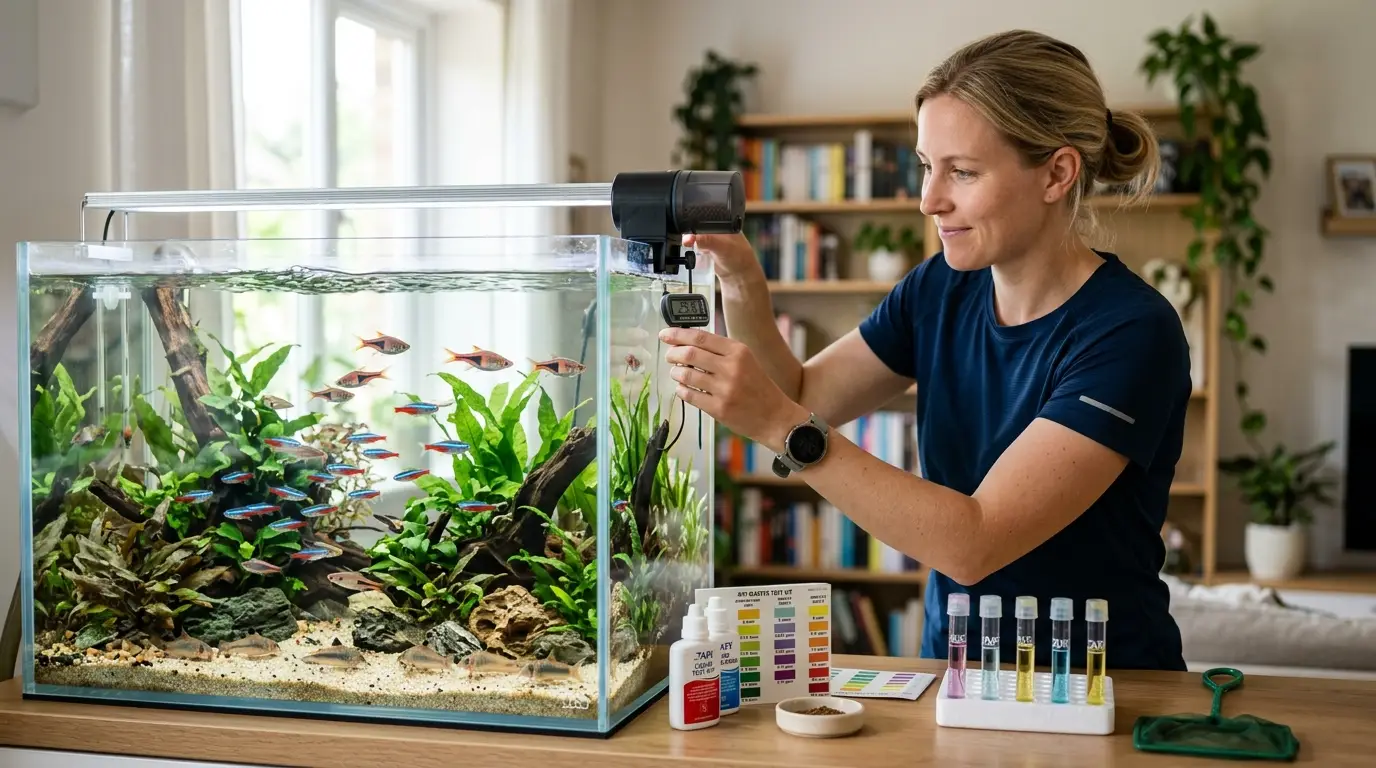
Do not dump a big meal right away. Your fish will beg. Stay calm and follow this simple reset.
- Check fish and equipment Look for torn fins, gasping, or stuck pumps.
- Test water First ammonia and nitrite, then nitrate and pH.
- Feed a small meal Wait 15 minutes and remove leftovers.
- Do a partial water change 20 to 30 percent is enough.
- Resume normal feeding After two to three light meals go well.
When feeding aquarium fish while on vacation, the real win is a soft landing when you get home. Patience prevents spikes and keeps your cycle safe.
Frequently Asked Questions of feeding aquarium fish while on vacation
How many days can fish go without food?
Most healthy adult freshwater fish can go 5 to 7 days. Larger, slower eaters can reach 10 to 14 days, but fry should never fast.
Are automatic fish feeders reliable?
Yes, if you use dry pellets, keep food dry, and test for a few days. Avoid flakes and always replace batteries before you leave.
Should I use a vacation feeder block?
Gel blocks can work after a trial run. Avoid chalk blocks in small tanks due to cloudy water and ammonia spikes.
Is it better to underfeed or overfeed before a trip?
Underfeed. Overfeeding causes waste, cloudy water, and filter stress. A small, steady plan beats one big meal.
Can I ask a neighbor to feed my fish?
Yes, but pre-portion every dose and leave a one-page guide. Limit tasks to feeding and a quick check of temperature and behavior.
What food works best in auto feeders?
Small pellets or granules flow best and dose evenly. Flakes clump with humidity and can dump too much at once.
Will plants feed my fish while I am gone?
Plants and algae help grazers, shrimp, and snails. They do not replace full meals for fry or high-energy fish.
What happens if my feeder gets wet?
Food will clump and jam the drum. Keep lids dry, use a desiccant, and aim the feeder away from splashes or bubblers.
Conclusion
Feeding aquarium fish while on vacation is simple when you plan for food, stability, and backup. Short trips often need no feeding at all. Longer trips call for a dry, calibrated auto feeder, or a sitter with clear, pre-portioned meals.
Start small. Run a test week. Write a one-page guide. Your fish will thank you with calm behavior and bright color when you return. Want more step-by-step care tips like this? Subscribe, share your travel plans in the comments, and let’s keep your tank healthy wherever you go.