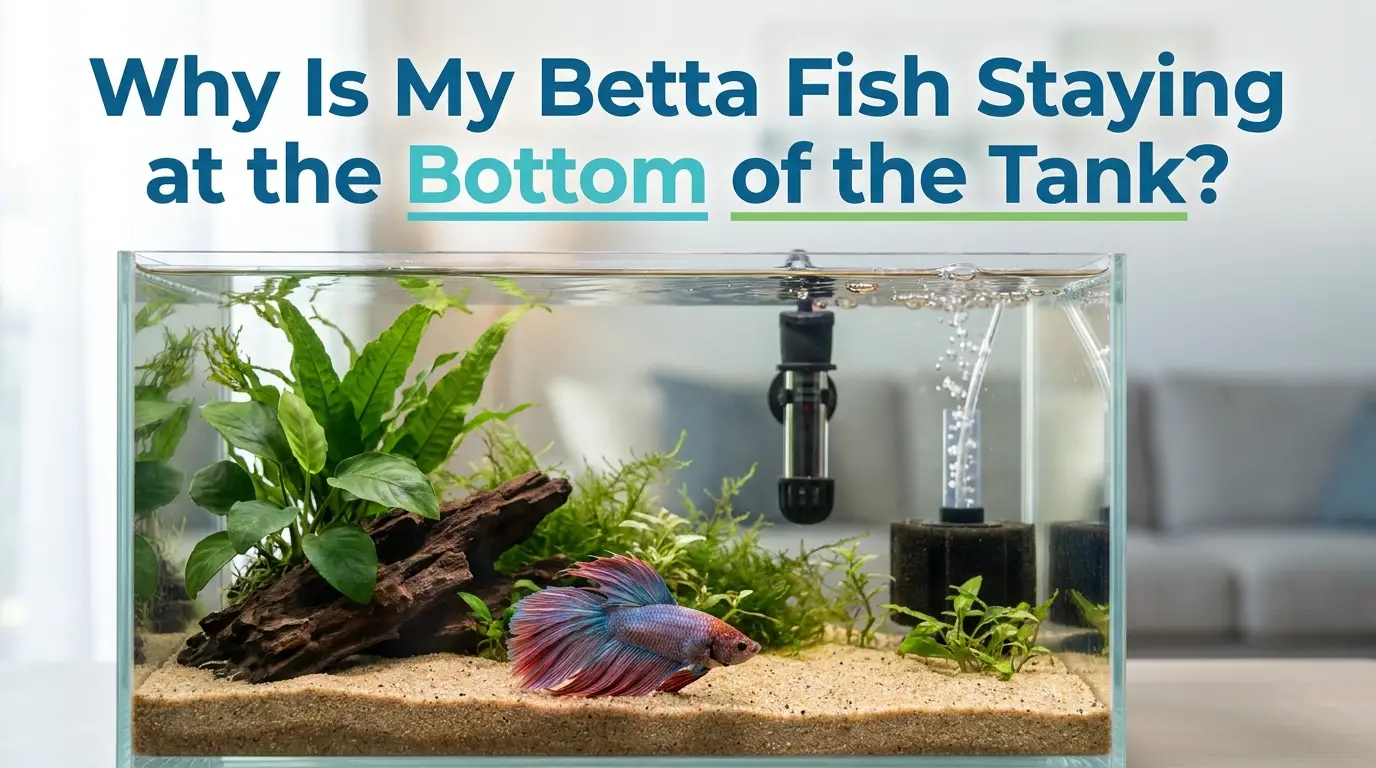
Most bettas rest at the bottom due to cold water, bad water, or illness.
If you’ve asked yourself Why Is My Betta Fish Staying at the Bottom of the Tank?, you’re not alone. I’ve kept and rehabbed many bettas over the years, and this behavior is one of the top signs I check. In this guide, I’ll show you what’s normal, what’s not, and the exact steps I use to fix it fast, with clear tips you can apply today.
Understanding Normal Betta Behavior
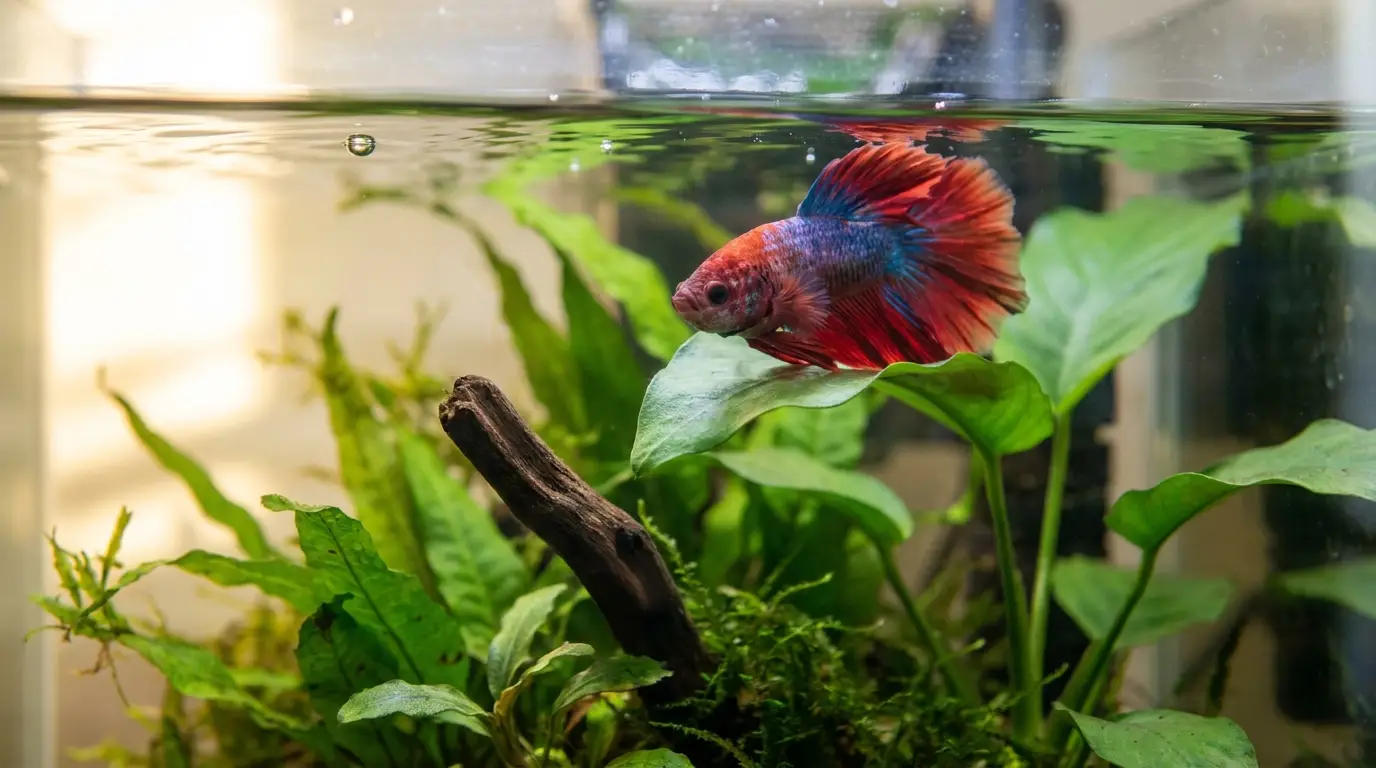
Bettas nap. They may sit on leaves, driftwood, or even the substrate. Short rests are normal. Long rests with dull color, clamped fins, or gasping are not.
Your fish may hang near the heater or under a plant to feel safe. Slow moments are fine. But if you wonder, Why Is My Betta Fish Staying at the Bottom of the Tank?, first learn what healthy rest looks like.
Healthy signs include bright color, quick response to you, and smooth breathing. If your fish perks up when you come near, that is a good sign. If not, dig deeper.
Top Reasons Your Betta Is Lying On The Bottom
Many things can cause bottom-sitting. Some are easy fixes. Some need treatment.
Common causes:
- Cold water lowers energy and slows digestion.
- Ammonia or nitrite burns gills and makes fish weak.
- Nitrate is high, which stresses the fish over time.
- Strong filter flow pushes your betta down.
- Constipation or swim bladder trouble makes it hard to stay up.
- Stress from a new tank, moves, or bright lights.
- Illness like fin rot, velvet, or internal parasites.
- Old age, which brings more resting and slower moves.
I once rescued a betta named Mango who hugged the gravel. The room was cool. The tank was 72°F. I set the heater to 79°F and did a water change. Mango was cruising midwater the next day.
Water Quality And Tank Conditions To Check First
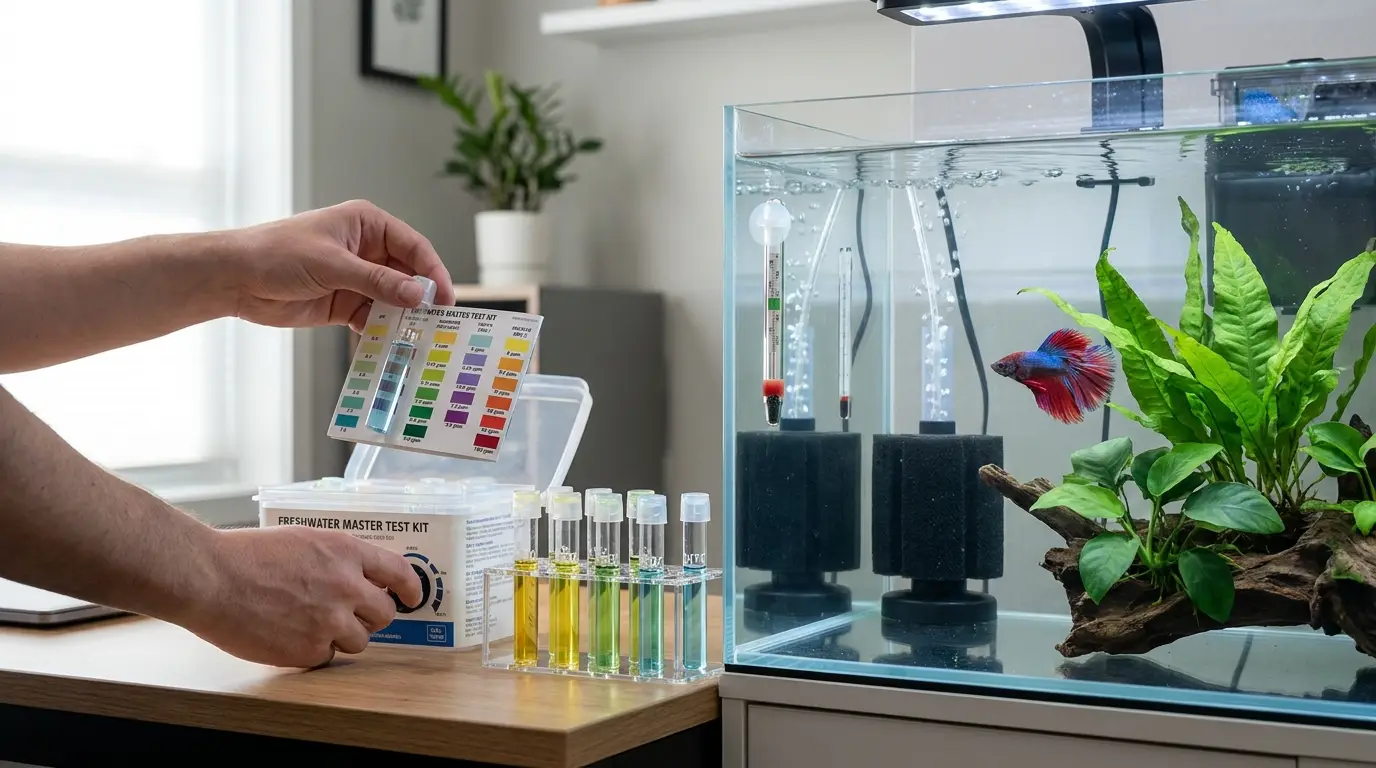
Water quality is the number one reason I see for this problem. It is also the fastest win.
Key targets:
- Temperature: 78–80°F for steady energy. A heater is not optional.
- Ammonia: 0 ppm at all times.
- Nitrite: 0 ppm at all times.
- Nitrate: under 20 ppm is best. Under 40 ppm is still okay.
- pH: stable, around 6.5–7.5. Stability beats chasing a number.
Action steps:
- Test water with a liquid test kit. Strips are less precise.
- Do a 30–50% water change if ammonia or nitrite show at all.
- Use a water conditioner that removes chlorine and chloramine.
- Make sure the tank is cycled. If not, cycle with a filter and bacteria.
If you are asking Why Is My Betta Fish Staying at the Bottom of the Tank?, test water first. Even small ammonia can make a strong fish act weak.
Health Problems That Cause Bottom-Sitting
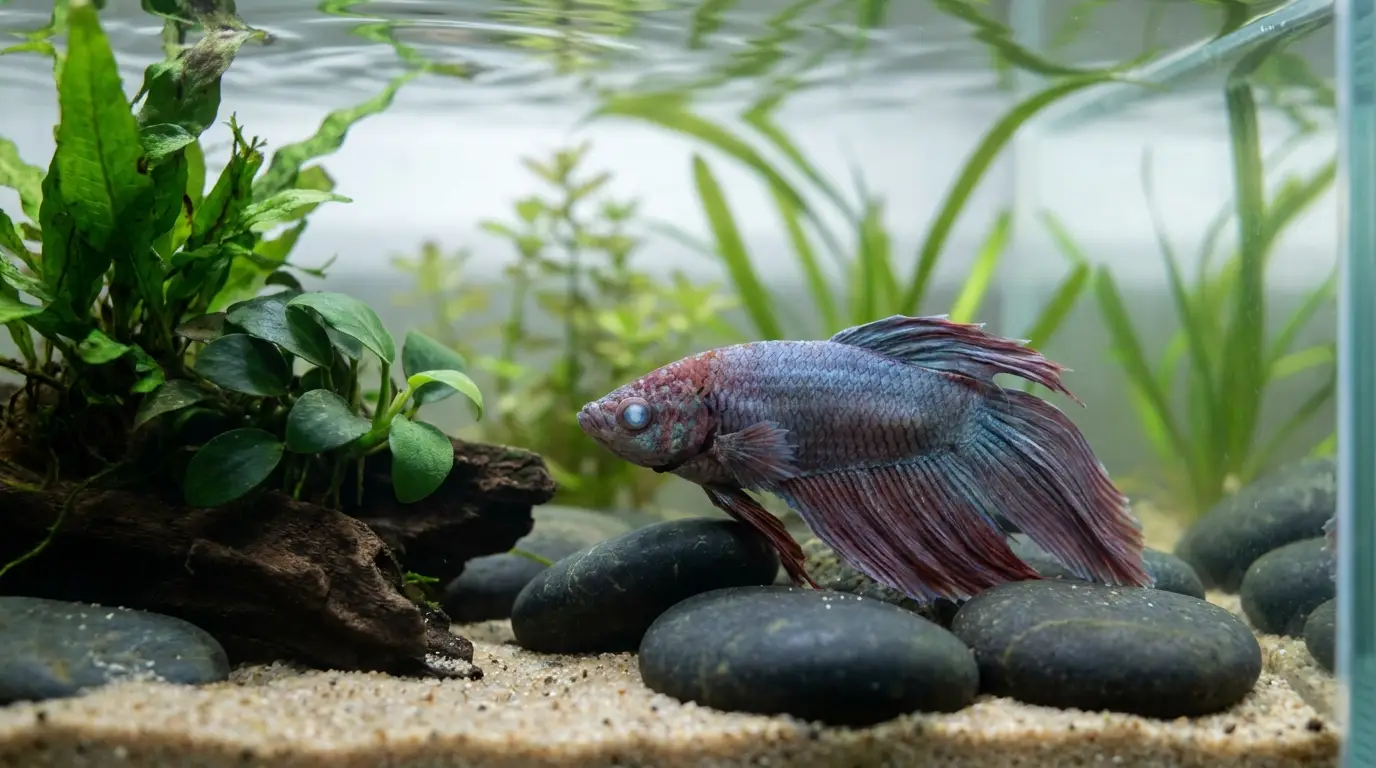
Illness can pin a betta to the substrate. Look for clues on the body and fins.
What to watch:
- Clamped fins, red streaks, or ragged edges suggest fin rot.
- White dots like salt mean ich.
- Gold dust shimmer under light can be velvet.
- Stringy white poop or a sunken belly suggest parasites.
- Swollen belly and trouble rising can be swim bladder issues.
Helpful tips:
- Keep water clean during treatment. Good water beats many drugs.
- Treat one issue at a time. Follow dose guides closely.
- Add extra air during meds if the label suggests it.
This is also a time to ask Why Is My Betta Fish Staying at the Bottom of the Tank? if no clear signs show. Some internal issues are hidden. A video consult with a fish vet can help you confirm.
Feeding, Bloating, And Swim Bladder Tips
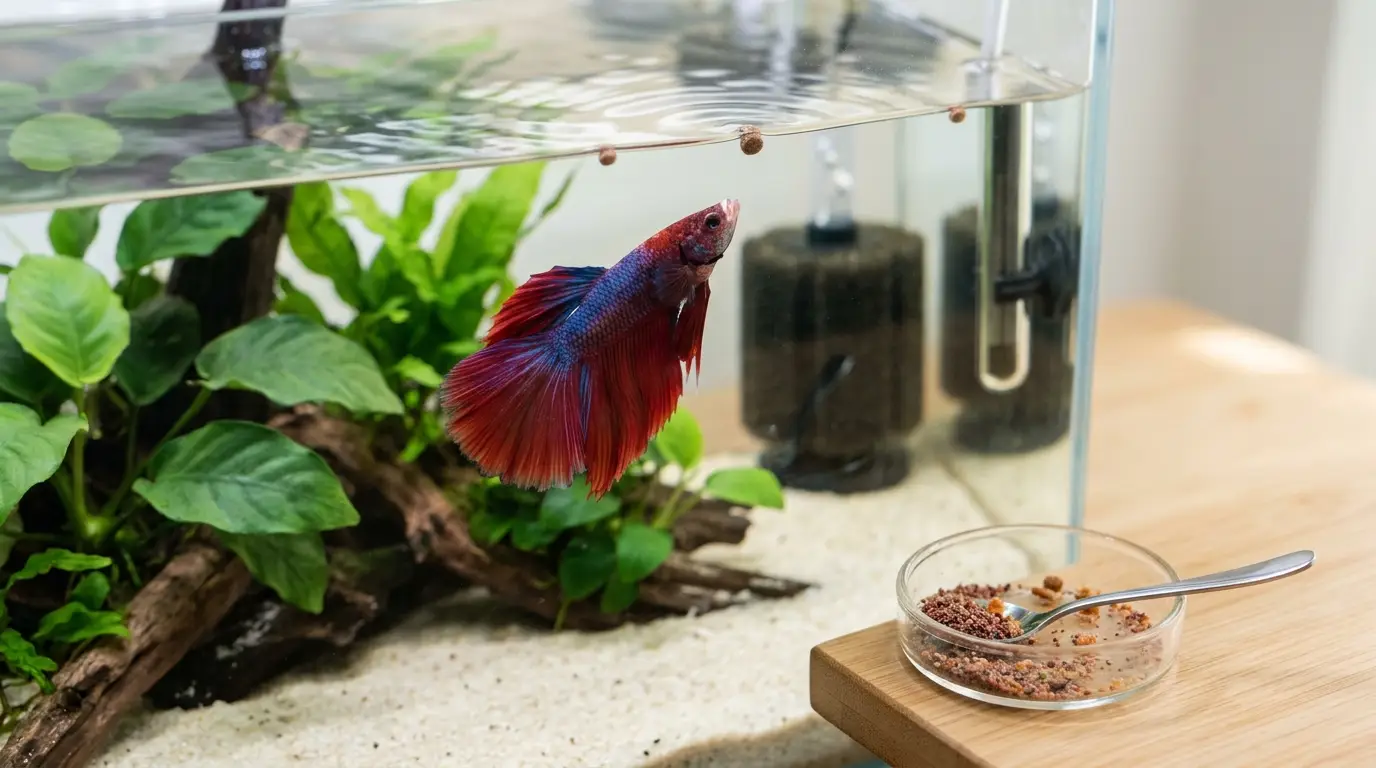
Overfeeding is a silent cause. It leads to bloating and swim bladder strain. The fish sinks and rests a lot.
Feeding best practices:
- Feed small meals once or twice daily. Skip one day a week.
- Use high-quality betta pellets and mix in frozen foods like daphnia.
- Soak dry pellets briefly so they do not swell in the gut.
If bloated:
- Fast 24–48 hours. This alone often helps.
- Offer a small meal of frozen daphnia after the fast.
- Keep the water warm. Warmth supports digestion.
I made this mistake early on. I gave too many pellets because my betta begged. He sank to the bottom in hours. A short fast and daphnia fixed it.
Stress, Age, And Rest Patterns
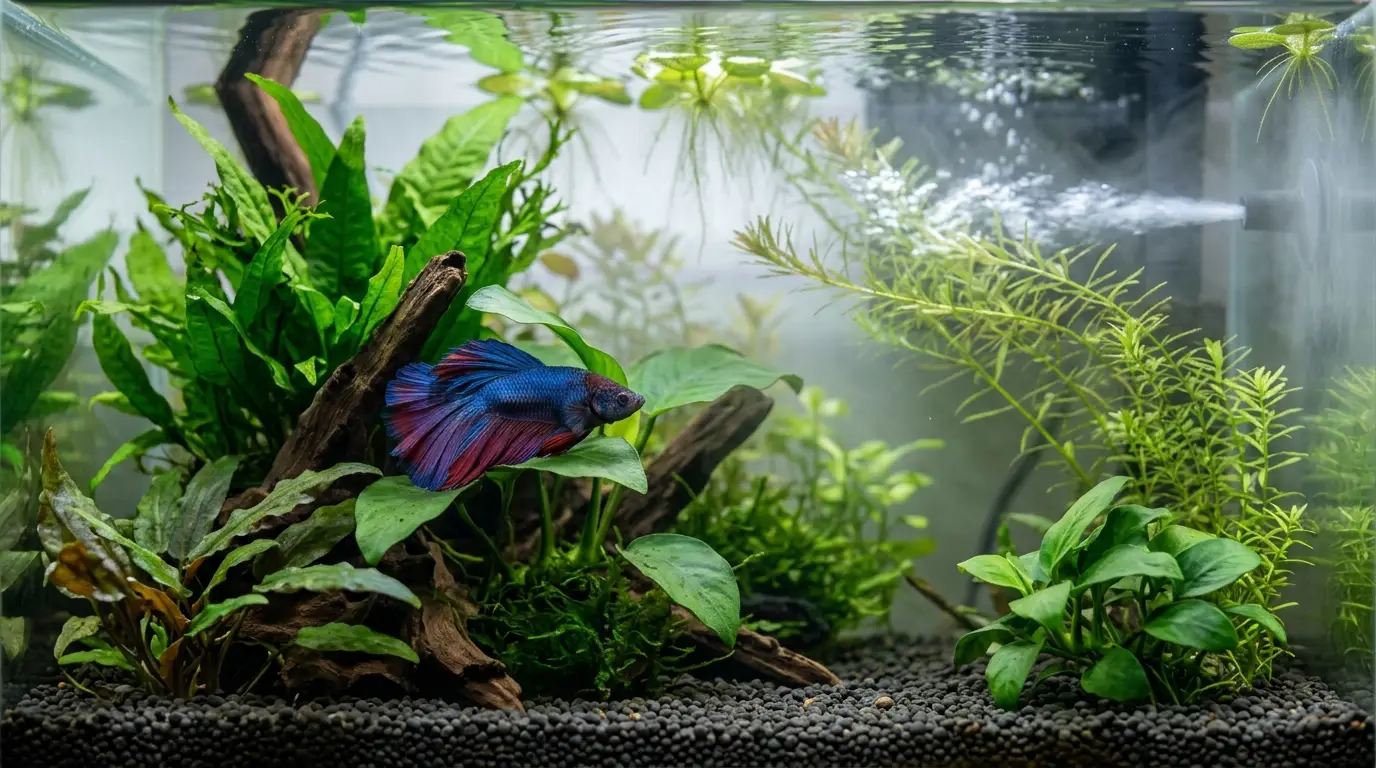
Bettas hate stress. Too much flow, stark lighting, and busy rooms can push them down to hide.
Reduce stress:
- Use a gentle sponge filter or baffle the outflow.
- Add live plants or silk plants for cover.
- Keep lights on a calm schedule. About 8–10 hours per day.
- Avoid tapping glass or sudden moves.
Age matters too. Older bettas nap more and swim less. If you still ask Why Is My Betta Fish Staying at the Bottom of the Tank?, think about age and the daily rhythm of the fish.
Step-By-Step Troubleshooting Checklist
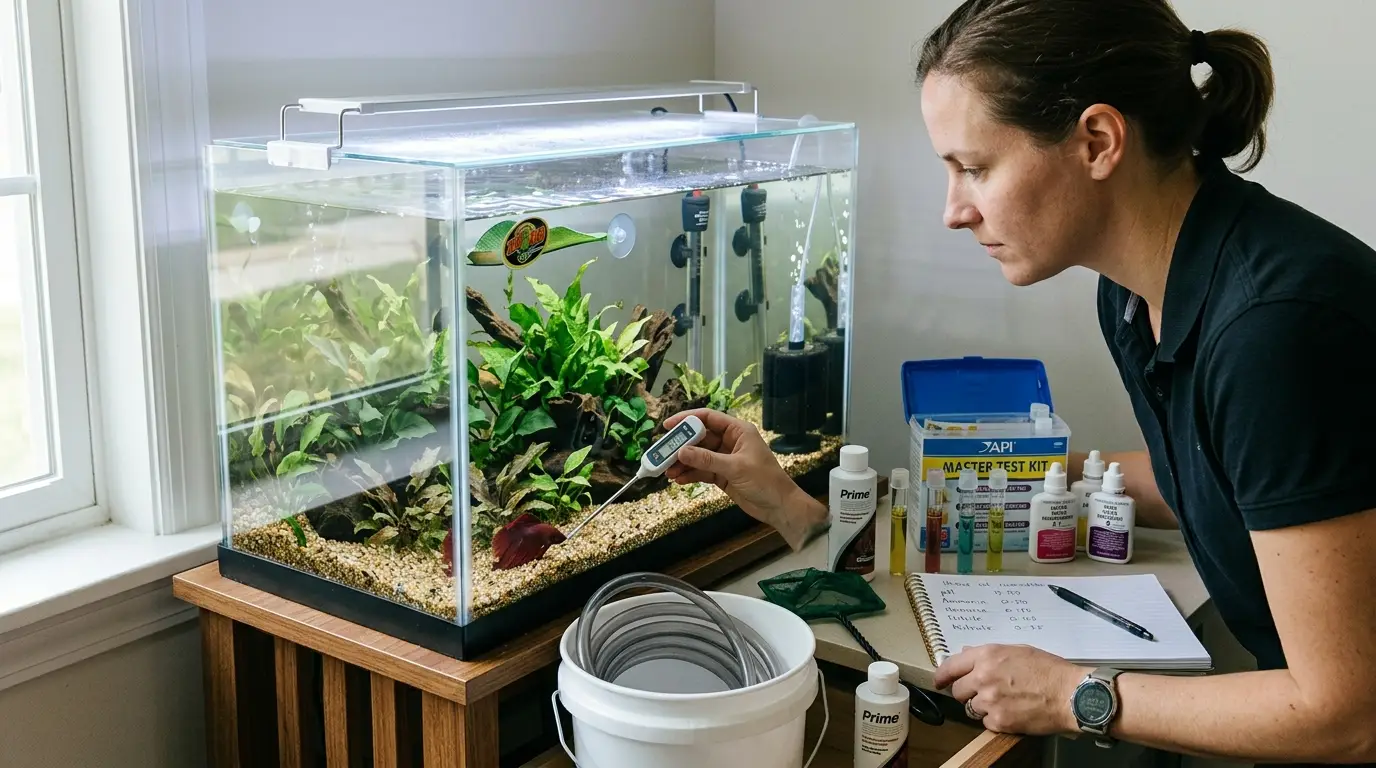
Use this quick plan when your fish sits on the bottom.
- Test water. Fix ammonia and nitrite with a 30–50% change and conditioner.
- Check temperature. Set 78–80°F with a reliable heater and a thermometer.
- Reduce flow. Baffle the filter if your betta fights the current.
- Stop feeding for 24 hours. Then feed light, high-quality meals.
- Watch for signs of disease. Treat based on clear symptoms.
- Add cover. Plants and caves lower stress.
- Keep lights steady. No more than 10 hours daily.
- Recheck in 24–48 hours. If no change, consider a vet consult.
If you still wonder Why Is My Betta Fish Staying at the Bottom of the Tank?, repeat tests and keep notes. Patterns help you find the cause.
Prevention: Setup And Care Best Practices
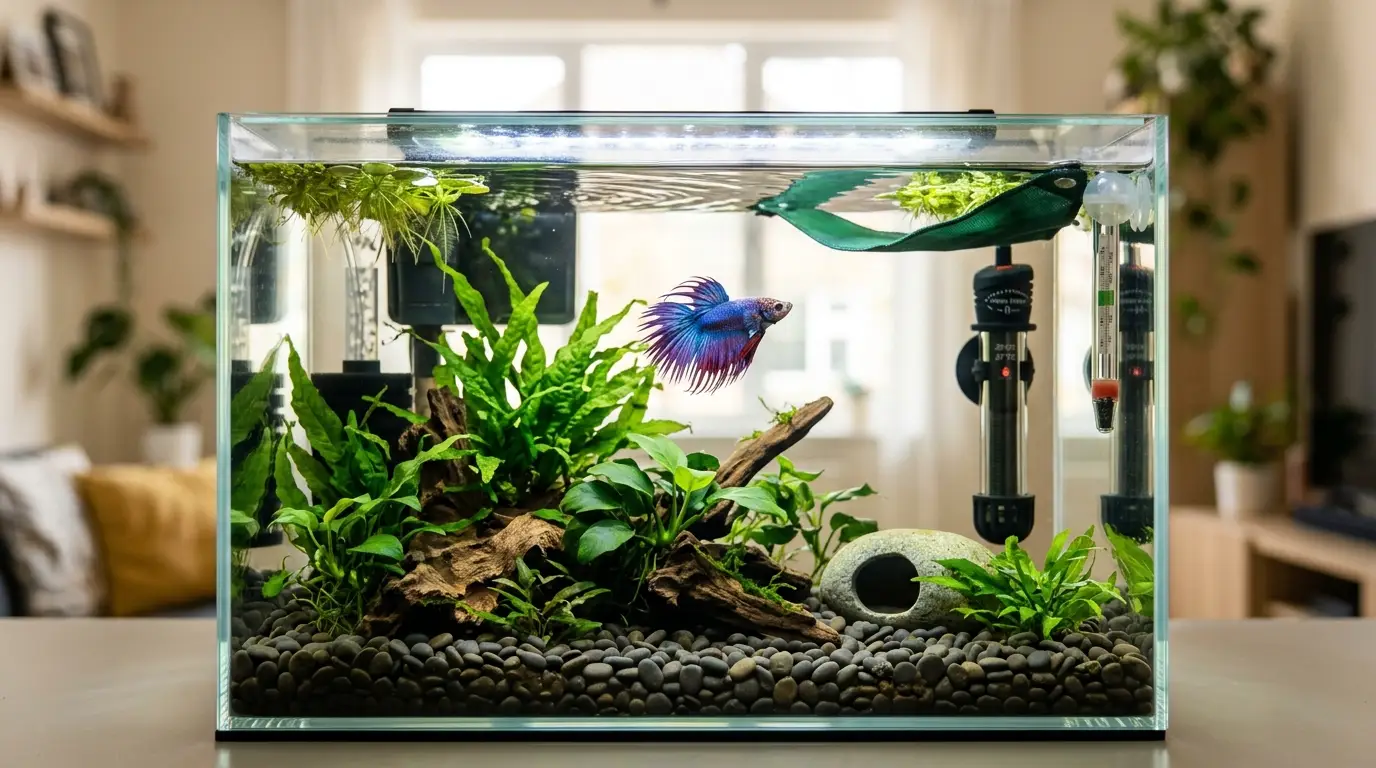
Good setup prevents bottom-sitting. Think warm, clean, and calm.
Core setup:
- Tank size: 5 gallons or more for stable water.
- Heater: set 78–80°F. Use a backup thermometer.
- Filter: gentle flow. Sponge filters are great for bettas.
- Plants: live or silk, plus a leaf hammock near the surface.
- Lid: bettas jump. Keep it snug with air space to breathe.
Care habits:
- Test water weekly. Keep a log.
- Change 20–30% of water every week.
- Rinse filter media in tank water, not tap water.
- Feed small and varied. Skip one day a week.
It sounds simple. It is. When a reader asked Why Is My Betta Fish Staying at the Bottom of the Tank?, these basics solved it four times out of five.
When To See A Fish Vet
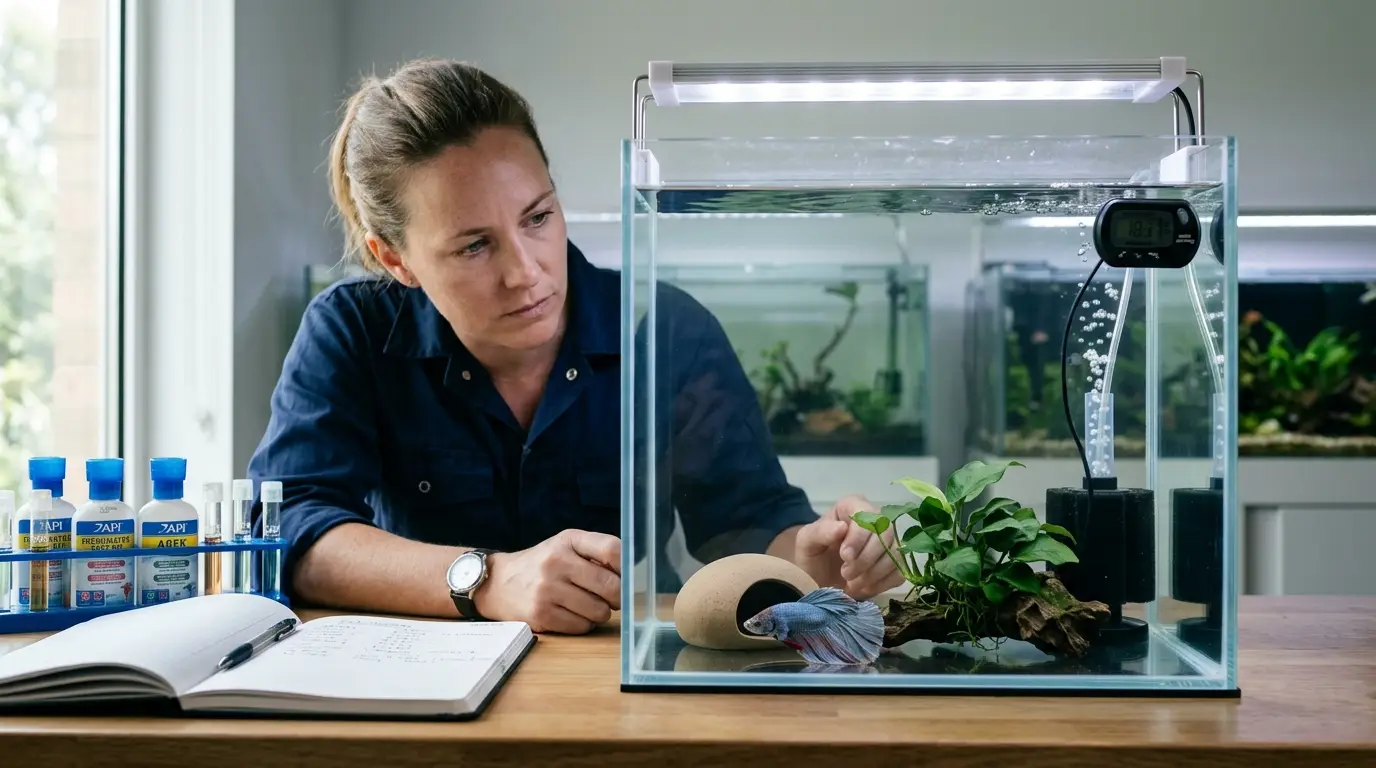
Some cases need expert care. Seek help if:
- Your fish cannot rise at all or rolls to one side.
- There is fast breathing, blackened gills, or bleeding.
- You see clear disease signs that do not improve in 48–72 hours.
- You have repeated episodes even with good water and heat.
If you feel stuck and ask Why Is My Betta Fish Staying at the Bottom of the Tank? after all checks, a vet can test for parasites or infection. Quick action saves time and stress.
Frequently Asked Questions of Why Is My Betta Fish Staying at the Bottom of the Tank?
Is it normal for bettas to rest on the bottom?
Short naps are normal, especially under plants or near the heater. Long, frequent rests with dull color or heavy breathing are warning signs.
How long should I wait before worrying?
If the fish sits for hours and ignores food, act now. Test water and warm the tank before the day ends.
Can cold water make my betta stay low?
Yes. Cold water slows the fish and digestion. Raise the temperature to 78–80°F and watch for quick improvement.
Will a water change help right away?
Often, yes. A 30–50% change with conditioner can ease stress and remove toxins fast.
Is the pea trick safe for bettas?
Bettas are carnivores, so peas are not ideal. Fasting and feeding frozen daphnia work better for mild constipation.
How do I know if the filter flow is too strong?
If your betta hides, leans on decor, or rides the current, flow is high. Baffle the outflow or switch to a gentler filter.
Can high nitrate make a betta sit at the bottom?
Yes. Chronic high nitrate causes stress and lethargy. Keep nitrate under 20 ppm if possible.
Conclusion
Bottom-sitting is a message. It often points to cold water, poor water quality, stress, or simple feeding mistakes. Fix the basics first: test, warm, change water, and reduce flow. Watch your fish and adjust with care.
Take one action today. Test your tank, log the numbers, and make one small change. If you found this guide useful, subscribe for more easy fish care tips, share your story, or leave a comment with your results.