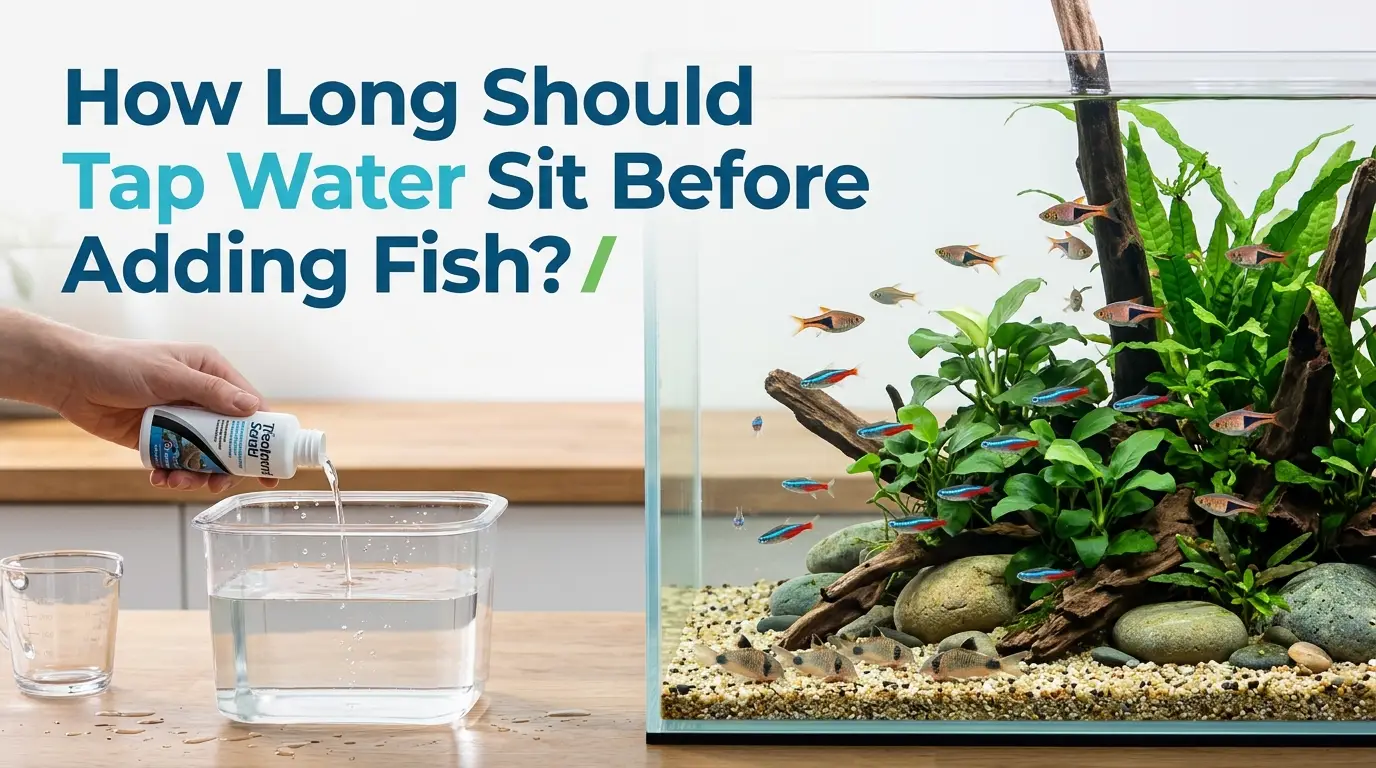
Let chlorine tap water sit 24 hours; chloramine needs conditioner—time alone won’t work.
If you’re wondering how long should tap water sit before adding fish, you’re already thinking like a careful fishkeeper. I’ve set up tanks for over a decade, and I’ve learned that safe water is about more than just waiting. In this guide, I’ll break down the science, share real-world tips, and give you a clear plan so you can protect your fish from day one.
Why letting tap water sit matters
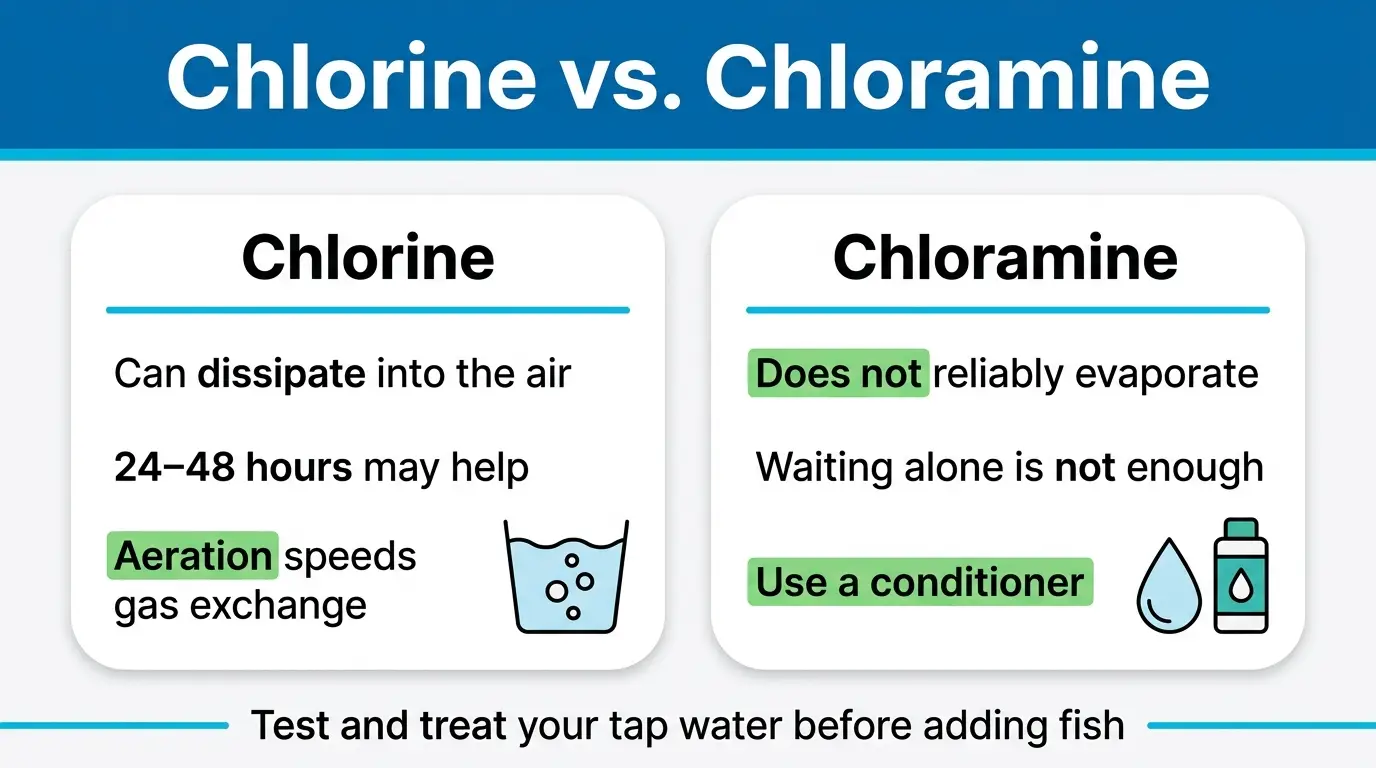
Tap water is treated to keep people safe, not fish. The main issues are disinfectants and chemistry swings.
- Chlorine: This is common and volatile. It can evaporate from water within 24 to 48 hours, faster with surface movement and aeration.
- Chloramine: Many water utilities use it because it lasts longer in pipes. It does not evaporate in a day or two. It can persist for days or weeks without treatment.
- Heavy metals: Small amounts of copper, lead, and zinc may be present. These can stress or kill fish and invertebrates.
- pH and gases: Fresh tap water can hold extra dissolved gases. As water “ages,” gases balance out and pH can shift slightly.
- Temperature: Sudden swings can shock fish. Matching temperature matters as much as removing chlorine or chloramine.
Public water systems often switch between chlorine and chloramine. That’s why how long should tap water sit before adding fish depends on your disinfectant and setup. Industry guidance confirms chlorine dissipates with time while chloramine requires a chemical conditioner that breaks the bond and detoxifies the released ammonia.
Exactly how long should tap water sit before adding fish?
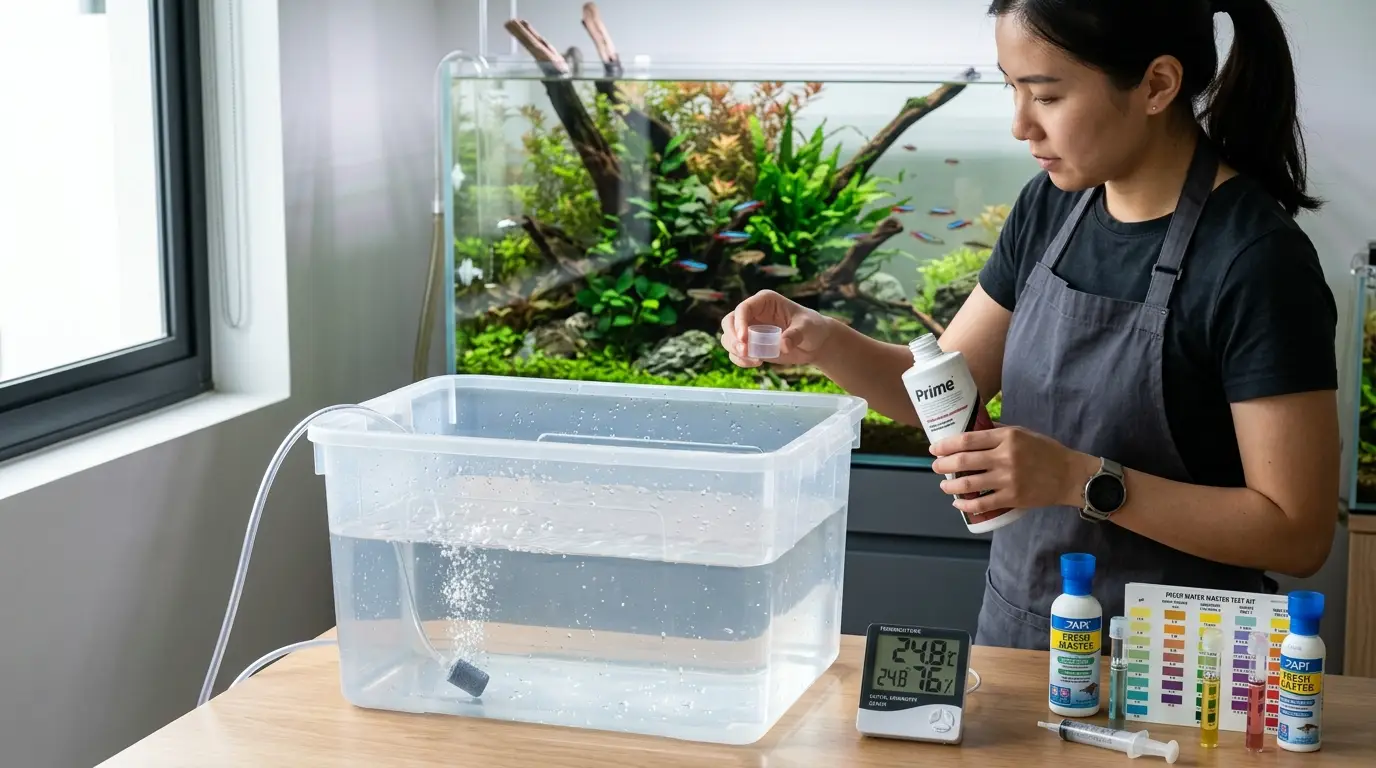
Let’s get specific. How long should tap water sit before adding fish depends on disinfectant type, your tools, and your goals.
- If your utility uses chlorine only: Let water sit 24 to 48 hours. Add strong aeration to speed up gas exchange. Test to confirm zero chlorine before adding fish.
- If your utility uses chloramine: Do not rely on time. Use a water conditioner that treats chloramine and binds ammonia. You can use the water within minutes after dosing and mixing.
- If you don’t know what’s in your tap: Assume chloramine. Use a conditioner labeled for chloramine. Test as you learn more.
- For water changes in established aquariums: Dose conditioner for the full tank volume or the new water volume as directed. Mix well. You can refill right away.
- For new tanks: Water safety is step one. But the biological cycle takes weeks. Even if dechlorinated today, don’t add a full fish load until the tank is cycled.
In short, if you’re asking how long should tap water sit before adding fish, the safe answer is: for chlorine, 24 hours is fine; for chloramine, use a conditioner and don’t wait.
Step-by-step: Make tap water safe for fish
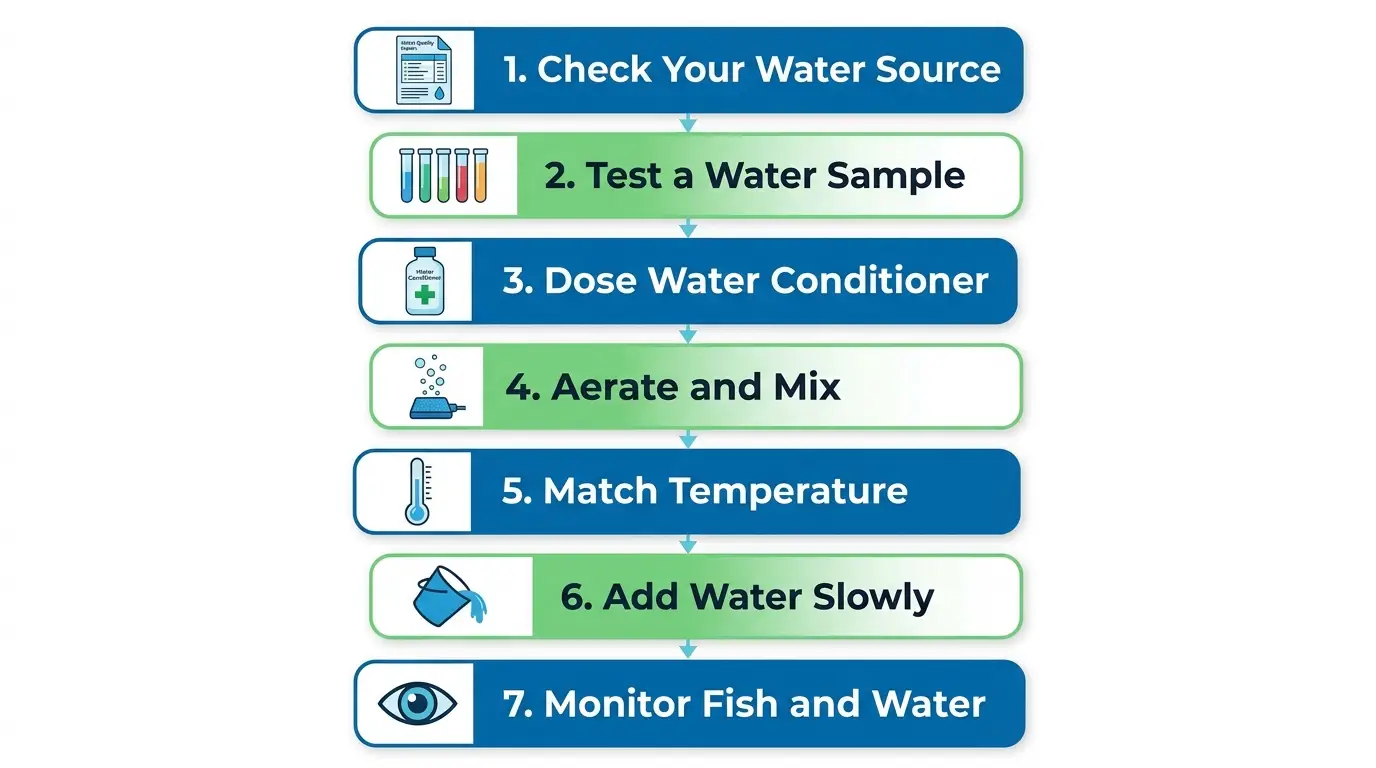
When clients ask me how long should tap water sit before adding fish, I walk them through this quick process. It’s fast, reliable, and repeatable.
- Check your water source. Look up your city’s water report or call your utility. Ask if they use chlorine or chloramine.
- Test a sample. Use a chlorine/chloramine test strip or liquid kit. Note the pH and temperature too.
- Dose a conditioner. Choose one that neutralizes chlorine and chloramine and binds ammonia and heavy metals. Follow the label exactly.
- Aerate and mix. Stir or aerate for 2 to 5 minutes. Most conditioners work almost instantly; aeration improves oxygen and mixing.
- Match temperature. Keep the new water within 1 to 2°F of the tank water to avoid shock.
- Add the water. For big water changes, add slowly so fish aren’t stressed by sudden shifts.
- Monitor. After refilling, test for free chlorine, ammonia, and pH. Watch fish behavior for any stress signs.
This method beats guessing how long should tap water sit before adding fish. You get safe, consistent results every time.
Common myths and mistakes to avoid

I’ve made a few of these myself early on. Save yourself the stress.
- Myth: “If water sits overnight, it’s always safe.” Reality: That only applies to chlorine, not chloramine.
- Mistake: Skipping a conditioner “to be natural.” Tap isn’t natural for fish. A good conditioner prevents burns to gills and fins.
- Myth: Bubbling for an hour fixes everything. Aeration helps chlorine evaporation but does not remove chloramine or metals.
- Mistake: Adding fish the same day you fill a brand-new tank. Dechlorination isn’t cycling. The nitrogen cycle still takes time.
- Myth: If water looks clear, it’s fine. Toxins are invisible. Test and treat; don’t eyeball it.
Whenever you wonder how long should tap water sit before adding fish, remember: chemistry, not the clock, keeps fish safe.
Special cases: Bettas, goldfish, shrimp, and marine tanks
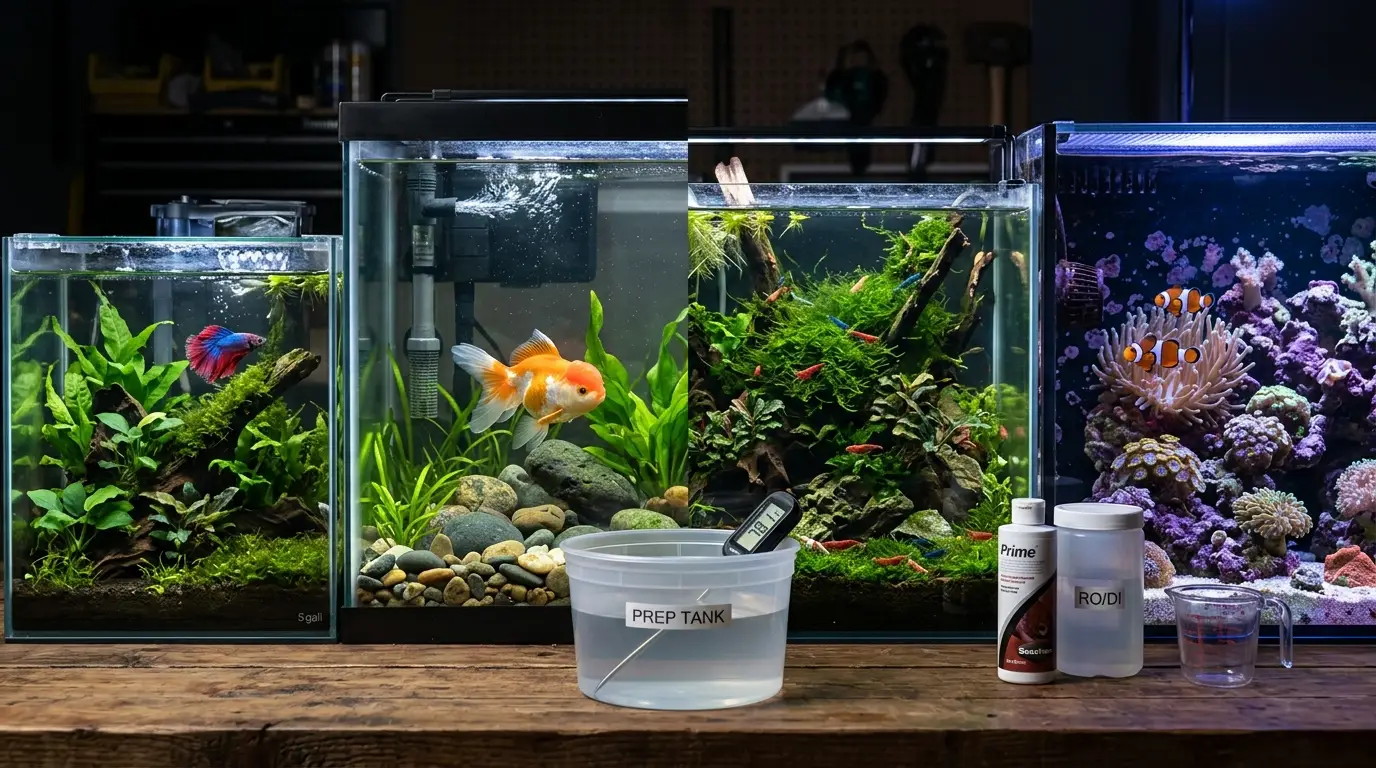
Different animals handle risk differently. Here’s what to know.
- Bettas: Hardy, but still sensitive to chloramine. Use a conditioner every time. Keep water calm yet oxygenated.
- Goldfish: Big oxygen demand and high waste. Treat tap water and change water regularly. Extra aeration helps.
- Shrimp and snails: Very sensitive to metals and disinfectants. Always use a conditioner with metal chelators. Consider remineralized RO/DI for consistency.
- Planted tanks: Dechlorinate. Strong light and CO2 systems can exaggerate pH swings if you add untreated water.
- Marine and reef: Do not use straight tap for mixing saltwater. Use RO/DI water, then add salt, then heat and aerate. Tap additives can fuel algae and harm corals.
For all these, the right way to answer how long should tap water sit before adding fish is: use the right conditioner, match temperature, and test. Time alone is not protection.
Tools and tests that make life easier
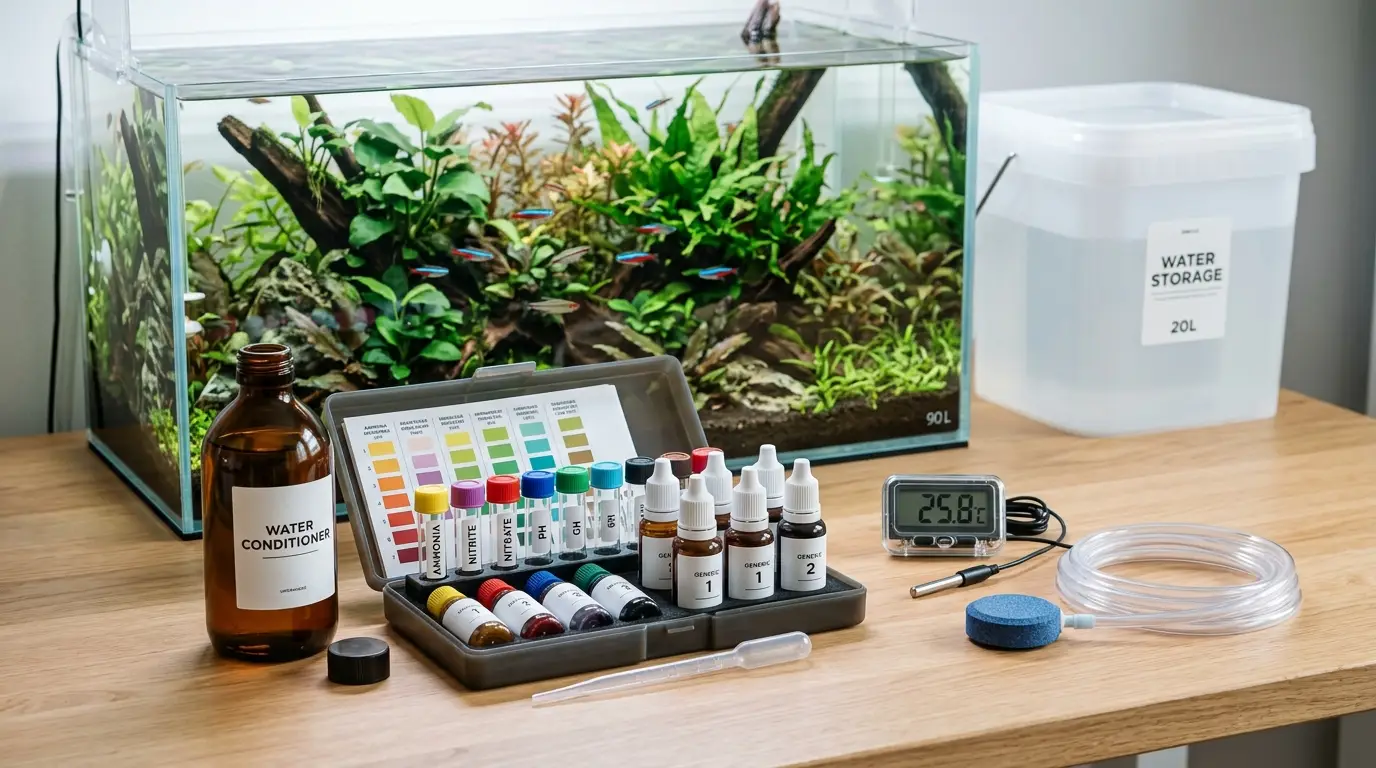
Having the right kit makes this simple and safe.
- Water conditioner: Choose one that handles chlorine, chloramine, ammonia, and heavy metals.
- Test kits: Use tests for chlorine/chloramine, ammonia, nitrite, nitrate, pH, GH, and KH.
- Aeration: An air stone or strong surface ripple speeds mixing and stabilizes gases.
- Thermometer: Match temperatures to prevent shock.
- Storage container: A food-safe bucket or barrel for mixing and dosing water.
These tools remove the guesswork from how long should tap water sit before adding fish and keep your routine fast and reliable.
Frequently Asked Questions of how long should tap water sit before adding fish
How do I find out if my city uses chloramine?
Check your local water quality report or call your water utility. Many cities post disinfectant types and average levels online.
Can I boil tap water to make it safe for fish?
Boiling can remove chlorine but is not reliable for chloramine or metals. It also concentrates minerals through evaporation, which can stress fish.
Do I need to wait after adding a water conditioner?
Most conditioners work within minutes. Mix well and aerate briefly; you can add the water right after dosing.
Is it okay to add fish right after filling a new tank?
Only if you are doing a fish-in cycle with careful monitoring. It is safer to cycle the tank first, which takes about 4 to 6 weeks.
Will letting water sit remove heavy metals?
No, time does not remove metals. Use a conditioner with chelators that bind metals and protect fish and invertebrates.
Conclusion
If you came here asking how long should tap water sit before adding fish, here’s the clear plan: for chlorine-only water, 24 hours with aeration works; for chloramine, use a proper conditioner and don’t rely on time. Match temperature, test the basics, and give your biofilter time to mature before adding a full fish load.
Put this into practice on your next water change. Treat, test, and add with confidence. Want more clear, friendly guides like this? Subscribe, share your setup in the comments, or ask a question and I’ll help you troubleshoot.