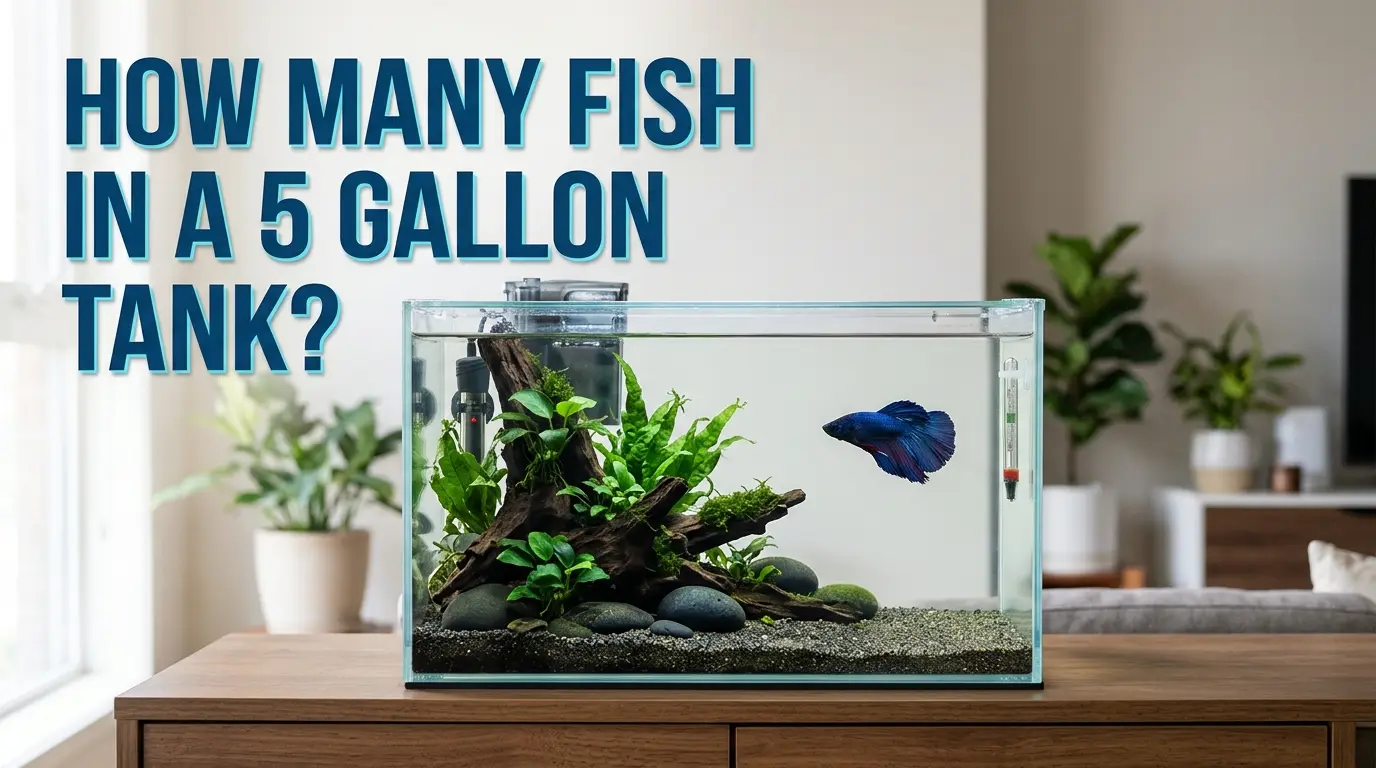
For most U.S. homes, a 5-gallon tank should hold one small fish at most—and often no fish at all, depending on the species. The safest common choice is one betta, kept alone with a filter, heater, lid, and fully cycled water.
A 5-gallon aquarium can also work well as a shrimp or snail tank. It is usually too small for goldfish, tetras, guppies, mollies, corydoras, and most community fish.
The old “one inch of fish per gallon” rule is not a safe stocking guide. Fish differ in body shape, waste output, swimming needs, adult size, and social needs.
Quick answer
- One betta: Usually suitable when the tank is heated, filtered, cycled, and maintained.
- One small solitary fish: May be possible, but species needs decide the answer.
- Small schooling fish: Usually not suitable because they need groups and more swimming room.
- Shrimp: About 5 to 10 adult freshwater shrimp can often live in a mature 5-gallon tank, depending on filtration and care.
- Snails: One mystery snail or several small snails may fit, but waste levels still matter.
- Goldfish: None. A 5-gallon tank is far too small, even for a young goldfish.
Why a 5-gallon tank is harder than it looks
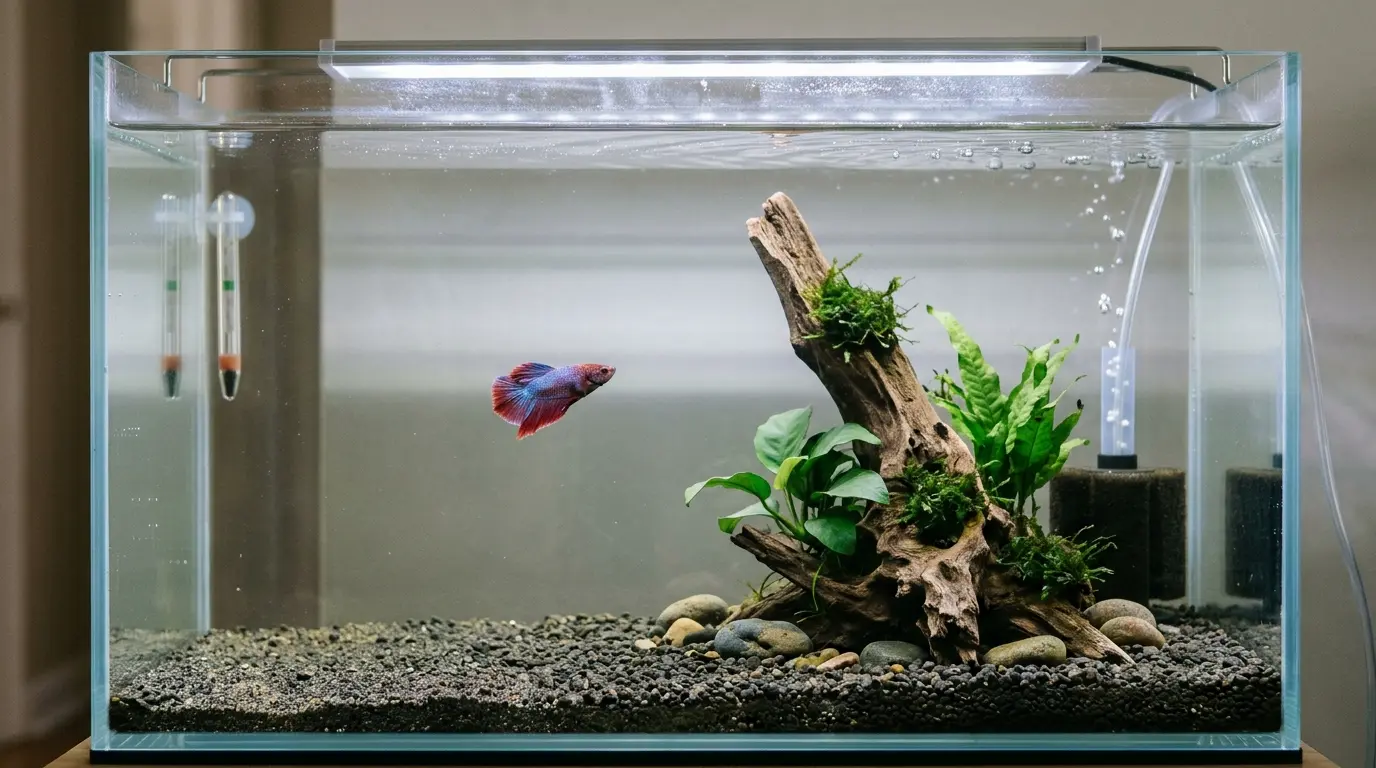
A “5-gallon tank” does not hold five gallons of usable water. Gravel, plants, decorations, and equipment reduce the water volume. A filled tank may contain closer to 4 gallons of water, depending on its shape and setup.
That small water volume can change very fast. A small amount of uneaten food or fish waste may cause a large rise in ammonia. Temperature and pH can also shift more quickly than they would in a larger aquarium.
Fish waste breaks down through the nitrogen cycle:
- Fish produce waste.
- Waste creates toxic ammonia.
- Beneficial bacteria convert ammonia into nitrite.
- Other bacteria convert nitrite into nitrate.
- Water changes remove nitrate and other waste.
A new aquarium does not have enough helpful bacteria at first. This is why a tank must be cycled before fish are added. The University of Florida IFAS Extension and other university aquarium resources explain that biological filtration is central to maintaining safe water.
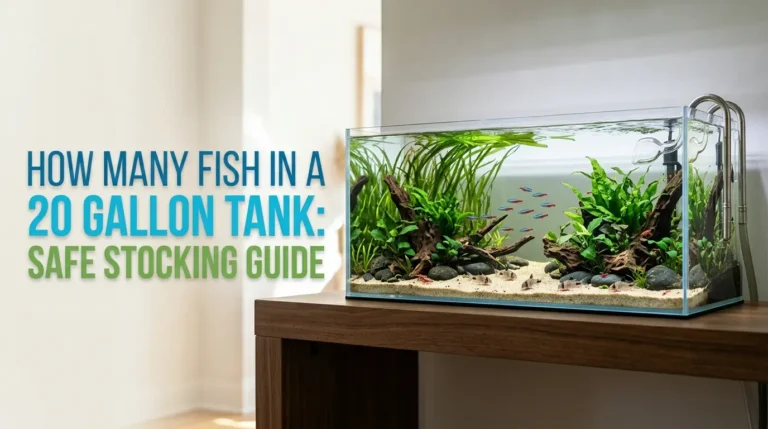
The smaller the tank, the less room there is for mistakes. A 20-gallon tank can dilute waste more effectively than a 5-gallon tank. That does not remove the need for care, but it gives the keeper more time to spot a problem.
The best fish for a 5-gallon tank
One betta
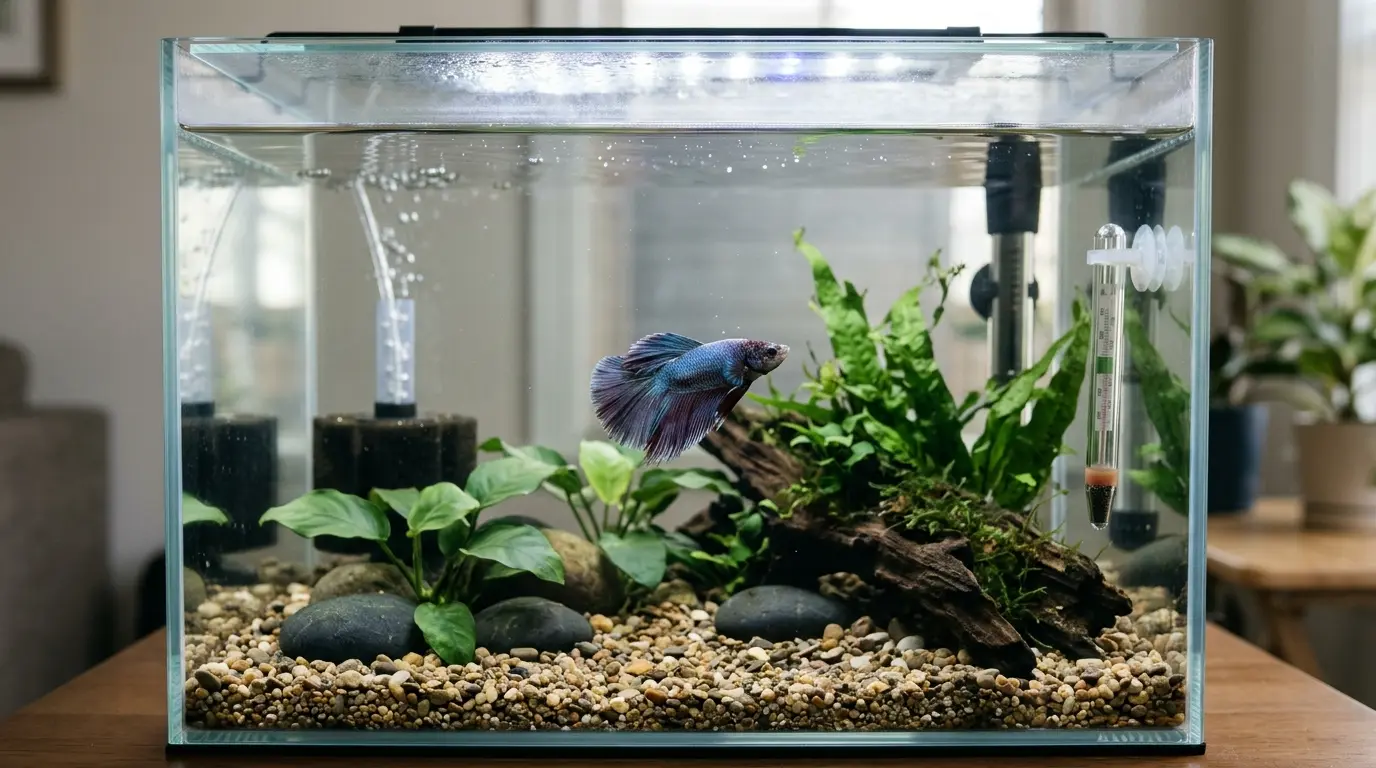
A single betta is the most common fish choice for a 5-gallon aquarium in the United States. Bettas do not need a school, and one adult can live alone.
A betta tank should include:
- A gentle filter
- An adjustable heater
- A secure lid
- A thermometer
- Smooth décor and resting places
- Open water near the surface
- A cycled aquarium
Keep the water around 78–80°F for a betta, unless a qualified aquatic veterinarian gives different advice. Avoid strong filter flow. Long-finned bettas may struggle in fast-moving water.
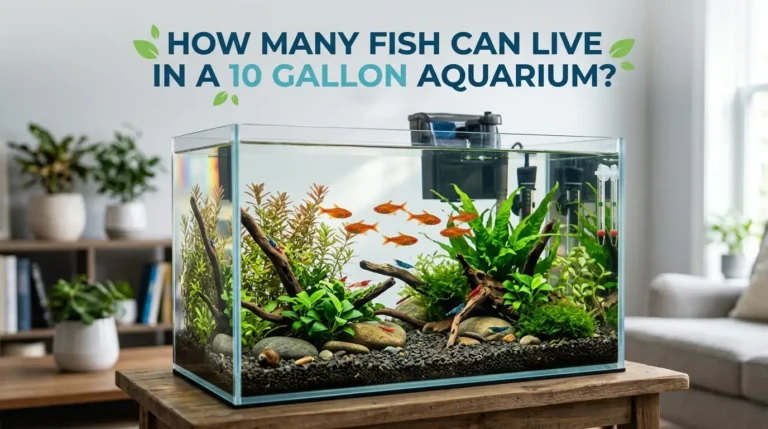
A 5-gallon tank is a starting point, not a guarantee of good care. A larger tank is often easier to keep stable and gives the fish more room to explore. A 10-gallon tank may be a better choice for beginners who have enough space.
One small, solitary fish
Some fish can live alone, but many are not suitable for a 5-gallon tank. Before choosing a species, check its adult size, swimming habits, temperature needs, and social behavior.
Do not choose a fish just because it is sold as a “small tank fish.” Juvenile fish may look small in a store but grow much larger. Some species also need a group of six or more to feel secure.
Freshwater shrimp
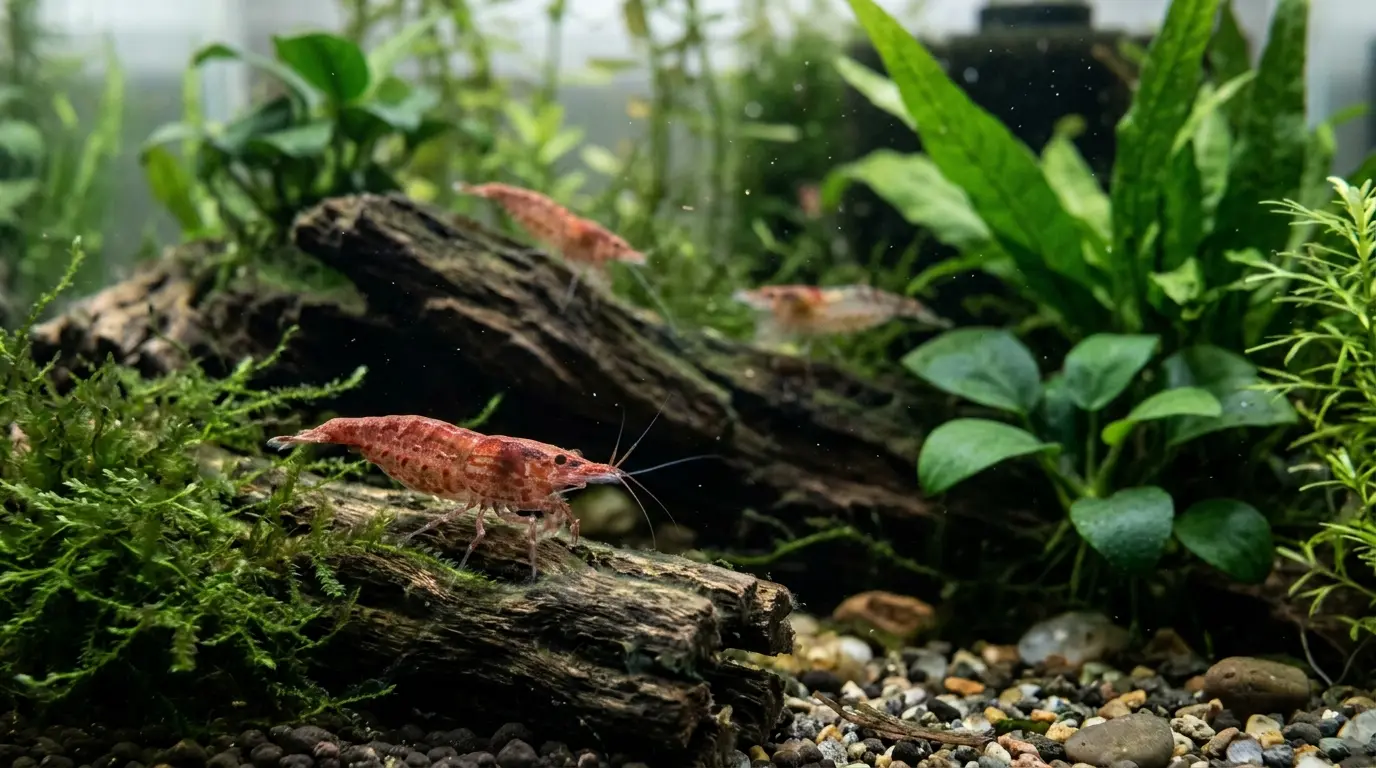
A 5-gallon tank can make a good home for Neocaridina shrimp, such as cherry shrimp, when the aquarium is mature and stable. Shrimp have a small biological footprint, but they are sensitive to sudden changes in water conditions.
A planted tank with moss, wood, and other surfaces gives shrimp places to graze and hide. Start with a small group rather than adding too many at once. Shrimp may breed, so the population can grow over time.
Avoid adding shrimp to a betta tank without a plan. Some bettas ignore shrimp. Others hunt them. Dense plants and hiding places may reduce risk, but they cannot guarantee safety.
Snails
A single mystery snail may live in a 5-gallon tank if the tank has enough filtration and a steady food supply. Mystery snails grow larger and produce more waste than many small pest snails.
Small ramshorn or bladder snails may also live in a 5-gallon aquarium. Their numbers often increase when excess food is available. A sudden snail population boom usually points to overfeeding rather than a need for snail-killing chemicals.
Fish that should not live in a 5-gallon tank
The following fish are poor choices for a 5-gallon aquarium:
- Goldfish
- Common plecos
- Most corydoras
- Neon tetras
- Cardinal tetras
- Rummy-nose tetras
- Zebra danios
- Harlequin rasboras
- Guppies
- Mollies
- Platies
- Most dwarf cichlids
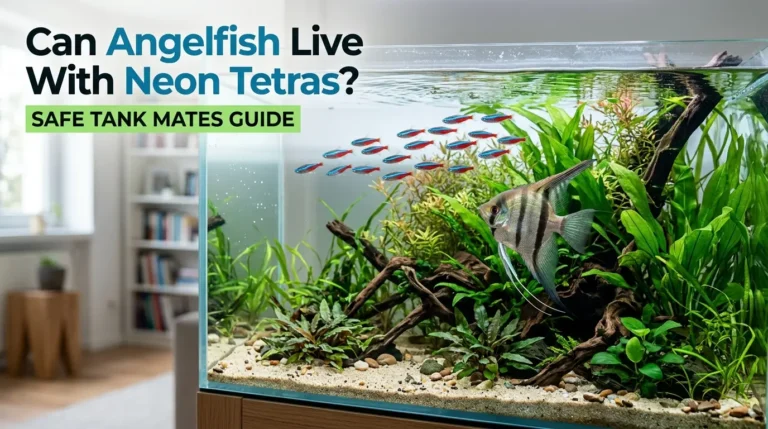
- Angelfish
- Gouramis that need more swimming space
Why schooling fish need a larger tank
Tetras, danios, rasboras, and corydoras are social fish. They usually need a group to display normal behavior. Keeping one or two fish from a schooling species may reduce the space needed, but it does not meet their social needs.
A group also needs room to move. A 5-gallon tank may not provide enough length for active fish to swim, even if the tank’s water tests look safe.
Why goldfish are not suitable
Goldfish produce a high amount of waste and can grow much larger than many new keepers expect. They also need strong filtration and substantial swimming space.
A goldfish in a small tank may survive for a short time, but survival is not the same as suitable long-term care. Do not use a 5-gallon tank as a permanent home for a goldfish.
Why “small fish” can still need large tanks
A fish’s adult length is only one factor. A better decision also considers:
- Adult body shape
- Activity level
- Group size
- Territorial behavior
- Waste production
- Water temperature
- Required decorations
- Minimum tank length
- Need for open swimming space
A fish that is only 1 inch long may still need more room than a calm fish of the same size.
How to decide the right stocking level
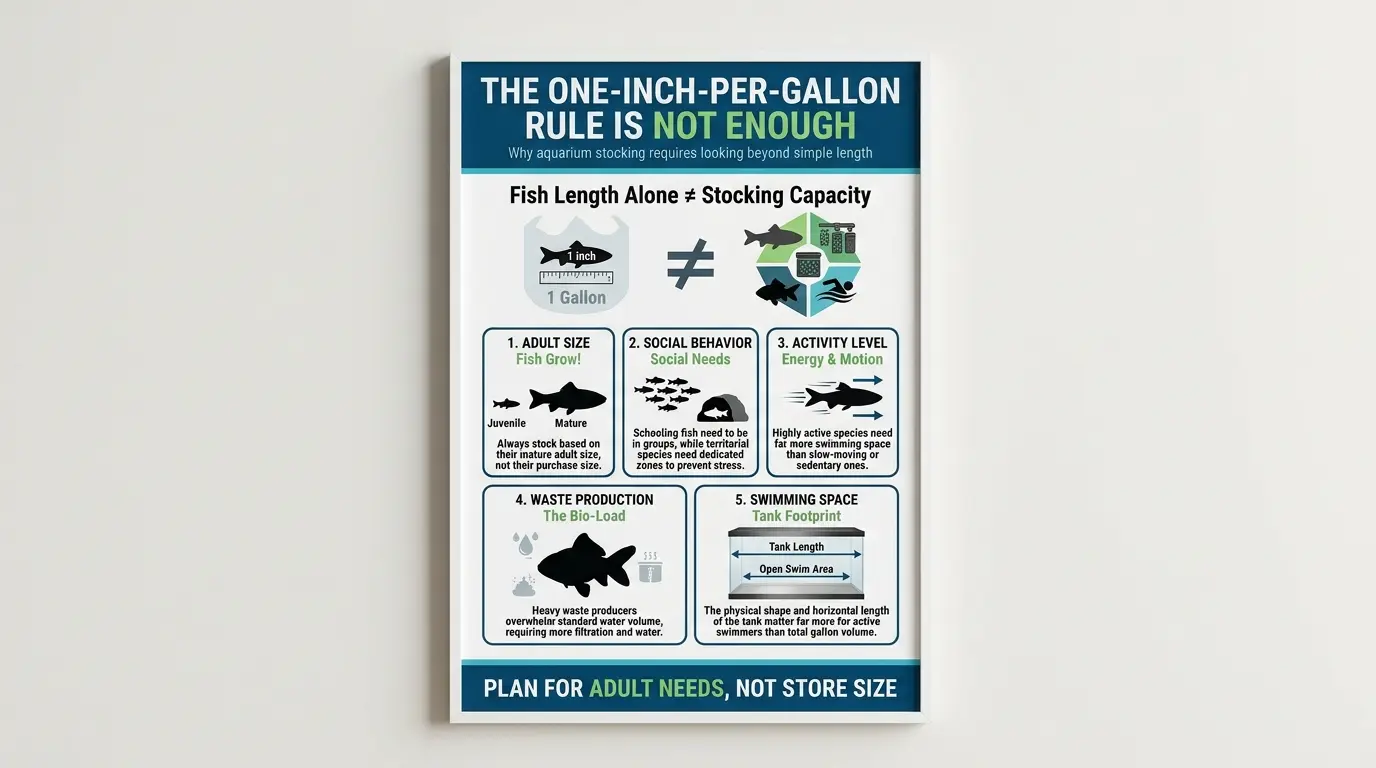
Use the following process before buying fish.
1. Check the adult size
Use the adult size, not the size of the fish at the store. Search the scientific name when possible, because common names can describe several different fish.
2. Check whether the fish needs companions
If a species needs a group, a 5-gallon tank is usually not the right aquarium. Never solve a social need by keeping one fish alone.
3. Check the tank length
A tall 5-gallon tank may hold the same volume as a long 5-gallon tank, but the fish will not get the same swimming space. For active fish, length often matters more than height.
4. Count the equipment and décor
Substrate, rocks, wood, plants, and internal filters reduce usable water. Heavy décor can also reduce open swimming room.
5. Leave room for growth
Do not stock a tank based on a fish’s current size. Plan for adult size and possible breeding.
6. Start below the limit
Add one fish or a small group of invertebrates first. Test the water for several days before adding anything else. In a 5-gallon aquarium, adding more livestock may not be safe even when the first fish appears healthy.
A practical stocking table
| Livestock | 5-gallon suitability | Main condition |
|---|---|---|
| One betta | Often suitable | Heater, gentle filter, lid, and cycled water |
| One mystery snail | Possible | Stable water and enough food |
| Several small snails | Possible | Control excess food and monitor waste |
| Neocaridina shrimp | Often suitable | Mature tank with stable water |
| One guppy | Not recommended | Guppies need social space and more room |
| A group of tetras | Not suitable | Schooling and swimming needs |
| Corydoras | Not suitable | Group behavior and bottom space |
| Goldfish | Not suitable | Growth, waste, and space needs |
This table gives general guidance, not a substitute for a species care sheet. Fish sold under the same common name may have different care needs.
What a healthy 5-gallon setup needs
A suitable setup starts before the fish arrives.
Use a filter
A filter removes particles and provides a surface for beneficial bacteria. Choose a model with gentle flow or use a sponge pre-filter to protect fins and small shrimp.
Do not replace all filter media at once. Doing so can remove much of the helpful bacteria. Rinse filter media in removed aquarium water, not under untreated tap water.
Add a heater when the species needs warm water
Bettas and many tropical species need warm, steady temperatures. Use a thermometer to check the real water temperature. Room temperature can change during a U.S. winter or during air-conditioning season.
A heater must match the tank size and follow the manufacturer’s safety directions. Keep it fully submerged when the instructions require that, and unplug it before removing it from water.
Cycle the aquarium
A fishless cycle is the safest way to prepare a new tank. Add an ammonia source, test the water, and wait for beneficial bacteria to establish. The cycle is complete when the tank can process ammonia and nitrite without either building up.
Before adding fish, test for:
- Ammonia: 0 ppm
- Nitrite: 0 ppm
- Nitrate: present at a manageable level
Test kits vary, so follow the instructions for the exact kit. Do not add fish just because the water looks clear. Clear water can still contain toxic ammonia or nitrite.
Use a lid
A lid helps reduce evaporation and can stop bettas and other fish from jumping. Leave room for air exchange if the tank design requires it.
Add safe décor and plants
Choose smooth décor without sharp edges. Live plants can provide cover and help create a calmer environment, but plants do not replace a filter or water changes.
Maintenance for a 5-gallon fish tank
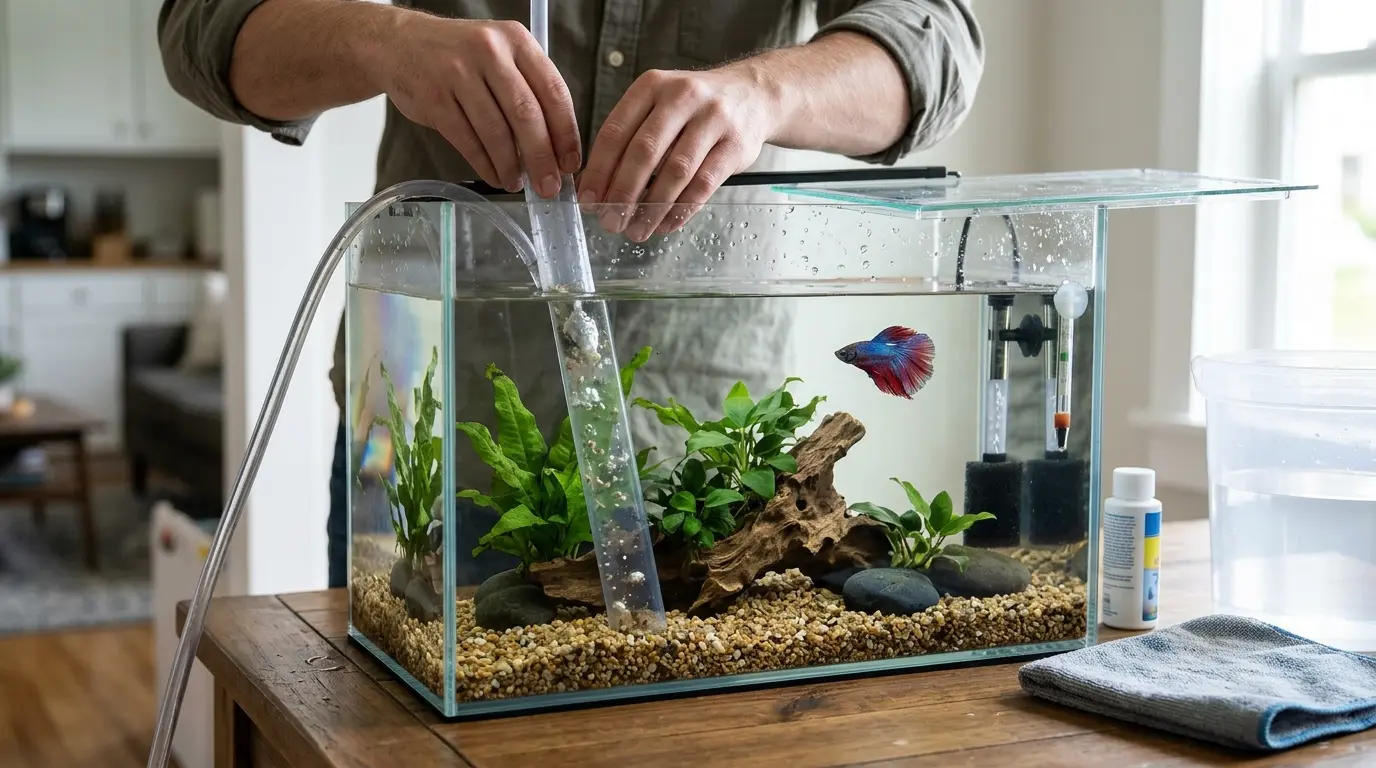
A 5-gallon aquarium usually needs steady, small maintenance rather than occasional large corrections.
Test the water when the tank is new, after adding livestock, and whenever the fish acts sick or unusual. Perform a partial water change when nitrate rises or when testing shows a water-quality problem. Always use a water conditioner that treats the local tap water.
During a water change:
- Match the new water to the tank’s temperature.
- Add the correct amount of water conditioner.
- Remove only part of the water.
- Vacuum waste from the substrate.
- Refill slowly to avoid stressing the fish.
- Check that the heater and filter work correctly.
Do not deep-clean every surface at the same time. A spotless tank is not the goal. A stable tank with healthy biological filtration is the goal.
Feed small amounts. Most bettas need only a few suitable pellets at a time, though feeding plans vary by food and fish. Remove uneaten food. Overfeeding is one of the fastest ways to damage water quality in a small tank.
Signs that a 5-gallon tank is overstocked
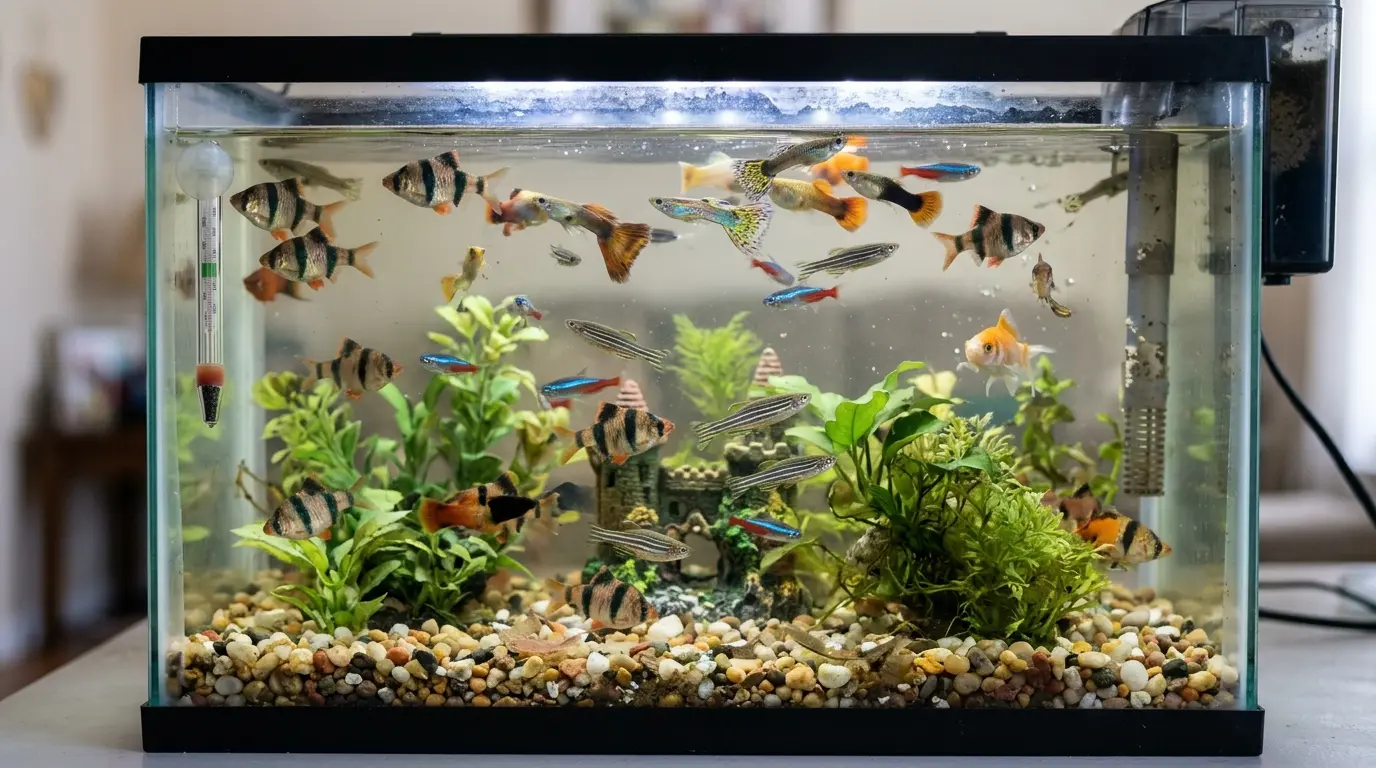
Overstocking can appear as a water problem, a behavior problem, or both.
Watch for:
- Ammonia or nitrite above 0 ppm
- Nitrate that rises very fast
- Cloudy water that does not improve
- Fish gasping at the surface
- Clamped fins
- Constant hiding
- Chasing or repeated fighting
- Strong odor
- Algae caused by excess nutrients
- Fish growth that leaves little open swimming room
If ammonia or nitrite is above zero, test again to confirm the result and perform a partial water change with conditioned water. Stop feeding for a short period if appropriate for the species, then test again. Do not add more livestock.
If the problem continues, move the fish to a properly prepared larger aquarium or seek help from an aquatic veterinarian or experienced local fish specialist. Medication should not be the first response to a water-quality problem.
Common mistakes to avoid
Using the one-inch-per-gallon rule
This rule ignores social needs, waste, activity, and body shape. A one-inch fish is not automatically equal to another one-inch fish.
Adding several fish at once
A new biological filter may not handle a sudden increase in waste. Add livestock slowly, and test the water after each change.
Choosing fish by baby size
Store fish are often young. Learn the adult size before purchase.
Skipping the heater
A room can feel comfortable to a person while still being too cool or unstable for a tropical fish.
Treating the tank as a bowl
A small aquarium still needs a filter, water testing, regular changes, and a stable temperature.
Replacing the filter cartridge too often
Throwing away filter media can remove beneficial bacteria. Follow the filter instructions while preserving established biological media when possible.
Adding tank mates to a betta
A betta may attack shrimp, snails, or other fish. A 5-gallon tank does not give tank mates much room to escape. Keeping one betta alone is often the safer plan.
Frequently asked questions
Can two fish live in a 5-gallon tank?
Usually, no. Two fish create more waste and may compete for space. Two fish from a schooling species still do not form a proper school, while two territorial fish may fight.
Can a betta live in a 5-gallon tank?
Yes, one betta can often live well in a cycled 5-gallon tank with a heater, gentle filter, lid, and regular care. A larger tank may be easier to maintain.
Can I keep a male and female betta together?
No. Male and female bettas should not share a small home as normal tank mates. They can fight and injure each other. Breeding requires a controlled setup and close supervision.
How many shrimp can live in a 5-gallon tank?
A small starting group of Neocaridina shrimp can work in a mature 5-gallon tank. Begin conservatively, provide plants and hiding areas, and remember that shrimp may reproduce.
Can I keep a goldfish in a 5-gallon tank temporarily?
A 5-gallon tank may be used only for a brief emergency situation while you arrange a suitable aquarium. It is not an appropriate permanent home. Test the water often and move the goldfish as soon as a safe, larger setup is ready.
Conclusion
For a 5-gallon aquarium, the safest fish stocking answer is usually one betta and no other fish. A mature tank can also support freshwater shrimp or a suitable snail population. Most schooling fish, active fish, livebearers, and goldfish need more space.
Before buying livestock, cycle the tank, install the right equipment, check the species’ adult needs, and plan for stable water. If you want a community aquarium, start with a larger tank rather than trying to fit several fish into five gallons.