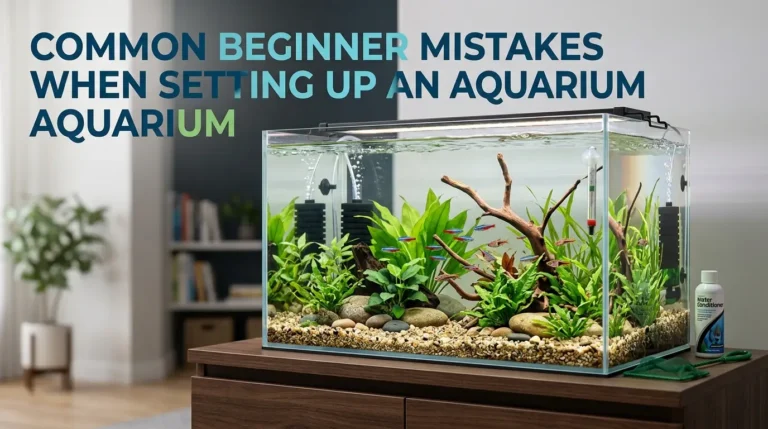
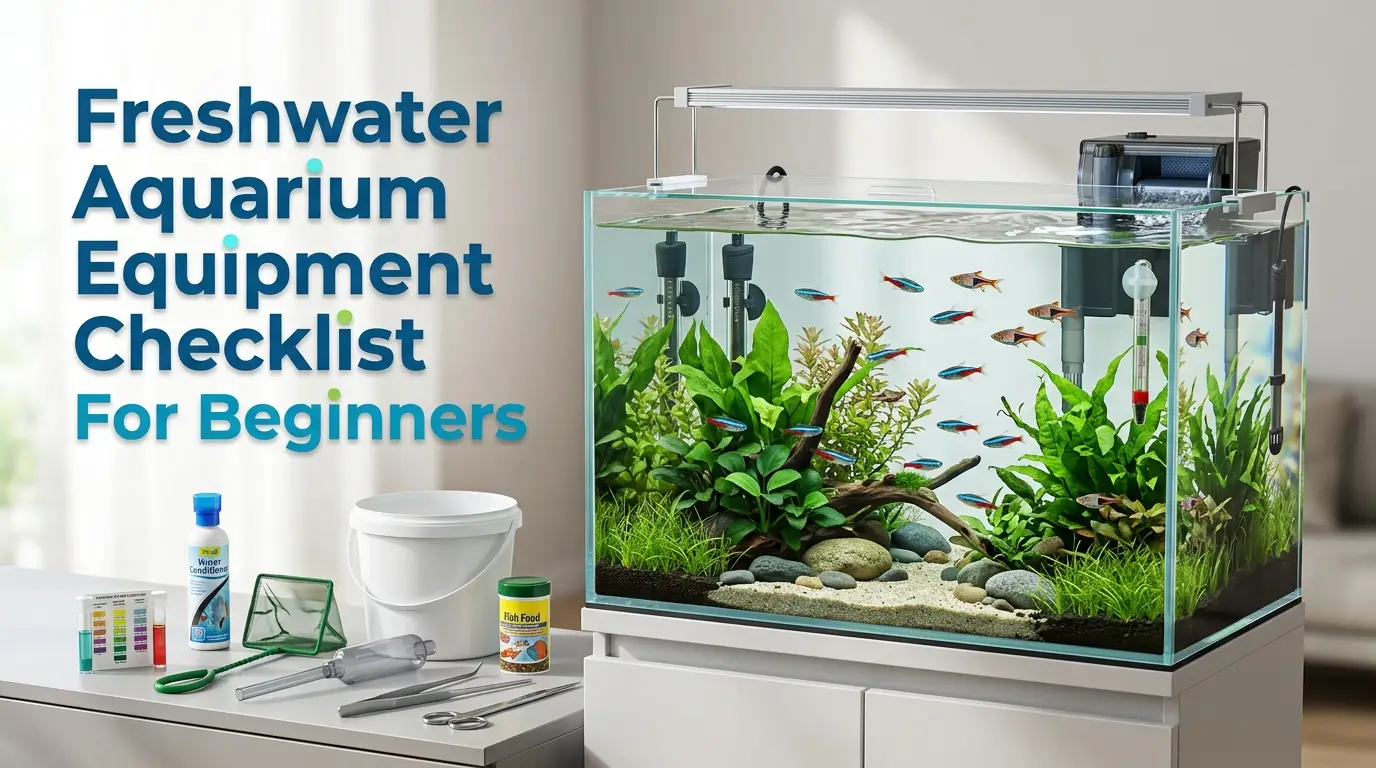
A freshwater aquarium equipment checklist for beginners: tank, filter, heater, lights, test kit.
If you want a calm, healthy tank from day one, you need the right tools. I have set up dozens of beginner tanks, and I know what saves time and what avoids loss. This freshwater aquarium equipment checklist for beginners will show you what to buy, why it matters, and how to use each item the right way. Read on to build a tank that looks great and runs smooth.
What you need before you buy: plan your setup
Before spending money, define your goal. The freshwater aquarium equipment checklist for beginners starts with size, stock, and space. A clear plan makes each purchase smart and simple.
Think about:
- Tank size and room location. Bigger water volume is more stable.
- Fish type and count. Pick hardy species first.
- Your weekly time. A 20-minute routine is ideal for most.
My rule of thumb: plan for a 20-gallon tank if space allows. It is big enough to keep water steady and small enough to manage. This makes the freshwater aquarium equipment checklist for beginners far easier to follow.
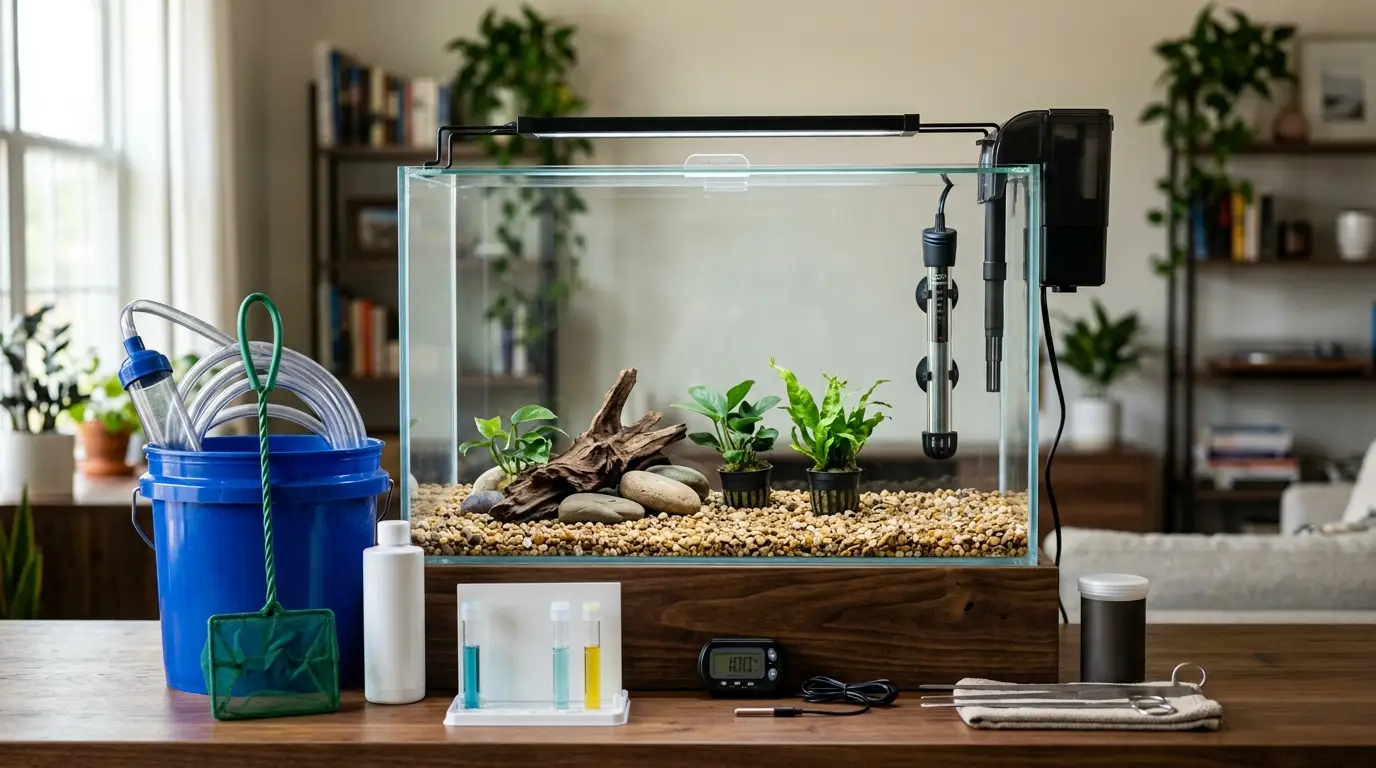
Tank and stand: the base of your build
Your tank and stand set the tone for the whole system. A level, strong base keeps glass seams safe and noise low.
What to look for:
- Size. 10 to 20 gallons for most first tanks; 29 gallons if you want more room.
- Glass vs acrylic. Glass resists scratches. Acrylic is light and clear but needs care.
- Stand. Rated for full weight. A 20-gallon tank can weigh over 200 pounds when filled.
Pro tip from my first setup: place a yoga mat or thin foam pad under rimless tanks if the maker allows it. It evens out tiny bumps and lowers stress on the glass. Add a background film to hide cables. It makes fish feel safe and keeps the view clean. This is step one in any freshwater aquarium equipment checklist for beginners.
Filtration: keep water clear and stable
A good filter is your best friend. It traps waste, grows bacteria, and moves water.
Main types:
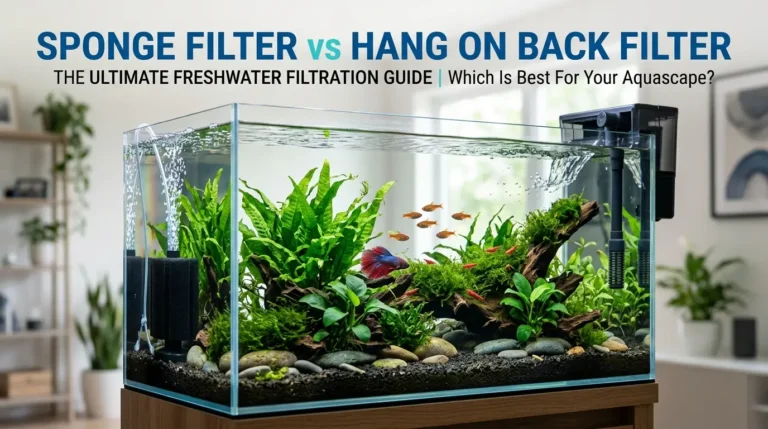
- Sponge filter. Cheap, safe for fry, great with an air pump. Best for small tanks.
- Hang-on-back filter. Easy to clean and great flow. Ideal for 10 to 40 gallons.
- Canister filter. Strong and quiet. Great for larger tanks.
What to buy:
- Filter rated for 1.5 to 2 times your tank volume per hour.
- Extra biomedia like ceramic rings. More surface means more bacteria.
- Extra sponge pre-filter to protect shrimp and fry.
After a bad algae week in my early days, I added a sponge pre-filter to my hang-on-back. It cut debris and kept the impeller clean. This simple add-on belongs on every freshwater aquarium equipment checklist for beginners.
Heater and thermometer: stable temps save fish
Most tropical fish need 75 to 78°F. A stable temp means less stress and fewer health issues.
What to buy:
- A submersible heater with a guard, about 3 to 5 watts per gallon.
- A digital thermometer you can read at a glance.
Tips:
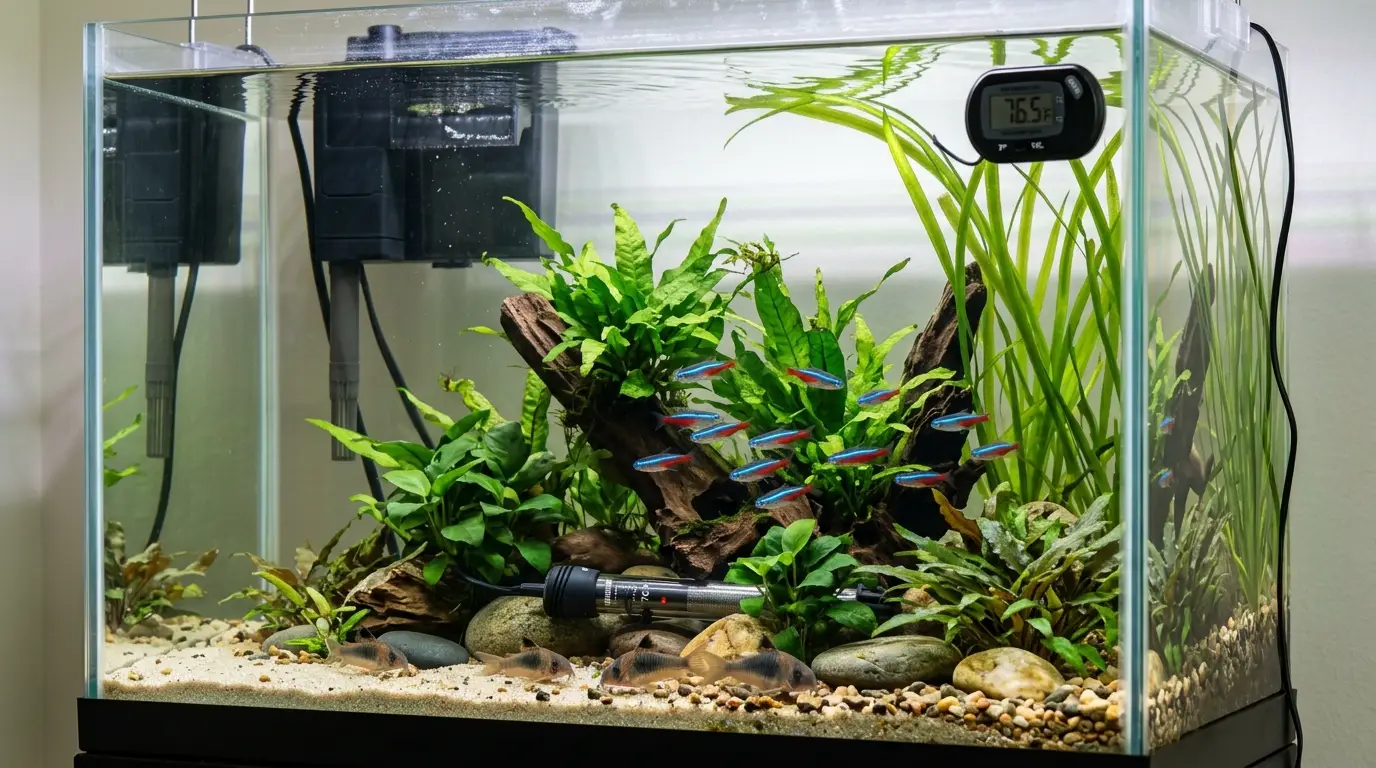
- Place the heater near flow so heat spreads fast.
- Check the temp at the same time each day.
If your room is warm year-round, you may skip a heater for true coldwater fish, but test often. For most users of a freshwater aquarium equipment checklist for beginners, a heater is non-negotiable.
Lighting and lid: safety, growth, and view
Light shapes plant growth and shows color. A lid stops fish from jumping and slows water loss.
What to buy:
- LED light with a timer for 8 to 10 hours per day.
- Tight-fitting lid or glass top to prevent jumps and reduce dust.
Tips:
- Choose a light with a daylight spectrum. If you keep easy plants, a basic LED works well.
- Use a timer. Consistent light cuts algae.
I once lost a guppy to a small gap in the lid. Since then, I always test for escape points. Put this check on your freshwater aquarium equipment checklist for beginners.
Substrate and hardscape: the look and the biology
Substrate anchors plants and hosts bacteria. Hardscape gives hiding spots and style.
What to buy:
- Inert sand or fine gravel for community tanks.
- Nutrient soil if you plan a planted layout.
- Safe rocks and driftwood that do not raise pH unless you want that effect.
Tips:
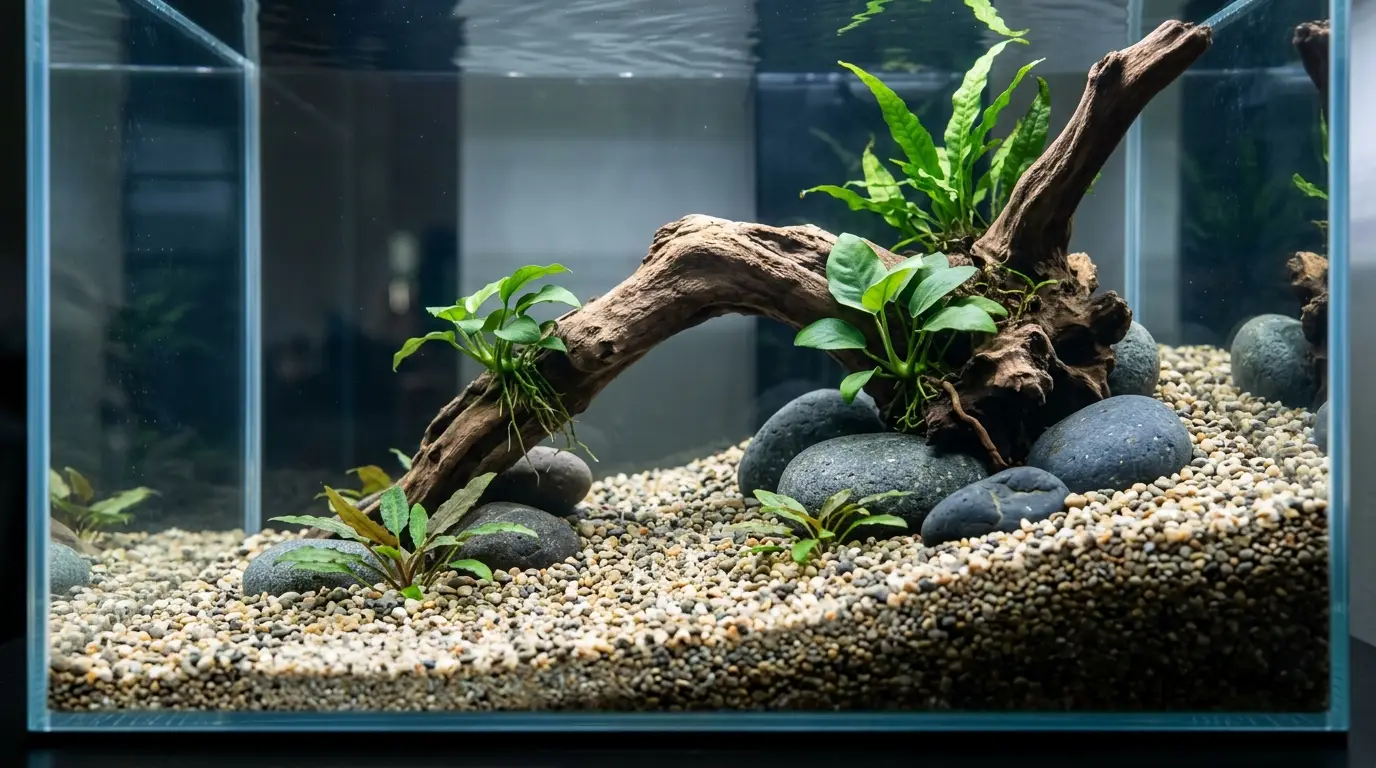
- Rinse substrate until the water runs clear. It saves your filter from a muddy day.
- Boil or soak driftwood to remove tannins and help it sink.
I skipped the rinse once. The tank looked like tea for three days. Never again. Any freshwater aquarium equipment checklist for beginners should highlight a proper rinse.
Water conditioner and test kit: make tap water safe
Tap water often has chlorine or chloramine. These harm fish and bacteria. Conditioners fix that fast.
What to buy:
- Water conditioner that handles chlorine, chloramine, and heavy metals.
- Liquid test kit for ammonia, nitrite, nitrate, and pH.
How to use:
- Dose conditioner for the full tank or the volume you change.
- Test twice a week while cycling, then weekly.
Accurate tests guide every choice. This is the heart of a safe start and a core item on any freshwater aquarium equipment checklist for beginners.
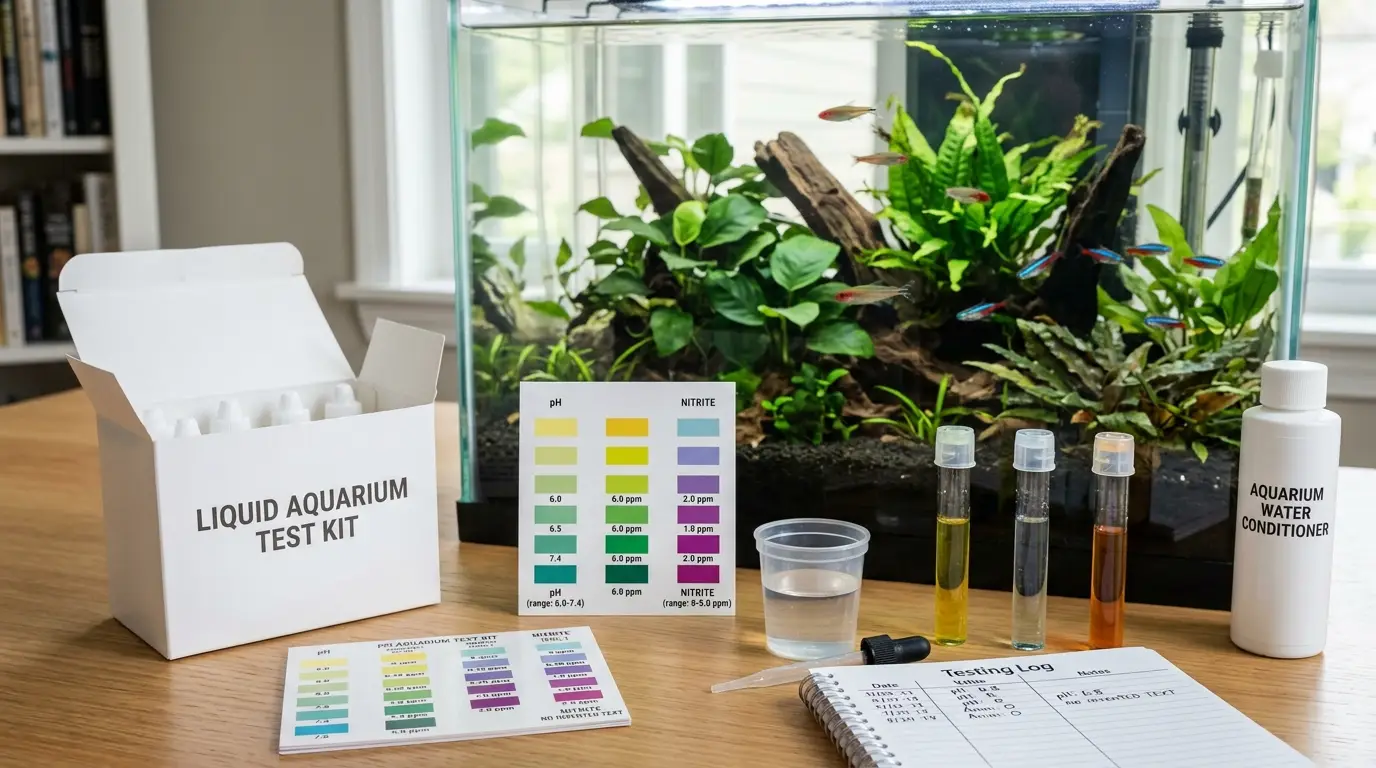
Cycling tools and beneficial bacteria: start right
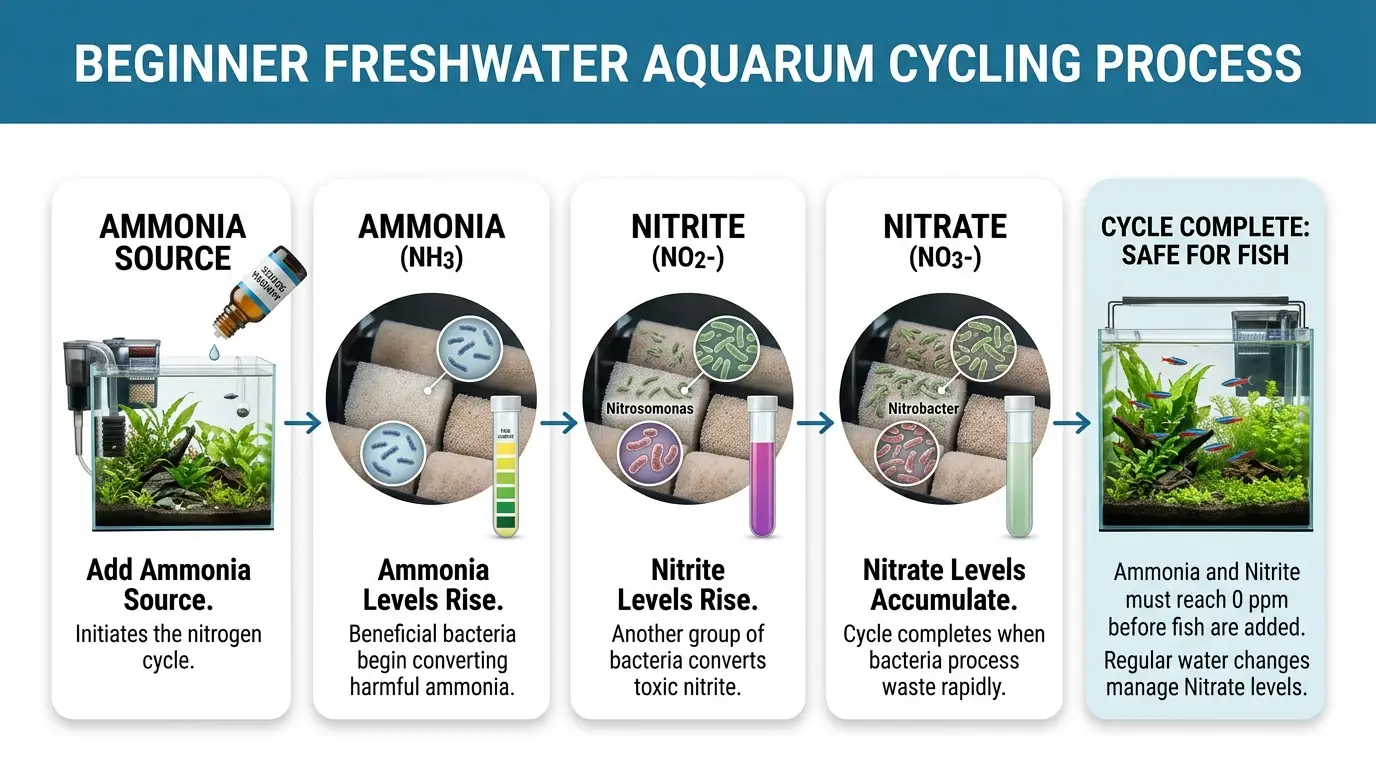
Cycling grows bacteria that turn toxic ammonia into safer nitrate. This takes time but saves fish.
What to buy:
- Bottled beneficial bacteria from a fresh, trusted source.
- A small bottle of pure ammonia or fish food to feed the cycle.
- Extra biomedia to seed future tanks.
Quick plan:
- Add bacteria and a tiny bit of ammonia.
- Keep ammonia and nitrite near zero before adding fish.
- Use your test kit to track progress.
I have sped up many cycles by moving a used sponge from a healthy tank. If you can do that, it is gold. For the freshwater aquarium equipment checklist for beginners, bottled bacteria plus patience works well.
Air pump and accessories: when and why
Do you need an air pump? Not always. If your filter stirs the surface, gas exchange is fine. But some setups need more oxygen.
What to buy:
- Quiet air pump, airline tubing, check valve, and an airstone.
- T-valves and splitters if you run more than one device.
Use air when:
- You run a sponge filter.
- Water is warm or medicated, which lowers oxygen.
- You see fish gasping near the surface.
Add this to your freshwater aquarium equipment checklist for beginners if you keep heavy stock or warmer tanks.
Maintenance kit: siphon, buckets, and more
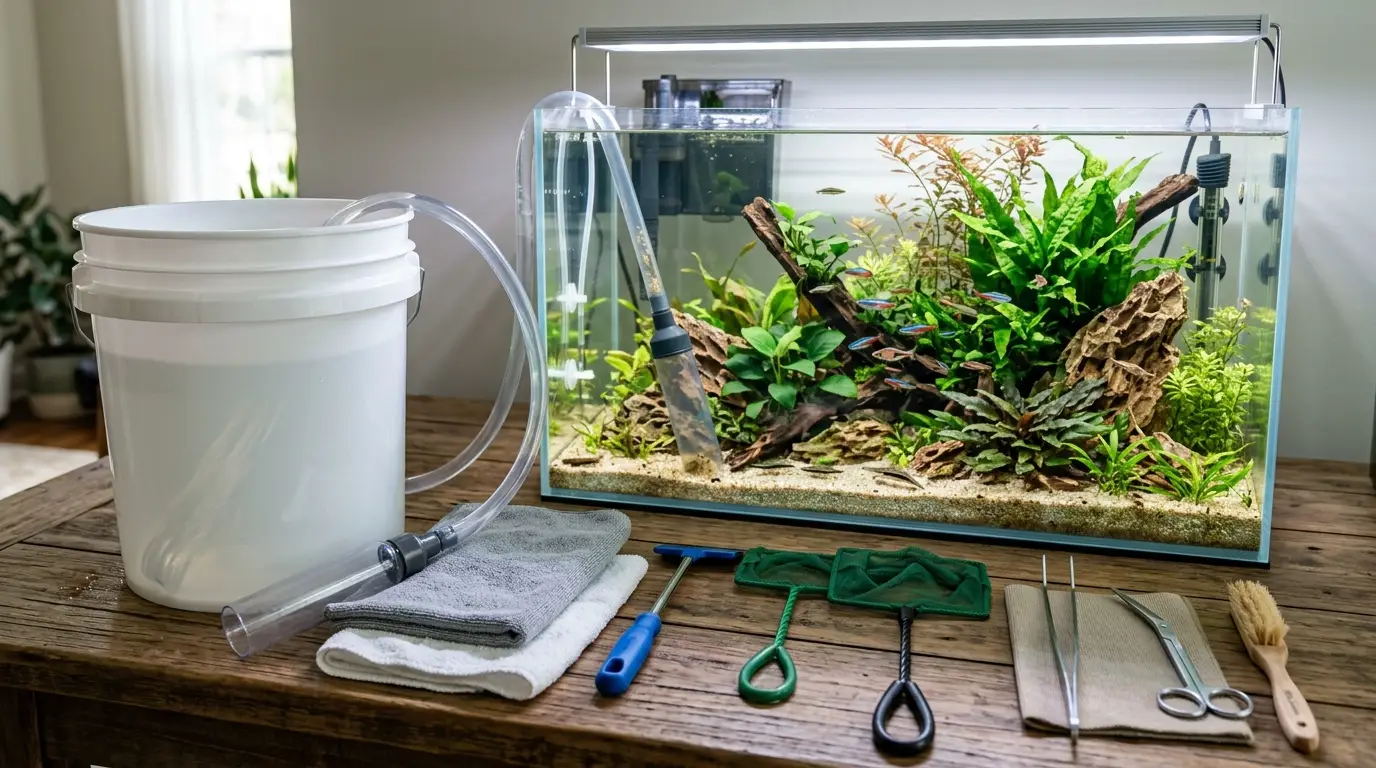
Good tools make water changes easy. Easy means you will keep doing them.
What to buy:
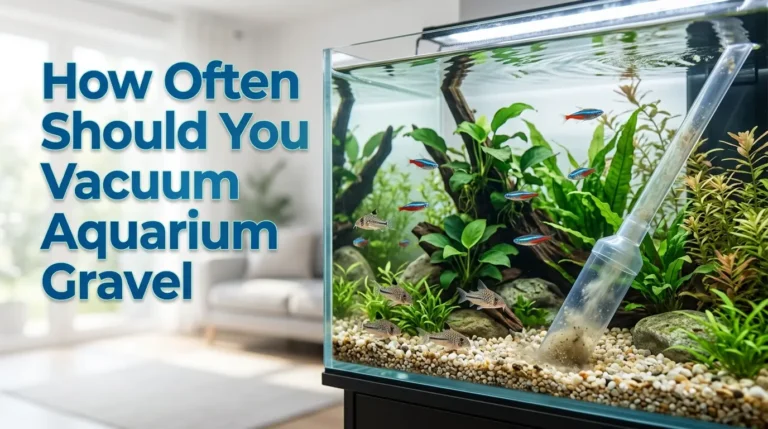
- Gravel vacuum and a dedicated bucket marked “Aquarium Only.”
- Algae scraper or magnetic cleaner.
- Towels, aquascaping tongs, and a small brush for filter parts.
Routine:
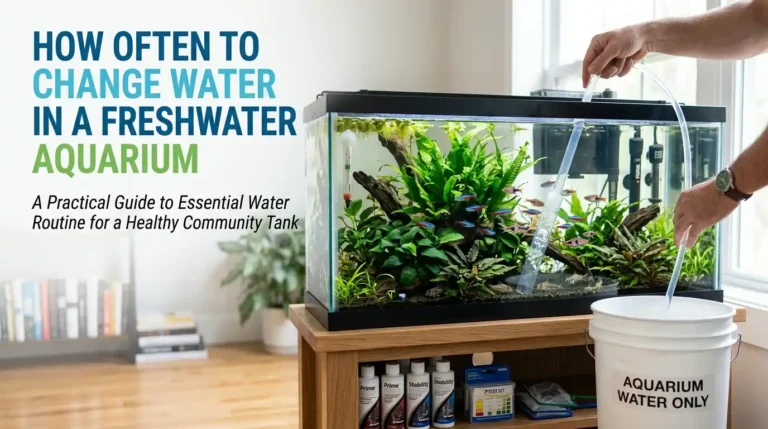
- Change 25 to 35 percent each week.
- Match new water temp within 2°F.
My best upgrade was a longer hose for my siphon. No spills. Less lift. It turned chores into a simple habit and earns a spot on any freshwater aquarium equipment checklist for beginners.
Food, nets, and care basics
Food choices affect health and water quality.
What to buy:
- Quality flakes or pellets as a staple.
- Frozen or freeze-dried treats like daphnia or bloodworms once or twice a week.
- Two nets: one small, one medium, plus a breeder box if needed.
Tips:
- Feed small amounts fish can eat in 30 to 60 seconds.
- Rotate foods for better color and growth.
A small feeding ring keeps food in one area and cuts waste. It is a neat add-on to your freshwater aquarium equipment checklist for beginners.
Power and safety: GFCI, drip loops, timers
Water and power need safe rules.
What to buy:
- Surge-protected power strip on a GFCI outlet if possible.
- Cable clips to form drip loops.
- Timers for lights and even air pumps.
Tips:
- Unplug the heater before big water changes.
- Label each plug. In a rush, clear labels prevent mistakes.
I once pulled the wrong plug and stalled my filter bacteria. Labels fixed that for good. Safety gear belongs on every freshwater aquarium equipment checklist for beginners.
Budget, timeline, and starter stocking plan
A plan keeps costs clear and the process calm.
Budget ranges:
- Essentials only: tank, filter, heater, light, lid, substrate, conditioner, test kit, food, siphon.
- Nice to have: extra biomedia, aquascaping tools, timers, background, float valve.
Starter timeline:
- Week 1. Set tank, add substrate, hardscape, water, conditioner, filter, heater, and light.
- Week 1 to 3. Add bacteria and cycle. Test often.
- Week 3 to 4. When ammonia and nitrite read zero, add a small first group of fish.
- Ongoing. Weekly water changes and tests.
Beginner fish ideas:
- Livebearers like guppies and platies.
- Corydoras catfish for the bottom.
- Small tetras for schools.
Use this plan with the freshwater aquarium equipment checklist for beginners to avoid rush buys and poor fits.
Common mistakes to avoid
Learn from what I did wrong so you do not repeat it.
Avoid:
- Skipping the test kit. You cannot manage what you cannot measure.
- Overcleaning filters. Rinse media in tank water, not tap, to protect bacteria.
- Adding too many fish at once. Stock slow to match your cycle.
- Ignoring drip loops. One splash can be a big shock.
- Overfeeding. Extra food turns into ammonia and algae.
These points show why a careful freshwater aquarium equipment checklist for beginners matters from day one.
Step-by-step setup checklist
Use this simple path to get it done.
Unpack and place
- Stand level, tank on stand, background on if desired.
Install gear
- Rinsed substrate, hardscape, filter, heater, lid, light, thermometer.
Fill and treat
- Fill with tap water, add conditioner, start filter and heater, set timer for light.
Seed and cycle
- Add bacteria and a small ammonia source. Test every few days.
Plant and fine-tune
- Add easy plants like Java fern or Anubias. Adjust flow and light.
Add first fish
- When ammonia and nitrite are zero, add a small group. Feed light.
Maintain
- Weekly 25 to 35 percent water change, glass clean, test and log.
Print this and keep it near your tank. It pairs with your freshwater aquarium equipment checklist for beginners so you never miss a step.
Frequently Asked Questions of freshwater aquarium equipment checklist for beginners
What size tank is best for a first setup?
A 20-gallon tank is a sweet spot for stability and cost. It keeps water steady and gives fish room.
Do I need a heater for a freshwater tank?
Most tropical fish need 75 to 78°F, so a heater is best. Cool-water species can skip it if room temps are steady.
How long does cycling take?
With bottled bacteria, many tanks cycle in 2 to 4 weeks. Always confirm with tests for ammonia, nitrite, and nitrate.
What is the best beginner filter?
A hang-on-back filter is simple, quiet, and easy to clean. Add extra biomedia and a sponge pre-filter for better results.
How often should I change water?
Do a 25 to 35 percent change every week. Test your water and adjust if nitrate rises fast.
Can I add fish right away?
Add fish only when ammonia and nitrite read zero. Start with a small group to avoid overload.
What light schedule should I use?
Run lights for 8 to 10 hours daily on a timer. Shorten the period if algae grows.
Conclusion
Setups that last start with smart tools and patient steps. Use this freshwater aquarium equipment checklist for beginners to guide each buy and each task. Keep tests regular, changes steady, and feeding light.
Your next move is simple: list what you have, note what you need, and set a start date. When you are ready, share your plan or questions below, or subscribe for more step-by-step guides and stocking ideas.