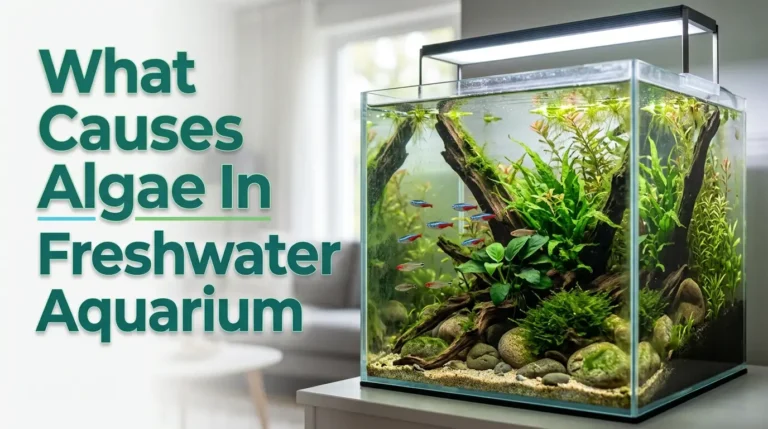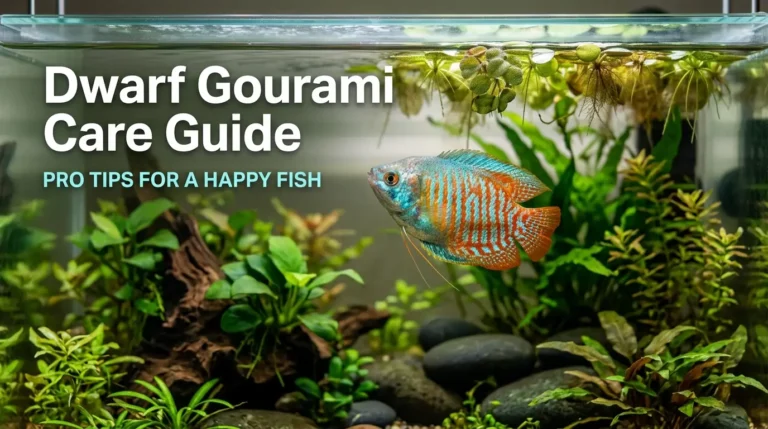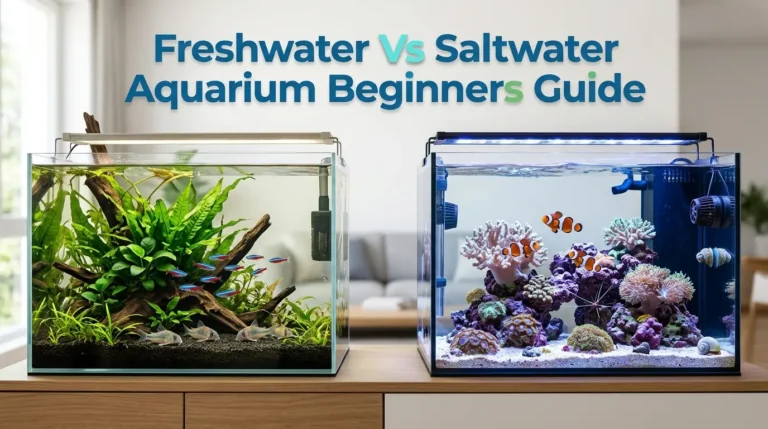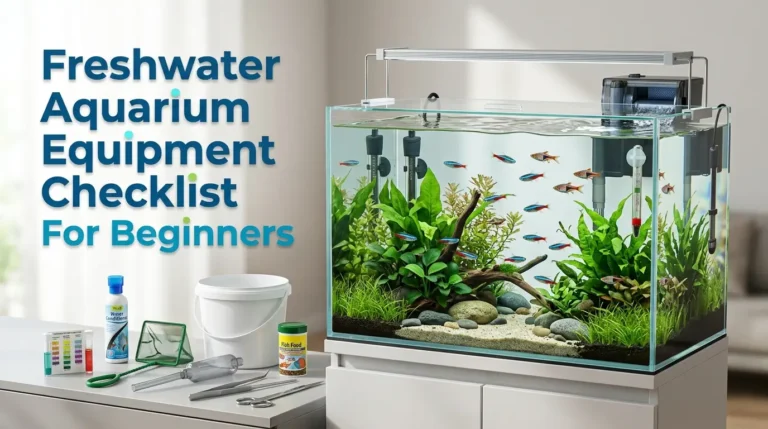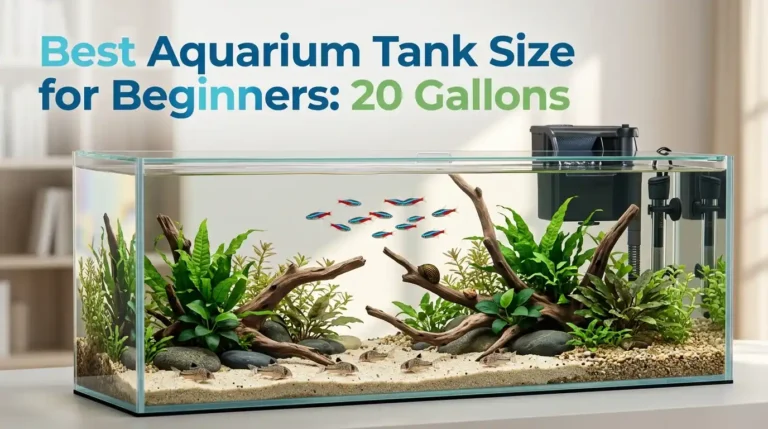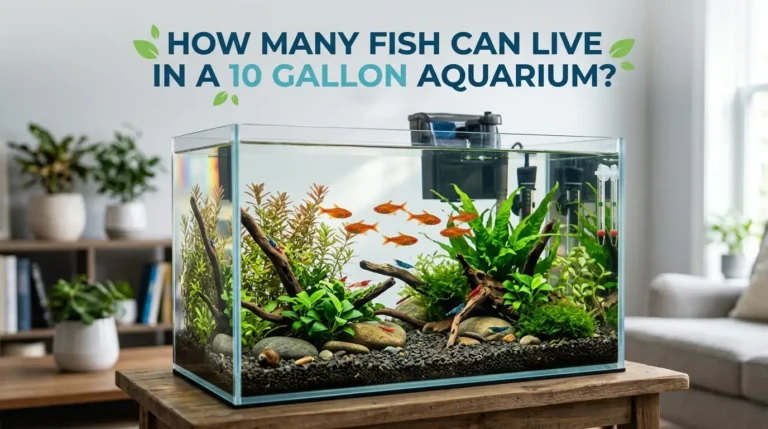
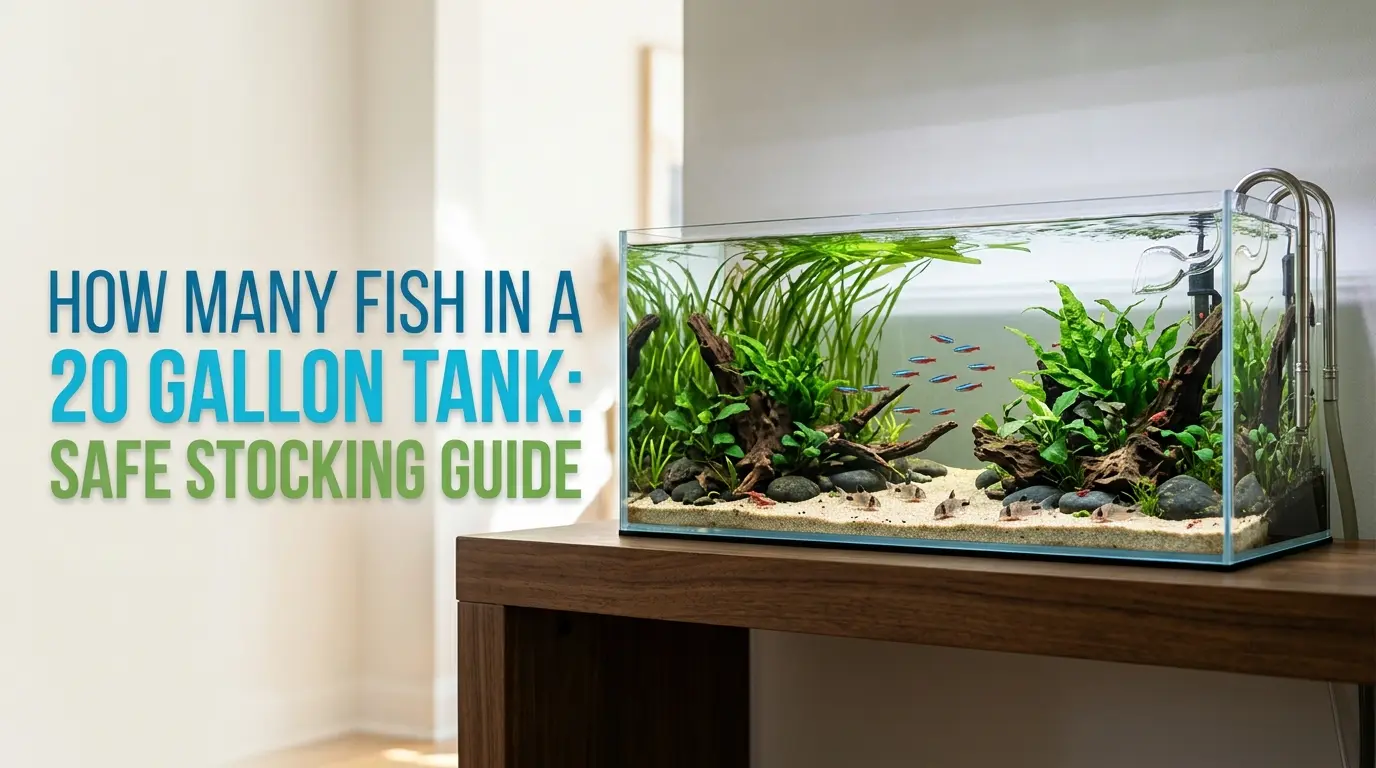
A 20-gallon aquarium can usually hold 6 to 10 small fish, but the safe number depends on the fish species, adult size, body shape, activity level, and filtration. A better plan is to choose a compatible group first, then add fish slowly.
For homes in the United States, “20 gallons” means 20 US gallons. The tank may hold less water after adding gravel, rocks, wood, plants, and decorations. A 20-gallon tank also comes in different shapes. A 20-gallon long tank gives fish more swimming space than a tall tank with the same stated volume.
The old “one inch of fish per gallon” rule is only a rough starting point. It does not account for waste, swimming space, adult size, or fish behavior. Use the guide below to build a safer stocking plan.
The Short Answer: How Many Fish Are Safe?
A well-filtered, fully cycled 20-gallon tank can often support one of these general setups:
- 6 to 8 small schooling fish, such as neon tetras
- 8 to 12 very small fish, such as chili rasboras, if water quality stays stable
- 1 betta with a carefully chosen community, depending on the betta’s behavior
- 6 to 8 small livebearers, such as male endlers
- 1 honey gourami with a small school of peaceful fish
- A small group of shrimp and snails with fewer or no fish
- One species-only group, such as a small school of one peaceful nano species
These numbers are estimates, not fixed limits. A 20-gallon tank with strong filtration and many live plants may manage waste better than a bare tank. However, filtration does not create more swimming room, and it cannot solve aggressive behavior.
Stock fewer fish if:
- The fish grow larger than about 2 to 3 inches.
- The fish are messy eaters or produce a lot of waste.
- The tank is new or not fully cycled.
- The fish need a large territory.
- The tank has poor water movement or low oxygen.
- You are new to aquarium care.
- You want a wider safety margin between water changes.
A practical first goal is six to eight small, peaceful fish, added in stages.
Why the One-Inch-per-Gallon Rule Falls Short
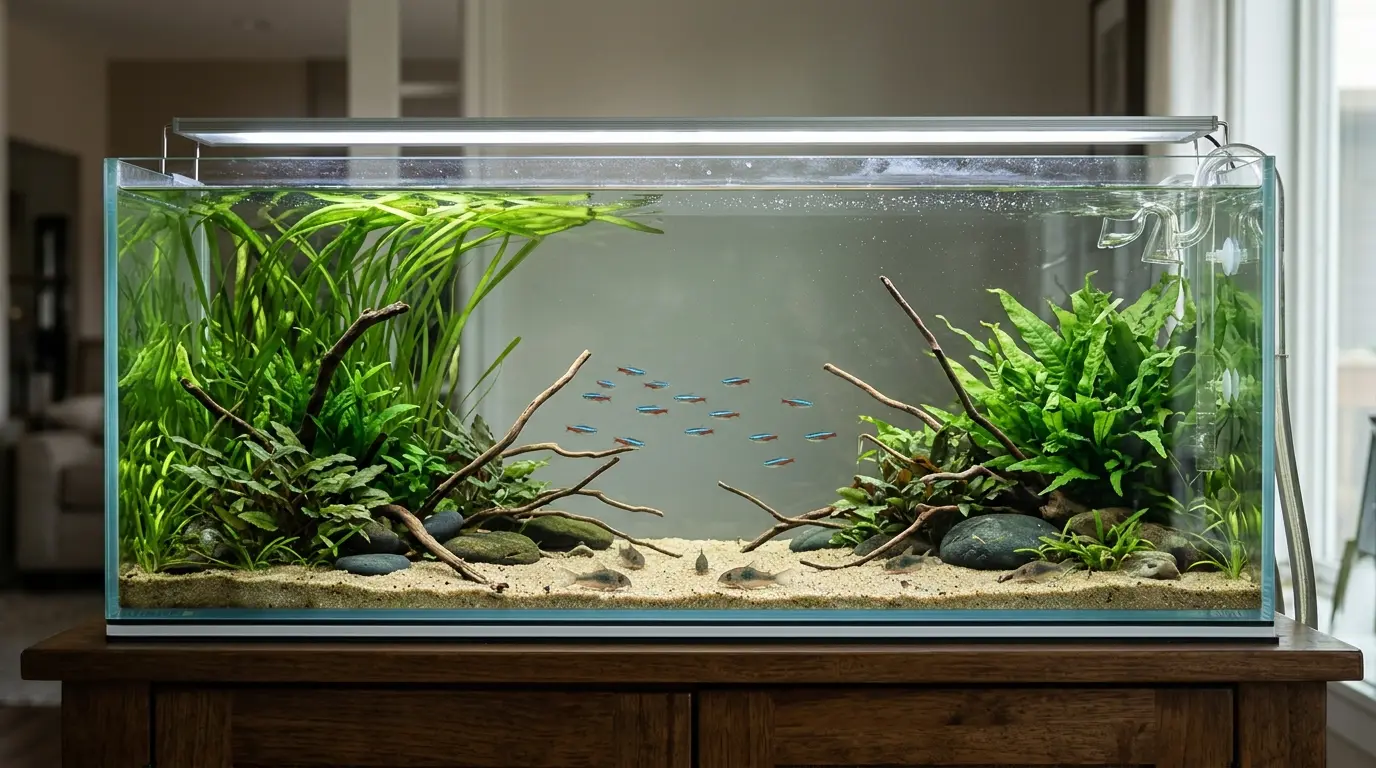
The one-inch rule suggests that one inch of adult fish can live in each gallon of water. This method is easy to remember, but it can give unsafe advice.
A 6-inch slender fish does not have the same needs as six 1-inch fish. A large fish has a heavier body, larger waste load, and greater need for room. Some fish also swim constantly, while others defend a small area.
The rule also ignores these key factors:
Adult size
Always stock for the fish’s adult size, not its size at the store. A juvenile common pleco may look suitable for a 20-gallon aquarium, but an adult can grow far too large for it.
Body shape and waste
A deep-bodied fish usually creates more waste than a slim fish of the same length. Goldfish are a common example. They produce substantial waste and need much more space than their small juvenile size suggests.
Swimming behavior
Active fish need open horizontal space. A 20-gallon long tank is often better for schooling fish than a tall 20-gallon tank.
Territory
Some fish need a defined territory. A pair of territorial cichlids may need more room than a larger group of tiny schooling fish.
Water chemistry
Different fish prefer different water conditions. A tank may have enough physical space but still be unsuitable if the species need different temperatures, pH levels, or hardness.
For these reasons, the best stocking method combines adult size, behavior, bioload, water quality, and tank shape.
Best Fish Choices for a 20-Gallon Aquarium
Small, peaceful species are usually the easiest fit. The following examples are common options for a freshwater 20-gallon tank in the United States.
Neon tetras
A group of 6 to 10 neon tetras can work in a planted 20-gallon tank. They are schooling fish, so keeping only two or three is not ideal.
Neon tetras need stable water and should be added only after the aquarium has completed the nitrogen cycle. They also do best with peaceful tank mates that will not chase or eat them.
Ember tetras
A group of 8 to 12 ember tetras may fit well in a 20-gallon tank. Ember tetras stay small and add color without using much swimming space.
Their small size does not remove the need for clean water. Small fish can still suffer quickly when ammonia or nitrite rises.
Harlequin rasboras
A group of 6 to 8 harlequin rasboras is a reasonable starting range. They are peaceful schooling fish and often use the middle area of the aquarium.
They are larger than some nano fish, so avoid combining them with too many other active species.
Chili rasboras
A group of 8 to 12 chili rasboras can suit a mature, planted 20-gallon aquarium. Their small size makes them a better match for carefully planned nano communities.
They may be shy in a bare tank. Plants, moss, and gentle water flow can help them feel secure.
Endler’s livebearers
A group of 6 to 8 male endlers can be a colorful option. Using males only avoids the rapid increase that occurs when males and females breed.
If you keep both sexes, the population may grow quickly. A 20-gallon tank can become crowded when fry survive.
Honey gourami
A single honey gourami can serve as a centerpiece fish in a 20-gallon aquarium. It may live with a small school of peaceful fish, such as ember tetras or harlequin rasboras.
Do not assume every gourami is peaceful. Some larger gourami species need more space or may bully tank mates.
Corydoras catfish
Small species, such as pygmy or panda corydoras, may work in a 20-gallon tank. Keep them in a proper group rather than as a single “bottom cleaner.”
Corydoras still need food. They do not live on scraps alone, and uneaten food can raise waste levels.
Betta fish
A single betta can live in a 20-gallon aquarium. A betta may also accept peaceful tank mates, but personality varies widely.
Avoid fin-nipping fish and species that may compete for the surface. Have a backup plan in case the betta becomes aggressive.
Stocking Examples for a 20-Gallon Tank
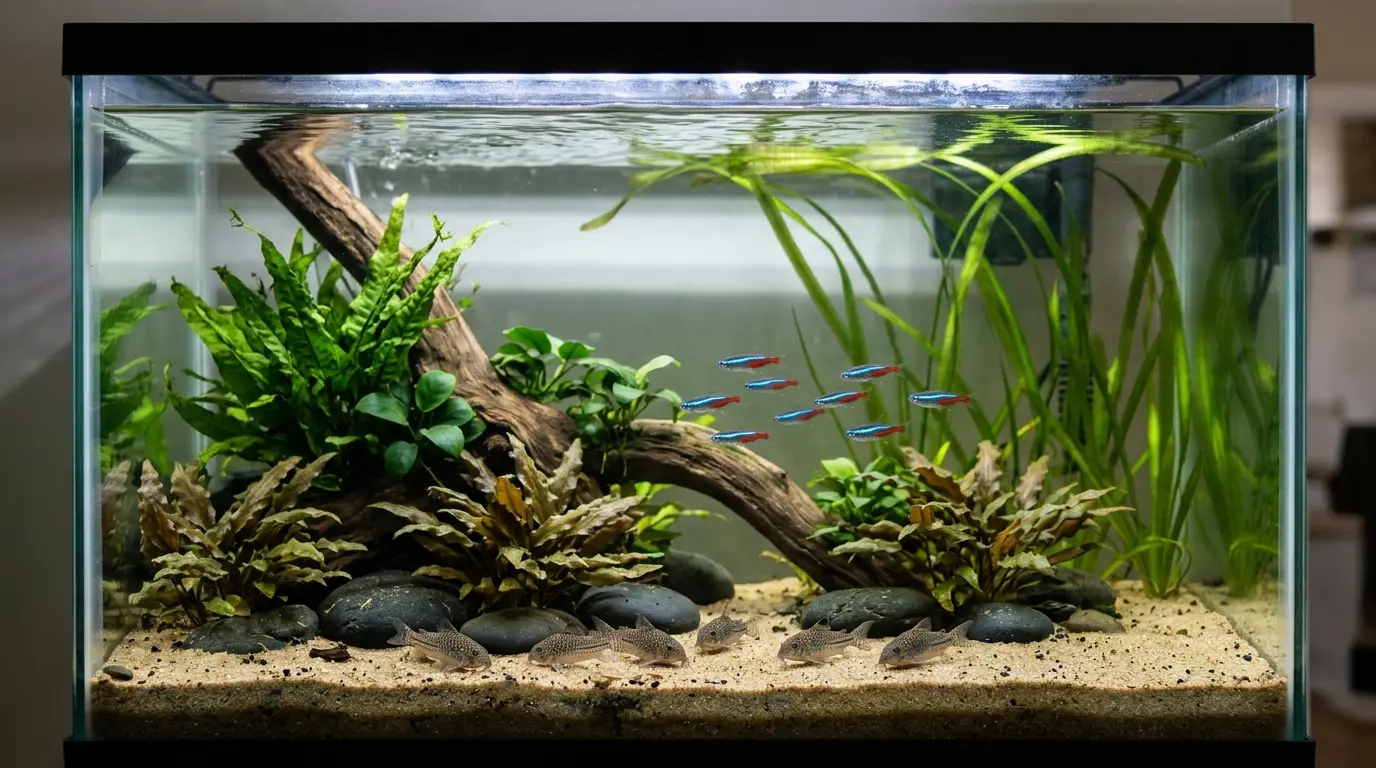
The table below shows hypothetical starting plans. Each plan assumes a cycled tank, suitable filtration, regular testing, and compatible water conditions.
| Aquarium plan | Suggested stocking | Main condition |
|---|---|---|
| Simple school | 8 ember tetras | Use gentle tank mates or no tank mates |
| Larger school | 8 neon tetras | Provide plants and open swimming space |
| Rasbora group | 6 harlequin rasboras | Keep water stable and avoid overcrowding |
| Nano community | 8 chili rasboras plus 6 shrimp | Use a mature, planted tank |
| Livebearer tank | 6 to 8 male endlers | Use males only to prevent fry |
| Centerpiece tank | 1 honey gourami plus 6 small schooling fish | Watch for chasing |
| Betta community | 1 betta plus a small peaceful group | Have a separate tank ready |
| Bottom-focused setup | 8 small corydoras | Provide soft, clean substrate and sinking food |
Do not combine every row. The table gives separate choices, not one large stocking list.
For example, eight neon tetras plus eight corydoras may be possible in some 20-gallon tanks, but the plan needs more care than a single school. Add the bottom fish and schooling fish at different times. Test the water after each addition.
A conservative plan is often best:
- Cycle the aquarium.
- Add one group of fish.
- Wait at least one to two weeks.
- Test ammonia, nitrite, and nitrate.
- Add more fish only if the readings remain safe and the fish show no signs of stress.
Fish That Usually Do Not Belong in a 20-Gallon Tank
Some popular fish outgrow a 20-gallon aquarium or create too much waste. Avoid buying a fish based on its juvenile size.
Goldfish
Common, comet, and shubunkin goldfish need much more space than a 20-gallon tank provides. They grow large and produce heavy waste.
Fancy goldfish also need more room and stronger filtration than many beginners expect. A 20-gallon aquarium is not a good permanent home for them.
Common plecos
Common plecos can grow to well over a foot long. They are not suitable for a 20-gallon tank.
A small pleco in a store tank may be a baby, not a small species. If you want an algae-eating fish, research the adult size of the exact species.
Koi
Koi are pond fish. They should not be kept as permanent residents in a 20-gallon aquarium.
Bala sharks
Bala sharks grow large and need long swimming areas and groups. They are not suitable for a 20-gallon aquarium.
Common clown loaches
Clown loaches become large and social. They need a much larger aquarium and should not be purchased for a 20-gallon setup.
Most large cichlids
Oscars, jack dempseys, green terrors, and many other cichlids need more space and may become aggressive. Even smaller cichlids require careful planning because territory matters.
Tiger barbs
Tiger barbs are active and can nip fins. A proper group needs more swimming room than many 20-gallon tanks provide, especially when combined with other fish.
How to Calculate a Safer Stocking Level
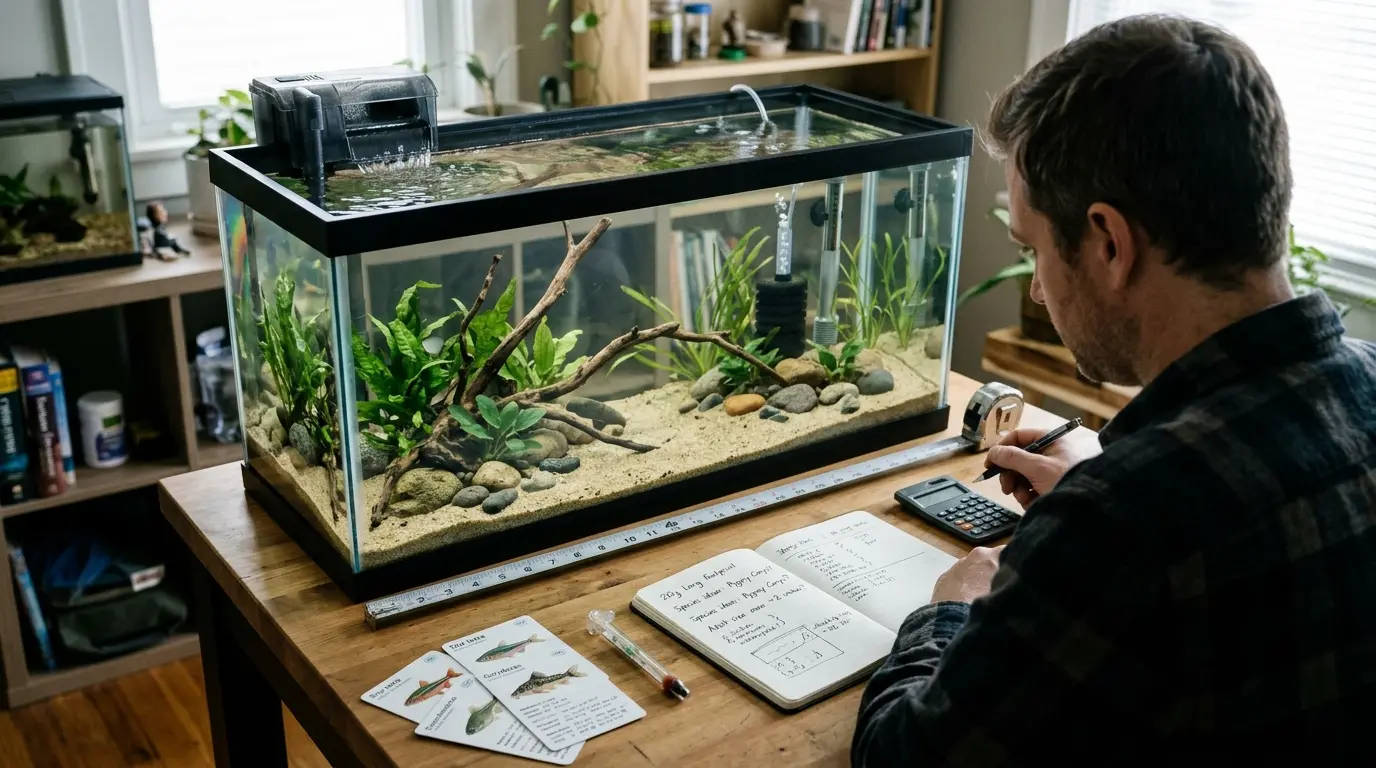
Use this simple process instead of relying on a single fish-per-gallon number.
1. Measure the actual tank
Check the tank’s dimensions and account for the space taken by:
- Gravel or sand
- Rocks and wood
- Large decorations
- Internal filters
- Thick plant growth
A tank labeled 20 gallons may contain less than 20 gallons of water in daily use.
2. Identify the adult size
Look up the adult size of each species from a reliable care source. Do not use the size of the fish at purchase.
3. Check social needs
Some fish need a group of six or more. Others need to live alone. A fish that needs a group uses more of the tank’s total capacity.
4. Check the swimming zone
Fish may use the top, middle, or bottom of the tank. Using different zones can reduce competition, but it does not double the tank’s capacity.
5. Check behavior
Do not mix fish that:
- Chase one another
- Nip fins
- Compete for the same cave
- Need very different temperatures
- Eat small tank mates
- Fight over the surface
6. Add fish slowly
A filter needs time to support a larger waste load. Adding many fish at once can cause an ammonia or nitrite spike.
7. Test the water
Use a reliable aquarium test kit. In a healthy cycled aquarium, ammonia and nitrite should remain at 0 parts per million (ppm). Nitrate should stay controlled through water changes and plant growth.
If ammonia or nitrite appears, stop adding fish. Perform a partial water change and find the cause.
Filtration, Cycling, and Maintenance
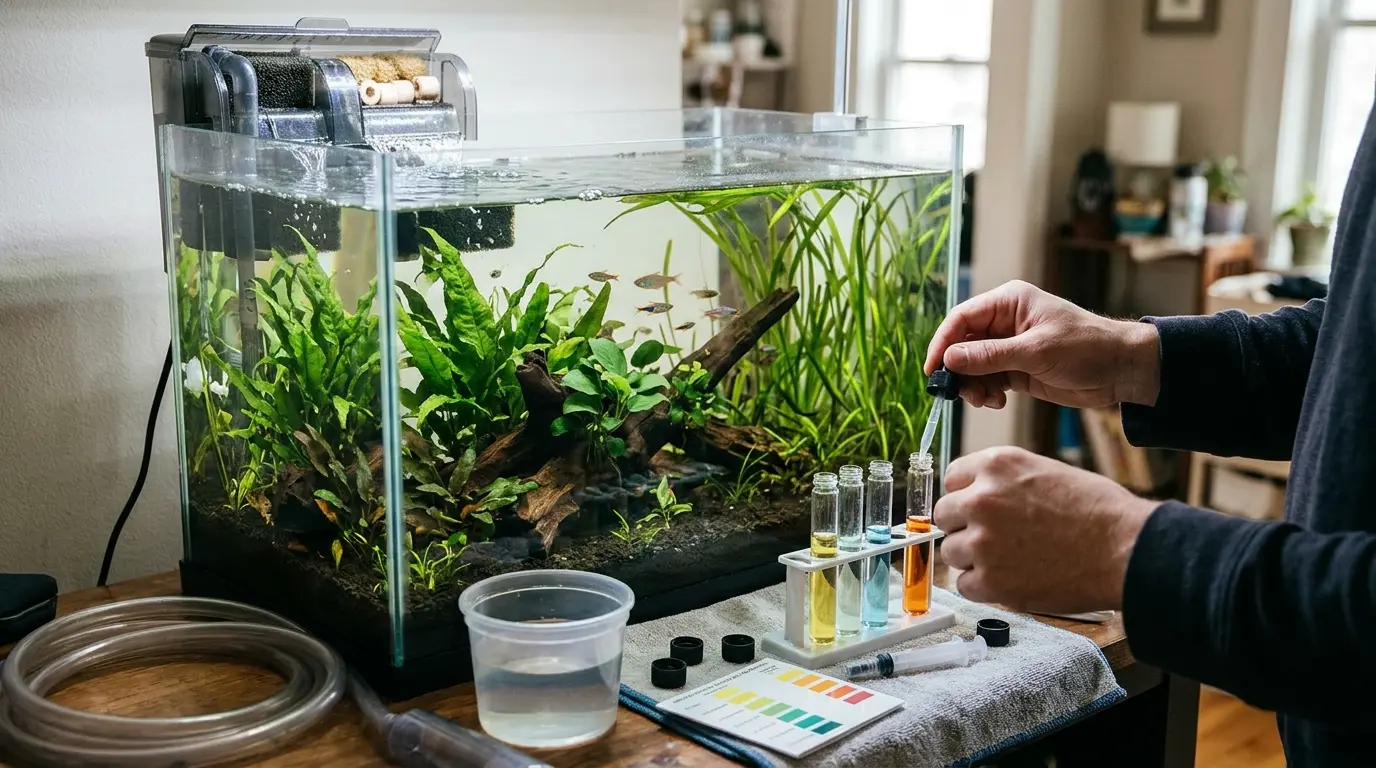
A 20-gallon tank must complete the nitrogen cycle before it receives a full fish load. Beneficial bacteria convert toxic ammonia into nitrite and then into nitrate.
A filter supports this process, but a filter does not make an overstocked tank safe. It also does not remove the need for water changes.
A good maintenance plan includes:
- Testing ammonia and nitrite during setup
- Testing again after adding fish
- Removing uneaten food
- Cleaning the filter media in removed tank water
- Avoiding tap-water rinses that can damage beneficial bacteria
- Performing regular partial water changes
- Replacing evaporated water with treated water
- Checking temperature each day during the first weeks
Do not replace all filter media at once unless there is a clear reason. Replacing every piece can remove much of the helpful bacteria.
Live plants can absorb some nutrients and provide cover. They help, but they do not cancel out excess fish, excess food, or poor maintenance.
Signs That a 20-Gallon Tank Has Too Many Fish

Test results are the clearest warning, but fish behavior can also reveal trouble.
Watch for:
- Ammonia or nitrite above 0 ppm
- Nitrate that keeps rising between water changes
- Cloudy water after adding fish
- Fish gasping at the surface
- Rapid gill movement
- Clamped fins
- Repeated hiding
- Chasing or fin damage
- Strong odor
- Fish dying soon after new additions
If these signs appear, stop feeding for a short period, stop adding fish, and test the water. Improve aeration and perform a partial water change if ammonia or nitrite is present.
Do not simply add more chemical products and continue stocking. Find the cause first. Common causes include overfeeding, a new filter, dead fish, untreated tap water, or too many fish added at once.
Common Mistakes to Avoid
Buying fish before cycling the tank
New water may look clean, but it has not yet built the bacteria needed to process fish waste.
Counting juvenile size
A fish sold at 1 inch may grow several times larger. Plan for the adult fish.
Adding fish all at once
A sudden waste increase can overwhelm the biological filter.
Treating a 20-gallon tank as a fixed limit
The shape matters. A long tank provides more horizontal swimming space than a tall tank.
Using algae eaters as cleaners
Every fish creates waste. No fish cleans the tank for free.
Ignoring breeding
Livebearers can produce many fry. A tank that starts with six fish may hold dozens within a short time.
Overfeeding
Extra food becomes extra waste. Feed only what the fish can eat in a short period, then remove leftovers.
Trusting labels without research
Terms such as “community fish” do not guarantee that every species will work in every tank. Check adult size, group size, temperature, behavior, and water needs.
Frequently Asked Questions
Can I keep 10 fish in a 20-gallon tank?
You may be able to keep 10 very small, peaceful fish in a mature, well-maintained 20-gallon tank. Ten larger or active fish may be too many. The species and adult size matter more than the number alone.
How many bettas can live in a 20-gallon tank?
Usually, only one betta should live in a 20-gallon aquarium. Keeping multiple bettas together can lead to serious fighting. A divided tank may still create stress if the fish can see one another.
Can I keep a betta with tetras?
A betta may live with peaceful tetras, but there is no guarantee. Use a planted tank, avoid fin-nipping species, and watch closely for chasing or torn fins. Keep another suitable tank available if the mix fails.
Is a 20-gallon tank good for beginners?
Yes. A 20-gallon tank offers more stable water conditions than a very small aquarium and gives beginners room to build a peaceful community. It still needs cycling, testing, and regular maintenance.
Can I keep shrimp with fish in a 20-gallon tank?
Yes, but some fish may eat baby shrimp. Adult shrimp are more likely to survive with small, peaceful fish and plenty of plants, moss, and hiding places.
How long should I wait before adding more fish?
Wait at least one to two weeks after an addition, then test the water. Add more fish only when ammonia and nitrite remain at 0 ppm and the existing fish show no signs of stress.
Final Recommendation
For most new aquarists, start with 6 to 8 small, peaceful fish in a fully cycled 20-gallon aquarium. Add them in stages, test the water, and stock for adult size.
The safest answer is not simply “20 fish” or “one inch per gallon.” Choose a compatible species, give schooling fish a proper group, avoid large waste-producing fish, and leave room for stable water quality.