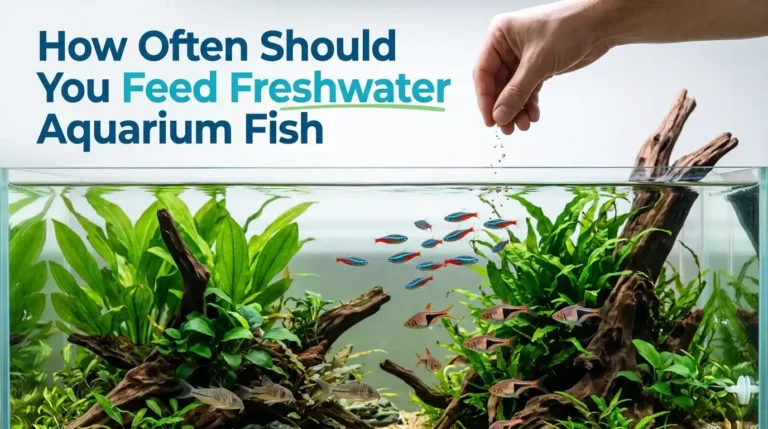
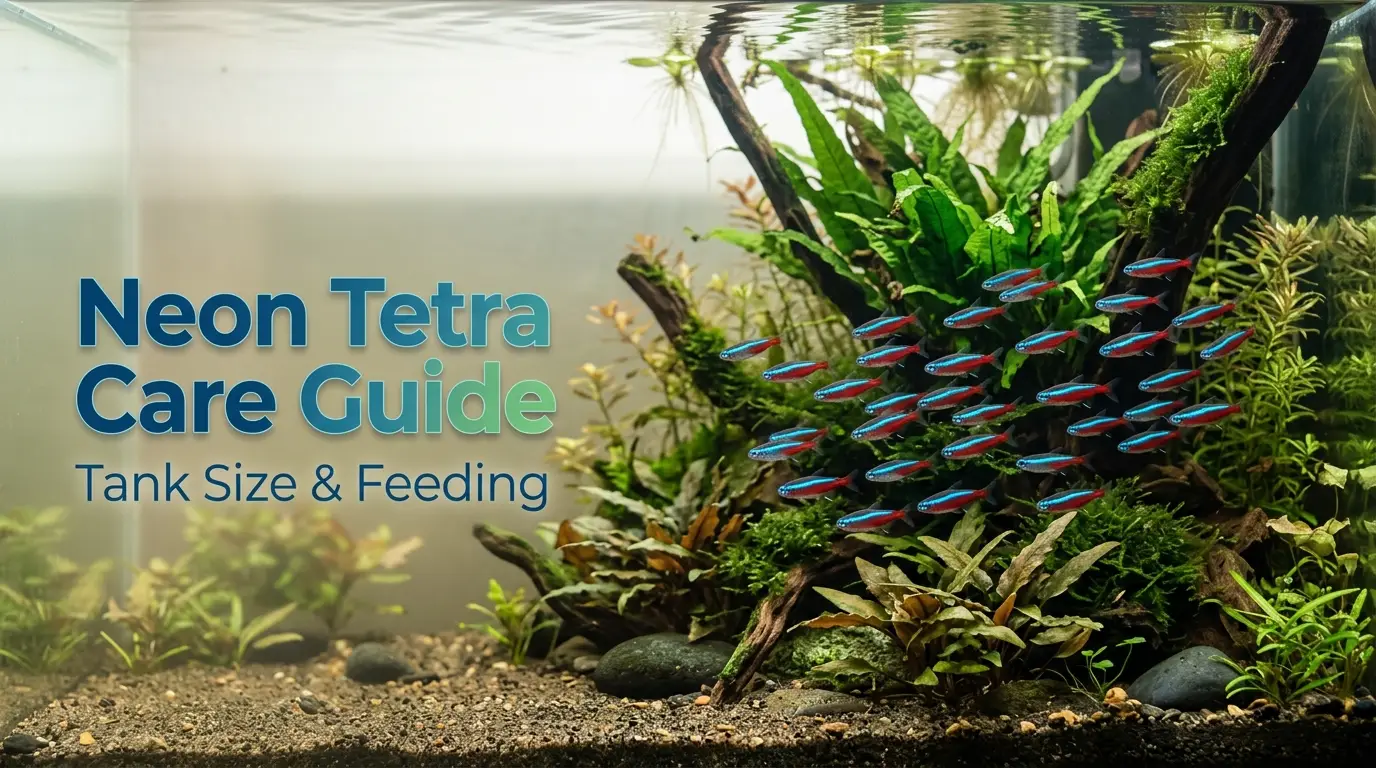
Neon tetras need stable soft water, a roomy planted tank, and tiny varied meals.
If you want a tank full of color that is easy to care for, neon tetras are a great choice. In this neon tetra care guide tank size feeding, I share proven tips from years of keeping and breeding small community fish. You will learn how big the tank should be, what to feed, how to keep water stable, and what mistakes to avoid so your school glows bright and lives long.
What Are Neon Tetras?
Neon tetras are small, schooling fish from blackwater streams in the Amazon. They flash a blue stripe and a red tail band that look like lights in dim water. They are peaceful and do best in groups.
This neon tetra care guide tank size feeding shows you how to match their wild needs at home. When you keep them in the right setup, they live 5 to 8 years and show rich color. They are perfect for planted community tanks.
Ideal Tank Size and Aquascape Setup
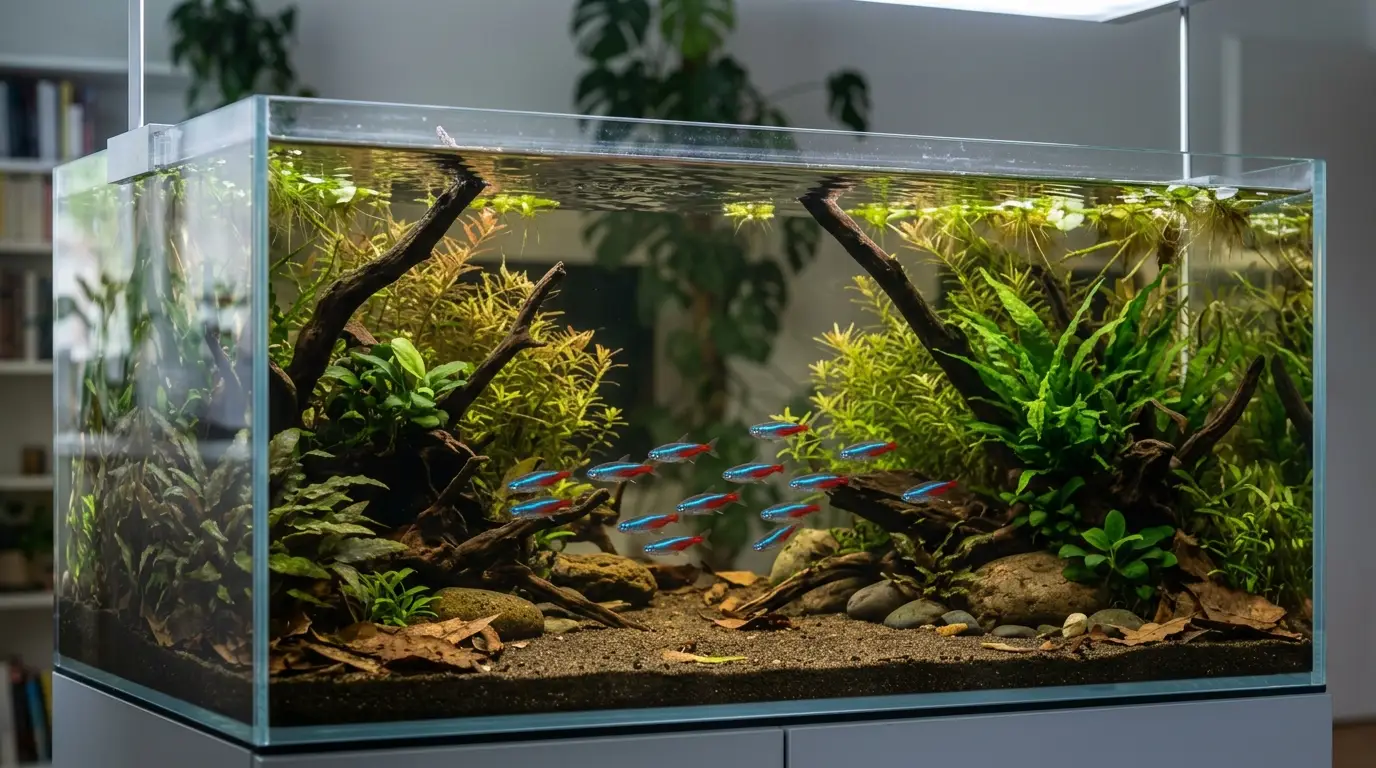
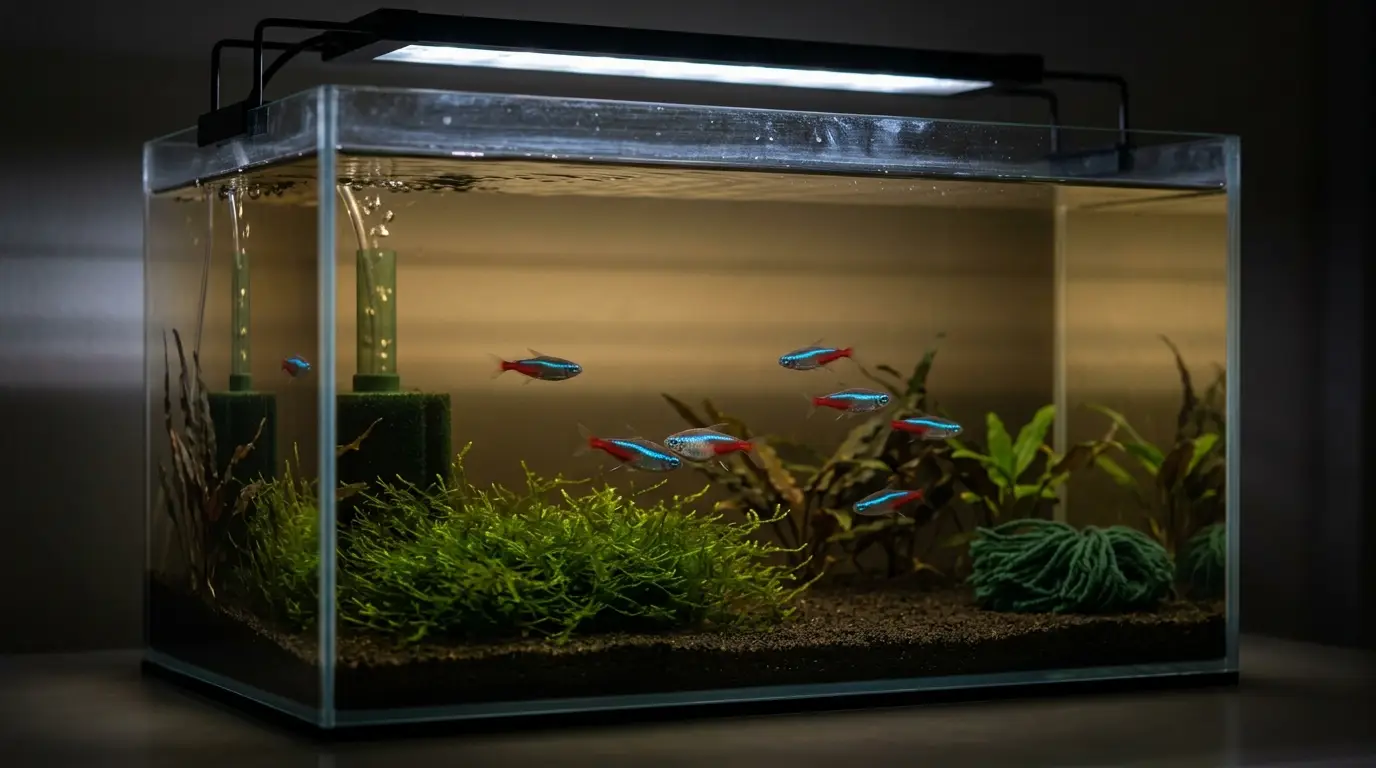
Neon tetras are tiny, but they use space. A 10-gallon tank is the safe start for a group of 8 to 10. For 12 to 15 fish, go for 20 gallons or more. Pick a long tank with a 24 to 30 inch length so the school can glide.
Aim for a calm, shaded layout. Use plants, wood, and leaf litter to mimic a stream. Dark sand and floating plants help lower stress and boost color.
- Tank size
- 10 gallons for 8 to 10 neon tetras
- 15 to 20 gallons for 12 to 15 tetras
- Add 1 to 2 gallons per extra fish
- Aquascape tips
- Use fine sand or smooth gravel
- Add driftwood and catappa leaves for tannins
- Plant stems, crypts, and moss for cover
- Use a lid; they can jump
In this neon tetra care guide tank size feeding, space is not a luxury—it is stress control. More room means tighter schooling and less nipping at meal time.
Water Parameters, Filtration, and Cycling
Stable water beats perfect numbers. Keep ammonia and nitrite at 0 ppm, and nitrate under 20 ppm. Neon tetras prefer soft, slightly acidic water.
- Target ranges
- Temperature: 74 to 76°F (23 to 24.5°C)
- pH: 6.0 to 7.2
- GH: 1 to 8 dGH
- KH: 1 to 4 dKH
- TDS: under 200 ppm
- Filtration
- Use a sponge filter or a gentle hang-on-back
- Baffle the outflow; avoid harsh current
- Rinse media in tank water, not tap water
- Cycling
- Seed with mature media or bottled bacteria
- Test daily at first; add fish only when stable
- Quarantine new fish for 2 to 4 weeks
I learned the hard way that sudden swings make neons hide and lose color. Slow changes keep them bold and active. This neon tetra care guide tank size feeding leans on steady, gentle filtration and a fully cycled tank.
Feeding Neon Tetras: Diet, Schedule, and Growth
Neon tetras have tiny mouths and fast guts. Think small bites and clean plates. Offer a mix of micro foods to cover protein, fat, and fiber.
- Core foods
- Micro pellets 0.5 to 0.8 mm
- Crushed high-quality flakes
- Live or frozen baby brine shrimp, daphnia, cyclops, and micro worms
- Feeding schedule
- Two small meals per day
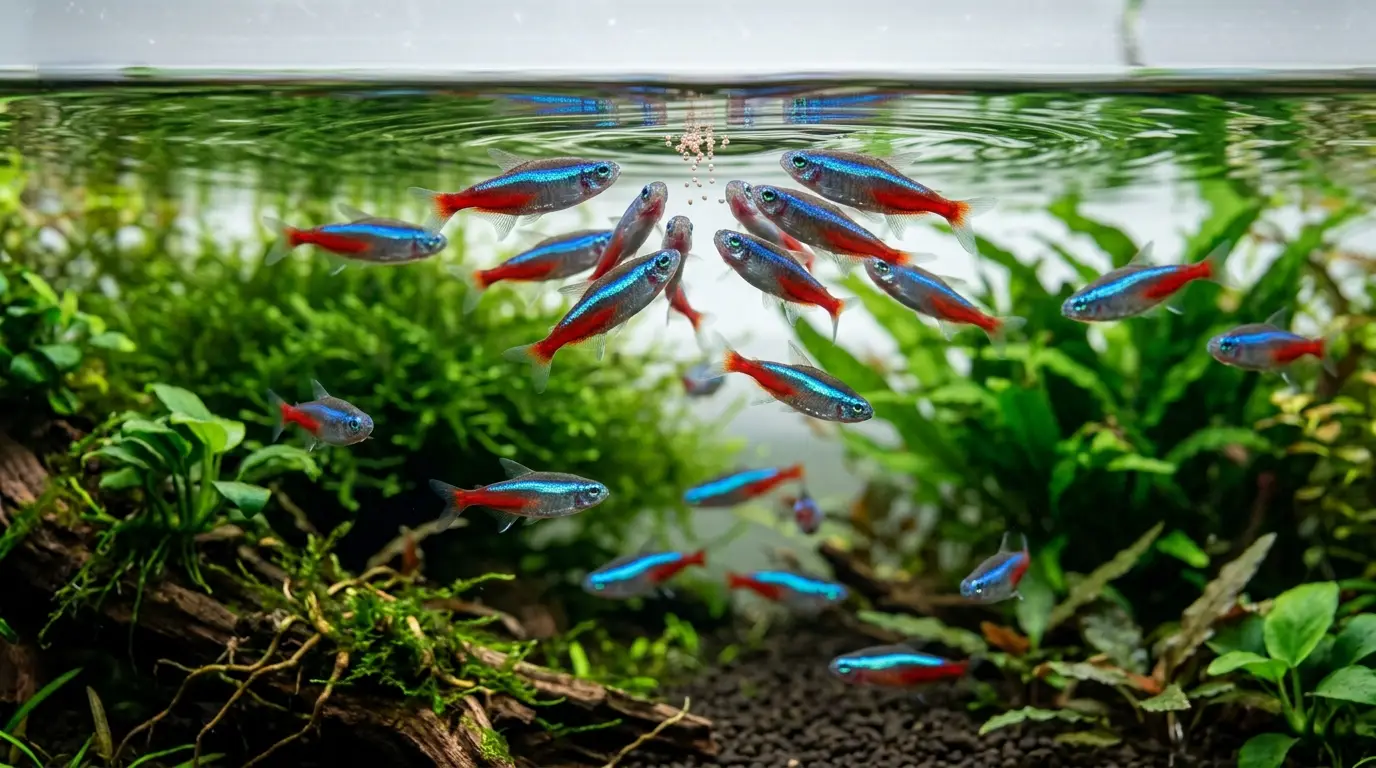
- Only what they eat in 1 to 2 minutes
- One light fast day per week to prevent bloat
- Tips
- Soak dry foods for 30 seconds to sink them
- Rotate brands to balance amino acids
- Use a feeding ring to cut waste
When I shifted my school to tiny pellets in the morning and live baby brine at night, color and spawn interest went up within a week. Overfeeding led to cloudy water and listless fish, so I now feed less but better. This neon tetra care guide tank size feeding stresses variety and portion control. If you remember one thing from this neon tetra care guide tank size feeding, make it this: small, frequent, diverse meals beat one big feed.
Schooling Behavior and Peaceful Tank Mates
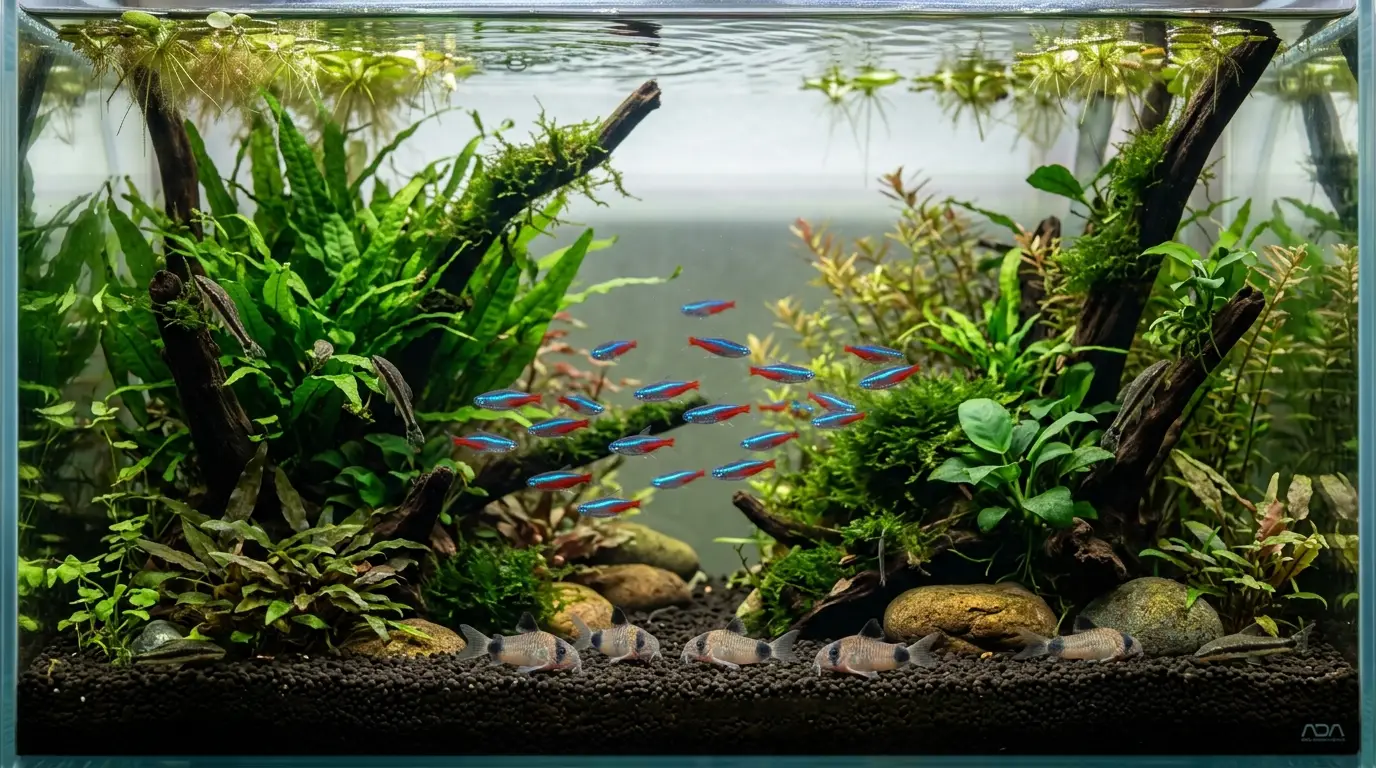
Neon tetras relax in a group. Keep at least 8, but 12 or more looks and works best. A large school makes shy fish brave and cuts stress.
Good neighbors are small and calm.
- Great tank mates
- Ember tetras, green neon tetras, and small rasboras
- Pygmy and panda corydoras
- Otocinclus and small snails
- Honey gourami (not dwarf gourami in many cases)
- Avoid
- Large cichlids, most barbs, and aggressive bettas
- Fin nippers like serpae tetras
- Anything big enough to eat them
I once tried them with a lively barb group. The neons hid and stopped eating. After moving the barbs, the school came back out in hours. Choose mates that match this neon tetra care guide tank size feeding so they can feed in peace and school in calm water.
Health, Stress, and Common Issues
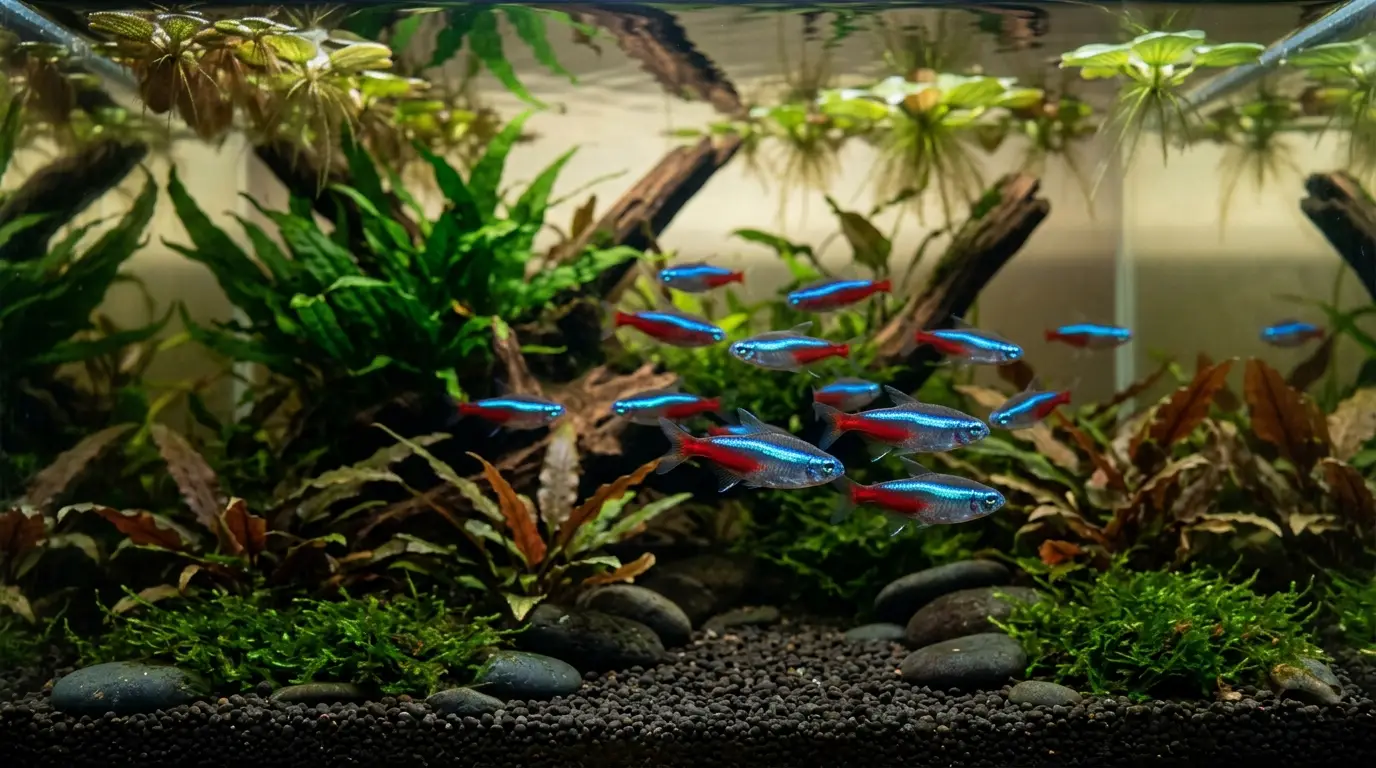
Healthy neon tetras have even color, clear eyes, and smooth gill beats. Watch for clamped fins, gasping, pale stripes, or a crooked spine.
- Common issues
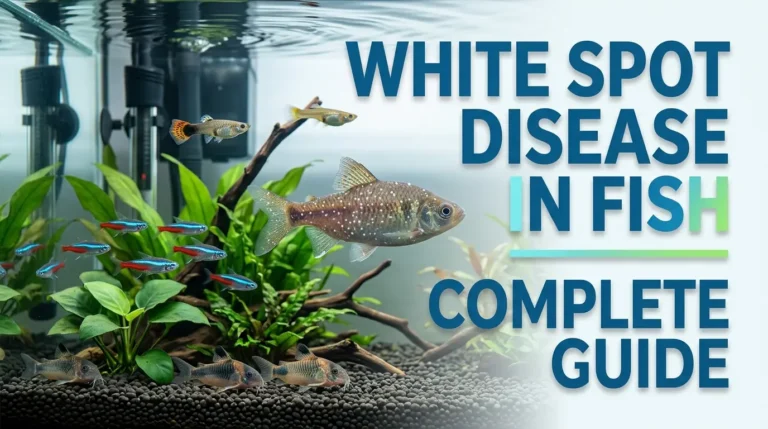
- Ich: white salt-like spots; treat with heat and meds
- Fin rot: frayed fins from stress or poor water
- Neon tetra disease (NTD): muscle turns pale; no known cure; prevent with quarantine
- False NTD: often bacterial; may respond to antibiotics
- Prevention
- Quarantine all new fish and plants
- Keep water stable and dim the lights
- Feed clean, fresh foods; avoid overfeeding
- Do not move fish between tanks without cleaning tools
Based on expert reports and long-term hobby data, NTD’s best defense is strict quarantine and culling if needed. It is a hard call, but it protects your school. This neon tetra care guide tank size feeding puts biosecurity first.
Breeding Basics
Neon tetras are egg scatterers. They spawn at dawn in soft, acidic water with low light. Most people fail if they try to breed them in a busy community tank.
- Setup
- 5 to 10-gallon bare tank with moss or a spawning mop
- pH 5.5 to 6.5, GH 1 to 3, dim light
- Pair or small group conditioned on live foods
- Process
- Remove adults after spawning to save the eggs
- Eggs hatch in about 24 hours
- Feed infusoria first, then baby brine shrimp at day 4 to 5
I have had best luck with rainwater cut with RO and a night of total darkness. The next dawn, dozens of eggs. Raising fry is easier when the parents eat well, which loops back to this neon tetra care guide tank size feeding.
Maintenance Schedule and Troubleshooting
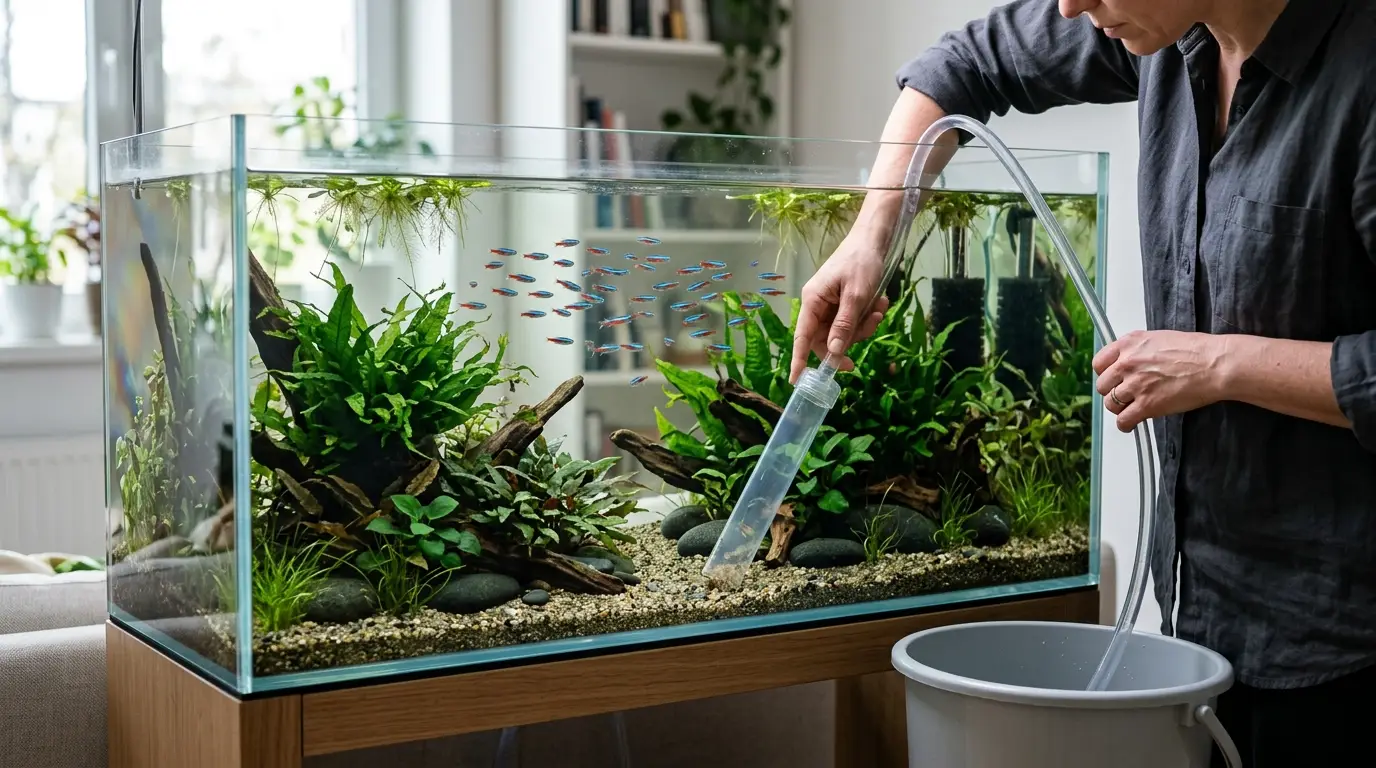
A simple routine keeps things stable and clear. Make it a habit, like brushing your teeth.
- Weekly tasks
- Test pH, ammonia, nitrite, and nitrate
- Change 25 to 40% of the water with dechlorinated, temperature-matched water
- Vacuum lightly to protect plant roots
- Monthly tasks
- Rinse filter media in tank water
- Prune plants and thin floaters
- Check heater and thermometer
- Quick fixes
- Cloudy water: feed less, add more plants, clean filter
- Faded color: add shade, review diet, check nitrate
- Gasping fish: test for ammonia and nitrite right away
When I travel, I pre-portion pellets into pill boxes. No more overfeeding by a kind friend. This neon tetra care guide tank size feeding works best when your routine is steady and light.
Cost and Gear Checklist
You do not need fancy gear, but a few tools make life easy.
- Essentials
- 10 to 20-gallon tank with lid and light
- Sponge or gentle hang-on-back filter
- Reliable heater and thermometer
- Water test kit and dechlorinator
- Plants, wood, and fine substrate
- Nice-to-haves
- RO unit or peat for softer water
- Feeding ring and pipette
- Extra quarantine tank
Build your list around this neon tetra care guide tank size feeding. Spend on a stable filter, a heater that holds temp, and fresh foods. Your fish will thank you with color and calm schools.
Frequently Asked Questions of neon tetra care guide tank size feeding
How many neon tetras should I keep in a 10-gallon tank?
Keep 8 to 10 in a 10-gallon tank. More space allows larger schools and better behavior.
What is the best temperature for neon tetras?
Aim for 74 to 76°F. They can handle 72 to 78°F, but stable mid-70s keeps them active.
How often should I feed neon tetras?
Feed two small meals per day. Offer only what they finish in 1 to 2 minutes.
Can neon tetras live with shrimp?
Yes, adult shrimp can work, but tiny shrimp may become snacks. Provide dense plants and moss.
Do neon tetras need a heater?
In most homes, yes. They are tropical and need stable mid-70s water all year.
What is the ideal pH for neon tetras?
They prefer slightly acidic water, around 6.0 to 7.2. Stability is more important than chasing a number.
Will neon tetras nip fins?
Rarely, and usually only if kept too few or in a cramped tank. Keep a larger school to reduce stress.
Conclusion
Neon tetras shine when you give them space, stable soft water, and tiny, varied meals. Choose a 10 to 20-gallon planted tank, keep the school at 8 to 12 or more, and feed a mix of micro pellets and live or frozen foods. Follow the water and maintenance steps in this neon tetra care guide tank size feeding, and your fish will reward you with bold color and calm motion.
Ready to get started? Set up your plan, pick your school, and share your progress. Subscribe for more care guides, ask questions in the comments, and keep your tank glowing.