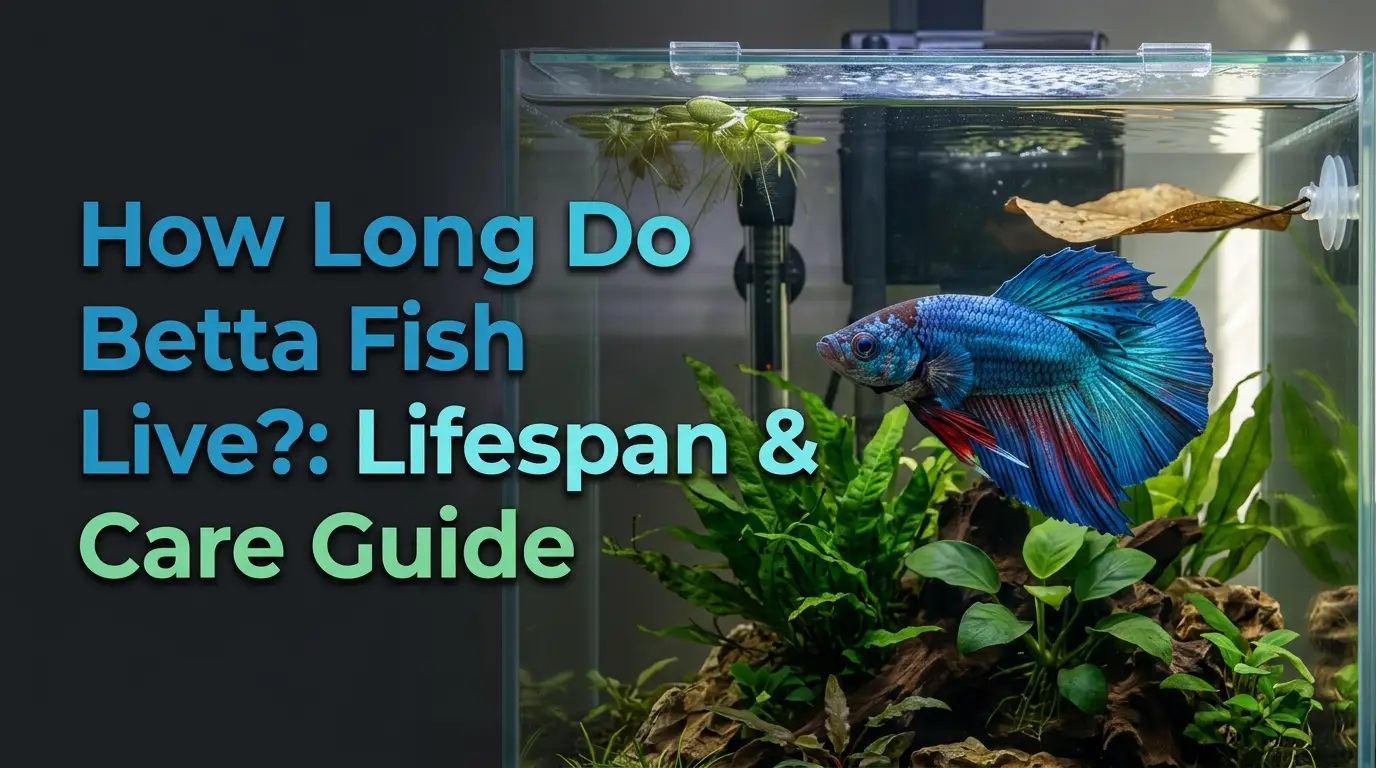
Betta fish live 3–5 years with good care; poor care shortens life.
If you want a vivid, long-lived betta, you are in the right place. I’ve kept and rehabbed many bettas. This guide explains How Long Do Betta Fish Live? Lifespan and Care Factors in clear, simple steps you can use today. You will learn what matters most and what to avoid for a healthy, happy fish.
Average Betta Fish Lifespan at a Glance
Most pet bettas live 3 to 5 years with steady, proper care. Some reach 6 years or more in ideal homes. Many store bettas are already 6 to 12 months old when you buy them. That means your time with them may be 2 to 4 years.
This section sets the stage for How Long Do Betta Fish Live? Lifespan and Care Factors. Think of lifespan as a result of water, heat, food, genes, and stress. Take control of those, and your odds go up fast.
Key points to remember:
- Aim for a stable, warm tank.
- Keep toxins at zero.
- Feed a clean, varied diet.
- Prevent stress and disease.
I have seen stressed bettas fade in months. I have also watched a shy rescue bloom and live past five years. The difference was steady care, not luck. How Long Do Betta Fish Live? Lifespan and Care Factors always come down to daily basics done well.
Wild vs. Captive Betta Lifespan
Wild bettas often live shorter lives due to predators, poor food, and harsh seasons. In nature, survival is hard. In homes, we can remove many risks. That is why pet bettas can outlive wild ones.
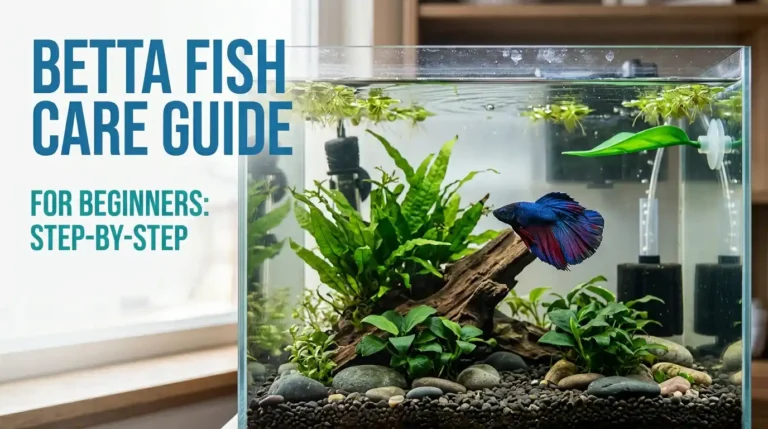
Captive lifespan depends on the setup. Bowls and cold water cut life short. A heated, filtered 5-gallon tank helps them thrive. When people ask How Long Do Betta Fish Live? Lifespan and Care Factors, I highlight this gap. Your home can be safer than a swamp, if you set it right.
Care Factors That Extend Lifespan
Bettas are hardy, but not invincible. Cover these basics, and you set the floor for a long life. This is the heart of How Long Do Betta Fish Live? Lifespan and Care Factors.
Water Quality and the Nitrogen Cycle
Toxins kill fast. Good bacteria protect your fish.
- Ammonia: 0 ppm. Nitrite: 0 ppm. Nitrate: under 20 to 40 ppm.
- pH: about 6.5 to 7.5. Keep it stable more than perfect.
- Cycle the tank before adding your fish. Use a test kit, not guesses.
- Change 25 to 40 percent of water weekly. Treat tap water for chlorine and chloramine.
Real talk from my tanks: uncycled water is a silent killer. The fish looks fine, until it does not. Test strips help, but I trust a liquid kit.
Temperature and Heater
Bettas are tropical. Cold water slows them and weakens their immune system.
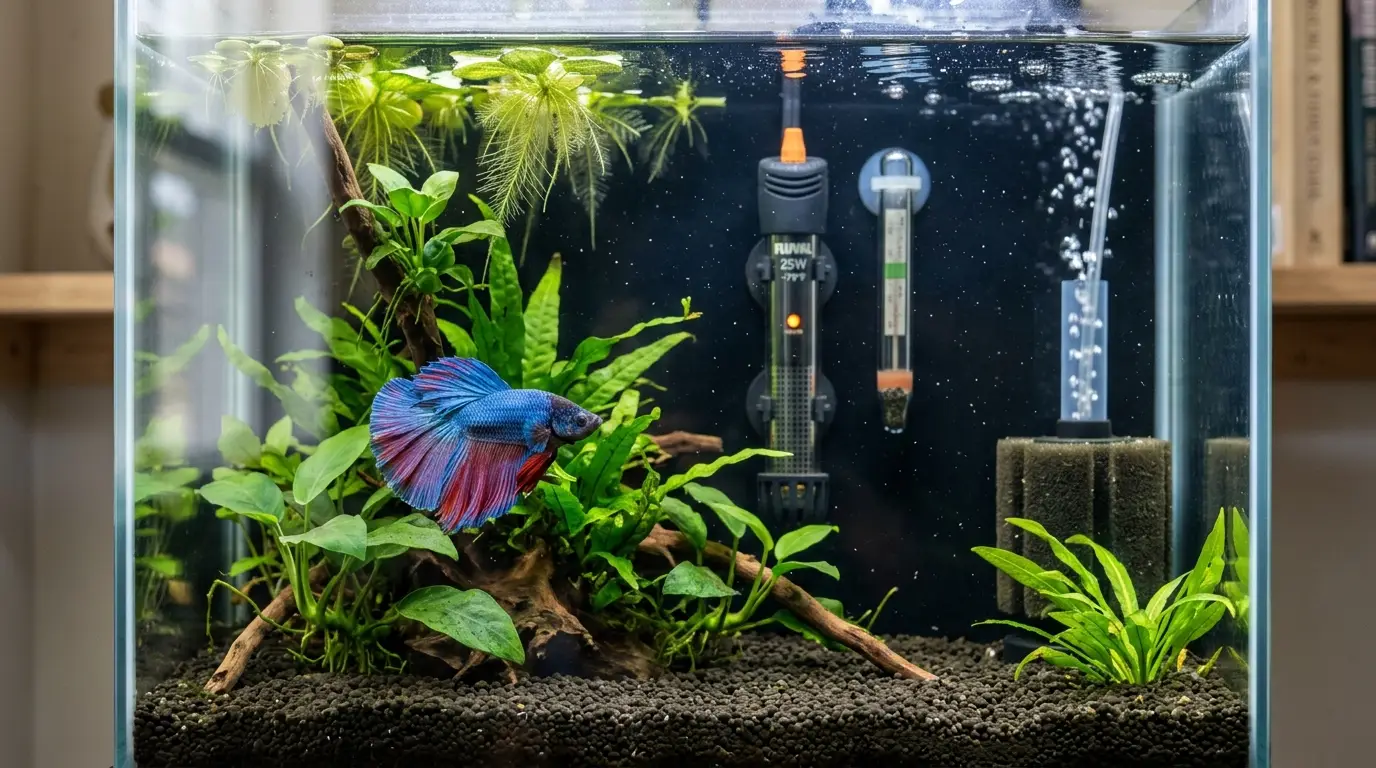
- Target 78 to 80°F (25.5 to 26.5°C). Acceptable range is 76 to 82°F.
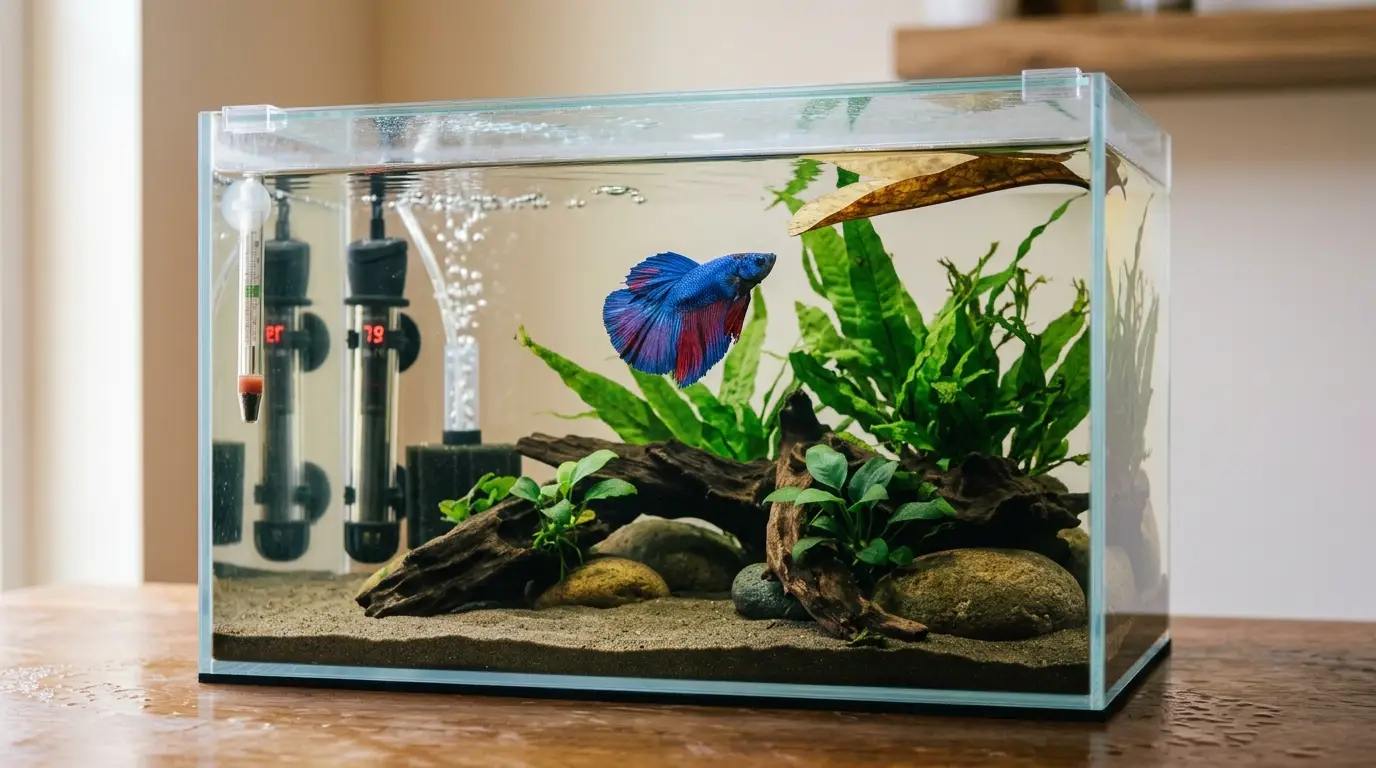
- Use a reliable heater and a thermometer.
- Avoid quick swings. Fast drops cause stress and disease.
Tank Size and Filtration
Space and flow matter.
- Use at least a 5-gallon tank. Bigger is easier to keep stable.
- Gentle filtration is best. Baffle strong flow to protect the fins.
- Keep a lid. Bettas jump. Leave a small air gap at the top.
Diet and Feeding
Food is fuel and medicine.
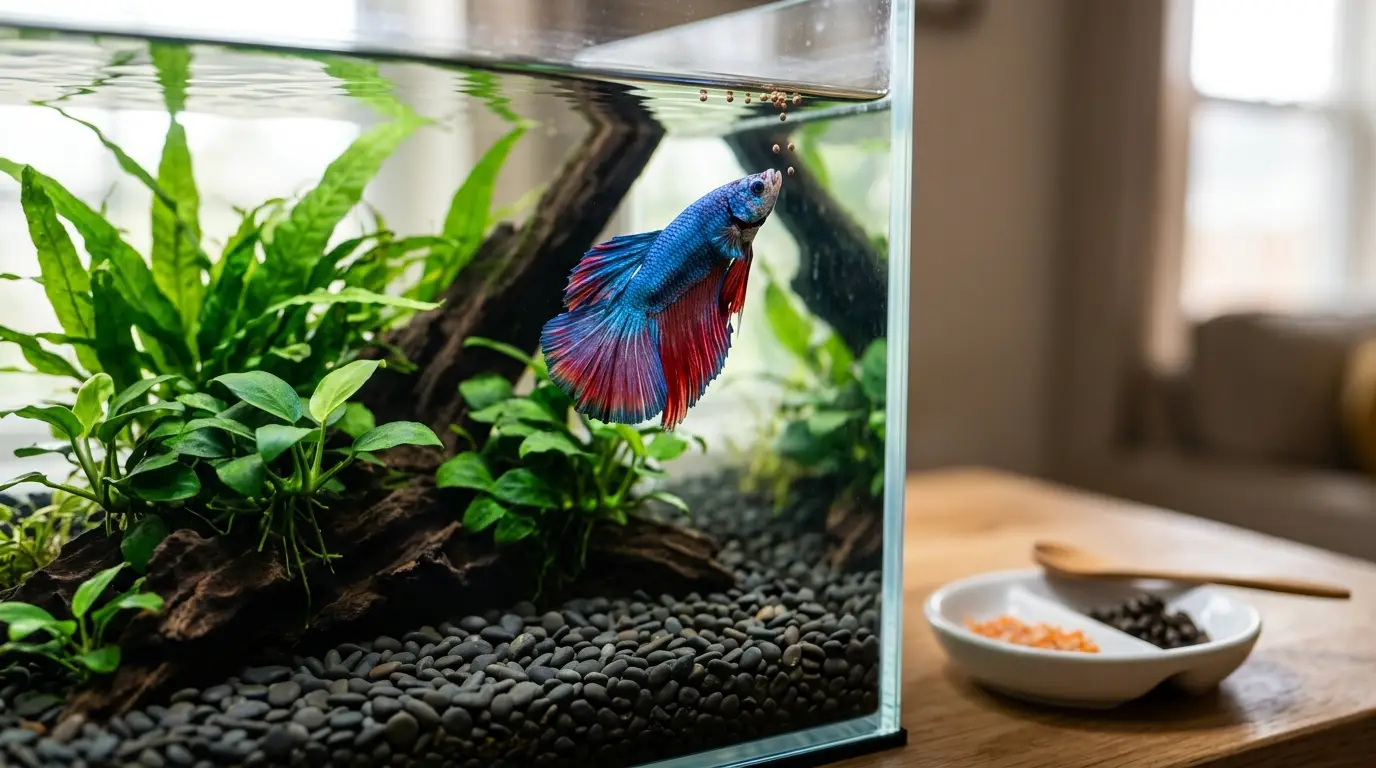
- Use a quality betta pellet with 38 to 45 percent protein.
- Offer frozen or live treats like brine shrimp or daphnia.
- Feed small meals. Two to four pellets twice a day is enough for most fish.
- Fast one day per week to prevent bloat.
- Avoid only bloodworms. They are like candy, not a full diet.
Enrichment and Stress Control
A calm betta is a healthy betta.
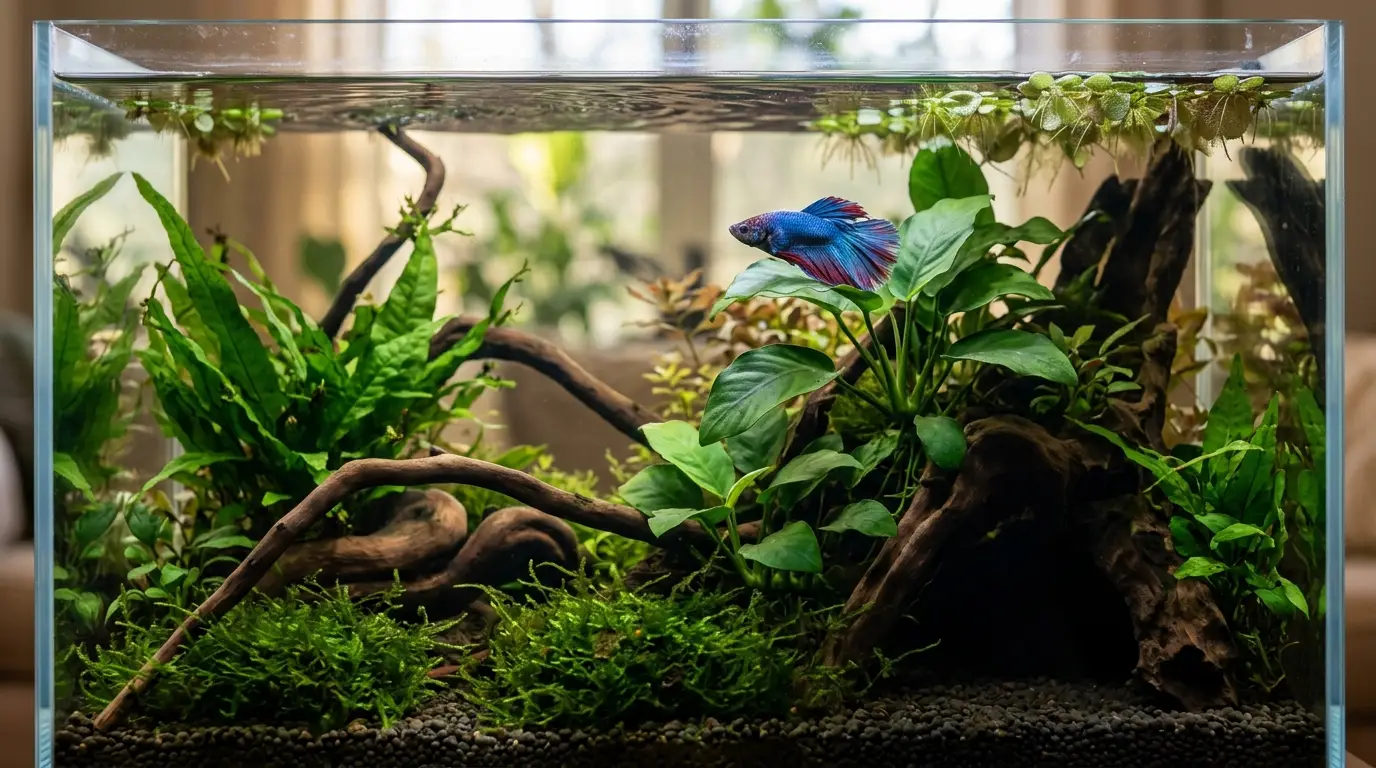
- Add real or silk plants, hides, and a gentle current.
- Reduce mirror use. Short training is fine; daily strain is not.
- Avoid nippy tank mates. Never house two male bettas together.
Water Additives and Natural Tannins
Some bettas relax in tannin-rich water.
- Indian almond leaves can add tannins and mild benefits.
- Replace leaves as they break down. Keep water clear enough to inspect your fish.
Genetics and Sourcing
Genes set the ceiling.
- Fancy long fins can be fragile. Short-fin types may resist tears.
- Buy from a reputable breeder or store. Look for clear eyes, full fins, and steady swimming.
If you master these, How Long Do Betta Fish Live? Lifespan and Care Factors will feel simple and repeatable.
Common Mistakes That Shorten Lifespan
I see the same issues again and again. They are easy to fix once you know them.
- Keeping bettas in bowls or tiny tanks. Small volume swings fast and builds toxins.
- Skipping the cycle. Ammonia and nitrite burn gills and reduce life.
- Cold water. Low heat invites fin rot and slow immune response.
- Overfeeding. Extra food rots and spikes ammonia. It also causes bloat.
- Dirty filters. Rinsing in tap water kills good bacteria. Use tank water instead.
- Sharp decor. Rough plastic shreds fins. Use silk plants or smooth items.
- Wrong tank mates. Fin-nippers and fast fish raise stress and injury.
- No lid. Bettas jump when spooked or hunting.
- Random dosing of meds. Guessing at disease can make things worse.
Avoid these and you already improve the odds on How Long Do Betta Fish Live? Lifespan and Care Factors.
Health Problems That Cut Life Short and How to Prevent Them
Early help saves lives. Learn the signs, act fast, and stay calm.
Common issues and what to do:
- Fin rot. Edges look ragged or black. Improve water, add heat, and use a proven antibacterial if needed.
- Ich (white spots). Tiny salt-like dots and flashing. Raise temp slowly, treat the whole tank, and clean gravel.
- Velvet. Gold dust look and clamped fins. Dim lights, treat fast, and keep water warm and clean.
- Constipation and bloat. Swollen belly and no poop. Fast for 24 to 48 hours, then feed a small daphnia meal.
- Dropsy. Pinecone scales and swelling. This is severe. Quarantine and treat, but the outlook is guarded.
Prevention steps that work:
- Quarantine new fish and plants for at least 2 weeks.
- Keep water stable and warm.
- Feed a clean, varied diet.
- Watch your fish daily for changes.
I note trends in my logs. A tiny color fade or clamped fins for two days is my early alarm. That habit alone has saved more bettas than any medicine. How Long Do Betta Fish Live? Lifespan and Care Factors improve when you notice small shifts early.
A Simple Weekly Care Routine That Works
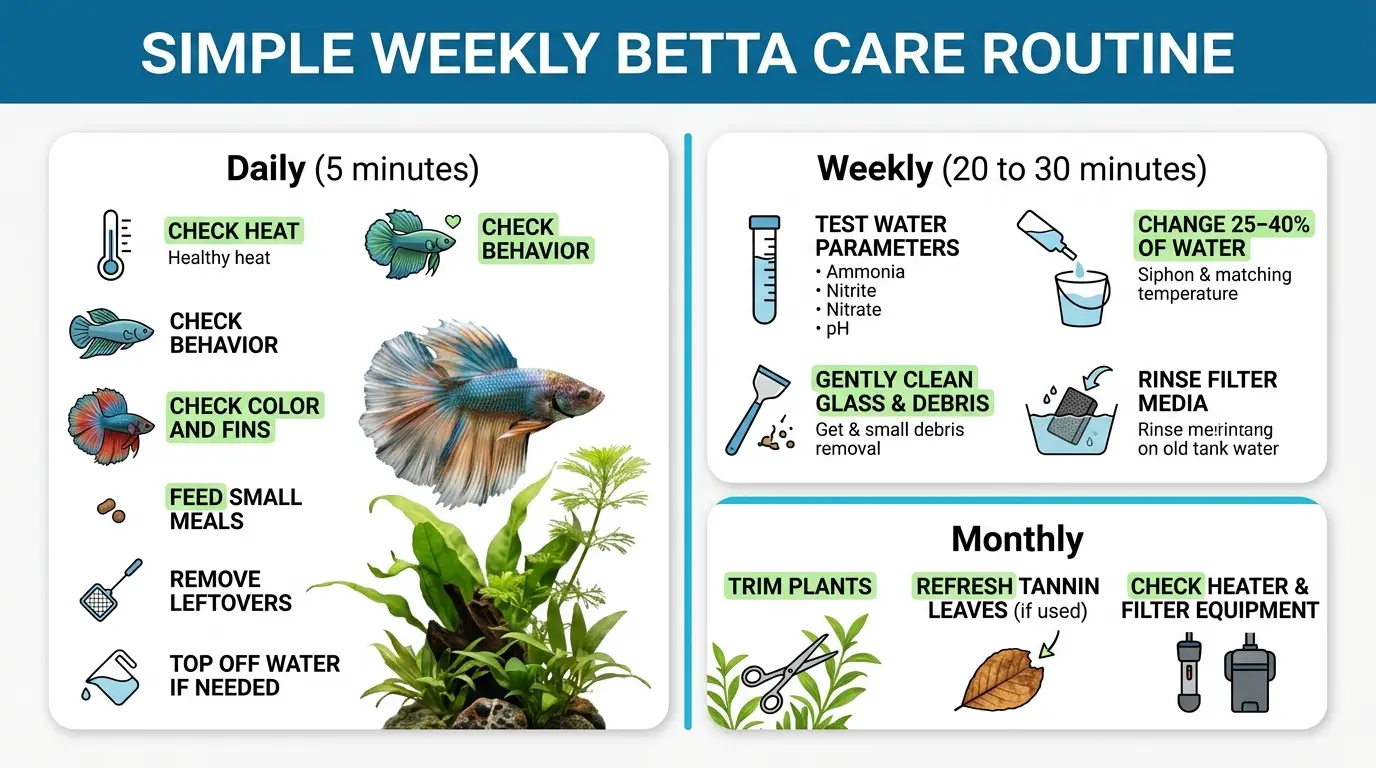
A routine keeps things easy. Here is a plan I follow in my own tanks.
Daily (5 minutes):
- Check heat, behavior, color, and fins.
- Feed small meals and remove leftovers.
- Top off water if needed.
Weekly (20 to 30 minutes):
- Test ammonia, nitrite, nitrate, and pH.
- Change 25 to 40 percent of water. Match temperature.
- Gently clean glass and remove debris.
- Rinse filter media in old tank water.
Monthly:
- Trim plants. Refresh tannin leaves if used.
- Review gear. Heaters and filters fail. Check now, not after a crash.
With this plan, How Long Do Betta Fish Live? Lifespan and Care Factors become much less scary. You have a clear path to success.
Normal Aging vs. Warning Signs
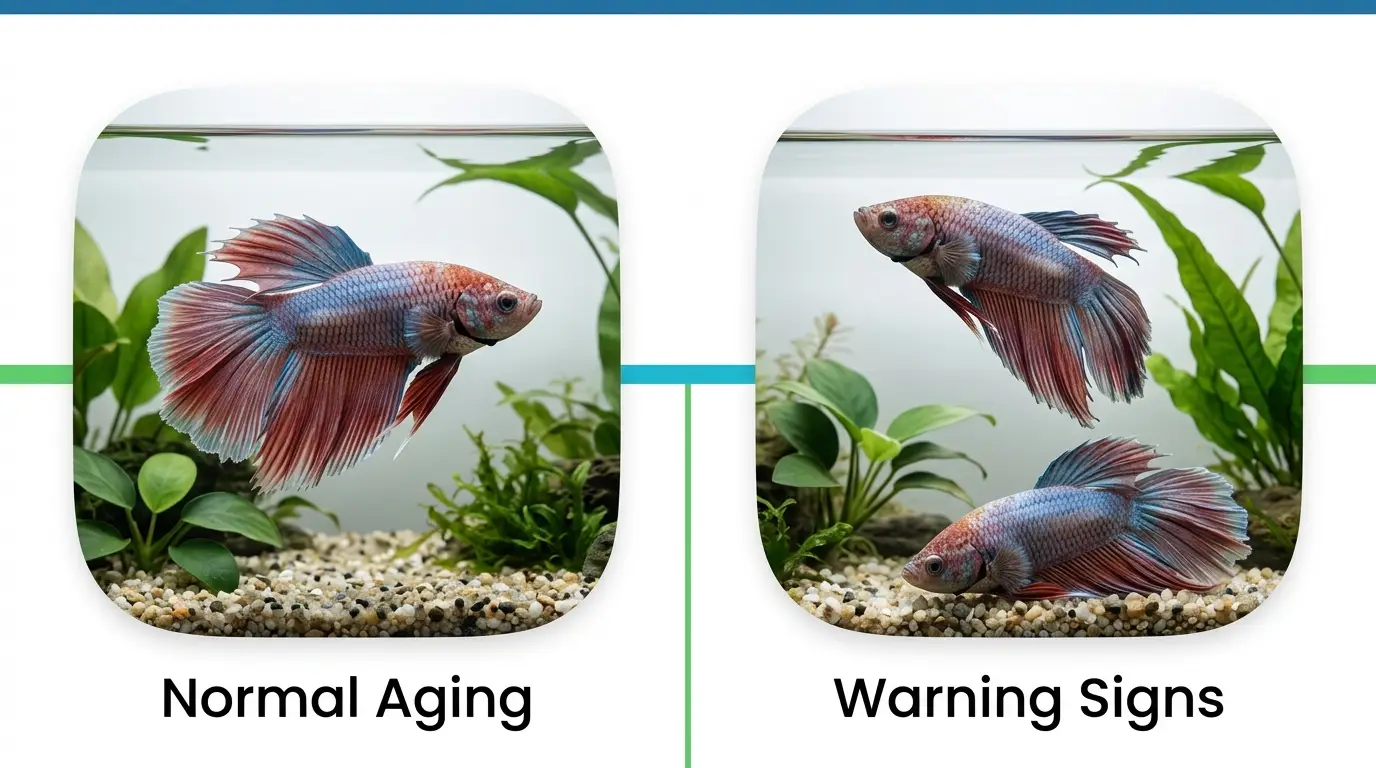
Older bettas slow down. That can be normal. Trouble starts when many signs stack together.
Normal aging:
- Slight color fade.
- Slower swim and longer naps.
- Thinner body over time.
Warning signs:
- Clamped fins, heavy breathing, or gasping at the surface.
- Rapid color loss or sudden fin damage.
- White spots, fuzzy patches, or pineconing.
- Not eating for several days.
If you see warning signs, test water first. Correct numbers save lives. Then treat the right problem. How Long Do Betta Fish Live? Lifespan and Care Factors improve when you separate normal aging from real disease.
Frequently Asked Questions of How Long Do Betta Fish Live? Lifespan and Care Factors
How long do betta fish live on average?
Most live 3 to 5 years with stable heat, clean water, and good food. Some reach 6 years with careful care.
Do female bettas live longer than males?
They can be similar, but females may have fewer fin injuries. Genetics and care have a bigger impact than sex.
What tank size helps a betta live longer?
Use at least 5 gallons. More water stays stable and gives room to swim and explore.
Can a betta live in a bowl?
They can survive, but they do not thrive. Bowls swing in temperature and build toxins fast, which shortens life.
What temperature is best for longevity?
Aim for 78 to 80°F. Warm, stable water supports digestion and immunity.
How often should I feed my betta?
Feed small amounts twice a day. Include a fast day once a week to prevent bloat.
What signs show my betta is stressed?
Clamped fins, hiding, pale color, and glass surfing are common signs. Fix water, reduce flow, and remove bullies.
How do I cycle a betta tank?
Run the filter with an ammonia source until ammonia and nitrite read zero. Test often; this protects the fish from toxins.
Conclusion
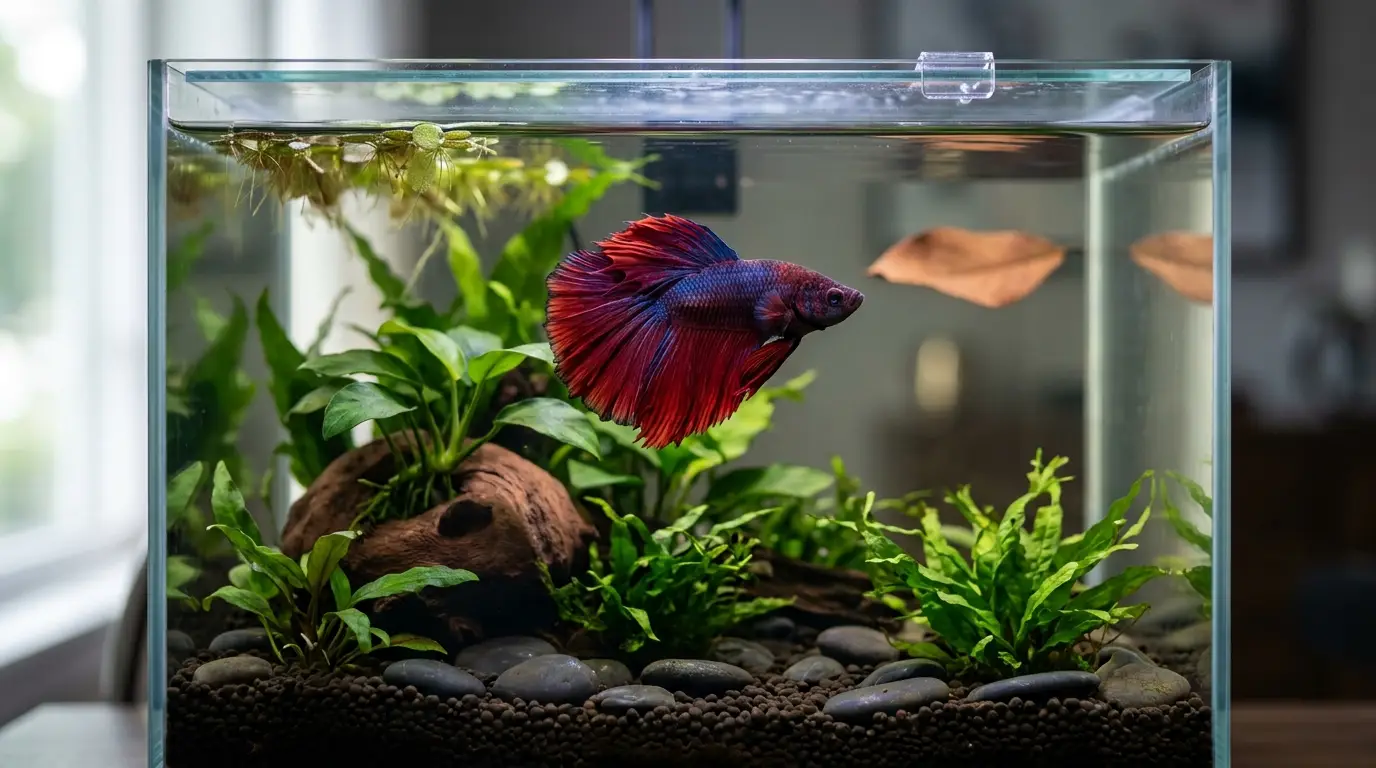
You now know the core of How Long Do Betta Fish Live? Lifespan and Care Factors. Keep the water clean and warm. Feed high-quality food in small amounts. Reduce stress, watch for early signs, and follow a simple routine. These steps turn a fragile pet into a hardy companion.
Set up your plan today. Your betta will thank you with bright color, bold fins, and years by your side. Want more tips like this? Subscribe, share your setup, or drop a question in the comments.