Change 20–30% weekly; adjust by stocking, feeding, nitrates, and plants.
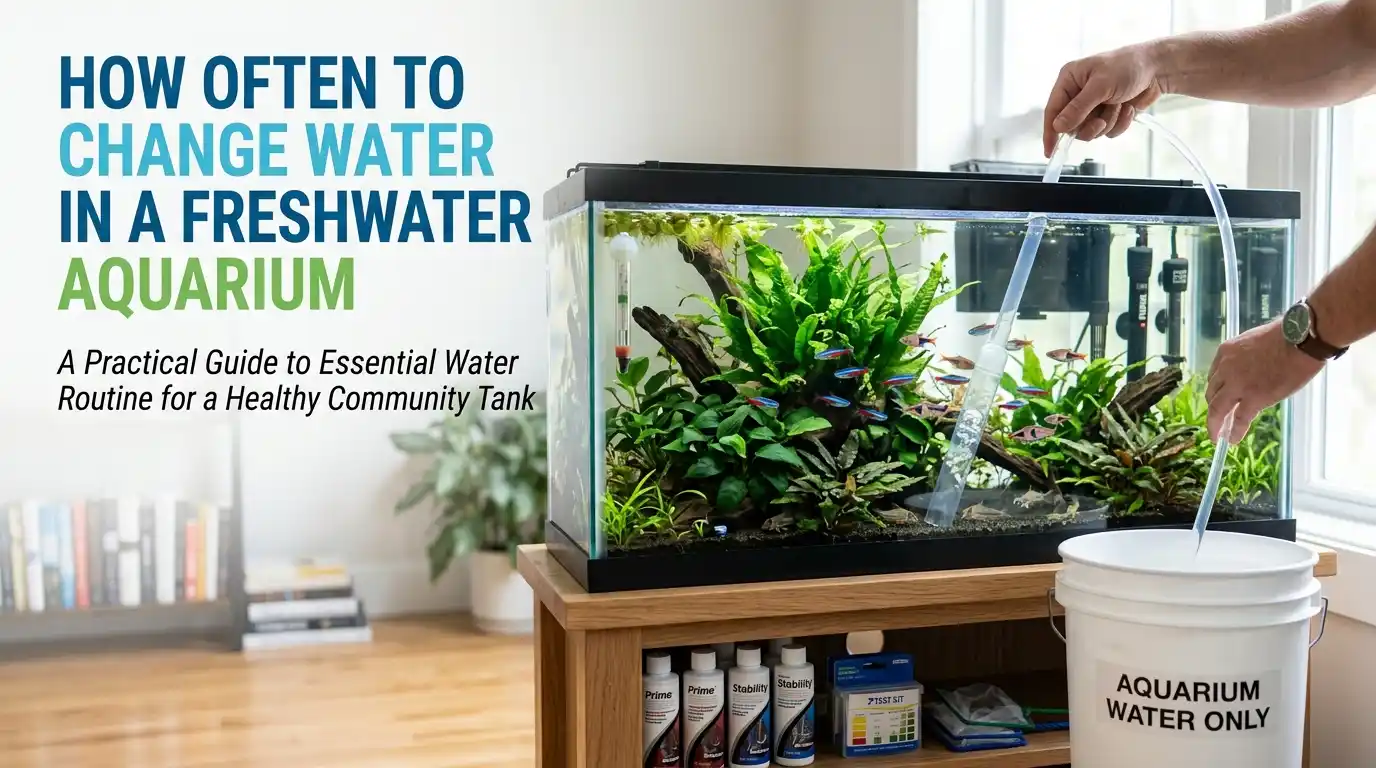
If you have ever wondered how often to change water in freshwater aquarium care, you’re not alone. I’ve helped set up, fix, and fine‑tune tanks for years, and the right schedule can turn a cloudy, smelly box into a calm, crystal world. In this guide, I’ll break down how often to change water in freshwater aquarium setups, why it matters, and exactly how to do it without stress or guesswork.
Water change schedule at a glance
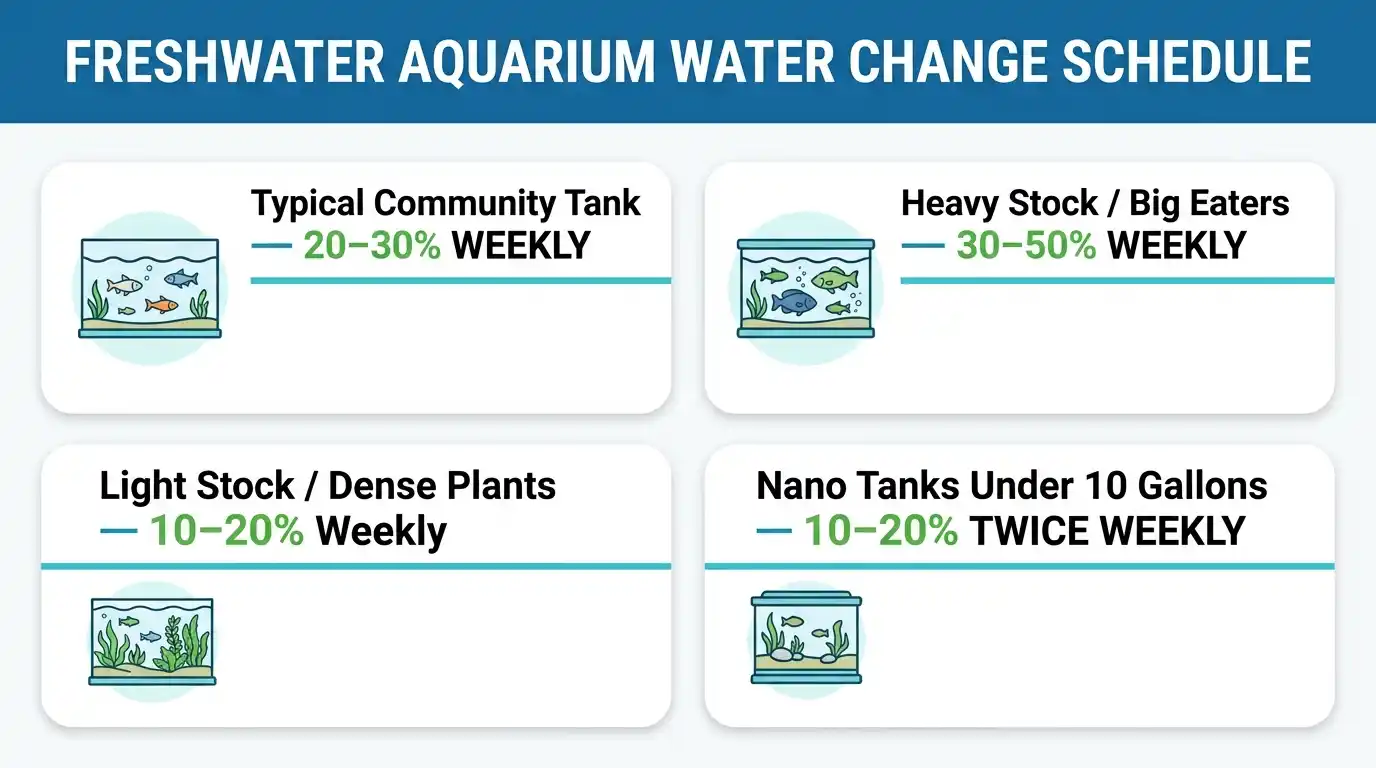
Most home tanks thrive with a 20–30% water change every week. That baseline fits many community tanks with livebearers, tetras, or a single betta. It keeps nitrate in check, refreshes minerals, and resets what filters can’t remove.
Adjust that schedule with simple rules:
- Heavy stock or big eaters: 30–50% weekly, sometimes twice per week.
- Light stock or dense plants: 10–20% weekly, or every 10–14 days if tests look great.
- Nano tanks under 10 gallons: smaller changes more often, like 10–20% two times a week.
- New tanks with fish: small, frequent changes (10–20%) until stable.
When people ask how often to change water in freshwater aquarium maintenance, this quick map covers most cases. Then you confirm with testing and watch your fish.
Why water changes matter
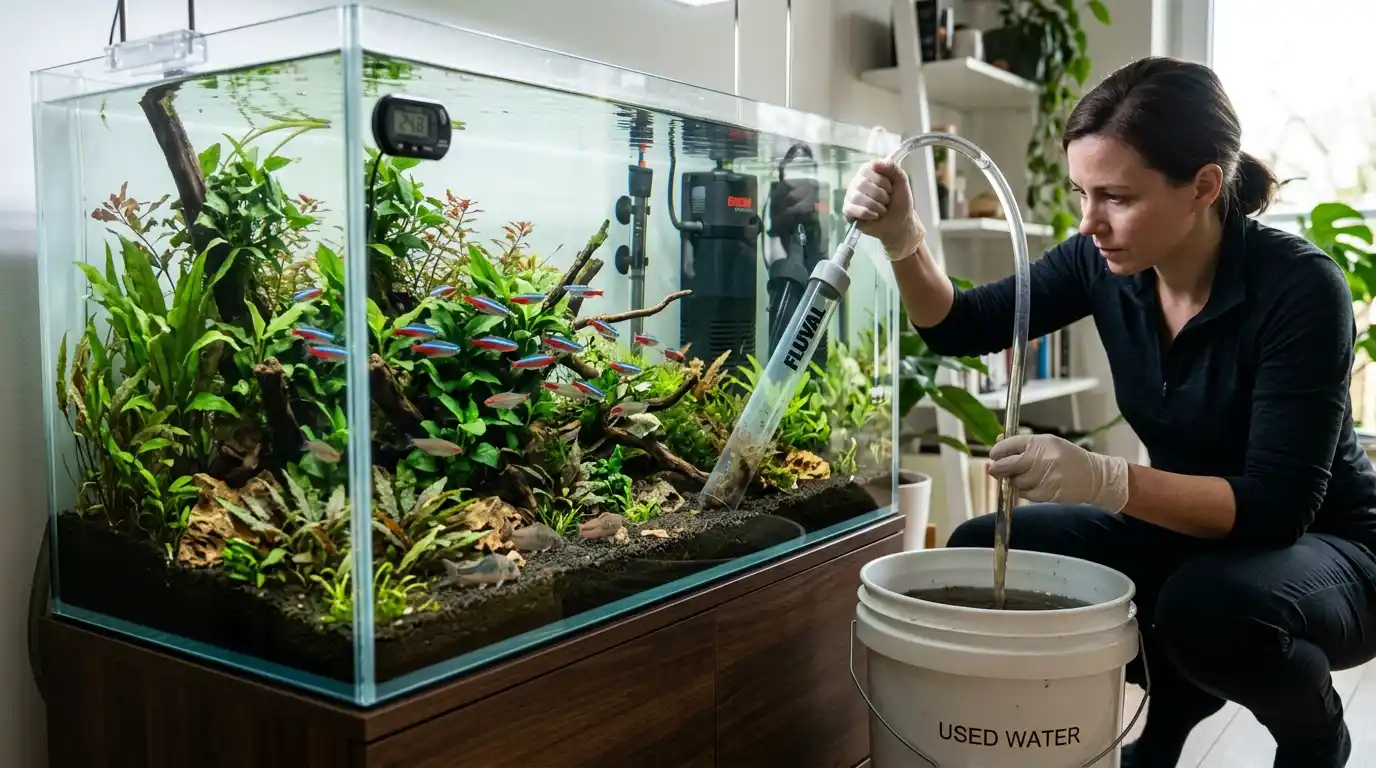
Filters remove solids and convert ammonia to nitrite and then nitrate. Water changes do the jobs filters cannot: lower nitrate and dissolved organics, balance minerals, and reset pH drift. Clean, stable water reduces disease risk and stress.
You also export hormones and waste that build up over time. Clear water is not always clean water. If you ask how often to change water in freshwater aquarium care, the deeper answer is this: often enough to keep toxins low and minerals steady.
I learned this the hard way with a crowded 29‑gallon. The tank looked fine, but nitrate crept above 40 ppm. Algae bloomed, and fish hid. Weekly 30% changes pulled nitrate down, and the tank healed in two weeks.
How often to change water in freshwater aquarium: the key factors
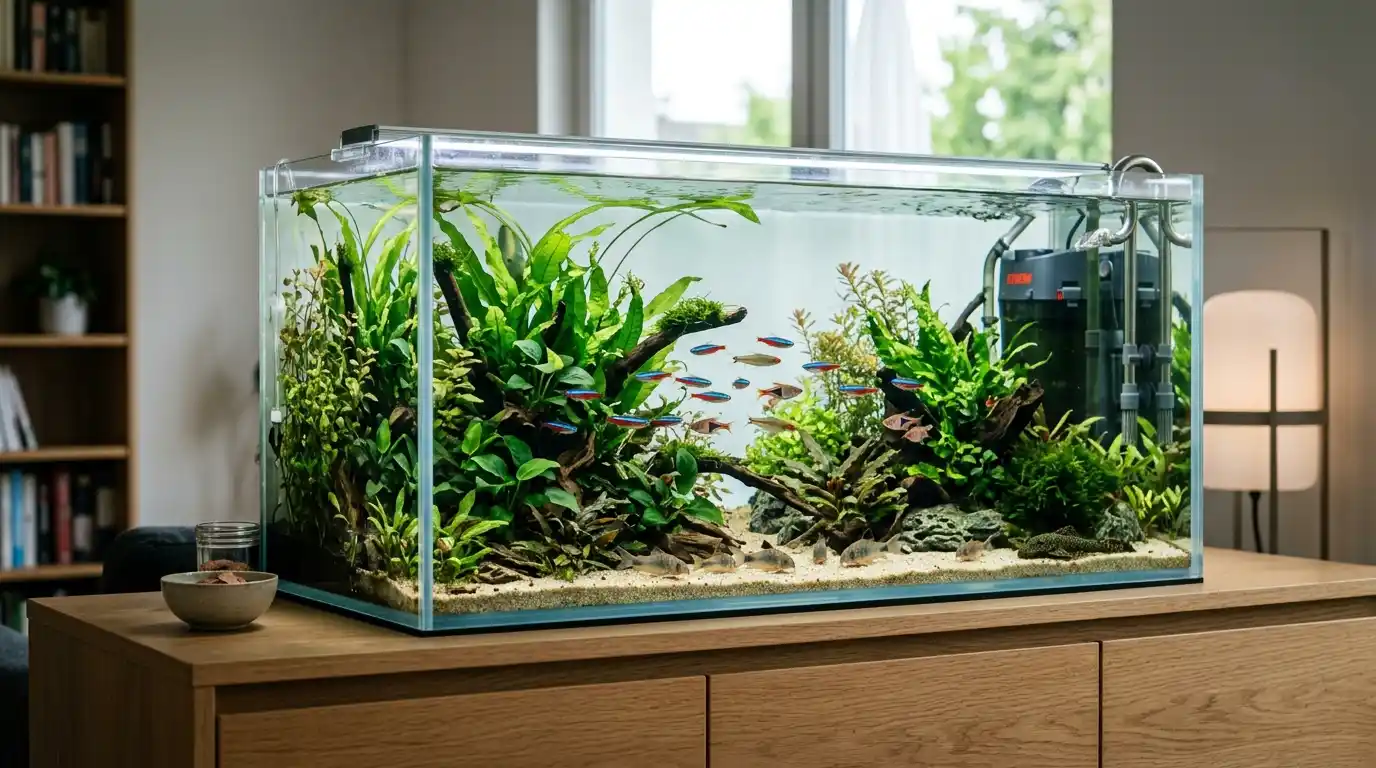
Think of your tank like a city. More residents and more food means more trash. That logic sets how often to change water in freshwater aquarium routines.
- Stocking level. More fish per gallon needs more frequent changes. Goldfish and cichlids produce heavy waste.
- Feeding. Overfeeding drives nitrate and cloudy water. Feed what fish eat in 30–60 seconds.
- Tank size. Small tanks swing fast. Large tanks are stable but still need routine.
- Plants. Fast growers soak up nitrate. Heavily planted tanks may stretch to 10–20% weekly if tests are low.
- Filtration and flow. Strong, well‑maintained filters help. But they do not replace water changes.
- Source water. Hard, mineral‑rich water builds TDS faster. Soft or RO water may need mineral top‑ups.
- Livestock type. Shrimp and soft‑water fish prefer steadier, smaller changes. Livebearers tolerate bigger shifts.
If you want a simple rule for how often to change water in freshwater aquarium setups, start at weekly 20–30%. Test, then move up or down.
How much water to change each time
Bigger is not always better. Massive changes can shock fish, especially in soft water or with big pH shifts.
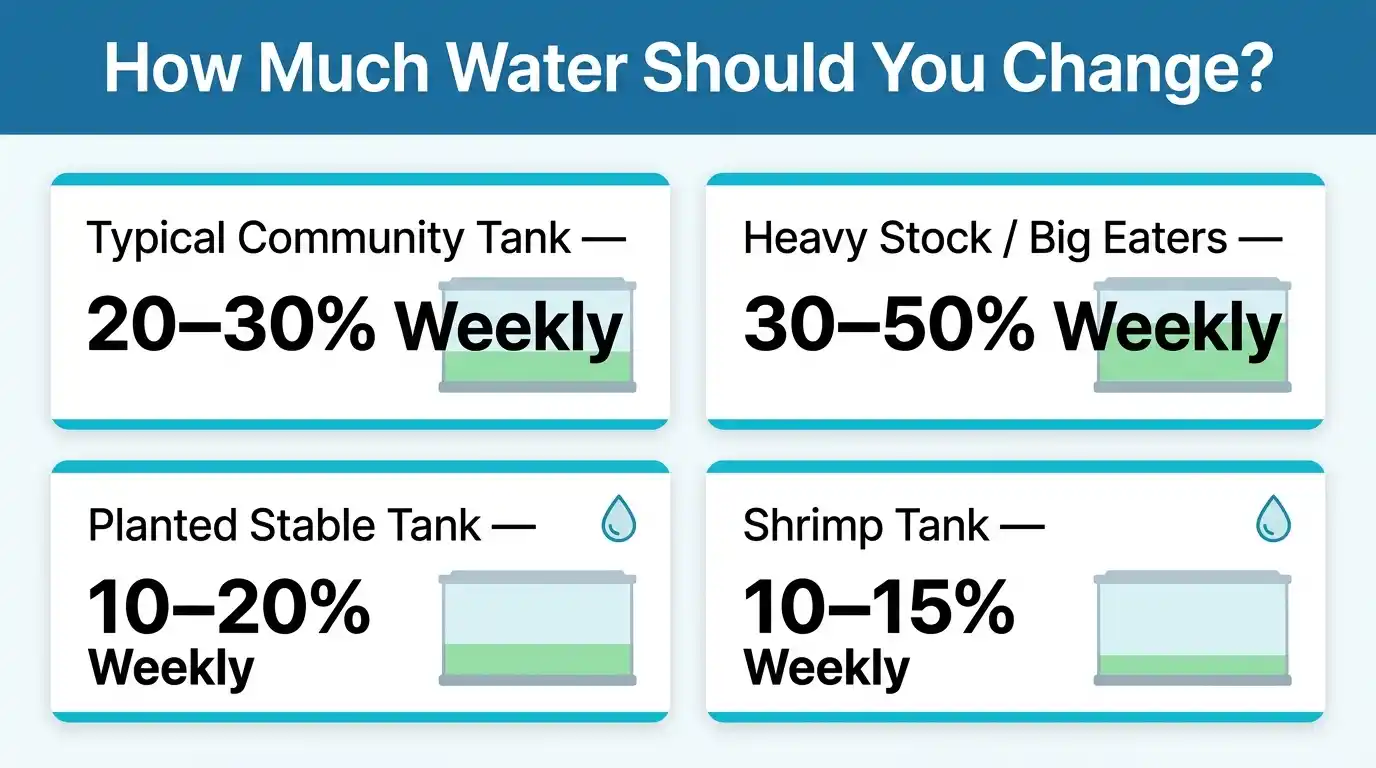
- Typical community tanks: 20–30% weekly.
- Heavy stock or big eaters: 30–50% weekly, split into two smaller sessions if needed.
- Planted, stable tanks: 10–20% weekly. High‑tech CO2 tanks often do 30–50% weekly.
- Shrimp tanks: 10–15% weekly to avoid sudden swings.
You can decide how often to change water in freshwater aquarium care by tracking nitrate. Aim to keep nitrate under 20 ppm for sensitive fish and under 40 ppm for hardy fish. Adjust volume to meet that range.
A safe, step‑by‑step water change routine
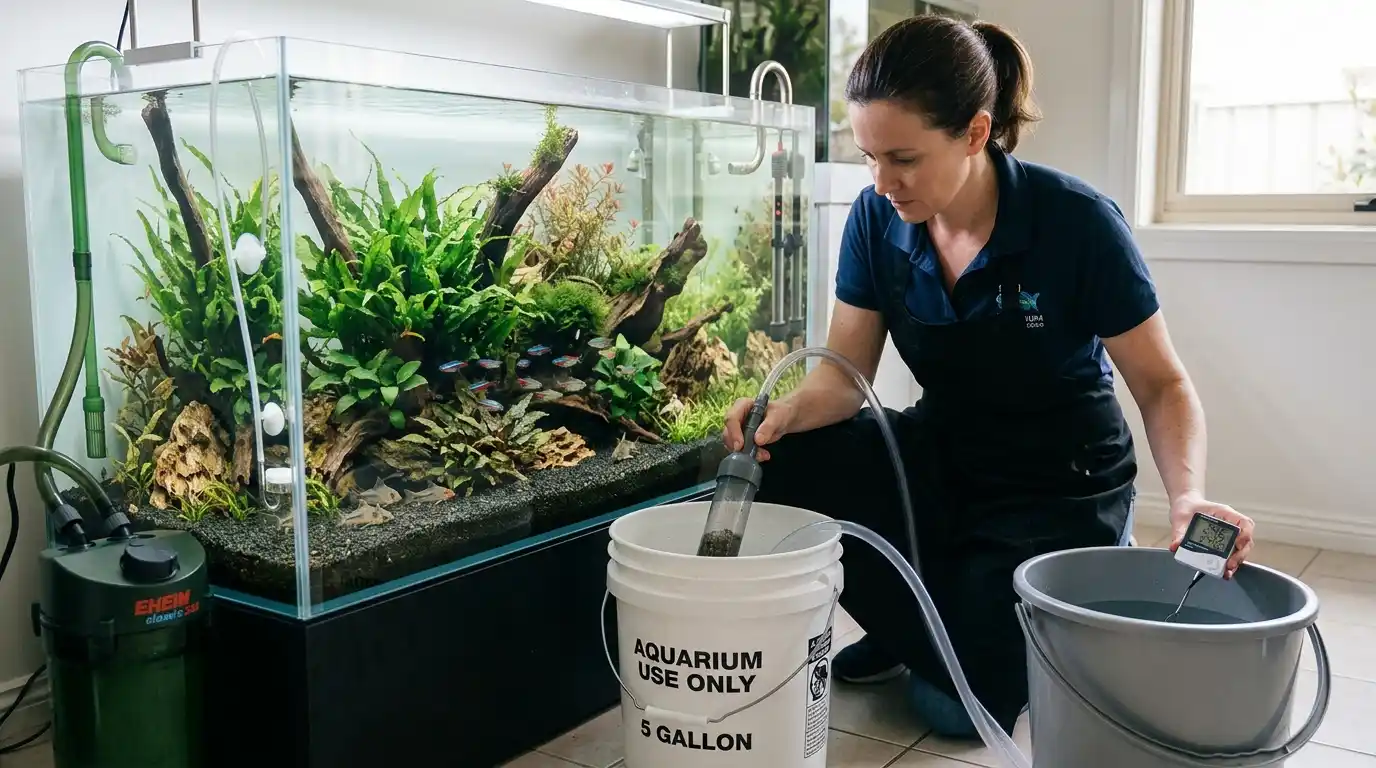
Follow this routine to avoid stress and keep bacteria safe.
- Test first. Check ammonia, nitrite, nitrate, and pH. Note your target.
- Unplug heaters if exposed. Keep filters running if the intake will stay covered with water.
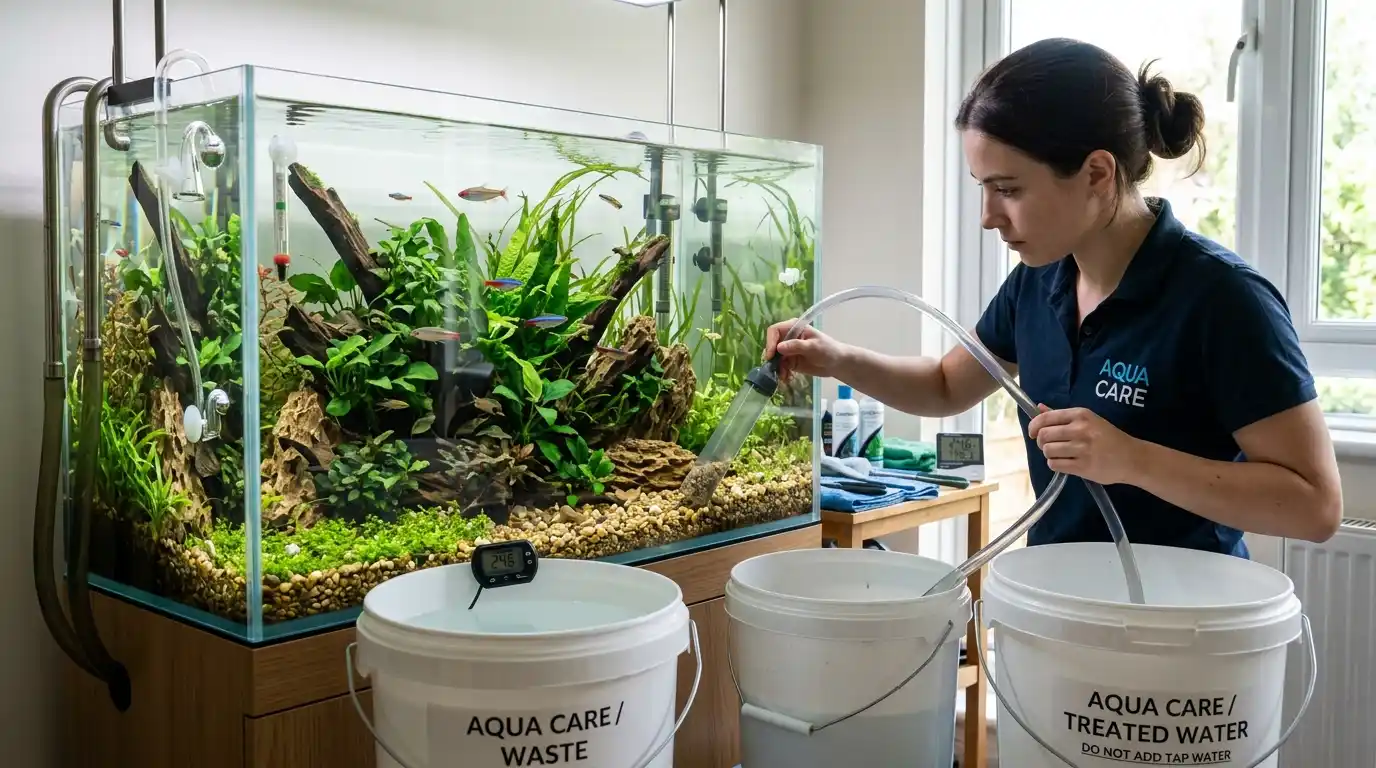
- Siphon 20–30%. Vacuum the top layer of gravel where waste sits. Do not stir deep, anaerobic layers all at once.
- Treat tap water with a full‑dose conditioner. Make sure it handles chlorine and chloramine.
- Match temperature within 1–2°F. Fish hate sudden swings.
- Refill slowly. Aim the flow at glass or a plate to avoid disturbing the substrate.
- Wipe glass, tidy plants, and check gear.
- Clean filter media on a separate week. Rinse in removed tank water, never under the tap.
This is the method I teach when people ask how often to change water in freshwater aquarium setups and how to do it right. It prevents new‑tank syndrome and keeps fish calm.
Testing and tracking: when to adjust frequency
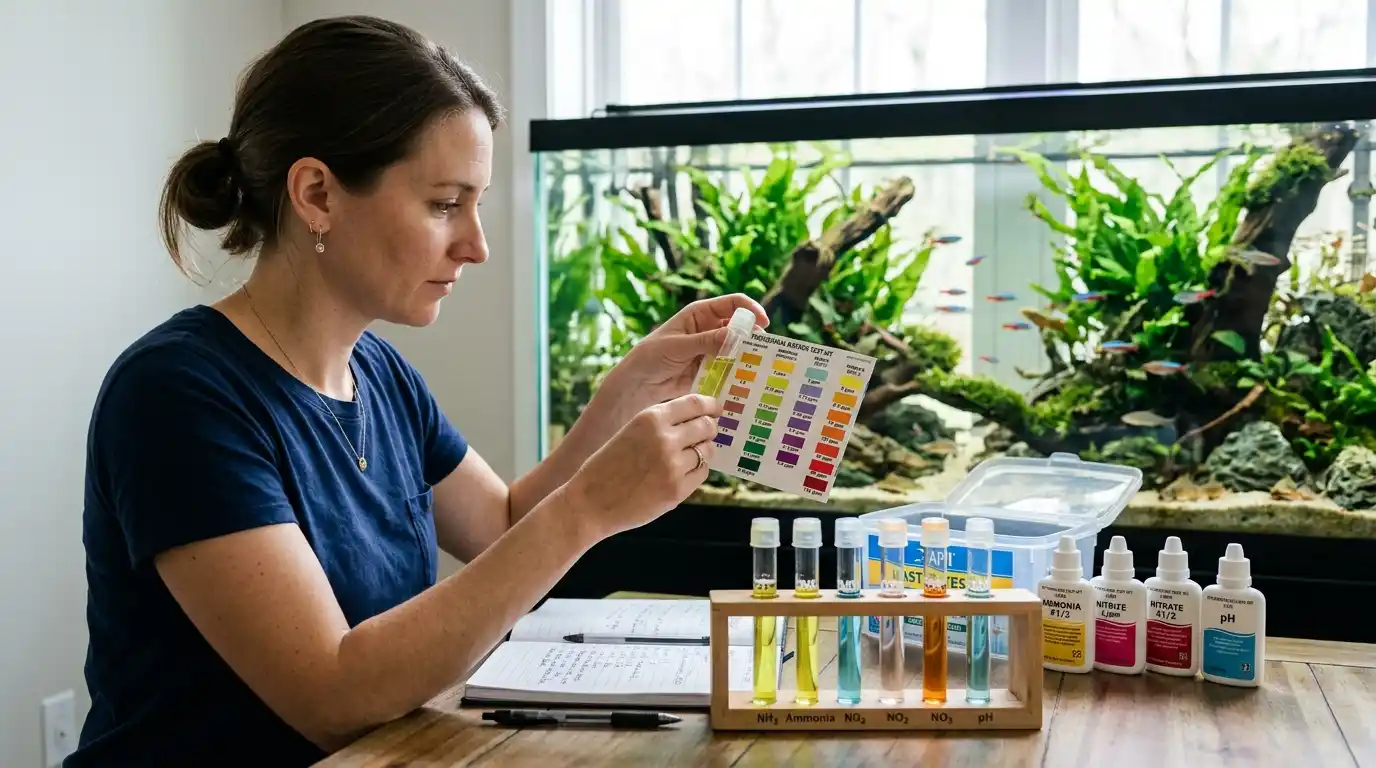
Use data, not guesswork. Simple liquid test kits are enough.
- Ammonia and nitrite should stay at 0 ppm.
- Nitrate should trend under 20–40 ppm, based on species.
- If nitrate rises more than 10–20 ppm between changes, increase water change size or frequency.
- If you miss and fish seem fine, do not “make up” with a huge change. Resume your rhythm.
A log helps. Record how often to change water in freshwater aquarium care for your tank, your test numbers, and what you fed. Patterns appear fast, and tweaks get easy.
Special cases and species notes
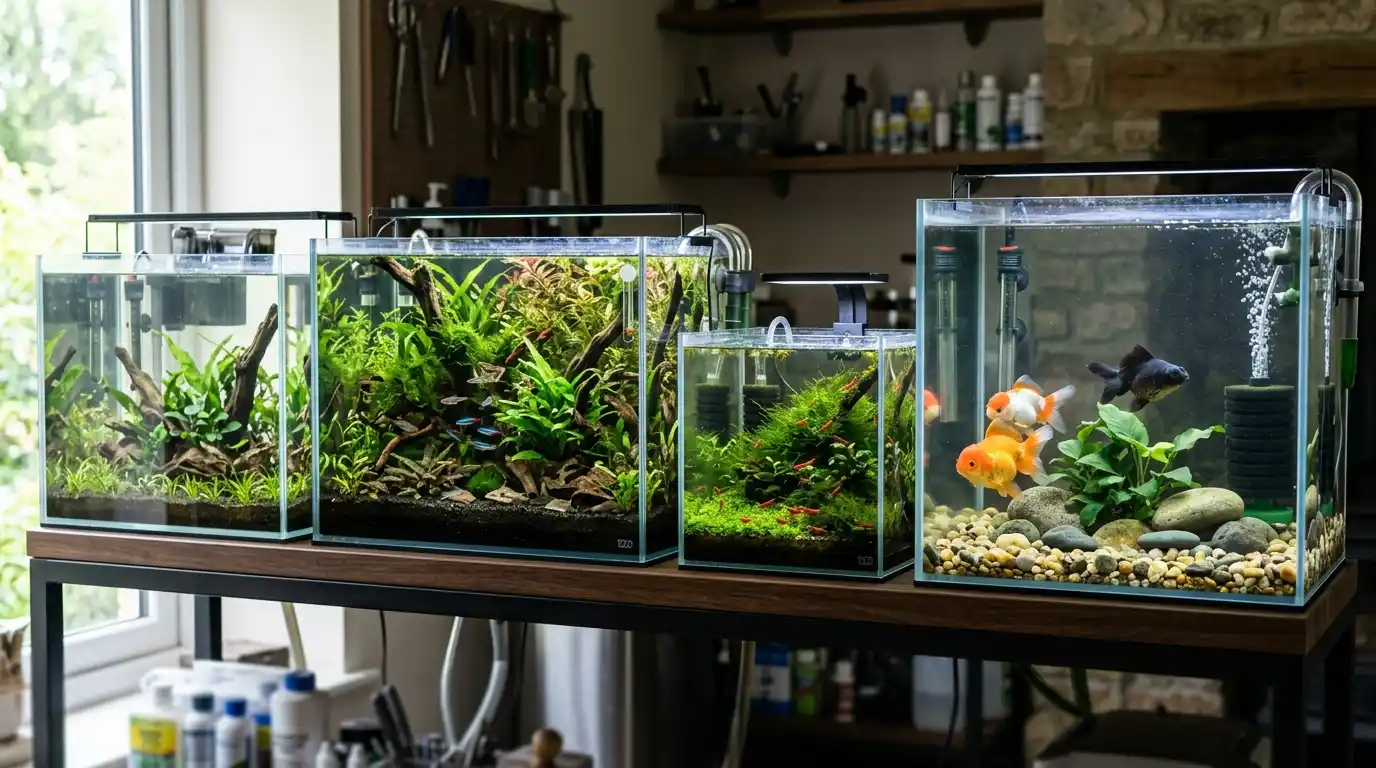
New tanks
- Fishless cycle: Water changes are rare until nitrite spikes high. Then do a large change to protect bacteria and reset nitrate.
- Fish‑in cycle: Do 10–20% as often as needed to keep ammonia and nitrite near zero. Daily at first is common.
Heavily planted tanks
- With CO2 and fertilizers, many hobbyists do 30–50% weekly to reset nutrients. Without CO2, 10–20% weekly often works.
Shrimp and delicate nano fish
- Do smaller changes, more often. 10–15% weekly helps avoid shock.
Goldfish and large cichlids
- Big waste makers. Plan 40–50% weekly, or 25% twice per week.
Betta bowls and nano desktops
- Bowls under 3 gallons are unstable. Upgrade if you can. If not, change 30–50% twice weekly with matched, conditioned water.
Brackish or RO blends
- Remineralize RO water. Track GH and KH so each change matches your target.
These cases show why how often to change water in freshwater aquarium care depends on load, size, and goals.
Troubleshooting and common mistakes
Cloudy water after changes
- Likely a bacterial bloom. Keep your schedule steady. Do not deep‑clean everything at once.
High nitrate even with weekly changes
- Reduce feeding, add fast plants, and increase change size. Check tap water nitrate.
Fish gasping after a change
- Temperature or chloramine mismatch. Always treat water and match temp.
Algae spikes
- Consistent changes plus balanced light and nutrients help. Test nitrate and phosphate.
Big one‑day “overhauls”
- Avoid 100% changes and scrubbing everything. That resets good bacteria and can crash the tank.
When people ask how often to change water in freshwater aquarium care but still see problems, the fix is often better consistency, not more chemicals.
Tools and gear checklist
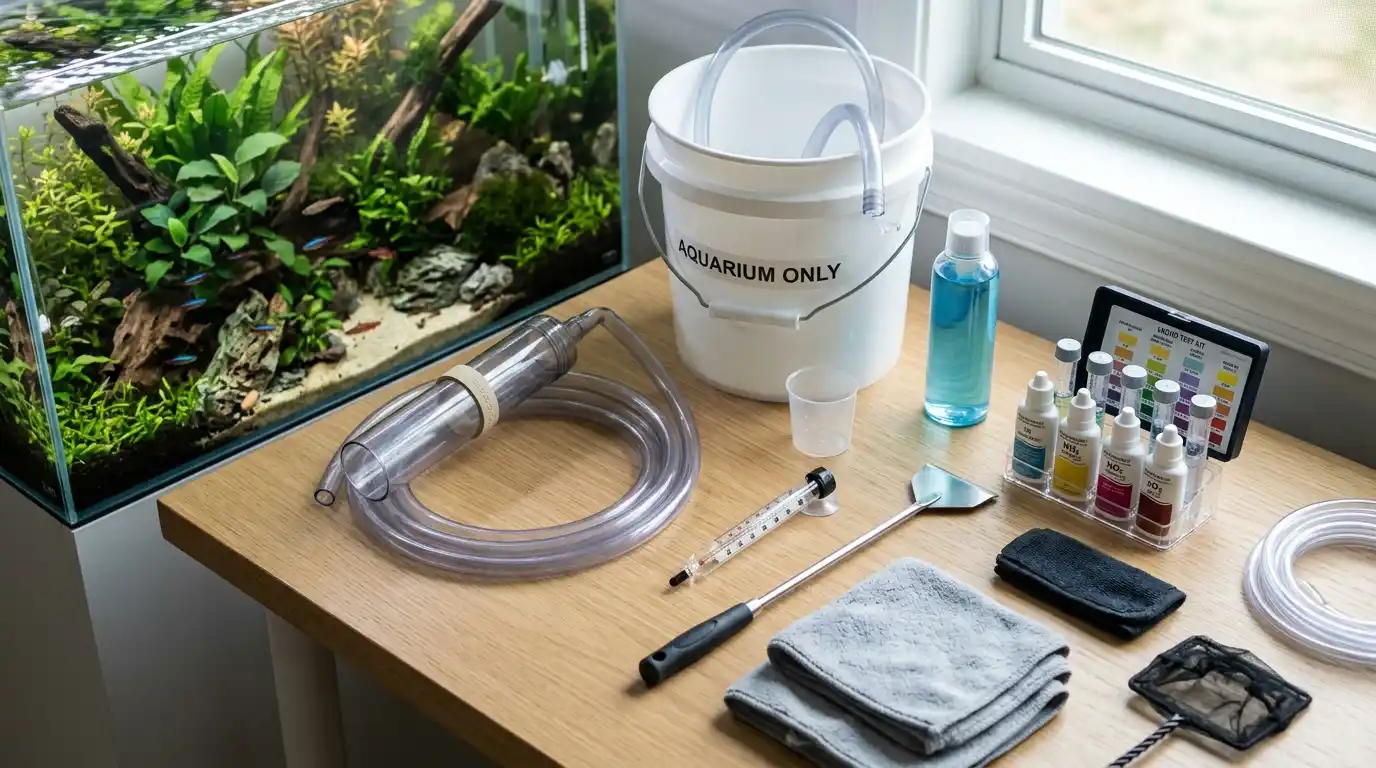
- Siphon or gravel vac sized for your tank
- Buckets labeled for aquarium use only
- Water conditioner that neutralizes chlorine and chloramine
- Thermometer to match refill temperature
- Test kits for ammonia, nitrite, nitrate, pH; GH/KH if needed
- Algae scraper and soft towels
- Optional: faucet‑to‑tank water changer for large tanks
Keep these ready, and how often to change water in freshwater aquarium routines will feel easy and quick.
Frequently Asked Questions of how often to change water in freshwater aquarium
How often to change water in freshwater aquarium for beginners?
Start with 20–30% once per week. Test nitrate and adjust your schedule up or down based on results.
Can I change water every two weeks?
Yes, if stocking is light, plants are dense, and nitrate stays low. Test to confirm it remains under your target.
How often to change water in freshwater aquarium with goldfish?
Goldfish are messy, so plan 40–50% weekly. Some keepers do 25% twice per week for steadier water.
Do I need to vacuum the gravel every time?
Lightly, yes. Focus on high‑waste areas. In planted tanks, vacuum open areas and avoid deep roots.
Should I turn off the filter during a water change?
Leave it on if it stays submerged. If the intake will run dry, turn it off and restart as soon as you refill.
Is distilled or RO water better than tap?
Only if you remineralize. Most fish need minerals for osmoregulation. Many keepers use treated tap water with great results.
What if my tap water has nitrate?
Use RO or a mix of RO and tap, then remineralize. Increase plant mass and consider a denser change schedule.
Conclusion
You now know how often to change water in freshwater aquarium care, and more important, how to tailor it to your tank. Start with 20–30% weekly, test nitrate, watch your fish, and adjust with calm, steady steps. Small, regular changes beat big, rare ones every time.
Make a simple plan today: set a weekly reminder, prep your gear, and log your numbers for one month. If this helped, subscribe for more practical aquarium tips or leave a comment with your tank size and stock, and I’ll help you fine‑tune your schedule.