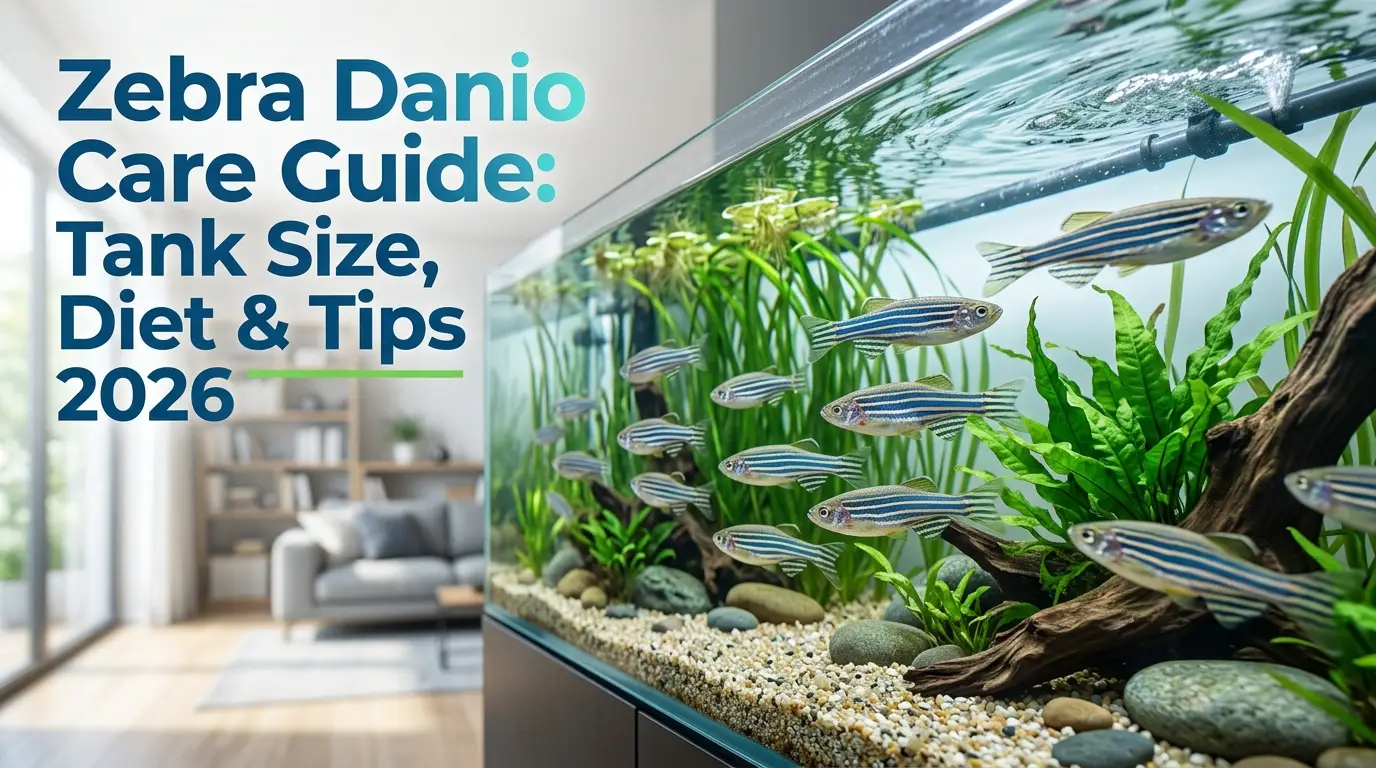
Zebra danios need cool, clean water, steady flow, and a large school.
This zebra danio care guide distills years of hands-on fishkeeping into simple, proven steps. I’ll show you how to set up a healthy tank, dial in water and diet, prevent disease, and even breed them. If you want fast, fuss-free success with zebra danios, this guide is your roadmap.
Zebra Danio Snapshot: What Makes Them Great
Zebra danios, also called zebrafish, are small, active minnows from South Asia. They grow to about 2 inches, live 3 to 5 years, and love to swim fast. They are hardy, social, and perfect for beginners.
They shine in cool, oxygen-rich water with lively flow. Keep them in a school of at least 6, but 10 to 12 looks and works best. A tight school cuts stress and nipping and shows off their zig-zag dance.
As an aquarist and breeder, I’ve found they are most fun in long tanks. Give them room to sprint, and they will reward you with color and bold behavior. This zebra danio care guide leans on that real-world experience.
Tank Setup and Equipment
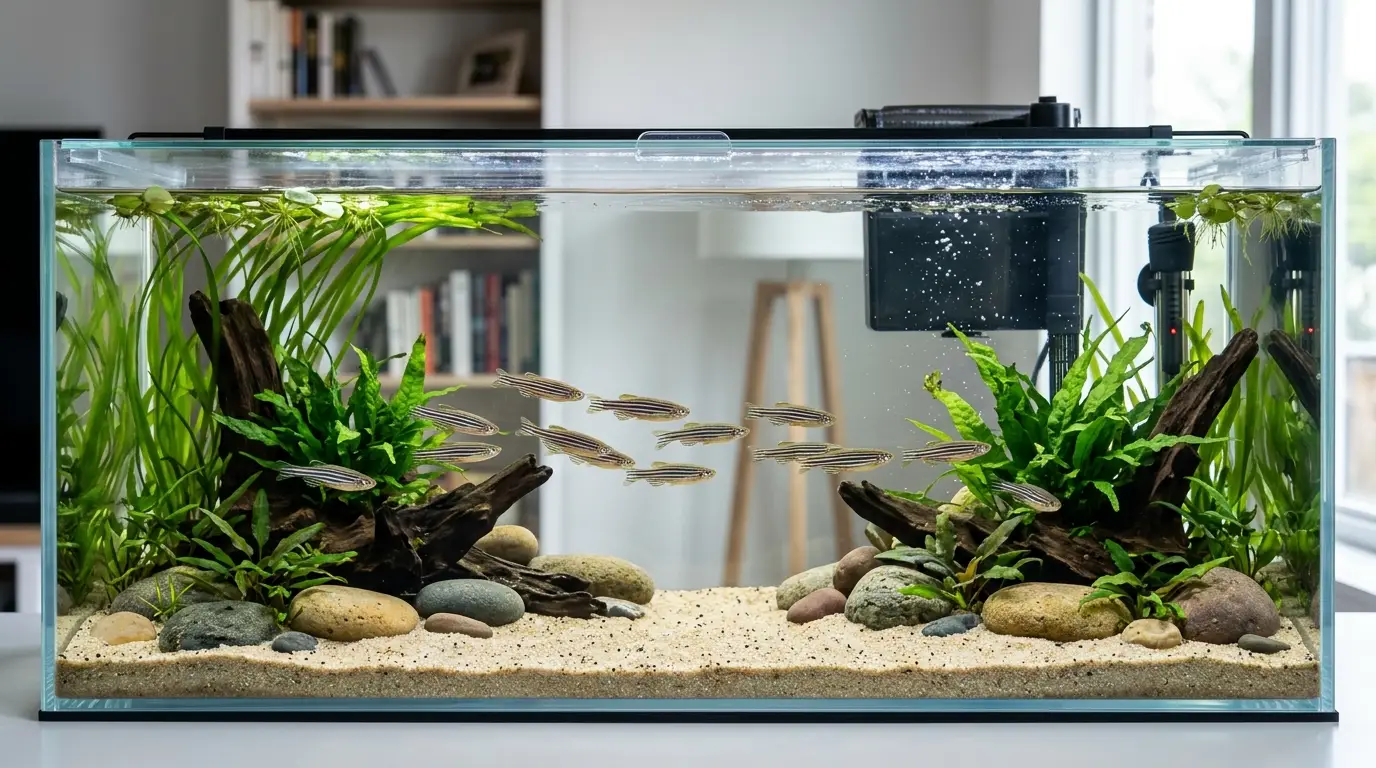
Start with space. A 20-gallon long tank is the sweet spot for a school of 8 to 12. You can keep 6 in a 10-gallon, but active fish do better with more length to run.
Pick gear that keeps water moving and clean.
- Filter: A hang-on-back or small canister with a spray bar for even flow.
- Flow: Aim for moderate current. Add a small powerhead if needed.
- Heater: Often optional in a warm room. Keep a heater handy for steady temps.
- Lid: They jump. A tight lid saves lives.
- Light: Moderate light helps plants and colors pop.
Decor should support swimming and rest.
- Substrate: Sand or smooth gravel.
- Plants: Java fern, Vallisneria, and floating plants for cover.
- Hardscape: Smooth stones and wood to break sight lines, not block lanes.
Pro tip from my first zebra danio tank: angle the spray bar toward the surface. You get great oxygen and just the right push for schooling. It’s a small move with big results for this zebra danio care guide.
Water Parameters and Cycling
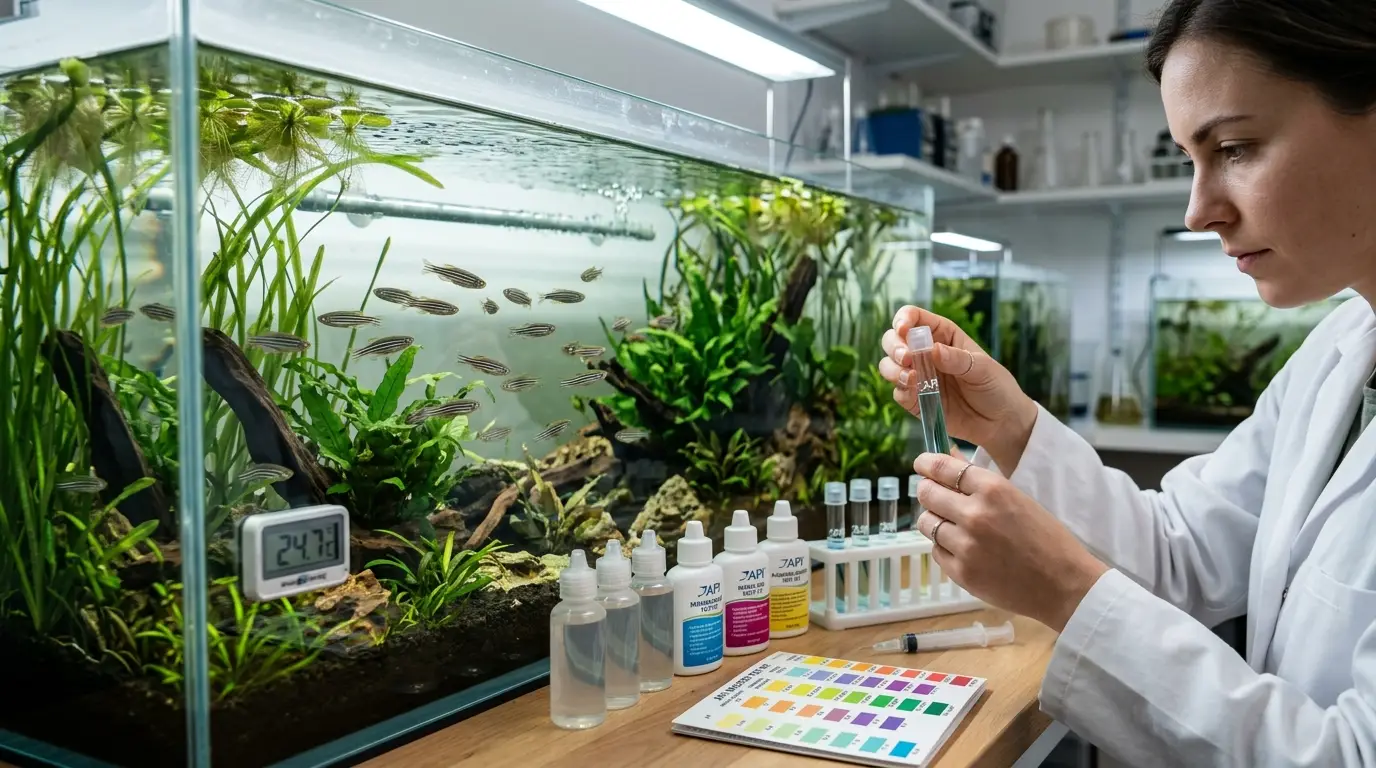
Stable water is the core of this zebra danio care guide. They are tough, but spikes still harm them.
Key targets:
- Temperature: 68 to 75°F (20 to 24°C). I like 72°F.
- pH: 6.5 to 7.5.
- Hardness: 5 to 12 dGH.
- Ammonia and nitrite: 0 ppm.
- Nitrate: Under 20 ppm, lower is better.
Cycle the tank before fish.
- Use bottled bacteria or seeded media to start.
- Feed the cycle with a pinch of flake or pure ammonia.
- Test with liquid kits until ammonia and nitrite read 0 for a week.
Weekly care keeps things smooth.
- Change 30 to 40 percent of water each week.
- Vacuum light debris but leave some biofilm on decor.
- Rinse filter media in tank water, not tap, to protect bacteria.
If your tap water runs warm in summer, watch for heat stress. Add a fan across the surface to cool a few degrees. This small hack saved a summer spawn in my fish room and belongs in any zebra danio care guide.
Diet and Feeding
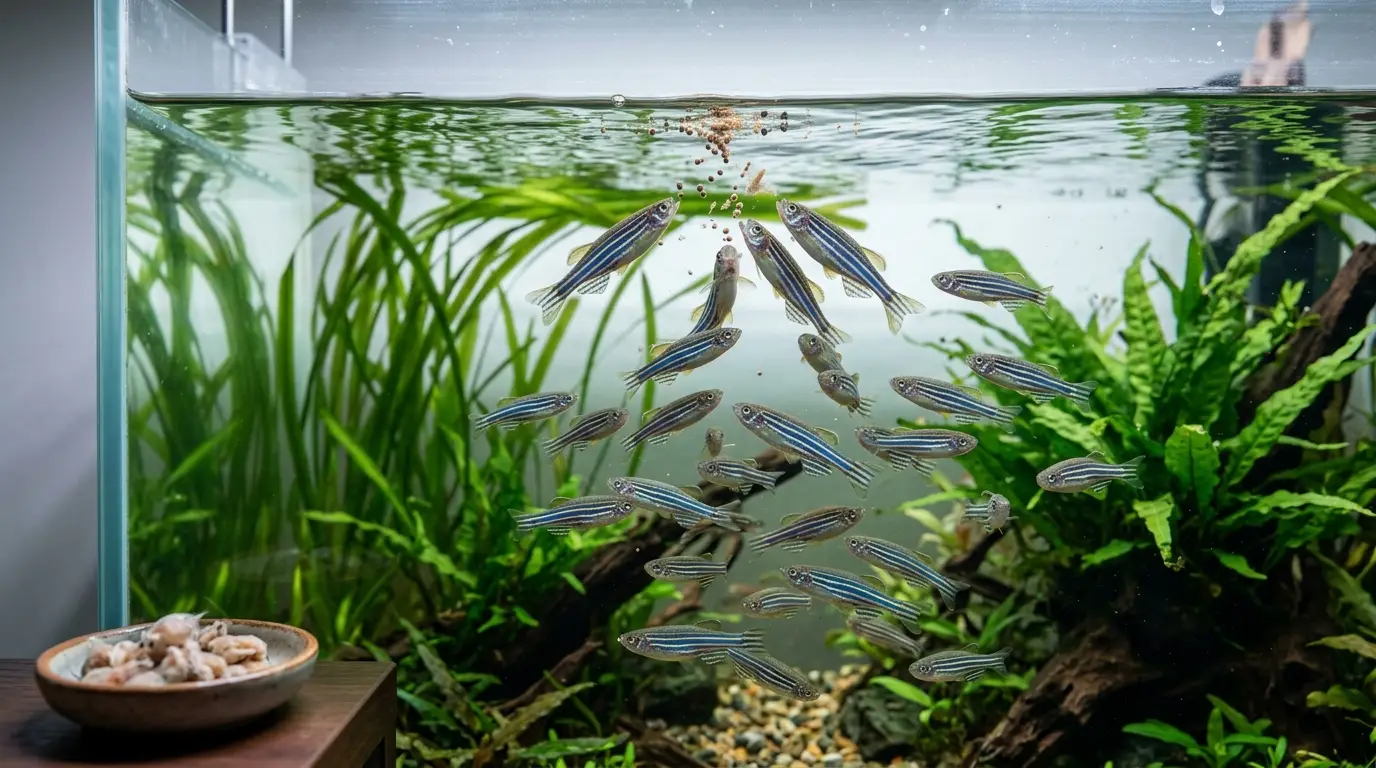
Zebra danios are omnivores. They do best on variety.
- High-quality flakes or micro pellets.
- Feed small pinches they finish in 30 to 60 seconds, once or twice a day.
Boosts for health and color:
- Frozen or live foods like daphnia, brine shrimp, or cyclops.
- Occasional bloodworms, chopped if needed.
- A weekly fast day to prevent bloat.
I rotate three foods each week to cover all bases. When training picky fish, a few live brine shrimp flips the switch. In any zebra danio care guide, variety is the secret to bright stripes and strong spawns.
Behavior, Schooling, and Tank Mates
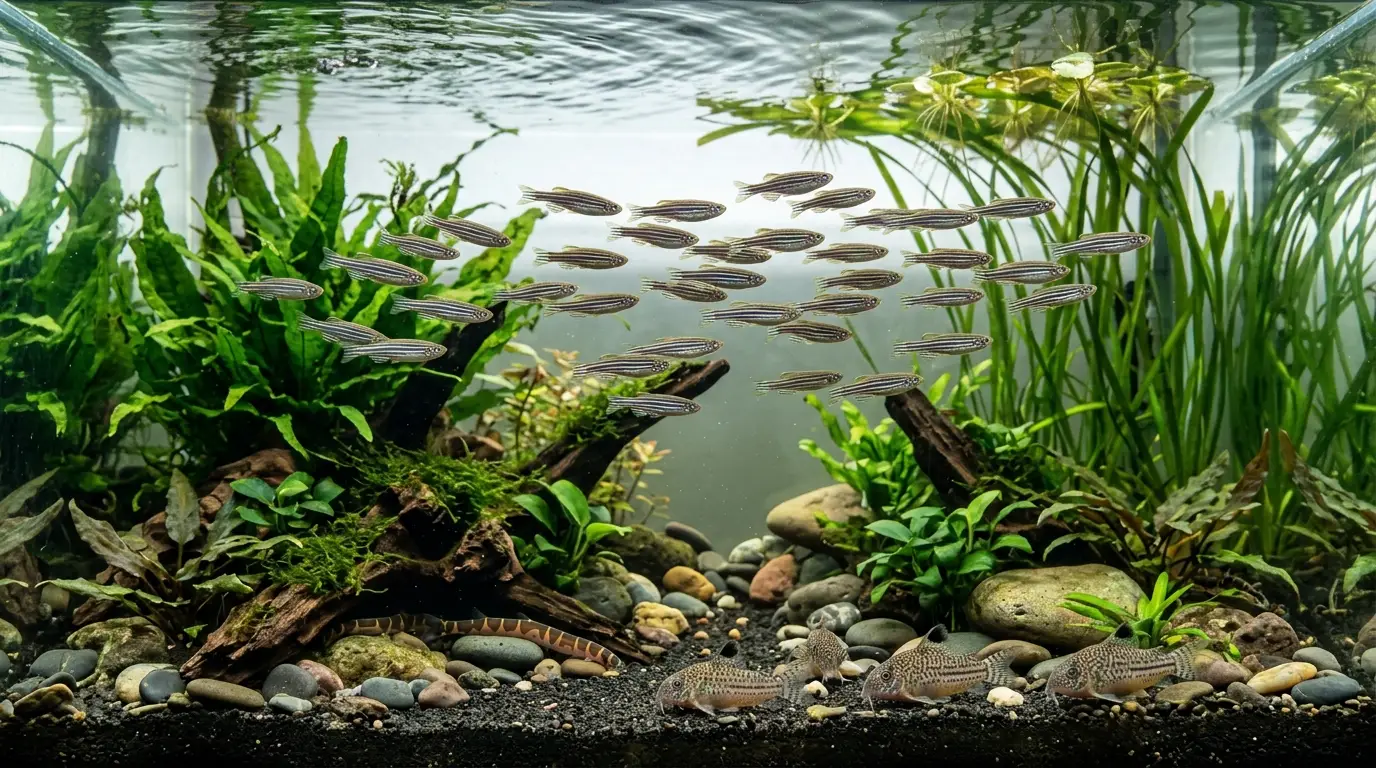
Zebra danios are fast, curious, and social. Most fin nipping fades in a big, busy school. Keep at least 8 to spread any pushy behavior.
Good tank mates:
- Corydoras, kuhli loaches, and peaceful plecos.
- Rasboras, white cloud mountain minnows, and cherry barbs.
- Smaller rainbowfish and other fast, peaceful minnows.
Avoid slow, long-finned fish.
- Bettas, angelfish, fancy guppies, and gouramis may get harassed.
- Very shy fish can stress in high-flow tanks.
If you see chasing, first add more danios, then add plants or wood to break sight lines. I’ve solved more “nipping” this way than with any other fix in this zebra danio care guide.
Breeding Zebra Danios Made Simple
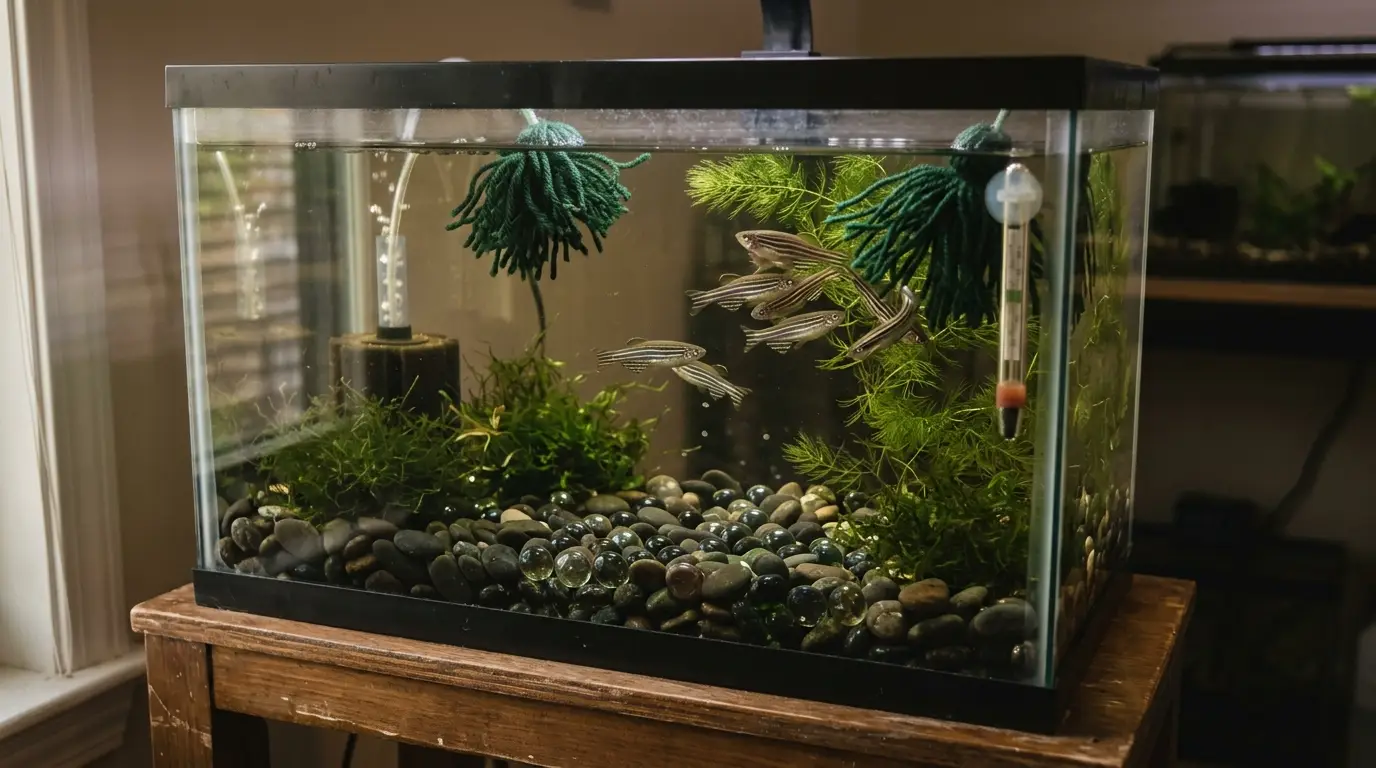
Zebra danios are egg scatterers. They spawn at dawn, toss eggs over plants or mops, and may eat them after.
Set a simple breeding tank:
- 10 gallons with a sponge filter and marbles or a mesh floor.
- A spawning mop or fine plants for egg catch.
- Temp 72°F, then bump to 74 to 75°F to trigger spawning.
Steps:
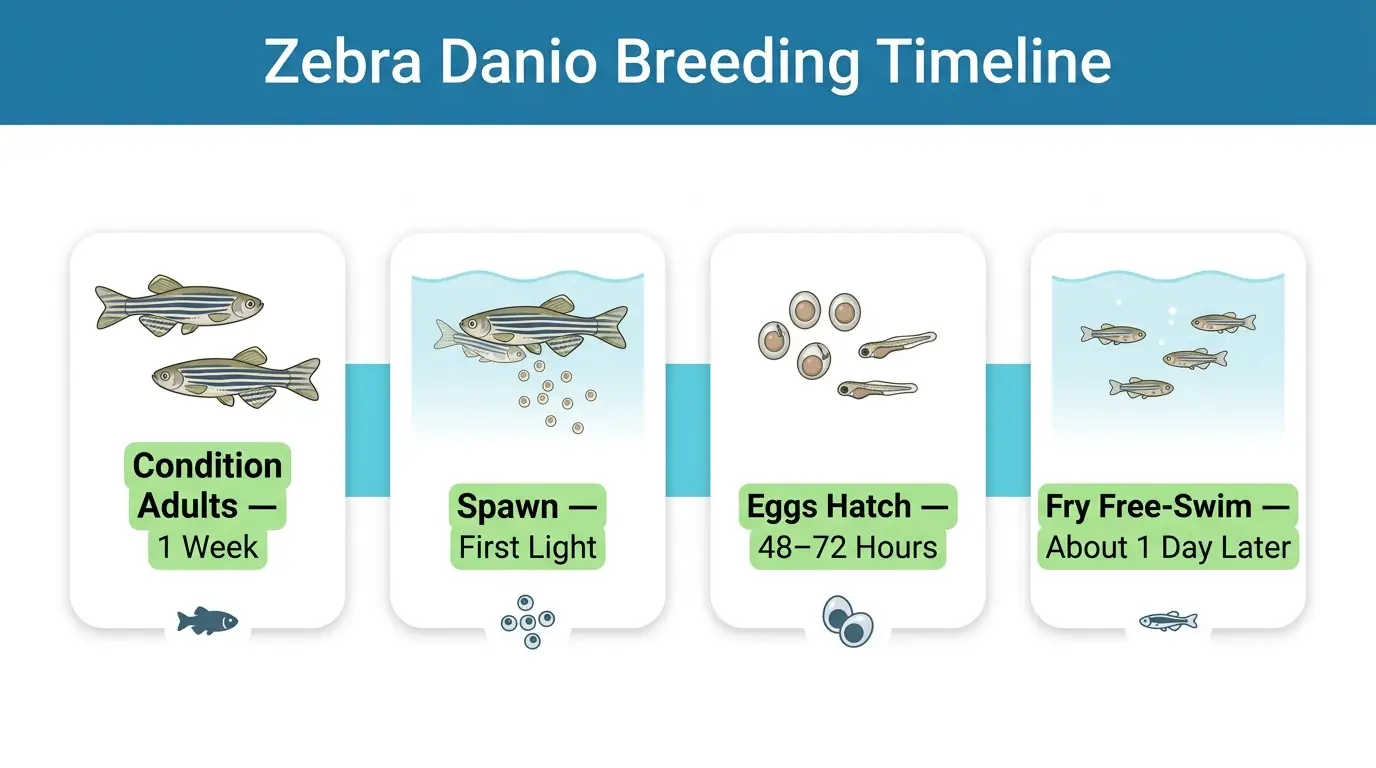
- Condition a group with rich foods for a week.
- Add 1 to 2 females with 2 to 3 males at night.
- They spawn at first light. Remove adults right after.
- Eggs hatch in 48 to 72 hours. Fry free-swim a day later.
- Feed infusoria or commercial fry food, then baby brine shrimp.
I used two small mops and marbles to double my egg catch. It cut losses and made feeding fry much easier. Any practical zebra danio care guide should suggest this cheap, high-yield setup.
Health, Disease Prevention, and Care Routine
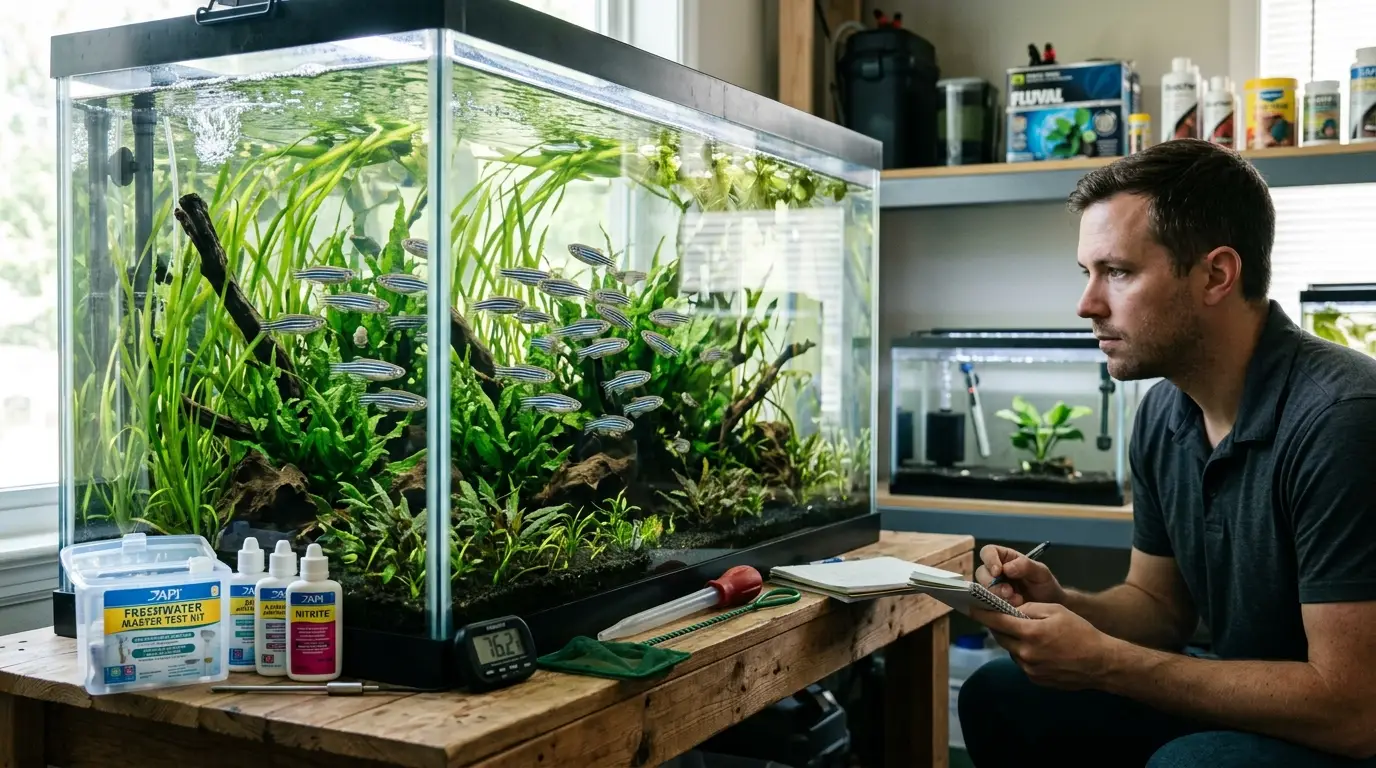
Healthy zebra danios are nonstop movers. When they slow down, check water first.
Watch for:
- Ich: White spots, flashing. Treat fast and raise oxygen.
- Fin rot and columnaris: Frayed fins or white patches. Improve water and medicate.
- Mycobacteriosis: Weight loss with normal appetite and bent spines. Isolate and consult a pro.
Strong prevention:
- Quarantine all new fish for 2 to 4 weeks.
- Keep water cool and steady to reduce stress.
- Do not overfeed. Remove uneaten food.
My routine in this zebra danio care guide:
- Test water every week.
- Clean the filter monthly.
- Keep a hospital tub, air pump, and broad-spectrum meds on hand.
Common Mistakes and Pro Tips
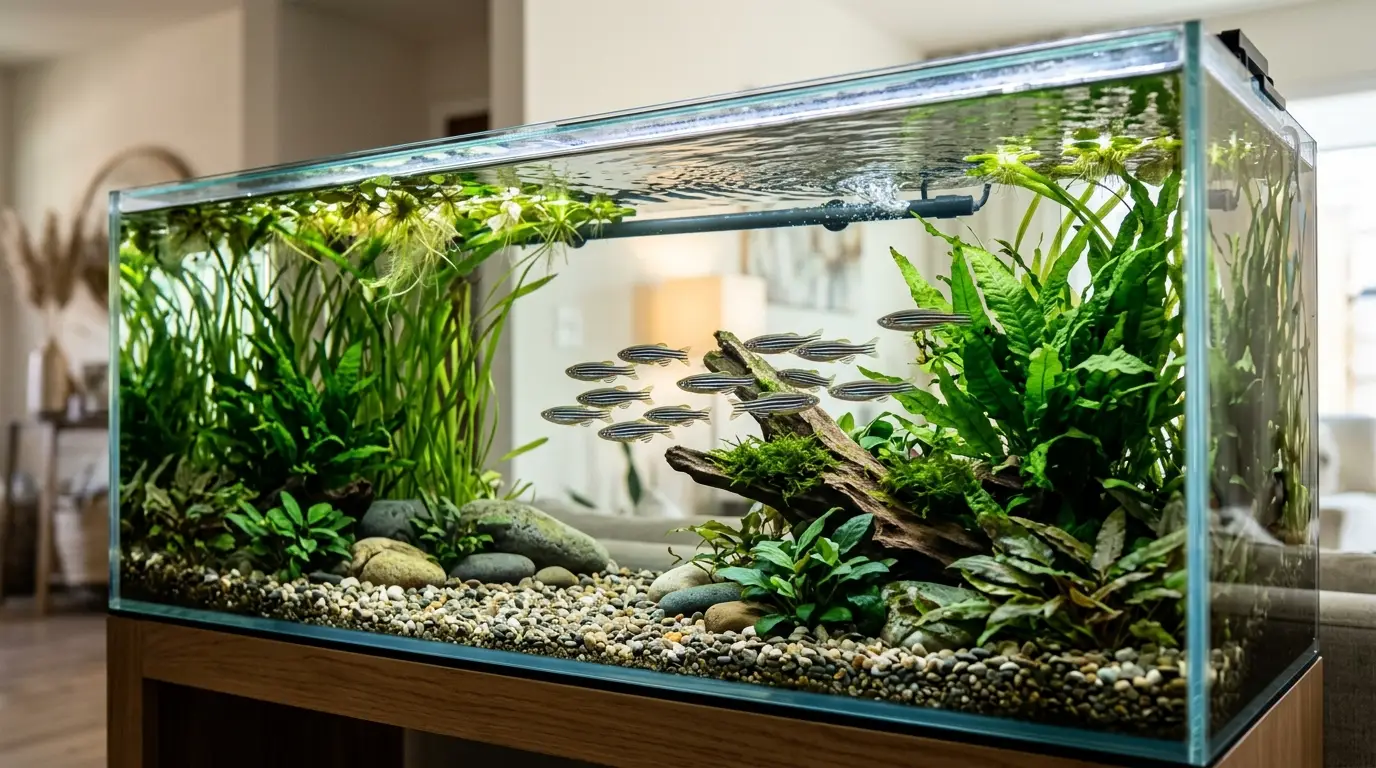
Mistakes to avoid:
- Keeping 2 or 3 fish. Small groups raise stress and chasing.
- Hot water. Long-term temps above 78°F cut lifespan.
- Weak flow. Stagnant water bores and stresses fast fish.
- No lid. Zebra danios jump clean out.
Pro tips that work:
- Use a long tank for long sprints.
- Add a spray bar. It gives flow without blasting fish.
- Mix dense plants and open water for perfect laps.
- Feed a tiny night snack before breeding to time a strong dawn spawn.
This zebra danio care guide keeps fixes simple. Most problems vanish with more space, more schoolmates, and cleaner water.
Budget, Sourcing, and Ethical Notes
Zebra danios are budget-friendly and widely bred. Choose clear eyes, full bellies, and tight schooling at the store. Avoid fish with clamped fins or odd curves.
Buying tips:
- Pick captive-bred fish when possible.
- Quarantine after purchase.
- Skip dyed or altered fish. It’s cruel and risky.
Expect low costs:
- Fish: Low price each, buy 8 to 12.
- Gear: Invest in a good filter and test kit once.
- Food: Rotate two dry foods and one frozen for balance.
These small choices support healthy fish and a cleaner hobby. A mindful zebra danio care guide should cover your wallet and your values.
Frequently Asked Questions of zebra danio care guide
How many zebra danios can live in a 10-gallon tank?
Six is the safe upper limit, but a 20-gallon long is much better. They need swim space and benefit from a larger school.
Do zebra danios need a heater?
Often no, if your room stays near 70 to 72°F. Use a heater only to keep temps stable during cold snaps.
What temperature is best for zebra danios?
Aim for 68 to 75°F, with 72°F as a sweet spot. Stable, cool water keeps them active and long-lived.
Are zebra danios fin nippers?
They can be if kept in small groups or tight spaces. A bigger school and longer tank almost always solve it.
Can zebra danios live with a betta?
It’s risky. Danios may hassle a slow betta, and their fast pace can stress it out.
How long do zebra danios live?
Most live 3 to 5 years with good care. Cooler, clean water and varied food extend lifespan.
How can I tell males from females?
Females are rounder with a fuller belly. Males look slimmer and may have brighter, sharper stripes.
Conclusion
Zebra danios thrive when you give them space, flow, and friends. Keep the water cool and clean, offer a varied diet, and let them school in a long tank. Follow the steps in this zebra danio care guide, and you’ll enjoy bold color, playful motion, and even easy breeding.
Ready to start or fine-tune your setup? Put these tips into action this week, track your water, and watch your school shine. If this helped, share it with a friend, subscribe for more guides, or drop your questions in the comments.