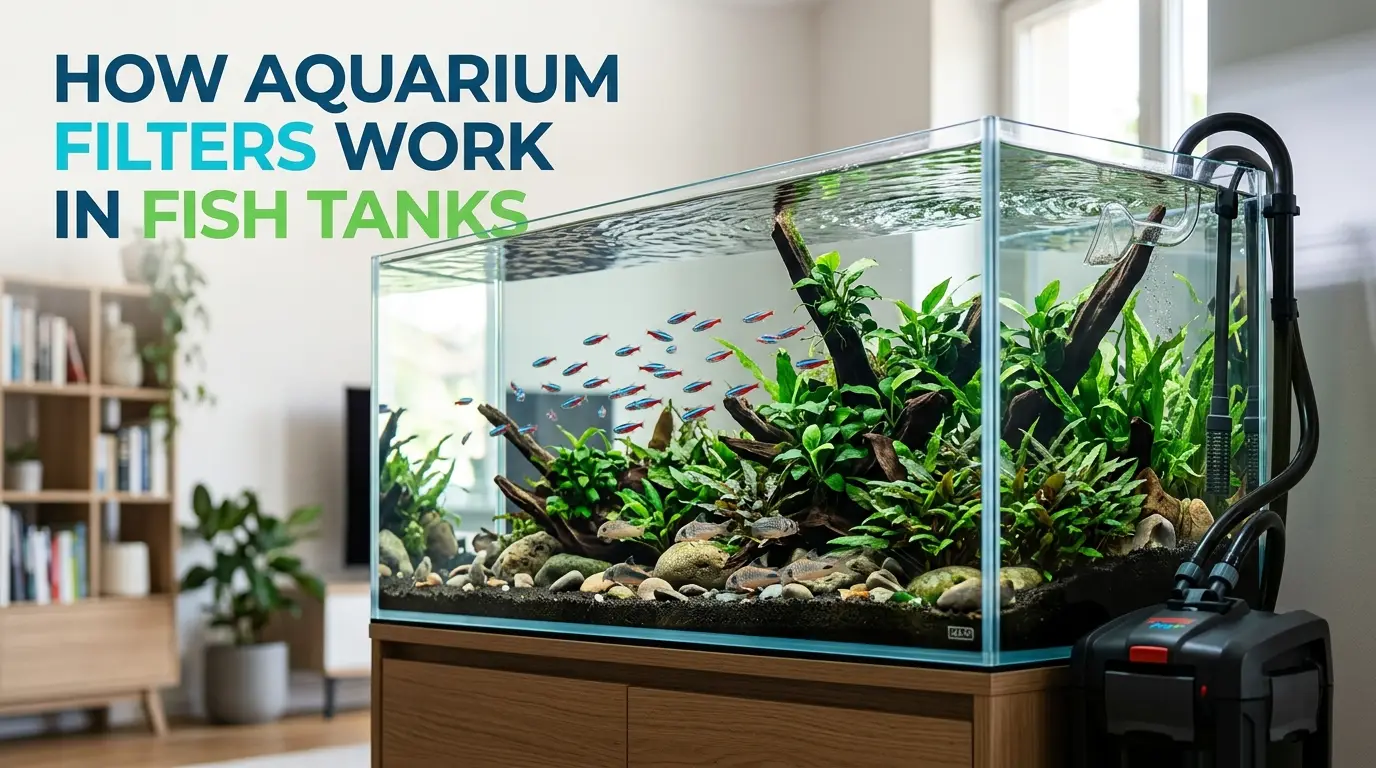
Aquarium filters pull water through media to trap waste, grow bacteria, and polish water.
If you want clear water and healthy fish, you need a filter that does more than catch gunk. In this guide, I’ll break down How Aquarium Filters Work in Fish Tanks with real examples, clear steps, and expert tips from years of setting up tanks for clients and my own fish rooms. You’ll learn the science, the gear, and the small habits that keep your tank stable for the long run.
The Big Picture: What Filters Actually Do
A filter is a water mover and a life support system. It turns your tank into a loop where water passes through media, gets cleaned, and returns to the fish. Good filters do three jobs at once: strain debris, detox waste, and improve gas exchange.
Think of it like a kitchen sink with three steps. You catch solids in a strainer. You scrub away the invisible grime. You also keep fresh air moving. That is the heart of How Aquarium Filters Work in Fish Tanks.
Filtration supports the nitrogen cycle. Fish make ammonia. Bacteria change ammonia to nitrite, then nitrite to nitrate. Your filter media is where these bacteria live in huge numbers. Knowing this is key to How Aquarium Filters Work in Fish Tanks in everyday use.
The Three Pillars: Mechanical, Biological, Chemical Filtration
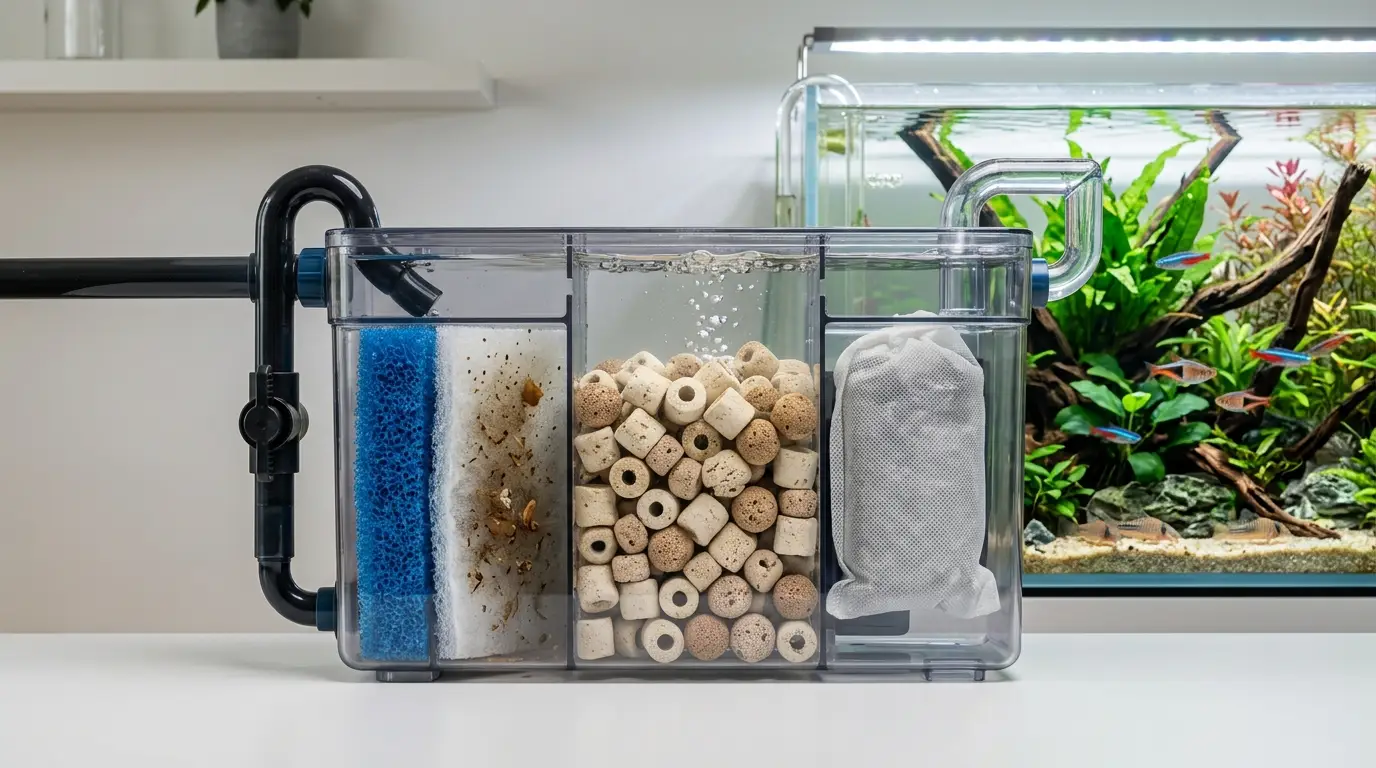
Mechanical filtration traps visible waste. Sponges and pads catch fish poop, food, and plant bits. Rinse or replace these before they clog. Do not scrub them sterile, or you risk losing good bacteria.
Biological filtration hosts beneficial bacteria. Porous media like ceramic rings, bio balls, and sponges offer surface area. Bacteria like Nitrosomonas and Nitrospira convert ammonia to safer forms. This is the engine of How Aquarium Filters Work in Fish Tanks.
Chemical filtration uses media to remove dissolved stuff. Activated carbon pulls out tannins, meds, and odors. Specialty resins target ammonia, phosphate, or organics. Use chemical media as a tool, not a crutch, and replace on schedule for steady results.
Popular Filter Types and How They Move Water

Different filters push water in different ways, but all follow the same principles. Here’s how common options work inside.
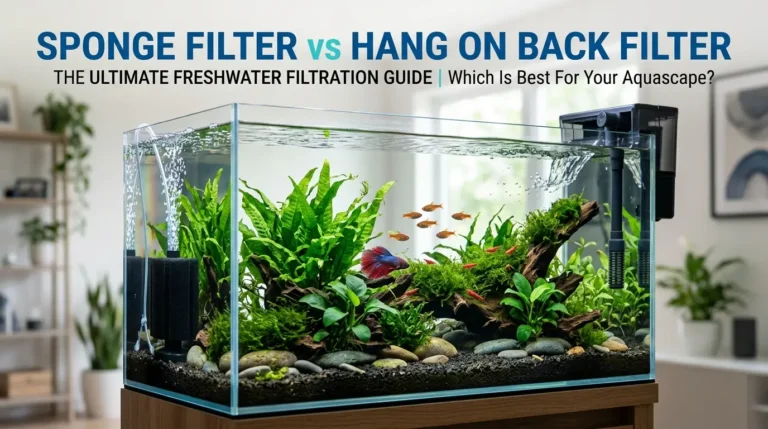
Hang-on-back filters
- Hang on the rim and draw water up a tube.
- Water passes through floss, sponge, and bio media.
- Easy to service and great for small to mid tanks.
Canister filters
- Sit below the tank with hoses in and out.
- Force water through baskets of media in stages.
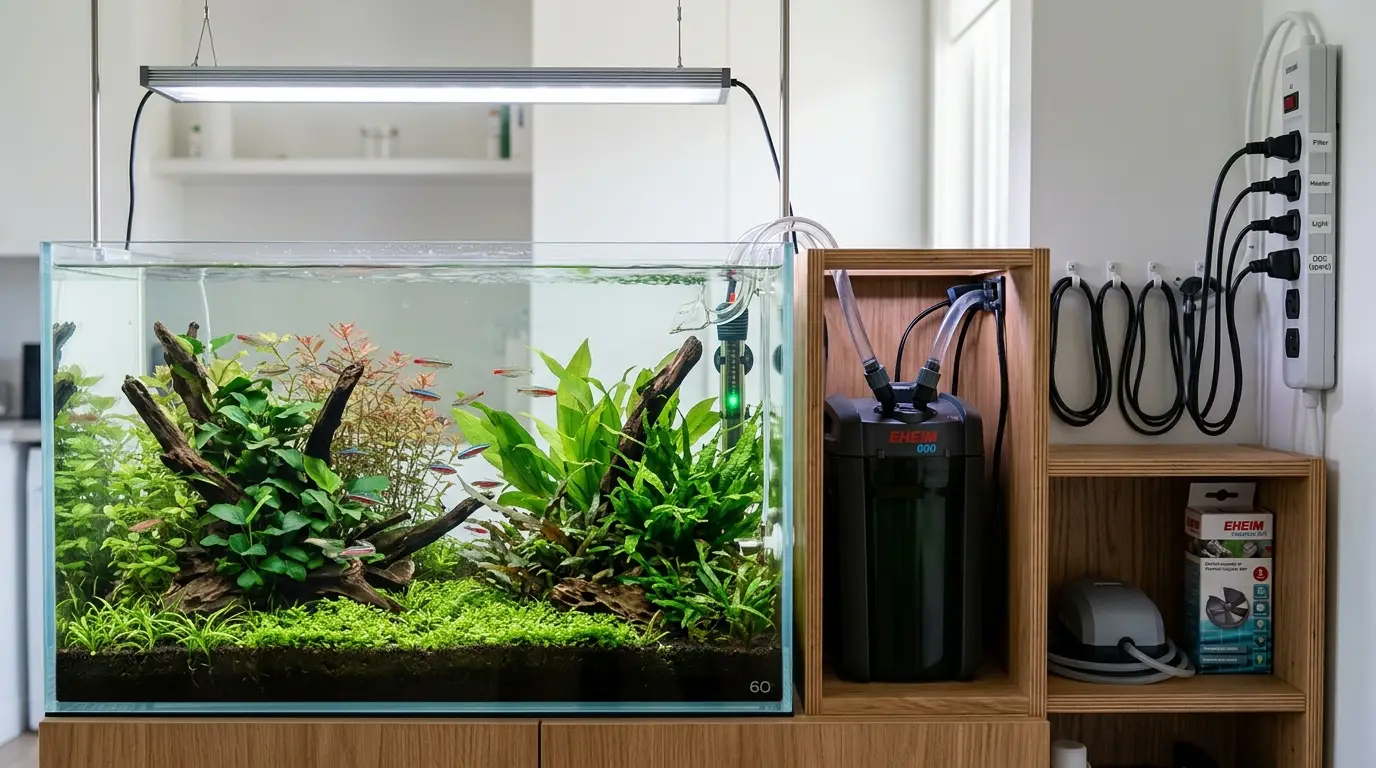
- High capacity, quiet when set up right, ideal for larger tanks.
Sponge filters
- Run by an air pump.
- Air lifts water up, pulling it through a sponge.
- Cheap, safe for fry and shrimp, and a bio workhorse.
Internal filters
- Sit inside the tank with a small pump.
- Compact and simple for small aquariums or quarantine.
Undergravel filters
- Pull water down through the gravel and up lift tubes.
- The gravel itself acts as bio media.
- Works best with modest stocking and regular gravel care.
Sumps and wet/dry filters
- Water overflows down to a separate chamber, then returns by a pump.
- Huge media space and great oxygenation.
- Common in reef and large freshwater setups.
Whatever you choose, the path of water through media explains How Aquarium Filters Work in Fish Tanks across all designs.
Sizing and Choosing the Right Filter
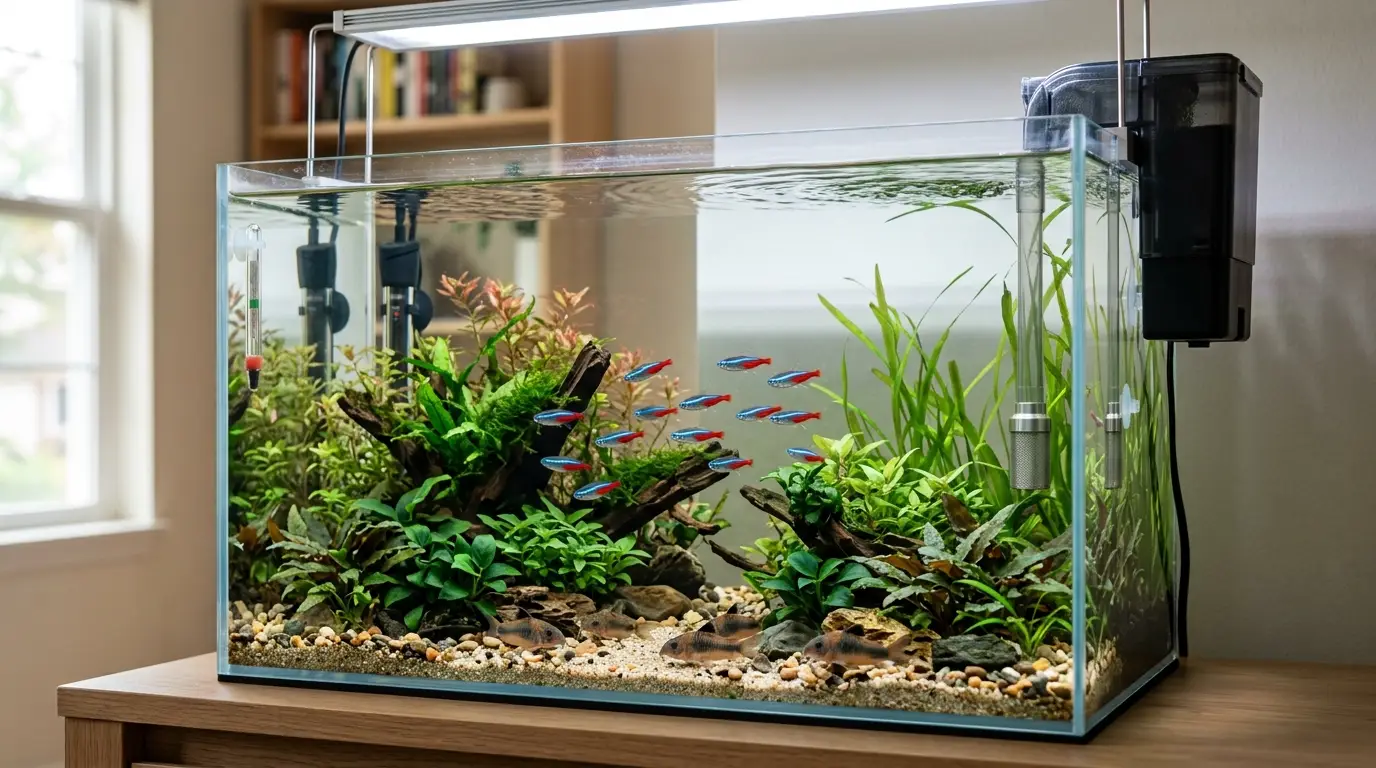
Aim for a turnover of 5–10 times your tank volume per hour. A 20-gallon tank often needs 100–200 gallons per hour. Heavy stocking or messy fish like goldfish may need more. Gentle fish like bettas may prefer baffles and lower flow.
Match media volume to your bio load. More fish equals more waste and more media. Pick quiet, reliable pumps. Check head height on canisters and sumps. This helps you plan How Aquarium Filters Work in Fish Tanks at the scale you need.
Consider your goals and livestock:
- Planted tanks often need stable, moderate flow to avoid CO2 loss.
- Shrimp and fry need pre-filters to avoid getting sucked in.
- Cichlids and goldfish need strong mechanical and big bio capacity.
- Nano tanks favor sponge or small HOB units with gentle output.
I often overfilter by one size and then tune down the flow. That gives a safety margin and keeps parameters steady. This approach supports How Aquarium Filters Work in Fish Tanks under real-life swings.
Setup, Cycling, and Seeding Beneficial Bacteria
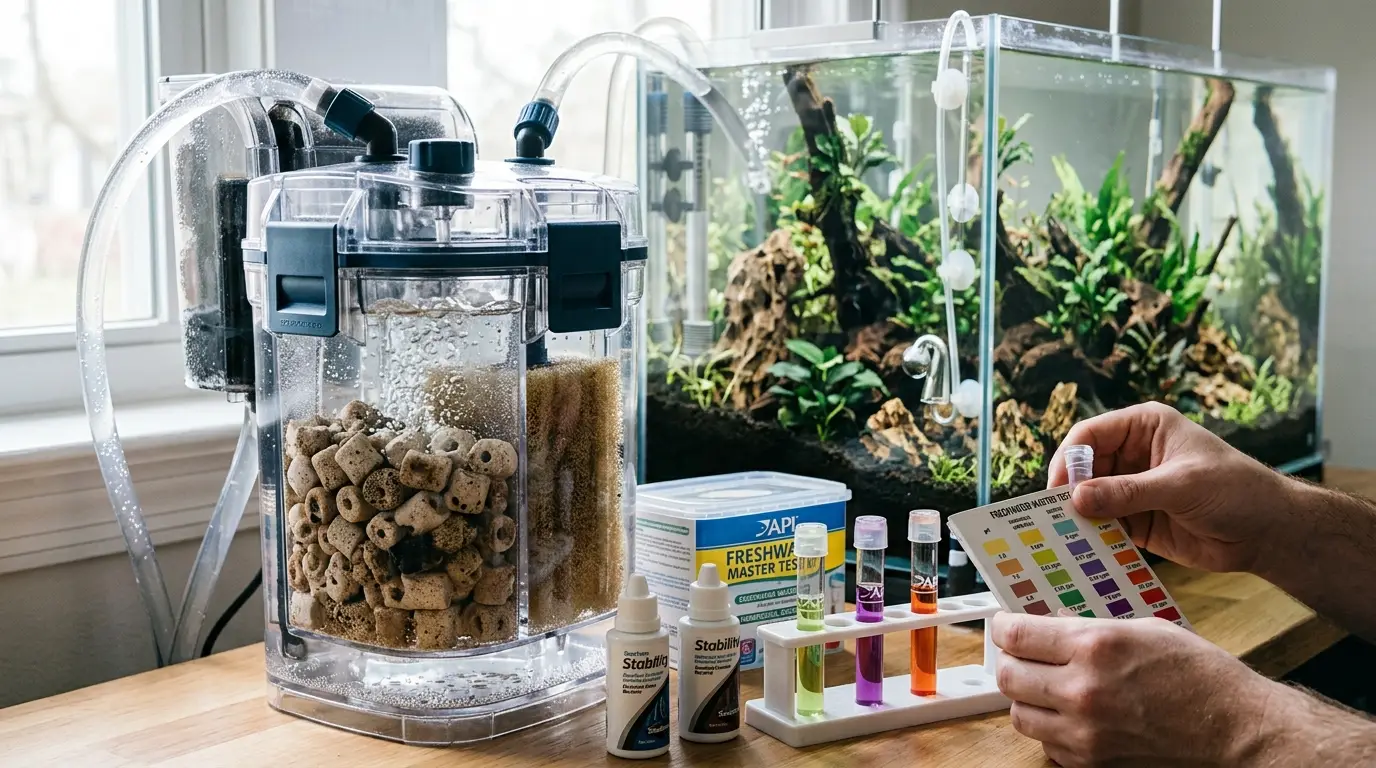
A new filter is lifeless until it cycles. Cycling means growing the bacteria that convert ammonia to nitrate. You can cycle with fishless ammonia, hardy fish, or bottled bacteria. Test daily for ammonia, nitrite, and nitrate.
Tips that speed up the cycle:
- Seed the new filter with media from a mature tank or sponge.
- Keep temperature stable and water oxygenated.
- Never rinse media in tap water with chlorine. Use tank water.
Expect 2–6 weeks for a strong cycle. Once stable, you will see ammonia and nitrite at zero, and nitrate rising. This is the moment when How Aquarium Filters Work in Fish Tanks becomes clear: the bio filter is now your backbone.
Filter Media: What to Use and When
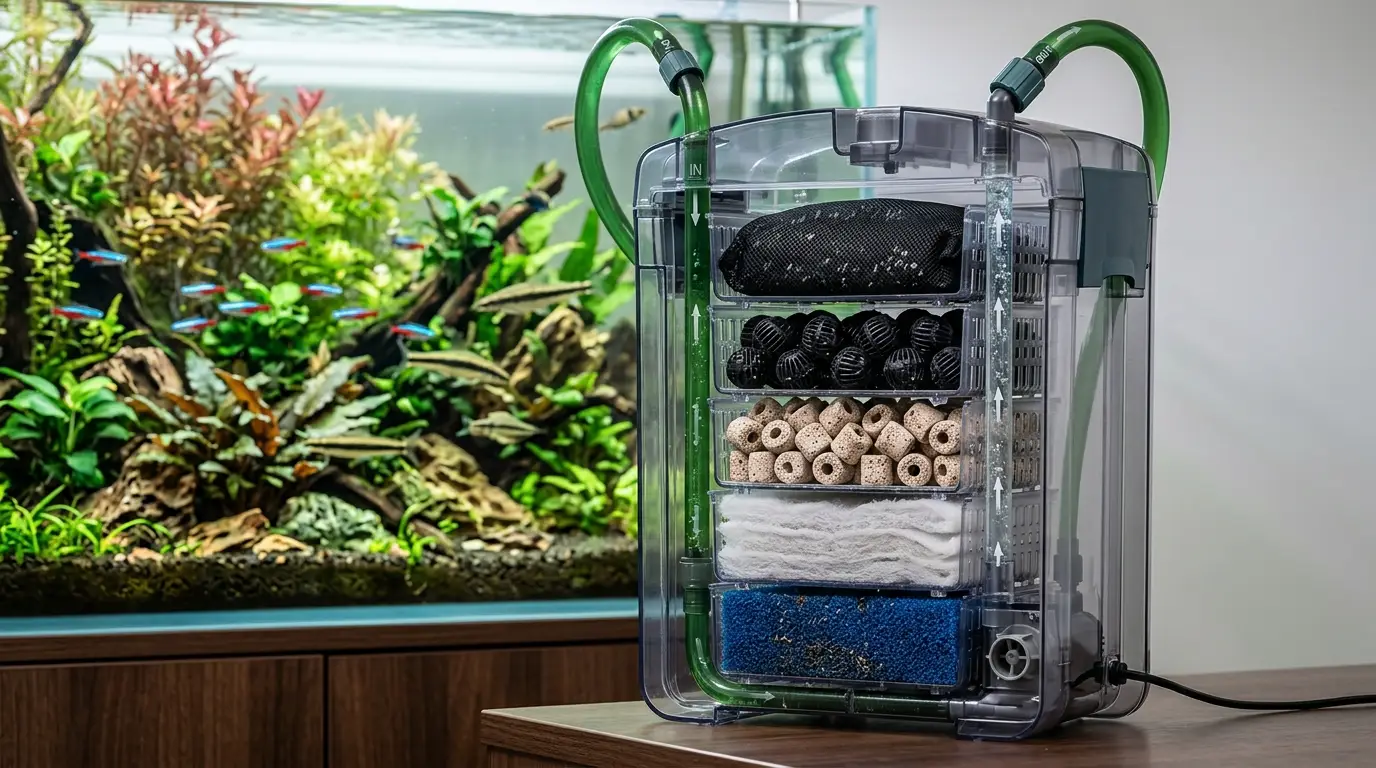
Media order matters. Go from coarse to fine so you avoid clogs and keep flow.
Common media stack
- Coarse sponge catches big debris.
- Fine floss polishes small particles.
- Ceramic rings or bio balls host bacteria.
- Optional chemical media like carbon or resins.
When to use chemical media
- After medication.
- To clear tannins if you want bright water.
- To control odors or specific nutrients like phosphate.
What to avoid
- Replacing all media at once.
- Overpacking the filter so water bypasses the media.
- Mixing too many specialty media without a clear goal.
I swap fine floss weekly on client tanks for sparkle. I keep sponges and bio media long term. These habits showcase How Aquarium Filters Work in Fish Tanks if you keep the balance right.
Maintenance Routines and Troubleshooting
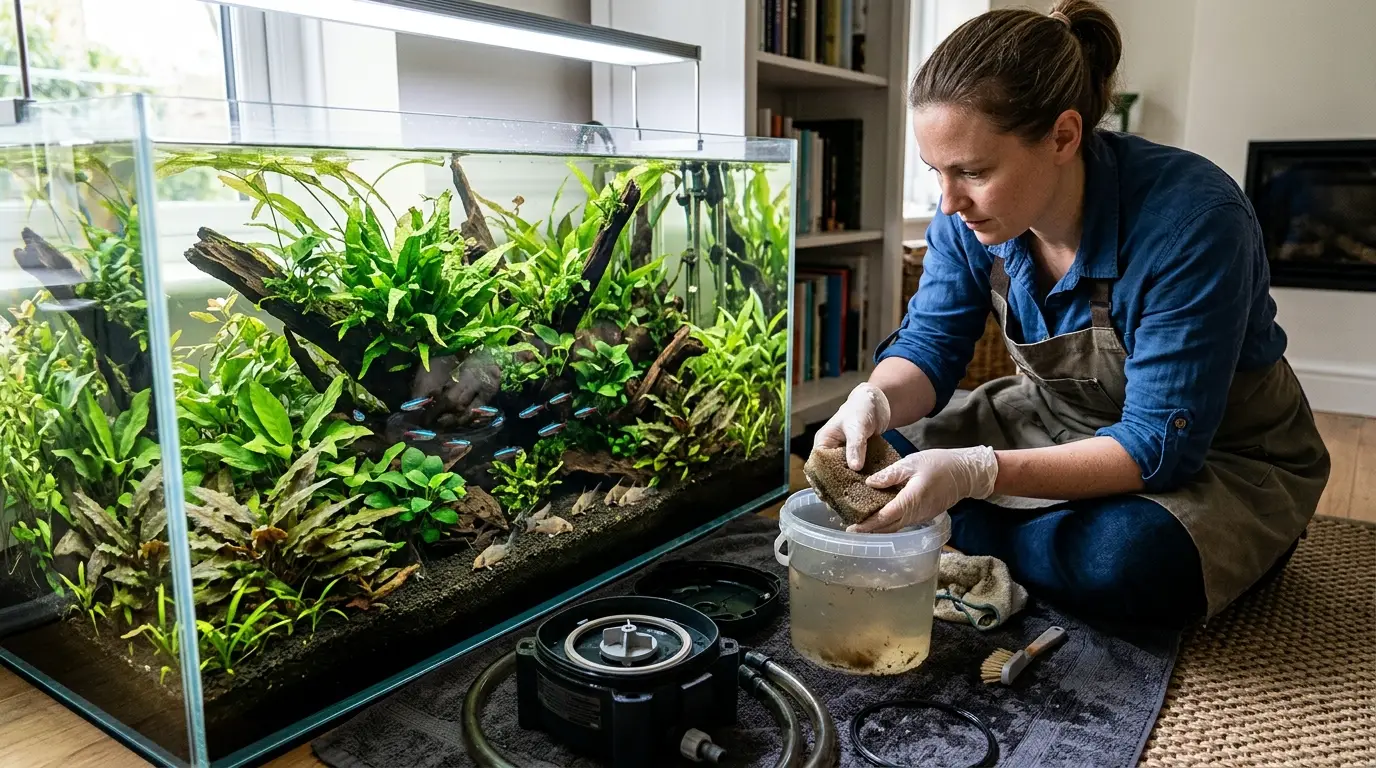
Consistent care keeps flow strong and bacteria happy. A clogged filter is a stalled heart.
Simple routine
- Rinse sponges and pads in removed tank water every 1–2 weeks.
- Swish bio media gently only when flow drops.
- Replace chemical media as directed.
- Clean impellers and hoses monthly for steady output.
Common problems and fixes
- Cloudy water: add fine floss, reduce overfeeding, boost water changes.
- Low flow: clean impeller, pad, or hoses; check for kinks.
- Noise: level the filter, bleed air, and seat the lid firmly.
- Smell: service mechanical media and ensure good oxygenation.
Big mistake to avoid: washing media under chlorinated tap water. That can crash your cycle. Another one: replacing everything at once. Stagger changes. These steps reflect the real heart of How Aquarium Filters Work in Fish Tanks day to day.
Advanced Tips, Real Examples, and Pro Lessons
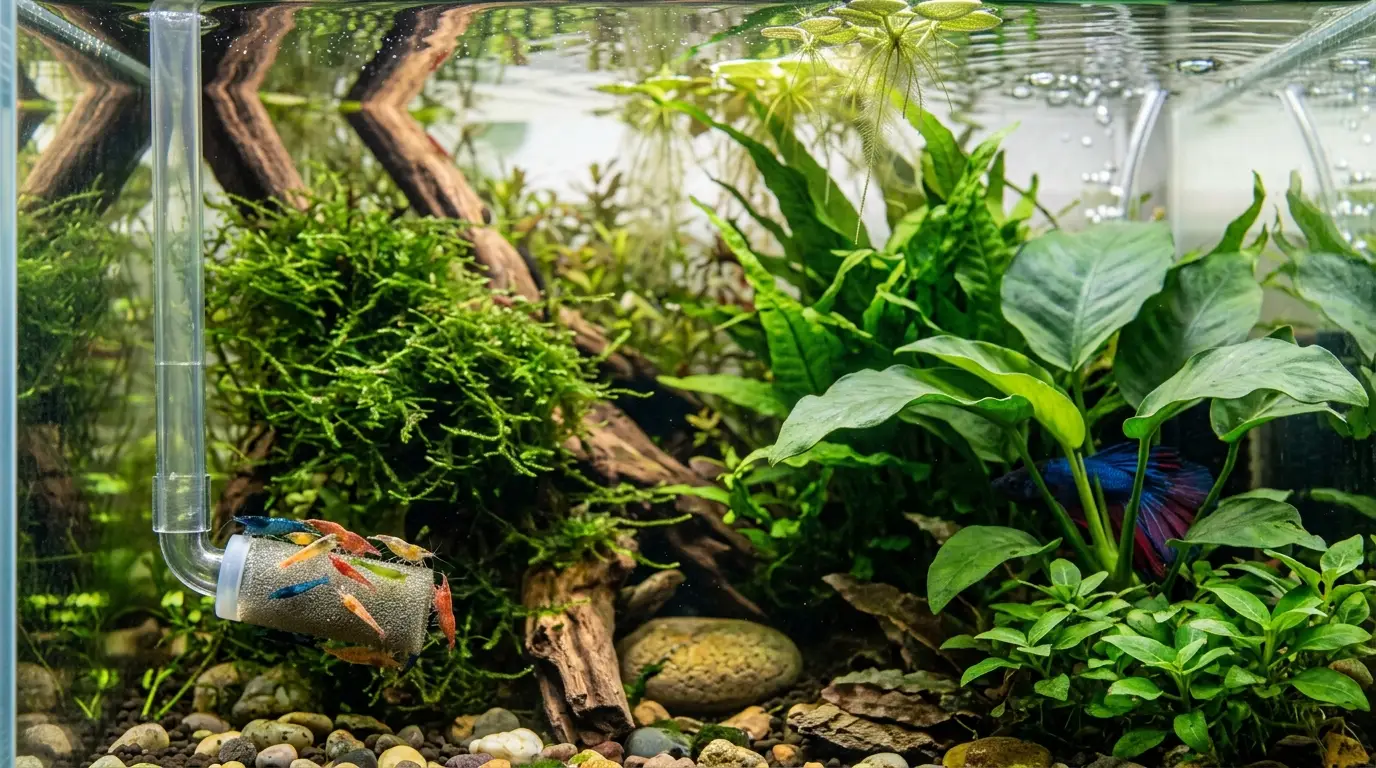
Real-world tip: use a pre-filter sponge on the intake. It catches food and protects shrimp. It also keeps your canister clean longer.
Flow tuning: aim return flow across the surface to improve gas exchange. Add a spray bar to spread flow. For bettas, baffle the output with a coarse sponge to reduce stress.
Two quick examples from my logs:
- A 55-gallon cichlid tank with a canister and large sponge filter ran crystal clear. Mechanical pads were rinsed weekly. Bio media never replaced. Ammonia and nitrite stayed at zero.
- A 10-gallon shrimp tank used only a double sponge filter. The sponges were the bio core. Gentle flow, zero casualties at intake, and steady TDS.
What I learned about How Aquarium Filters Work in Fish Tanks:
- Extra surface area beats gimmicks.
- Steady hands and small, regular cleanings work better than big overhauls.
- Oxygen is a silent hero. Keep water moving and surfaces rippling.
Myths, Limits, and Safety Considerations
Myth: bigger filters always mean cleaner water. Truth: big flow without proper media order can just push dirt around. Match media, flow, and bio load.
Myth: carbon is always required. Truth: it is optional. Use it with intent and replace it on time.
Limitations to note:
- Filters cannot fix overstocking or poor feeding.
- They do not replace water changes. Nitrate still rises.
- Very soft water may need remineralization for healthy bacteria.
Safety and reliability
- Use drip loops and GFCI outlets.
- Keep spare impeller and intake o-rings on hand.
- Consider a battery air pump for outages.
These are the real-world edges of How Aquarium Filters Work in Fish Tanks. Know them, and your system stays safe and stable.
Frequently Asked Questions of How Aquarium Filters Work in Fish Tanks
Do I need a filter if I do lots of water changes?
Yes. Water changes help, but a filter runs the nitrogen cycle 24/7. It keeps ammonia and nitrite at zero between changes.
How often should I clean my filter?
Clean mechanical media every 1–2 weeks, and bio media only when flow drops. Always use tank water for rinsing.
Can I run two filters on one tank?
Yes, and it is smart on larger tanks. It adds redundancy, extra bio capacity, and smoother flow.
Why does my new filter make the water cloudy?
New filters often stir up fine particles. Add fine floss and wait 24–48 hours as the filter polishes the water.
Will a strong filter stress my betta or shrimp?
It can. Baffle the output, use a pre-filter sponge, and aim for gentle flow zones.
Conclusion
Filters keep water clear, convert toxic waste, and move oxygen where fish need it. When you size the unit well, stack media in smart order, and maintain it on schedule, you unlock stable water and happy livestock. That is the simple truth behind How Aquarium Filters Work in Fish Tanks.
Try one improvement this week: add a pre-filter sponge, rinse pads in tank water, or tune your flow. Small steps compound into a stable, beautiful tank. Want more guides like this on How Aquarium Filters Work in Fish Tanks and everyday care? Subscribe, share your setup, or ask a question so we can help you dial it in.