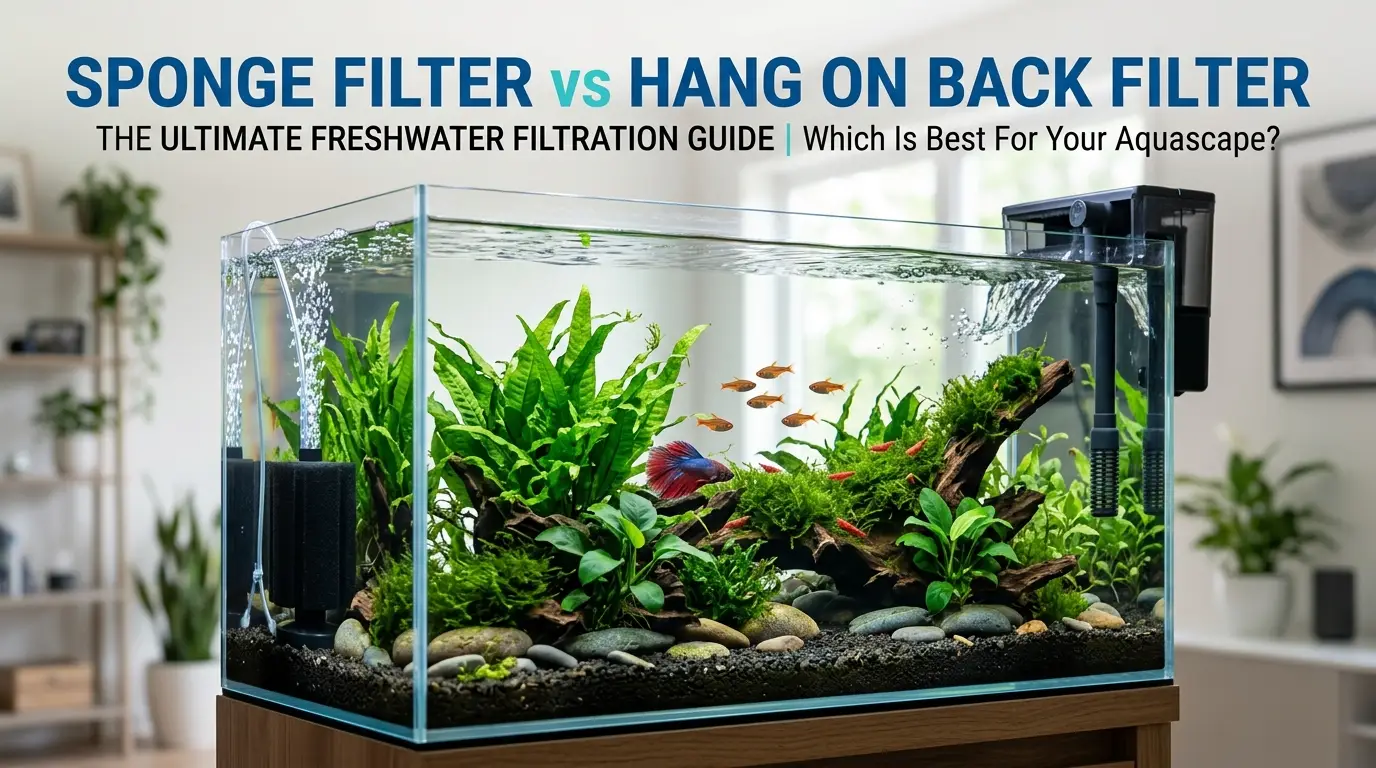
Sponge filters suit gentle, biological filtration; HOB filters polish water with stronger flow.
Choosing the right filter shapes your tank’s health, clarity, and day-to-day care. In this Sponge Filter vs Hang On Back Filter Comparison, I’ll share what actually works after years of setting up shrimp tanks, betta tanks, community tanks, and quarantine systems. We will look at how each filter works, real costs, noise, water clarity, and best picks by tank type so you can decide with confidence.
What Is a Sponge Filter?
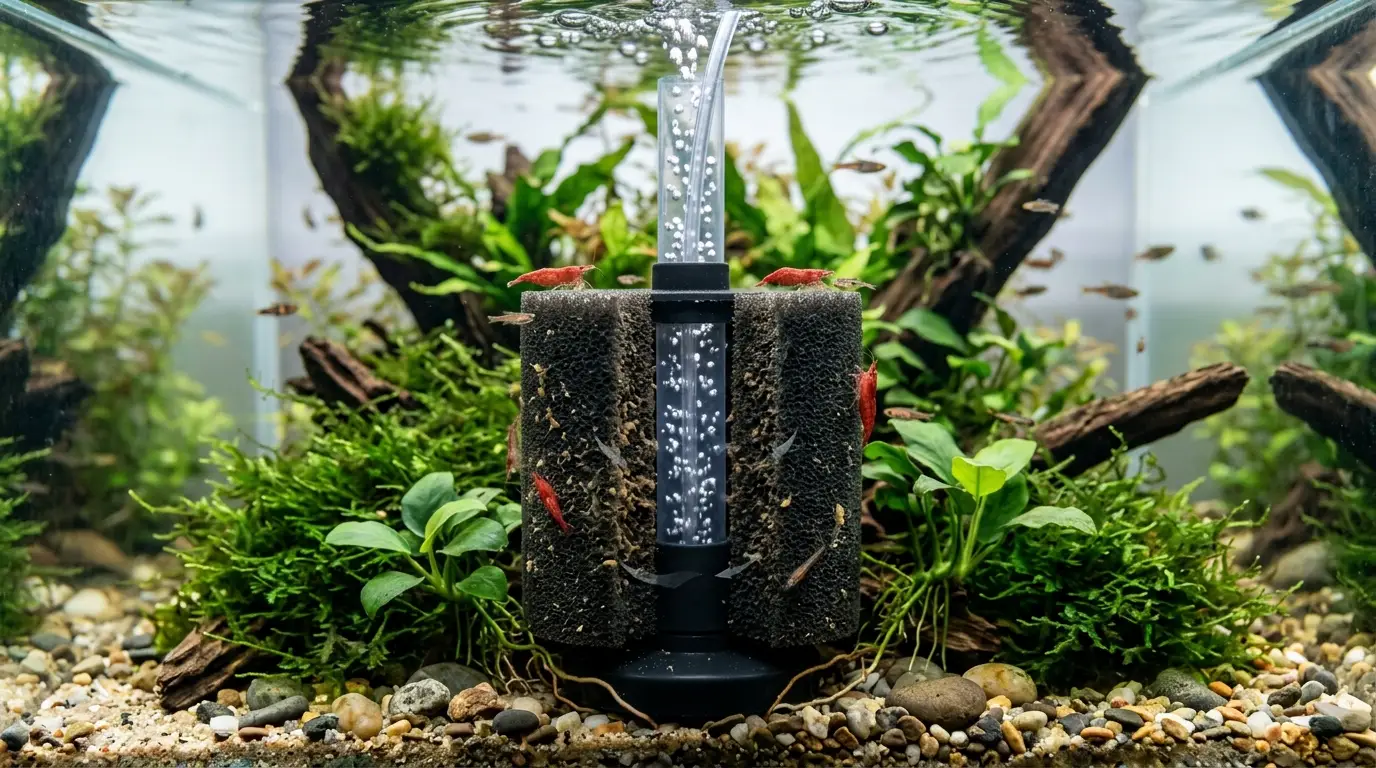
A sponge filter uses an air pump to pull water through a porous sponge. As water moves through the sponge, debris gets trapped. The sponge surface hosts beneficial bacteria that convert ammonia to nitrite and nitrate. The rising bubbles add oxygen to the water.
Where sponge filters shine is gentle, safe flow. Fry, shrimp, and bettas are not pulled into an intake. They are cheap, simple, and very reliable. The trade-off is weaker mechanical polishing and no built-in chemical media.
Pros
- Very safe for fry, shrimp, and long-finned fish.
- Great biological filtration and strong aeration.
- Low cost, easy to clean, and hard to break.
- Perfect for seeding media for new tanks or quarantine.
Cons
- Limited mechanical polishing compared to HOB filters.
- Needs an air pump and airline tubing.
- Takes up space inside the tank and is visible.
What Is a Hang On Back Filter?
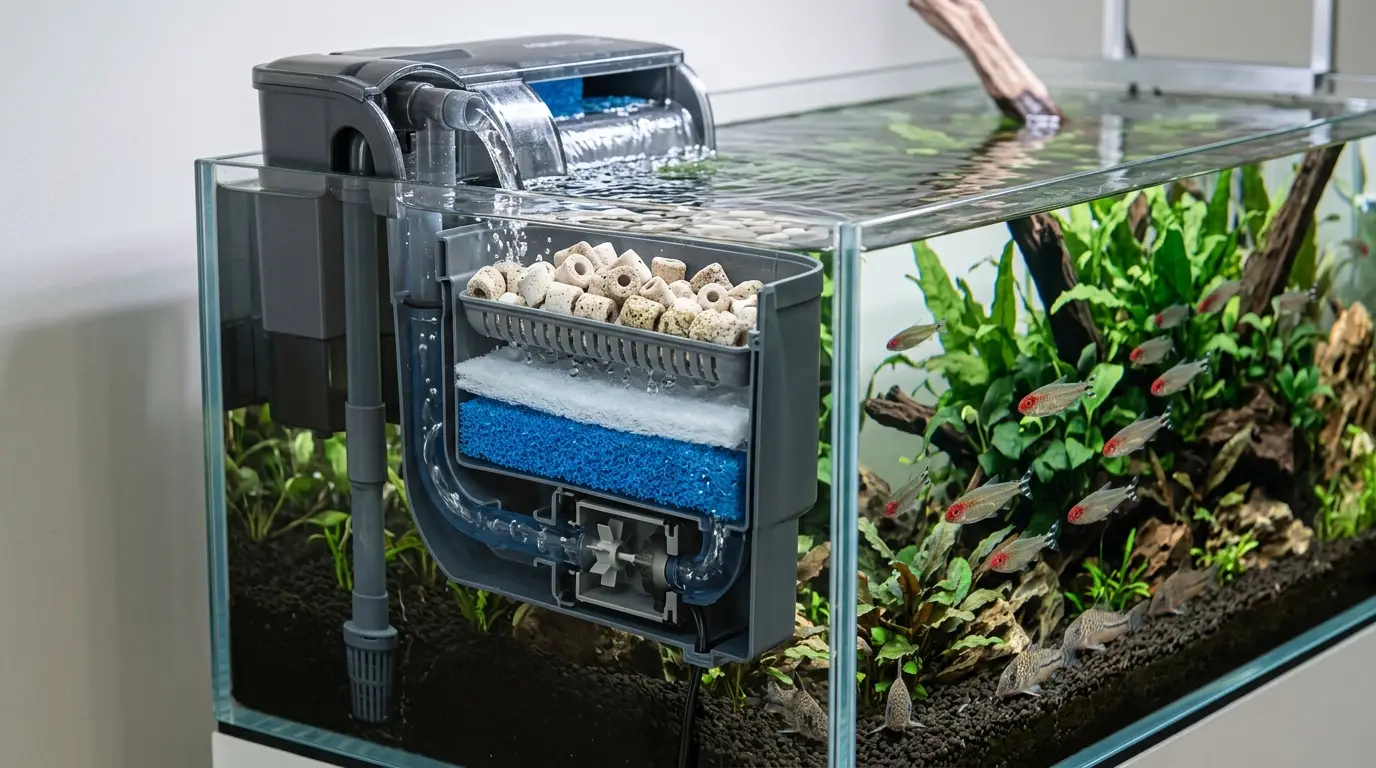
A hang on back filter (HOB) hangs on the tank rim and uses an impeller to draw water through media. Most HOBs pass water through a sponge or pad for mechanical filtration, then over bio-media. You can add chemical media, like carbon or phosphate removers, if needed.
HOB filters excel at clear, polished water and steady flow. Many models are quiet and simple to service. Downsides include possible intake risks for shrimp or fry, more parts to clean, and cartridge costs if you use disposable pads.
Pros
- Strong mechanical filtration and clearer water.
- Flexible media use, including chemical media.
- Easy to access and clean without wet arms.
Cons
- Intakes can endanger shrimp and fry without a pre-filter.
- Can be louder than a sponge-air pump combo in some rooms.
- Some lose prime after power cuts and need re-priming.
Sponge Filter vs Hang On Back Filter Comparison: Key Differences
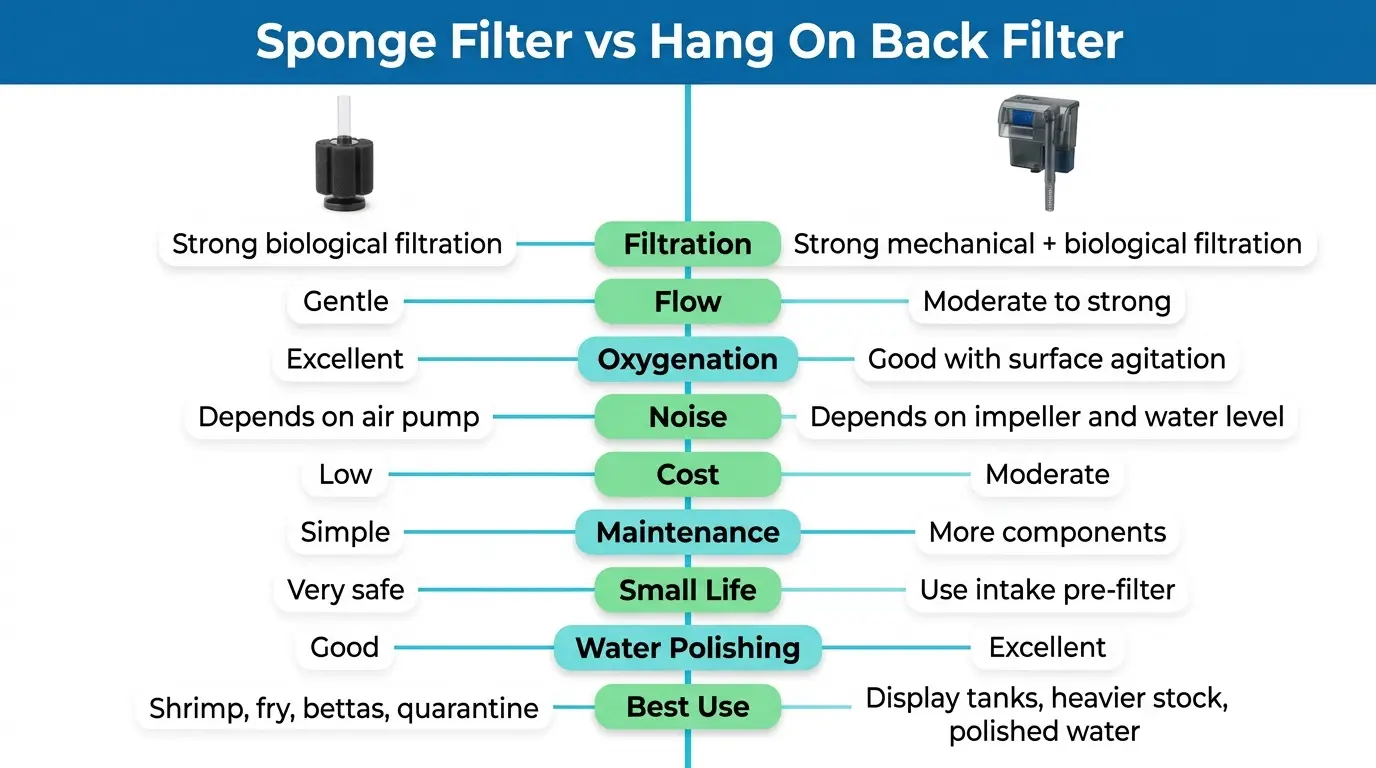
This Sponge Filter vs Hang On Back Filter Comparison covers performance, cost, upkeep, and fit by tank goal. Here is what matters most when you choose.
Filtration type and performance
- Sponge filter: Excellent biological filtration due to high surface area. Good mechanical capture of fine debris once seasoned. No built-in chemical media.
- HOB filter: Strong mechanical and biological filtration with the right media layout. Optional chemical media for odors, meds, or tannins. Better water polishing.
Flow and oxygenation
- Sponge filter: Gentle flow and high gas exchange from bubbles. Great for bettas, shrimp, and fry.
- HOB filter: Higher flow and turnover. Good surface agitation if the outflow ripples the surface, but not always as much aeration as rising bubbles.
Noise and vibration
- Sponge filter: Noise depends on the air pump and placement. A small, quality pump with a soft pad is near silent.
- HOB filter: Many are quiet, but waterfall noise rises if the water level drops. Impeller hum can occur if gunk builds up.
Cost of ownership
- Sponge filter: Low startup cost. Sponge lasts years. Air pump uses about 2 to 5 watts.
- HOB filter: Higher startup cost. Avoid disposable cartridges to save money. Power draw is often 5 to 12 watts.
Maintenance effort
- Sponge filter: Squeeze-rinse the sponge in tank water every 2 to 4 weeks. Takes a minute.
- HOB filter: Rinse sponge or pads, swish bio-media in tank water, and wipe impeller well every 3 to 6 weeks. Takes a few minutes.
Reliability and power cuts
- Sponge filter: Stays submerged, so bacteria remain wet. Restarts as soon as air returns.
- HOB filter: Some lose prime after power loss and need manual priming. Keep the water level high to reduce risk.
Stocking level and tank size
- Sponge filter: Best for nano to medium tanks with light to medium stock. Use dual sponges for bigger bioloads.
- HOB filter: Great for medium to larger tanks or messy fish that shed fine waste.
Safety for small life
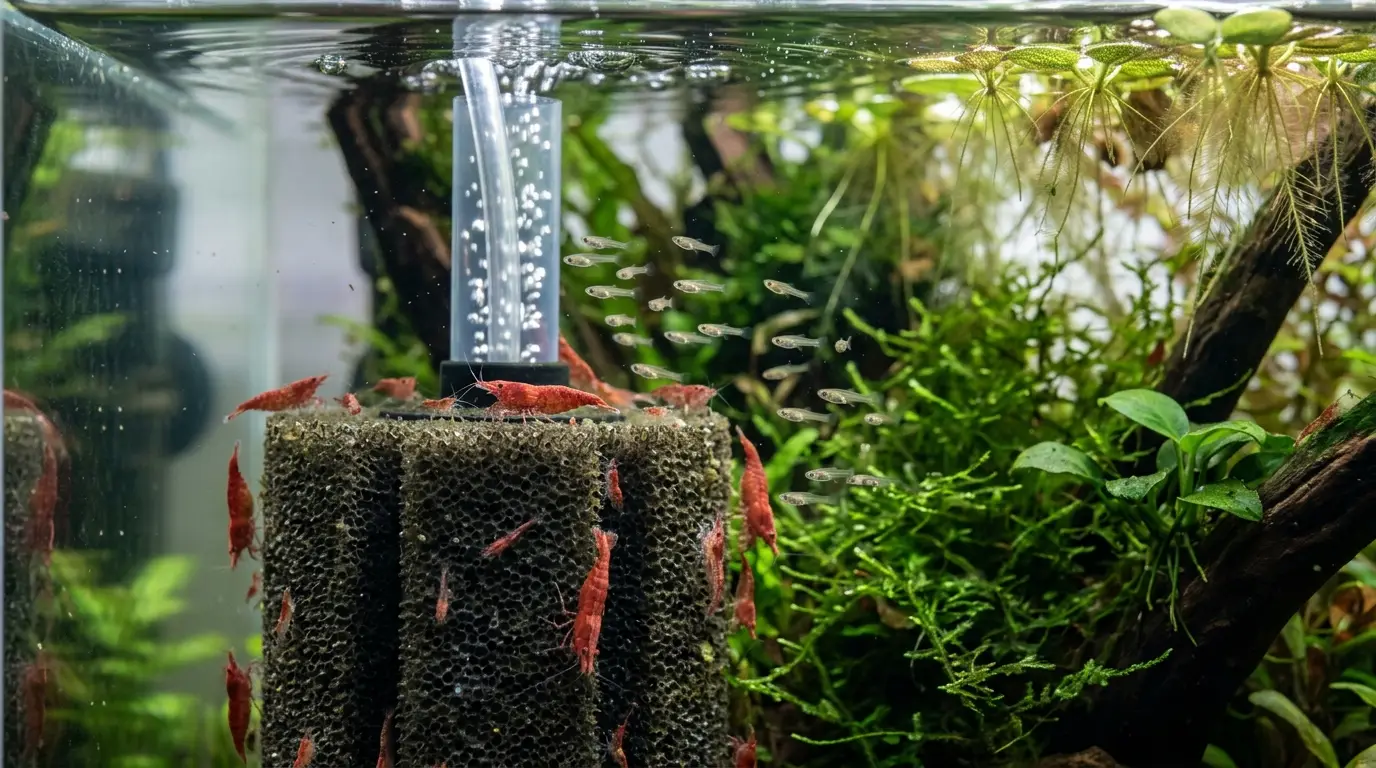
- Sponge filter: Safe for shrimp, snails, and fry right out of the box.
- HOB filter: Needs a sponge pre-filter on the intake to protect tiny tank mates.
Aesthetics and space
- Sponge filter: Visible in the tank and may not suit display aquascapes.
- HOB filter: Hangs on the rim, keeps more space inside the tank open.
Real-world clarity
- Sponge filter: Good clarity in balanced tanks. May leave fines suspended without a polishing pad.
- HOB filter: Crisper water with high-quality pads and steady flow. Great for planted displays.
My take after dozens of setups: I use sponge filters in shrimp and fry tanks or as backup bio in every tank. I use HOB filters when I want clear, polished water for display or heavier stock. For this Sponge Filter vs Hang On Back Filter Comparison, that split has held true in real homes and fish rooms.
Which One Should You Choose? Scenarios and Tank Types
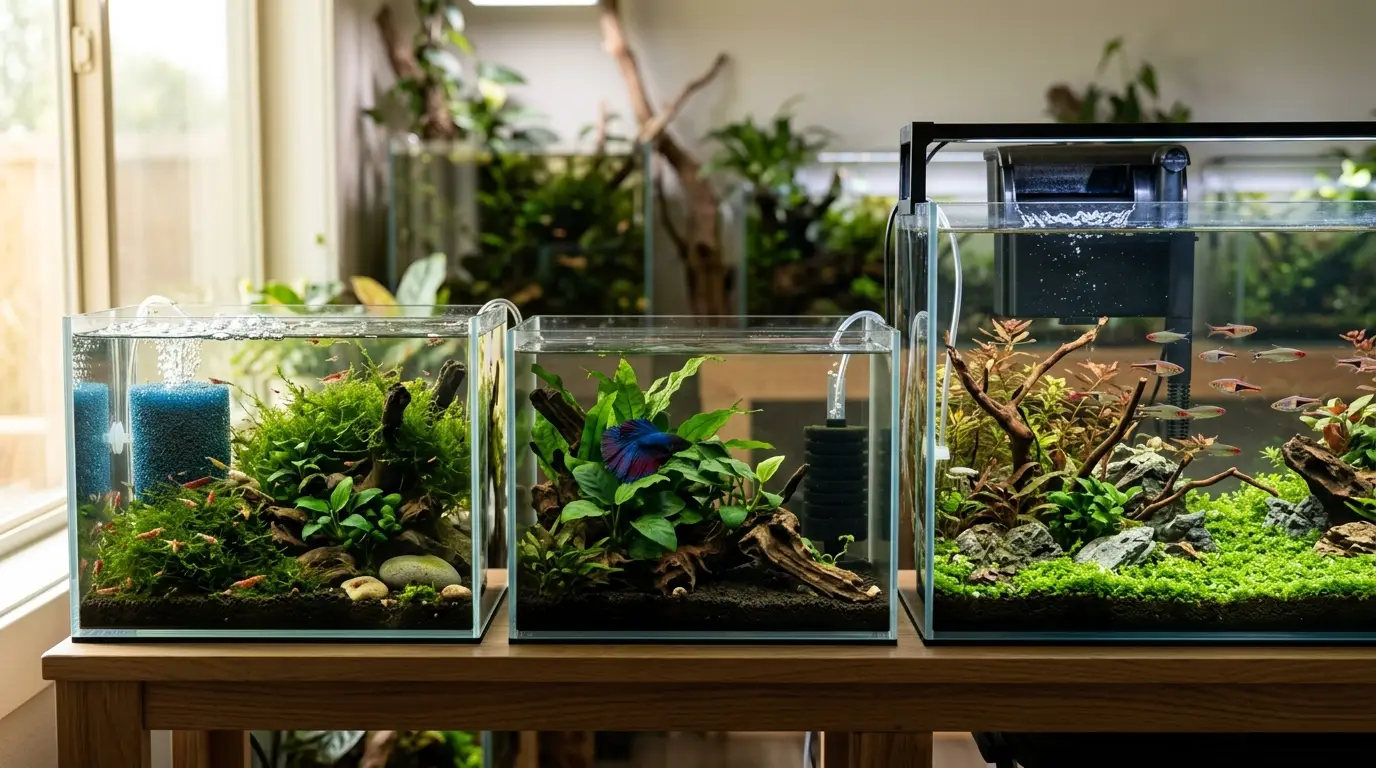
Use this practical guide to match your goal to the right tool. This section is the heart of the Sponge Filter vs Hang On Back Filter Comparison because every tank story is different.
Choose a sponge filter if
- You keep shrimp, fry, bettas, or slow swimmers.
- You run a quarantine or hospital tank with meds.
- You want a cheap, reliable biofilter that doubles as a seeding station.
- You value top-tier aeration and gentle flow.
Choose a HOB filter if
- You want crystal-clear display water with fine polishing.
- You keep messy eaters or have a higher bio-load.
- You want flexible media for carbon or resins.
- You prefer maintenance outside the tank.
Great combo
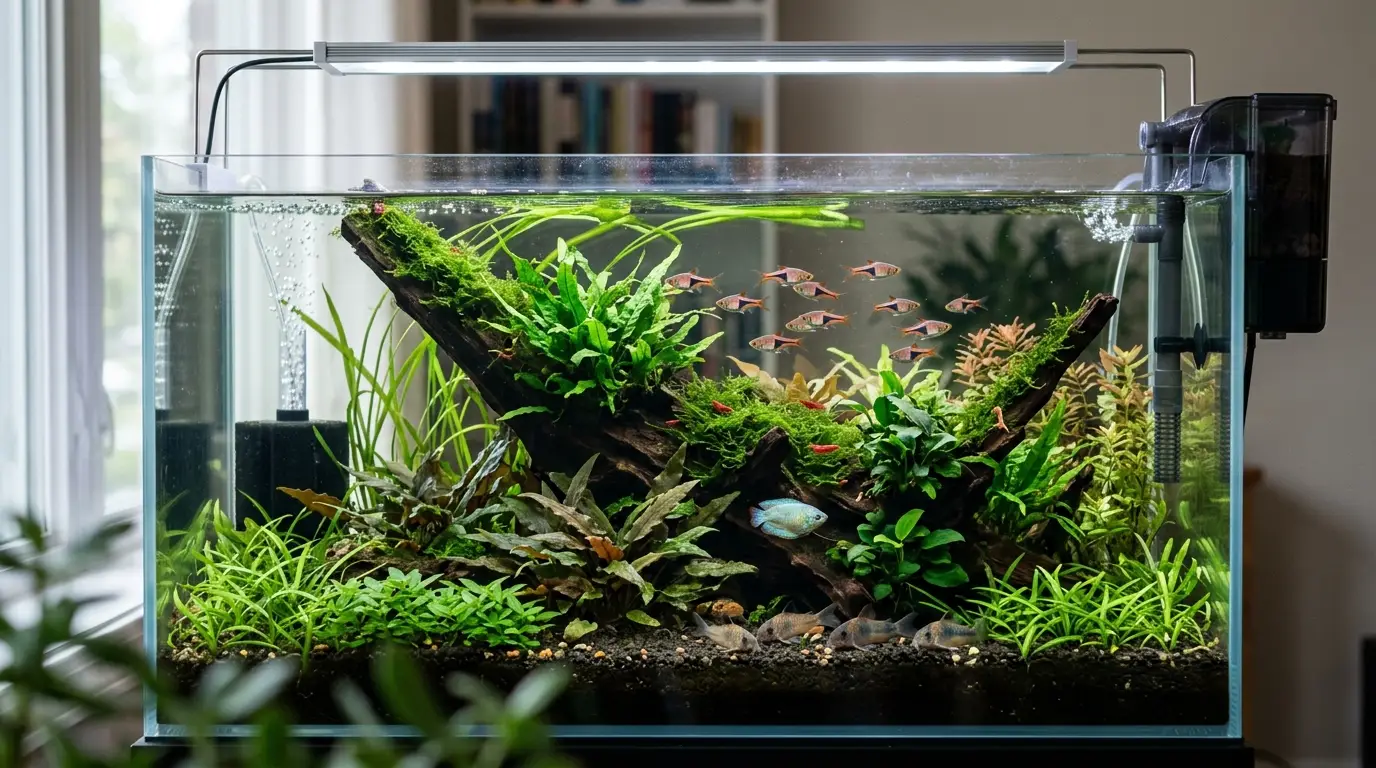
- Run both on community tanks. The sponge gives robust bio and aeration. The HOB clears fines and runs optional carbon after treatments. It also gives redundancy in case one stops.
Personal example
- My 10-gallon shrimp tank thrives on a single large sponge. My 29-gallon community looks extra clear with a HOB plus a small corner sponge. On a 55-gallon cichlid setup, a beefy HOB with reusable pads kept the water bright, while a sponge kept bio stable during filter cleanings.
Setup and Maintenance Tips for Both Filters
Sizing and flow
- Aim for 4 to 6 times turnover per hour for most community tanks.
- Go 6 to 10 times for heavy stock or goldfish.
- For sponge filters, pick a size up and use a dual-sponge in tanks over 20 gallons.
Smart media layout for HOB filters
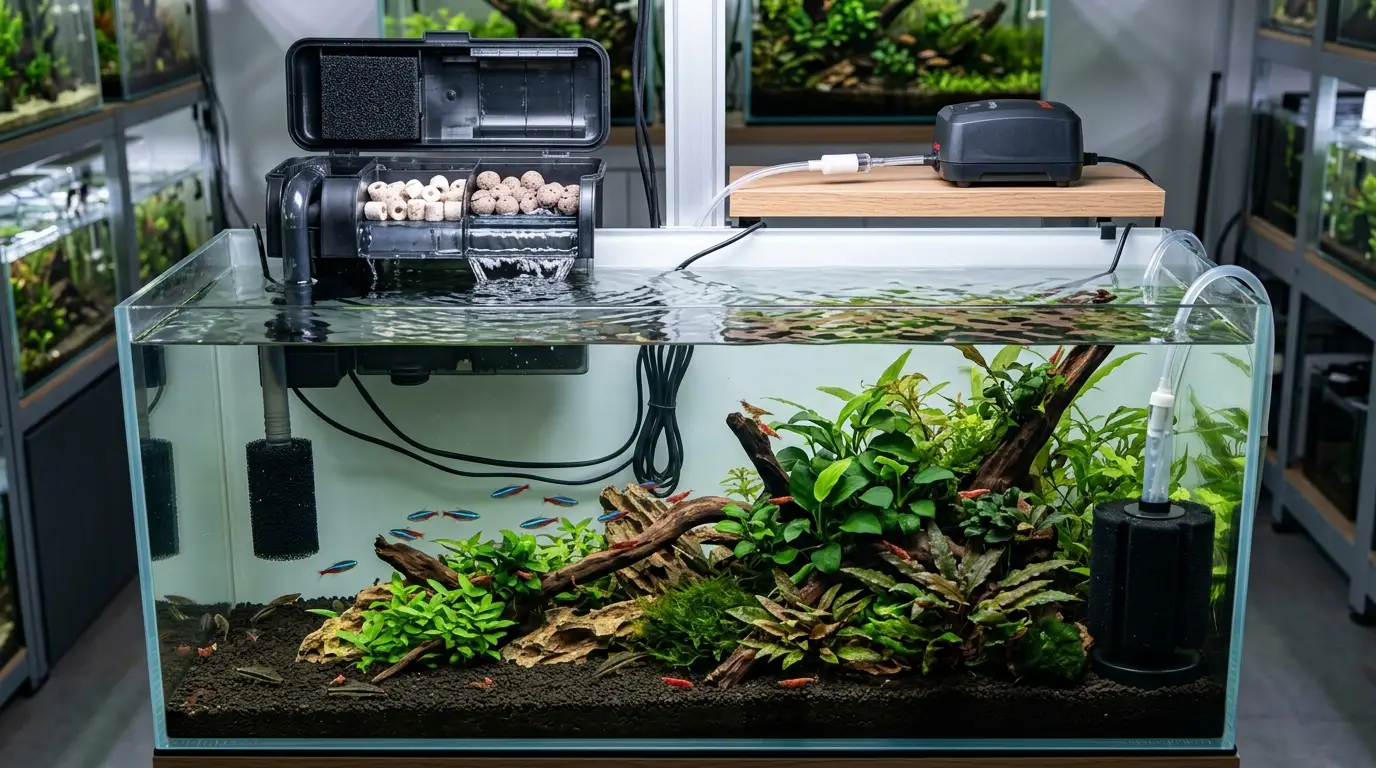
- Skip disposable cartridges. Use a coarse sponge pad for mechanical first.
- Add bio-media like ceramic rings or porous blocks.
- Use carbon only after meds or to remove odors or tannins.
Air pump and sponge best practices
- Use a check valve to stop back-siphon.
- Place the pump above water line or on a shelf pad to cut noise.
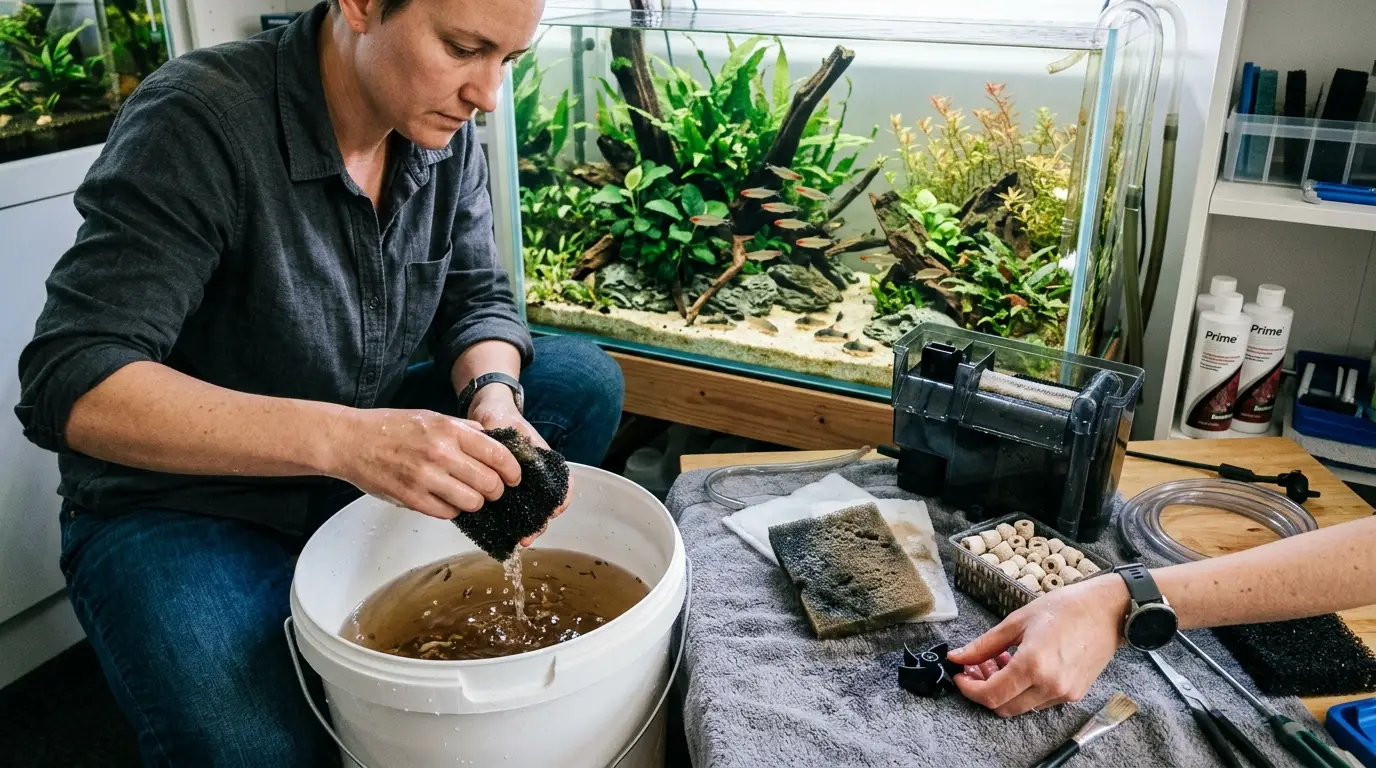
- Clean sponge media in old tank water. Never under tap water to protect bacteria.
HOB maintenance musts
- Keep the tank water level high to reduce waterfall noise.
- Clean the impeller and shaft every month or two.
- Add a sponge pre-filter to the intake for shrimp and fry safety.
- Baffle the outflow with a piece of sponge if flow is too strong for bettas or plants.
Common mistakes to avoid
- Over-cleaning and killing bio-bacteria with hot or tap water.
- Letting a HOB run low on water and lose prime.
- Relying on carbon pads all the time which adds cost without need.
- Ignoring air pump noise that signals a hard surface contact or clogged stone.
From long use, my biggest lesson is this: stable bio-media beats fancy cartridges. That truth drives every part of this Sponge Filter vs Hang On Back Filter Comparison and will save you time and money.
Frequently Asked Questions of Sponge Filter vs Hang On Back Filter Comparison
Can I run a sponge filter and a HOB together?
Yes, and it works very well. The sponge adds bio and air, while the HOB polishes the water and adds flow.
Do sponge filters keep water clear?
They keep water healthy and fairly clear in balanced tanks. For very fine polishing, pair a sponge with a HOB or add a fine pad to your setup.
Are HOB filters safe for shrimp and fry?
Yes, with a sponge pre-filter on the intake. Without it, tiny creatures can get pulled in.
How often should I clean each filter?
Rinse sponge filters every 2 to 4 weeks in tank water. Rinse HOB media and clean the impeller every 3 to 6 weeks, based on debris.
Which is better for planted tanks?
Both work. Many planted tanks use a gentle HOB with a baffle or a sponge for soft flow and strong CO2 retention.
Do I need chemical media with a HOB?
Not always. Use it after medications, to remove odors, or for specific issues like tannins or phosphates.
What size HOB for a 20-gallon tank?
Look for a model rated 100 to 200 gallons per hour. That gives about 5 to 10 times turnover per hour.

Conclusion
Both filters are winners, but they shine in different jobs. Sponge filters give safe, steady bio and air for delicate life, while HOB filters deliver clear, polished water and flexible media options. The smart move from this Sponge Filter vs Hang On Back Filter Comparison is to match the filter to your fish, your plants, and your goals.
Pick one and set it up today, or run both for the best of each. If this helped, subscribe for more practical guides, ask a question in the comments, or share your own setup so others can learn from your experience.