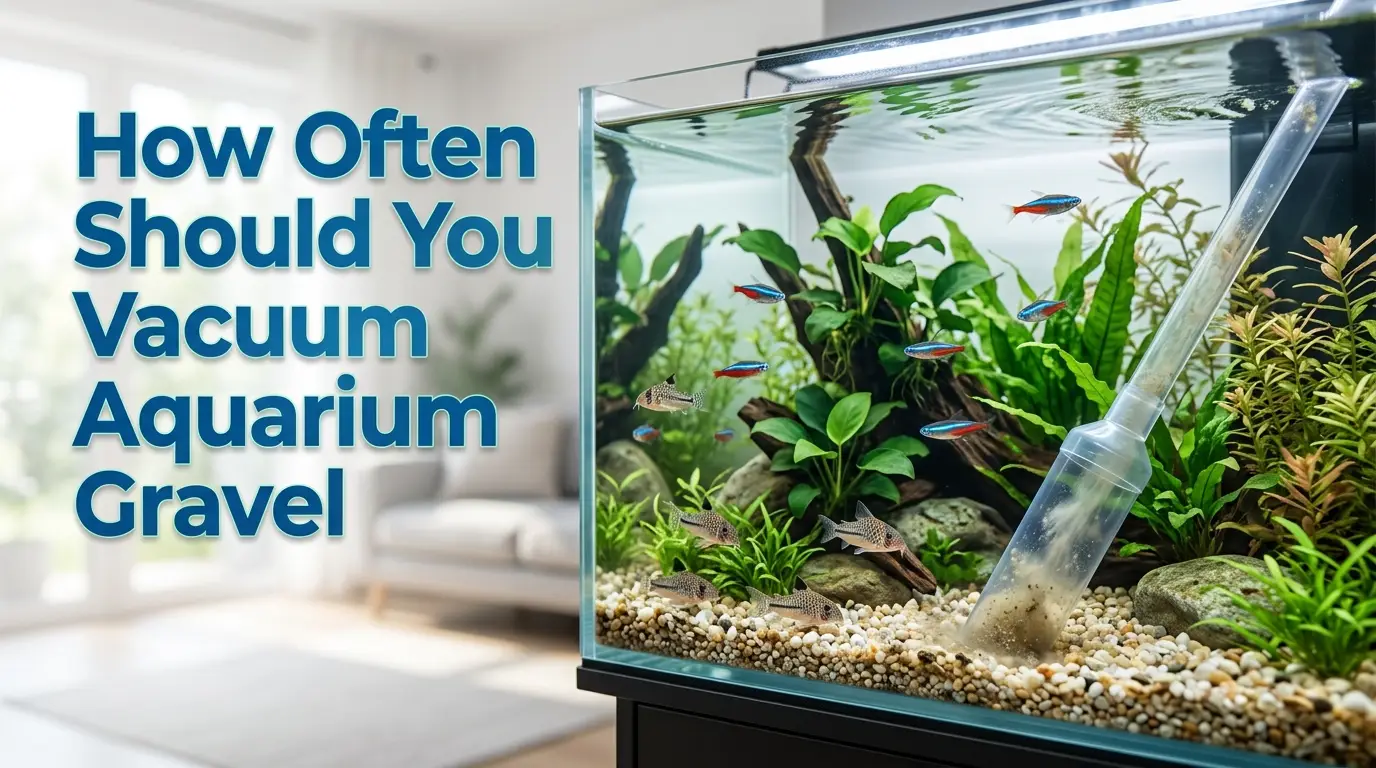
Vacuum aquarium gravel every 1–2 weeks, adjusted for tank size and bioload.
If you want clear water, healthy fish, and a stable cycle, you need a plan. In this guide, I break down How Often Should You Vacuum Aquarium Gravel with simple rules, real examples, and pro tips from years of caring for community, planted, and high-bioload tanks. You will learn the why, when, and how, so your routine fits your tank, not the other way around.
Why Gravel Vacuuming Matters
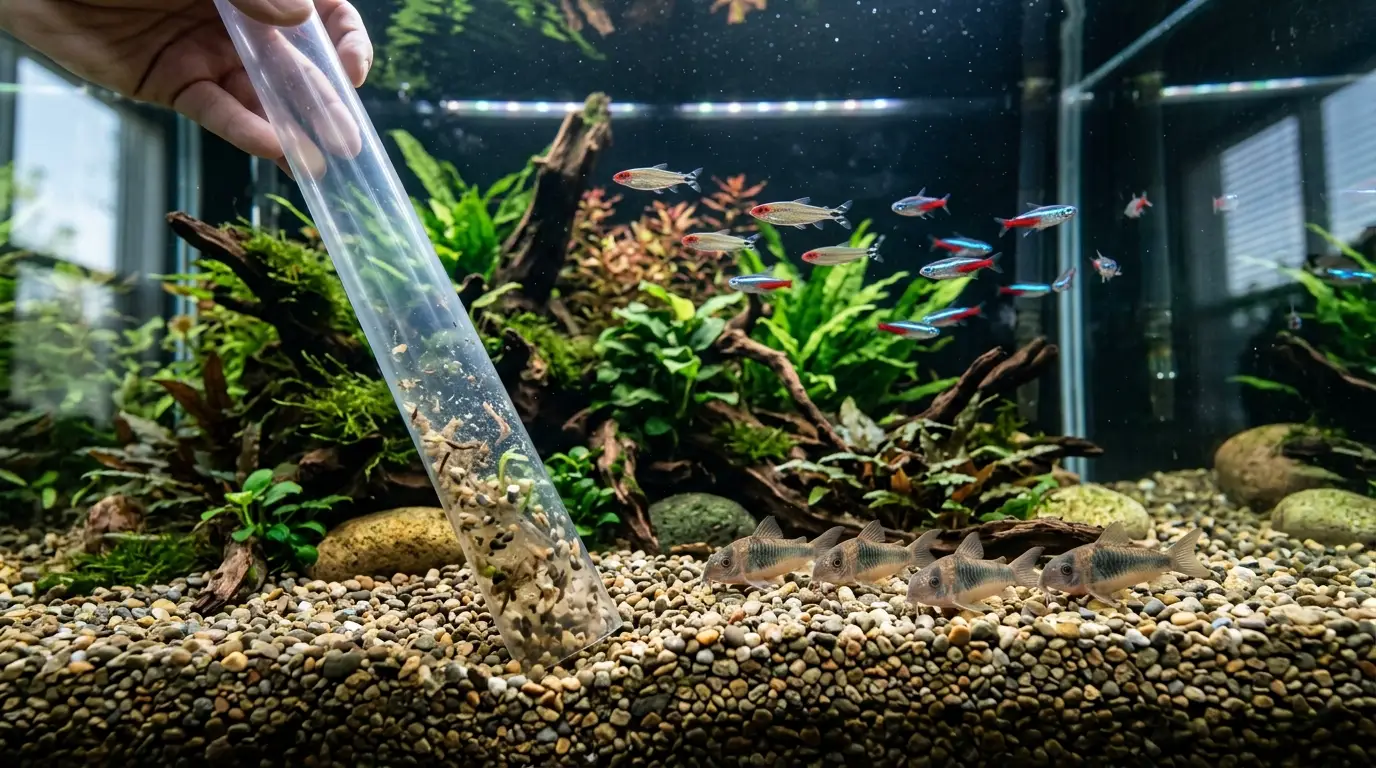
Detritus piles up fast. Leftover food, fish waste, and shed plant bits sink into the gravel. Bacteria break it down and make nitrate and phosphate. These rise and stress fish.
A gravel vacuum lifts debris before it rots. It helps the filter, not fights it. It keeps oxygen in the bed and stops foul gas pockets. Your water stays clear, and your fish act calm and feed well.
From my tanks, skipping vacuums raised nitrate from 10 ppm to 40 ppm in one week. Algae bloomed. A steady gravel clean brought it back down and kept fish active. Simple habit. Big results.
Common worry: Will I hurt the cycle? No. Most biofilter bacteria live in the filter media and on surfaces. Light, regular gravel cleaning supports the cycle by removing excess waste, not by stripping it.
How Often Should You Vacuum Aquarium Gravel: The Core Schedule
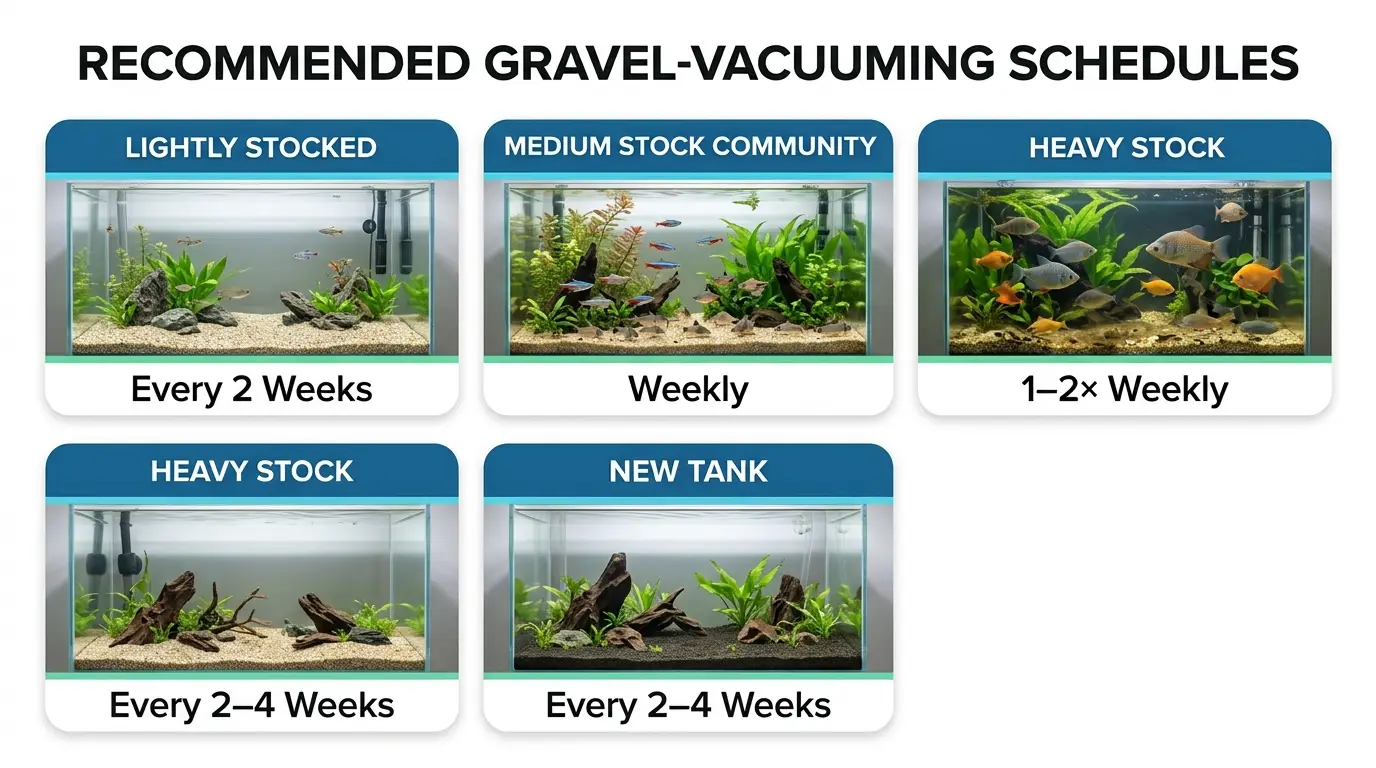
Use this as your base, then tweak it.
- Lightly stocked tanks: Vacuum every 2 weeks with a 20–30% water change.
- Medium stock community tanks: Vacuum weekly with a 25–35% water change.
- Heavy stock or messy eaters (goldfish, cichlids): Vacuum 1–2 times per week with a 30–50% change.
- New tanks under 3 months: Vacuum lightly every week to avoid swings.
- Planted tanks with rooted carpets: Vacuum every 2–4 weeks, focus on open areas.
I like a zone method. Split the gravel into four sections. Clean one or two zones per week. You protect plant roots and still remove gunk. Over a month, you cover the whole bed.
How Often Should You Vacuum Aquarium Gravel if you feed often? Increase frequency. More food means more waste. If you feed lightly, you can ease off.
How Often Should You Vacuum Aquarium Gravel in nano tanks? Small tanks swing fast. I do a quick, gentle vacuum weekly. It keeps things stable.
Key Factors That Change Your Schedule
Many things shift how often you clean. Match the plan to your tank.
- Bioload. More fish or big waste producers need more vacuums.
- Feeding. Heavy feeding drives fast debris build-up.
- Substrate type. Coarse gravel traps gunk; fine sand keeps it on top.
- Depth. Deep beds collect more waste in lower layers.
- Plants. Dense roots stabilize the bed. Vacuum around, not through, roots.
- Filtration. Weak filters leave more in the gravel.
- Tank age. New tanks need gentle, steady care. Mature tanks are forgiving.
- Species. Loaches, plecos, and corys stir debris. Goldfish and cichlids are messy.
- Undergravel filters. Gravel is the filter. Siphon lightly and often.
How Often Should You Vacuum Aquarium Gravel depends on these signals. Let the tank tell you what it needs. Then set a simple routine.
How To Vacuum Gravel The Right Way
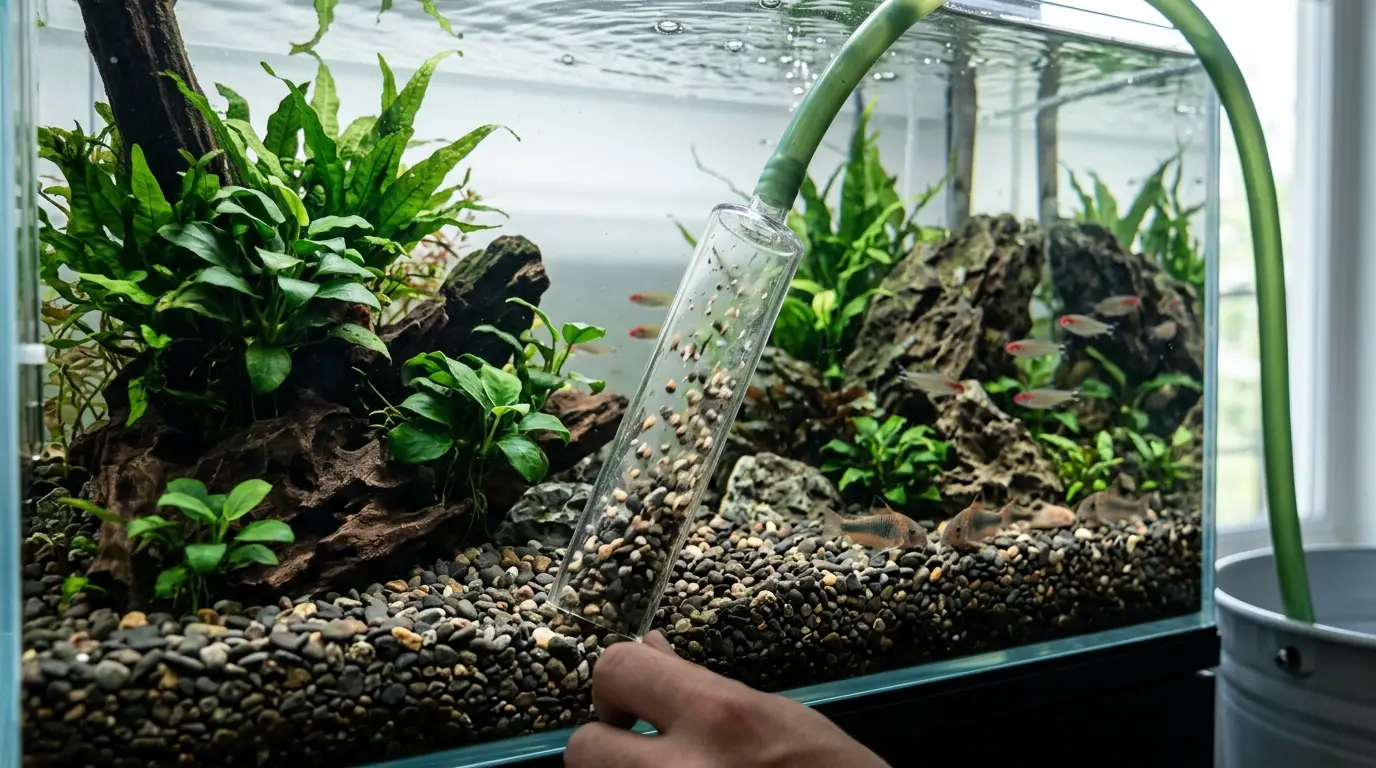
Get the right tools:
- A gravel siphon or python-style vacuum sized for your tank.
- A bucket or drain line.
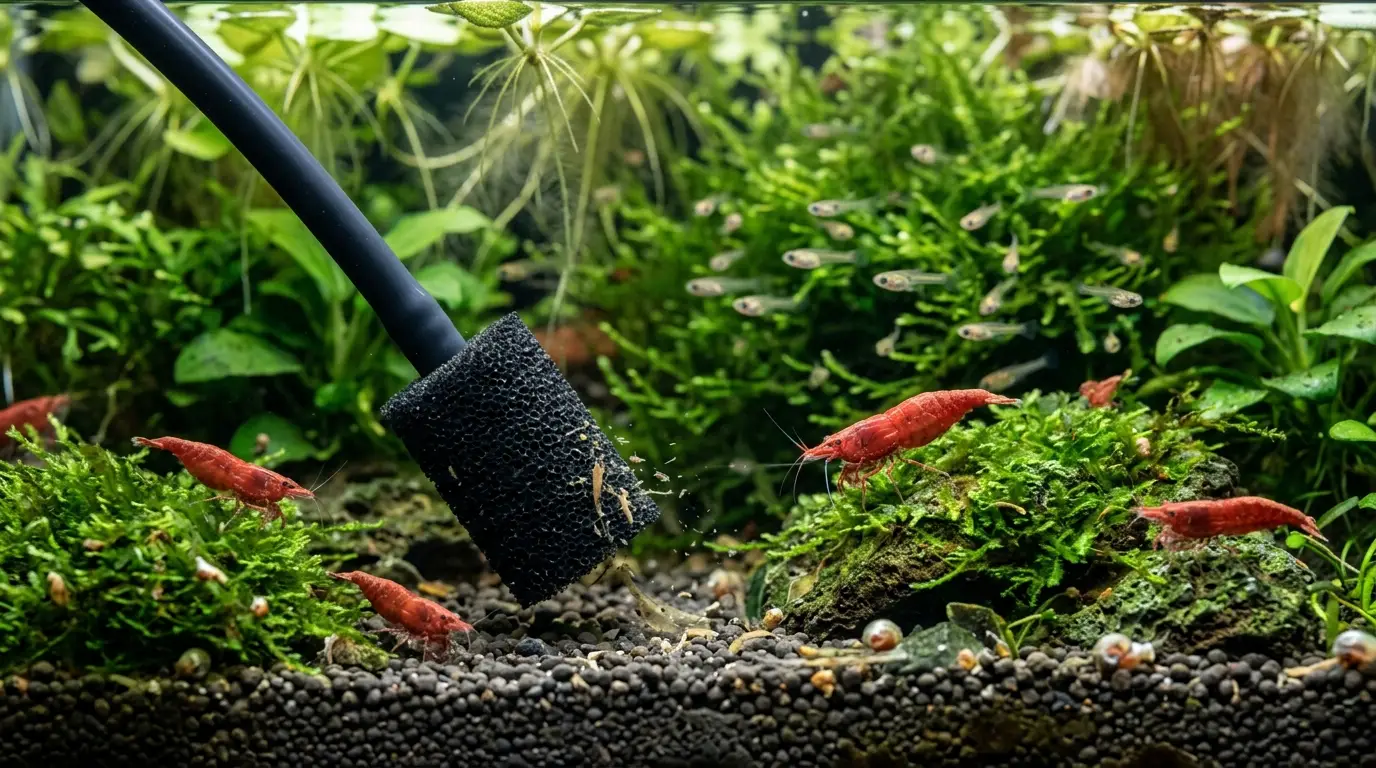
- A pre-separator if you have shrimp or fry.
Follow these steps:
- Start a siphon and lower the tube into the gravel.
- Push down. Lift up. Let the gravel tumble. Waste rises and exits.
- Move in small grids. Do not rush. Keep water changes within safe limits.
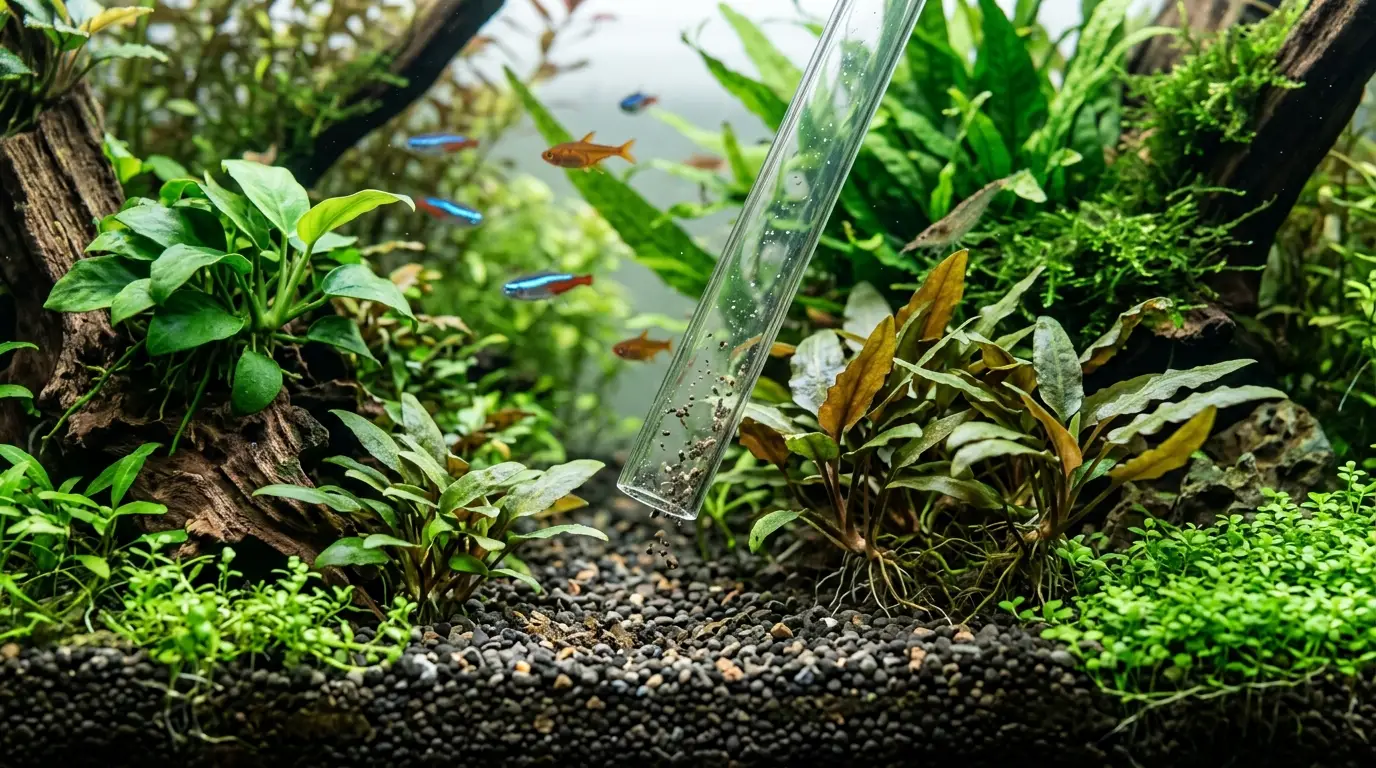
- For planted areas, hover the tube just above the surface. Skim debris.
- Pause if fish crowd the tube. Let them swim off, then resume.
- Refill with dechlorinated water at matched temperature.
Avoid these mistakes:
- Overcleaning the whole bed at once in a new tank.
- Stirring deep beds fast, which can release foul gas.
- Ignoring plant roots or pulling them up.
- Skipping dechlorinator on refill.
How Often Should You Vacuum Aquarium Gravel with rooted plants? Gently. Focus on paths and open zones. Skim, do not plunge near root crowns.
Personal tip: In my 75-gallon planted tank, I vacuum open areas weekly, and root zones every third week. Algae stayed low, and my nitrates held between 10–20 ppm.
Signs You Should Vacuum Now
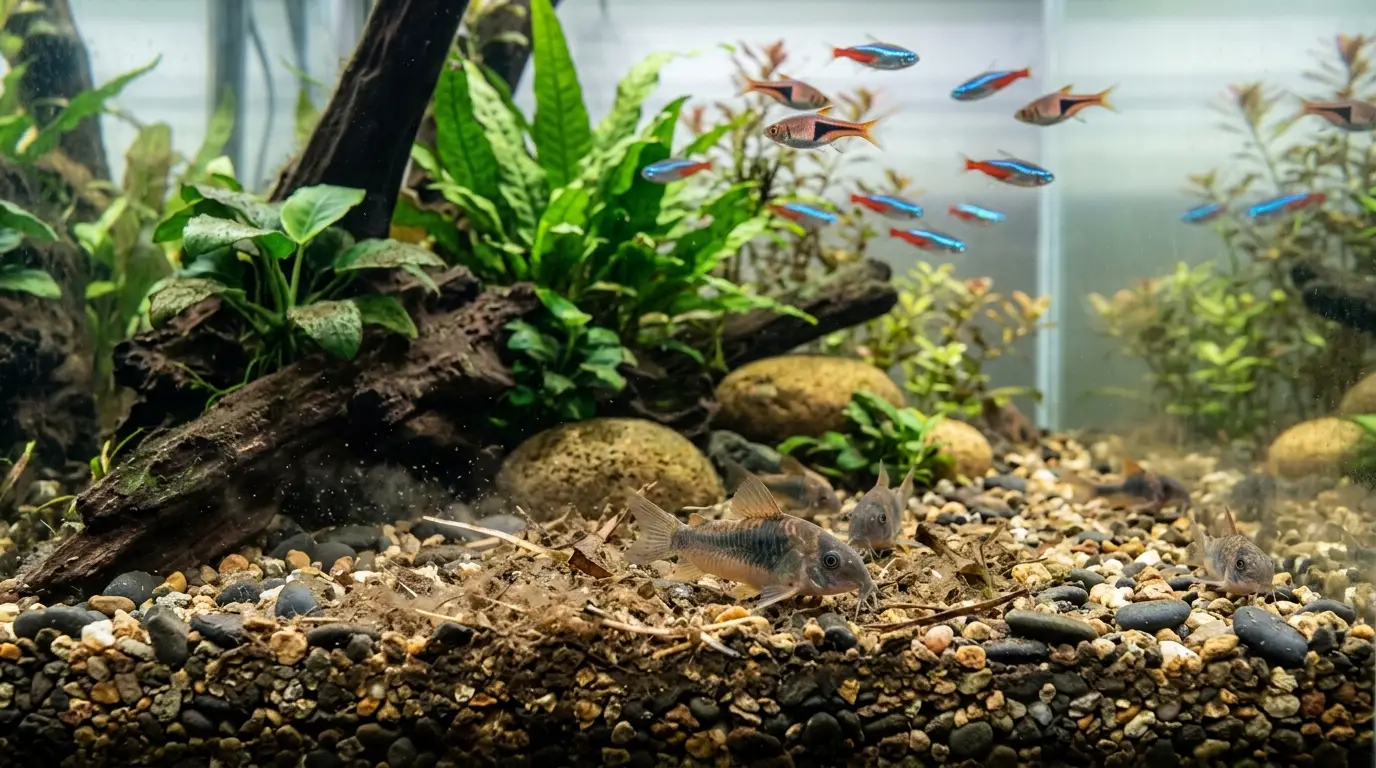
Watch for these red flags:
- Rising nitrate or phosphate despite water changes.
- Cloudy water or fine debris floating after feeding.
- Brown dust on leaves and decor that returns fast.
- Musty or sulfur-like smell when you stir the bed.
- Fish gulping near the bottom or picking at waste.
- Algae blooms, especially diatoms or green dust.
If two or more show up, increase frequency. How Often Should You Vacuum Aquarium Gravel then? Move to weekly until readings and water clarity improve.
Target readings:
- Nitrate under 20–40 ppm for most freshwater fish.
- Phosphate around 0.1–0.5 ppm if you fight algae.
Special Cases And Exceptions
Planted aquariums:
- Rooted, heavy plant beds work as living filters. Skim the surface every 2–4 weeks.
- Carpets trap fine debris. Use a turkey baster to puff it up, then siphon.
- Dose and CO2 plans stay stable when the substrate stays undisturbed.
Sand substrates:
- Waste stays on top. Hover the vacuum and skim weekly.
- Do not plunge the tube. You will pull sand and bury fish.
- Stir small areas with your fingers to release gas pockets, then siphon.
Shrimp and fry tanks:
- Use a pre-filter or shrimp net over the tube.
- Vacuum gently every 1–2 weeks. Focus on the front where food lands.
Goldfish and large cichlids:
- They are messy. Plan on 2 short vacuums per week or one deep clean.
- Use bigger hoses to move debris fast.
Undergravel filters:
- The gravel is the filter. Vacuum lightly each week to keep flow paths clear.
How Often Should You Vacuum Aquarium Gravel in a marine tank?
- For fish-only saltwater tanks, vacuum 2–4 weeks, based on bioload.
- For reef tanks with sand and microfauna, skim lightly and let the clean-up crew help.
How Often Should You Vacuum Aquarium Gravel in low-tech, deep-bed setups?
- Some run on natural processes. Vacuum only the top and open paths every few weeks.
- Test often. Watch for slow nitrate creep and adjust.
Sample Maintenance Calendars
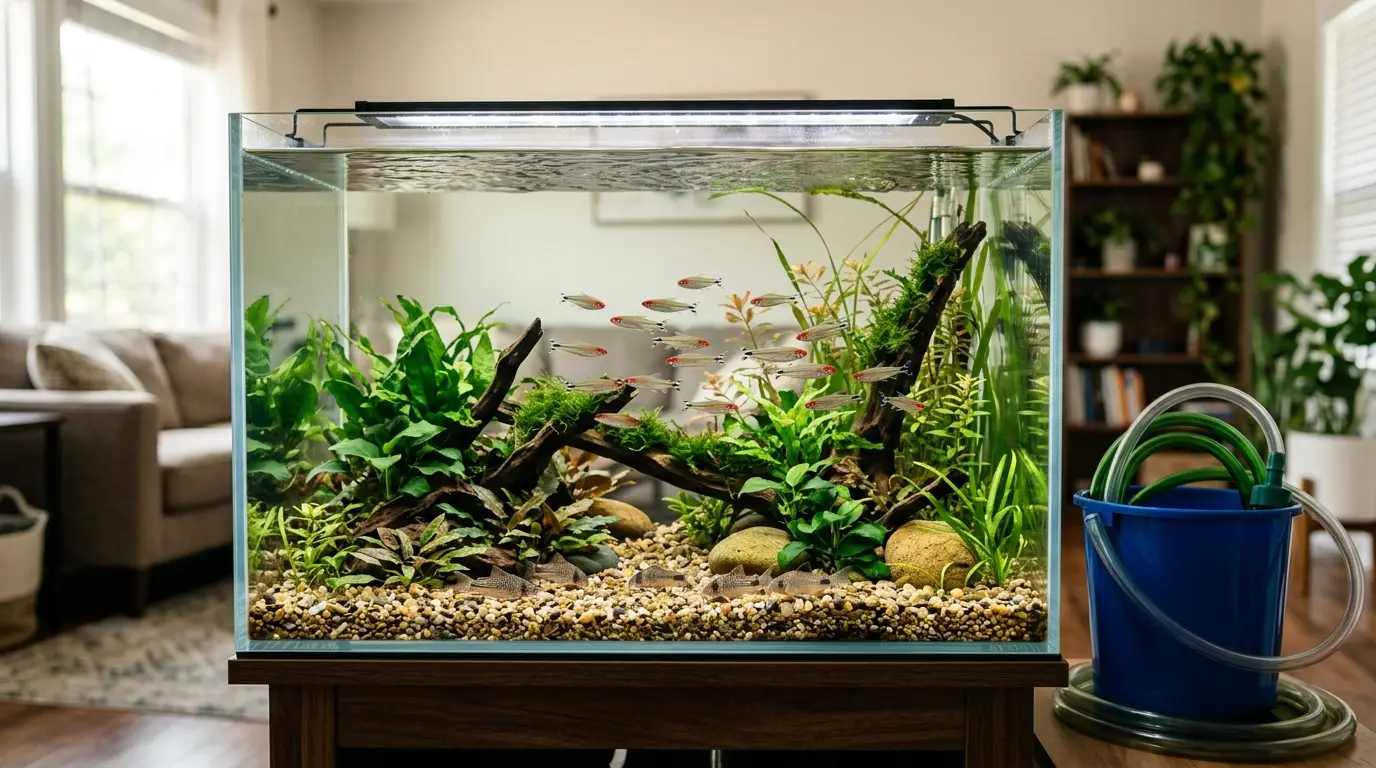
Pick a simple plan and stick to it.
Community tank, moderate stock:
- Weekly: Vacuum half the open gravel. Change 25–30% water.
- Week 2: Vacuum the other half. Prune plants. Clean intake sponge.
- Monthly: Deeper clean in traffic zones. Rinse filter media in tank water.
Goldfish or messy cichlids:
- Midweek: Quick 10-minute skim in feeding zones. Change 20–25%.
- Weekend: Full pass over all open gravel. Change 30–40%.
Nano planted tank:
- Weekly: Skim surface only. Change 15–25%.
- Biweekly: Spot clean detritus traps behind rocks and wood.
Travel or busy weeks:
- Do a fast skim. Feed less. Resume normal pace next week.
How Often Should You Vacuum Aquarium Gravel in these schedules? Use the weekly touch as the anchor. Add a midweek skim if waste builds fast.
Tools And Gear That Help
Good tools save time and stress.
- Choose a vacuum with the right tube size. Small tubes for nanos. Large tubes for big tanks.
- Long hoses let you drain to a sink. Less bucket lugging.
- Valve clamps help control flow in fine sand.
- Pre-filter sponges protect shrimp and fry.
- A turkey baster lifts debris from tight spots.
- Test kits guide your schedule with data.
How Often Should You Vacuum Aquarium Gravel if you automate water changes? You can do smaller, more frequent skims. Little and often beats rare and deep.
Troubleshooting Common Problems
Gravel keeps spitting back debris:
- Slow the flow. Pause and let gravel tumble longer.
- Lift and settle the tube in small pulses.
Sand clogs the tube:
- Hover above the sand. Use a smaller opening.
- Start the siphon, then pinch the hose to lower flow.
Fish panic during cleaning:
- Move slowly. Keep the tube clear of fish paths.
- Try dim lights and clean after feeding when fish are calm.
Nitrates stay high:
- Increase vacuum frequency and water change volume.
- Feed less. Rinse frozen foods. Clean filter intake sponges.
Unsure How Often Should You Vacuum Aquarium Gravel after a deep clean?
- Test water two days later. If nitrate creeps fast, add a midweek skim.
Frequently Asked Questions of How Often Should You Vacuum Aquarium Gravel
How often should you vacuum aquarium gravel in a planted tank?
Every 2–4 weeks is typical. Skim open areas weekly and avoid pulling up roots.
Can vacuuming gravel remove beneficial bacteria?
Most bacteria live in your filter and on hard surfaces. Gentle, regular vacuuming will not harm the cycle.
Should I vacuum gravel during every water change?
For medium to heavy stock, yes. For light stock or dense plants, alternate weeks or use spot cleans.
How deep should I push the gravel vacuum?
In coarse gravel, sink the tube 1–2 inches to tumble the bed. In fine substrates or near plants, skim the surface.
Is it okay to vacuum right after feeding?
Wait at least 30–60 minutes. Let fish eat first, then remove leftovers and debris.
What if I see bubbles or smell sulfur when stirring the gravel?
Stop, do a partial change, and increase vacuum frequency. You likely have anaerobic pockets that need slow, steady care.
How Often Should You Vacuum Aquarium Gravel in a goldfish tank?
At least once per week, often twice. Goldfish produce large waste loads that collect fast.
Conclusion
A clean gravel bed keeps your fish healthy and your water clear. Use a simple plan, watch your test results, and tune the routine to your tank. How Often Should You Vacuum Aquarium Gravel comes down to stock level, feeding, and what you see day to day.
Start this week. Set a weekly reminder. Do a light zone clean, then adjust based on nitrate and debris. If this helped, subscribe for more hands-on tank care tips or drop your questions in the comments.