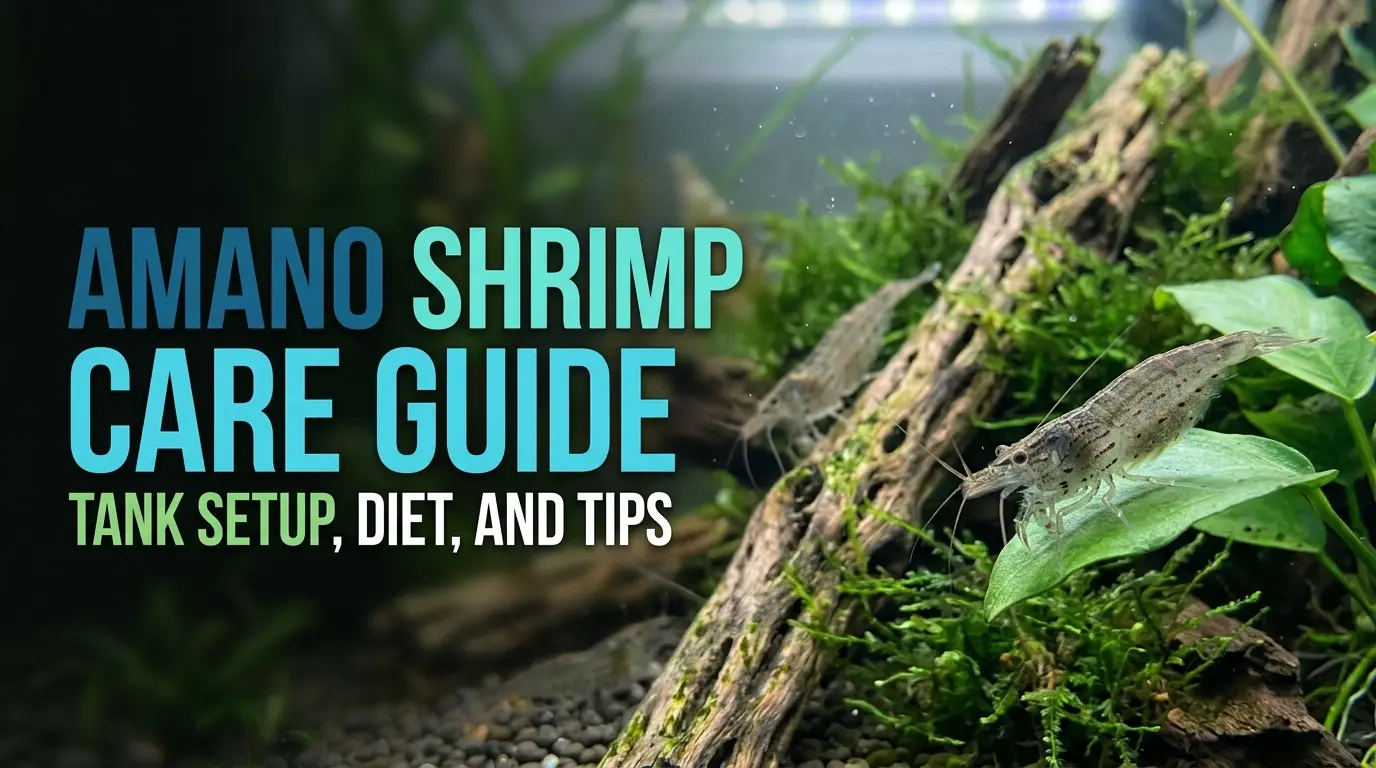
Amano shrimp thrive with stable water, algae-rich diet, and stress-free tanks.
If you want hardy cleaners that power through algae and bring life to planted tanks, this amano shrimp care guide is for you. I have kept Caridina multidentata for years, and I have tested what works in real home tanks. Below, you will find clear steps, proven tips, and honest warnings that will help you keep your shrimp healthy and active from day one.
What Makes Amano Shrimp Special

Amano shrimp, or Caridina multidentata, are famous algae eaters. They are busy, social, and safe for plants. They grow to about two inches and can live three to five years with good care.
This amano shrimp care guide starts with their role in a tank. They scour glass, leaves, and wood for biofilm and soft algae. They will not fix a dirty tank alone, but they shine as part of a balanced clean-up crew.
They are peaceful and do best in groups of six or more. In my tanks, a group spread across a 20-gallon planted setup keeps film algae in check. They do best with calm fish and many hiding spots.
Ideal Tank Setup and Water Parameters

A stable, mature tank is the base of this amano shrimp care guide. Start with at least 10 gallons so water stays steady. Use a lid, since shrimp can climb out.
- Filtration: Use a sponge filter or a hang-on-back with a pre-filter sponge. This protects tiny legs and keeps biofilm in the tank.
- Substrate and plants: Fine sand or small gravel works well. Add stem plants, moss, and wood. Shrimp graze on the biofilm that grows there.
- Light and flow: Moderate light and gentle flow let algae and biofilm form. Aim flow across the surface to boost oxygen.
Water parameters that work well:
- Temperature: 68 to 78°F, with 72 to 75°F ideal for planted tanks
- pH: 6.5 to 7.5
- GH: 4 to 8 dGH
- KH: 1 to 6 dKH
- Ammonia and nitrite: 0 ppm
- Nitrate: Under 20 ppm
- TDS: 120 to 250 ppm
Always cycle the tank before adding shrimp. I drip acclimate for at least one hour to avoid shock. Treat tap water with a conditioner that binds chlorine and chloramine.
Diet and Feeding Strategy

Food is simple in this amano shrimp care guide. Let them graze on algae and biofilm for most meals. Top up with small, safe foods two to three times a week.
Good choices include:
- Algae wafers and shrimp pellets in tiny amounts
- Blanched zucchini, spinach, or green beans
- Botanicals like Indian almond leaves for biofilm
- Occasional protein, such as high-quality micro pellets
Feed what they can finish in one to two hours. Remove leftovers to keep water clean. For strong molts, keep GH in range, and do regular water changes. I avoid dosing extra iodine, since stable minerals are enough in most home tanks.
Tank Mates and Community Planning
This amano shrimp care guide supports calm, shrimp-safe fish. Pick small, peaceful species. Build the scape with hides so shrimp can molt in peace.
Great tank mates:
- Small tetras, rasboras, and celestial pearl danios
- Otocinclus and corydoras
- Nerite and rabbit snails
- Other dwarf shrimp of similar size, with care for crossbreeding rules
Risky or poor matches:
- Large or nippy fish like cichlids and barbs
- Bettas and gouramis can work, but watch for hunting
- Loaches and crayfish that may grab shrimp
- Goldfish, which uproot plants and eat small tank mates
Add lots of moss, wood, and rock caves. In my tanks, extra cover drops stress and boosts feeding time.
Molting, Health, and Troubleshooting
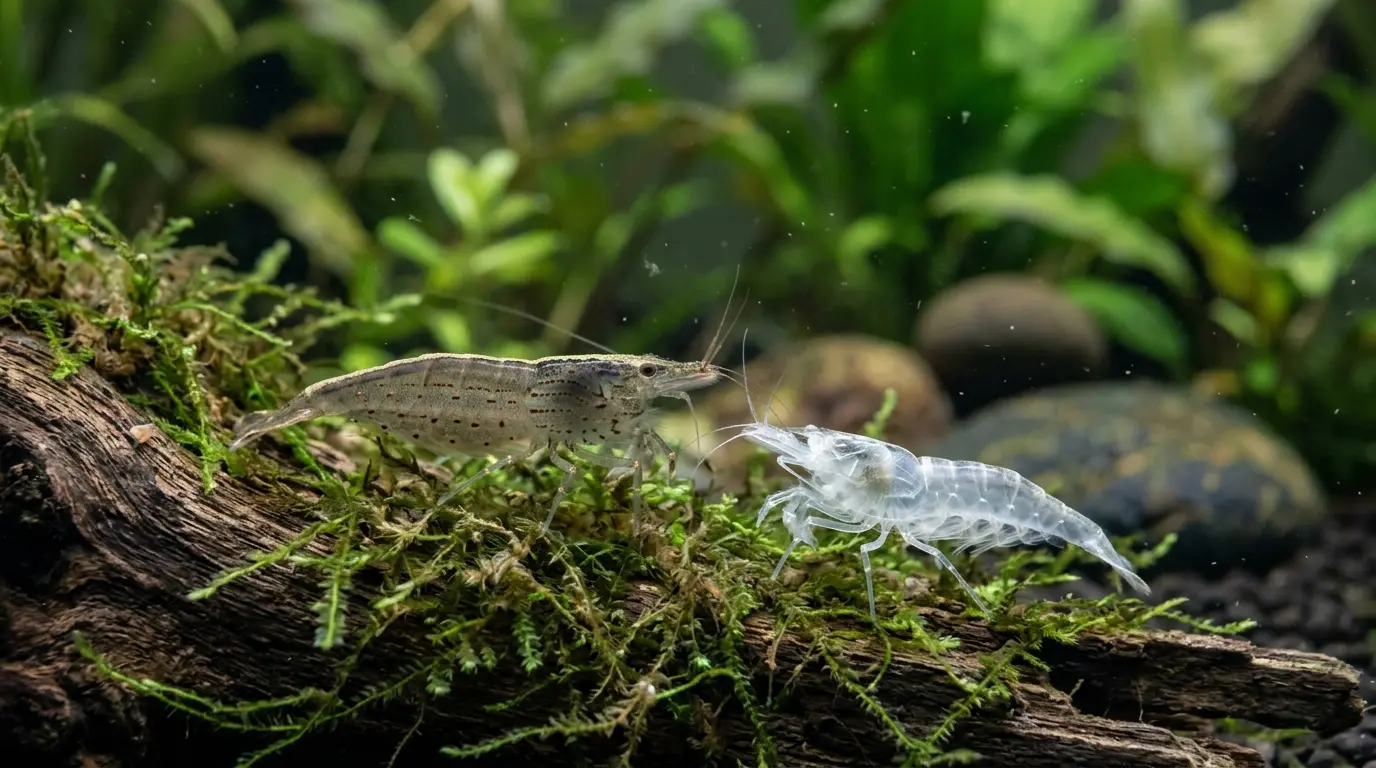
A healthy molt cycle is key in any amano shrimp care guide. Before a molt, shrimp hide more and eat less. After they shed, shells look ghost-like. Leave the shell in the tank, since shrimp will eat it for minerals.
Watch for these issues:
- Failed molts: Often tied to low minerals or fast parameter swings. Check GH and keep changes small.
- Lethargy or sudden deaths: Test ammonia, nitrite, and copper. Many meds and algaecides have copper and are toxic to shrimp.
- Bacterial infections: You may see pinkish bodies or odd swimming. Quarantine if you can, and avoid harsh meds.
Best practices I use:
- Quarantine new plants and fish
- Use shrimp-safe fertilizers and avoid copper
- Keep a steady routine with small, regular changes, not big swings
Breeding Realities
Here is the honest part of this amano shrimp care guide. Amano shrimp are hard to breed in freshwater. Females release larvae that must go to brackish or marine water to survive.
Advanced keepers use this path:
- Let a berried female release larvae in the tank
- Move larvae to brackish water near 15 to 25 ppt
- Feed live micro foods like phytoplankton
- After 30 to 45 days, when they change into mini shrimp, move them back to fresh water
This takes space, gear, and time. Most hobbyists buy juveniles from stores or farms instead. Ask for captive-bred when you can. It supports better collection practices.
Maintenance Routine and Checklist
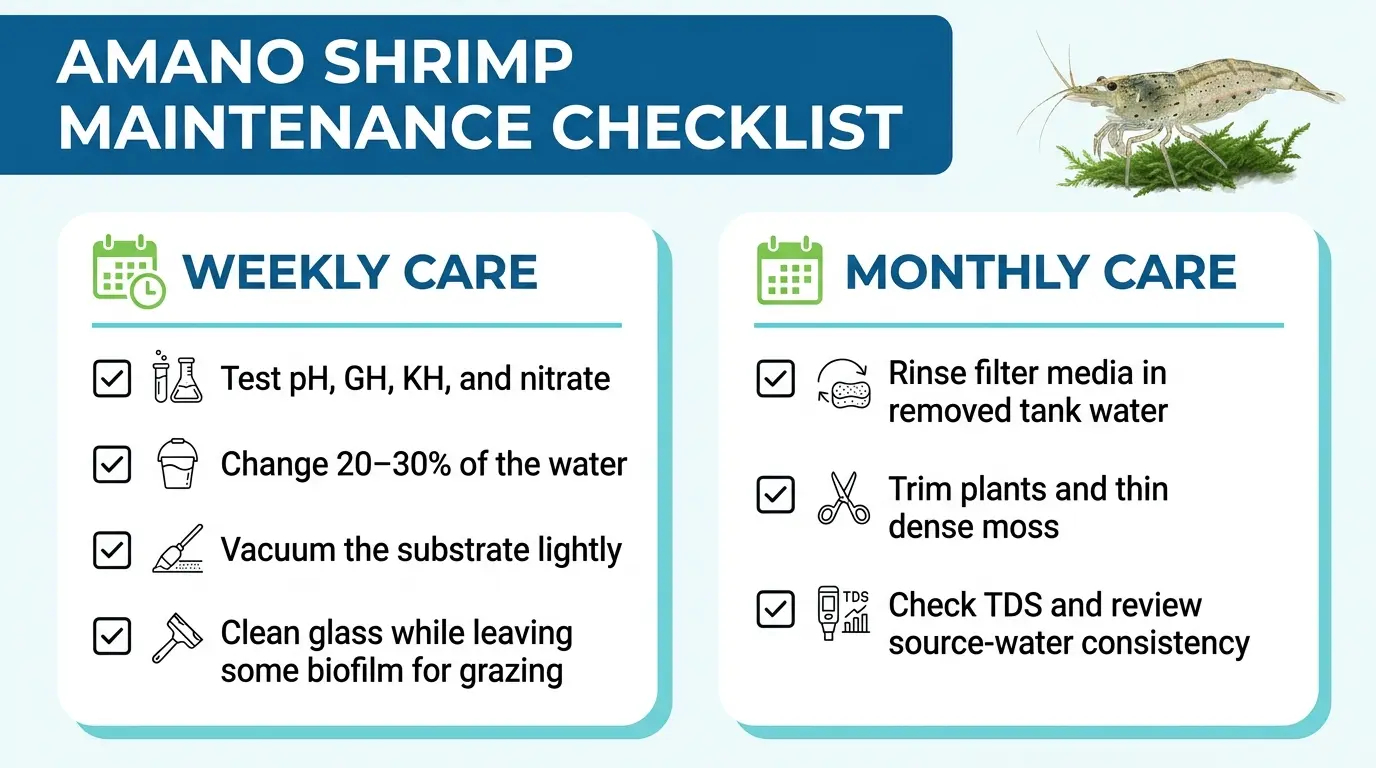
Long-term success in this amano shrimp care guide comes from small, steady steps. Use a simple weekly plan. Keep notes so you see trends early.
Weekly tasks:
- Test pH, GH, KH, and nitrate
- Change 20 to 30 percent of the water
- Vacuum lightly, but do not strip the whole floor
- Clean glass but leave some film on side panels
Monthly tasks:
- Rinse filter media in removed tank water
- Trim plants and thin moss so flow stays good
- Check TDS and adjust for your source water
I dose shrimp-safe fertilizer after water changes. If I run CO2, I keep steady levels and avoid sharp swings.
Common Mistakes to Avoid
I learned the hard way, so this amano shrimp care guide flags common traps. Avoid these, and your shrimp will thrive.
- Adding shrimp to an uncycled tank
- Big changes in temperature, pH, or TDS
- Overfeeding and letting food rot
- Using meds or algaecides with copper
- Mixing with hunters or fast, nippy fish
- Letting CO2 or fertilizer dosing swing
- Leaving the tank uncovered so shrimp escape
If a shrimp dies, test right away. Fix water issues before you add more livestock.
Supplies and Starter Kit
This amano shrimp care guide ends the setup with a clear list. Start right and you avoid weeks of stress.
You will need:
- 10 to 20-gallon tank with a secure lid
- Sponge filter or hang-on-back with a pre-filter sponge
- Heater and thermometer
- Liquid test kits for ammonia, nitrite, nitrate, GH, KH, and pH
- Water conditioner that treats chlorine and chloramine
- Inert substrate, wood, rocks, and live plants
- Shrimp-safe foods and botanicals
- A fine net and a drip line for acclimation
- Optional TDS meter and RO water with a remineralizer
Set everything up, cycle, and then add shrimp slowly. Patience pays off here.
Frequently Asked Questions of amano shrimp care guide
How many Amano shrimp should I start with?
Begin with six or more so they feel safe and graze well. A group spreads out work and reduces stress.
Can Amano shrimp live with cherry shrimp?
Yes, they can live together in stable water with many hides. Feed small amounts so both groups eat.
Do Amano shrimp eat hair algae?
They pick at soft hair algae, but not all types. Manual removal plus good flow and feeding control work best.
Why did my Amano shrimp jump out?
Shrimp jump when stressed by poor water or bullies. Use a tight lid and fix water issues fast.
How do I acclimate Amano shrimp?
Use a drip line for 60 to 90 minutes until parameters match. Keep lights low and offer hides on day one.
Conclusion
You now have a clear plan to house, feed, and protect Amano shrimp with calm, steady care. This amano shrimp care guide showed you the tank setup, water ranges, diet, safe mates, and a routine that works.
Start small, keep tests and notes, and make slow changes. Your reward will be active grazers, clear leaves, and a calm, lively tank. Try one tip today, share your results, and subscribe for more simple, proven guides.