
Set up a stable, plant-rich tank, keep clean water, feed well, and avoid copper.
If you want bright, active shrimp that breed and thrive, you are in the right place. I have kept Neocaridina for years, across dozens of planted tanks. This cherry shrimp care guide for planted aquariums blends hands-on lessons with proven methods, so you can enjoy a colorful, self-sustaining colony with ease.
What Are Cherry Shrimp (Neocaridina davidi)?
Cherry shrimp are small freshwater dwarf shrimp prized for their bright red color and easy care. They are peaceful scavengers that graze on biofilm, algae, and plant debris. In the right tank, they breed without special gear. In this cherry shrimp care guide for planted aquariums, you will learn how to build a safe, stable home that keeps them healthy.
Cherry shrimp are graded by color depth, from low grade to painted fire red. Higher grades need cleaner water and less stress to keep rich color. Stable water, good plants, and gentle feeding all help color pop.
Why Planted Aquariums Suit Cherry Shrimp
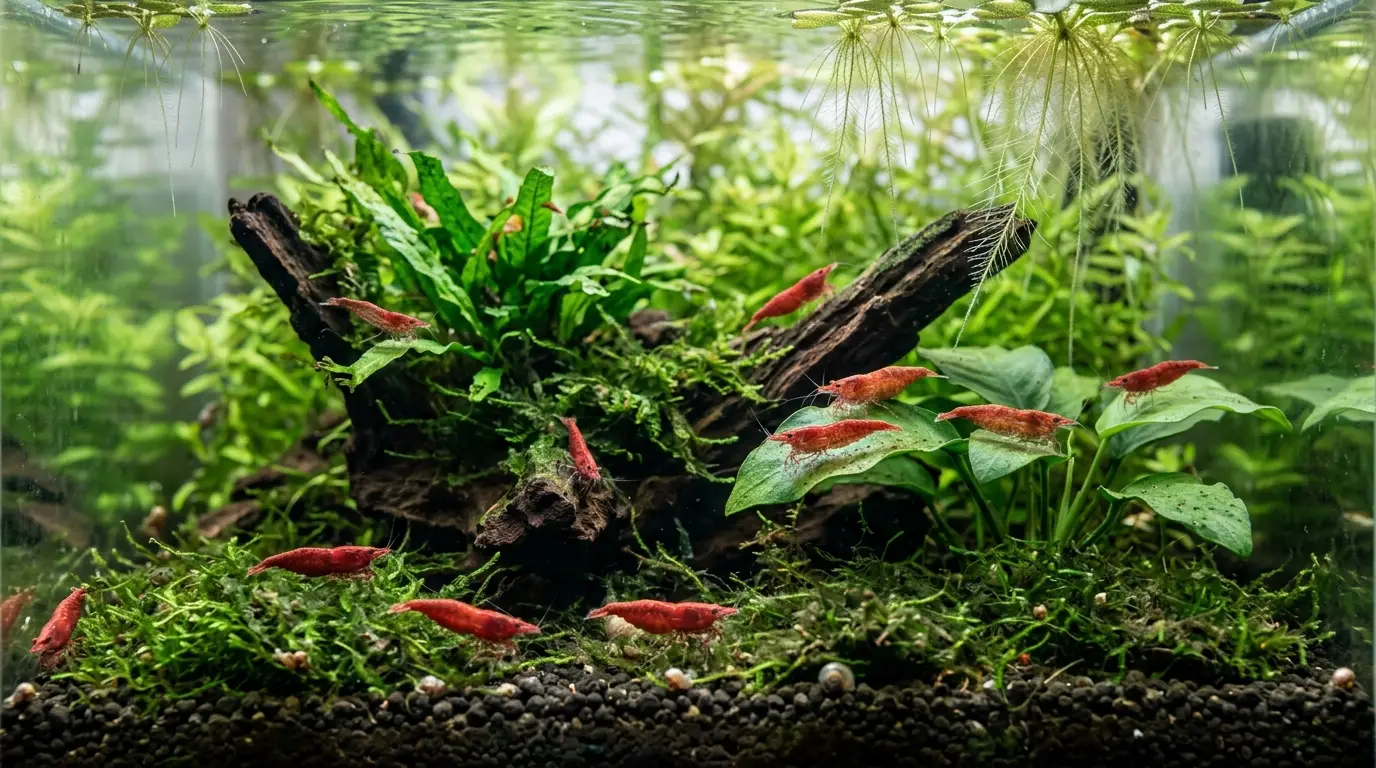
Live plants make food and shelter. Leaves host biofilm, which is a shrimp buffet. Dense stems and moss protect babies from flow and fish.
Plants help balance water by using ammonia and nitrate. That reduces stress. In short, a planted tank does the heavy lifting, and that is the heart of this cherry shrimp care guide for planted aquariums.
Tank Size and Setup Checklist
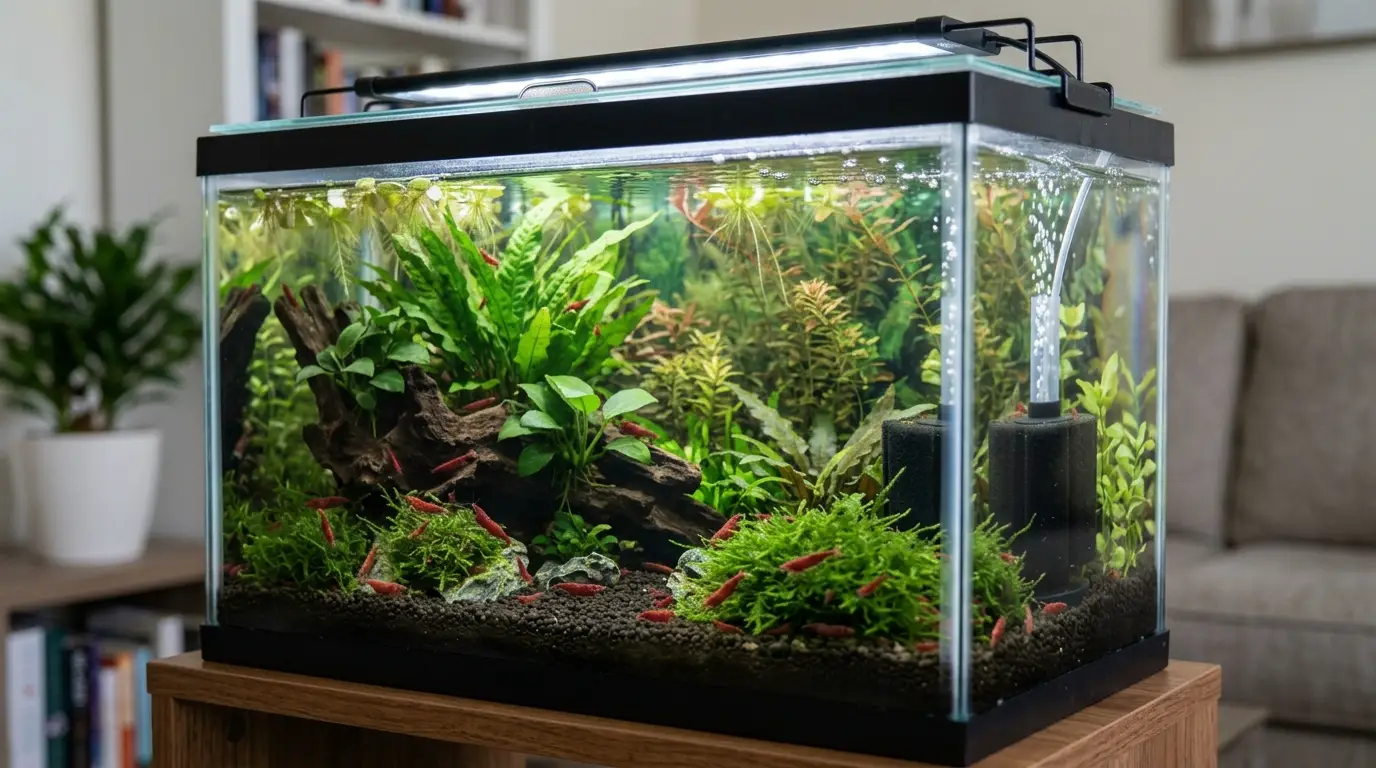
Small tanks work well. A 5–10 gallon tank is a sweet spot for new keepers. More water means more stability, which shrimp love.
Use this quick setup plan:
- Tank size: 5–20 gallons to start a colony.
- Filter: sponge or gentle HOB with a sponge pre-filter.
- Heater: only if your room drops below 68°F.
- Light: low to medium for plants and algae growth.
- Lid: shrimp climb; lids prevent escape and reduce dust.
I follow this cherry shrimp care guide for planted aquariums every time I start a new tank, and it keeps things simple and safe.
Water Parameters and Stability
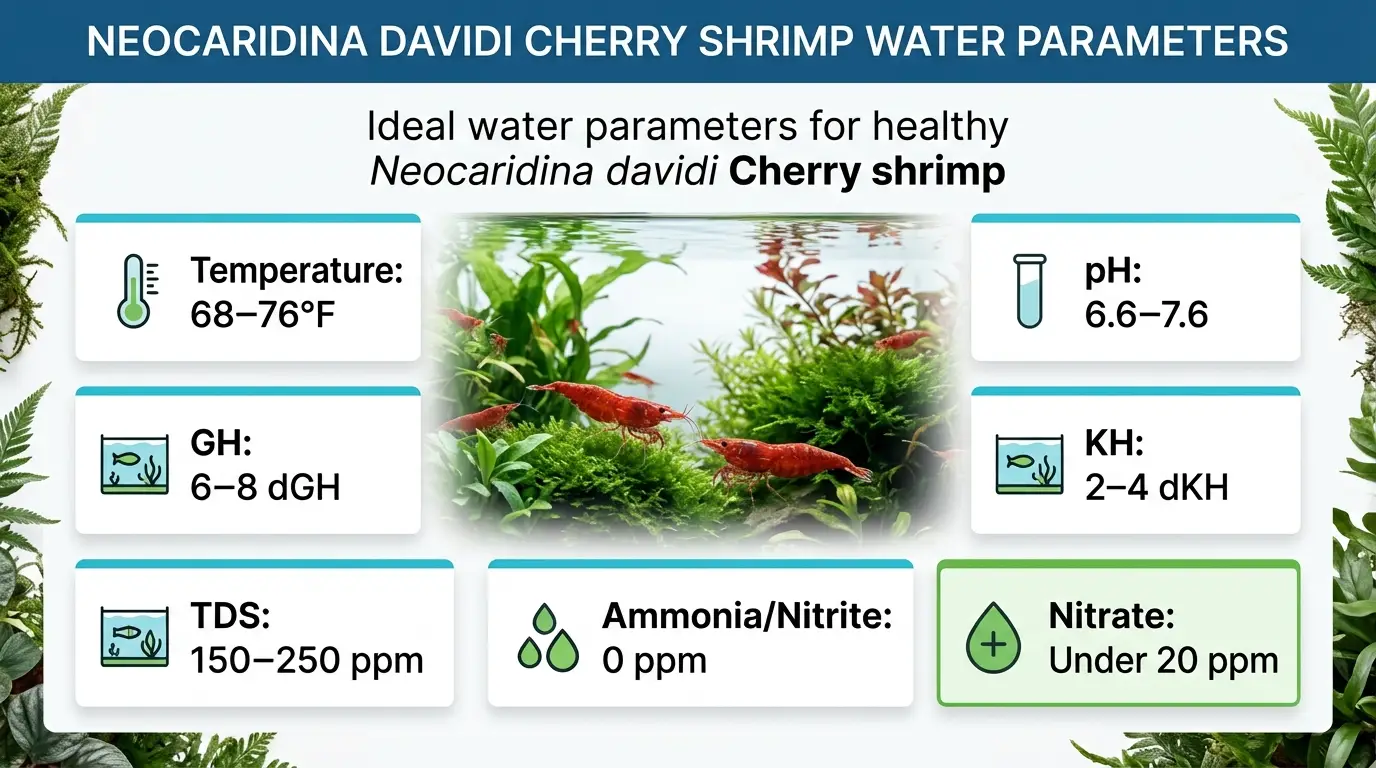
Shrimp thrive in clean, stable water. Fast swings kill more shrimp than anything else. Aim for these ranges:
- Temperature: 68–76°F. I see best results at 72–74°F.
- pH: 6.6–7.6, steady is key.
- GH: 6–8 dGH for strong shells.
- KH: 2–4 dKH for pH buffer.
- TDS: 150–250 ppm, match during changes.
- Ammonia/Nitrite: 0 ppm. Nitrate: under 20 ppm.
Use a dechlorinator at every water change. If your tap water is hard to predict, use RO water with a shrimp mineral mix. This cherry shrimp care guide for planted aquariums favors stability over perfect numbers.
Cycling, Acclimation, and Quarantine
Cycle the tank for 4–6 weeks before shrimp. Test until ammonia and nitrite read zero for two weeks in a row. Add plants early to seed biofilm.
When new shrimp arrive, float to match temperature. Then drip acclimate for 60–120 minutes. Double the water volume in the bag at least three times. Move shrimp with a net, not the bag water. Quarantine new shrimp and plants to avoid pests and disease. This careful start is core to any cherry shrimp care guide for planted aquariums.
Personal note: I lost my first shipment by rushing acclimation. I now take my time, and mortality is near zero.
Substrate, Plants, and Hardscape
Choose a dark, inert or buffered substrate. Dark sand shows off color and calms shy shrimp. Avoid sharp gravel that can trap waste.
Great plants for shrimp:
- Mosses: java, Christmas, weeping. Baby safe and biofilm rich.
- Epiphytes: Anubias, Bucephalandra, java fern. Easy and hardy.
- Fast stems: Rotala, Hygrophila, Ludwigia. They suck up excess nutrients.
- Floaters: frogbit, salvinia, red root floater. Shade and nitrate control.
Add leaves for tannins and grazing:
- Indian almond leaves or oak leaves. One leaf per 10 gallons, replace as it breaks down.
Rinse hardscape. Boil driftwood if possible. This cherry shrimp care guide for planted aquariums leans on moss and leaves to grow food for free.
Filtration, Flow, Lighting, and CO2
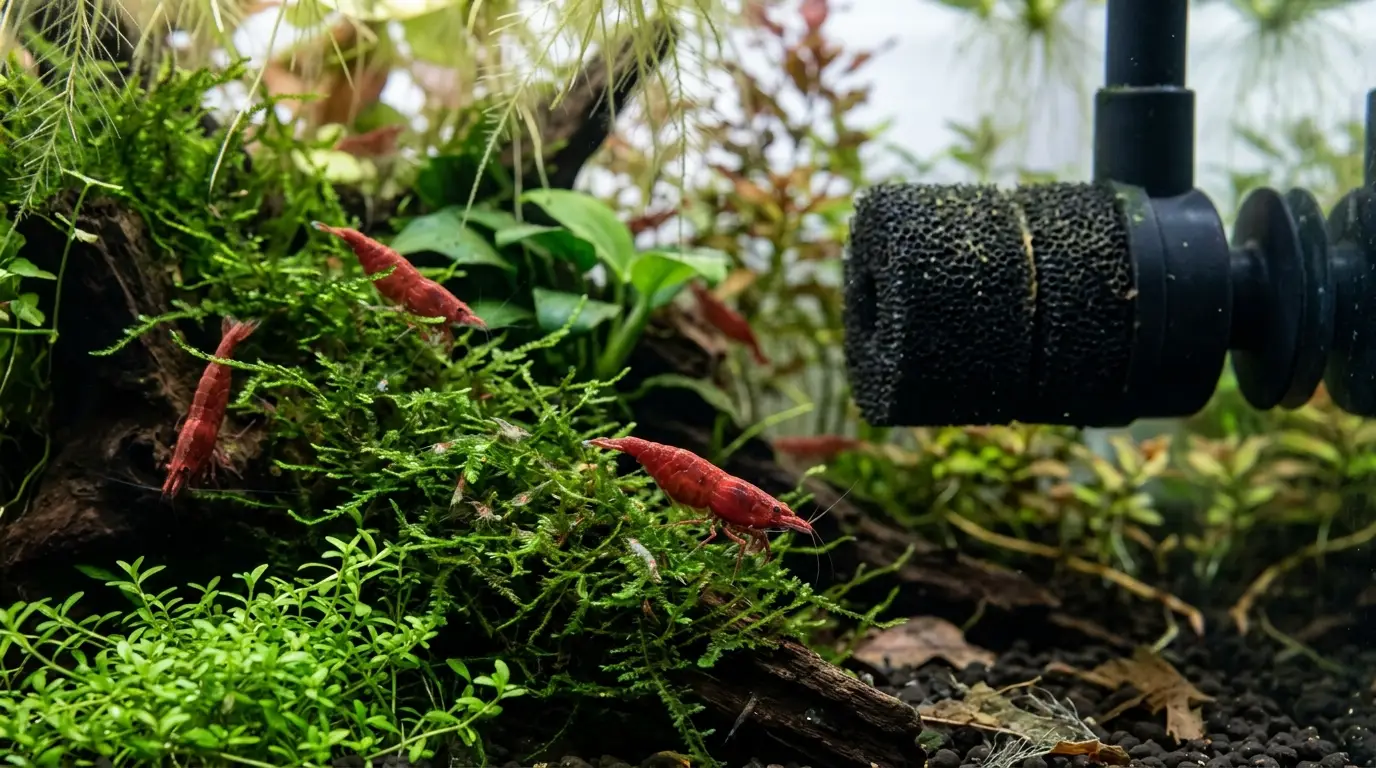
Shrimp need oxygen and clean water, not strong flow. A sponge filter gives gentle turnover and huge bio-media. Add an air stone if the surface is still.
Lighting tips:
- Low to medium light grows biofilm and easy plants.
- Run 6–8 hours daily. Increase slowly to avoid algae blooms.
CO2 can work with shrimp if stable. Keep CO2 moderate and avoid big pH drops. Turn CO2 off at night. Dose fertilizers that are shrimp safe and avoid copper. If you spot stress, reduce CO2 first. The safest cherry shrimp care guide for planted aquariums always puts stability before plant speed.
Feeding and Nutrition
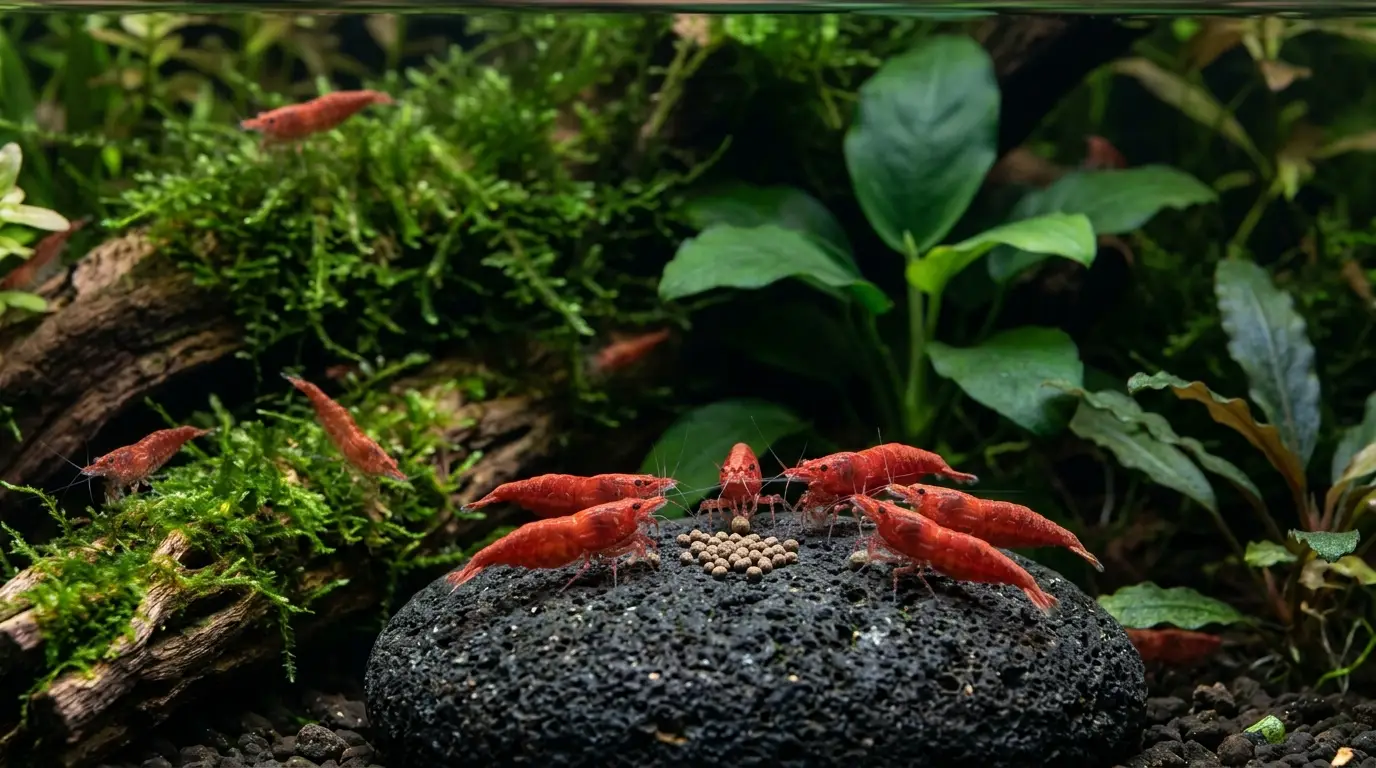
Shrimp graze all day. A mature tank can feed them well. Still, add balanced food a few times a week.
Smart feeding plan:
- Main food: quality shrimp pellets or wafers. Tiny portions.
- Veg: blanched zucchini, spinach, or kale. Remove leftovers in 4–6 hours.
- Protein: once per week. A tiny pinch of frozen cyclops or bloodworms.
- Treats: algae wafers, mulberry leaves, or bee pollen. Small amounts.
- Bio-boost: add a catappa leaf or alder cones for steady grazing.
Feed what they can finish in 1–2 hours. Overfeeding fuels planaria and hydra. A clean, measured routine is central to this cherry shrimp care guide for planted aquariums.
Tank Mates and Community Planning
Shrimp are prey for many fish. Choose small, calm species or keep a shrimp-only tank.
Good partners:
- Nano fish: chili rasbora, ember tetra, celestial pearl danio.
- Bottom dwellers: pygmy cory, otocinclus (after the tank is mature).
- Snails: nerite, ramshorn, bladder snails.
Avoid:
- Any cichlid, betta, or large tetra.
- Most loaches and gourami.
Add dense plants and moss to boost survival. Feed fish well to reduce hunting. This cherry shrimp care guide for planted aquariums stresses safety first when picking tank mates.
Breeding and Raising Shrimplets
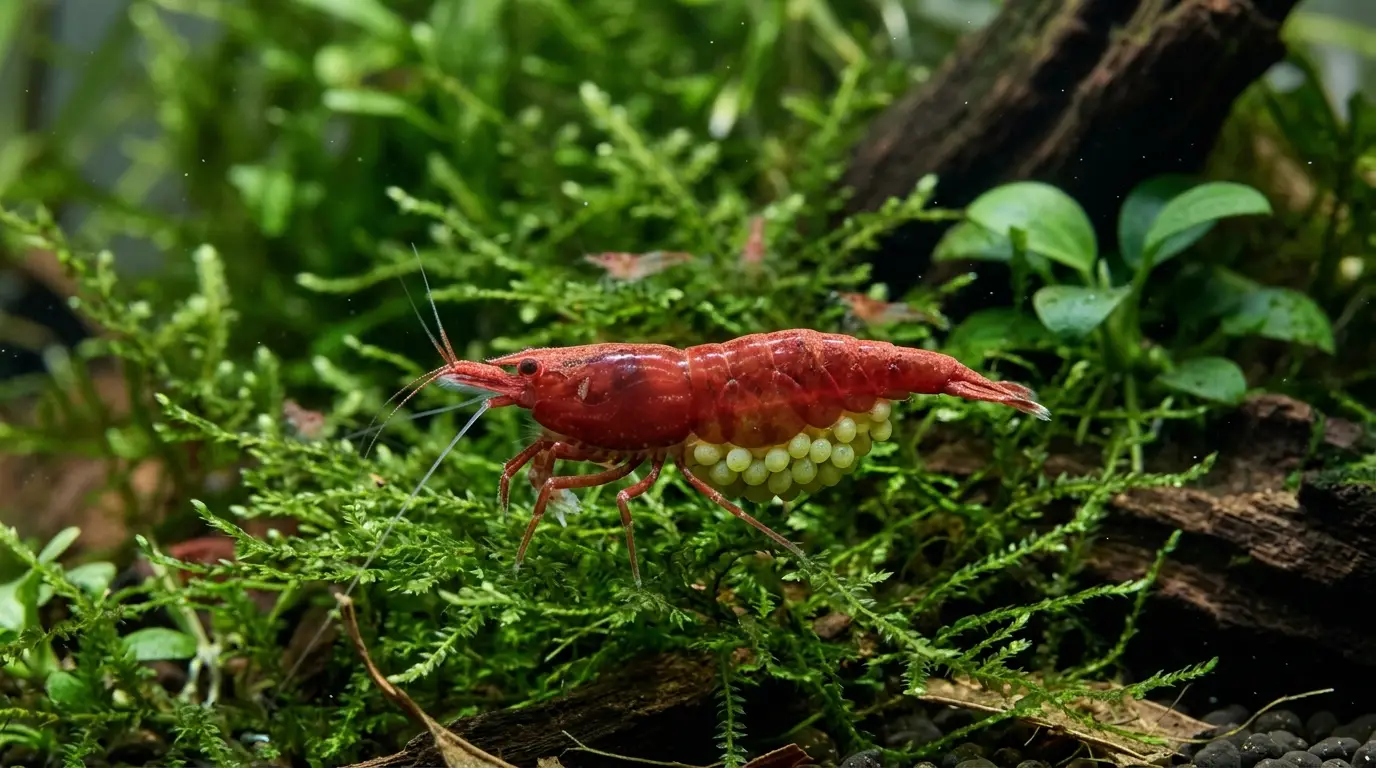
Cherry shrimp breed on their own in stable water. Females carry eggs for about 3–4 weeks. Then tiny, fully formed shrimplets appear.
Tips to raise big numbers:
- Keep sponge pre-filters on all intakes.
- Provide moss thickets and leaf litter for cover.
- Feed micro foods: powdered shrimp food or biofilm boosters.
- Hold nitrate under 20 ppm and keep temp near 72–74°F.
You will see color deepen with each generation in good tanks. That result is the prize of any cherry shrimp care guide for planted aquariums.
Routine Care and Maintenance Schedule
Consistency beats intensity. Short, regular tasks work best.
Weekly:
- Test pH, GH, KH, and TDS.
- Change 10–20% water. Match temperature and TDS.
- Clean glass with a soft sponge.
- Siphon gently around plants. Do not vacuum deep in moss.
Monthly:
- Rinse sponge filter in old tank water.
- Trim plants to keep flow and light.
I log TDS and temp on water change day. That habit, plus slow changes, is a pillar in this cherry shrimp care guide for planted aquariums.
Troubleshooting Common Problems
Sudden deaths
- Check ammonia, nitrite, and copper. Dechlorinate. Stop any new additives.
- Match TDS on water changes. Large swings shock shrimp.
Failed molts
- Raise GH to 6–8 dGH with a shrimp mineral mix.
- Add calcium from cuttlebone chips or minerals. Avoid big pH shifts.
Pests (planaria or hydra)
- Cut feeding by half. Siphon pests.
- Some treatments harm shrimp. Research before dosing.
Algae blooms
- Shorten light to 6 hours. Add floaters. Water change 15%.
- Clean filter and increase gentle flow.
I once lost a batch after using a plant fertilizer with copper. Since then, I always read labels. That hard lesson is now a key warning in this cherry shrimp care guide for planted aquariums.
My Proven Tips from Years of Keeping Cherry Shrimp
These small tweaks deliver big gains:
- Use a sponge pre-filter on day one. It saves countless babies.
- Seed new tanks with a used sponge from a healthy tank.
- Keep a small bag of crushed coral if KH runs low.
- Drip acclimate longer than you think you need.
- Run two small sponge filters instead of one large unit.
- Rotate foods. Variety builds color and shell strength.
- Quarantine all new plants to avoid hitchhikers and copper traces.
Apply these and you will feel how smooth shrimp keeping can be. They round out this cherry shrimp care guide for planted aquariums with battle-tested steps.
Frequently Asked Questions of cherry shrimp care guide for planted aquariums
How many cherry shrimp should I start with?
Start with 10–20 shrimp in a 10-gallon tank. This gives a stable gene pool and helps a colony form fast.
Can I keep cherry shrimp without a heater?
Yes, if your room stays 68–76°F and does not swing fast. If temps drop at night, a small heater keeps things stable.
Do fertilizers or medications harm shrimp?
Some do. Avoid copper and dose plant foods at the low end while you test for stress.
How often should I feed cherry shrimp?
Feed tiny portions 3–5 times per week. Let them graze on biofilm the rest of the time.
Why are my shrimp not breeding?
Check for stress, low minerals, and swings. Raise GH to 6–8 dGH, keep temp near 72–74°F, and add more cover like moss.
Can I mix cherry shrimp colors?
They will cross and may revert to wild colors. Keep one color line per tank if you want strong reds.
Conclusion
Cherry shrimp thrive on stable water, thick plants, and light feeding. Keep parameters steady, avoid copper, and let biofilm do its work. Add safe tank mates, protect the babies with sponge intakes, and track small changes over time.
Set up your tank, follow the care steps, and enjoy a bright, buzzing colony. If this guide helped, share it, subscribe for more planted tank tips, or drop your questions and wins in the comments.