
Keep mystery snails in clean, cycled tanks with stable, mineral-rich water, gentle filtration, copper-free care.
If you want happy, active snails with bright, smooth shells, this mystery snail care guide is for you. I have kept Pomacea bridgesii for years, and I know the small details that make a big difference. Follow this friendly mystery snail care guide to set up, feed, and protect your snails with confidence.
Mystery Snail Care Guide Essentials
Mystery snails are peaceful freshwater snails that breathe air and water. They love to graze on algae and biofilm. They come in many colors and are safe for planted tanks. They are great for first-time snail keepers.
Aim for a stable home. Keep ammonia and nitrite at zero and nitrate under 20 ppm. Use a lid, since they will explore and can climb out. Avoid any copper in water or medication, as it is harmful.
Key water targets many keepers use:
- Temperature: 72 to 78°F for strong activity and growth
- pH: 7.2 to 8.2 to protect the shell
- GH: 6 to 12 dGH for calcium
- KH: 3 to 8 dKH for pH stability
This mystery snail care guide also stresses calcium support. Good mineral levels protect new shell growth. Test weekly until your tank is stable. Keep a log so you see trends over time.
Tank Setup and Water Parameters
Pick a tank that fits their waste and size. A 10-gallon tank works well for one to two mystery snails. Add more water volume for each extra snail. Use a gentle filter, such as a sponge filter, or a pre-filter on the intake. This stops damage to the snail’s antennae.
Always cycle the tank before adding snails. Feed the empty tank a small pinch of food and test until ammonia and nitrite read zero. Dechlorinate tap water at every water change. Match temperature to avoid shock. This step is vital in any mystery snail care guide.
Setup tips that work well:
- Substrate: sand or smooth gravel to protect the foot
- Decor: driftwood, smooth stones, and broad-leaf plants like anubias
- Flow: low to moderate with strong oxygen
- Space: a 1 to 2 inch gap between water and lid to prevent escape
Acclimate slowly. I drip-acclimate for 45 to 60 minutes. This reduces stress and helps them adjust to KH and GH.
Feeding and Nutrition for Mystery Snails
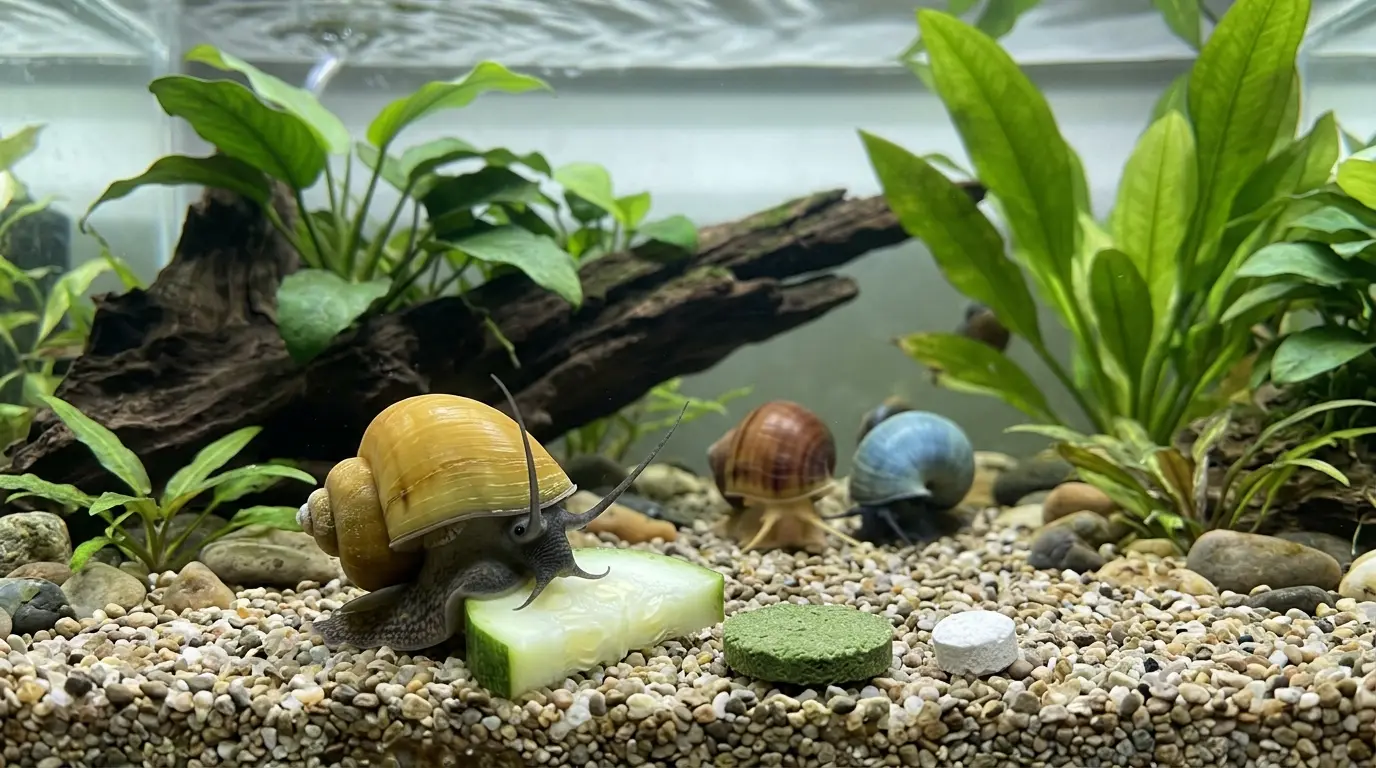
Mystery snails are not algae crews alone. They need real food to thrive. A mixed diet keeps shells strong and colors bright. In my tanks, a simple routine made a clear difference in growth.
Good foods to rotate:
- Blanched vegetables: zucchini, green beans, kale, or cucumber
- Prepared foods: algae wafers, shrimp pellets, or snail-specific gels
- Calcium-rich options: cuttlebone, mineral chips, or calcium-fortified gels
Feed small amounts once a day or every other day. Remove leftovers within 12 to 24 hours to keep water clean. This mystery snail care guide also warns against salty or seasoned foods. Simple, clean foods are best.
Shell Health and Calcium Support
A healthy shell looks smooth and thick, with even color at the growing edge. Thin or pitted shells point to low minerals or low pH. You can correct this with calcium and stable hardness. I learned this the hard way when a new soft water source caused shell wear.
Ways to boost calcium and hardness:
- Add a cuttlebone or mineral block to the tank
- Use crushed coral in the filter to raise GH and KH
- Offer calcium gel foods or eggshell powder in gel recipes
- Keep pH above 7.2 to slow acid wear
Check shells every week. Look for cracks, holes, or chalky spots. Tackle issues fast, and you will see firm, clean growth. This mystery snail care guide places shell care at the top of the list.
Behavior, Lifespan, and Routine Care
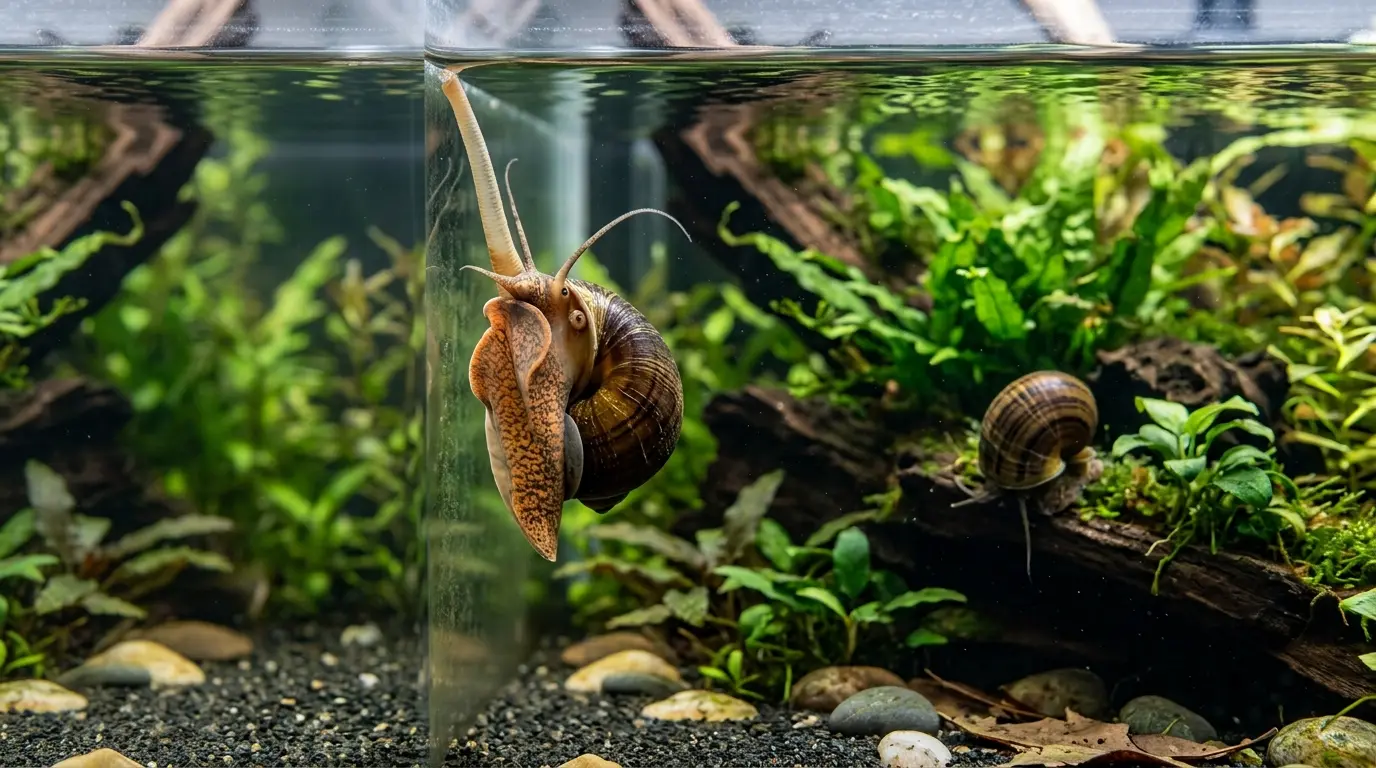
Mystery snails are fun to watch. They nap in short bursts and then zoom along the glass. They breathe with a siphon at the surface, so do not worry when they stretch upward. A healthy snail explores, grazes, and responds when moved.
Most live 1 to 2 years. Warmer water speeds growth but can shorten life. Cooler water can slow them down. Plan weekly care to support a longer, better life.
Simple routines that work:
- Change 20 to 30 percent of water each week
- Test ammonia, nitrite, and nitrate at least weekly
- Wipe algae from glass and rinse sponges in tank water
- Check for egg clutches under the lid
Never yank a snail off the glass. Slide a finger under the foot to free it. That small habit, taught to me early on, prevents injury. This mystery snail care guide puts gentle handling first.
Safe Tank Mates and Compatibility
Mystery snails are peaceful and easy to pair. Choose calm fish and inverts that will not nip antennae. Avoid anything that eats or harasses snails. Good company keeps stress low and health high.
Good options:
- Small community fish like tetras, rasboras, guppies, and platies
- Corydoras and otocinclus
- Shrimp like amano and larger neocaridina
- Other peaceful snails like nerites
Avoid:
- Loaches, puffers, crayfish, and most large cichlids
- Fin nippers that target antennae
- Any fish known to eat inverts
Watch bettas with care. Many are fine; some will nip. This mystery snail care guide suggests a backup plan if a fish misbehaves.
Breeding, Eggs, and Population Control

Mystery snails need a male and female to breed. They are not self-fertile. Mating happens under water. The female lays a pink, bubble-like clutch above the waterline, often on the lid. Keep a gap under the lid for this.
If you want babies:
- Keep humidity high above the clutch, not wet
- Incubation takes 2 to 4 weeks
- Move the clutch to a hatching box if needed
If you do not want more snails, you can remove and discard the clutch. Do this early and humanely. This mystery snail care guide keeps both options clear and kind.
Common Problems and Troubleshooting
If a snail floats, it may be fine. They can trap air while feeding. Gently tilt them to burp the air out. If floating lasts more than a day, test water right away.
Lethargy often links to cold water, poor oxygen, or high ammonia. Fix the cause and they perk up. Shell pits point to low pH or low minerals. Raise GH and KH and improve diet. Avoid any copper-based medicine in a snail tank.
Escape attempts can mean bad water. Check parameters and make changes. A strong, foul smell means a dead snail. Remove it fast to protect the tank. This mystery snail care guide helps you act early and avoid losses.
Cleaning, Maintenance, and Best Practices

A clean tank supports healthy shells and steady growth. Siphon light waste without overcleaning. Leave some biofilm for natural grazing. Rinse filter media in tank water to save good bacteria.
Weekly rhythm that keeps things easy:
- Test water and record the numbers
- Change water, match temperature, and dechlorinate
- Wipe glass and trim plants as needed
- Check shells, antennae, and activity
When you travel, feed less, not more. One algae wafer can hold them over a day or two. Growth is steady when water is stable and food is simple. This mystery snail care guide values consistency over fancy gear.
Frequently Asked Questions
Do mystery snails need a heater?
They do well at 72 to 78°F. If your room drops below this, use a heater to keep them stable.
How many mystery snails per gallon?
Plan for one mystery snail per 5 gallons. More water means more stable waste control and better growth.
Why is my mystery snail not moving?
Check temperature and water quality first. If ammonia or nitrite is above zero, do a water change and add air.
Can mystery snails live with a betta?
Many can, but watch for nipping. If the betta harasses the snail, separate them.
Why is my mystery snail floating?
It may have trapped air or just ate a big meal. Gently release air and test water if it continues.
What should I feed my mystery snail every day?
Offer a small piece of blanched veggie or an algae wafer. Rotate foods and add a calcium source each week.
Do mystery snails need calcium?
Yes. Calcium supports strong shells and new growth. Use cuttlebone, mineral blocks, or crushed coral to help.
Conclusion
Mystery snails shine when the basics are solid. Keep water clean and mineral-rich, feed a varied diet, and protect them from copper and bullies. With these steps, you will see smooth shells, bright colors, and lively, curious pets.
Use this mystery snail care guide to set up your best routine this week. Test your water, add a calcium source, and try a simple feeding plan. If this helped, share it with a friend, subscribe for more care guides, or drop your best snail tip in the comments.