
Keep water stable and hard, feed algae and veggies, and secure the lid.
If you want a clean tank and peaceful vibe, few creatures beat nerites. This nerite snail care guide gives you clear steps, proven water targets, and real-world tips from years of keeping zebra, tiger, and horned nerites in planted tanks. Read on to learn how to set up, feed, and protect these tiny algae machines so they thrive and your glass shines.
Nerite snails 101: species, looks, and behavior
Nerites are hardy, peaceful algae grazers that shine in community aquariums. This nerite snail care guide starts with the basics: they come from freshwater and brackish zones in Africa and Asia, and they stay small, usually under 1 inch.
Common types you’ll see:
- Zebra nerite has bold striped shells.
- Tiger nerite shows wavy lines and spots.
- Horned nerite has tiny “horns” along the ridge.
- Olive nerite has a smooth, olive shell.
Key traits:
- Great at eating diatoms and soft green algae on glass, rocks, and leaves.
- Egg layers that will not hatch in freshwater, so no population booms.
- Escape artists that explore above the water line.
- Mostly nocturnal; they do their best work at night.
Personal note: My first zebra nerite cleared a 20-gallon’s brown film in a week. It taught me patience—they move slow, but they never stop.
Tank setup and water parameters
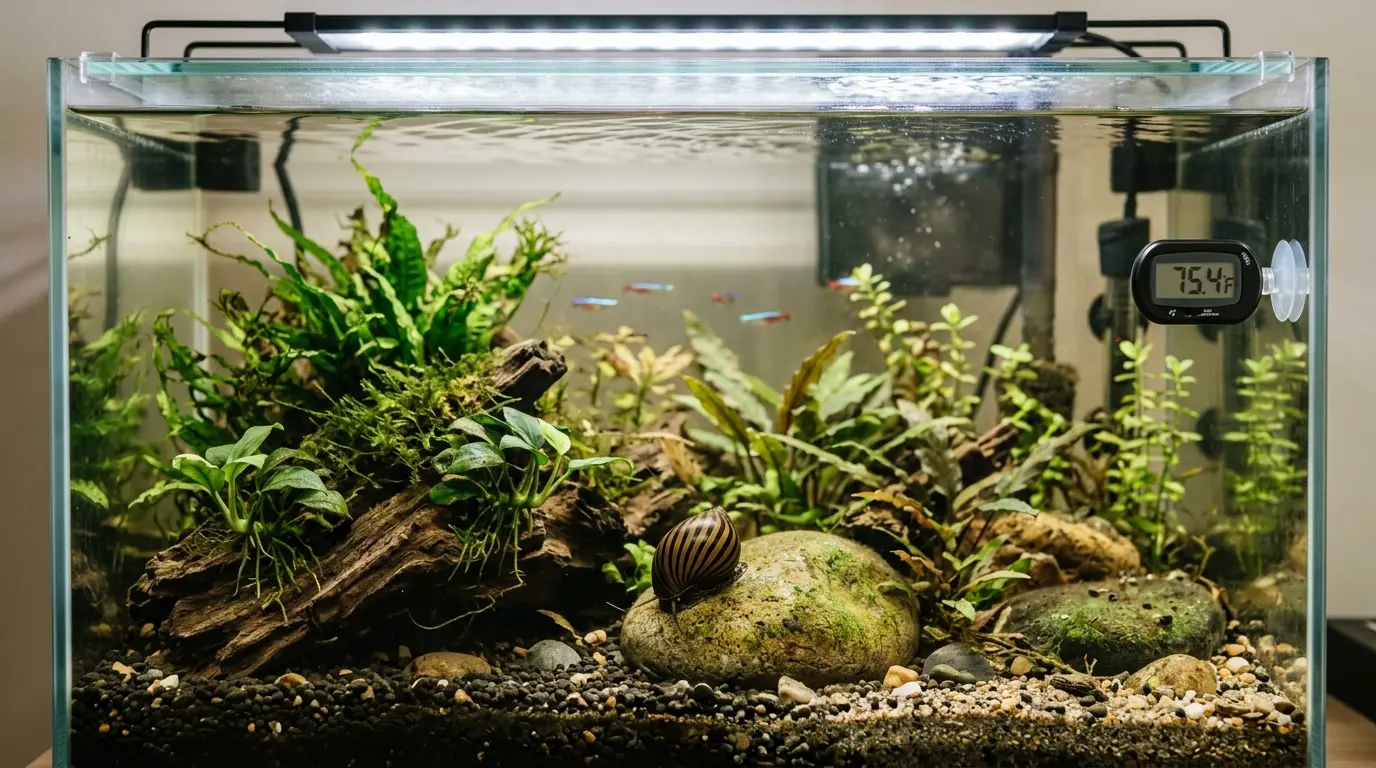
In this nerite snail care guide, water comes first. Stable, clean, and mineral-rich water keeps shells strong and snails active.
Targets to aim for:
- Temperature: 72–78°F (22–26°C)
- pH: 7.2–8.4
- GH: 6–12 dGH for calcium and magnesium
- KH: 3–10 dKH for buffer stability
- Ammonia and nitrite: 0 ppm
- Nitrate: under 20 ppm
Tank size and layout:
- Start with at least 5 gallons per nerite for stable water and steady algae.
- A 10–20 gallon planted tank is ideal for one to four nerites.
- Use a tight lid; block gaps near cords and filter intakes.
- Add hardscape like rocks and wood for biofilm growth.
- Gentle filtration and steady flow help distribute oxygen.
Acclimation and maintenance:
- Drip acclimate over 45–60 minutes to reduce shock.
- Keep hands clean; avoid soap, lotions, and copper residue.
- Do 20–30% weekly water changes.
- If you use RO/DI water, remineralize for GH and KH.
Expert tip from experience: I fixed shell pitting by placing a small bag of crushed coral in the filter. Within a month, new shell growth looked smooth and firm.
Feeding and diet
A nerite snail care guide must cover food beyond algae. Nerites love biofilm, but most tanks run too clean to feed them long-term. Supplement often, or they will starve.
What to feed:
- Algae wafers or snail pellets made for inverts
- Blanched zucchini, spinach, kale, or green beans
- Spirulina flakes or gel foods
- Snowflake foods (soy hulls) for steady grazing
How to feed:
- Offer small portions two to three times per week.
- Drop food near the snail at lights out to avoid fish stealing it.
- Remove uneaten veggies within 24 hours.
Calcium support:
- Provide a calcium source like cuttlebone, crushed coral, or a mineral block.
- Keep GH in range to prevent soft, eroding shells.
What they usually won’t eat:
- String algae and black beard algae are hit-or-miss.
- They do not eat cyanobacteria (blue-green slime).
Practical note: I rotate zucchini and algae wafers. On lean weeks, I leave a wafer overnight near their favorite path. It keeps them plump and active.
Compatible tank mates and stocking
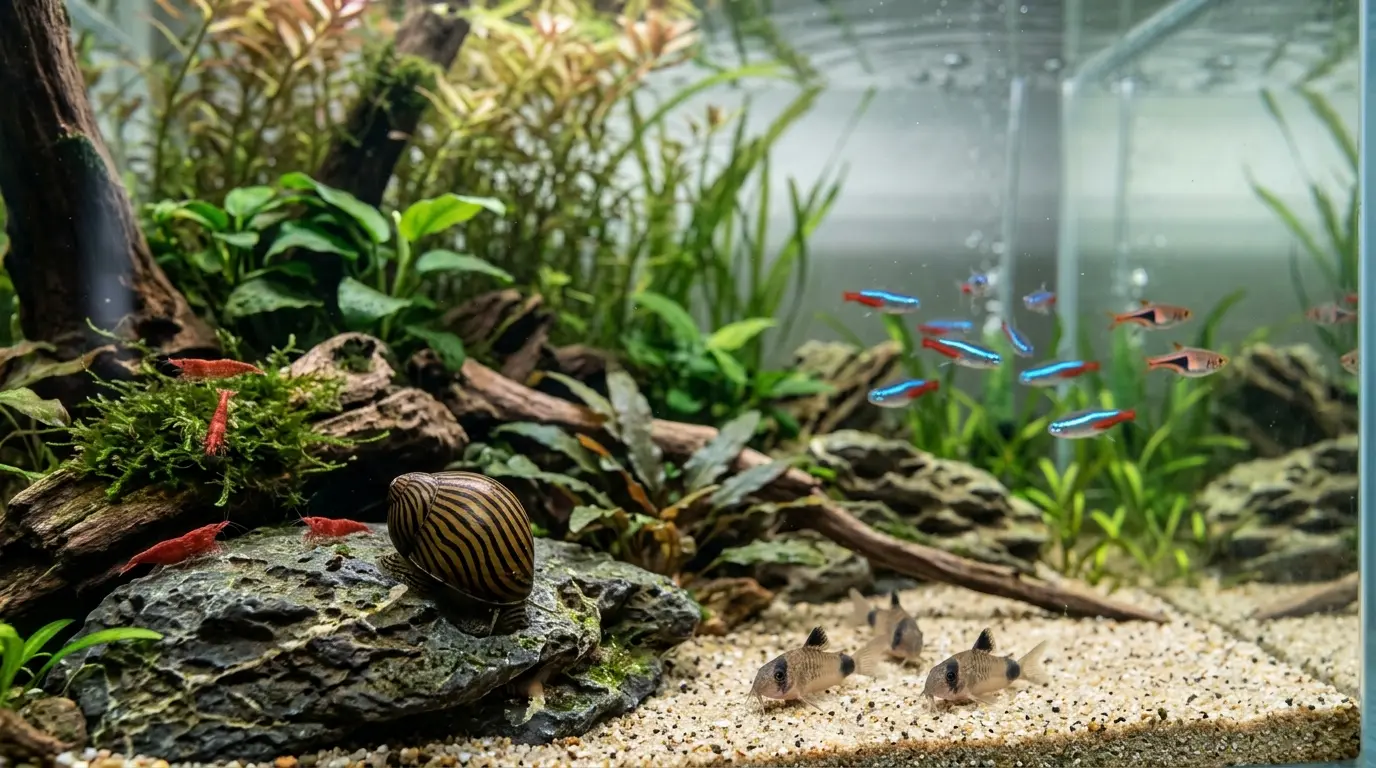
This nerite snail care guide favors peaceful neighbors. Nerites are gentle and easy to pair with many species.
Good companions:
- Small community fish like tetras, rasboras, guppies, and white cloud minnows
- Peaceful bettas (watch for curiosity at first)
- Corydoras and otocinclus catfish
- Shrimp (cherry, amano) and other peaceful snails
Avoid:
- Loaches (especially clown, yo-yo) and puffers—they eat or nip snails
- Larger or aggressive cichlids that pick at shells
- Crayfish that grab slow-moving inverts
Stocking tips:
- One nerite per 5–10 gallons is safe for algae and food supply.
- In new or very clean tanks, add only one until more biofilm grows.
Health, shell care, and common problems
Healthy nerites roam, graze, and stick to surfaces with a strong foot. This nerite snail care guide helps you spot trouble early.
Watch for:
- Shell erosion, pits, or cracks points to low minerals or acidic water.
- Lethargy, floating, or falling off the glass may signal poor water or stress.
- Swollen foot or antenna damage often comes from bullies or rough handling.
Fixes and preventions:
- Raise GH and stabilize KH to protect shells.
- Keep pH above 7.2; avoid sudden drops.
- Never use copper-based meds; they are toxic to snails.
- Be careful with planaria and algae treatments; many harm inverts.
- If a snail flips, help it upright; some struggle to right themselves on sand.
Sanitation and quarantine:
- Quarantine new snails for 2–4 weeks when possible.
- Rinse store snails in tank water to remove debris before acclimation.
Experience lesson: I once lost a horned nerite after a fast pH swing. Since then, I test KH weekly and buffer gently. No more sudden dips, no more shell issues.
Breeding, eggs, and escape prevention
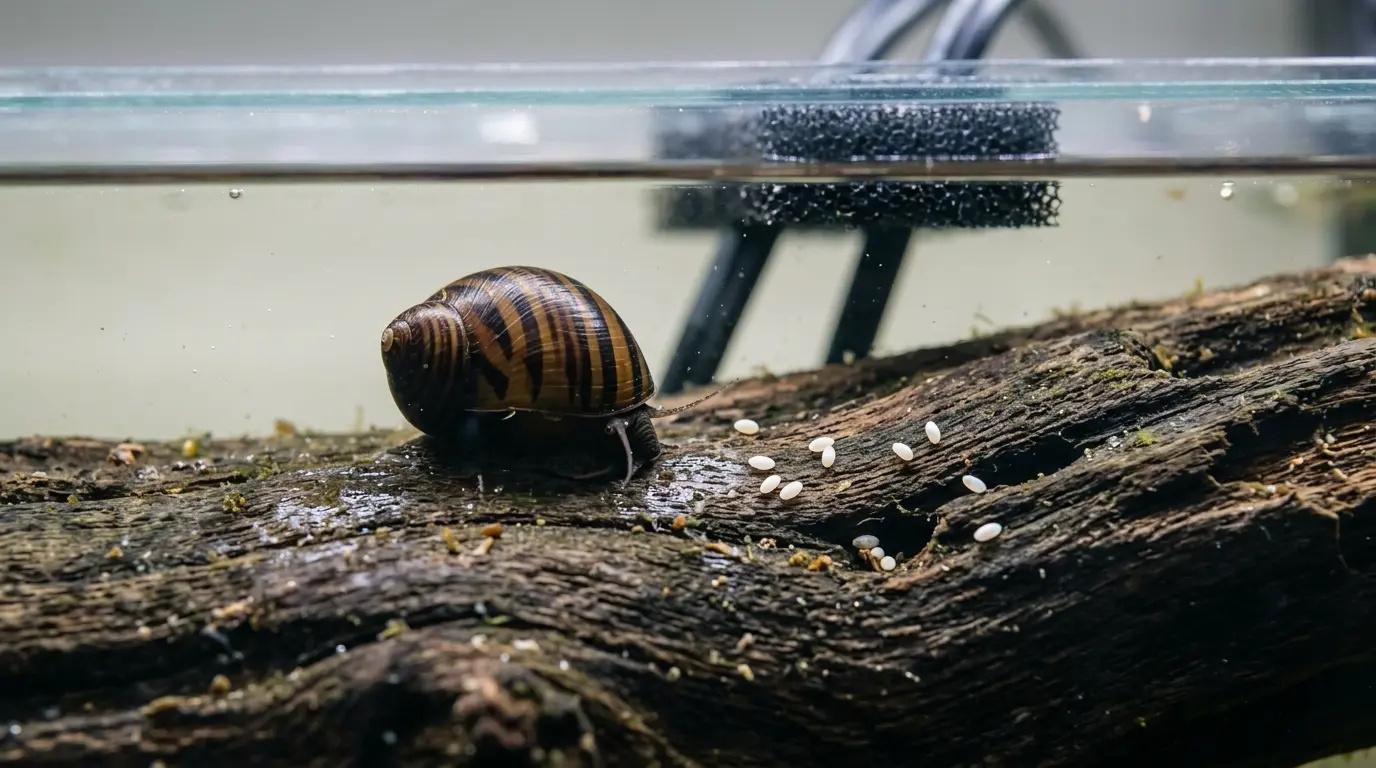
Here’s the honest part of any nerite snail care guide: you will see eggs. They look like tiny white sesame seeds glued to hard surfaces. In freshwater tanks, they do not hatch, because larvae need brackish to marine water to develop.
What to expect:
- Eggs appear on rocks, wood, glass, even filter parts.
- They are hard to remove without scraping.
- They won’t raise nitrates or foul water.
Control ideas:
- Use removable decor; scrape eggs off outside the tank.
- A razor or algae scraper can help on glass.
- Think of them as natural “tank freckles.”
Escape safety:
- Keep water line lower than the rim by 1 inch.
- Seal openings with fine mesh or sponge.
- Check lids after maintenance; I once found a nerite halfway up a cord.
Setup checklist and weekly care schedule
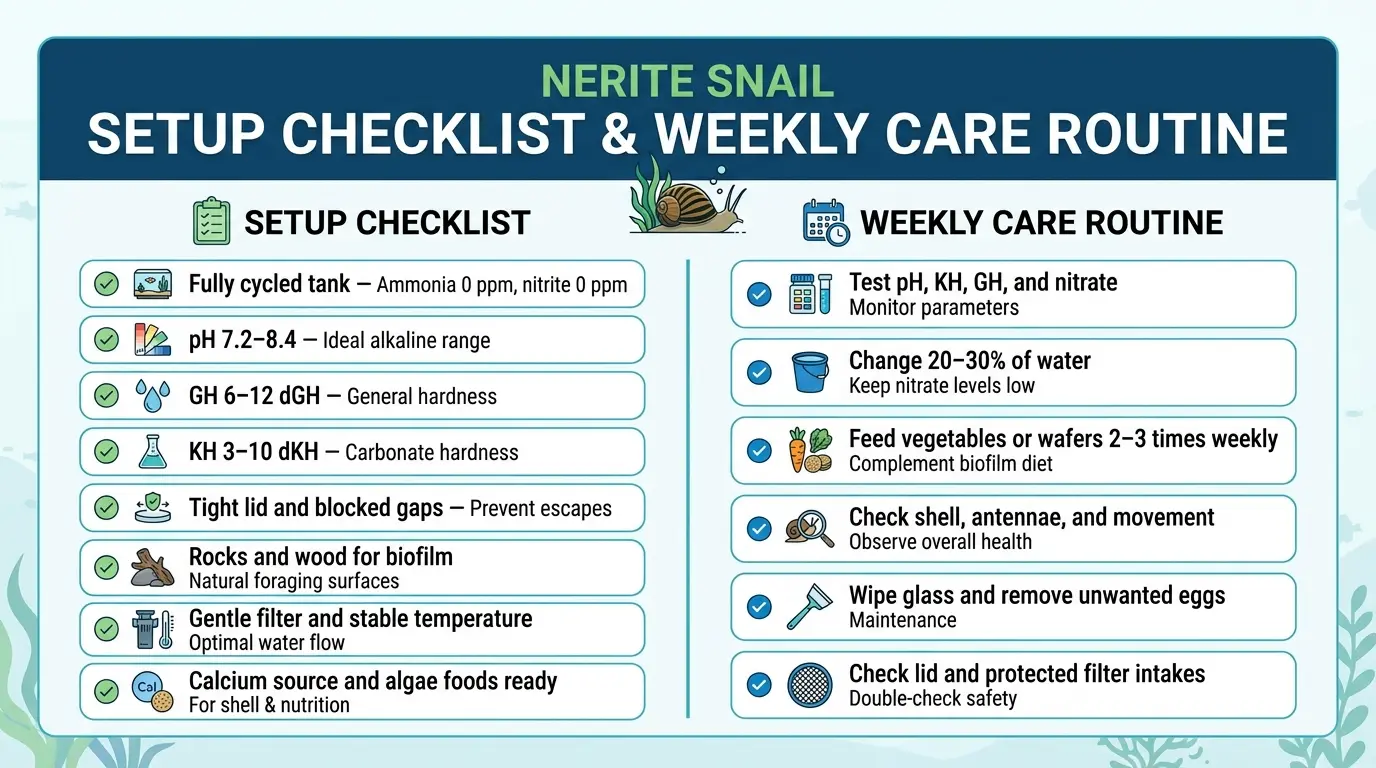
This nerite snail care guide closes with a simple routine you can follow.
Quick setup checklist:
- Cycle the tank fully and confirm 0 ammonia and nitrite.
- pH 7.2–8.4, GH 6–12, KH 3–10.
- Tight lid with blocked gaps.
- Rocks and wood for biofilm.
- Gentle filter and steady temperature.
- Calcium source and algae foods ready.
Weekly routine:
- Test pH, KH, GH, and nitrates.
- Change 20–30% water and vacuum lightly.
- Feed veggies or wafers two to three times.
- Check shells, antennae, and movement.
- Wipe glass and scrape any unwanted egg spots.
- Confirm the lid is tight and intakes are covered.
Personal rhythm: Sundays are my “snail check” day. I feed a wafer at lights out, test water, and top off. It takes 15 minutes and keeps every nerite happy.
Frequently Asked Questions of nerite snail care guide
How long do nerite snails live?
Most live 1–2 years, sometimes up to 3 with great care. Many are sold as adults, so they may have less time left than you think.
Do nerite snails breed in freshwater?
They lay eggs in freshwater, but the eggs do not hatch. Larvae need brackish or marine water to survive.
How many nerite snails per gallon is safe?
Aim for one per 5–10 gallons. In small or spotless tanks, start with one to ensure enough food.
Will nerite snails eat my plants?
Healthy plants are safe. Nerites graze algae and biofilm; they do not eat live, healthy leaves.
Why is my nerite snail not moving?
Check water first, especially temperature, ammonia, and pH. If flipped, gently place it upright on a solid surface.
Are copper medications safe for nerites?
No. Copper is toxic to invertebrates. Always read labels and avoid treatments that target snails or shrimp.
Conclusion
Nerites are simple to keep when you focus on steady water, steady minerals, and steady food. Use this nerite snail care guide to set clear targets, feed with intention, and keep lids tight. If you follow the routine, you’ll enjoy spotless glass, healthy shells, and calm, steady movement in your tank.
Ready to start? Pick your first nerite, set your water, and share your setup or questions in the comments. If this helped, subscribe for more easy, research-backed guides for clean, thriving aquariums.