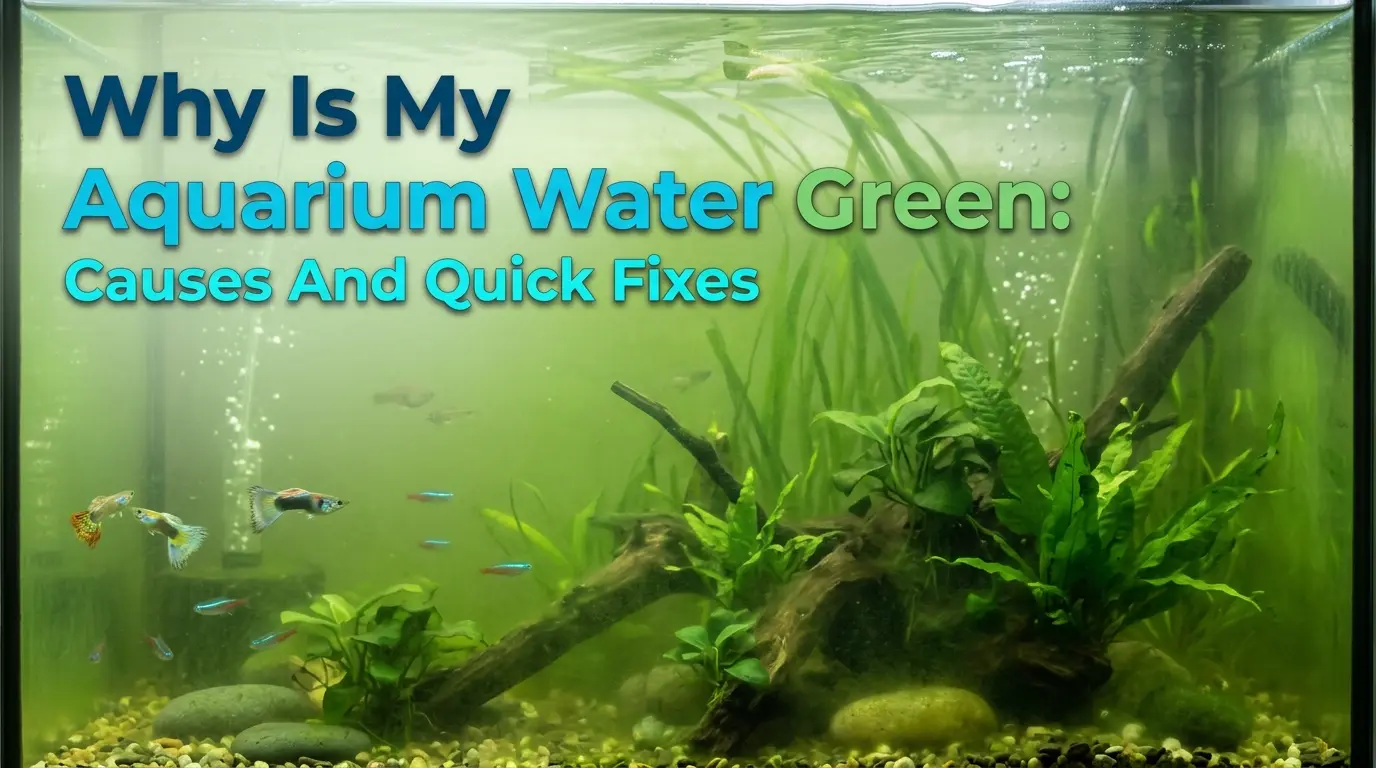
Green aquarium water is almost always an algae bloom fueled by light and nutrients.
If you’re asking why is my aquarium water green, you’re not alone. I’ve helped many aquarists solve this exact issue, and the fix is easier when you know the cause. This guide breaks down the science, the real-life reasons, and the exact steps to clear and prevent it for good—so you can enjoy a bright, healthy tank.
What that green tint really means
Green water is caused by free‑floating microalgae, also called phytoplankton. These tiny cells turn the water cloudy and pea‑soup green. They use light and nutrients in the water column to bloom fast. It’s different from the algae film that grows on glass, plants, or rocks.
When clients ask why is my aquarium water green, I start with this: algae needs light and food. Your tank has both in easy reach. If the balance tips, the bloom takes over the water, sometimes in days.
Main causes of green water

The answer to why is my aquarium water green often comes down to three inputs: light, nutrients, and stability. When these stack up, algae wins. Here are the usual triggers I see in tanks.
Too much light or direct sun
A long photoperiod or a tank by a window invites blooms. Sunlight is strong and changes through the day. Algae love that buffet.
Extra nutrients in the water
Ammonia, nitrite, nitrate, and phosphate are algae fuel. Overfeeding, decaying leaves, and fish waste boost levels. Tap water can carry phosphate too.
New tank syndrome
Young aquariums lack mature biofilters. That makes small nutrient spikes common. Green water often hits new setups at week 3 to 6.
Overfeeding and heavy stocking
Uneaten food breaks down fast. A crowded tank adds more waste. Both raise nutrients, and algae respond.
Weak plant growth and CO2 limits
Slow plants do not compete well. If plants lack CO2 or nutrients, they stall. Algae use whatever is left in the water.
Dirty filters and dead spots
Clogged media reduce flow and oxygen. Waste collects in corners and under decor. That creates mini nutrient hot spots.
Big water changes with “dirty” source water
Some tap water has phosphate or silicate. A big change can feed a bloom. Always test your source.
Is green water dangerous?
Another angle to why is my aquarium water green is risk to fish and plants. Green water itself is not toxic, but it can stress fish. At night, algae consume oxygen, which can lower O2 for fish and shrimp.
It also blocks light to rooted plants and makes it hard to see fish health. The good news: green water is very treatable. Clear water returns once the root cause is fixed.
How to diagnose the root cause

To nail down why is my aquarium water green, check light, nutrients, and routine. A simple checklist catches most issues fast.
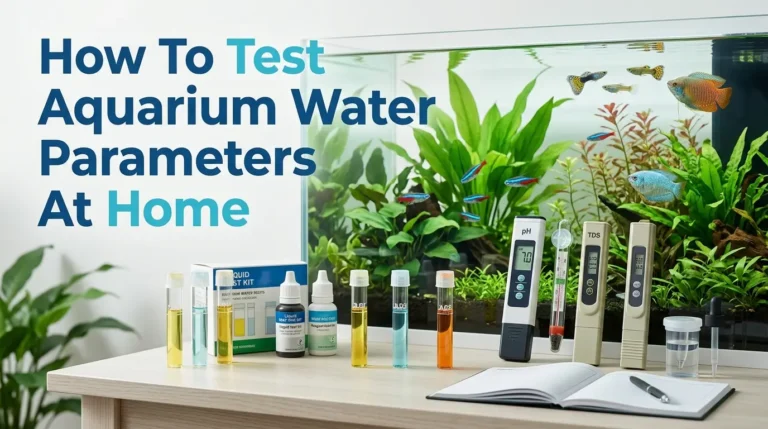
- Test with a liquid kit. Check ammonia, nitrite, nitrate, and phosphate. Nitrate under 20 to 40 ppm is a good aim, with low phosphate if plants are slow.
- Audit your light. Aim for 6 to 8 hours a day. Remove direct sun and dim very bright fixtures.
- Look for waste. Vacuum the substrate and lift decor to spot trapped debris. Clean prefilters and sponges.
- Review feeding. Feed what fish finish in under two minutes. Skip one day per week for balance.
- Check source water. Test tap for phosphate and nitrate. Consider RO/DI or mixing with distilled if high.
lear green water fast: methods that work
Here is how to fix why is my aquarium water green, step by step. Pick one or two methods, then lock in prevention.
- Do a controlled blackout. Cover the tank for 3 to 4 days, keep the filter running, and aerate well. Uncover and resume a shorter light schedule.
- Use a UV sterilizer. A properly sized UV with slow flow clears blooms in 24 to 72 hours. It kills free‑floating algae as water passes the lamp.
- Polish with fine filtration. Add a fine pad or micron cartridge. Clean or replace it as it traps green cells.
- Partial water changes. Do 20 to 30 percent changes every few days. Match temperature and dechlorinate to avoid stress.
- Boost plant mass. Fast growers like hornwort, water sprite, or floating plants outcompete algae. Healthy plant growth is a strong long‑term fix.
- Avoid harsh chemicals. Flocculants and algaecides can harm fish and shrimp if misused. If you try them, follow labels and increase aeration.
- Improve oxygen and flow. Add an airstone or raise filter output to ripple the surface. Stable oxygen helps fish during recovery.
Preventing green water long term

Prevention is the real fix for why is my aquarium water green. Think balance, not constant fighting.
- Set a stable light plan. Use a timer for 6 to 8 hours. Keep tanks out of sun and avoid big light swings.
- Feed less, but better. Offer small meals and remove leftovers. Choose high‑quality food that does not crumble to dust.
- Keep a clean routine. Vacuum weekly, rinse sponges in tank water, and service canisters on schedule. Do steady, small water changes.
- Grow strong plants. Provide basic nutrients and good CO2 if using high light. Trim often to keep growth fast and healthy.
- Control nutrients at the source. Test tap water. Use phosphate‑removing media if your source is high.
- Balance your stock. Avoid overstocking and add fish slowly. More fish means more waste, so filter size should match.
Gear and tech that help
Smart gear can make why is my aquarium water green a thing of the past. Use tools that support a stable setup.
- UV sterilizer. For algae control, aim for about 1 to 2 watts per 10 gallons with slow flow. Place it after mechanical filtration for best clarity.
- LED with a timer. Reliable on/off cycles prevent long light days. Many lights include an easy schedule mode.
- Reliable test kits. Keep ammonia, nitrite, nitrate, and phosphate kits on hand. Log results to spot trends.
- Phosphate remover and fine pads. Media like GFO can help in high‑phosphate water. Fine pads polish the water column.
- Flow and aeration. A small powerhead or extra air can prevent dead zones. Fish breathe easier, and filters work better.
Real‑life case study: from pea soup to crystal clear

I once battled why is my aquarium water green in a 29‑gallon community tank. It sat near a bright window, had a new light, and I was feeding heavy. Tests showed nitrate at 40 ppm and detectable phosphate out of the tap.
I moved the tank away from direct sun, cut light to 7 hours, and installed a 9‑watt UV with slow flow. I added hornwort, did two 30 percent water changes, and vacuumed the gravel. In three days the water went clear, and two weeks later the plants were thriving.
The key lesson: solve the cause, not only the symptom. Light control plus nutrient control beats green water every time.
Frequently Asked Questions of why is my aquarium water green
How do I get rid of green aquarium water fast?
Use a UV sterilizer or a 3 to 4 day blackout with added aeration. Then fix light and nutrients to keep it from coming back.
Is green water bad for fish?
It is not toxic by itself, but it can lower oxygen at night. It also makes it hard to see stress or disease, so clear it and restore balance.
Why does green water return after a water change?
A water change removes algae cells but not the cause. If light and nutrients stay high, the bloom restarts within days.
Will a UV sterilizer fix it for good?
UV clears free‑floating algae fast, often within 72 hours. Keep it running and adjust light and feeding to prevent future blooms.
Can live plants stop green water?
Yes, fast‑growing plants and floaters compete for the same nutrients. Healthy plant growth is one of the best long‑term controls.
How long should aquarium lights be on?
Most tanks do well with 6 to 8 hours per day. Longer times increase the risk of algae blooms.
Does direct sunlight cause green water?
Yes, even a few hours can trigger a bloom. Move the tank or block the sun to control it.
Conclusion
Now you know why is my aquarium water green and how to fix it with simple steps. Control light, manage nutrients, and build a routine that keeps balance steady. Tackle the cause once, and your tank will reward you with clear, lively water.
Ready to put this plan into action? Start with a light timer and a test kit this week, then track your progress. If you found this helpful, share your results, subscribe for more tips, or drop your questions in the comments.