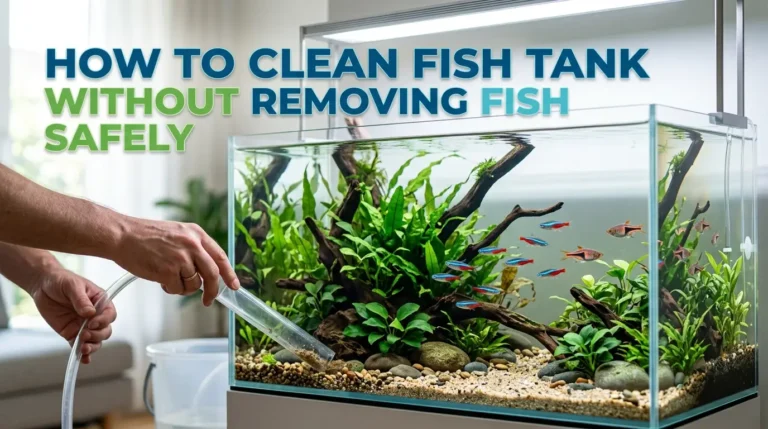
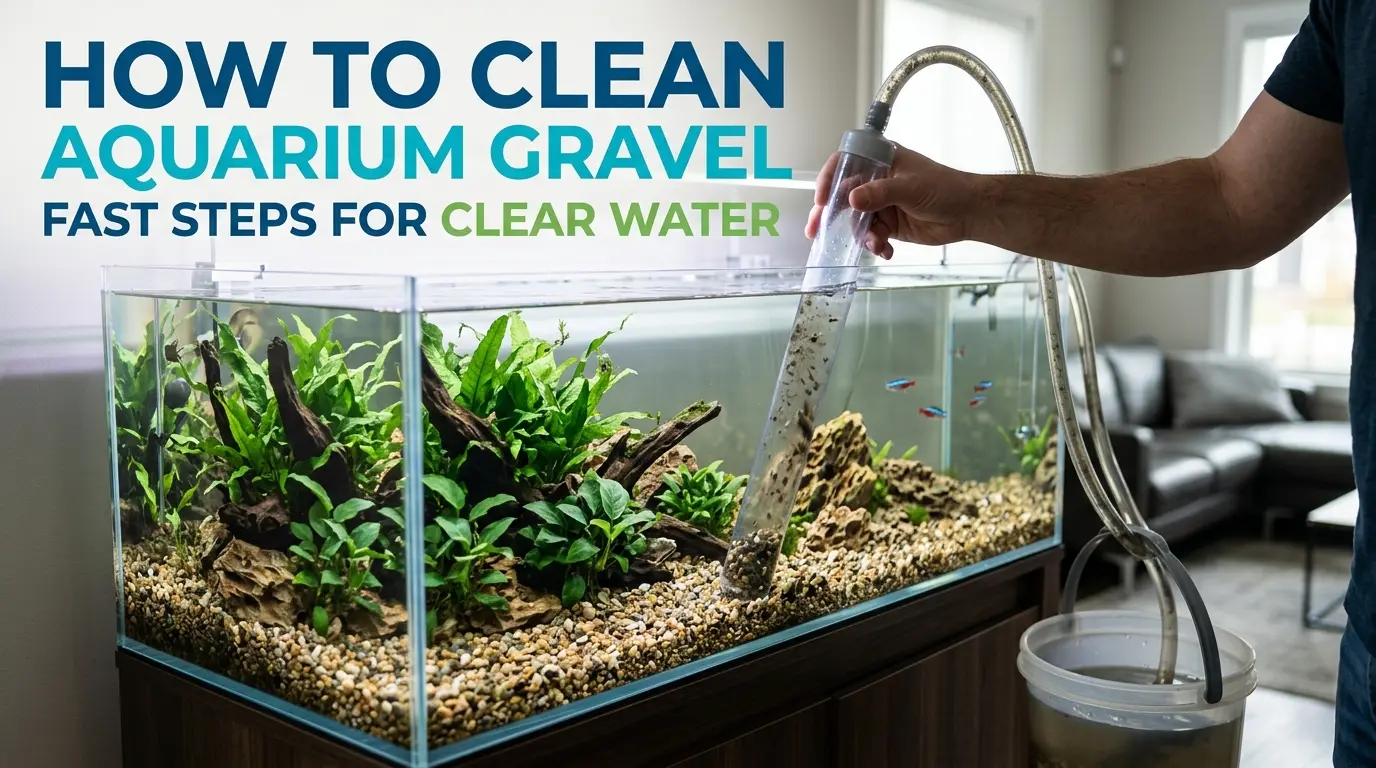
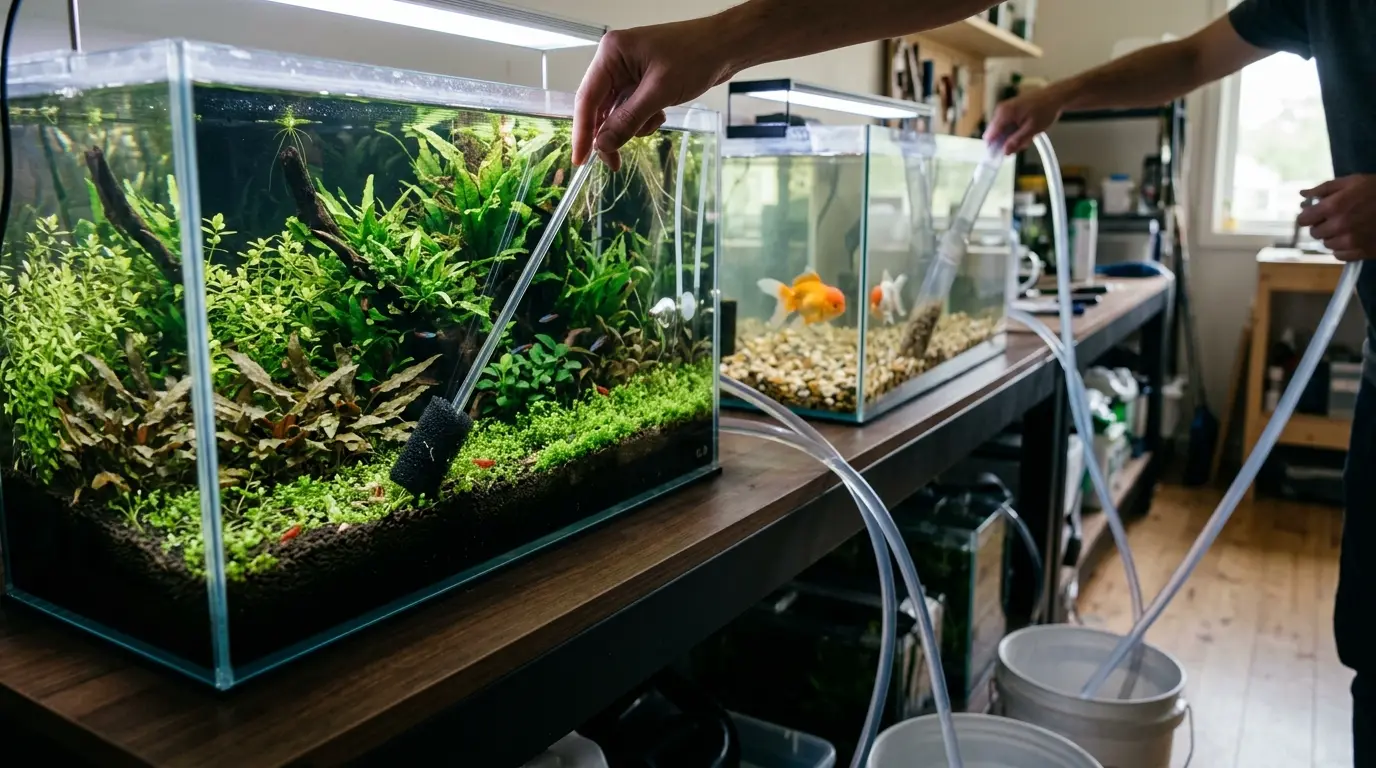
Use a gravel vacuum during water changes to remove waste without harming bacteria.
If you want crystal-clear water and healthy fish, learning how to clean aquarium gravel is a must. I’ve maintained community, planted, and reef tanks for years, and I’ll show you simple, low-stress methods that protect your beneficial bacteria, reduce toxins, and keep your tank stable. Stick with me, and you’ll master how to clean aquarium gravel like a pro—without tearing down your setup or stressing your fish.
Why clean aquarium gravel matters
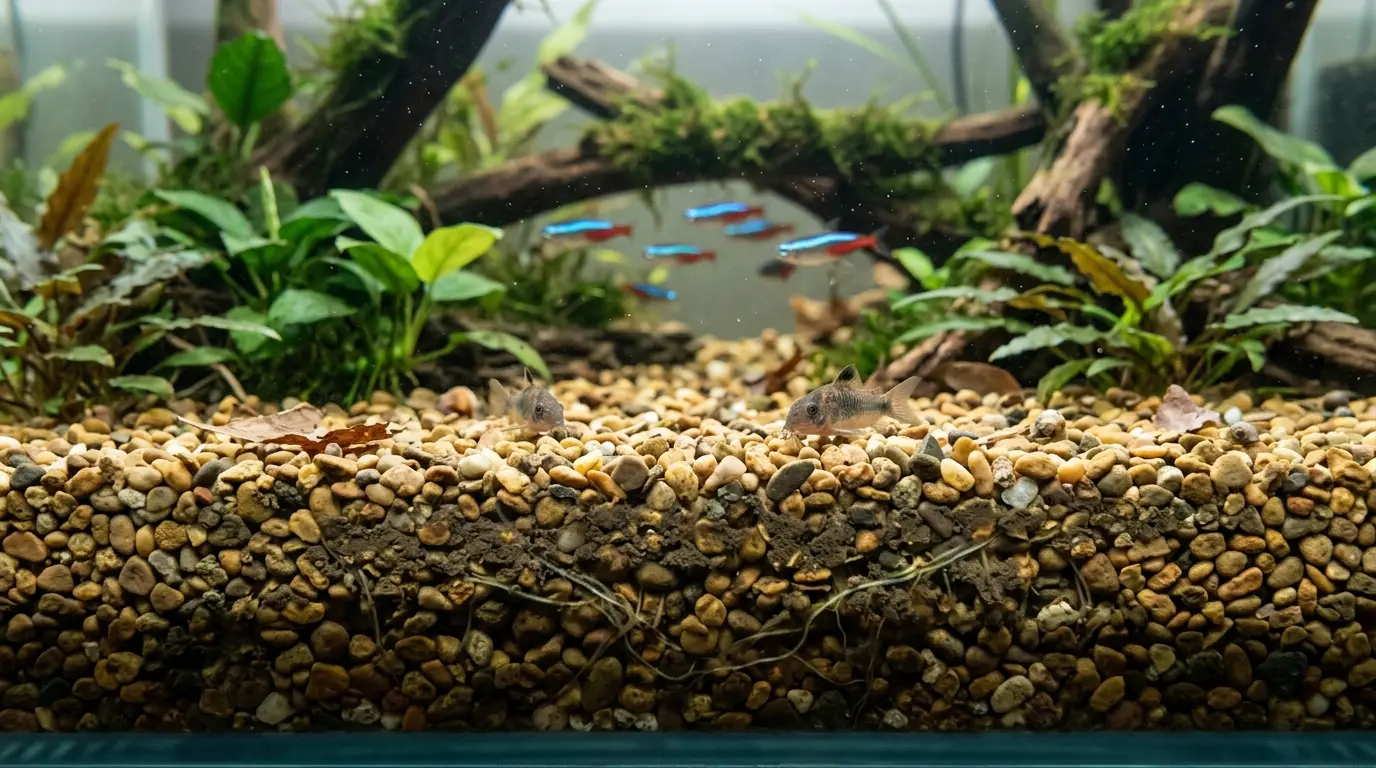
Fish waste, leftover food, and plant bits sink into the gravel. Over time, this builds up as mulm. That mulm feeds ammonia spikes and algae blooms. It also clouds the water and can smell bad.
Good gravel care supports the nitrogen cycle. Most nitrifying bacteria live on surfaces, including the substrate. When you know how to clean aquarium gravel the right way, you remove waste but keep the bacteria that keep your water safe.
Clean gravel also helps oxygen flow through the bed. That reduces dead zones where anaerobic bacteria can form and release toxins. Healthy gravel is like a filter you can see.
Tools and supplies you’ll need
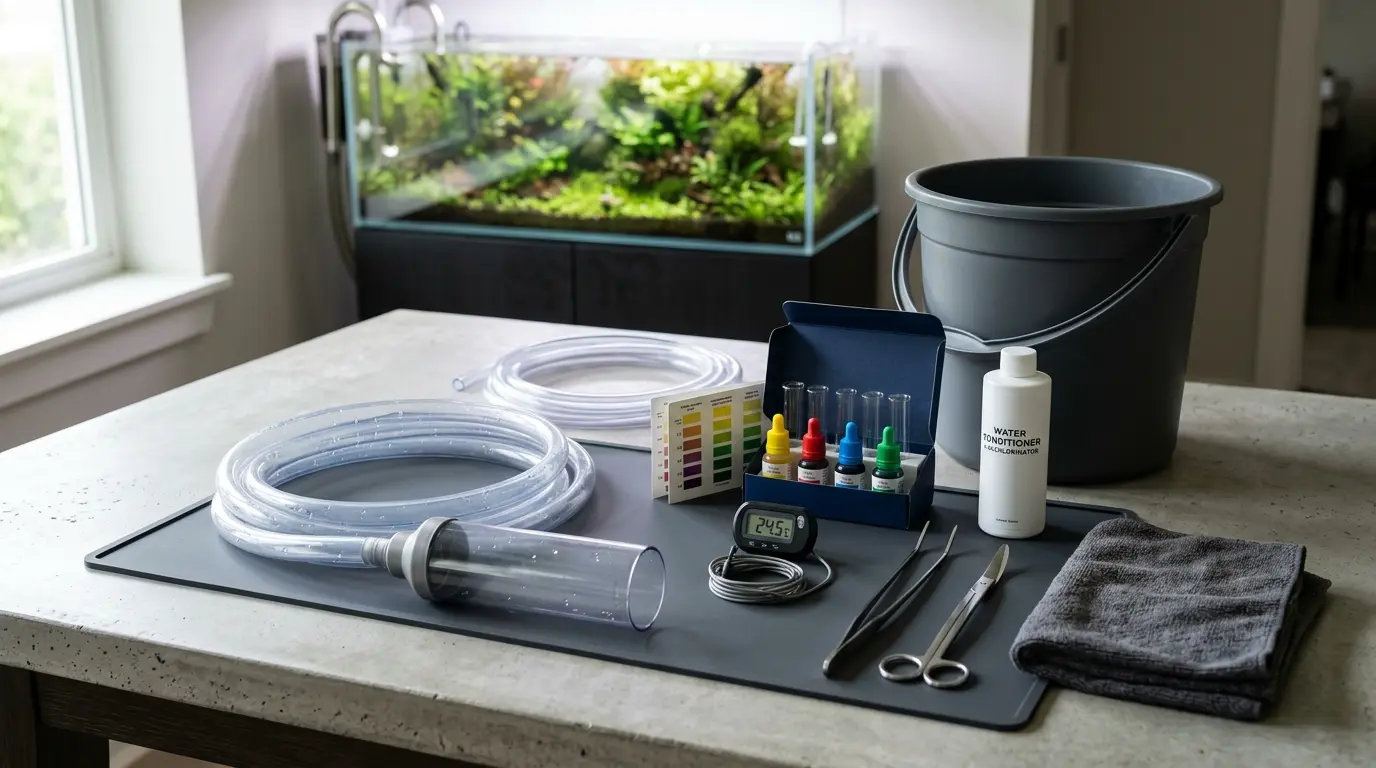
- Gravel vacuum or siphon with a wide intake tube
- Bucket used only for aquarium water
- Dechlorinator for tap water
- Water test kit for ammonia, nitrite, nitrate, and pH
- Thermometer to match new water temperature
- Old towel and a bath mat to catch drips
- Aquascaping tongs if you keep plants
Tip from my fish room: keep a spare siphon. One for clean water, one for waste. It prevents cross-contamination.
How often should you clean gravel?
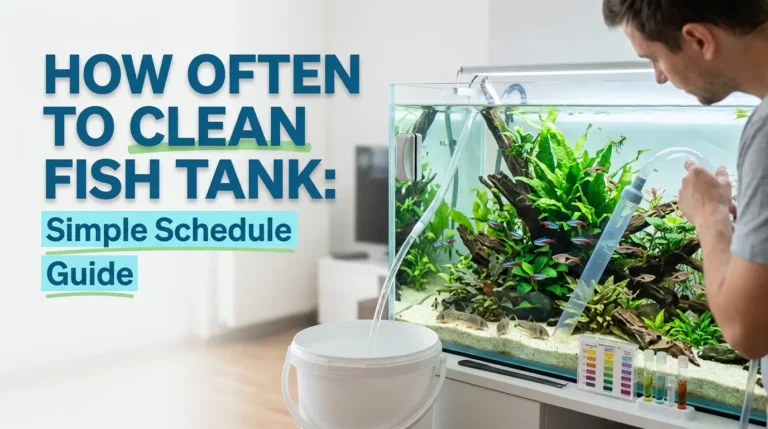
Your schedule depends on tank size, bioload, and feeding. Heavily stocked tanks often need weekly gravel cleaning with a 20–30% water change. Lightly stocked or planted tanks can go every two weeks.
Watch your gravel and test results. If nitrate climbs fast, or you see debris on the surface, clean sooner. Once you learn how to clean aquarium gravel on a set rhythm, your water will stay stable.
Step-by-step: how to clean aquarium gravel the right way
- Unplug gear. Turn off heaters and filters so they don’t run dry. Leave lids on to calm fish.
- Prepare new water. Match temperature to within 1–2°F of the tank. Add dechlorinator as directed.
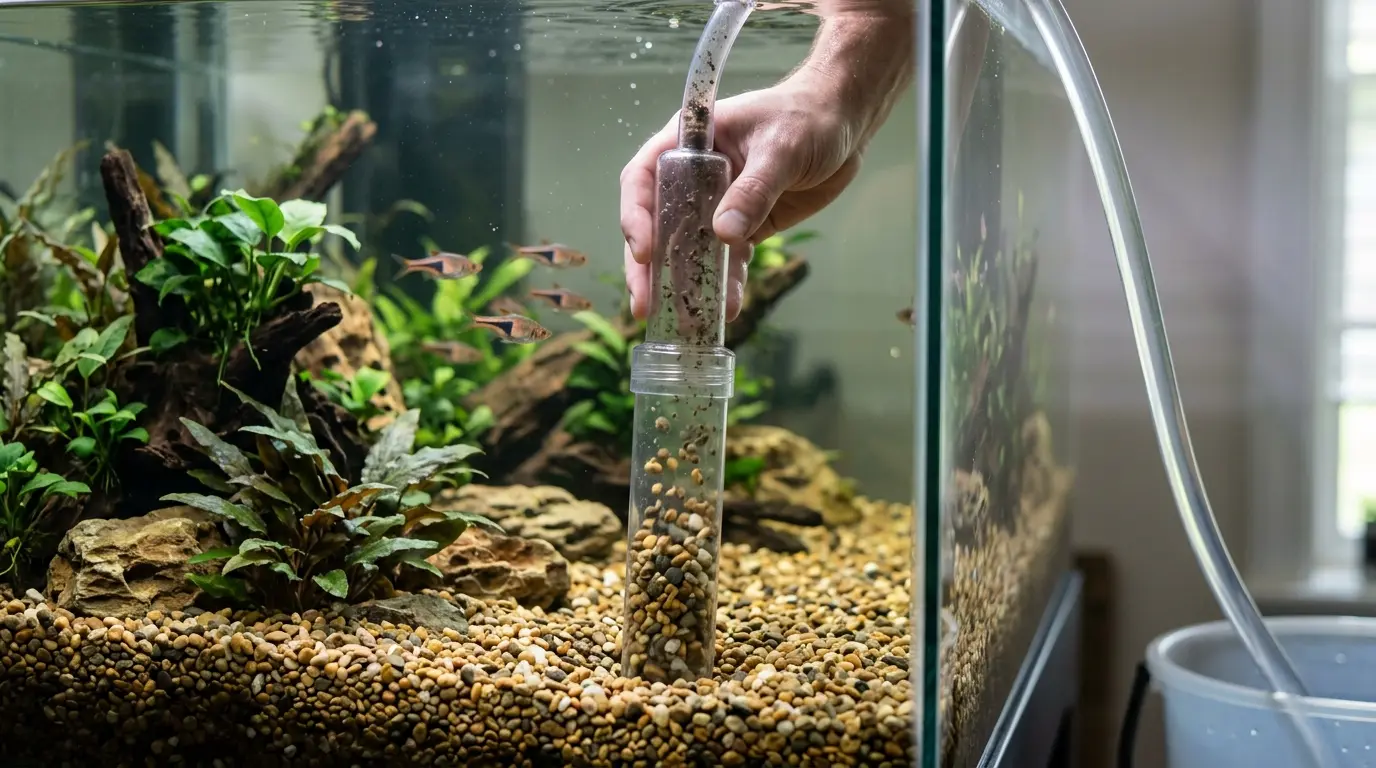
- Start the siphon. Submerge the gravel vacuum to fill it, then start the flow into your bucket.
- Vacuum the gravel. Push the intake tube straight down. Lift it as stones tumble and waste rises. Move in a grid so you do not miss spots.
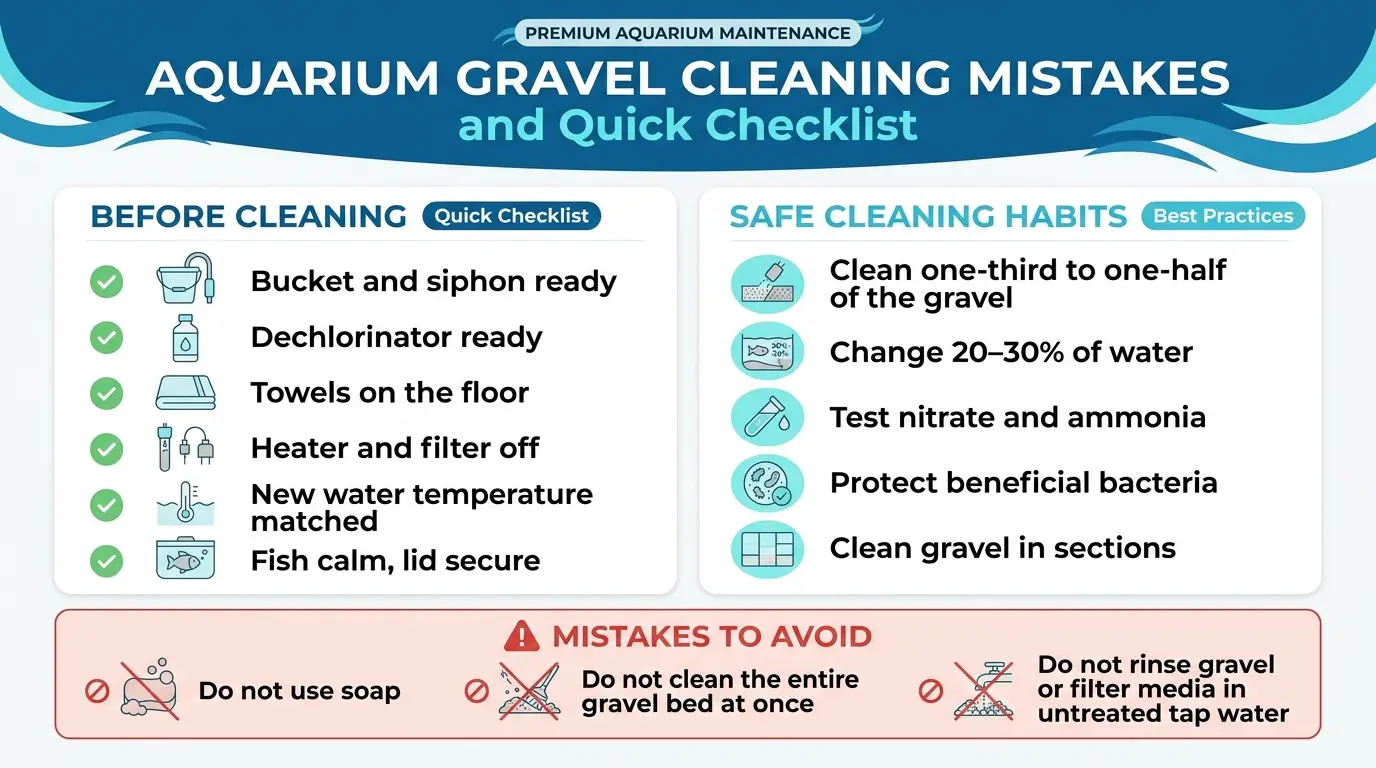
- Work in sections. Clean about one third to one half of the gravel each session. This protects bacterial colonies.
- Watch the cloud. When the water in the tube runs clearer, move to the next patch.
- Stop at 20–30% water removed. That range is ideal for most tanks. Go slower for nano tanks.
- Refill the tank. Pour treated water slowly onto a plate or bag to avoid stirring the bed.
- Restart gear. Prime the filter if needed. Check the heater light and flow rate.
- Test and log. Record nitrate and pH. A simple log helps you tune how to clean aquarium gravel for your setup.
Small-tank trick: pinch the siphon hose to reduce flow. It gives you more control and less mess.
Deep cleaning without crashing your cycle
Sometimes you need more than a routine pass. Maybe a rescape, or a big spill of food. You can deep clean and still keep bacteria safe.
- Do it in stages. Split the job over two to three weeks. Clean one area per session.
- Rinse gravel only in old tank water. Never use soap or untreated tap water. Chlorine can kill your biofilm.
- Keep the filter media wet and running. Most bacteria live there. Avoid cleaning the filter on the same day as a deep gravel clean.
- If you must remove fish, use an aerated tub with a heater. Match temperature and pH.
When clients ask how to clean aquarium gravel during a full redo, I remind them: preserve bacteria first. Your cycle is the heart of the tank. Treat it with care.
Special cases and pro tips
Planted tanks
- Vacuum lightly around roots. Focus on open paths where mulm gathers.
- Use a thin siphon or turkey baster for tight spots.
- Add root tabs after cleaning if you disturbed nutrients.
Shrimp and nano fish
- Cover the intake with a pre-filter sponge or mesh.
- Swirl the siphon just above the gravel to lift debris without sucking up tiny livestock.
Undergravel filters
- Push the vacuum deeper along uplift tubes and plates.
- Clean small areas each week to avoid releasing too much waste at once.
New tanks and cycling
- During the first month, clean gently. Learn how to clean aquarium gravel in small passes to avoid stalling the cycle.
High-waste setups (goldfish, cichlids)
- Vacuum weekly, sometimes twice a week.
- Feed less at a time. Less waste means less mulm.
Personal note: My biggest early mistake was scrubbing gravel spotless in one go. The tank looked great for a day, then the water turned cloudy. I learned to go slower, clean in zones, and never wash media and gravel on the same day.
Common mistakes to avoid and easy fixes
- Overcleaning the entire bed at once. Fix: clean in sections to protect bacteria.
- Using untreated tap water to rinse gravel. Fix: use dechlorinated or old tank water.
- Skipping water tests. Fix: test after each clean to tune your schedule.
- Stirring deep beds too fast. Fix: go slow to avoid releasing trapped gas pockets.
- Ignoring flow dead spots. Fix: adjust filter outlets so debris does not pile in corners.
Once you master how to clean aquarium gravel without these errors, your tank will run smoother and look clearer.
Maintenance schedule and quick checklist
Weekly or biweekly plan
- Test nitrate and ammonia.
- Vacuum one third to one half of the gravel.
- Change 20–30% of the water.
- Wipe the glass and prune plants.
- Top up and dechlorinate as needed.
Five-minute pre-clean checklist
- Bucket, siphon, dechlorinator ready.
- Towels on the floor.
- Heater and filter off.
- New water matched for temperature.
- Fish calm, lid secure.
This simple plan cements the habit of how to clean aquarium gravel with less stress and better results.
Frequently Asked Questions of how to clean aquarium gravel
How often should I clean my gravel?
Most tanks do well with gravel cleaning every week or two. Heavier bioloads or messy eaters may need weekly care.
Should I remove fish when I clean the gravel?
No, leave fish in the tank for routine cleaning. Work calmly and keep the siphon away from curious fins.
Can I use soap to clean aquarium gravel?
Never use soap. Rinse gravel only in old tank water or dechlorinated water to protect bacteria.
How deep should I vacuum the gravel?
Push the tube down until stones tumble and debris rises. In planted tanks, stay shallower around roots.
What if my gravel is very dirty?
Clean in stages over several sessions. Do small sections and test water after each pass to keep the cycle stable.
Is sand different from gravel for cleaning?
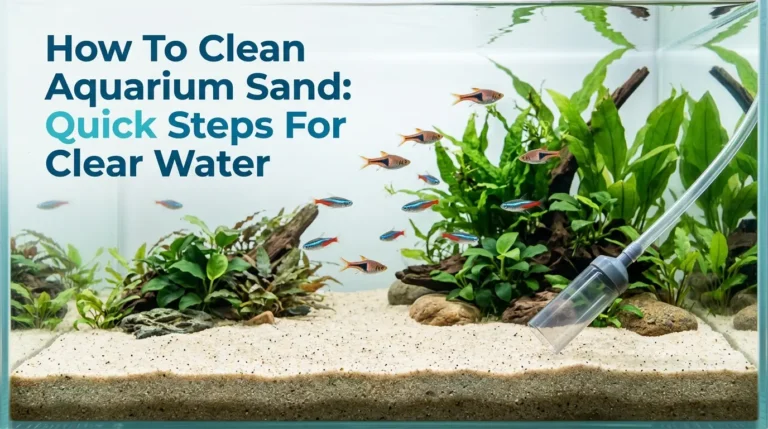
Yes. With sand, hover the siphon just above the surface. You skim waste without pulling up the substrate.
Conclusion
Gravel care is simple once you build a rhythm. Use a siphon, clean in sections, protect your bacteria, and keep notes. That is the core of how to clean aquarium gravel without stress.
Start this week: test your water, vacuum one third of the bed, and log the results. You will see clearer water and happier fish fast. If you found this guide useful, subscribe for more tank tips or share your own gravel-cleaning wins in the comments.