High ammonia happens when fish waste, excess food, and weak filtration overwhelm bacteria.
If you have ever asked what causes high ammonia in fish tank water, you are in the right place. I keep planted and community tanks, and I have fixed many scary ammonia spikes. In this guide, I explain the science in simple words and share real fixes that work. We will cover real causes, fast steps to lower ammonia, and a plan to prevent it for good.
What Is Ammonia and Why It Spikes
Ammonia is a waste product. Fish breathe and poop. Food breaks down. All that turns into ammonia. In water, ammonia exists as free ammonia (NH3) and ammonium (NH4+).
NH3 is the most toxic form. High pH and warm water make more NH3. That is why a tank at pH 8.2 can be deadly even at the same total ammonia reading. If you wonder what causes high ammonia in fish tank set ups that used to be fine, a pH jump or heat wave can turn safe ammonium into toxic ammonia fast.
The Nitrogen Cycle in Plain English
Good bacteria turn ammonia into nitrite, then into nitrate. This is the nitrogen cycle. It takes time to build those bacteria. Most new tanks are not cycled. That is why new tank syndrome is so common.
A stable biofilter lives on filter media and surfaces. It needs oxygen and steady flow. If you turn the filter off for hours, those bacteria can die. Later, you see what causes high ammonia in fish tank water: a biofilter crash. Seeded media from a mature tank can speed up cycling.
Common Causes of High Ammonia in Fish Tanks
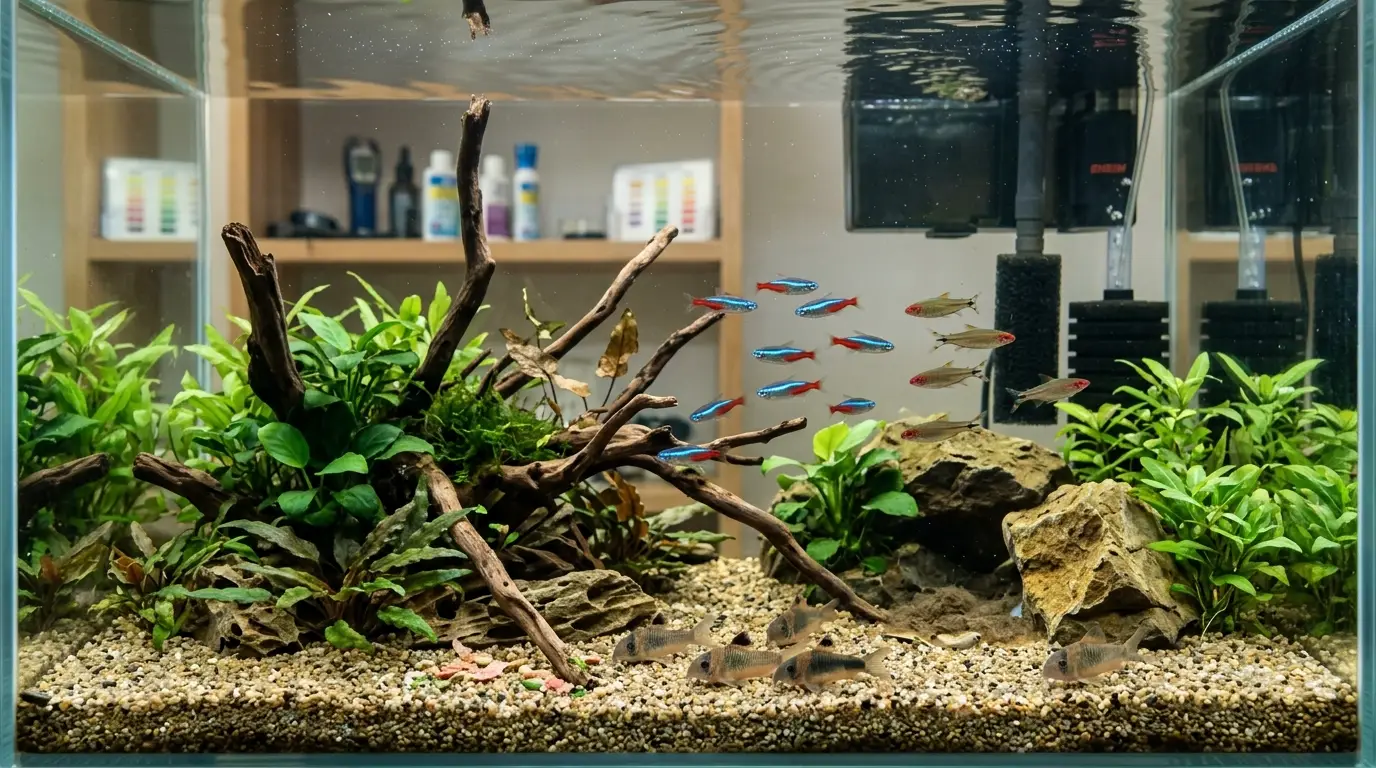
If you want the short list of what causes high ammonia in fish tank care, start here.
- Overfeeding
Too much food rots in hours. It releases ammonia and fuels bacteria blooms. Feed what fish eat in 30 to 60 seconds, once or twice a day. - Overstocking
More fish means more waste. A small filter cannot keep up. Aim for light to moderate stocking while your bacteria grow. - New tank, not cycled
Without a full cycle, ammonia builds right away. Fish-in cycling is stressful and risky. Fishless cycling with bottled bacteria is safer. - Weak or clogged filtration
A filter that is too small, gummed up, or turned off cannot process waste. Rinse sponges in old tank water, not tap water. - Killing the biofilter by mistake
Washing media in hot or chlorinated tap water wipes out bacteria. Some medications, algaecides, and bleach also cause die-offs. - Dead or decaying matter
A hidden dead fish, snails, shrimp, or piles of plant leaves raise ammonia fast. Check behind wood, rocks, and inside filters. - Poor maintenance
Skipping water changes lets waste pile up. Stirring a filthy substrate all at once can dump a cloud of decay into the water. - Tap water with chloramine
Many cities use chloramine. Conditioners break it into chlorine and ammonia. Good ones bind the ammonia, but test kits still read it as total ammonia. - pH changes
A rise in pH shifts ammonium into toxic ammonia. Crushed coral, limestone, or sudden changes in water source can push pH up. - Heat and low oxygen
Warm water holds less oxygen. Filters and bacteria struggle. That leads to more waste and more free ammonia.
These are the core answers to what causes high ammonia in fish tank problems across most home aquariums.
Hidden or Overlooked Sources You Might Miss
There are sneaky reasons too. These catch even experienced keepers.
- Power outage or unplugged filter overnight
Bacteria suffocate in still water. When flow returns, the filter smells bad and ammonia rises. - Overcleaning day
Deep-cleaning the filter and substrate on the same day can strip too much bacteria at once. - Old food stuck in decor
Caves, driftwood holes, and fake plants trap flakes. They rot where you cannot see. - Bottled bacteria misuse
Some products need shaking, heat protection, or a use-by date. Old bottles may not seed well. - Carbon and resins
Some products break chloramine but leave bound ammonia that still tests positive. The ammonia is less toxic, but your test shows a spike. - Big plant trim with no cleanup
Cutting large leaf mass and leaving scraps behind causes quick decay.
If you still ask what causes high ammonia in fish tank water after basic fixes, check these hidden spots next. I have found a single dead snail under a rock ruin a 30-gallon within a day.
How to Test, Track, and Diagnose an Ammonia Spike
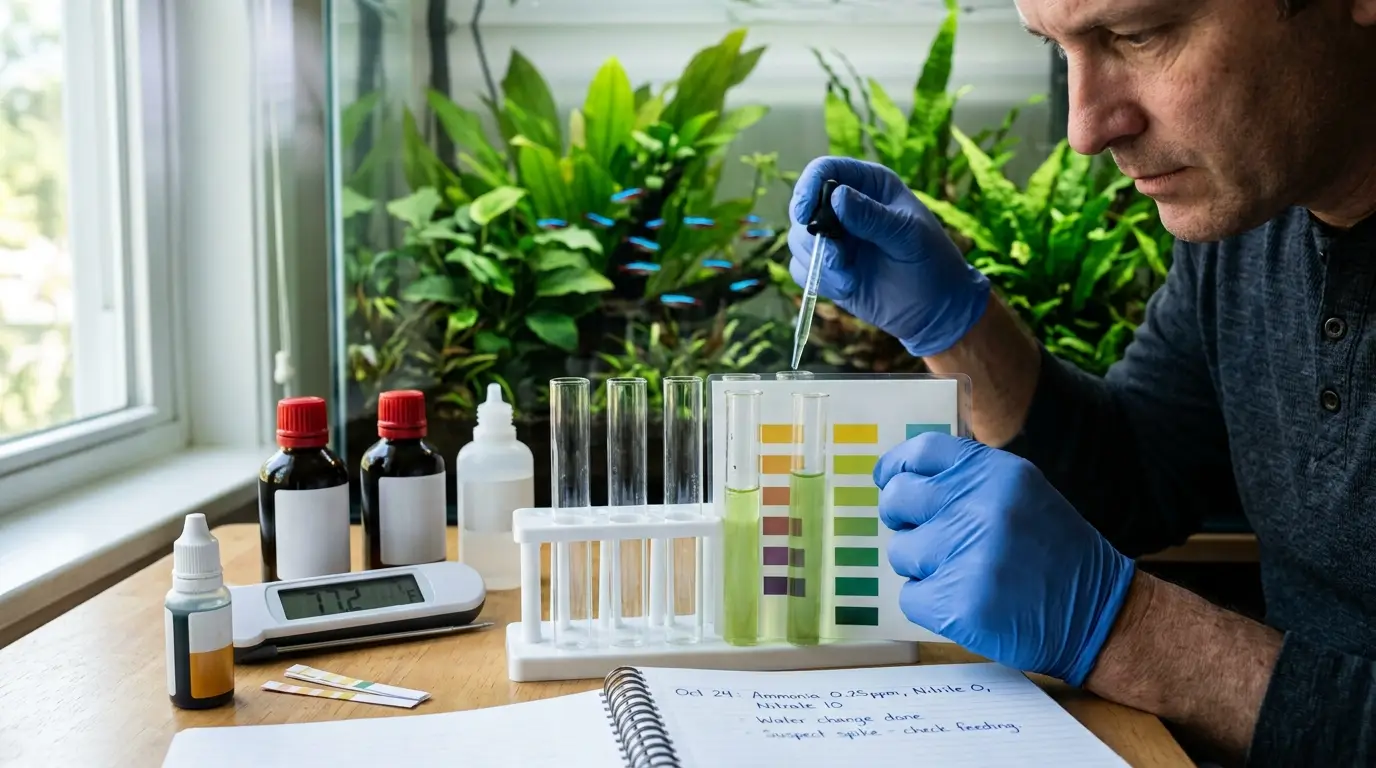
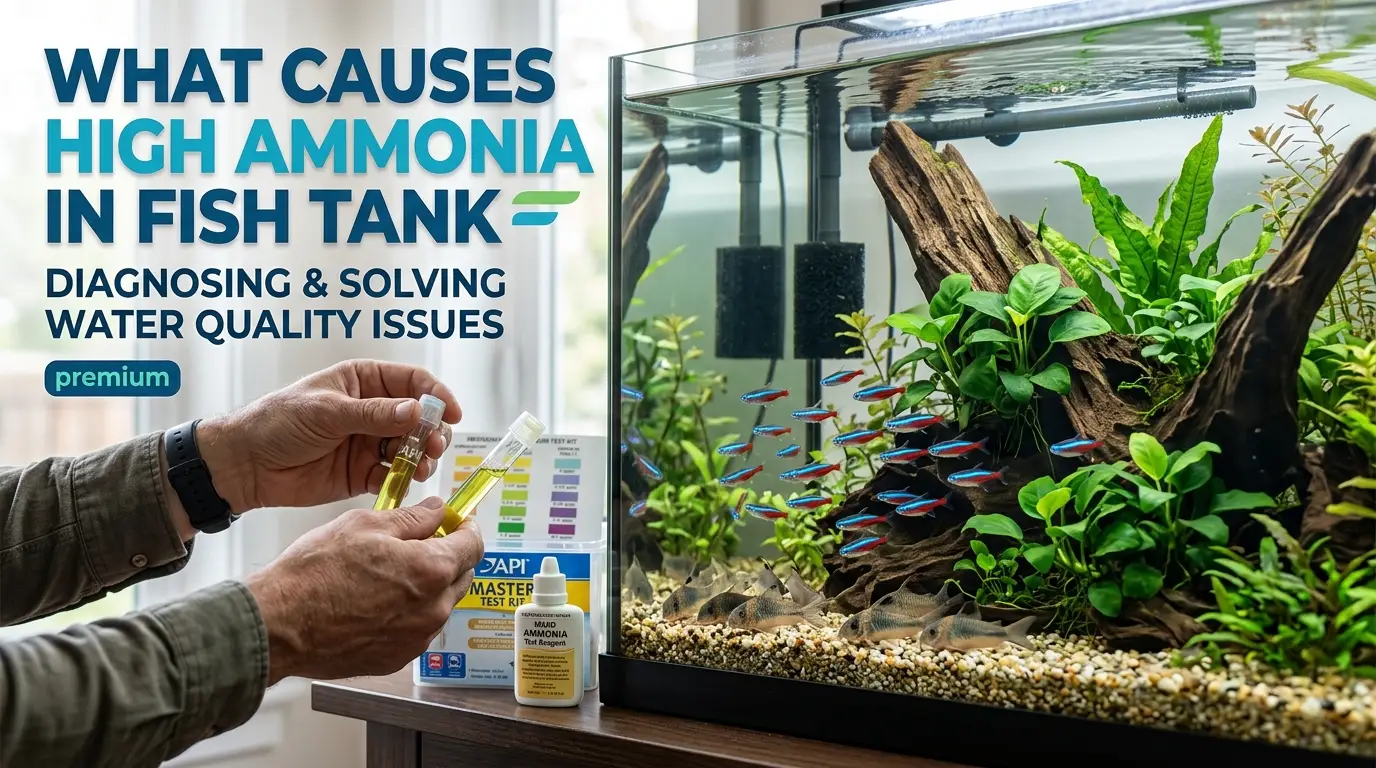
Start with a liquid test kit. Strips are fast but less exact. Test ammonia, nitrite, nitrate, pH, and temperature.
- Know the difference between total and free ammonia
Most tests read total ammonia (NH3 + NH4+). Toxic NH3 rises with pH and heat. Use a calculator or a badge that reads free ammonia. - Test your tap water
If total ammonia shows up from the tap, you likely have chloramine. Use a conditioner that detoxifies ammonia. - Test in the morning and at night
pH can swing. Warmer evenings can read more toxic NH3. - Watch your fish
Gasping, red gills, clamped fins, and hiding suggest ammonia stress. - Keep notes
Write dates, results, changes, and fish behavior. Patterns reveal what causes high ammonia in fish tank cycles over time.
Fast Fixes vs Long-Term Solutions
When ammonia is high, act fast. Then build a plan so it does not return.
Fast fixes to protect fish now:
- Do a 30 to 50 percent water change. Match temp and dechlorinate.
- Dose a quality conditioner that detoxifies ammonia for 24 to 48 hours.
- Add strong aeration. Oxygen helps fish and bacteria.
- Remove any dead or rotting matter. Vacuum the substrate.
- Add established media from a healthy tank. This seeds your filter.
- Use zeolite in emergencies. It can adsorb ammonia in freshwater.
Long-term solutions that stick:
- Right-size filtration. Aim for 5 to 10 times tank volume per hour.
- Double your bio-surface. Add a prefilter sponge or extra biomedia.
- Feed less and better. Small portions, high-quality food, more target feeding.
- Grow live plants. Fast growers like hornwort and water sprite help.
- Keep a steady pH and temperature. Stability reduces toxic NH3 swings.
- Cycle fishless before stocking. Add fish slowly in stages.
- Do routine water changes. Most tanks thrive on 25 to 35 percent weekly.
- Protect the biofilter. Rinse media in tank water. Avoid harsh meds.
- Prepare for outages. A battery air pump can save your cycle.
These steps address what causes high ammonia in fish tank care both now and later. I have relied on them to save entire schools during surprise spikes.
Prevention Checklist and Maintenance Schedule
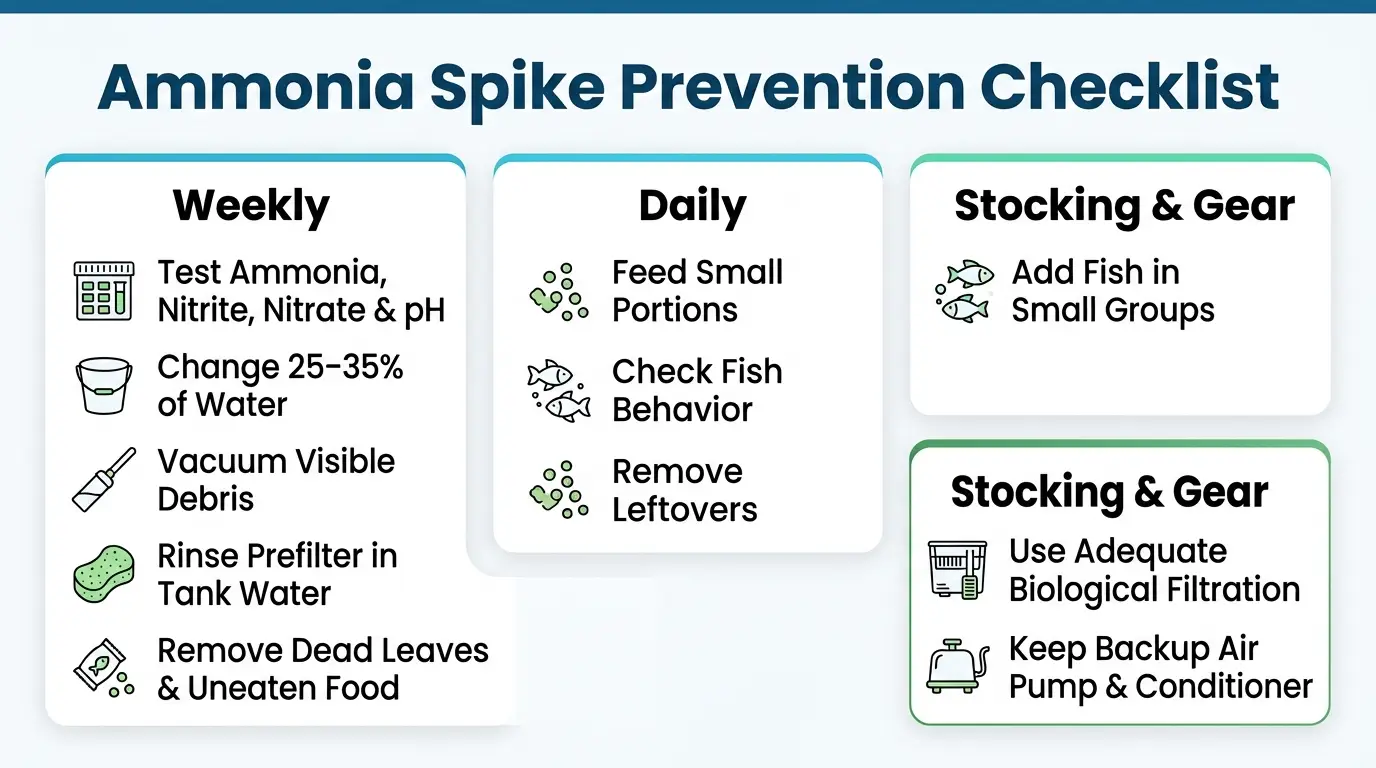
Prevention makes fish keeping calm and fun. Use this simple checklist.
Weekly checklist:
- Test ammonia, nitrite, nitrate, and pH.
- Change 25 to 35 percent of the water.
- Vacuum debris you can see.
- Rinse prefilter sponges in old tank water.
- Trim dead leaves and remove uneaten food.
Monthly checklist:
- Inspect impellers, hoses, and flow rate.
- Gently swish biomedia in tank water if flow drops.
- Review stocking and feeding amounts.
- Clean under decor that traps waste.
Smart feeding rules:
- Only what fish finish in 30 to 60 seconds.
- Skip one day a week. It helps water quality.
- Thaw frozen foods and feed small portions.
Stocking and gear:
- Add fish in small groups with two weeks between.
- Use two filters or a large filter with extra biomedia.
- Keep a backup air pump and conditioner on hand.
My quick routine for a 20-gallon community tank:
- Sunday: 30 percent water change and light vacuum.
- Wednesday: Test ammonia and nitrite, clean prefilter.
- Daily: Check fish, remove leftovers after 2 minutes.
This flow keeps ammonia at zero. It also prevents most of what causes high ammonia in fish tank water in small homes.
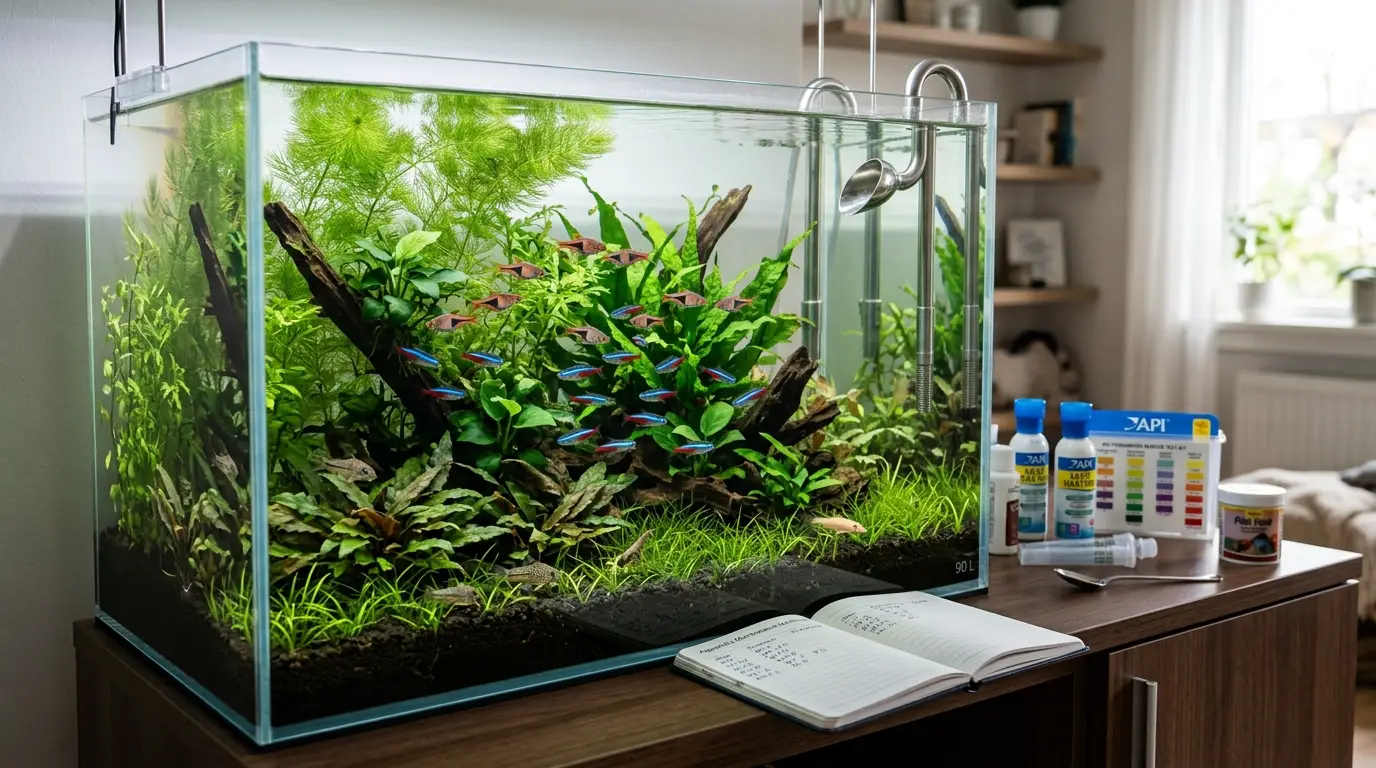
Frequently Asked Questions of what causes high ammonia in fish tank
How fast can ammonia hurt fish?
In a warm, high-pH tank, damage can happen within hours. Gills burn first, so fish may gasp and hide.
Does water conditioner remove ammonia?
Most bind ammonia into ammonium, which is less toxic. Your test may still read total ammonia, but it is safer for 24 to 48 hours.
Why is ammonia high after a water change?
Your tap water may have chloramine, which adds bound ammonia. Use a conditioner that handles chloramine and test again later.
Can plants fix high ammonia on their own?
Plants help but cannot fix a big spike alone. Combine plants with water changes, aeration, and a strong biofilter.
Is 0.25 ppm ammonia safe?
No. Aim for zero measurable ammonia. Even low levels can stress fish and invite disease.
Why did ammonia rise in a mature tank?
The biofilter may have crashed due to meds, a power cut, or overcleaning. Hidden decay or overfeeding can also overwhelm it.
How long does it take to lower ammonia to zero?
With water changes, detoxifier, and seeded media, many tanks recover in a few days. A full fix with stable bacteria may take one to two weeks.
Conclusion
Ammonia spikes come from extra waste, weak bacteria, and sudden changes in pH, heat, or flow. When you understand what causes high ammonia in fish tank water, you can act fast and prevent the next spike. Keep feeding light, boost biofiltration, and stick to a simple routine.
Take one step today. Test your water, clean that prefilter, and plan a steady schedule. If this guide helped, share it with a fellow fish keeper or leave a comment with your tank size and goals. I am happy to help you build a stress-free, crystal-clear aquarium.