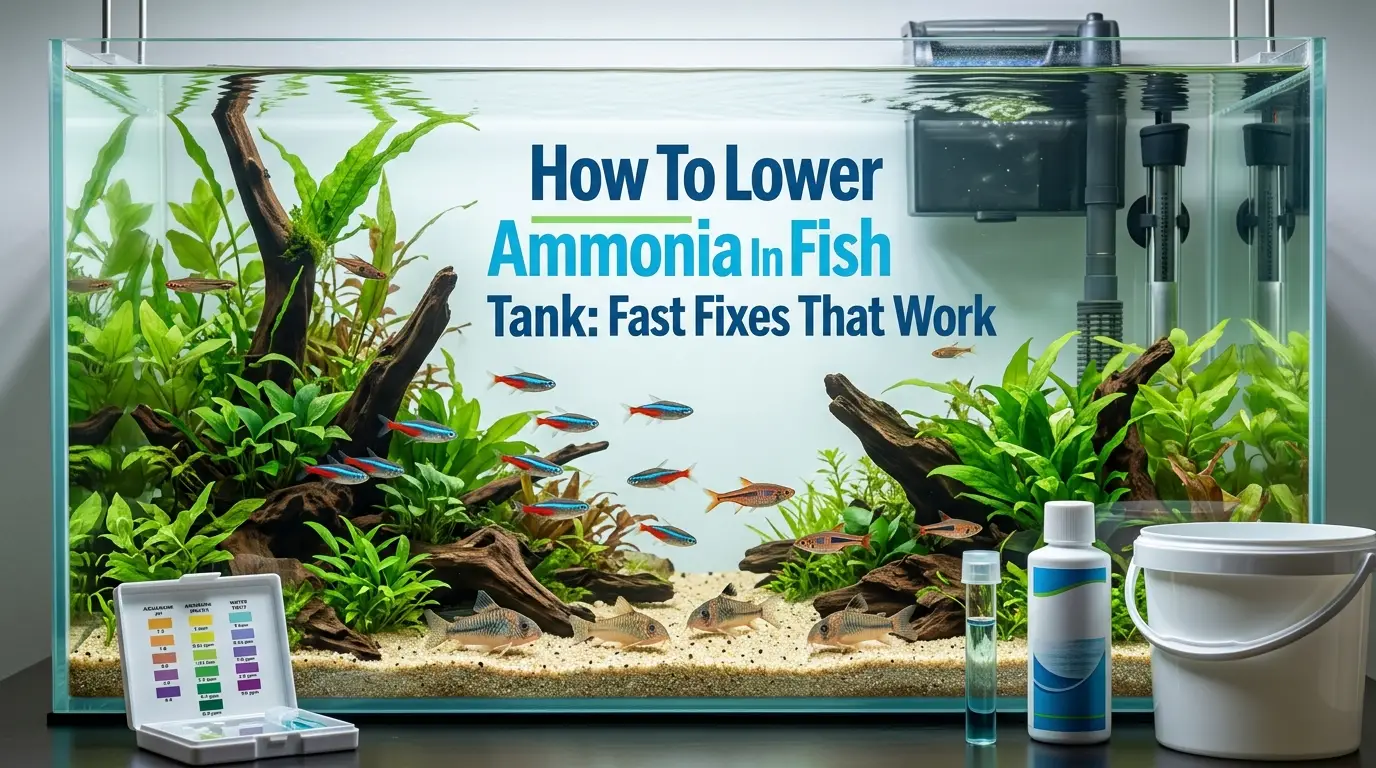
Do a big water change, detoxify ammonia, add bacteria, and fix overfeeding and waste.
If you want a clear, simple plan on how to lower ammonia in fish tank, you are in the right place. I’ve helped many hobbyists solve spikes fast and keep them from coming back. This guide blends proven aquarium science with real-world tips, so you can protect your fish today and build a stable, healthy tank for the long run.
What ammonia is and why it spikes
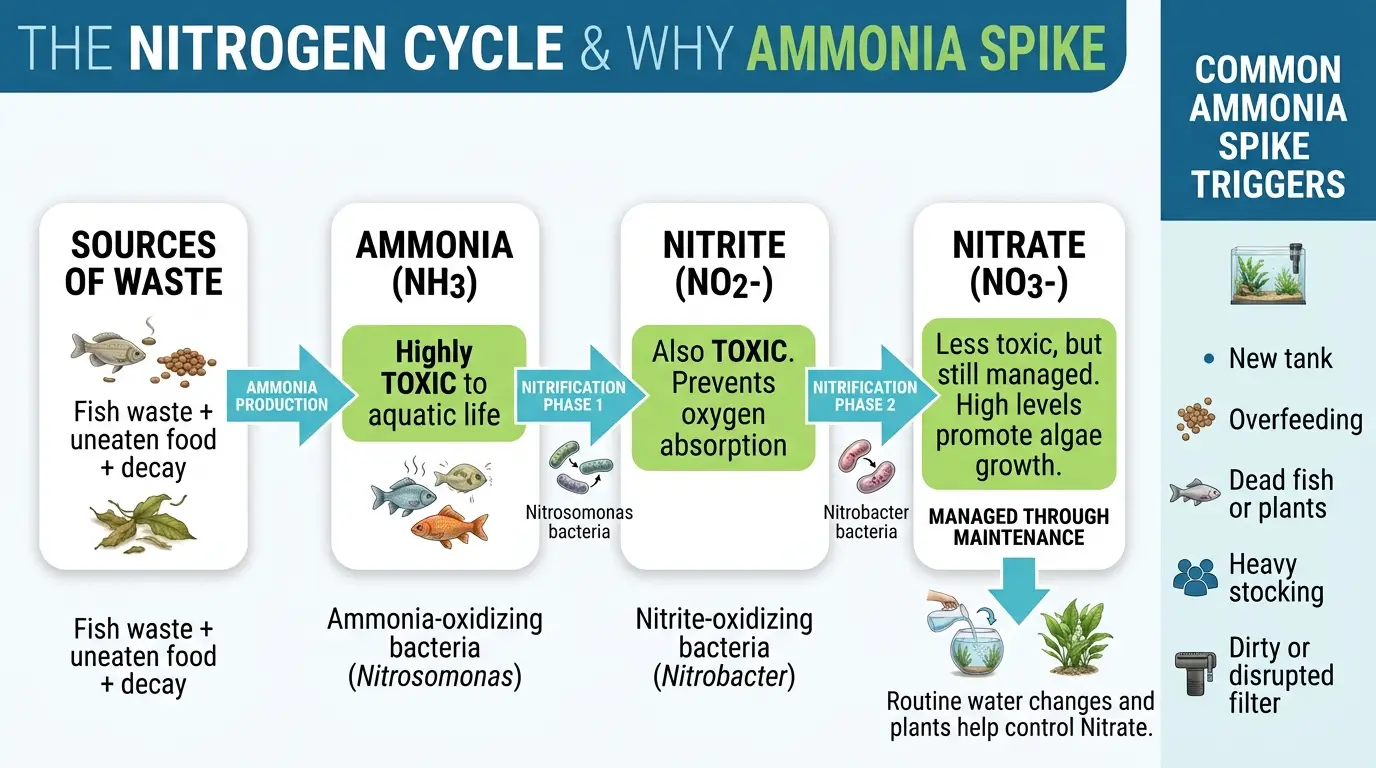
Ammonia is toxic waste made from fish poop, leftover food, and decay. In a balanced tank, bacteria turn ammonia into nitrite, then nitrate. This is the nitrogen cycle.
Spikes happen when waste builds up faster than bacteria can process it. New tanks, heavy feeding, dead plants or fish, and dirty filters are common triggers. If you are learning how to lower ammonia in fish tank, first understand this simple flow: waste to ammonia to nitrite to nitrate. Your job is to help the bacteria keep up.
Safe levels and testing you can trust

The safe goal for ammonia is 0 ppm. Any hint on a test means action. Ammonia gets more dangerous as pH and temperature rise. At high pH, even small amounts can burn gills.
Use a liquid test kit for accurate results. Test daily during a spike, and weekly once stable. Track ammonia, nitrite, nitrate, and pH in a log. If you want to master how to lower ammonia in fish tank, start by testing right and often.
Immediate steps: how to lower ammonia in fish tank today

Follow these steps right now. They work fast and protect fish.
- Stop feeding for 24 to 48 hours. Less food means less waste.
- Change 30 to 50% of the water. Use dechlorinator for chlorine and chloramine.
- Vacuum the substrate. Remove trapped debris and rotting food.
- Dose an ammonia detoxifier as directed. It binds ammonia short term to reduce harm.
- Boost aeration. Add an air stone or raise filter output for more oxygen.
- Remove dead fish, snails, leaves, or uneaten food. Decay feeds ammonia.
- Do not replace all filter media. Rinse it gently in old tank water to keep bacteria.
- Add bottled bacteria. This helps your biofilter catch up.
- Keep the lights low and reduce stress. Calm fish heal faster.
Repeat partial water changes daily until ammonia is 0 ppm. If you ask how to lower ammonia in fish tank without harming fish, this combo of water changes, detox, and bacteria is the safest, proven path.
Long-term fix: cycle your tank and strengthen the biofilter
Think of your filter as a living organ. It hosts bacteria that eat ammonia and nitrite. If that organ is weak, spikes return.
- Fishless cycle is best. Add a small ammonia source, keep filter running, and wait for ammonia and nitrite to hit 0 ppm while nitrate rises.
- Fish-in cycle needs care. Feed less, change water often, and use detoxifier to protect fish while bacteria grow.
- Seed your filter. Use mature media or squeezings from a healthy tank to jump-start bacteria.
- Never wash media in tap water. Chlorine kills good bacteria. Use tank water.
- Keep steady flow. A clogged filter starves bacteria of oxygen.
If you want a lasting answer to how to lower ammonia in fish tank, focus on a strong, stable biofilter. It is your tank’s immune system.
Feeding, stocking, plants, and routine prevention

Prevention is easier than a rescue. Small, steady habits keep ammonia at zero.
- Feed small amounts your fish finish in 30 to 60 seconds. Skip a day each week.
- Stock with care. Avoid crowding. Bigger, messy species need more filter capacity.
- Add fast-growing live plants. Hornwort, water sprite, and pothos eat ammonia and nitrate.
- Do weekly 25 to 40% water changes. Vacuum the substrate every time.
- Clean filter sponges gently every 2 to 4 weeks. Keep flow strong.
- Log tests monthly. Catch trends before they become spikes.
This is the heart of how to lower ammonia in fish tank for good: less waste in, more biofilter power out.
Special cases and troubleshooting
Some spikes have special causes. Target the cause and the fix gets easier.
- New tank syndrome. A fresh setup has little bacteria. Expect to test often and change water more.
- Old tank syndrome. Long gaps in care raise nitrate, drop pH, and stress fish. Do slow, repeated water changes to reset.
- High pH and heat. Ammonia is harsher in high pH and warm water. Keep within the safe range for your species.
- After medications. Some meds hurt bacteria. Use bacteria boosters after treatment and test daily.
- Chloramine in tap water. Use a conditioner that binds both chlorine and ammonia released from chloramine.
If you still wonder how to lower ammonia in fish tank after trying basics, check these edge cases. The fix may be in your tap water or filter history.
Natural methods vs chemical binders
Both have a place. Know the trade-offs.
- Water changes remove ammonia for real. This is the gold standard.
- Binders detoxify ammonia fast. They buy time but do not remove it. You must still change water and grow bacteria.
- Live plants and zeolite help. Plants use ammonia. Zeolite traps it, but gets exhausted and needs recharge.
- Bacteria starters help cycle faster. Quality varies. Use them with testing and water changes.
A balanced plan uses both. For how to lower ammonia in fish tank under stress, dose a binder now, then change water and build the biofilter.
Signs of ammonia poisoning and fish first aid
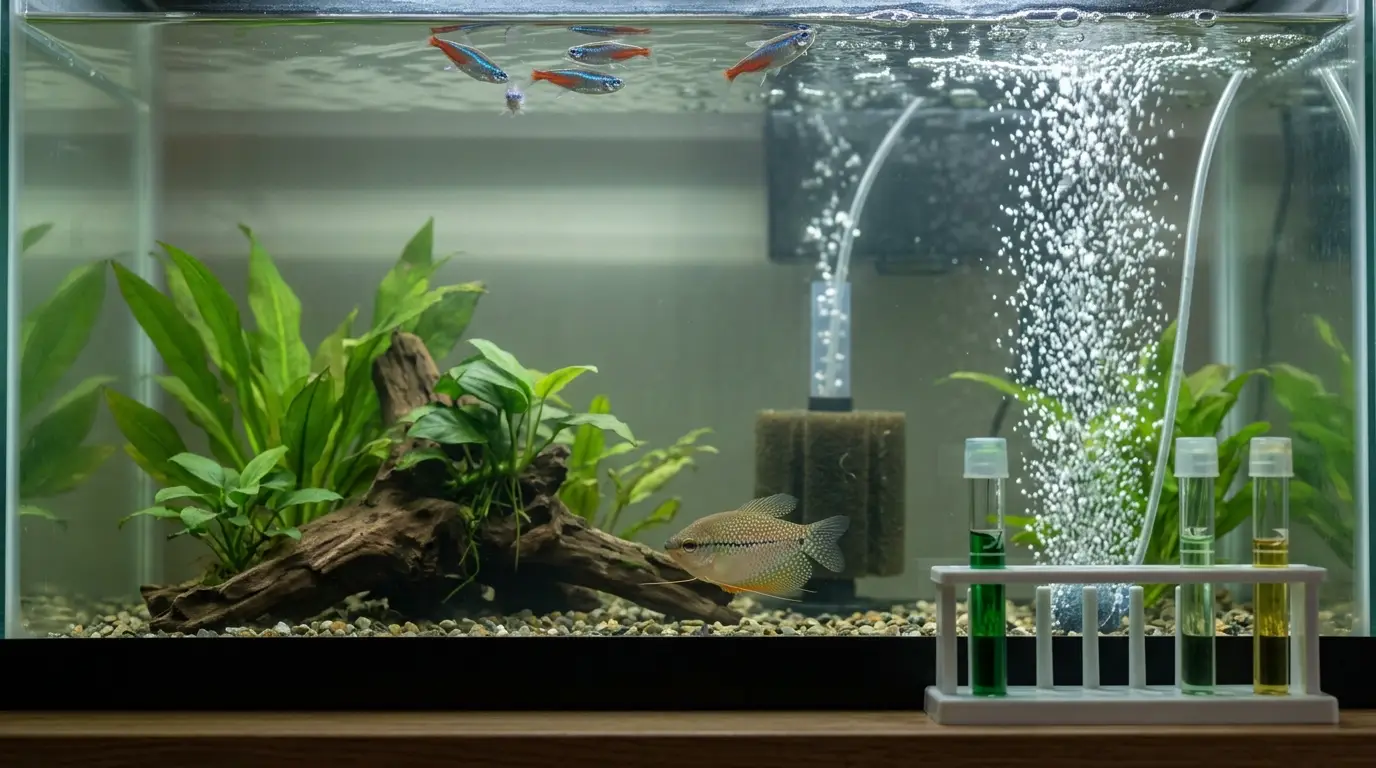
Watch your fish. They tell you when water hurts.
- Gasping at the surface, red or inflamed gills, clamped fins, and lying low are red flags.
- First aid is simple. Big water change, add detoxifier, increase air, and dim the lights.
- For sensitive species, avoid sudden pH swings. Stability heals.
These steps do not replace a cycle. They give you time while you fix the root cause. This is key in how to lower ammonia in fish tank without losing fish.
Real-world example: my 20-gallon rescue
I once rescued a 20-gallon with 1.0 ppm ammonia after a dead snail hid under wood. I stopped feeding, pulled the snail, vacuumed the sand, and changed 50% of the water. I dosed detoxifier, added an air stone, and seeded the filter with mature media.
Ammonia hit 0.25 ppm the next day and 0 ppm by day three. I kept feeding light for a week and added more plants. That tank stayed at 0 ppm for months. The lesson for anyone learning how to lower ammonia in fish tank is simple: act fast, then build biofilter strength.
Frequently Asked Questions of how to lower ammonia in fish tank
How fast can I lower ammonia in a fish tank?
You can reduce it the same day with water changes and a detoxifier. Full stability may take days as bacteria catch up.
Does water conditioner remove ammonia?
Some conditioners detoxify ammonia for 24 to 48 hours, but they do not remove it. You still need water changes and a working biofilter.
Do live plants fix ammonia spikes?
Fast plants help and can lower ammonia and nitrite. They support stability but do not replace testing and water changes.
Should I replace my filter cartridge during a spike?
No, not all at once. Rinse it in tank water to save bacteria, or run new media alongside the old for a few weeks.
Why is ammonia more toxic at high pH?
More ammonia stays in the harsher unionized form at high pH. Warmer water also increases toxicity, so watch temperature.
Can overfeeding cause constant ammonia?
Yes. Extra food rots and overwhelms bacteria. Feed less, clean the substrate, and test after meals.
What if ammonia is zero but nitrite is high?
Your cycle is mid-stage. Keep water changes, use detoxifier, add bacteria, and test daily until nitrite hits zero.
Conclusion
Lowering ammonia is a two-part mission. First, protect fish now with big water changes, a detoxifier, and more air. Then build a strong biofilter, feed less, plant more, and test often. If you remember one thing about how to lower ammonia in fish tank, make it this: remove waste fast and grow the bacteria that eat it.
You’ve got this. Start with a 50% water change today, log your tests this week, and enjoy clear, healthy water. Want more tips like this? Subscribe for simple, proven guides, or drop your questions in the comments.