Algae in freshwater aquariums grows due to extra light, excess nutrients, and imbalance.
Curious about what causes algae in freshwater aquarium and how to stop it for good? You’re in the right place. I’ve run planted tanks, community tanks, and high-tech setups, and I’ve seen almost every algae problem you can name. In this guide, I’ll break down the real triggers, how they interact, and the exact steps I use to beat algae and keep water clear. Read on to learn what causes algae in freshwater aquarium and how to keep it under control every day.
What algae is and why it appears
Algae are simple photosynthetic organisms. They use light and nutrients to grow, just like plants. In a balanced tank, a little algae is normal and even healthy.
Problems start when conditions favor algae over plants or beneficial bacteria. If you have ever asked what causes algae in freshwater aquarium, the answer is almost always extra light, extra nutrients, or both, plus unstable conditions.
Key idea: algae is a symptom. Fix the cause, not just the green stuff you see.
The main causes of algae in freshwater aquariums
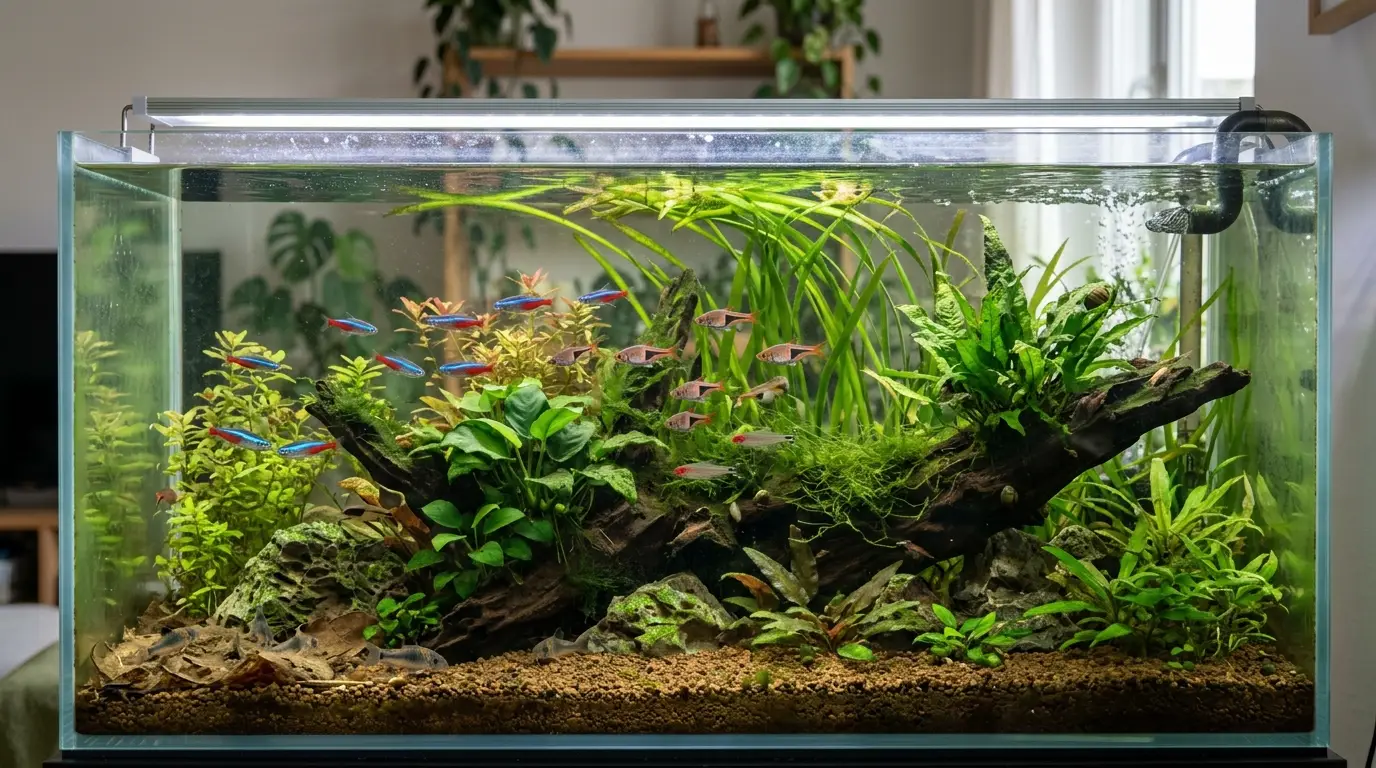
If you want a fast checklist for what causes algae in freshwater aquarium, start here. These are the root triggers I see most:
- Too much light The light is on too long or too bright. Direct sun hits the glass.
- Excess nutrients Extra fish food, fish waste, decaying leaves, and uneaten pellets raise nitrate and phosphate.
- Imbalance with plants Plants are slow or unhealthy, so algae uses the spare nutrients and light.
- Unstable CO2 and oxygen In planted tanks, big CO2 swings stress plants and give algae an edge.
- Weak filtration or low flow Dirt and detritus settle in dead spots. Ammonia spikes happen between water changes.
- New tank syndrome Young tanks lack mature bacteria. Small nutrient swings cause fast algae blooms.
- Silicates and minerals Tap water can carry silicates and metals that spark diatoms and other growths.
- Overcrowding Too many fish means too much waste, even with good filters.
- Infrequent maintenance Skipped water changes and clogged filters fuel algae week after week.
I like to ask three questions: How long is the light on? How much am I feeding? What do my water tests show?
Types of aquarium algae and what they signal
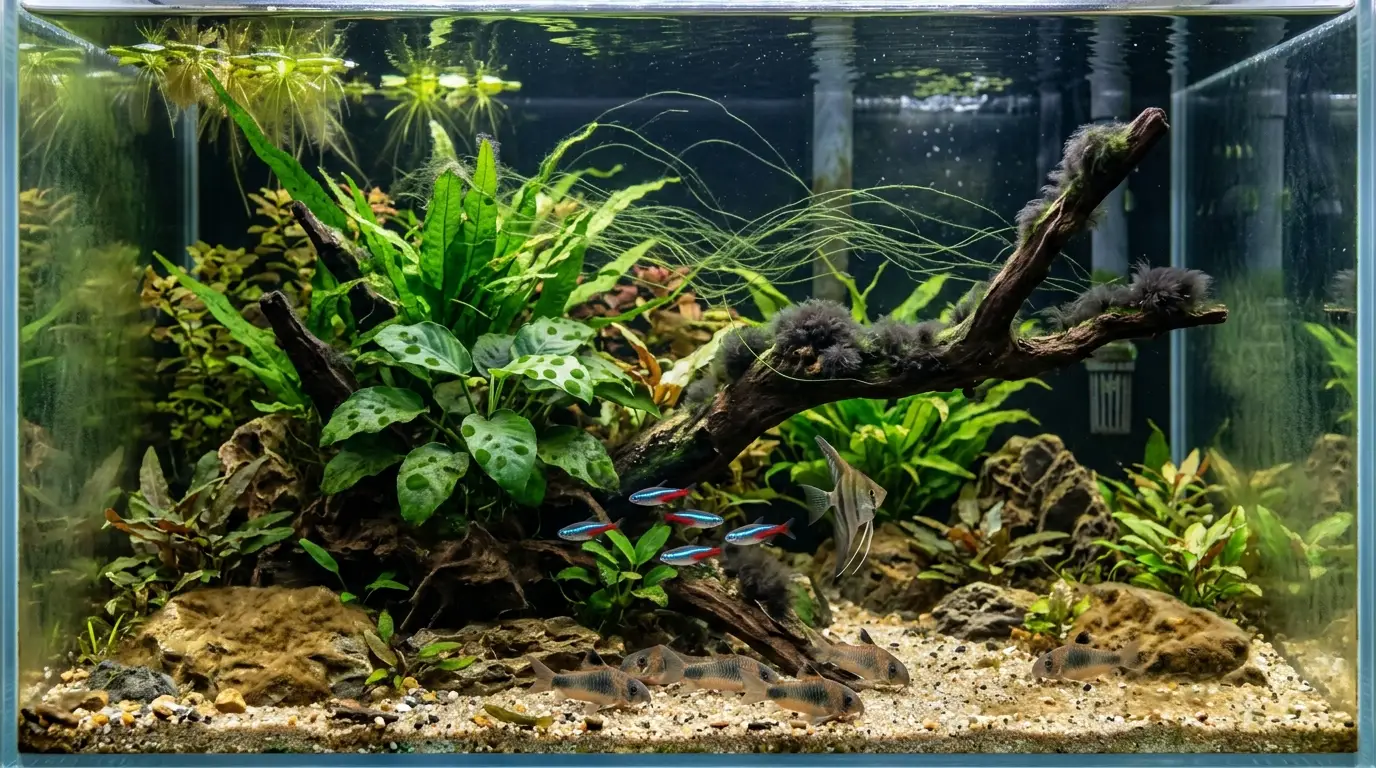
Learning the look of each type helps you trace what causes algae in freshwater aquarium.
- Green dust algae A dusty green film on glass. Often tied to new tanks and long light cycles.
- Green spot algae Hard green dots on glass and slow leaves. Often low phosphate and strong light.
- Hair or thread algae Long green strands. Extra nutrients, strong light, and weak plant growth.
- Black beard algae Dark, fuzzy tufts on wood, rocks, filter outputs. CO2 swings and high organics.
- Diatoms (brown algae) Soft brown coat on glass and decor. Common in new tanks and high silicates.
- Blue-green “algae” Slimy sheets that smell earthy. This is cyanobacteria, not true algae. Caused by low nitrate, excess light, poor flow, or dirty substrate.
Use these clues to aim your fix. For example, green spot algae often eases when you balance light and raise phosphate to a safe, steady level.
Water chemistry and nutrient balance
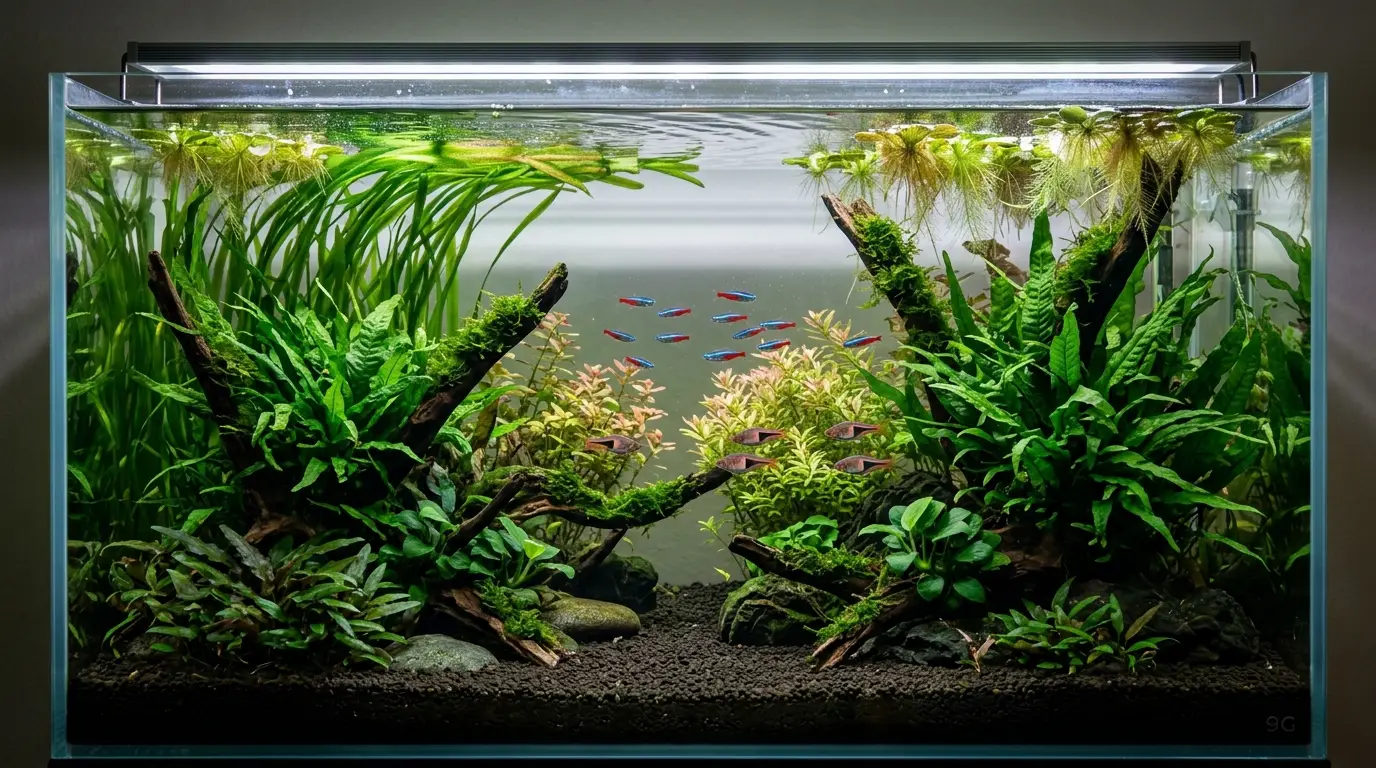
If you ask what causes algae in freshwater aquarium, water chemistry is a top driver. Algae loves excess nitrate and phosphate, but total zero is not the goal. You want steady, moderate levels.
Targets I use in most community tanks:
- Ammonia and nitrite 0 ppm at all times.
- Nitrate Under 20 ppm for low-tech tanks. Up to 20–30 ppm for high-tech planted tanks.
- Phosphate 0.1–1.0 ppm is often fine for planted tanks when stable.
- General hardness and carbonate hardness Match fish and plant needs. Stability matters most.
Tips:
- Test weekly. Watch trends, not single numbers.
- Vacuum the substrate. Remove trapped waste before it breaks down.
- If tap water has silicates, use RO water or a silicate-absorbing media.
Stable, predictable nutrients help plants win. Algae prefers chaos.
Lighting and photoperiod that trigger blooms
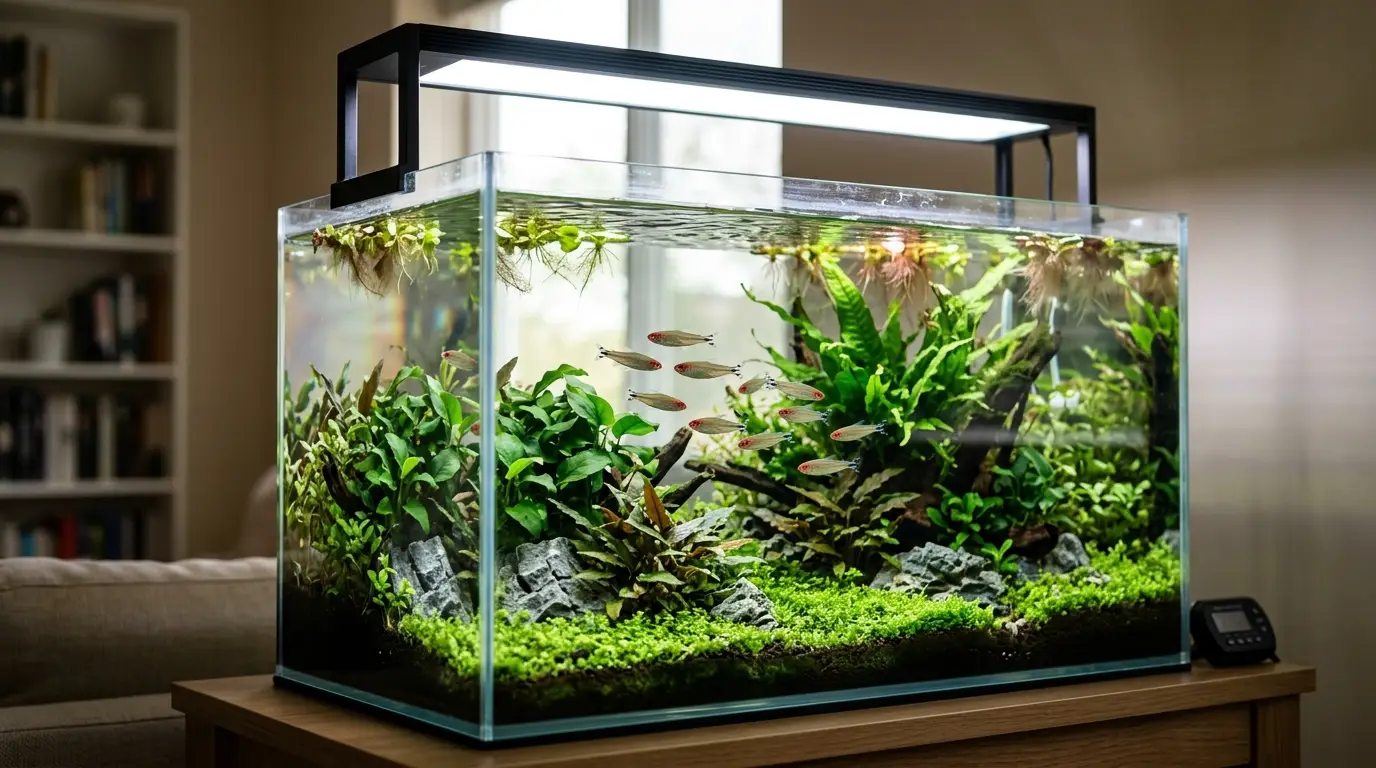
Light is fuel. When someone asks what causes algae in freshwater aquarium, I first check the light schedule.
Best practices:
- Limit duration 6–8 hours per day for most tanks. New tanks can start at 6 hours.
- Set intensity Match plant type. Low light plants need less. Avoid blasting the tank.
- Avoid sunlight Keep the aquarium out of direct sun.
- Use a timer Keep the schedule consistent, day after day.
- Consider a midday pause In high-tech tanks, a short siesta can reduce peaks.
If you do not grow demanding plants, you do not need powerful light. Less light often means less algae.
Filtration, flow, and oxygen
Poor flow leaves dead zones where waste collects. That waste is slow-release food for algae. When I troubleshoot what causes algae in freshwater aquarium, I check filter health next.
What to do:
- Right-size the filter Aim for 5–10 times tank volume per hour in many setups.
- Clean filter media Gently rinse in tank water. Do not kill your good bacteria.
- Improve circulation Add a small powerhead to move water across the substrate and behind decor.
- Boost oxygen Surface ripple helps your bacteria and fish. Healthy bacteria outcompete algae by processing waste fast.
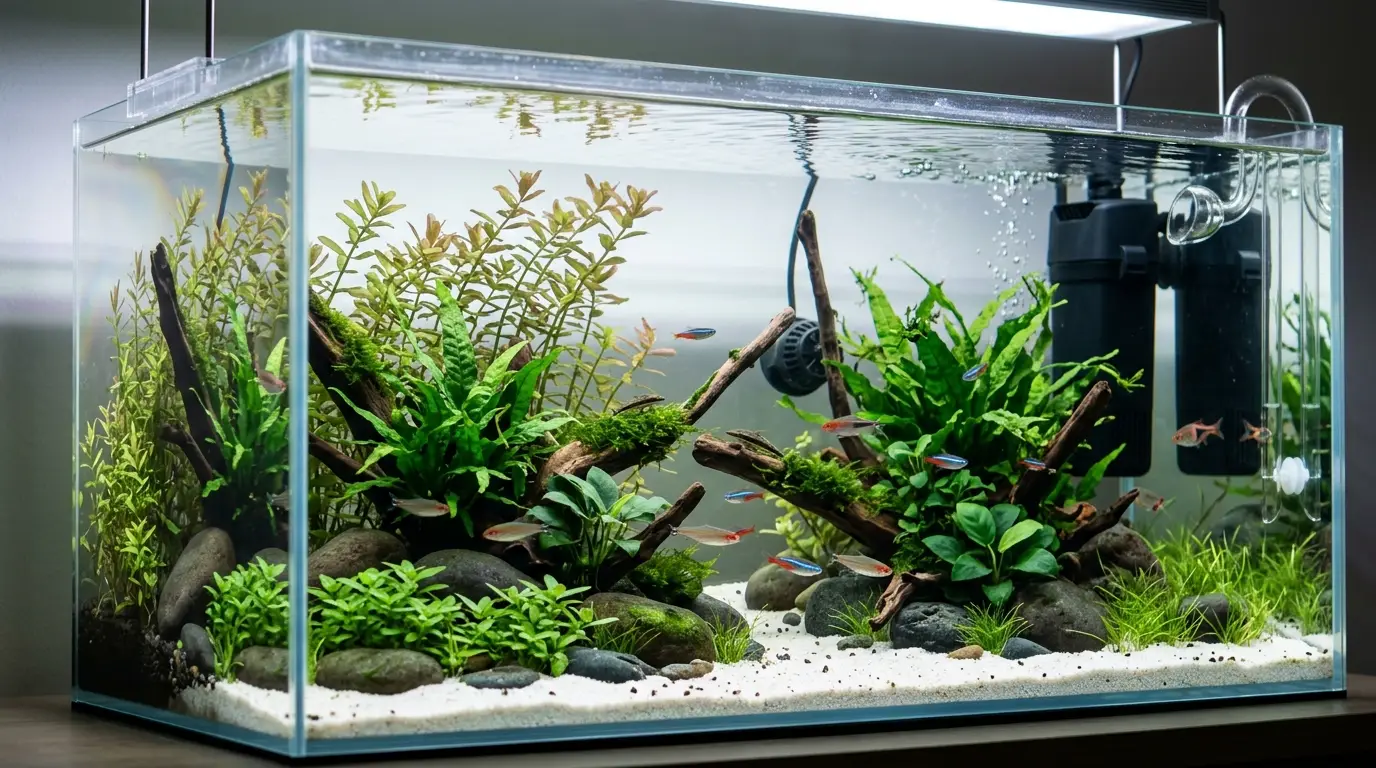
Stocking, feeding, and bioload pressure
Too many fish or too much food is a classic cause. If you wonder what causes algae in freshwater aquarium, extra feeding is high on the list.
Practical rules:
- Feed small amounts Fish should finish food in under two minutes.
- Skip a day once a week Most fish do fine. It keeps waste down.
- Choose stock with care Do not crowd the tank. More space means more stability.
I once cut feeding by 25 percent in a 30-gallon tank, and green hair algae faded within two weeks.
Maintenance habits that prevent algae
Good habits beat algae every time. If someone asks what causes algae in freshwater aquarium, I answer with this list and a calendar.
Weekly or biweekly:
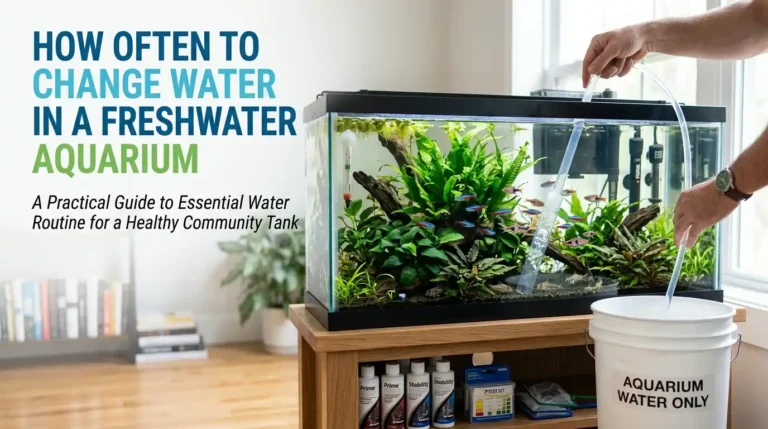
- Water change 25–50 percent, based on stocking and plants.
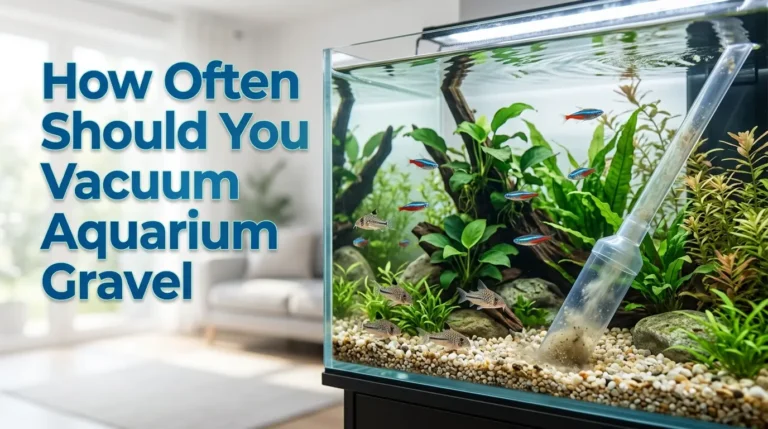
- Gravel vacuum Remove gunk from high-traffic spots and under hardscape.
- Glass wipe Keep the film from becoming a bloom.
- Trim plants Remove dying leaves that leak nutrients back into the water.
- Check parameters Nitrate, phosphate, pH, KH.
Consistency is the secret. Small, regular work stops big, messy blooms.
Natural controls: plants, algae eaters, and safe products
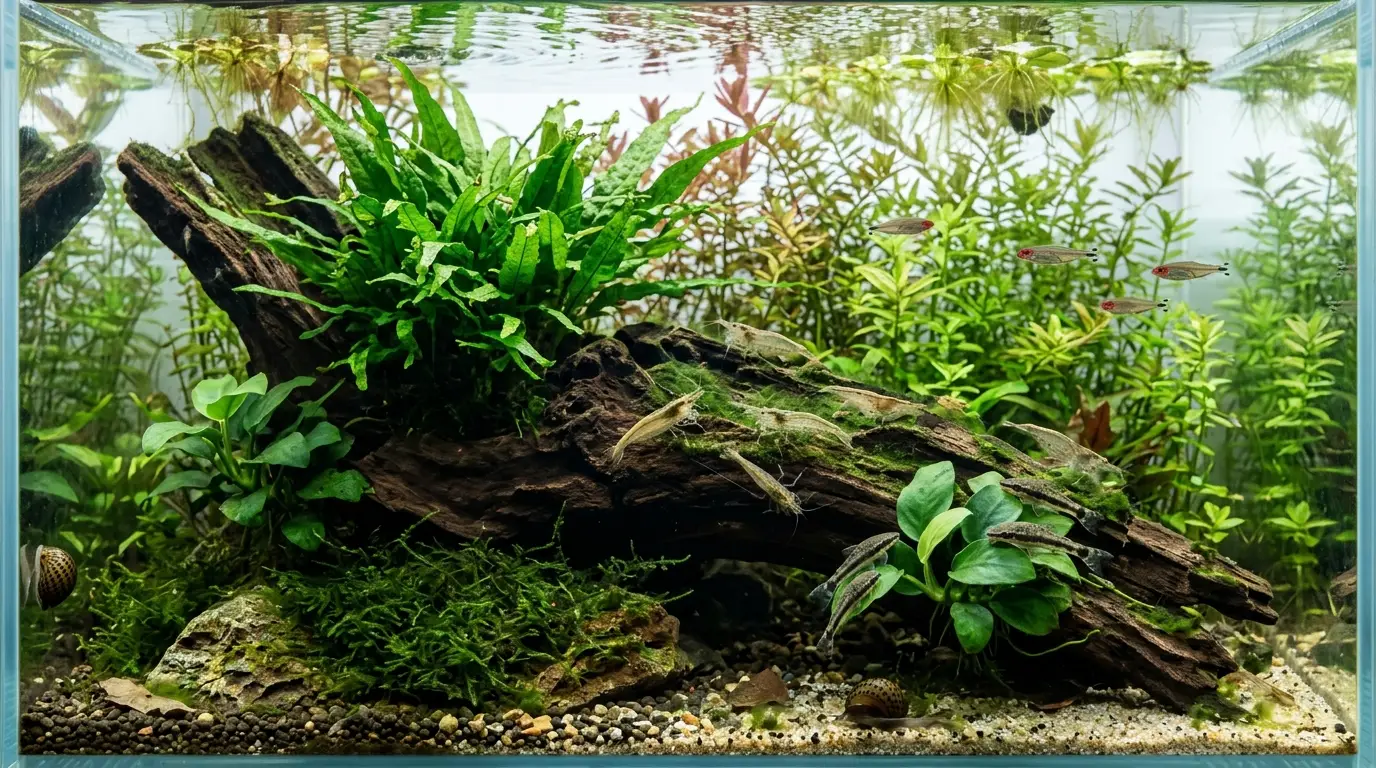
You can let nature help you fix what causes algae in freshwater aquarium.
Great plant picks:
- Fast stem plants They soak up extra nutrients fast.
- Floating plants They shade the tank and eat up nitrate and phosphate.
- Healthy roots Aim for steady fertilization and stable CO2 if used.
Helpful cleanup crew:
- Nerite snails Superb glass and decor cleaners.
- Otocinclus catfish Gentle on plants and great for diatoms.
- Amano shrimp Champions for soft green and hair algae.
Products and treatments:
- Liquid carbon and algaecides Use as a spot treatment. Follow labels. Do not rely on them alone.
- Phosphate and silicate removers Good as a short-term tool while you fix the cause.
Nature plus good routines works better than quick fixes alone.
Step-by-step action plan to fix a bloom fast
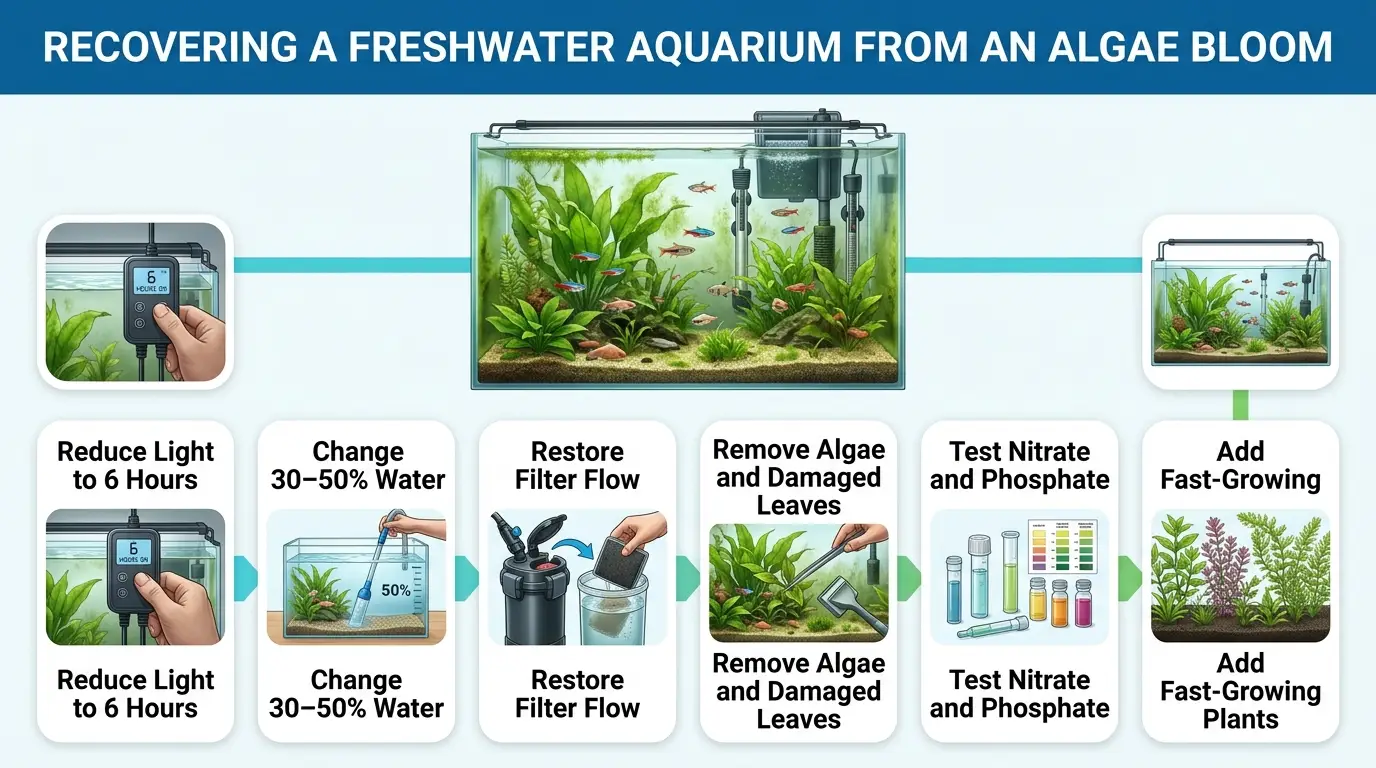
Use this when you face what causes algae in freshwater aquarium and need quick relief.
- Shorten light to 6 hours per day. Remove direct sun.
- Do a 30–50 percent water change. Vacuum the substrate well.
- Clean filter media gently. Restore flow and oxygen.
- Trim damaged plant leaves. Remove as much algae as you can by hand.
- Test nitrate and phosphate. Adjust feeding and stocking.
- Add fast growers or floaters. Consider a few safe algae eaters.
- Keep notes. Hold the plan for two to three weeks before judging results.
Steady changes beat big swings. Let the system settle.
My hard-learned lessons from years of fishkeeping
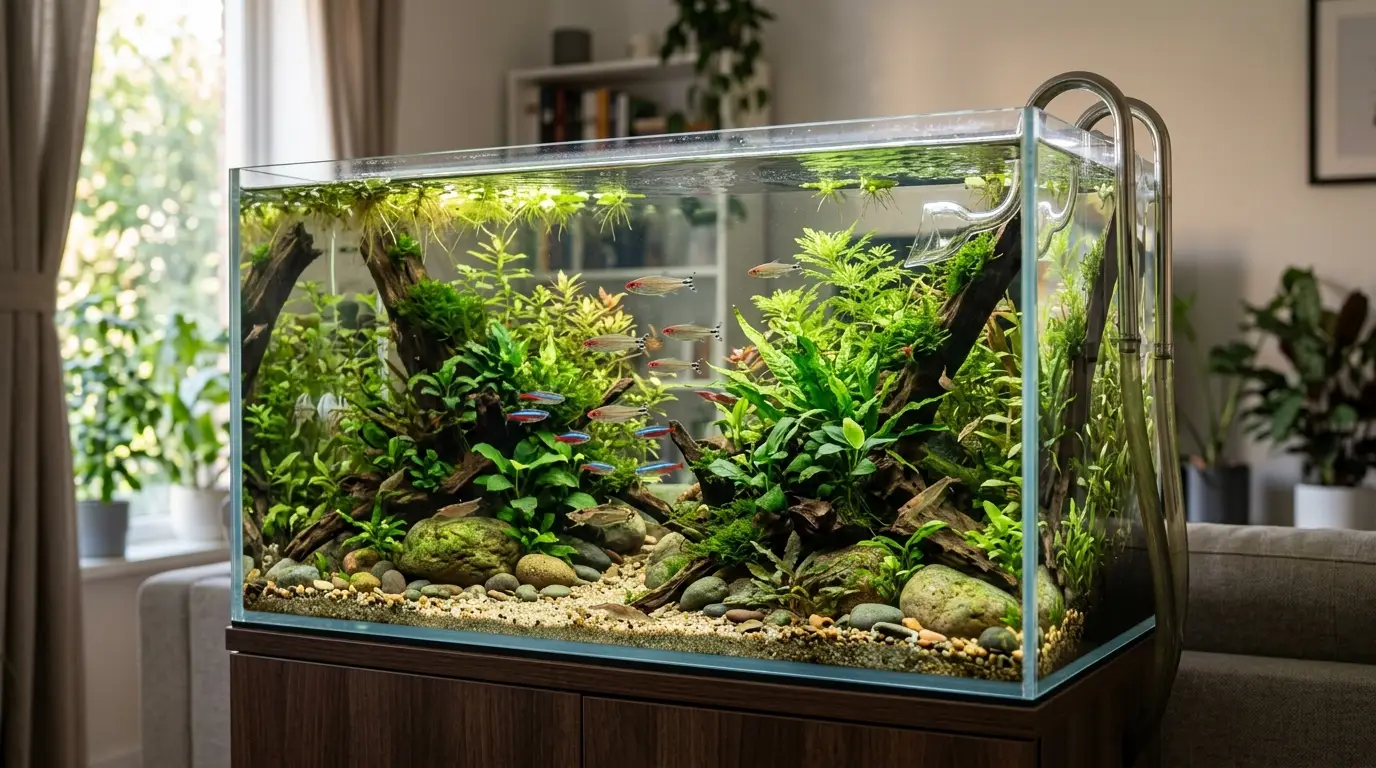
I once chased algae with chemicals in a new tank. It worked for a week, then came back worse. The real fix was cutting light, adding floating plants, and improving flow behind the wood.
I learned that what causes algae in freshwater aquarium is not evil algae. It is the gap between how we run the tank and what the tank needs. When I test water, set a timer, and feed less, my tanks stay clear. When I get lazy, algae reminds me fast.
Common myths about algae
Let’s clear up a few myths that confuse what causes algae in freshwater aquarium.
- Myth Algae only happens in dirty tanks. Reality Even clean, new tanks can bloom if light is too strong or nutrients swing.
- Myth Zero nitrate and phosphate stop algae. Reality Plants starve first. Algae then takes over the weak system.
- Myth More chemicals fix it. Reality They help short term. The cause still needs attention.
Keep your focus on balance, not on “killing algae” alone.
Frequently Asked Questions of what causes algae in freshwater aquarium
What causes algae in freshwater aquarium the most?
Too much light and extra nutrients. Unstable conditions and weak plant growth make it worse.
How long should my aquarium light be on to avoid algae?
Aim for 6–8 hours per day. Use a timer and avoid direct sunlight.
Will more water changes stop algae?
Yes, if done right. Regular changes remove excess nutrients and help stabilize your tank.
Do algae eaters fix the problem by themselves?
No. They help clean, but you must fix light, nutrients, and flow to stop regrowth.
Is tap water causing algae in my tank?
It can. Tap water may add silicates or phosphates. Test and consider RO water or media to remove them.
How do I balance plants and nutrients to reduce algae?
Keep steady light, provide enough fertilizer for plants, and avoid big swings. Healthy plants crowd out algae.
Can I run lights longer if I reduce intensity?
Sometimes. Lower intensity can allow a slightly longer photoperiod, but start small and watch for algae.
Conclusion
Algae is not a mystery. It grows when light, nutrients, and stability fall out of balance. Focus on steady light, smart feeding, solid filtration, and regular care, and your plants will win. Put this plan into action for two to three weeks, track your tests, and you will see real change. Ready to dial in your setup? Try the checklist today, share your results, and subscribe for more clear-water tips.