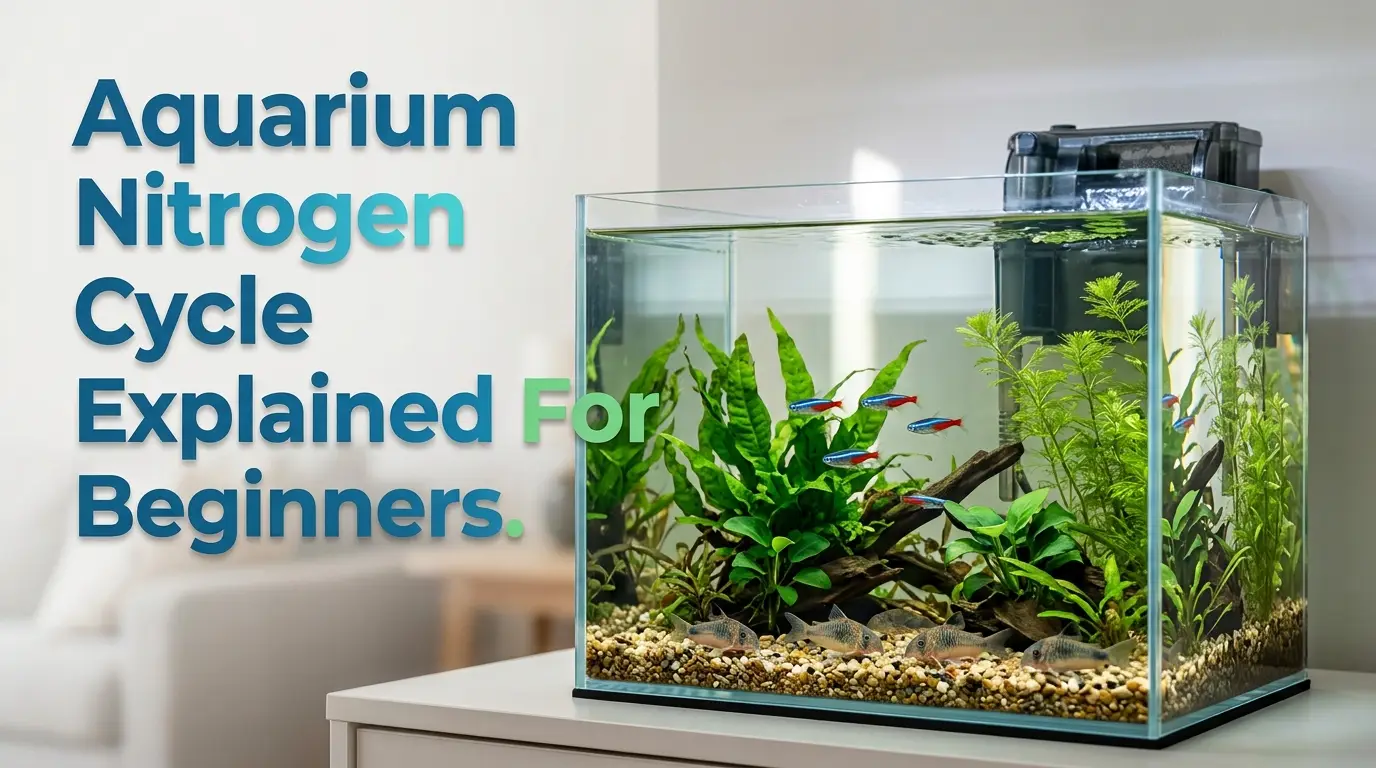
The aquarium nitrogen cycle turns fish waste into safer forms using helpful bacteria.
If you want a clear, friendly guide to the aquarium nitrogen cycle explained for beginners, you are in the right place. I’ve set up, cycled, and rescued more tanks than I can count. I’ll show you what works, what fails, and how to keep fish safe from day one. Read on to master the aquarium nitrogen cycle with simple steps, real examples, and pro tips.
What is the aquarium nitrogen cycle?
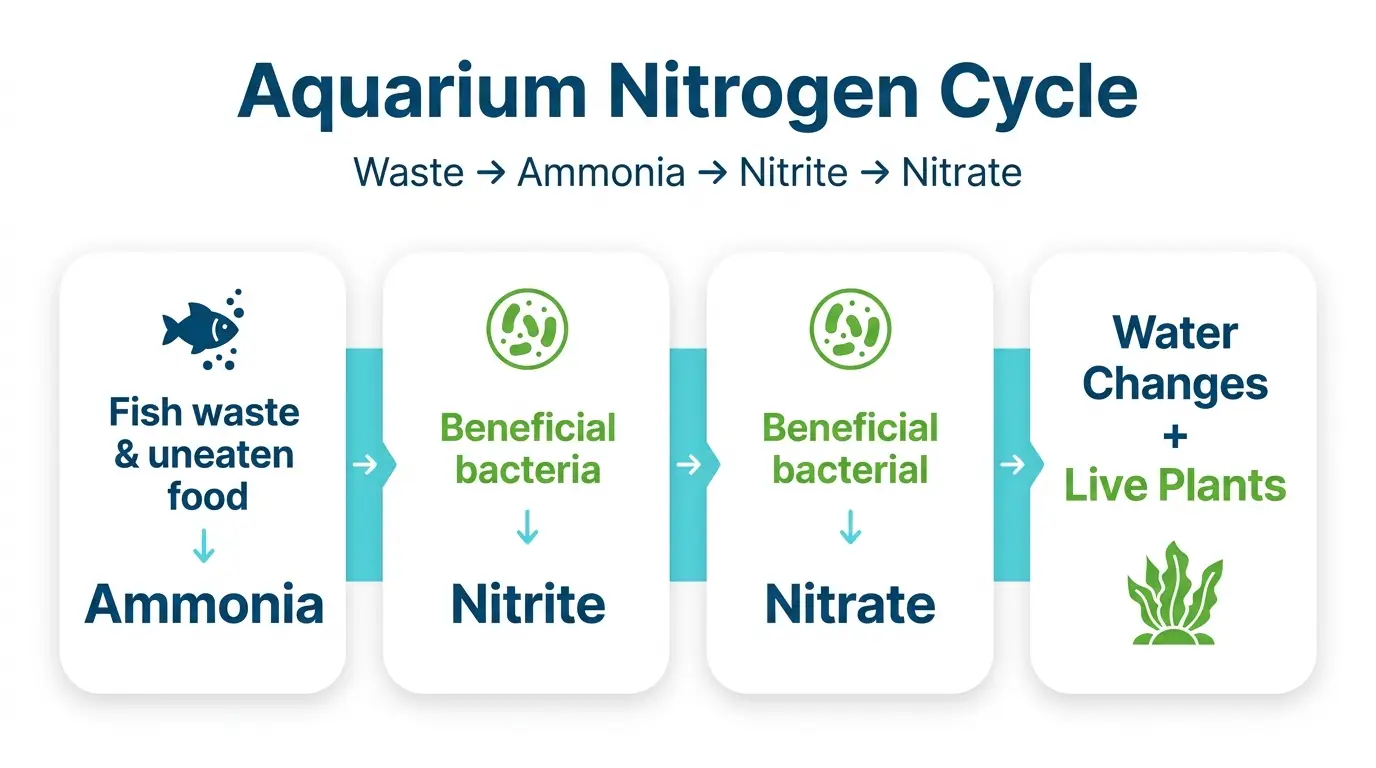
The aquarium nitrogen cycle is the process that turns toxic fish waste into less harmful forms. Fish and food create ammonia. Special bacteria convert ammonia to nitrite, then nitrite to nitrate. You keep nitrate low with water changes and live plants.
Think of it like compost for your tank. Waste goes in. Nature breaks it down. Your job is to help the process and keep levels safe. This is the heart of a healthy aquarium and a safe home for your fish.
I’ll keep this aquarium nitrogen cycle explained for beginners with plain words and real steps you can use today. This one skill will decide if your tank thrives or struggles.
Meet the players: ammonia, nitrite, nitrate, and bacteria
- Ammonia (NH3/NH4+): Comes from fish waste, uneaten food, and decay. Very toxic even in tiny amounts.
- Nitrite (NO2−): Formed when bacteria eat ammonia. Also very toxic.
- Nitrate (NO3−): Formed when other bacteria eat nitrite. Much less toxic, but still needs control.
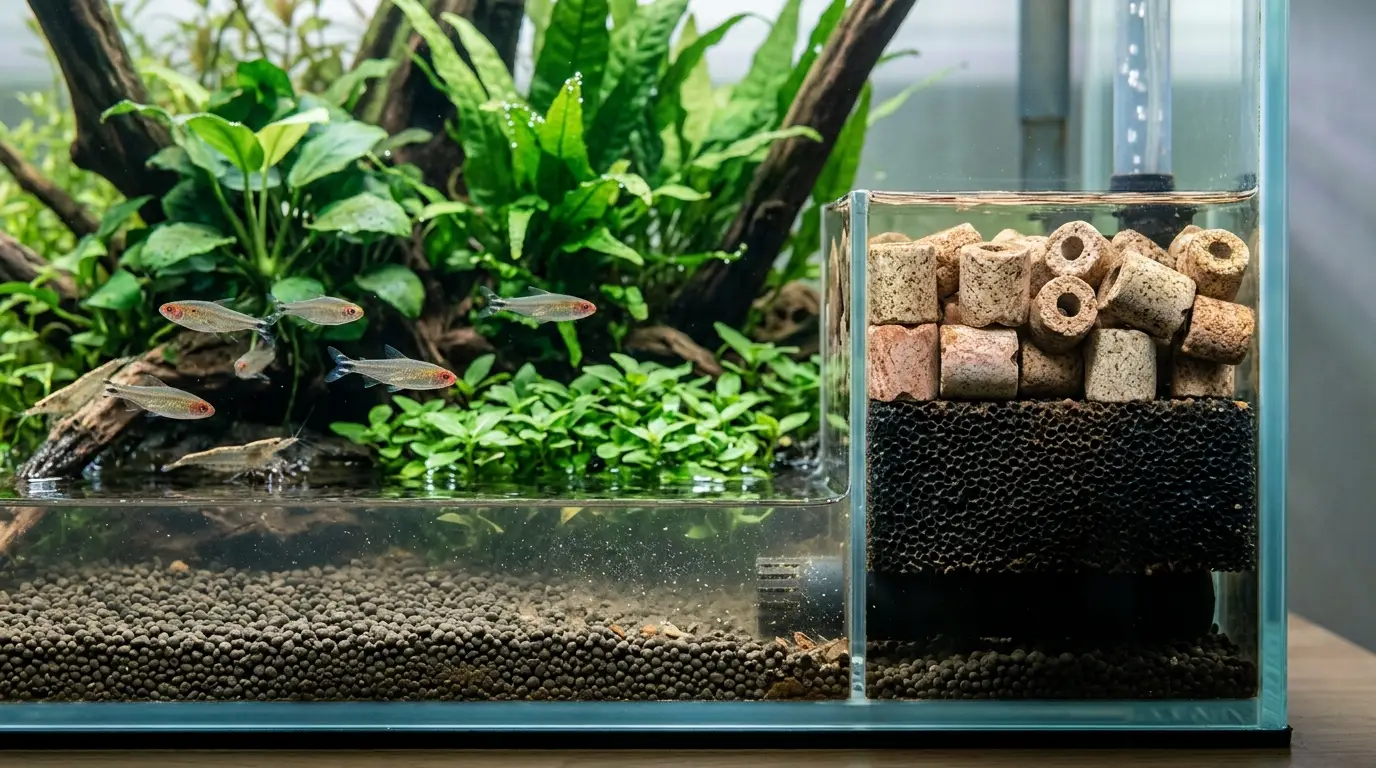
- Beneficial bacteria: Live on filter media, gravel, glass, rocks, and plants. Two key groups do the heavy lifting:
- Ammonia-oxidizers (like Nitrosomonas).
- Nitrite-oxidizers (like Nitrospira).
Live plants also use ammonia and nitrate. They help buffer mistakes. Your filter holds most of the bacteria. Do not replace all media at once or you reset the aquarium nitrogen cycle.
How the aquarium nitrogen cycle works step by step
- Waste adds ammonia to the water.
- Ammonia-oxidizing bacteria grow and convert ammonia to nitrite.
- Nitrite-oxidizing bacteria grow and convert nitrite to nitrate.
- You remove nitrate with water changes and plants.
Timeline for a new tank:
- Days 1–10: Ammonia rises. First bacteria start to grow.
- Days 10–20: Nitrite spikes as ammonia drops.
- Days 20–40: Nitrite falls. Nitrate rises. The aquarium nitrogen cycle stabilizes.
You know you are cycled when ammonia and nitrite both read zero in 24 hours after a known waste input, and nitrate is present.
How to cycle a new tank (fishless method)
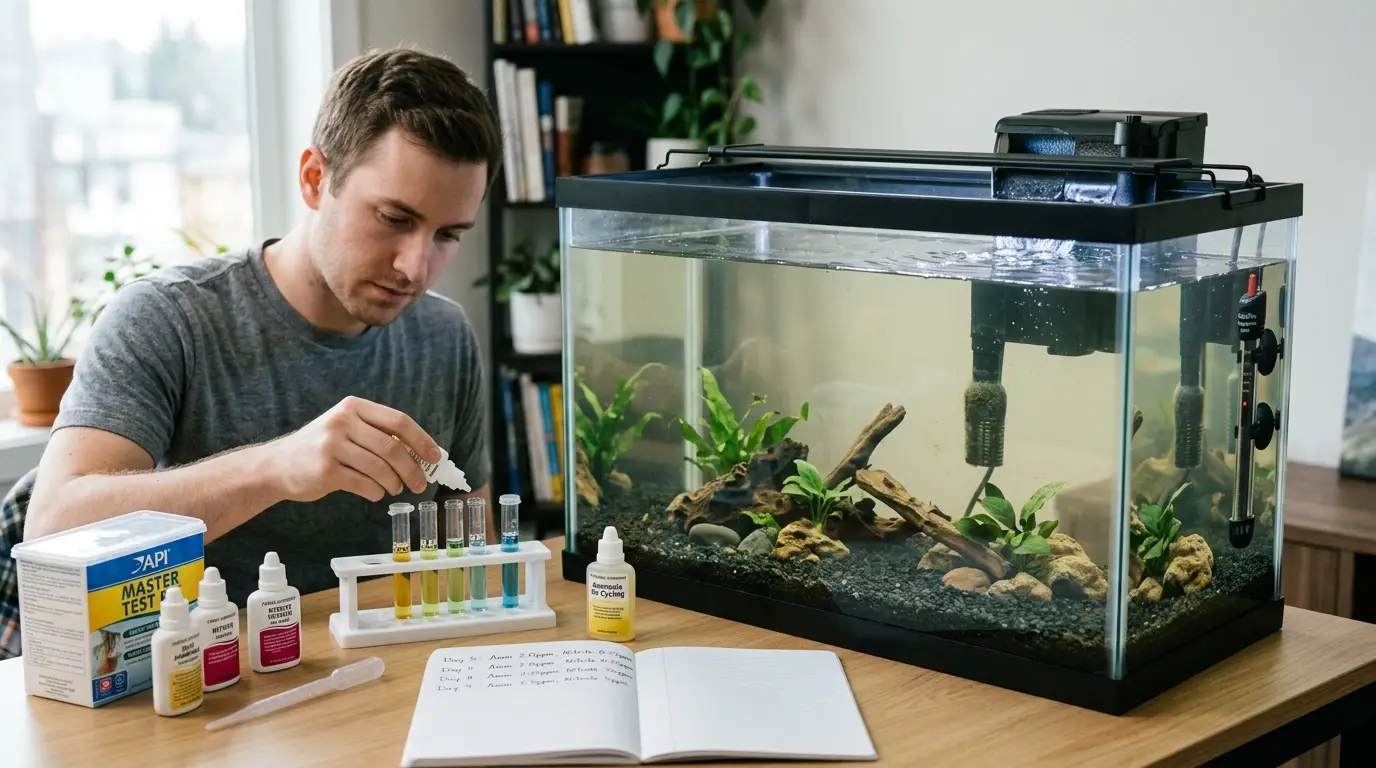
This is the safest and fastest way for beginners. No fish are at risk during the process. Here is how to get the aquarium nitrogen cycle right the first time.
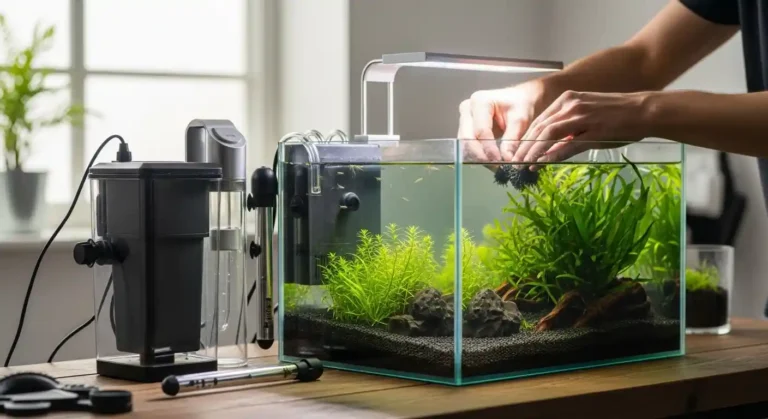
- Set up the tank. Add dechlorinated water, filter, heater, and air stone if you have one. Aim for 75–80°F for faster bacteria growth.
- Add pure ammonia. Use clear household ammonia with no scents or dyes. Target 2 ppm on your test kit.
- Add bottled bacteria. Choose a fresh, reputable product. Dose per the label. This can cut cycle time a lot.
- Test daily or every other day. Track ammonia, nitrite, and nitrate.
- When ammonia drops to near zero and nitrite rises, redose ammonia to 2 ppm.
- Keep feeding to 2 ppm daily or when it hits zero. This trains the biofilter to handle a real fish load.
- The cycle is complete when 2 ppm of ammonia is processed to zero ammonia and zero nitrite within 24 hours, and nitrate is present.
- Do a large water change (50–80%) to lower nitrate before adding fish.
- Add fish slowly over weeks. This lets the bacteria match the new load.
Real tip from my first big tank: I rushed fish in at the nitrite spike and lost two. Now I only add stock after a clean 24-hour zero on ammonia and nitrite. The aquarium nitrogen cycle rewards patience.
Testing and tracking your cycle
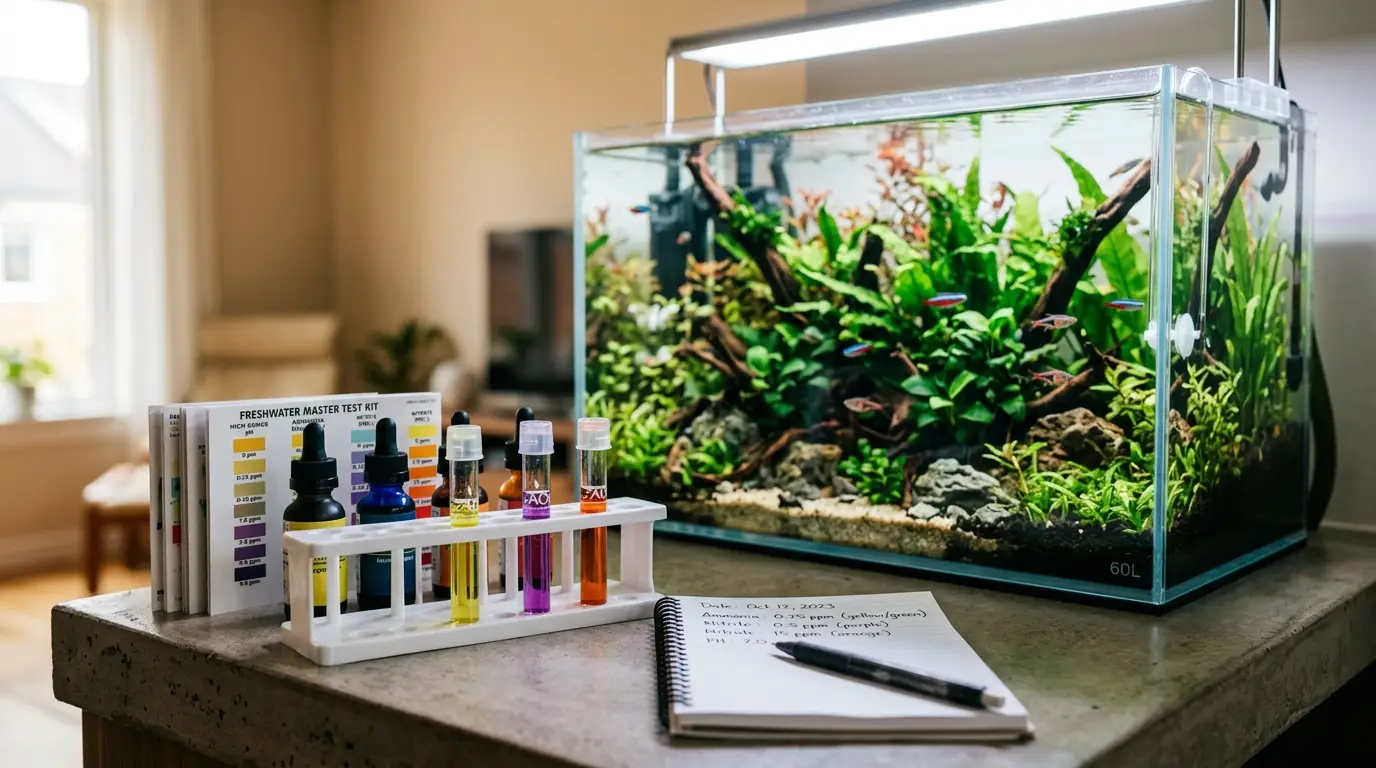
You cannot see the aquarium nitrogen cycle, so you must test.
- Use a liquid test kit for ammonia, nitrite, nitrate, and pH. Strips are fast but less exact.
- Test daily during cycling. After the cycle, test weekly at first, then at least twice a month.
- Keep a log. Write results and notes. Patterns jump out fast on paper.
- Safe targets for a cycled tank:
- Ammonia: 0 ppm
- Nitrite: 0 ppm
- Nitrate: Under 20–40 ppm for most freshwater fish
- pH: Stable within your species’ range
If your water has chloramine, use a conditioner that treats both chlorine and chloramine. These can add ammonia that your biofilter must process.
Common mistakes beginners make and how to avoid them
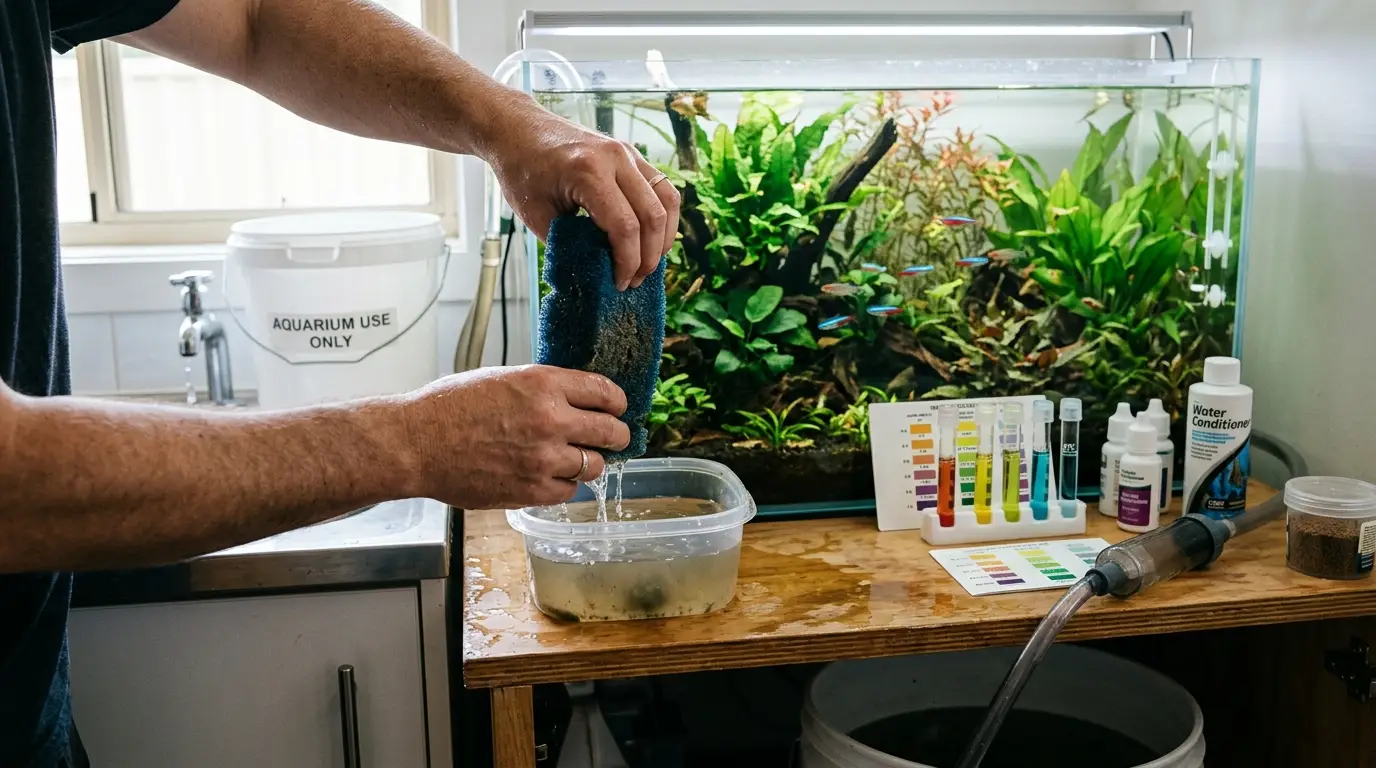
- Cleaning filter media under tap water. The chlorine kills your bacteria. Rinse in old tank water instead.
- Replacing all filter media at once. This removes your biofilter. Stagger changes and keep old media wet.
- Adding too many fish too soon. The bacteria cannot keep up. Stock in small steps over time.
- Overfeeding. Extra food becomes ammonia. Feed what fish eat in 30–60 seconds.
- Skipping dechlorinator. Chlorine and chloramine harm fish and bacteria. Condition all new water.
- Chasing pH with chemicals. Big swings stress fish and slow the aquarium nitrogen cycle. Aim for stable, not perfect.
I’ve made each of these errors at least once. The fix is simple: be gentle with your filter, go slow with stocking, and test before you act.
After cycling: stable maintenance for healthy fish
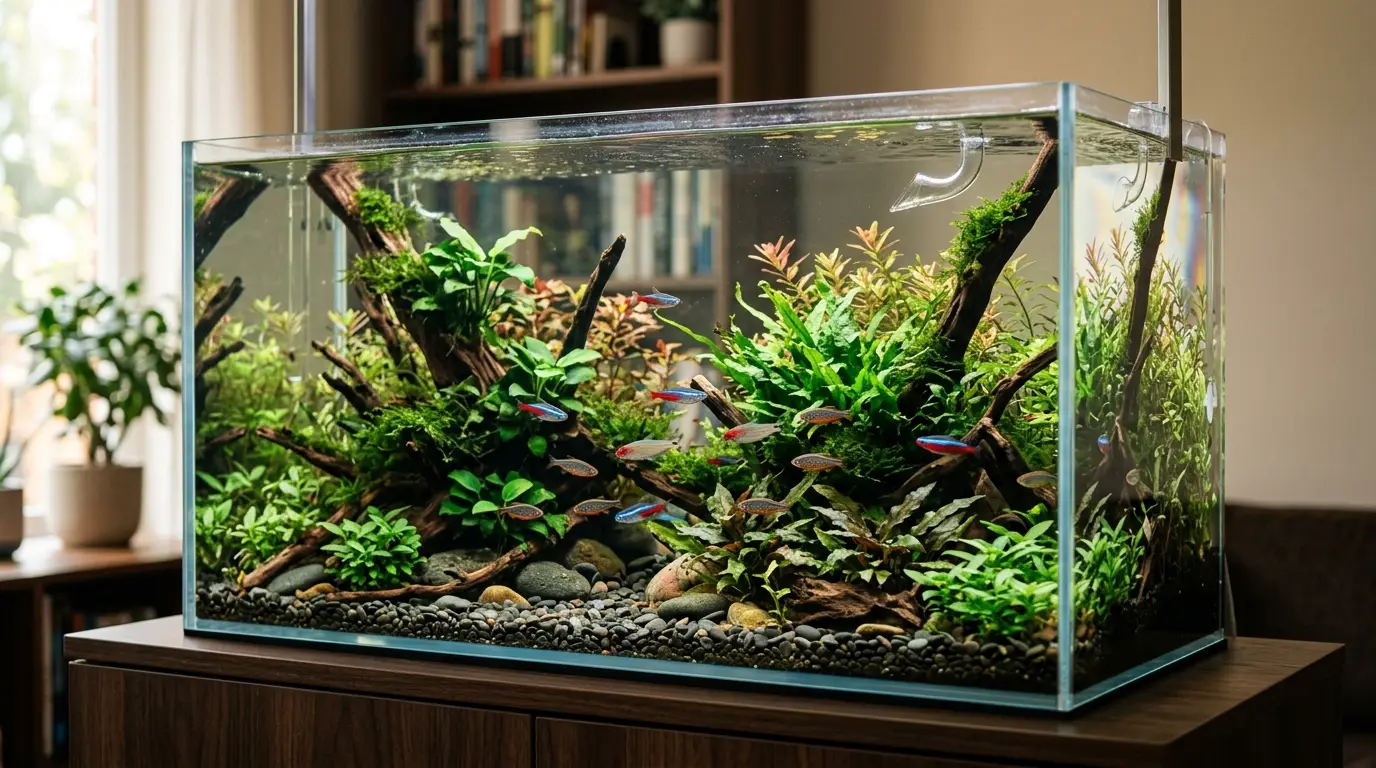
Your aquarium nitrogen cycle is running. Now keep it smooth.
- Do weekly water changes of 25–40%. This keeps nitrate and organics low.
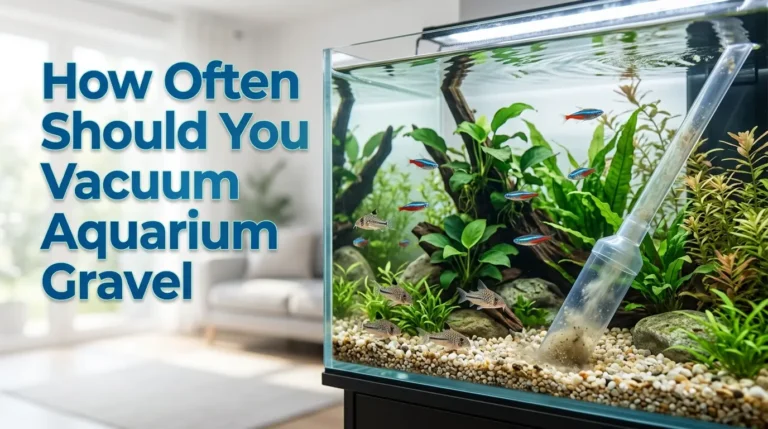
- Vacuum the substrate to remove trapped waste.
- Rinse filter sponges in tank water when the flow drops.
- Keep good surface agitation. Oxygen helps your bacteria work hard.
- Add live plants if you can. Fast growers like hornwort or pothos (roots out of the water) eat nitrate.
- Feed lightly and on a schedule. Less waste means fewer problems.
With these habits, the aquarium nitrogen cycle stays strong and your fish thrive.
Troubleshooting: spikes, cloudy water, and stalled cycles
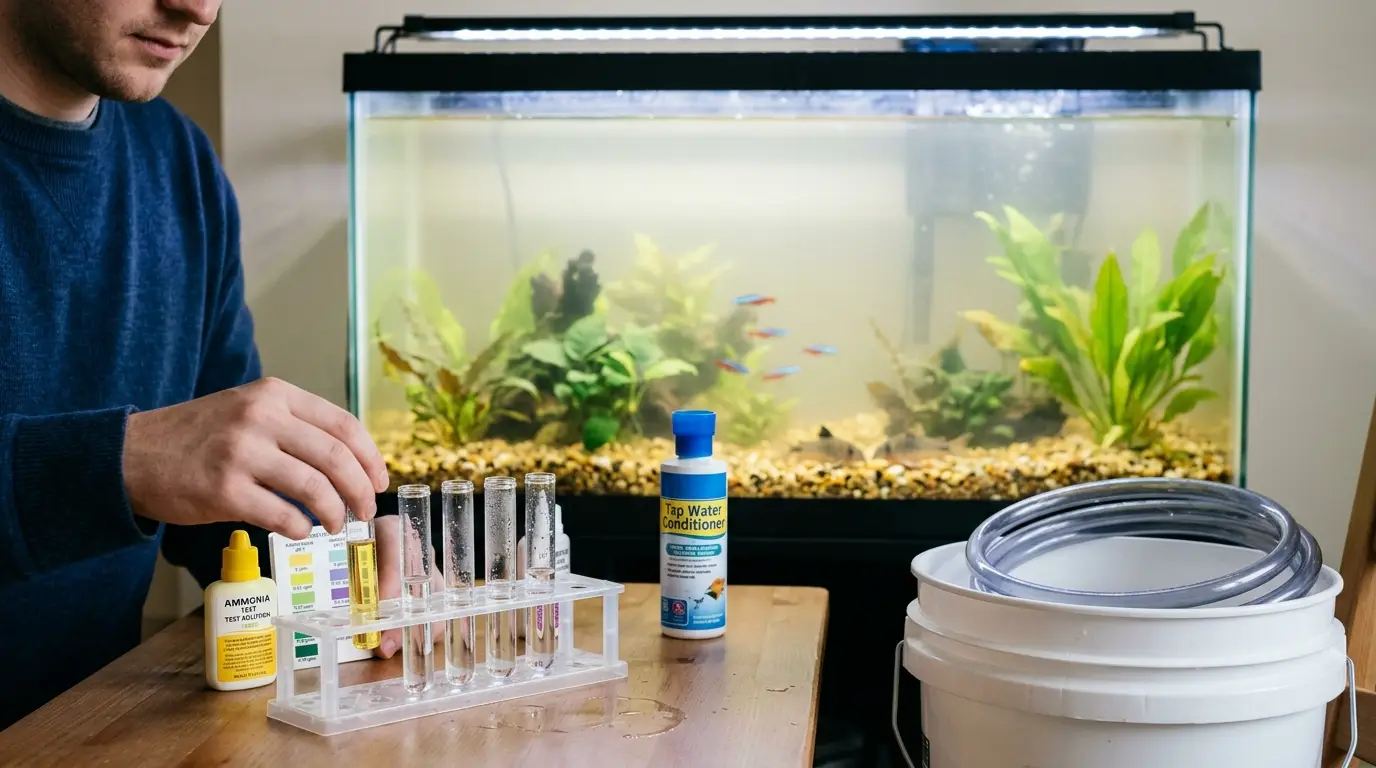
- Ammonia or nitrite spike after adding fish: Do a 30–50% water change. Dose conditioner that detoxifies ammonia and nitrite. Cut feeding. Test daily until back to zero.
- Milky, cloudy water in a new tank: This is a bacterial bloom. It often clears on its own in a few days. Do small water changes, keep the filter running, and avoid overfeeding.
- High nitrite during cycling: Add water changes to keep it under control. A small dose of aquarium salt (about 1 teaspoon per 5 gallons) can help protect fish by adding chloride, but check species tolerance first.
- Nitrate keeps climbing fast: Reduce feeding, clean substrate, increase water change size, add more plants, and review stocking levels.
- Cycle stalls at low pH: Nitrifiers slow under pH 6.0. Raise pH gently with a partial water change or add crushed coral in the filter for a slow, stable bump.
If you had a power outage, keep filter media wet and oxygenated. Moving water with a battery air pump can save your bacteria.
Advanced tips that make cycling easier
- Seed your filter. Move a piece of used media or gravel from a healthy tank. This can cut the cycle to days. Keep it wet and warm during transfer.
- Use quality media with high surface area. Ceramic rings, bio-sponge, and sintered glass hold more bacteria.
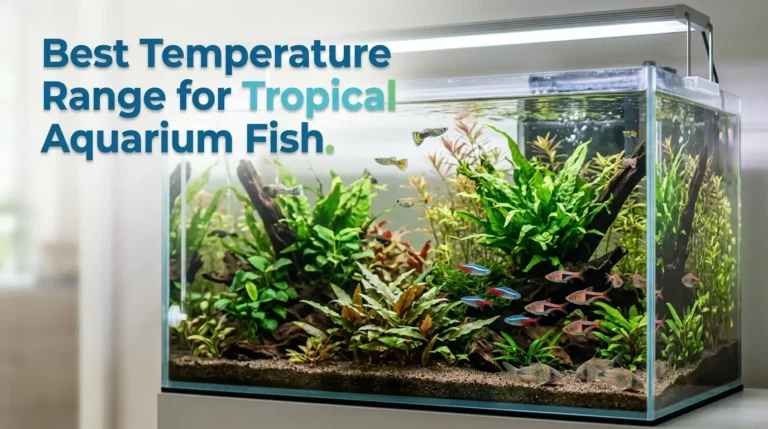
- Keep warmth and flow. Nitrifying bacteria work best near 77–86°F with strong oxygen. Aim for good current through the filter.
- Do not sterilize everything. A little clean biofilm is your friend in the aquarium nitrogen cycle.
- Dose stable ammonia. Pure ammonia is more exact than fish food. If you use food, go very light and wait for it to decay before testing.
These steps build a rock-solid base. They also help if you plan to run a bigger bio-load or a planted community tank.
Frequently Asked Questions of aquarium nitrogen cycle explained for beginners
How long does the aquarium nitrogen cycle take?
Most tanks cycle in 2–6 weeks. Using seeded media and fresh bottled bacteria can shorten this to about 1–2 weeks.
Can I cycle a tank with fish?
Yes, but it is risky for fish. If you must, test daily, change water often, and use a conditioner that detoxifies ammonia and nitrite until the cycle completes.
How do I know my tank is fully cycled?
Dose to about 2 ppm ammonia. If ammonia and nitrite both hit zero within 24 hours and nitrate rises, your aquarium nitrogen cycle is ready.
Why are my test strips different from my liquid kit?
Strips are faster but can be less precise. Trust a good liquid kit for the aquarium nitrogen cycle, especially during the first month.
Do live plants replace the aquarium nitrogen cycle?
No. Plants help by using ammonia and nitrate, but you still need a strong bacterial filter. Think of plants as a bonus filter.
Is nitrate safe for my fish?
Nitrate is far less toxic than ammonia and nitrite. Keep it under 20–40 ppm with regular water changes and plants.
Will cleaning the gravel hurt my cycle?
Light gravel vacuuming is good. Your key bacteria live mostly in the filter media, not deep in the gravel.
Conclusion
The aquarium nitrogen cycle is the foundation of every stable tank. Help the right bacteria grow, test often, change water on schedule, and add fish slowly. With these steps, your fish breathe easy, and your tank stays clear and calm.
Set up your cycle today. Keep a simple log, be patient, and enjoy the process. Want more tips like this? Subscribe, share your tank size and goals in the comments, and let’s build your best aquarium together.