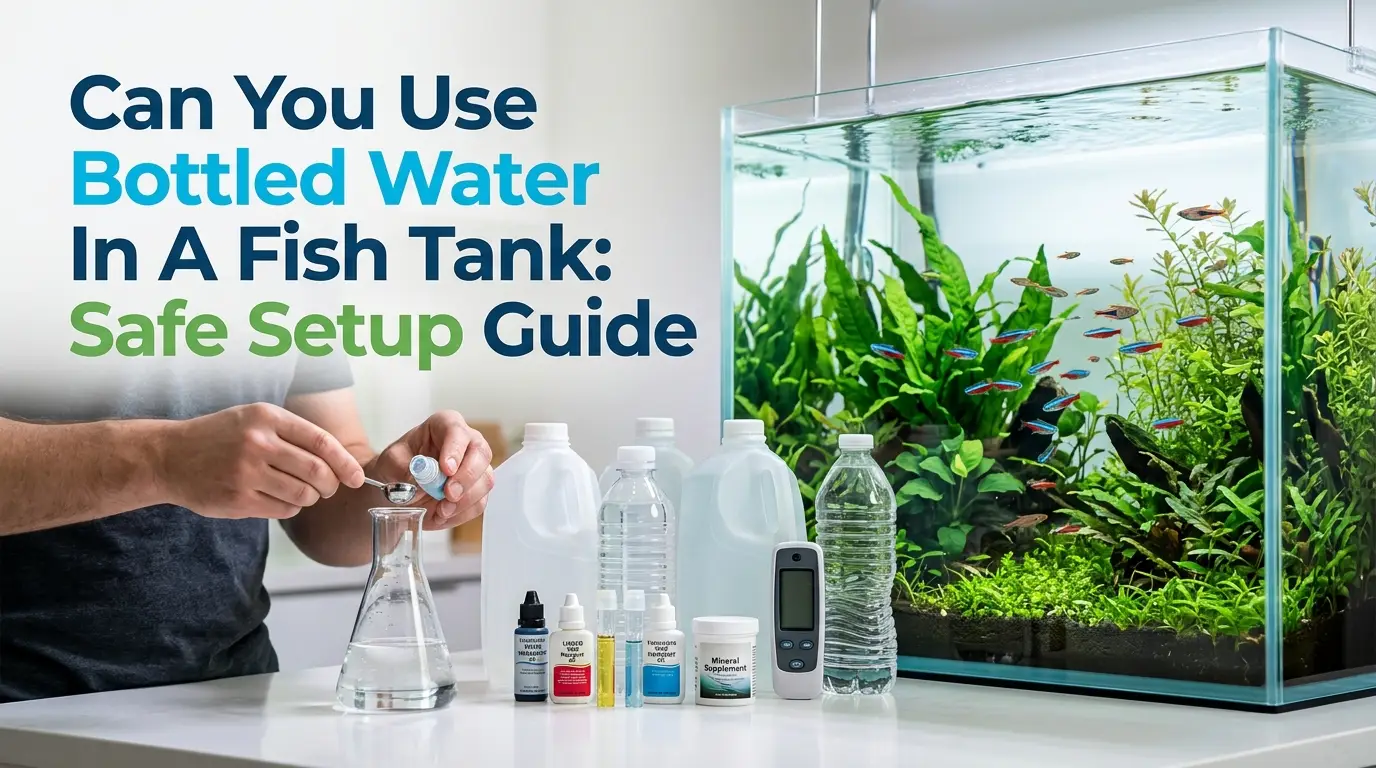
Yes, but only with testing, remineralizing, and consistency for stable parameters.
If you have wondered can you use bottled water in a fish tank, you are not alone. I have set up dozens of aquariums and learned that water is not “just water.” In this guide, I explain the risks, the safe steps, and the smarter options. Stay with me, and you will know exactly when and how to use bottled water without harming your fish.
What “bottled water” means for aquariums
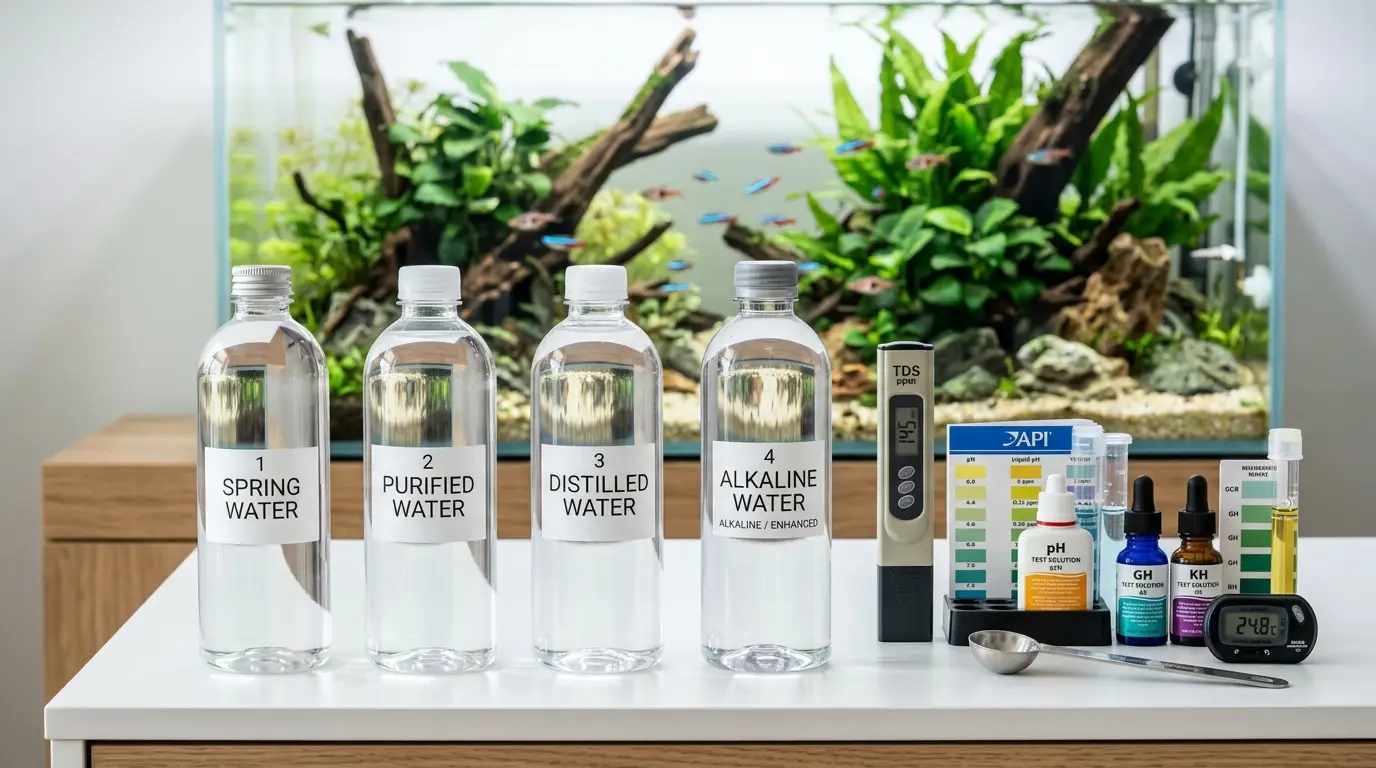
Not all bottled water is the same. The label tells you a lot about what is in the bottle. The source and the treatment change how it behaves in your tank.
Common types you will see:
- Spring or mineral water. Comes from a natural source and often has calcium, magnesium, and bicarbonates. It can have high hardness and TDS.
- Purified water. Starts as tap water and is filtered by reverse osmosis or distillation. It is very low in minerals and needs remineralizing.
- Distilled water. Very pure and almost zero minerals. Use only after adding minerals back.
- Alkaline or enhanced water. Often adjusted with minerals or electrolytes for taste. Content varies a lot by brand.
Bottled water may be sanitized with ozone or UV. It usually has no chlorine. But mineral content, pH, and buffering (KH) vary. That is why testing is key before it touches your fish.
Can you use bottled water in a fish tank? The full answer
So, can you use bottled water in a fish tank? Yes, but results depend on the type, your fish, and your process. Plain use, without testing or prep, is risky.
If you use purified or distilled water, it lacks minerals. Your pH can swing and stress fish. You must remineralize to set GH and KH. If you use spring or mineral water, minerals might be too high for soft-water species. You still need to test and match your target range.
Most times, when people ask can you use bottled water in a fish tank, they want “cleaner” water. Clean does not mean stable. Fish care is about stable, known parameters. Pick a water profile, test it, and keep it the same every week.
Pros and cons of using bottled water
People ask can you use bottled water in a fish tank for safety and ease. There are upsides and downsides.
Benefits:
- Low chlorine. Bottled water rarely has chlorine or chloramine.
- Predictable by brand. If you stick to one brand and test, you can keep it stable.
- Handy for emergencies. Useful when tap water is unsafe or during a move.
Limitations:
- Unknown minerals. Labels list basics, but not full GH and KH. You must test anyway.
- Cost and waste. It adds up fast and creates plastic waste.
- Not always “better.” Microplastics and high sodium can show up in some products.
Water parameters you must test first
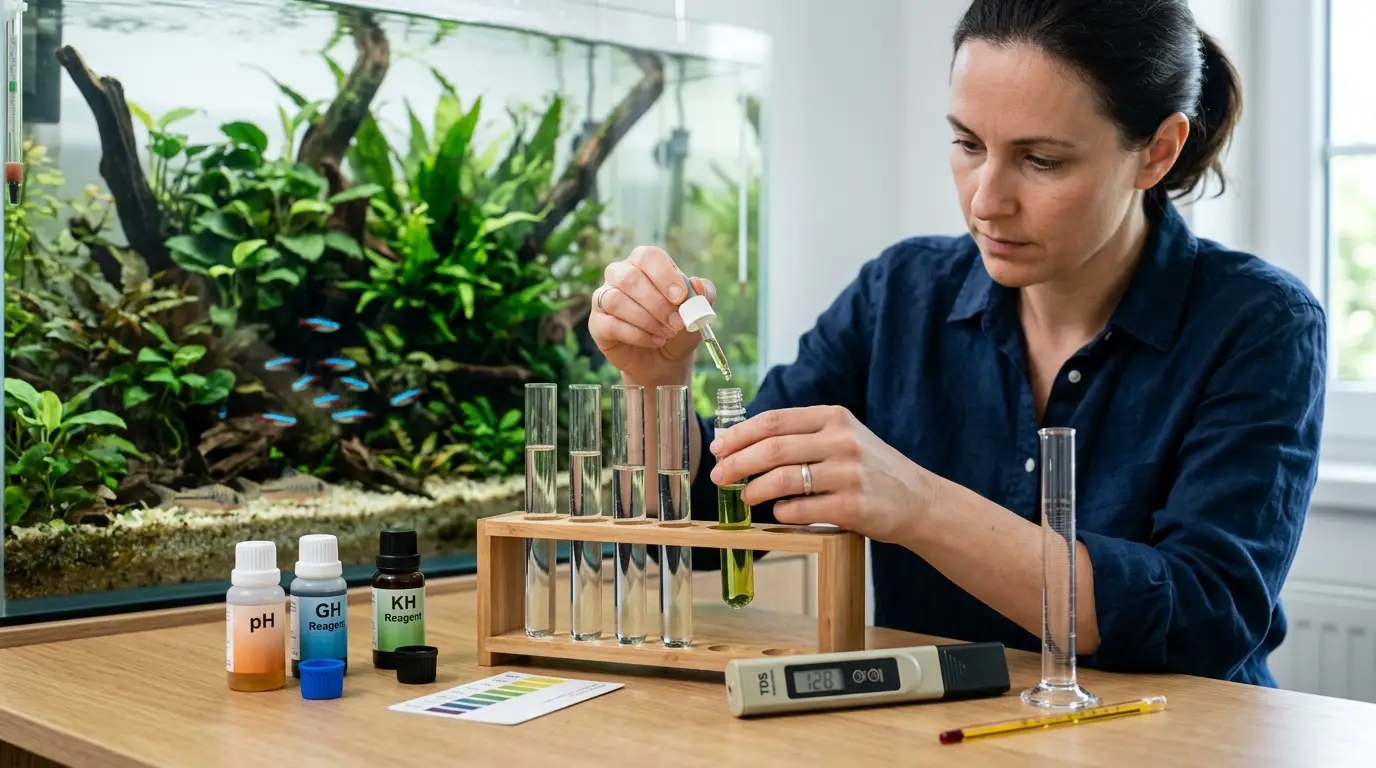
Before you decide can you use bottled water in a fish tank, test it like you would test your tap. Do not guess. Know your numbers.
Key tests:
- pH. Most community fish do well around 6.5 to 7.8 if stable.
- KH (carbonate hardness). Buffers pH. Aim for at least 3 to 5 dKH for most community tanks.
- GH (general hardness). Minerals for fish and plants. Many community fish like 4 to 8 dGH.
- TDS (total dissolved solids). A quick look at mineral load. Useful for tracking stability.
- Ammonia, nitrite, nitrate. Should be zero for ammonia and nitrite. Keep nitrate low.
- Chlorine and metals. Rare in bottled water, but test if you are unsure.
These ranges are based on common aquaculture practices and water standards. Always match your species needs. Stability beats a “perfect” number.
Safe setup: Step-by-step method with bottled water
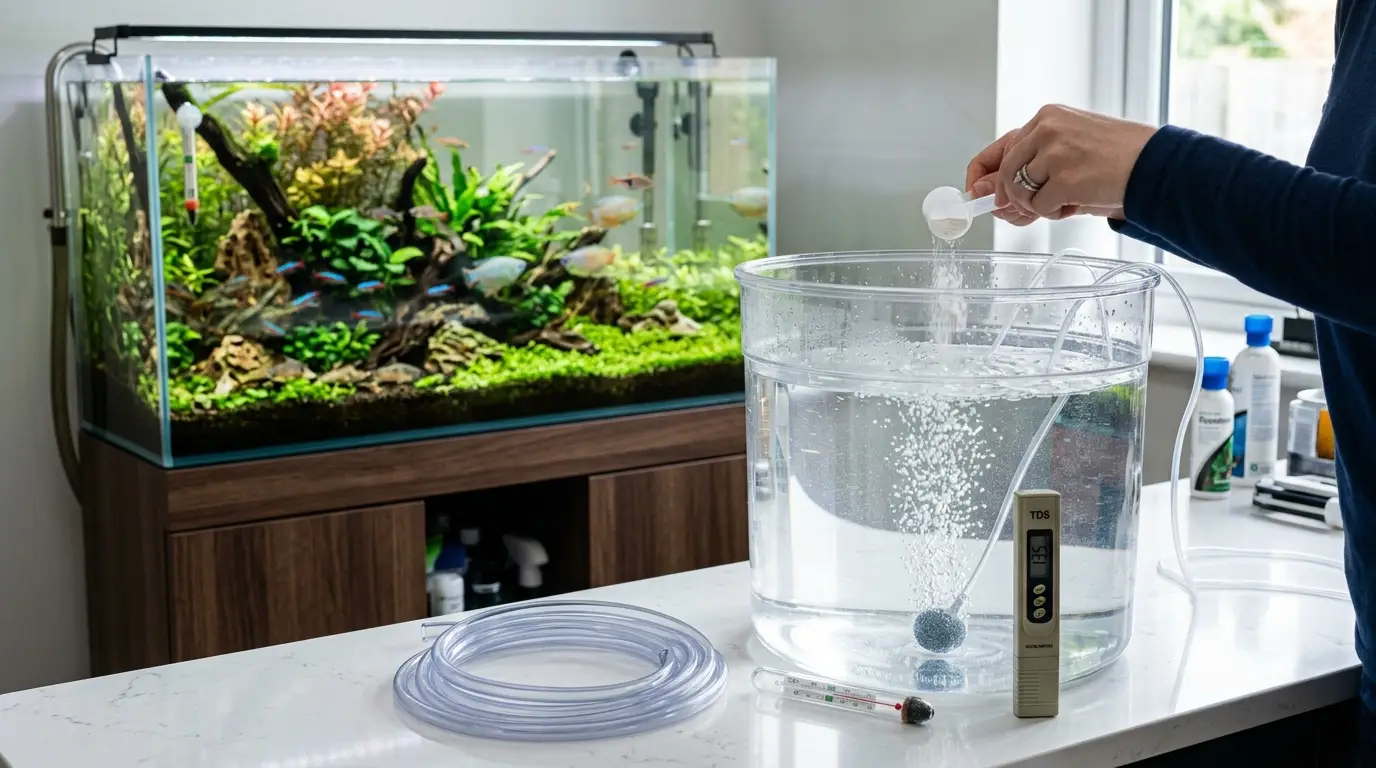
Here is how to proceed when you decide can you use bottled water in a fish tank. Follow these steps to keep your fish safe.
- Choose the water type. For most setups, start with RO or distilled, then remineralize. For hard-water fish, tested spring water can work.
- Remineralize if needed. Use a fish-safe mineral mix to set GH and KH. Follow label doses and test.
- Aerate and heat. Run an air stone for an hour and match temperature to the tank.
- Test. Confirm pH, KH, GH, and TDS before adding it to the aquarium.
- Acclimate. If parameters differ, drip-acclimate fish to avoid shock.
- Keep it consistent. Use the same brand and the same mineral dose every time.
If you switch brands, test again. Small changes on the label can hide big changes in your tank.
Species and tank types: What works and what does not
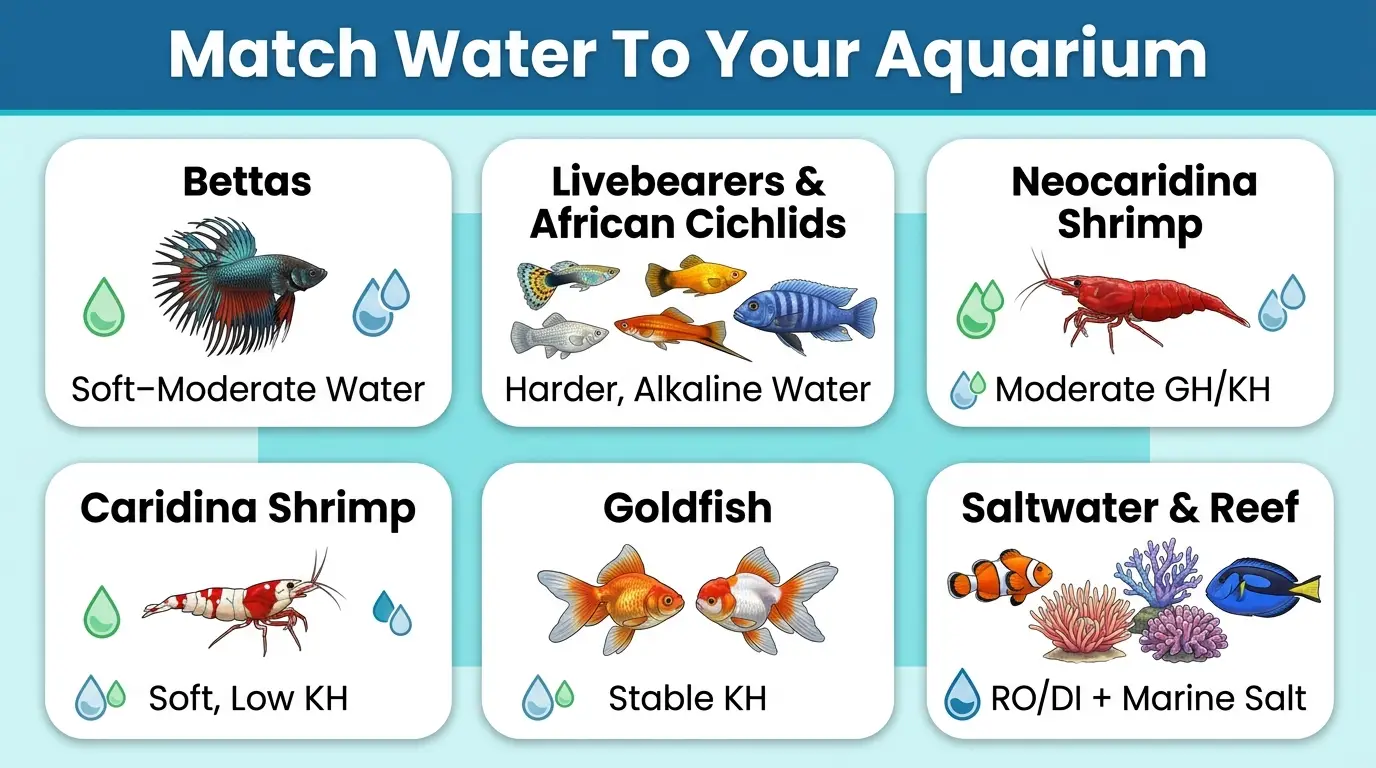
Different fish need different water. Choose bottled water only if it helps you match their needs.
- Bettas. Soft to moderate water with gentle pH is ideal. Bottled RO with a light remineralizer is a safe path.
- Livebearers and African cichlids. They like hard, alkaline water. A tested mineral or spring water may work, but cost will be high.
- Shrimp. Neocaridina like moderate GH and KH. Caridina prefer soft, low KH. RO plus precise remineralizer is best.
- Goldfish. They need good KH to avoid pH swings. Many spring waters work if KH is strong and nitrate stays low.
- Planted tanks. Plants need minerals, but not too much. RO with a balanced remineralizer gives you control.
- Saltwater. Do not use bottled mineral or spring water. Use RO or RO/DI only, then mix reef salt to spec.
If you ask can you use bottled water in a fish tank for a reef or sensitive shrimp, go with RO/DI and a proven remineral routine.
Common mistakes and myths to avoid
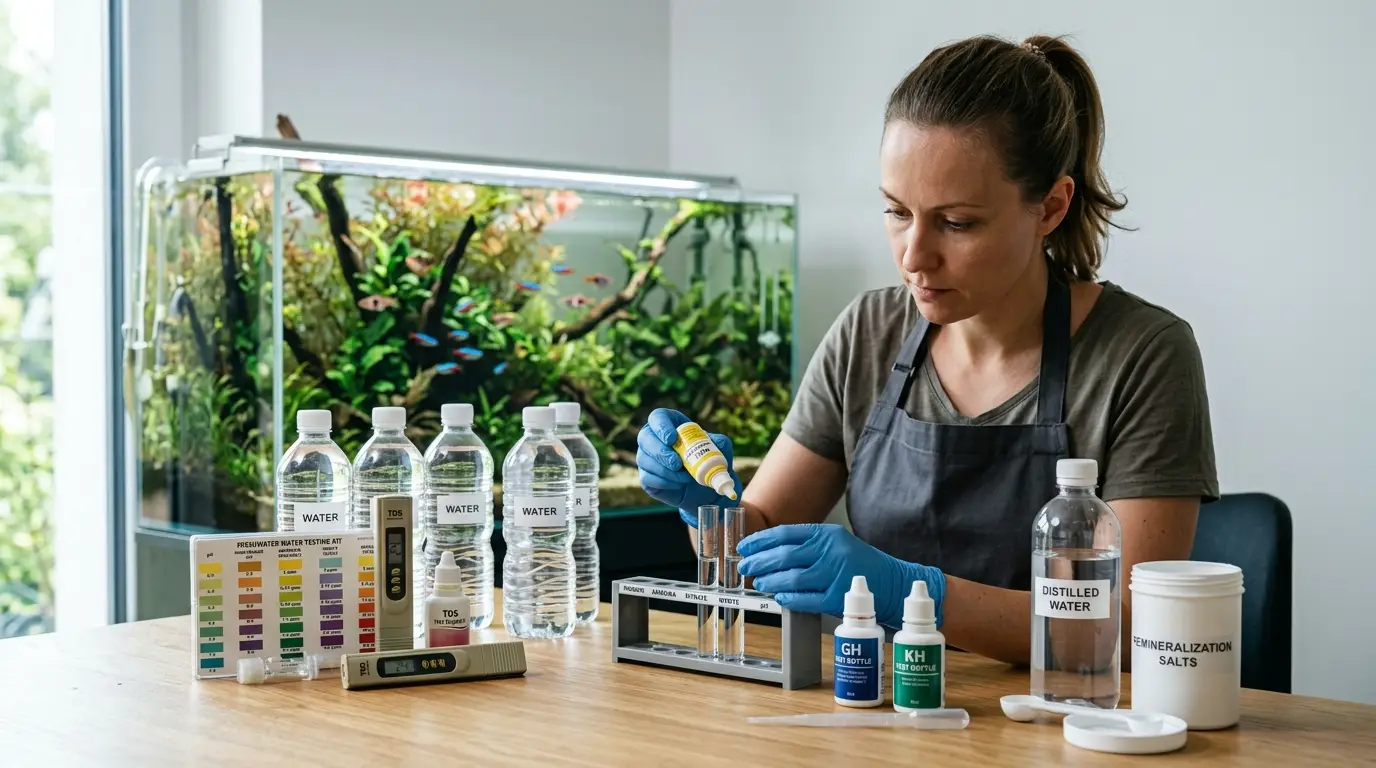
If you wonder can you use bottled water in a fish tank, avoid these traps.
- Using distilled or RO without adding minerals. This crashes pH and stresses fish.
- Mixing brands from week to week. Parameters swing and fish suffer.
- Assuming “alkaline” means “better.” Alkaline is not a quality badge. It is just higher pH.
- Skipping tests. Labels are not full water reports.
- Using flavored, sparkling, or vitamin water. Additives and CO2 can harm fish.
Cost, availability, and sustainability
Can you use bottled water in a fish tank every week? You can, but it gets pricey. The math matters.
- A 20-gallon tank with a 30 percent change is 6 gallons a week. At 1 dollar per gallon, that is over 300 dollars a year.
- RO/DI systems cost more at first but less over time. You add minerals and get control.
- Plastic waste adds up. Refill stations and RO at home reduce waste and trips to the store.
Time, cost, and waste often push hobbyists toward RO/DI or treated tap water.
Better alternatives to bottled water
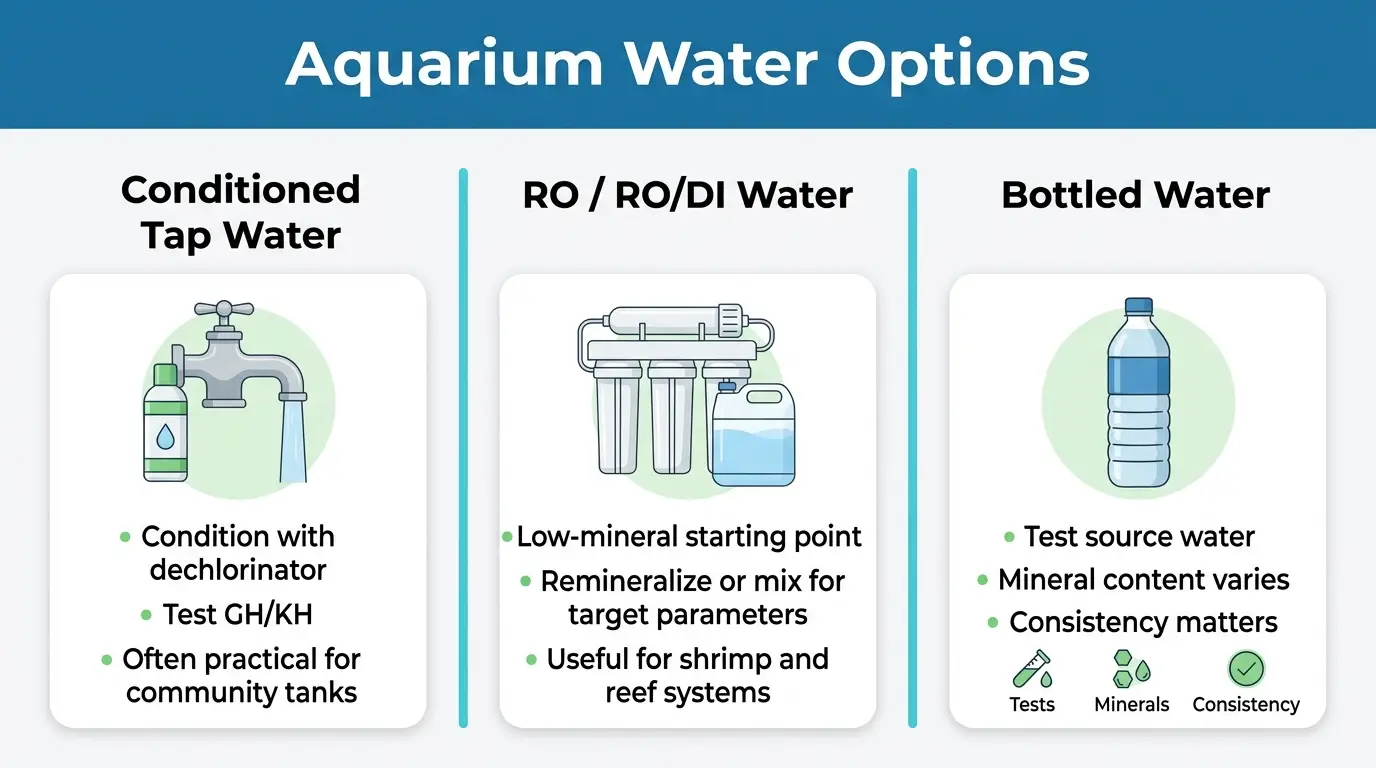
Tap water with a good conditioner is a great start for many. It removes chlorine and neutralizes chloramine. Test and adjust KH and GH if needed.
RO or RO/DI gives the clean slate that many want from bottled water. Then you add back minerals to meet your fish needs. This is ideal for shrimp, soft-water species, and reef tanks.
Well water can be great or risky. Test for iron, hardness, pH, and contaminants. If the well is stable and clean, it can beat bottled options.
If you still ask can you use bottled water in a fish tank, consider mixing: half RO and half hard tap or spring to hit your target.
My experience and practical tips
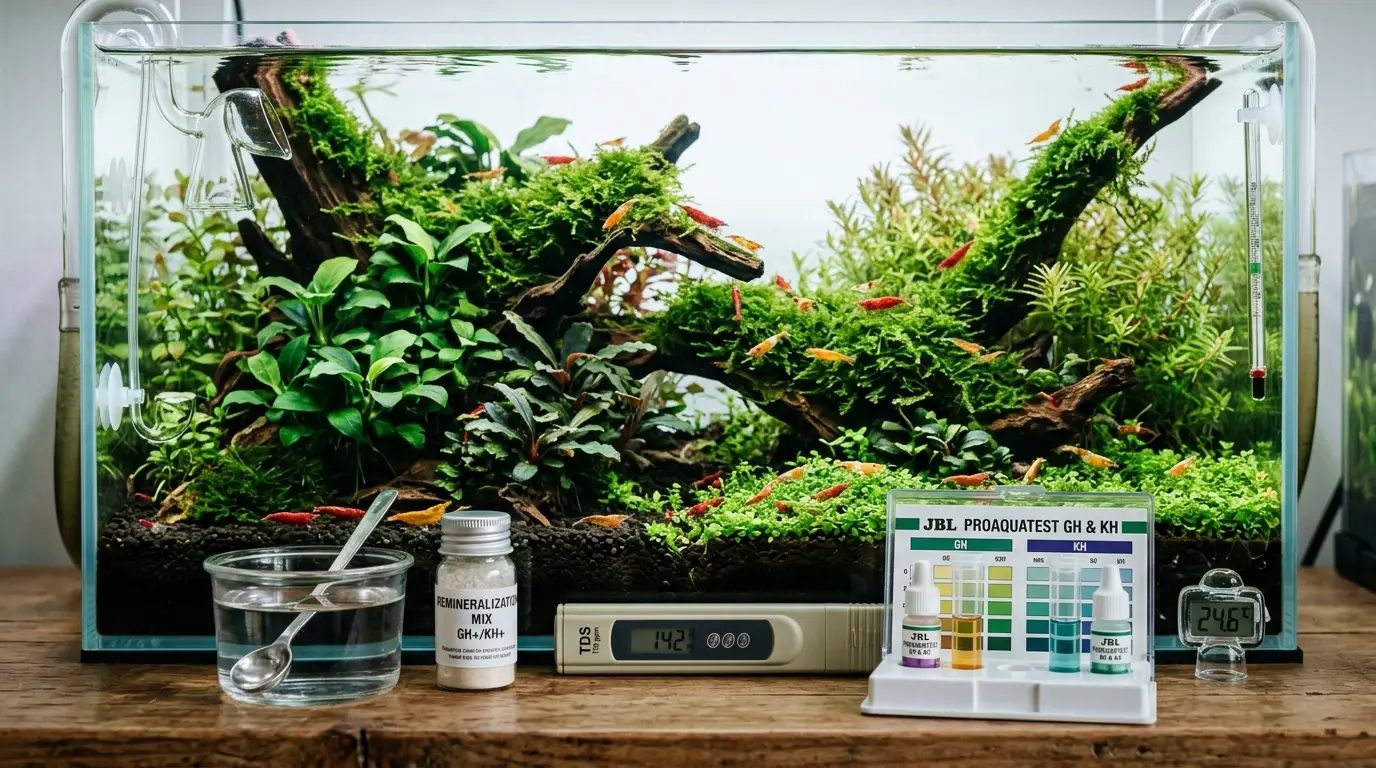
I once started a nano betta tank with off-the-shelf spring water. The KH was higher than I expected. The pH rose and my betta clamped his fins. A quick switch to RO plus a light remineralizer fixed it, and stability came back.
I also bred Neocaridina shrimp. I used RO and added a shrimp mineral mix to hit GH 6 and KH 3. Growth improved, molts were clean, and survival went up. My best lesson was simple: test every new water source and keep the same recipe week after week.
If you still wonder can you use bottled water in a fish tank, you can. Just make stability your north star, not the label on the bottle.
Frequently Asked Questions of can you use bottled water in a fish tank
Can you use bottled water in a fish tank for bettas?
Yes, if you set the hardness and pH. RO with a mild remineralizer is safer than random spring water.
Is distilled bottled water safe for aquariums?
Only after remineralizing. Pure distilled water has no buffering and can cause sudden pH swings.
Does bottled spring water have chlorine?
Most do not. Still, test to confirm and check minerals, because hardness and pH can be high.
Can you mix tap and bottled water in one tank?
Yes, but test the mix so GH, KH, and pH stay stable. Use the same ratio every water change.
How often should I change bottled water in a fish tank?
Follow normal schedules. Most tanks do 20 to 30 percent weekly, based on nitrates and stocking.
Is bottled water good for saltwater or reef tanks?
Use RO or RO/DI instead. Then add a quality salt mix to reach exact marine parameters.
What happens if I switch bottled water brands?
Parameters can shift and stress fish. Test first and transition slowly if you must switch.
Conclusion
Bottled water can work for aquariums, but only with testing, remineralizing, and a steady routine. It is not magic water, and it can be costly. Focus on stable pH, KH, GH, and clean, safe conditions for your fish.
If you choose bottled water, pick one path and keep it the same every week. If you want more control and lower cost, use RO/DI or conditioned tap water. Ready to go deeper? Test your current water today, set a target range, and build a simple plan that fits your fish. Subscribe for more hands-on aquarium guides, or leave a comment with your setup and goals.