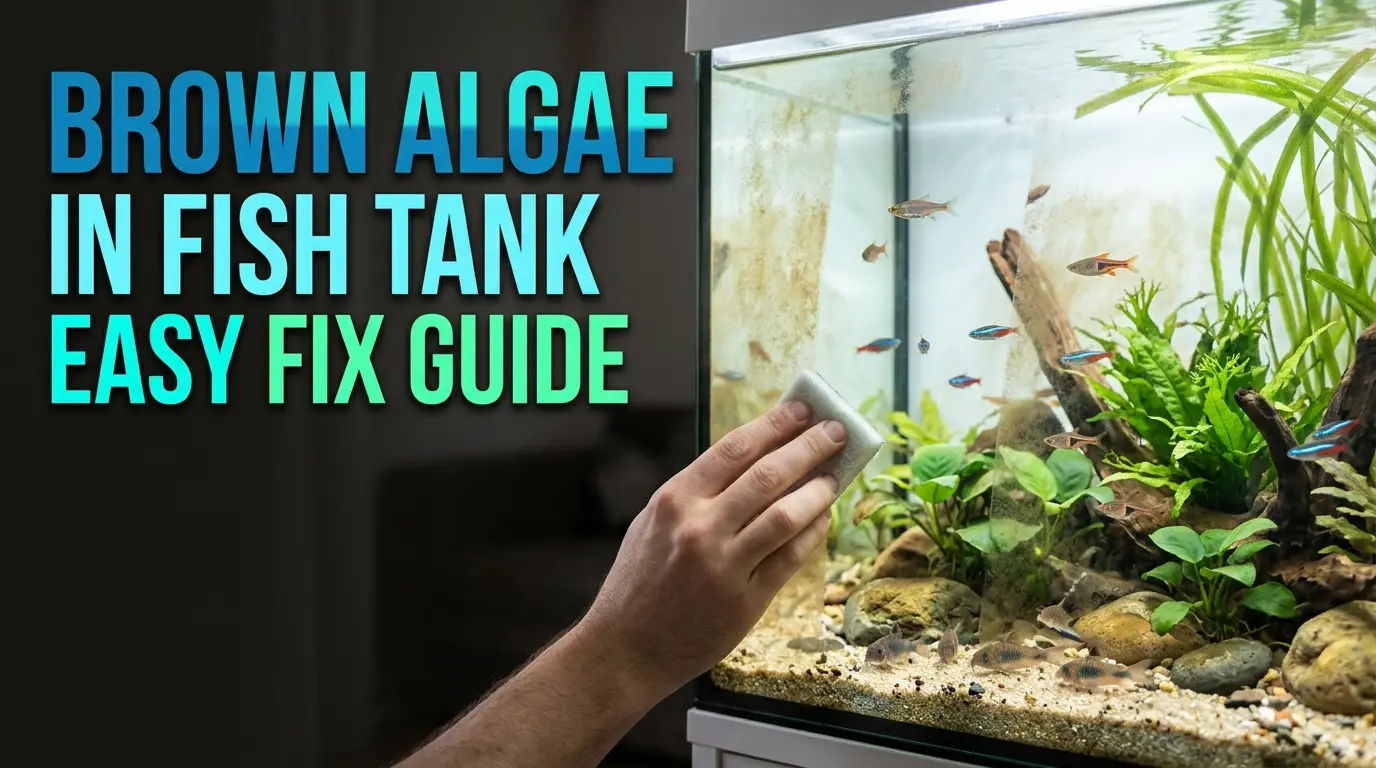
For fish keepers in the United States, brown algae in a fish tank is usually a dusty film of diatoms, not a sign that your fish are sick. It often appears in new aquariums, low-light tanks, and setups with extra nutrients or silicate in the water. The safest fix is simple: remove the film, improve routine care, control light, and give the tank time to mature.
What Is Brown Algae in a Fish Tank?

Brown algae is usually a thin, brown or tan coating on aquarium glass, gravel, rocks, plants, and decorations. In most freshwater tanks, this coating is made of diatoms. Diatoms are tiny organisms that use light and nutrients to grow.
The film may look like dust. It often wipes away easily with a sponge or algae scraper. It can return within a few days if the tank still has the conditions that support it.
True brown seaweeds are more common in saltwater environments. In a freshwater aquarium, “brown algae” almost always means diatom growth.
Brown algae is usually not toxic to fish. Still, heavy growth can block light from plants, cover slow-growing leaves, and make the tank look dirty. A sudden brown coating can also point to poor maintenance, excess waste, or an aquarium that is still cycling.
Why Does Brown Algae Grow in Aquariums?
Brown algae grows when light, nutrients, and water conditions give diatoms room to spread. New tanks are especially prone to this problem because their biological filter is still developing.
Common causes include:
- A newly set-up aquarium
- Low or inconsistent light
- Excess fish waste
- Uneaten food
- Infrequent water changes
- Tap water that contains silicate
- Dead plant leaves or other decaying matter
- Weak water movement
- An immature biological filter
- Too many fish for the tank size
New tank syndrome
Brown diatoms often appear during the first weeks or months of a new aquarium. Beneficial bacteria are still becoming established, so ammonia and nitrite may rise and fall as the tank cycles.
During this stage, test the water often. The U.S. Environmental Protection Agency and local water suppliers provide general information about tap water, but aquarium keepers should use an aquarium test kit for ammonia, nitrite, nitrate, and pH.
The exact timing varies. Some tanks clear brown algae in a few weeks. Others need longer, especially when they use low light or contain porous new gravel and decorations.
Excess nutrients
Diatoms can use nutrients from fish waste, decaying food, and decomposing plant material. A tank may look clean while still holding waste in the substrate or filter.
Overfeeding is a common cause. Feed only what fish can eat within a short period. Remove food that remains on the bottom.
Nitrate is less dangerous than ammonia or nitrite, but a high nitrate level often shows that waste is building up. Test results help you find the cause instead of guessing.
Silicate in tap water
Silicate can support diatom growth. It may enter an aquarium through tap water, sand, gravel, or other mineral-rich materials.
A silicate test can confirm whether it is present, but most fish keepers do not need to test silicate first. Start with basic care, water testing, and physical removal. If brown algae keeps returning after those steps, testing the source water may help.
Do not strip silicate from the tank without a reason. Some aquarium products sold for silicate removal can also affect other water minerals or reduce water flow if they become clogged.
Low light or poor plant growth
Brown algae often appears in tanks with weak light, short light periods, or poor plant growth. This does not mean you should simply increase the light.
Too much light can replace brown diatoms with green algae. The better goal is stable, suitable lighting for the plants and animals in the aquarium.
Is Brown Algae Bad for Fish?
Brown algae is usually harmless in small amounts. Fish can often swim, eat, and breathe normally while a light diatom film covers the tank.
It can become a problem when it:
- Covers the aquarium glass
- Blocks light from live plants
- Coats plant leaves
- Reduces the visual quality of the tank
- Builds up on filter parts
- Hides signs of disease or injury
- Appears with ammonia or nitrite problems
The brown film itself is not proof of unsafe water. Test the water rather than using algae color as a water-quality reading.
Ammonia and nitrite are more urgent concerns. Both can harm fish, even when the aquarium looks clean. If either test shows a measurable amount in an established tank, perform a partial water change with conditioned water and check the filter, stocking level, and feeding routine.
Never add algae-eating animals just to solve a water-quality problem. Snails, shrimp, and algae-eating fish still produce waste and need proper care.
How to Remove Brown Algae From a Fish Tank
The best method combines manual cleaning with better tank care. Removing the visible film gives the aquarium a fresh start, but prevention depends on correcting the cause.
1. Test the water first
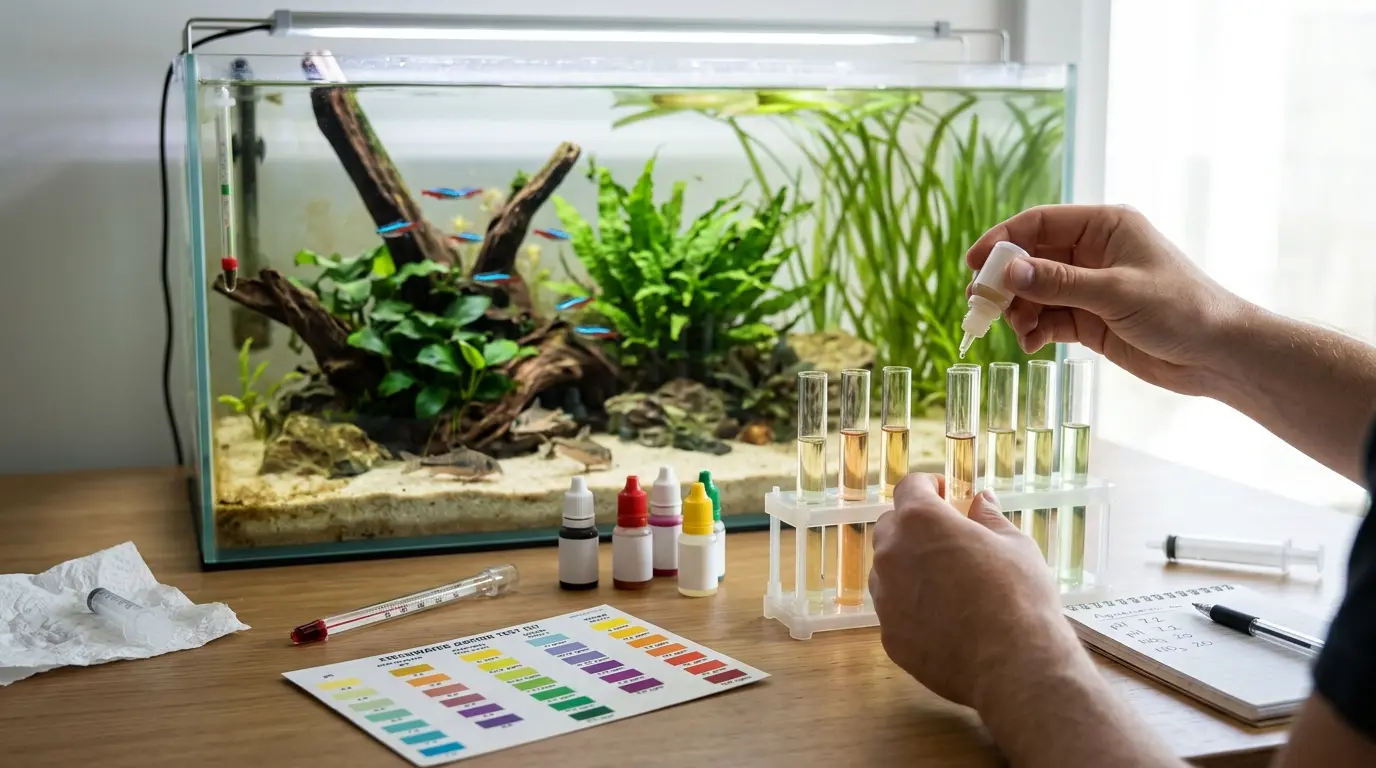
Use a reliable freshwater test kit to check:
- Ammonia
- Nitrite
- Nitrate
- pH
- Temperature
- Hardness, when needed
Test tap water as well as aquarium water if the problem returns quickly after water changes. Record the results so you can see trends.
Do not make large changes to pH or hardness unless you understand how they affect your fish. Sudden shifts can stress aquatic animals.
2. Wipe the glass
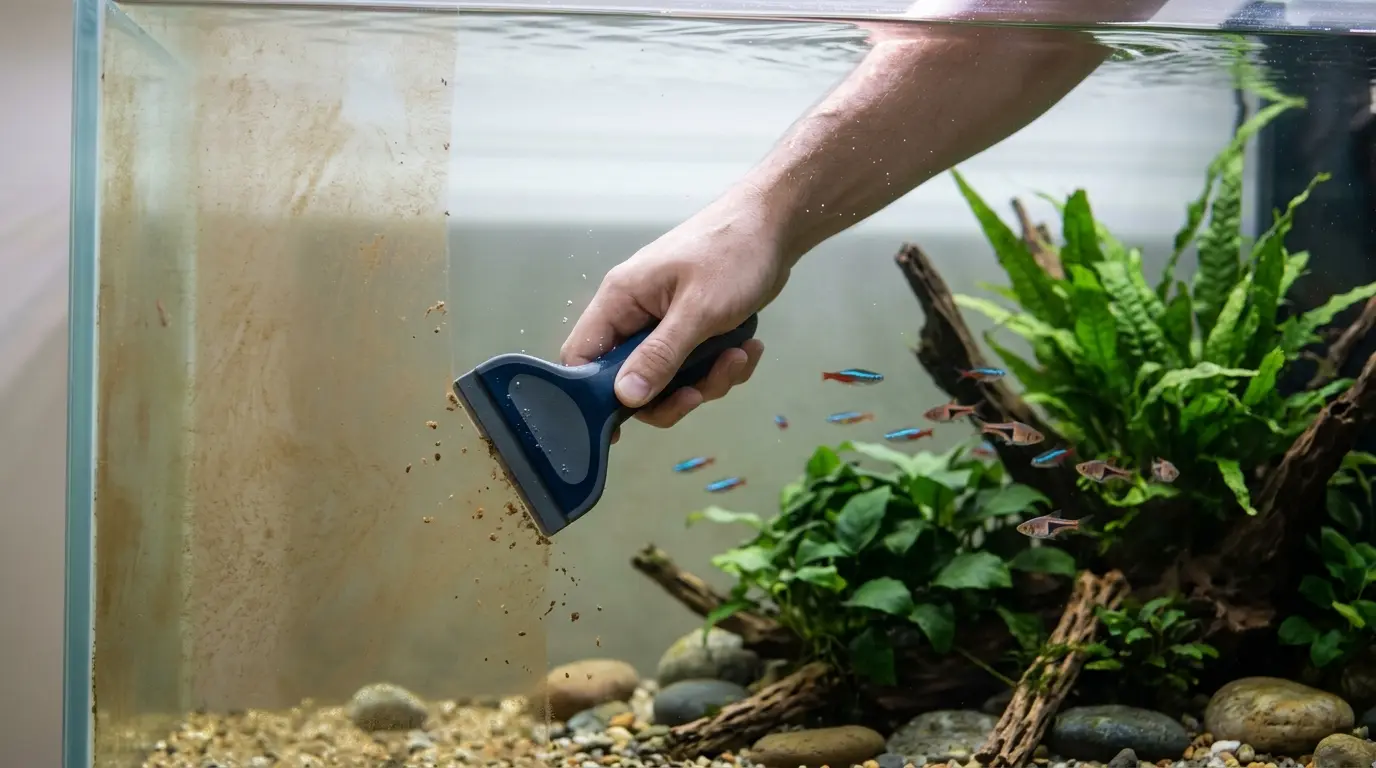
Use an aquarium-safe algae pad, magnetic cleaner, or algae scraper. Choose a tool that matches the tank material.
- Use a glass-safe scraper for glass aquariums.
- Use a plastic-safe pad for acrylic aquariums.
- Avoid tools that can scratch the surface.
- Keep sand away from cleaning pads because trapped grains can scratch glass or acrylic.
Wipe the inside glass before a water change. The loosened algae can then be removed with a siphon.
3. Siphon the substrate
Use a gravel vacuum to remove loose brown material, uneaten food, and waste from the bottom.
Work slowly around plant roots and decorations. Do not deep-clean the entire substrate and replace all filter media at the same time. That can remove too much beneficial bacteria from the aquarium.
A common maintenance approach is a partial water change of about 20% to 30%, adjusted to the tank’s test results and livestock needs. The correct amount depends on stocking, waste levels, and water chemistry.
4. Clean plants and decorations
Remove decorations when practical and scrub them with a clean aquarium brush. Rinse them in old tank water or conditioned water.
For live plants, gently rub the leaves between clean fingers or use a soft brush. Remove badly damaged leaves with clean aquarium scissors.
Do not use soap, household cleaners, bleach, or scented products on items that will return to the tank. Residue can harm fish and invertebrates.
5. Maintain the filter correctly
Rinse mechanical filter media in removed aquarium water when it becomes dirty. This removes debris without exposing beneficial bacteria to untreated tap water.
Do not replace all filter media at once unless the material is damaged or the manufacturer requires it. If you use disposable cartridges, replacing them too often can remove useful biological media.
Never wash biological media with hot tap water or cleaning chemicals.
How to Prevent Brown Algae From Coming Back
Brown algae prevention depends on stable care, not a single chemical treatment. Focus on waste control, suitable light, and a mature biological filter.
Feed less
Overfeeding creates waste that can support algae. Give fish small portions and watch how quickly they eat.
The right amount varies by species. Bottom-feeding fish may need sinking food, but extra food should not remain hidden under wood, rocks, or plants.
Keep a regular water-change schedule
A consistent schedule removes dissolved waste and replaces depleted minerals. Many freshwater aquariums do well with weekly maintenance, but the correct schedule depends on test results and stocking.
Use a water conditioner that treats the disinfectants used by your municipal water supplier. Match the new water’s temperature to the aquarium as closely as practical.
Control the light
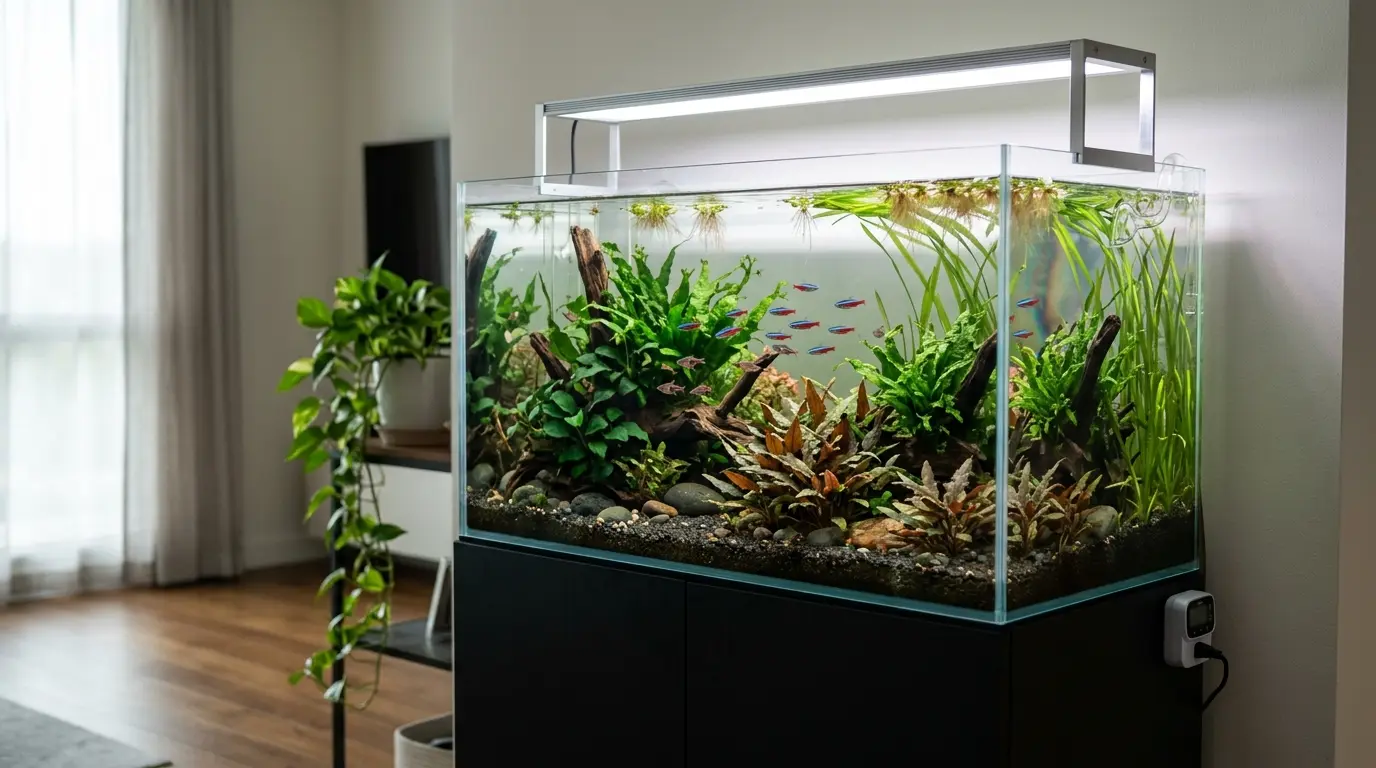
Use a timer so the aquarium receives the same light period each day. For many community tanks, starting with about 6 to 8 hours of light per day can help while you correct an algae problem.
This is a starting range, not a universal rule. Plants, light intensity, tank depth, and room light all change the result.
Keep the tank away from direct sunlight. Sunlight can add heat and create strong changes in light intensity.
Add live plants carefully
Healthy plants use nutrients and can compete with algae. Fast-growing plants often help more quickly than slow-growing plants.
Plants still need suitable light, nutrients, and carbon access. Adding plants without correcting poor care may not solve the issue.
Remove dying leaves because decaying plant matter adds nutrients to the water.
Improve water movement
Gentle water movement helps carry waste to the filter. Aim the filter outlet so it circulates water without creating a strong current that stresses fish.
Clean blocked intake tubes and check that the filter is sized for the aquarium. Do not rely only on a product’s stated flow rate because real flow can drop when media becomes dirty.
Let the aquarium mature
A stable, mature aquarium often develops fewer sudden swings than a new setup. This does not mean brown algae must be ignored.
Continue testing, feeding lightly, and removing the film. Time helps, but good maintenance gives the tank the best chance to settle.
Do Algae-Eating Fish or Snails Remove Brown Algae?
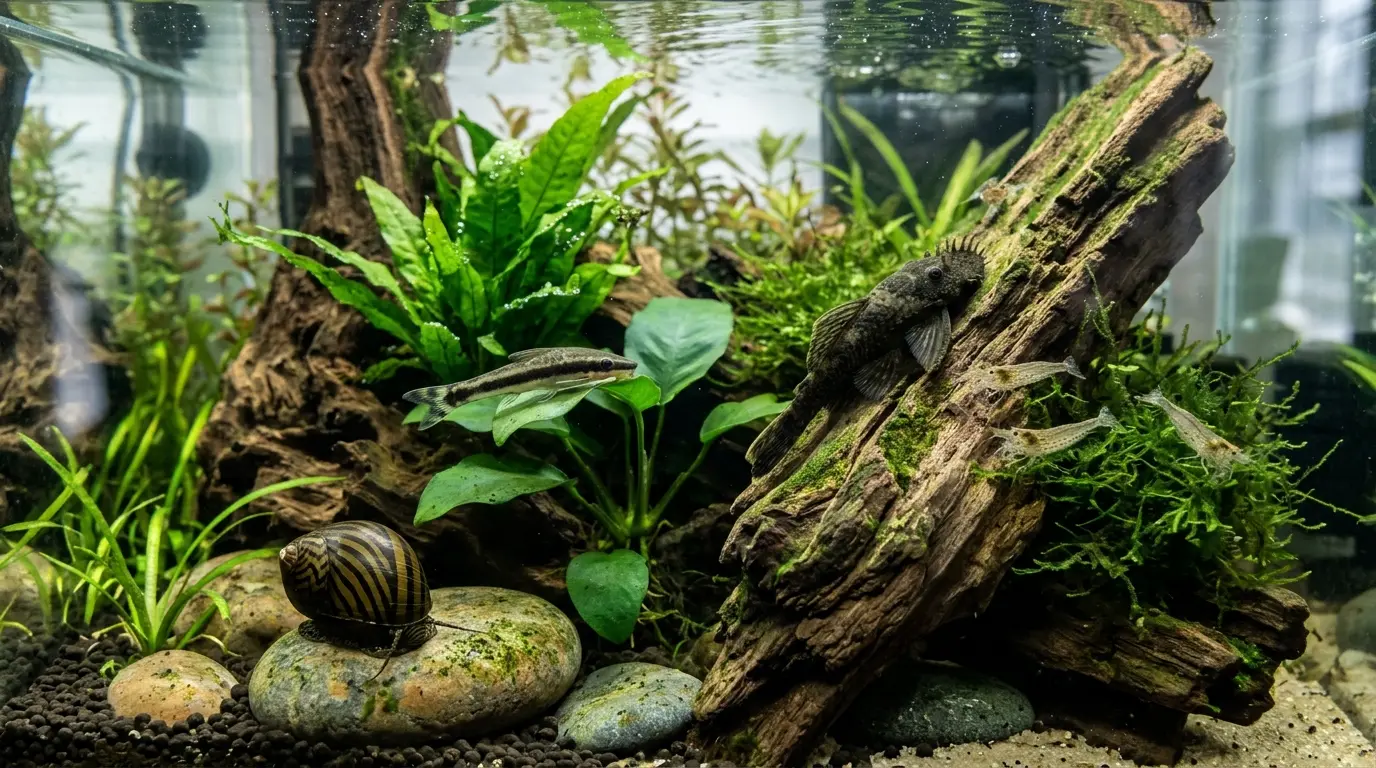
Some aquarium animals eat diatoms, but they should not be purchased as a quick fix. Choose livestock based on adult size, behavior, water needs, and tank volume first.
Possible algae grazers include:
- Nerite snails
- Some freshwater shrimp
- Otocinclus catfish in suitable mature tanks
- Certain plecos, depending on species and tank size
Nerite snails
Nerite snails are well known for grazing on algae in freshwater aquariums. They usually do not reproduce freely in freshwater, although they may leave small white egg spots on hard surfaces.
They need enough food and suitable mineral conditions for shell health. A tank with very little algae may not provide enough food by itself.
Shrimp
Some shrimp graze on soft algae and biofilm. They are small and may be vulnerable to fish that can fit them in their mouths.
Shrimp need stable water and should not be added to a tank with ammonia or nitrite problems.
Otocinclus catfish
Otocinclus catfish can eat soft algae and biofilm, but they are not disposable tank cleaners. They do best in mature aquariums with stable water and regular access to suitable food.
Avoid buying them for a brand-new tank that has no natural food or established surfaces.
Plecos
The common pleco can grow very large. It is not suitable for many home aquariums. Smaller species, such as bristlenose plecos, still need proper space, food, filtration, and care.
Research the exact species before purchase. “Pleco” is a broad trade name, not a single fish.
Brown Algae vs. Other Aquarium Growth
Not every brown-looking growth is the same. Correct identification helps you choose a safer treatment.
| Appearance | Likely growth | Common clue | First response |
|---|---|---|---|
| Thin tan dust on glass and decor | Diatoms | Wipes away easily | Clean surfaces and improve routine care |
| Slimy brown or dark film | Possible cyanobacteria or mixed growth | May peel off in sheets and smell earthy | Remove manually and check light, flow, and nutrients |
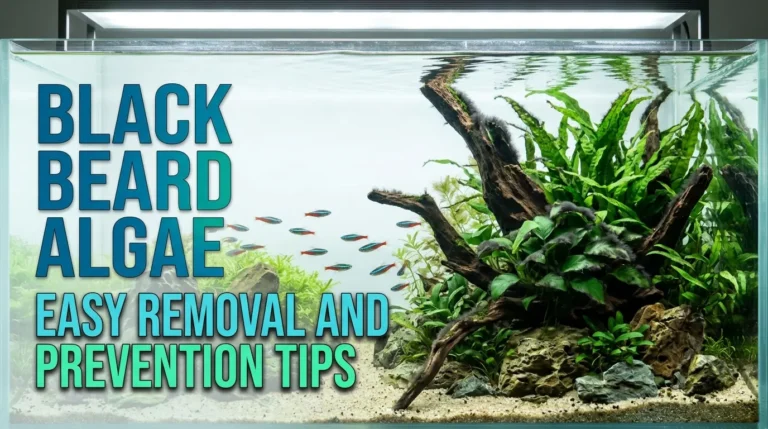
| Dark tufts on leaves or decor | Black beard algae | Firm, brush-like strands | Correct light and nutrients; remove badly affected leaves |
| Green powder or green spot marks | Green algae | Bright green color | Adjust light and maintenance |
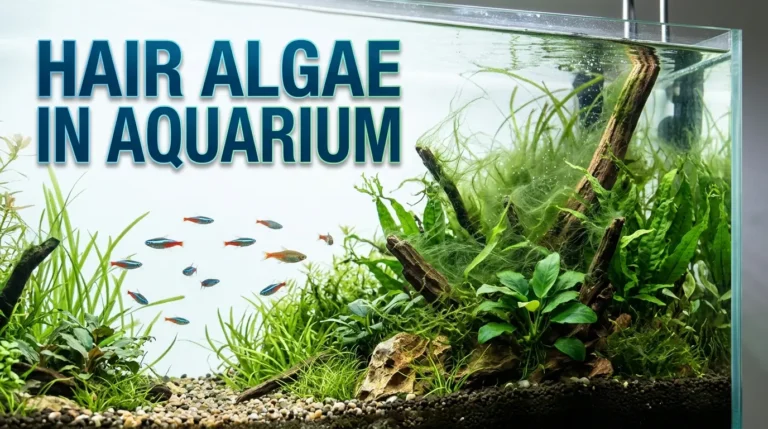
| Long green threads | Hair or filament algae | String-like strands | Remove by hand and check light and nutrients |
Color alone cannot identify every aquarium growth. Texture, location, speed of growth, and water conditions provide better clues.
If the film is slimy, smells foul, spreads quickly, or returns despite good maintenance, treat it as a different algae problem until identified. Avoid adding random chemicals because the wrong treatment may harm plants, shrimp, snails, or beneficial bacteria.
Should You Use Chemicals to Kill Brown Algae?
Chemical algae treatments are usually not the first choice for brown diatoms. Manual cleaning and stable care are safer starting points.
Before using any algae product, read the full label and check whether it is safe for:
- Shrimp
- Snails
- Live plants
- Sensitive fish
- Biological filter media
- Your aquarium size
Never exceed the labeled dose. More product does not mean faster or safer results.
Some treatments can lower oxygen as algae dies and decomposes. Increase surface movement and watch fish closely if a product label warns about oxygen use.
Do not mix aquarium chemicals unless the labels specifically allow it. Remove activated carbon only when the product instructions require it, and replace it as directed afterward.
If fish gasp at the surface, become weak, or show unusual behavior after treatment, remove the product according to the label and increase aeration. Seek help from an aquatic veterinarian or qualified aquarium professional when symptoms are severe or do not improve.
A Simple Weekly Brown Algae Control Plan
Use this routine as a starting point, then adjust it to your test results.
- Check the fish. Look for normal breathing, feeding, and activity.
- Test the water. Check ammonia, nitrite, and nitrate.
- Scrape the glass. Remove the brown film before the water change.
- Siphon loose waste. Focus on open areas and places where food collects.
- Change part of the water. Use conditioned water with a similar temperature.
- Trim damaged leaves. Remove plant material that is decaying.
- Check the filter. Rinse dirty mechanical media in removed tank water.
- Review feeding. Reduce portions if food remains after feeding.
- Check the light timer. Keep the daily schedule stable.
- Record the results. Note test values and whether the brown film returns.
Signs that the plan is working include slower regrowth, clearer glass, healthier plant leaves, and stable ammonia and nitrite readings.
If the brown film returns within one or two days, look for a hidden cause. Check the filter intake, substrate, feeding area, direct sunlight, source water, and tank stocking.
Common Mistakes to Avoid
Several quick fixes can make the problem worse.
Scrubbing without removing the waste
Scrubbing the glass loosens algae but does not remove it. Siphon out the debris during the water change.
Replacing all filter media
Changing every filter component at once can reduce the tank’s biological capacity. Rinse reusable media in old tank water instead.
Adding too many algae eaters
Extra animals create more waste and may compete for food. Stock for long-term care, not short-term cleaning.
Leaving the light on all day
Long light periods can support more algae. Use a timer and keep the schedule steady.
Using untreated tap water
Chlorine and chloramine can harm fish and beneficial bacteria. Use a suitable water conditioner for every water change.
Deep-cleaning everything at once
A full tank reset can remove helpful bacteria and stress fish. Clean in stages unless there is a serious contamination or disease issue.
Chasing a perfect appearance
A small amount of algae is normal in many aquariums. The goal is a stable, healthy tank—not a sterile one.
FAQs About Brown Algae in Fish Tanks
Is brown algae normal in a new fish tank?
Yes. Brown diatoms are common in new aquariums while the biological filter and surfaces mature. Continue testing ammonia and nitrite, perform careful water changes, and remove the film as needed.
How long does brown algae take to go away?
There is no fixed timeline. It may fade after several weeks, but it can remain longer if the tank has excess waste, weak circulation, unstable lighting, or silicate-rich source water.
Does brown algae mean my aquarium has too much silicate?
Not always. Silicate can support diatoms, but new-tank conditions, waste, light, and immature filtration also play a role. Test the source water if the problem continues after basic maintenance improves.
Can brown algae kill aquarium plants?
A light coating usually does not kill plants. Heavy growth can block light and weaken slow-growing leaves. Remove the film gently and trim leaves that are already dying.
Can I use hydrogen peroxide on brown algae?
Hydrogen peroxide can damage fish, shrimp, snails, and plants if used incorrectly. Do not add it to a stocked aquarium unless you understand the exact concentration, dose, exposure time, and product instructions. Manual removal is the safer first step.
Key Takeaways
- Brown algae in a freshwater fish tank is usually diatoms.
- It is common in new aquariums and is usually not harmful by itself.
- Test ammonia, nitrite, and nitrate before choosing a treatment.
- Scrape the glass, siphon the debris, and maintain the filter carefully.
- Control feeding, light, waste, and water changes.
- Do not add algae-eating animals unless they fit the tank for long-term care.
- Avoid harsh chemicals unless basic maintenance fails and the product is safe for your livestock.
Conclusion
Brown algae in a fish tank is usually a manageable maintenance issue, not an emergency. Remove the film, test the water, reduce waste, and keep the light and care routine steady.
If the growth is slimy, foul-smelling, fast-spreading, or linked with sick fish, investigate beyond ordinary diatoms. In most cases, a clean routine and a little patience will help the aquarium settle into a healthier balance.