
No, changing all aquarium water at once is rarely safe or needed.
If you have ever asked, Is It Safe to Change All Aquarium Water, you’re not alone. I’ve kept freshwater and reef tanks for years, and I’ve seen what sudden, big changes can do. This guide explains the science, the risks, and the right way to keep your tank clean without harming your fish. Read on to learn when full changes make sense, and how to protect your tank’s balance.
What really happens if you replace all the water?
Is It Safe to Change All Aquarium Water? Not in most cases. A full change can shock fish with sudden shifts in temperature, pH, hardness, and total dissolved solids. Even if your tank looks cleaner after a full swap, the sudden change can stress gills and disrupt osmoregulation.
Most of your good bacteria live in the filter media, substrate, rocks, and decorations. Some also float in the water. When you change all the water, you can trigger a mini-cycle, raise ammonia, and lower oxygen.
I learned this the hard way. Years ago, I did a 100% change on a stocked 20-gallon. Within minutes, fish were gasping and hiding. It took days, extra aeration, and bottled bacteria to stabilize.
Why partial water changes are safer
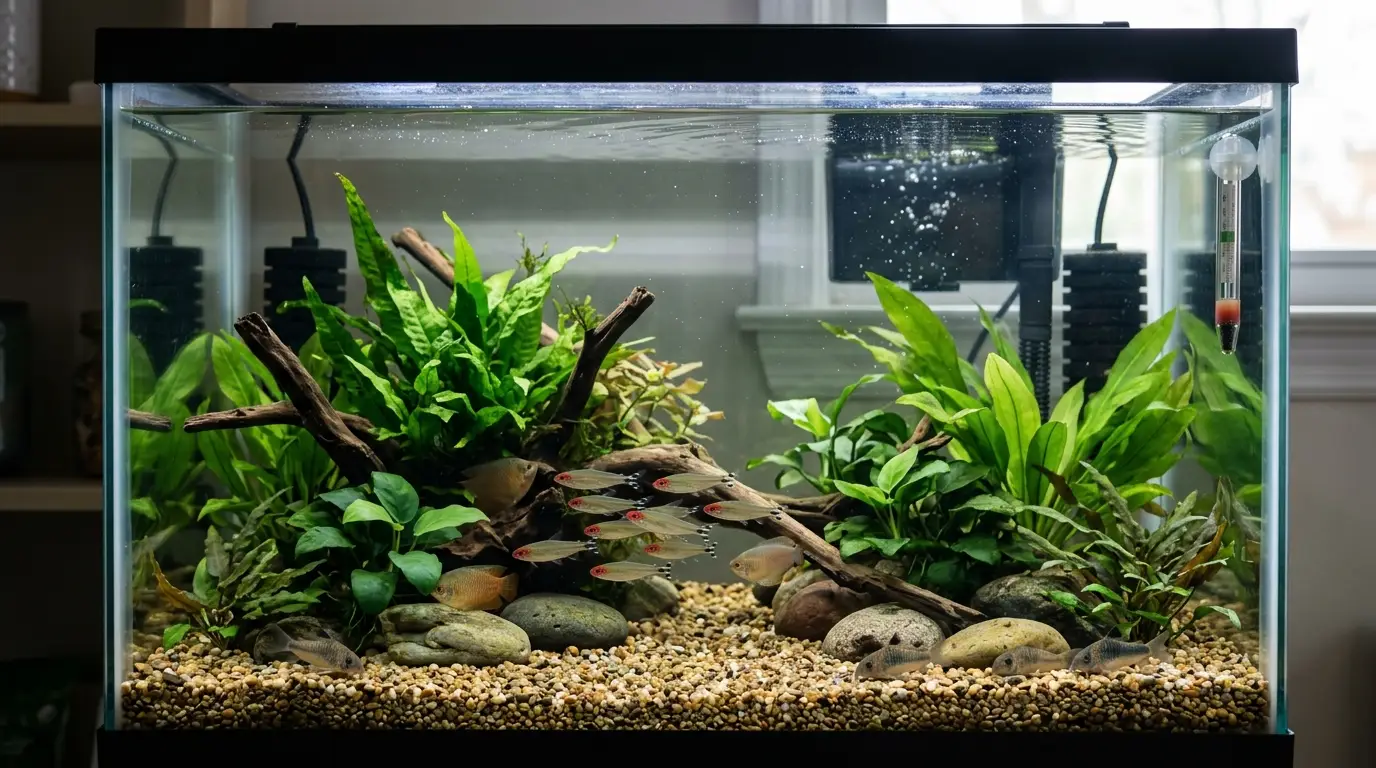
Partial changes keep water clean while holding parameters steady. They remove dissolved waste, control nitrate, and refresh minerals without shocking the system. This is why many aquarists ask, Is It Safe to Change All Aquarium Water, and then switch to a stable partial-change routine.
For most tanks, 20–35% once a week is a sweet spot. Heavy bioload tanks may need 40–50% weekly. Lightly stocked or planted tanks may only need 15–25% weekly. Always use a dechlorinator that treats chlorine and chloramine.
Match new water to the tank’s temperature. Aim within 1–2°F (0.5–1°C). Keep pH changes small. A swing of 0.2 pH units or less is ideal.
When a 100% change might be necessary
There are rare times when a full change is the safest move. If a toxin gets in the tank, act fast. Think soap, aerosol sprays, paint fumes, pesticides, or hand lotion. In those cases, Is It Safe to Change All Aquarium Water? Yes, because contamination can kill fast.
Other edge cases include:
- Massive decay from a hidden dead fish or spoiled food.
- A heater failure that cooked the water.
- A tank move or reset, when you keep the same filter media wet and alive.
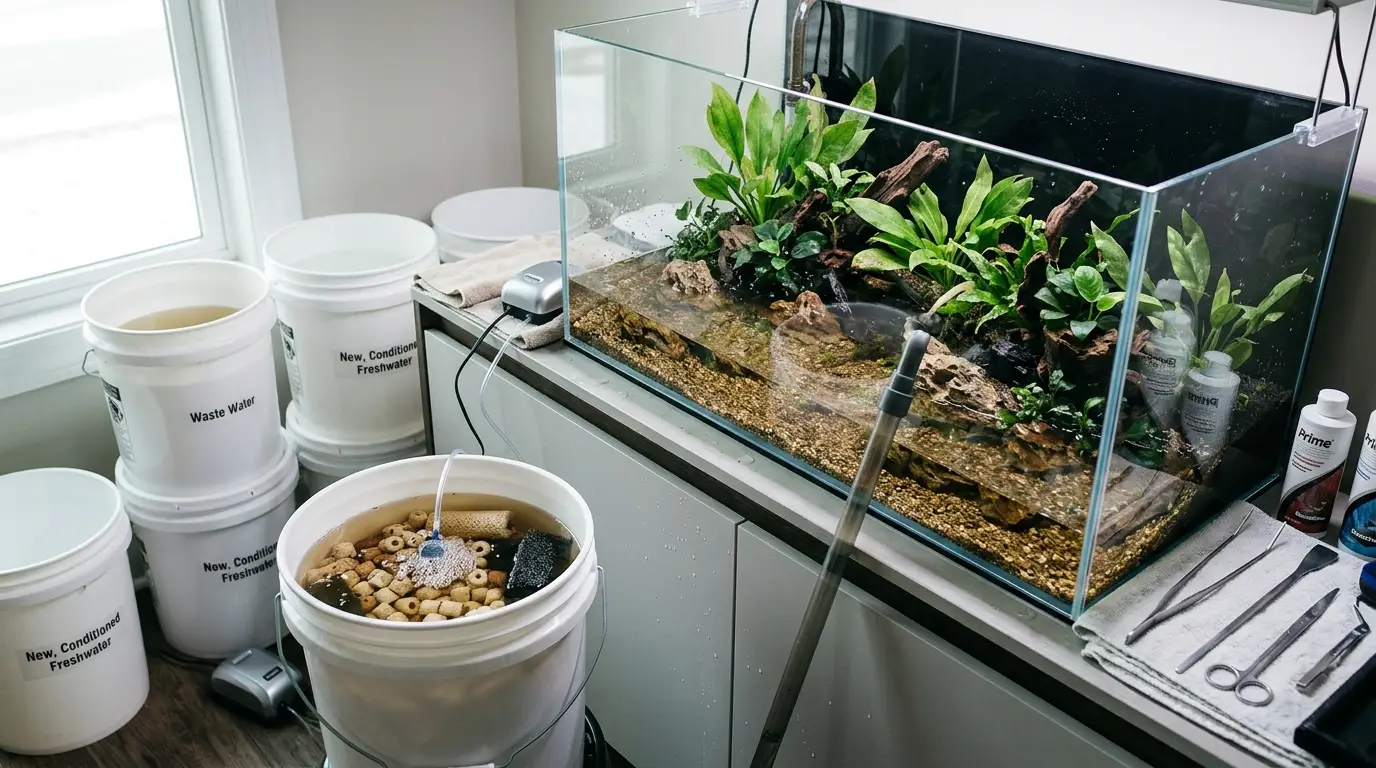
Even then, save the filter media in tank water so bacteria survive. Refill with matched, dechlorinated water. Add extra aeration and test often for the next few days.
How to perform a large water change safely (step by step)
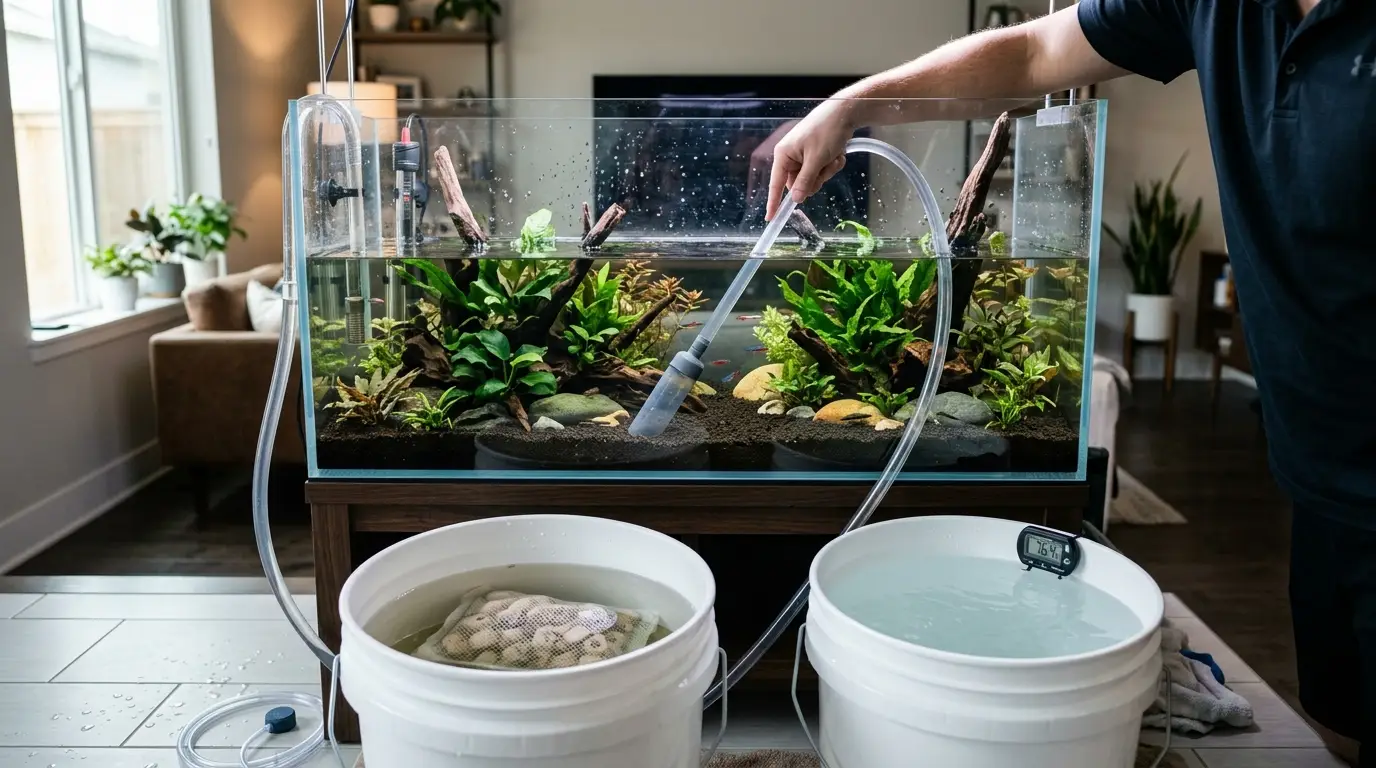
If you must do a big change, plan it. Here is a safe process I use with clients:
- Test first. Check ammonia, nitrite, nitrate, pH, and temperature.
- Prepare the new water. Treat for chlorine and chloramine. Match temperature and, for saltwater, salinity.
- Protect your biofilter. Turn off the heater and filter. Keep filter media wet in tank water, not under the tap.
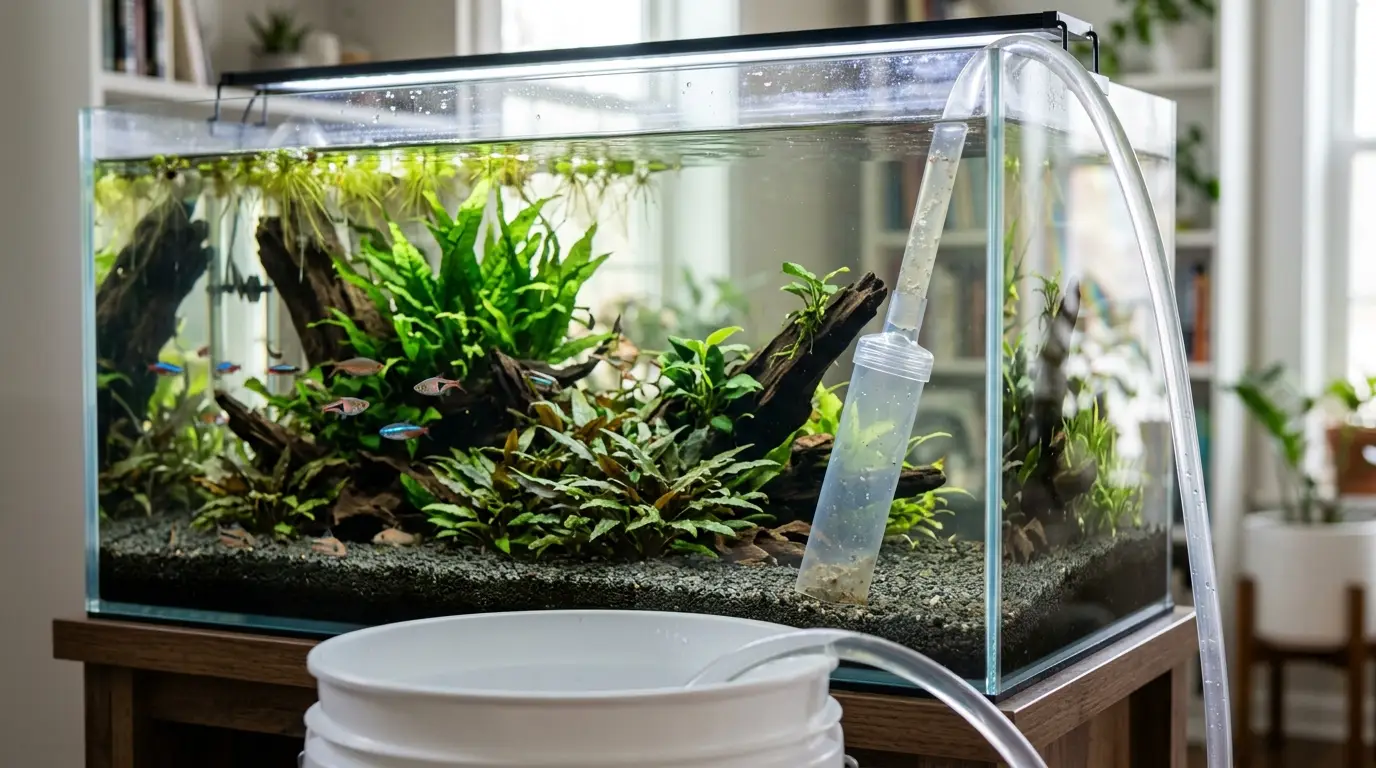
- Clean gently. Vacuum the substrate in sections. Do not scrub everything at once.
- Refill slowly. Add conditioned water back in small stages to avoid shock.
- Restart gear. Turn the filter and heater on. Add an air stone for 24–48 hours.
- Re-test after 1–2 hours, then the next day. Dose conditioner again if needed.
When people ask, Is It Safe to Change All Aquarium Water, this careful method is how you reduce risk if you must go large.
Water chemistry basics you should know
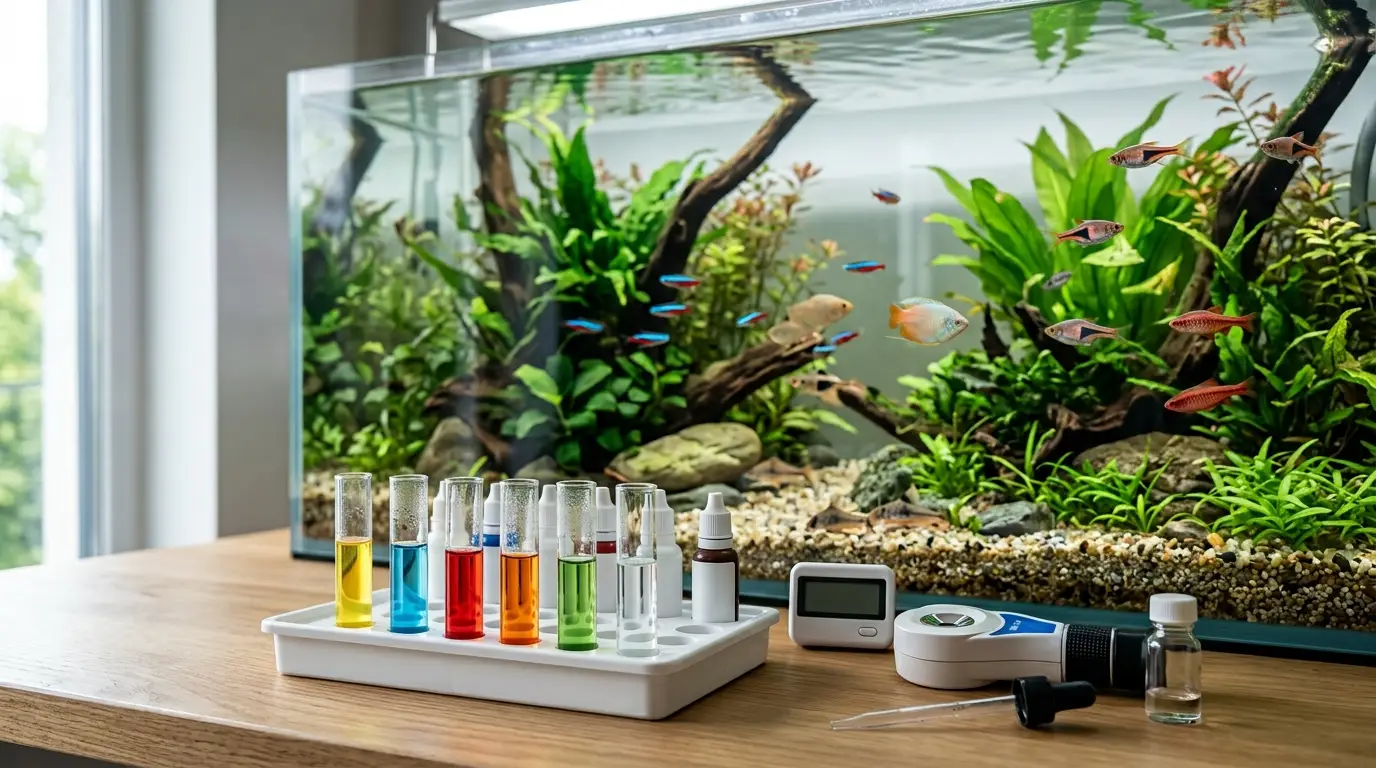
A stable nitrogen cycle is your tank’s life support. Ammonia should be 0 ppm, nitrite 0 ppm, and nitrate kept below 20–40 ppm for most fish. Higher levels can stress fish, slow growth, and weaken immunity.
pH, KH, and GH matter too. KH buffers pH swings. GH reflects mineral content. Keep new water close to your tank’s values. Sudden changes are the main danger during big swaps.
Tap water often has chlorine or chloramine. Both are toxic to fish and bacteria. Use a conditioner that neutralizes chlorine and breaks chloramine, then binds the ammonia byproduct. For saltwater, also match salinity with a refractometer.
Common mistakes and myths
Avoid these pitfalls I see again and again:
- Washing filter media under tap water. This kills your good bacteria and triggers a mini-cycle. Rinse media in a bucket of tank water instead.
- Chasing crystal-clear water with total resets. Clear water is not always safe water. Stability beats sparkle.
- Changing everything at once. Gravel, filter, decor, and 100% water changes on the same day cause chaos.
- Ignoring temperature and pH match. Even small swings can cause stress, gasping, or clamped fins.
- Believing “fish like fresh water” means 100% changes. They like clean, stable water. Not shock.
People ask, Is It Safe to Change All Aquarium Water, because these myths sound logical. But biology says slow and steady wins.
A simple maintenance schedule that works
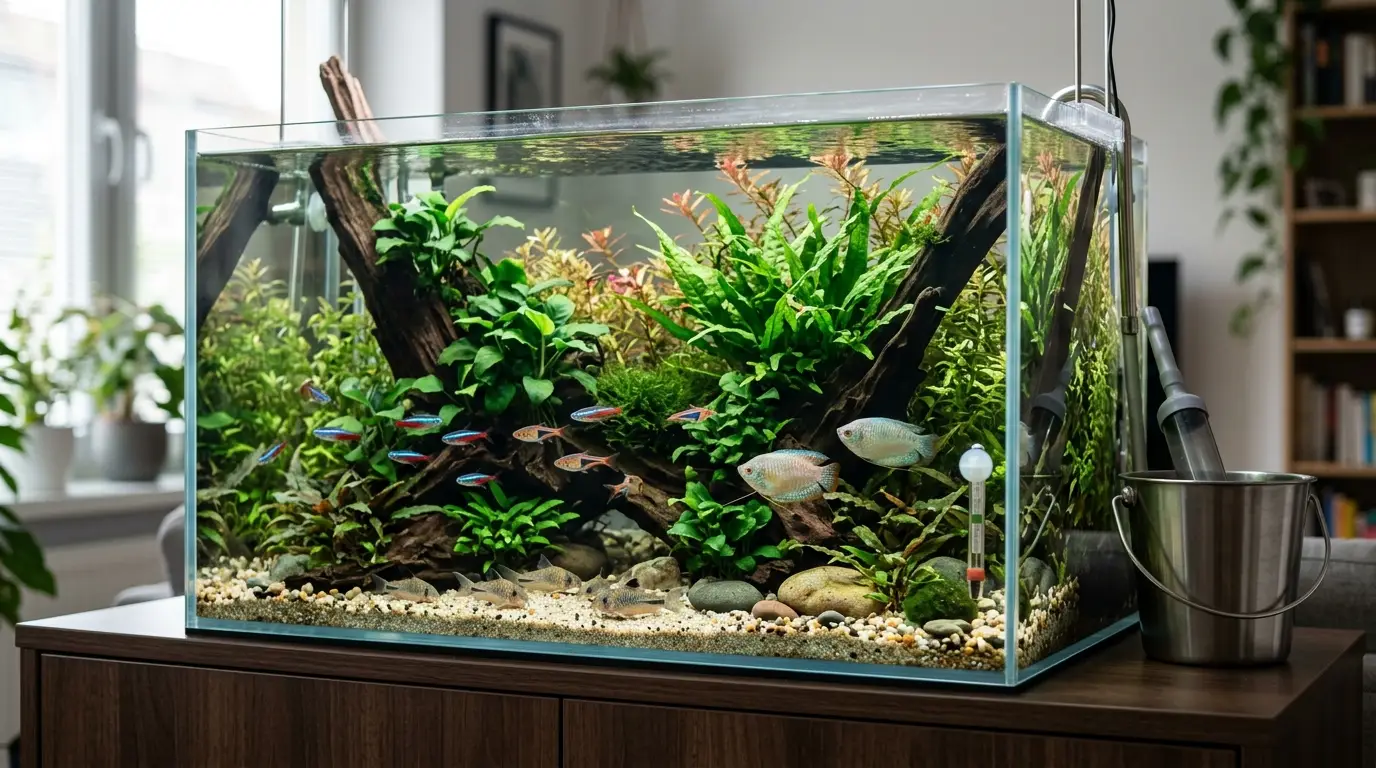
Use a routine that fits your tank type and load:
- Community freshwater tanks: 25–35% weekly with a gravel vacuum.
- Heavily stocked or messy fish (goldfish, cichlids): 40–50% weekly.
- Lightly stocked, planted tanks: 15–25% weekly, watch nitrate trends.
- Nano tanks and bettas: 20–30% twice weekly can prevent spikes.
Feed lightly, remove uneaten food, and clean pre-filters often. With this plan, you never need to ask Is It Safe to Change All Aquarium Water for normal care.
Signs of stress after a big change and what to do
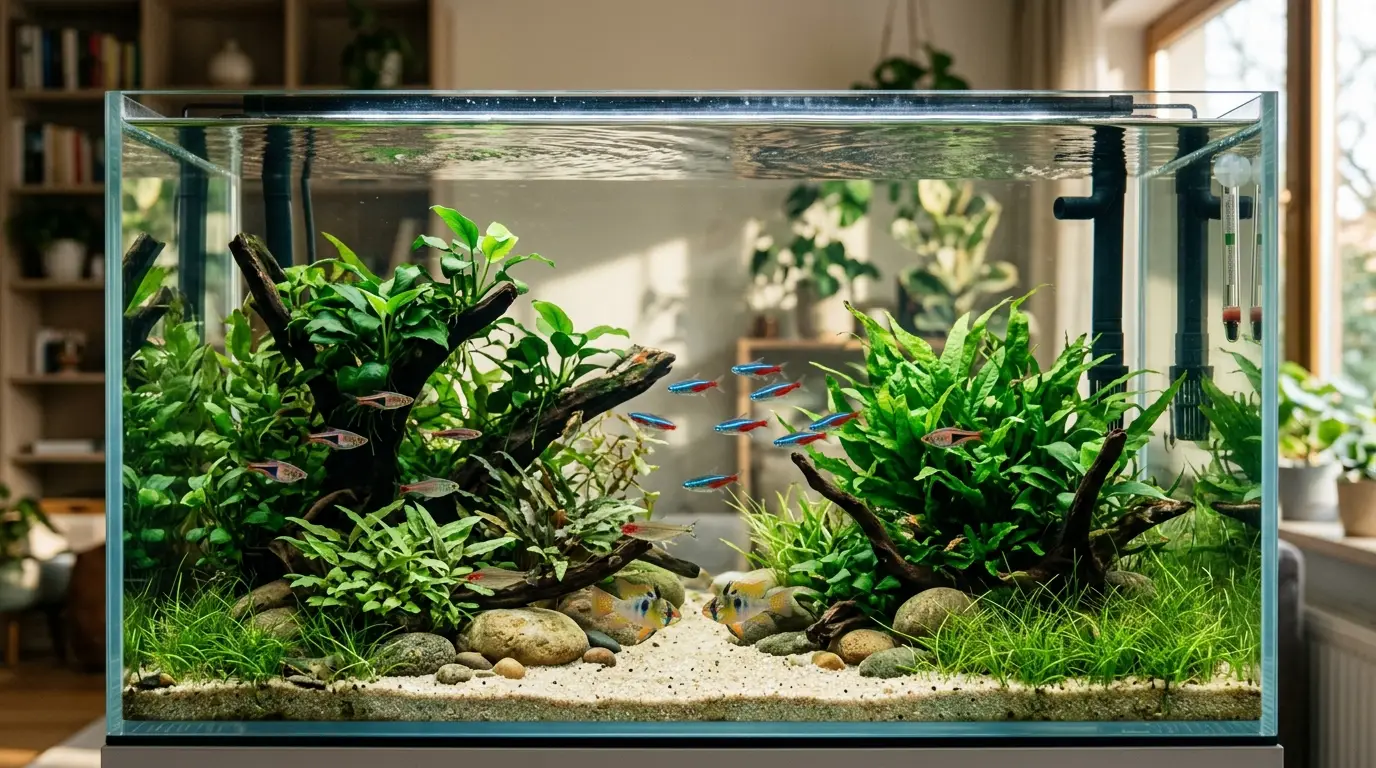
Watch for gasping at the surface, clamped fins, darting, flashing, excess mucus, or sudden hiding. Cloudy water can mean a bacterial bloom. Test ammonia and nitrite right away.
If you see trouble:
- Dose a conditioner that detoxifies ammonia and nitrite.
- Add strong aeration and keep lights low.
- Match temperature and pH with small, frequent changes.
- Add bottled nitrifying bacteria to help the biofilter.
- Stop feeding for 24 hours, then go light.
If you wonder, Is It Safe to Change All Aquarium Water after stress shows up, the answer is usually no. Focus on small, steady fixes instead.
Frequently Asked Questions of Is It Safe to Change All Aquarium Water
Is It Safe to Change All Aquarium Water?
Not for routine care. It risks temperature, pH, and mineral swings, and can harm your biofilter. Save 100% changes for true emergencies, like chemical contamination.
How much water should I change every week?
Most tanks do well with 20–35% weekly. Heavily stocked tanks may need 40–50%, while planted, light-load tanks can go lower.
Can I do a full change during cycling?
No. You will slow or reset the cycle. Do small changes to keep ammonia and nitrite under control until the filter is established.
Do I need to remove fish during water changes?
Usually no. Keep the siphon gentle and refill slowly with matched, dechlorinated water. Removing fish can add stress and injury risk.
What if my tap water has chloramine?
Use a conditioner that breaks chloramine and binds the resulting ammonia. Test after the change and add extra aeration for safety.
Is a 100% water change okay for a betta bowl?
It is better to upgrade to a filtered, heated tank and do partial changes. If you must do a full change, match parameters and add conditioner, then refill slowly.
Conclusion
Stability beats extremes in fishkeeping. Day to day, partial changes protect your biofilter, hold parameters steady, and keep fish healthy. Full changes have a place only in rare emergencies, and even then, careful prep is key.
Use the steps and schedules here to build a calm, clean, and thriving tank. If you still wonder, Is It Safe to Change All Aquarium Water, remember this rule: small and steady changes win. Want more tips? Subscribe, ask a question in the comments, or share your setup so we can fine-tune a plan together.
One Comment