
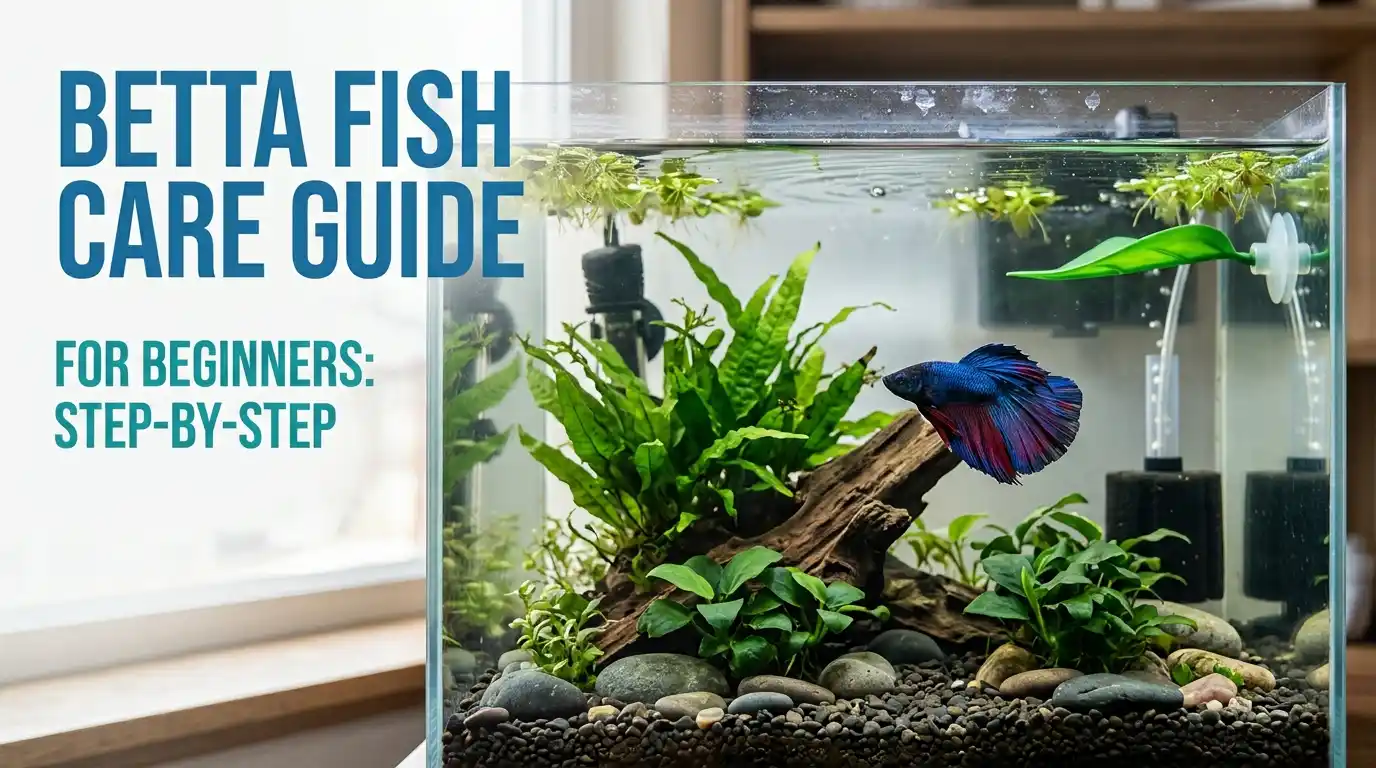
Begin with a 5-gallon heated tank, gentle filter, water conditioner, and small, varied feedings.
If you want a long-lived, vibrant betta, this betta fish care guide for beginners step by step will walk you through every stage with clear, friendly tips. I’ve helped many new keepers avoid common mistakes, and I’ll show you exactly how to set up, feed, and care for your betta with confidence, from day one to year three and beyond.
Before You Start: What a Betta Needs to Thrive
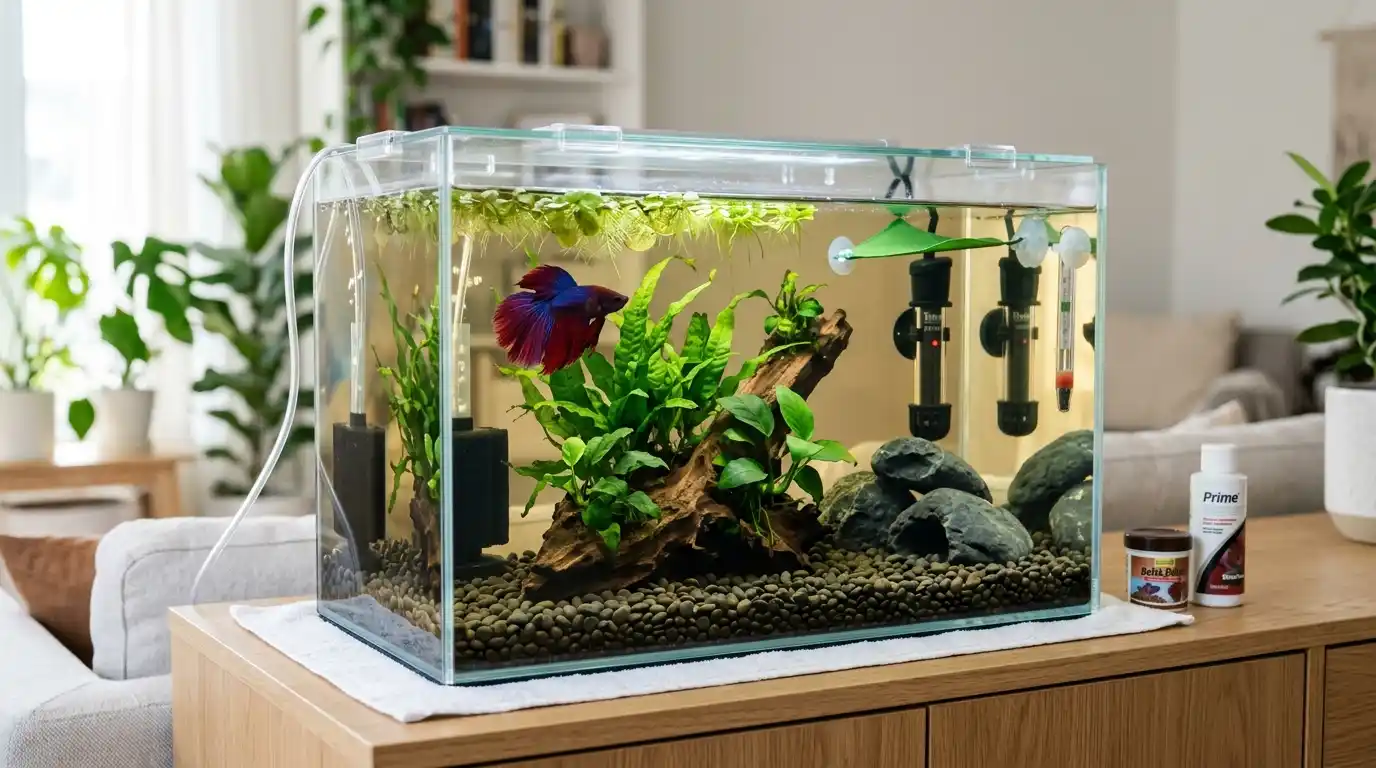
A healthy betta needs clean, warm, stable water and low stress. This betta fish care guide for beginners step by step focuses on the basics that matter most.
- Tank size of at least 5 gallons with a secure lid.
- Stable water temperature of 78 to 80°F.
- Gentle filtration with slow flow.
- Dechlorinated water and a cycled tank.
- Hiding spots and soft plants.
- High protein food in small amounts.
- Simple, steady routines.
Step-by-Step Betta Setup Checklist
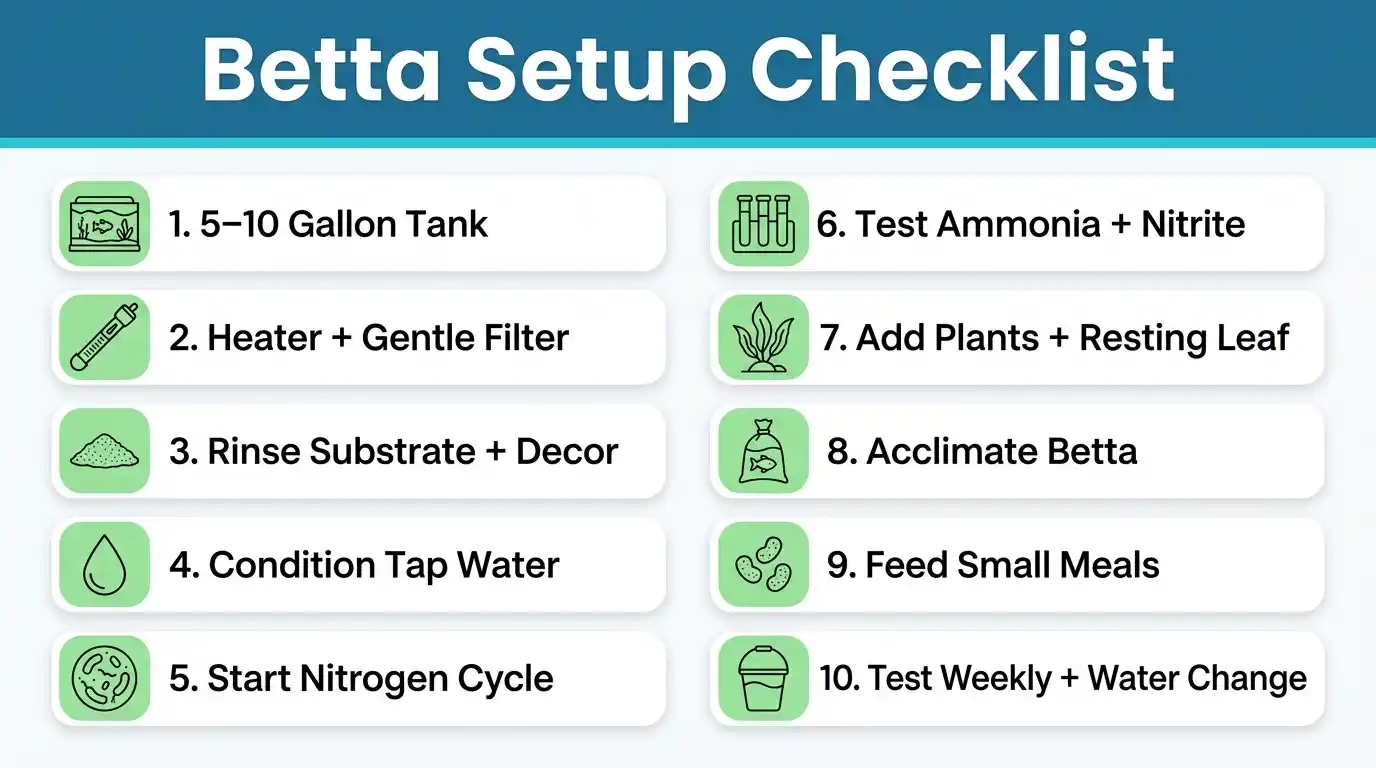
Use this betta fish care guide for beginners step by step to set up your tank fast and right.
- Buy a 5–10 gallon tank with a lid.
- Add a small heater and a gentle sponge filter.
- Rinse substrate and decor, then place them in the tank.
- Fill with tap water treated with water conditioner.
- Start the nitrogen cycle with bottled bacteria and an ammonia source.
- Test water every few days until ammonia and nitrite are zero.
- Plant live or silk plants and add a resting leaf near the surface.
- Once cycled, acclimate your betta slowly.
- Feed small meals and keep a simple care schedule.
- Test weekly and change water every 1–2 weeks.
Step 1: Choose the Right Tank Size and Shape
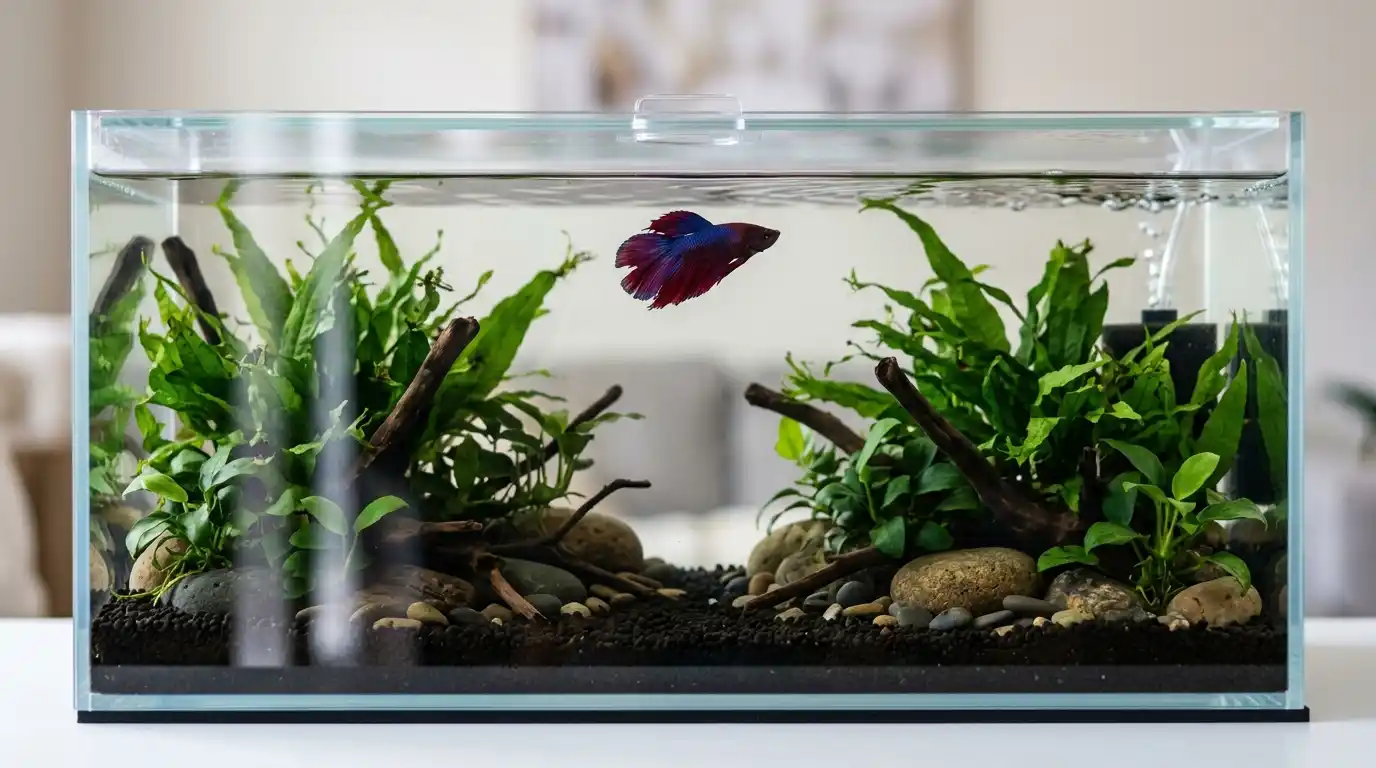
For this betta fish care guide for beginners step by step, I suggest a 5–10 gallon rectangle. Avoid bowls. Bettas breathe air at the surface and need space and a lid.
- A longer tank gives more swimming room.
- Lids prevent jumps and keep humidity for the labyrinth organ.
- Clear access to the surface helps them rest and breathe.
Personal tip: My 5-gallon tanks with taller plants keep fin damage low and help skittish fish relax.
Step 2: Heater, Filter, and Flow Control
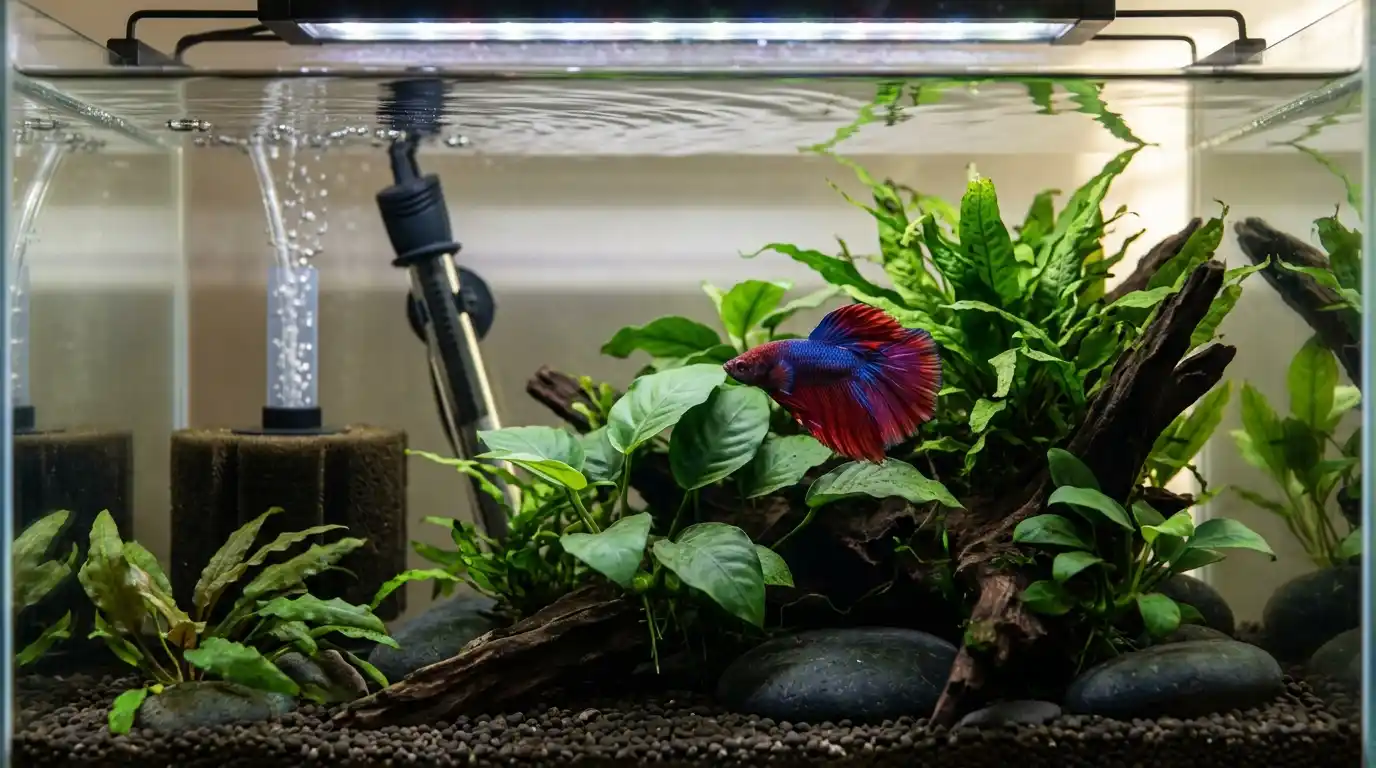
Heat and flow are key in a betta fish care guide for beginners step by step. Bettas are tropical fish. They need warm, steady water and a mild current.
- Use an adjustable heater sized near 25 watts for a 5-gallon.
- Keep 78 to 80°F. Avoid wide swings.
- Pick a sponge filter or baffle the outflow of a small hang-on-back.
- Aim for a gentle turn-over, about 4 times the tank volume per hour.
Experience note: When I reduced flow with a simple pre-filter sponge, fin tears healed faster.
Step 3: Water Prep, Dechlorination, and the Nitrogen Cycle
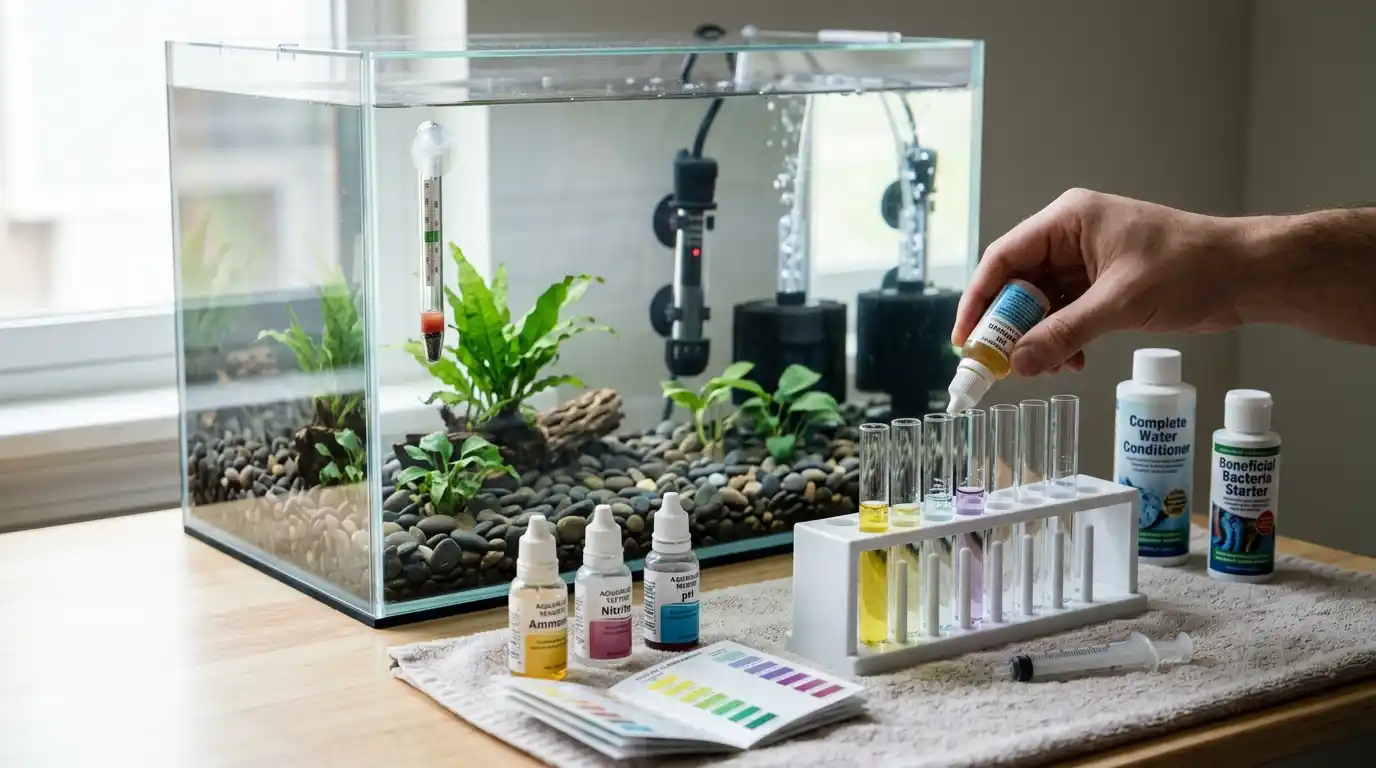
Clean water starts here in any betta fish care guide for beginners step by step. Tap water has chlorine or chloramine. Both harm gills.
- Treat new water with conditioner that handles chlorine and chloramine.
- Cycle the tank before adding your fish. Use bottled bacteria and a small ammonia source.
- Test targets: ammonia 0 ppm, nitrite 0 ppm, nitrate under 20 ppm.
- Cycling often takes 2–4 weeks.
Lesson learned: I rushed a cycle once, and my betta clamped his fins. Since then, I never add a betta until tests show zero ammonia and nitrite.
Step 4: Substrate, Plants, and Decor
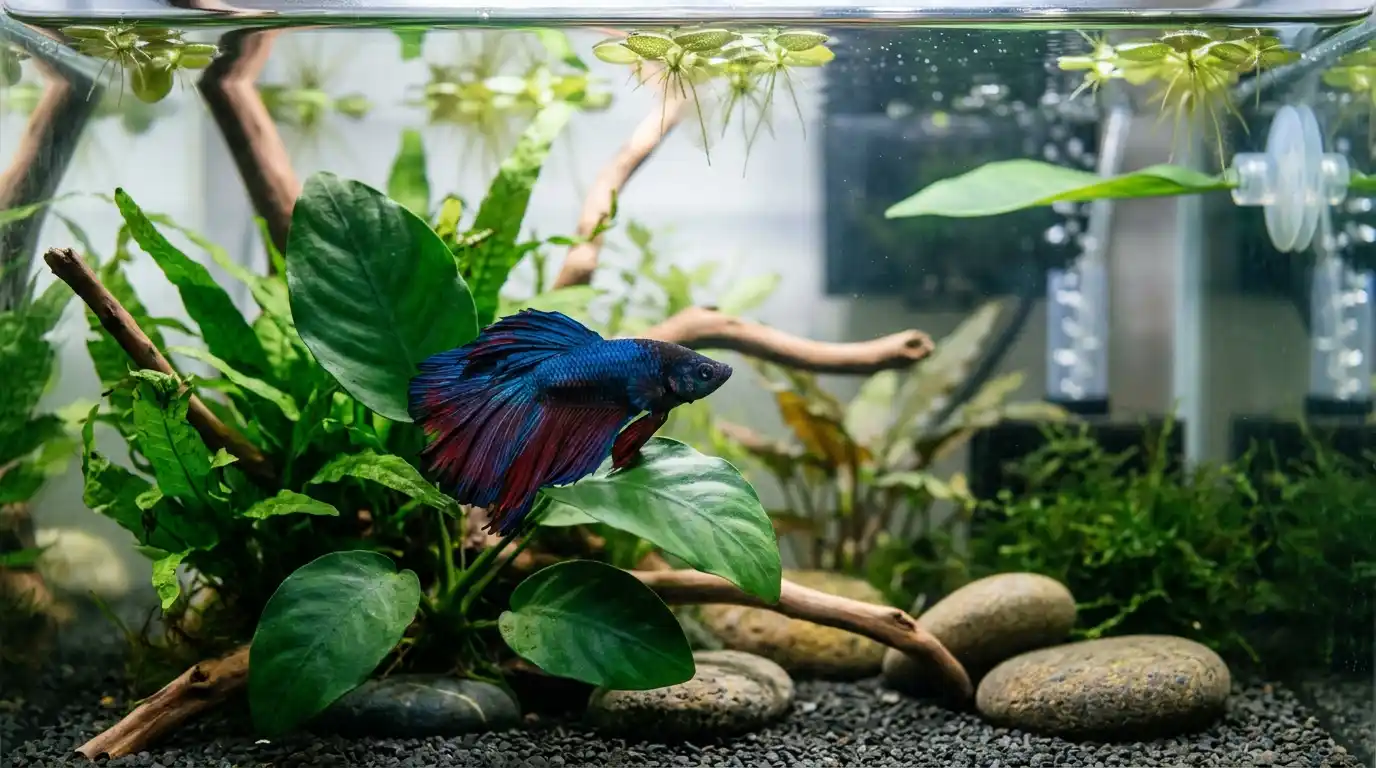
This betta fish care guide for beginners step by step favors soft, safe decor. Sharp plastic tears fins.
- Choose smooth gravel or sand.
- Use live plants like java fern, anubias, and floating salvinia. Silk plants are fine as a start.
- Add a betta leaf hammock near the surface and a cave or log.
- Rinse all decor. Check edges with a paper towel; if it snags, do not use it.
Benefit: Live plants help control nitrate and give your fish a calm space.
Step 5: Pick a Healthy Betta
Selection matters in a betta fish care guide for beginners step by step. Healthy fish adapt faster.
- Look for clear eyes, smooth scales, full fins, and bright color.
- Avoid fish with clamped fins, white spots, torn tails, or lethargy.
- Ask the store to feed the fish; a healthy betta shows interest.
- Quarantine if possible for 2 weeks.
Pro tip: Short-finned varieties like plakats are hardier and swim better in mild flow.
Step 6: Acclimate Your Betta
A slow start helps in any betta fish care guide for beginners step by step. Take 20–40 minutes.
- Float the bag for 15 minutes to match temperature.
- Add a small cup of tank water to the bag every 5 minutes.
- Gently net the fish into the tank. Discard bag water.
- Lights off for a few hours to reduce stress.
Step 7: Feeding Schedule and Nutrition
Food is a pillar of this betta fish care guide for beginners step by step. Bettas are carnivores.
- Use high protein betta pellets as the staple.
- Feed 2–3 small pellets twice a day. Adjust for fish size.
- Offer treats like frozen daphnia or brine shrimp two to three times a week.
- Skip one feeding day weekly to reduce bloat.
Tip: If pellets sink fast, pre-soak for a few seconds so your betta catches them at the top.
Step 8: Daily and Weekly Care
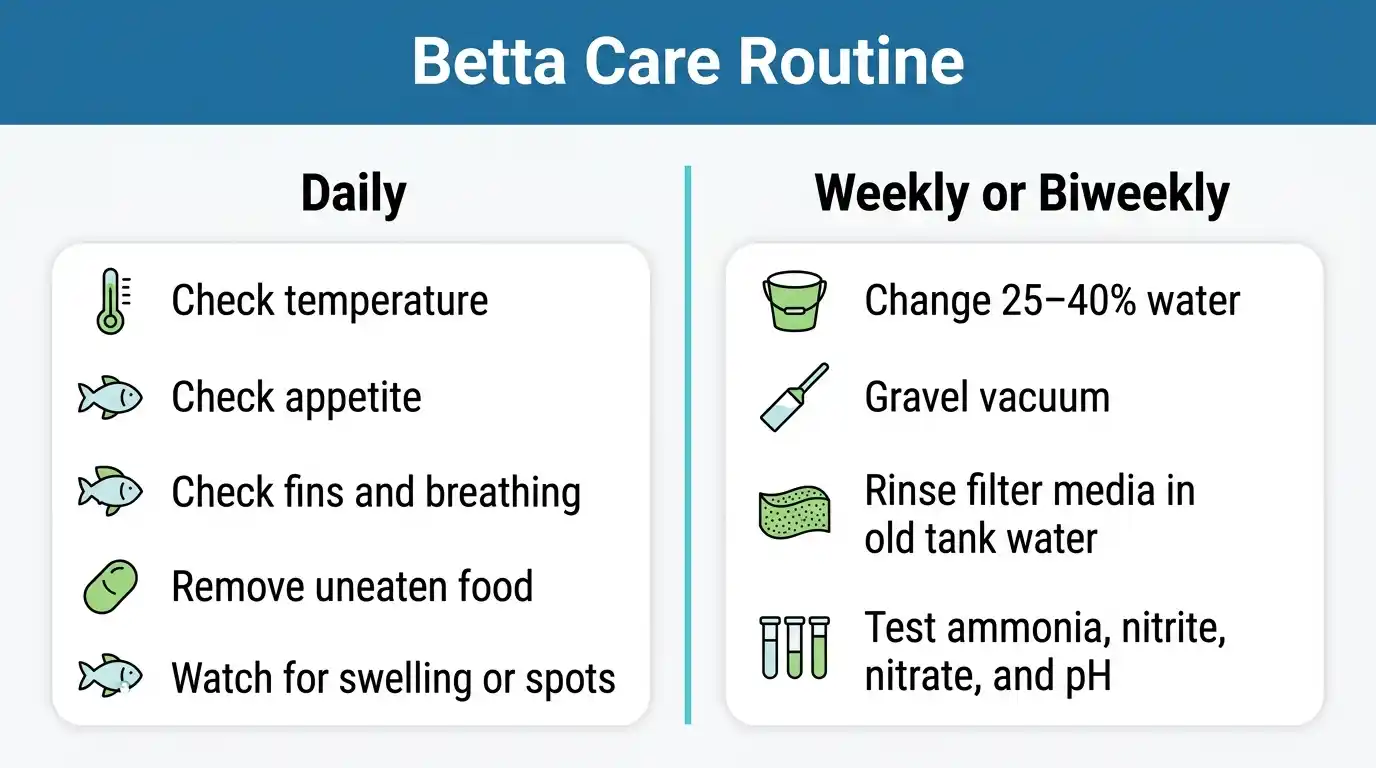
Good habits keep fish healthy, which this betta fish care guide for beginners step by step aims to build.
Daily
- Check temperature, appetite, fins, and breathing.
- Remove uneaten food after a few minutes.
- Watch for swelling or spots.
Weekly or Biweekly
- Change 25–40% of the water with conditioned, temperature-matched water.
- Gravel vacuum to remove waste.
- Gently rinse filter media in old tank water, not tap water.
- Test ammonia, nitrite, nitrate, and pH.
Step 9: Health Watch: Signs, Prevention, and First Aid
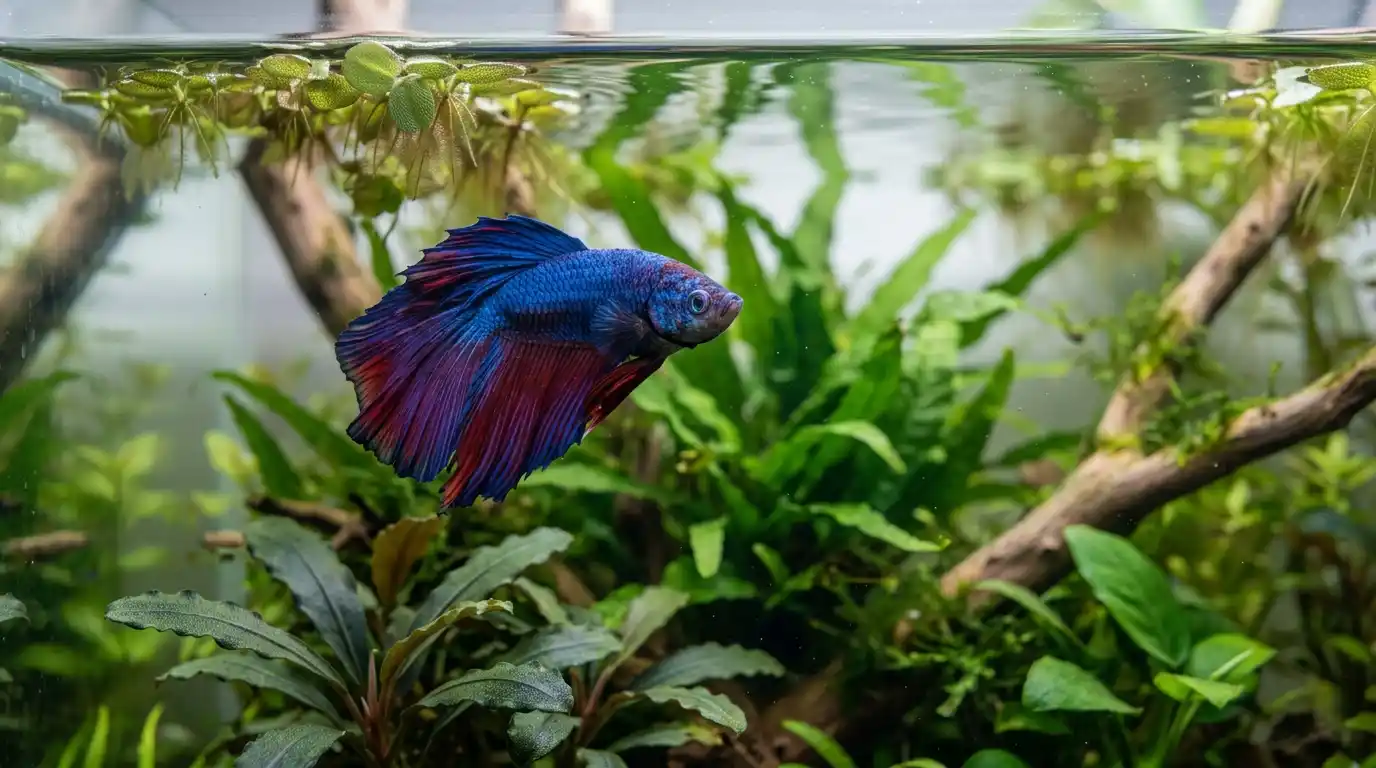
Health topics round out a betta fish care guide for beginners step by step. Early signs are subtle.
- Fin rot: ragged edges, red or black tips. Improve water, consider medication if it spreads.
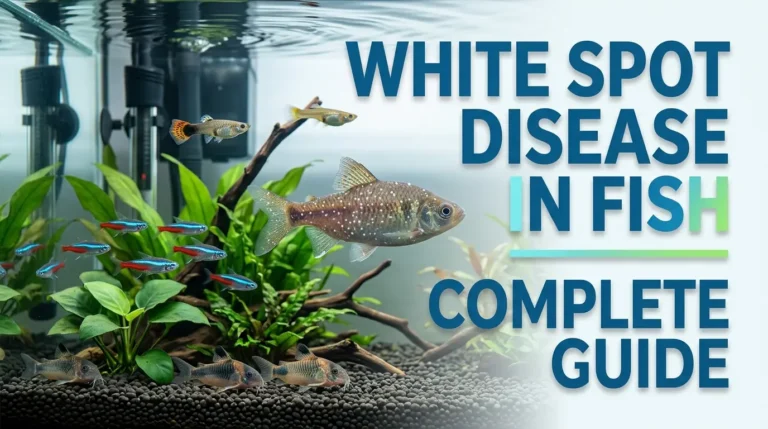
- Ich: white salt-like spots. Raise temp slowly to 80°F and use a proven treatment.
- Velvet: gold dust sheen, rubbing. Treat in low light with a copper-safe or formalin-free product.
- Bloat or constipation: swelling and floating. Fast a day, then offer daphnia.
Always read medication labels for labyrinth fish. When in doubt, get advice from a fish-experienced vet or aquatic specialist.
Step 10: Tank Mates and Enrichment
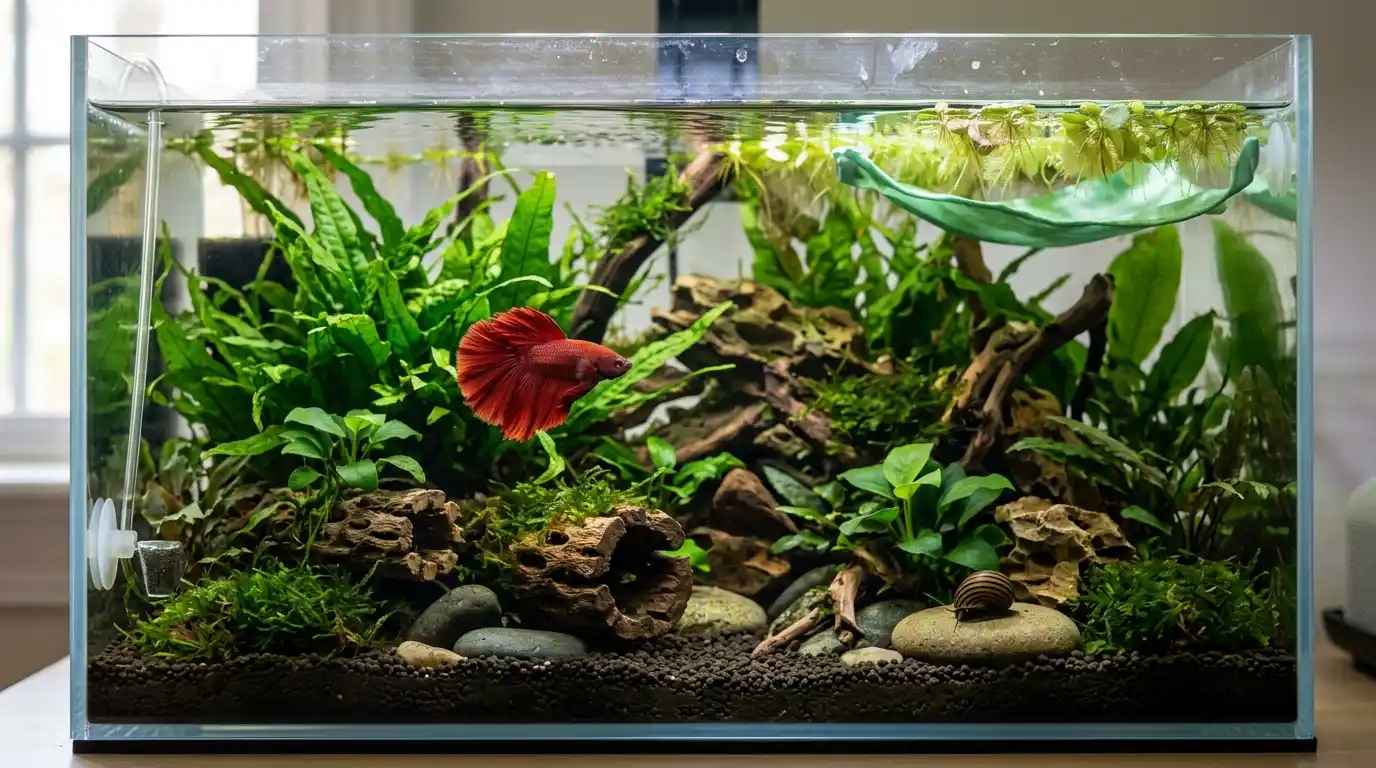
Community ideas belong in a betta fish care guide for beginners step by step, but safety comes first. Many bettas prefer living alone.
- Good options: nerite snails, mystery snails, and sometimes shrimp in dense plants.
- Possible options with care: small, peaceful fish like ember tetras in larger, well-planted tanks.
- Avoid fin nippers and bright, flashy fish that trigger aggression.
- Enrich with leaf hammocks, tunnels, and brief mirror sessions for 1–2 minutes, a few times a week.
Watch stress signs. If there is chasing or fin damage, separate at once.
Budget, Tools, and Quick Shopping List
Cost is part of a smart betta fish care guide for beginners step by step. You can build a safe setup on a budget.
Essentials
- 5–10 gallon tank with lid
- Adjustable heater and thermometer
- Sponge filter and air pump
- Water conditioner and test kit
- Substrate, decor, and plants
- High quality betta pellets and frozen treats
- Gravel vacuum, algae scraper, and buckets
Budget range: You can start near $80–$150 with careful picks and sales.
Troubleshooting Common Beginner Mistakes
Use this short fix list from my betta fish care guide for beginners step by step.
- Cloudy water: cycle not done or overfeeding. Cut food and test.
- Torn fins: sharp decor or strong flow. Remove hazards and baffle.
- Lethargy: cold water or toxins. Check temp and test ammonia and nitrite.
- Rapid breathing: poor oxygen or high ammonia. Do an urgent partial water change.
If problems repeat, test more often and keep a simple log.
Frequently Asked Questions
How many gallons does a betta need?
A single betta does best in at least 5 gallons. More water is more stable and easier to keep clean.
Do bettas need a filter and heater?
Yes. A gentle filter keeps water safe, and a heater keeps a steady 78 to 80°F. Stability prevents stress and disease.
How often should I change the water?
Do a 25–40% change every 1–2 weeks in a cycled tank. Test nitrate and adjust the schedule to keep it under 20 ppm.
Can I keep two male bettas together?
No. Male bettas fight and can be hurt. Keep one male per tank unless you use a safe, opaque divider.
Why is my betta not eating?
Check temperature, water quality, and stress. Try smaller meals, soak pellets, and offer a different pellet or frozen daphnia.
How long do bettas live?
Most live 3–5 years with good care. Warm, clean, stable water and good food help them reach the higher end.
Can bettas live in bowls?
Bowls are not ideal due to small volume and poor heat and filtration. A 5–10 gallon tank is safer and easier to maintain.
Conclusion
You now have a complete plan to set up, feed, and care for your betta with ease. Follow the steps, keep the water warm and clean, and your fish will reward you with bright color and bold personality. Start today by gathering your gear, cycling the tank, and using this guide as your go-to checklist. If this helped, subscribe for more care guides, ask a question, or share your own betta story.

2 Comments