Most betta fish hide due to stress, poor water quality, or lack of cover.
If you have wondered why is my betta fish hiding, you are not alone. I’ve kept and rehabbed many bettas over the years, and I’ve seen shy fish bloom once their needs were met. In this guide, Why Is My Betta Fish Hiding? Common Causes Explained, I’ll break down normal behavior, common stressors, quick fixes, and long-term care so you can help your fish feel safe and thrive.
What Normal Betta Behavior Looks Like
Bettas are curious, but they also value shade and rest. It is normal for them to nap on leaves, under a log, or behind a filter. They often hide after a meal or during midday when the light is bright.
They sleep at night. They prefer dim zones in the tank. A relaxed betta explores in slow loops, flares now and then, and builds bubble nests when conditions are right.
If you are asking why is my betta fish hiding, remember that brief hiding can be normal. It becomes a concern if it is new, constant, or paired with other signs like clamped fins, no appetite, or heavy breathing.
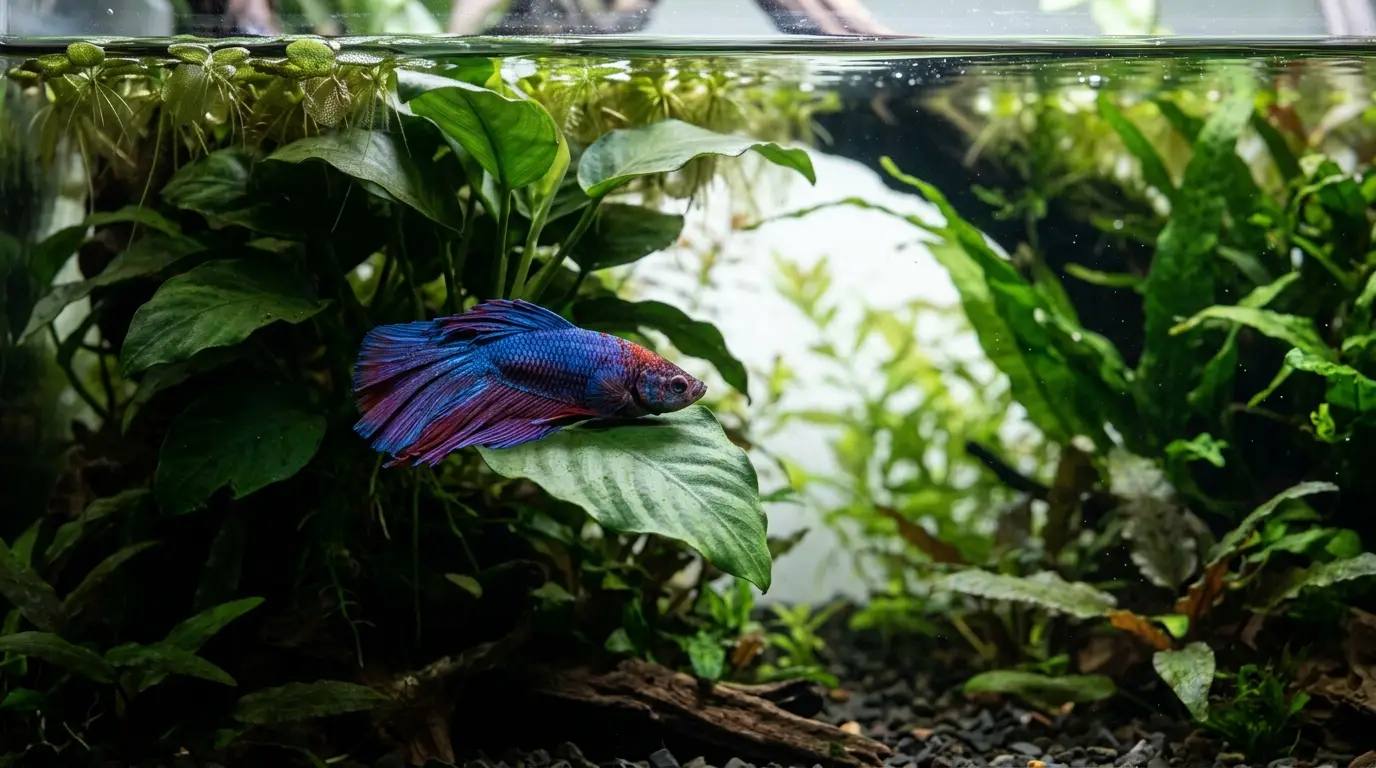
Why Your Betta Might Be Hiding: Common Causes
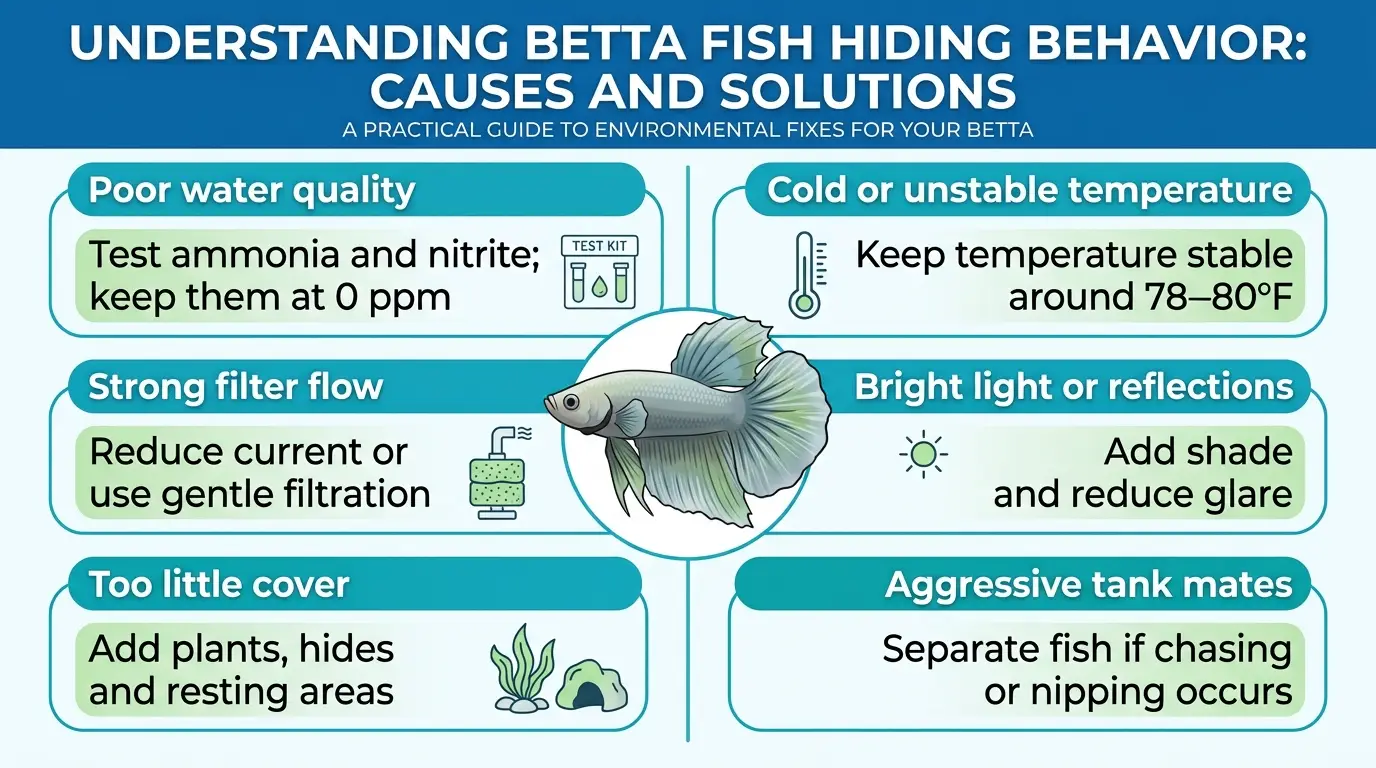
Understanding why is my betta fish hiding starts with the big triggers I see most. Here are the common causes, explained with signs and quick tips.
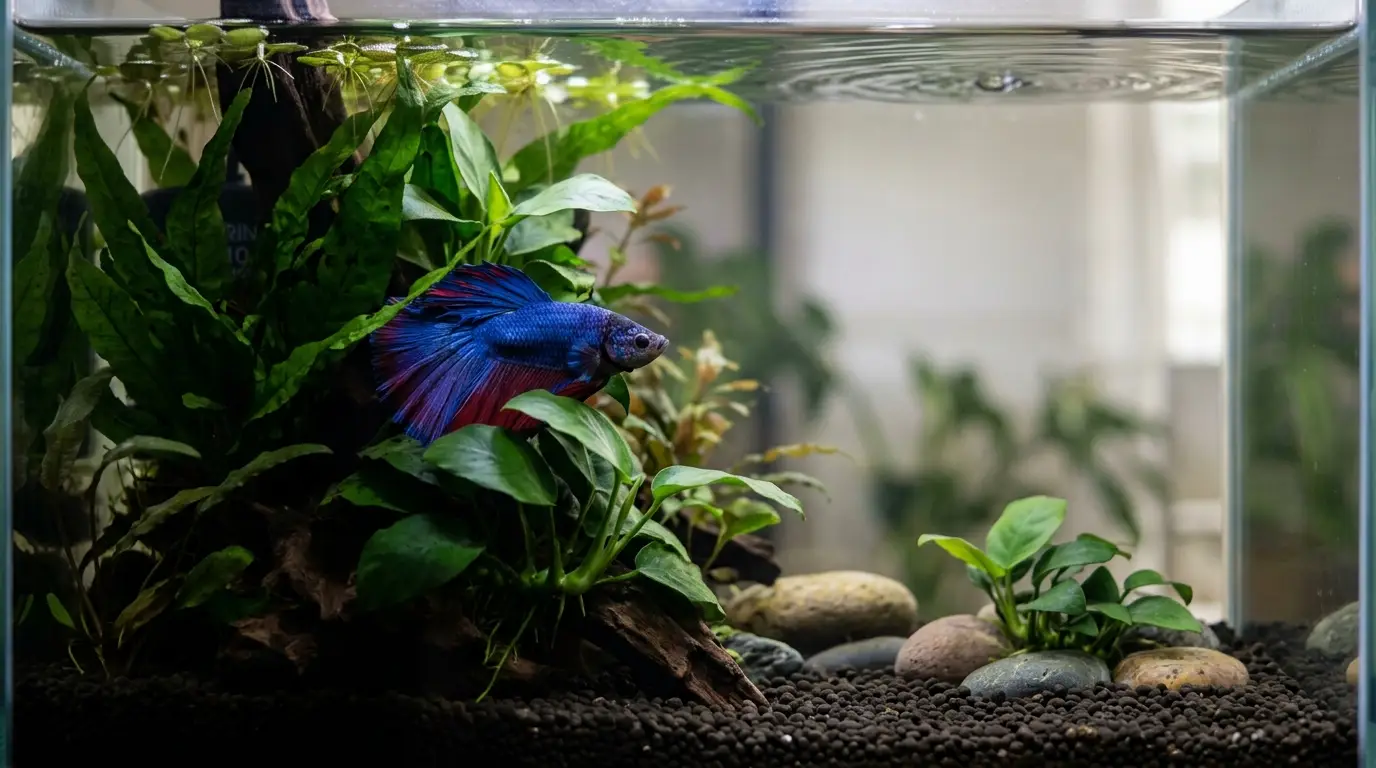
New environment and acclimation stress
Moves are scary for small fish. New sights, water, and smells can send them under a leaf for a few days. Keep lights dim, keep noise low, and avoid tapping the glass. Give them time.
Poor water quality or an uncycled tank
Ammonia and nitrite should be 0 ppm. Nitrate should be under 20–40 ppm. Even small spikes burn gills and raise stress hormones. If your mind asks why is my betta fish hiding, test first. Use a liquid test kit, not only strips. Do a partial water change if numbers are off.
Temperature swings or cold water
Bettas thrive at 78–80°F. A cold tank slows them down. Sudden drops push them to hide and gulp air more. Use a heater with a reliable thermometer. Keep the room draft-free.
Strong filter flow
Bettas are built for calm water. Constant push from a filter wears them out. They hide to avoid the current. Baffle the output, aim the flow at glass, or switch to a gentle sponge filter.
Bright light and harsh reflections
Harsh light causes glare. Reflections can look like rivals. Your betta may hide to escape both. Add floaters or stem plants to break light. Reduce room glare and background mirrors.
Tank size and layout
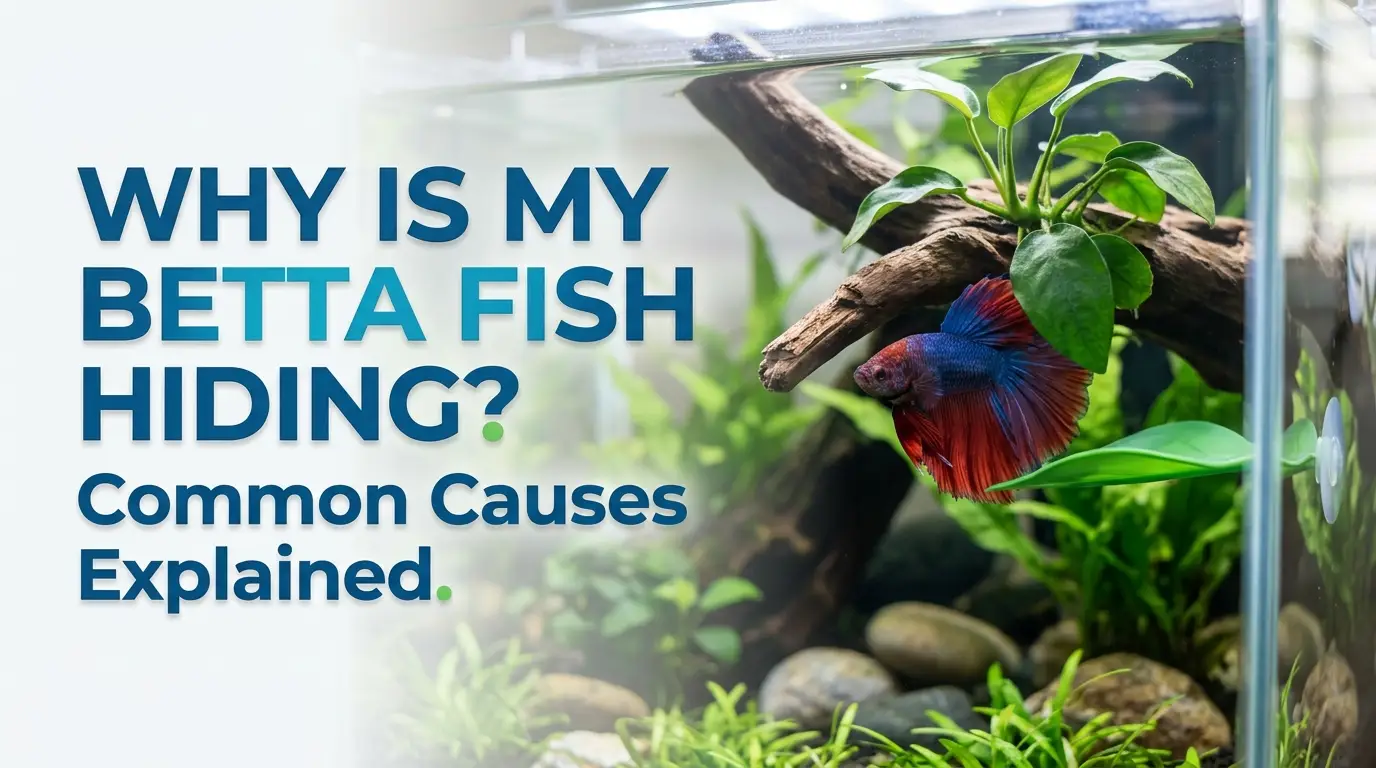
Small, bare tanks make bettas feel exposed. They like line-of-sight breaks. A minimum 5-gallon tank with plants and caves helps a lot. When people ask why is my betta fish hiding, this is often the fix.
Aggressive tank mates
Fin nippers, fast tetras, or even a pushy snail can stress a betta. He hides to stay safe. Watch for torn fins or chase marks. When in doubt, house him alone.
Illness or injury
Look for pale color, fuzzy patches, bloating, or clamped fins. A sick fish hides more and eats less. Address water first. Then isolate and seek fish-vet advice for treatment.
Overfeeding and constipation
A stuffed gut feels awful. The fish may rest on the bottom or behind decor. Feed small amounts. Fast one day per week. Offer a thawed pea only if your vet suggests it, since peas are not needed in a normal betta diet.
Age and energy
Older bettas rest more. Hiding goes up as their pace slows. Make sure the path from resting spots to the surface is short and easy.
Quick Diagnostics: A 10-minute Checklist
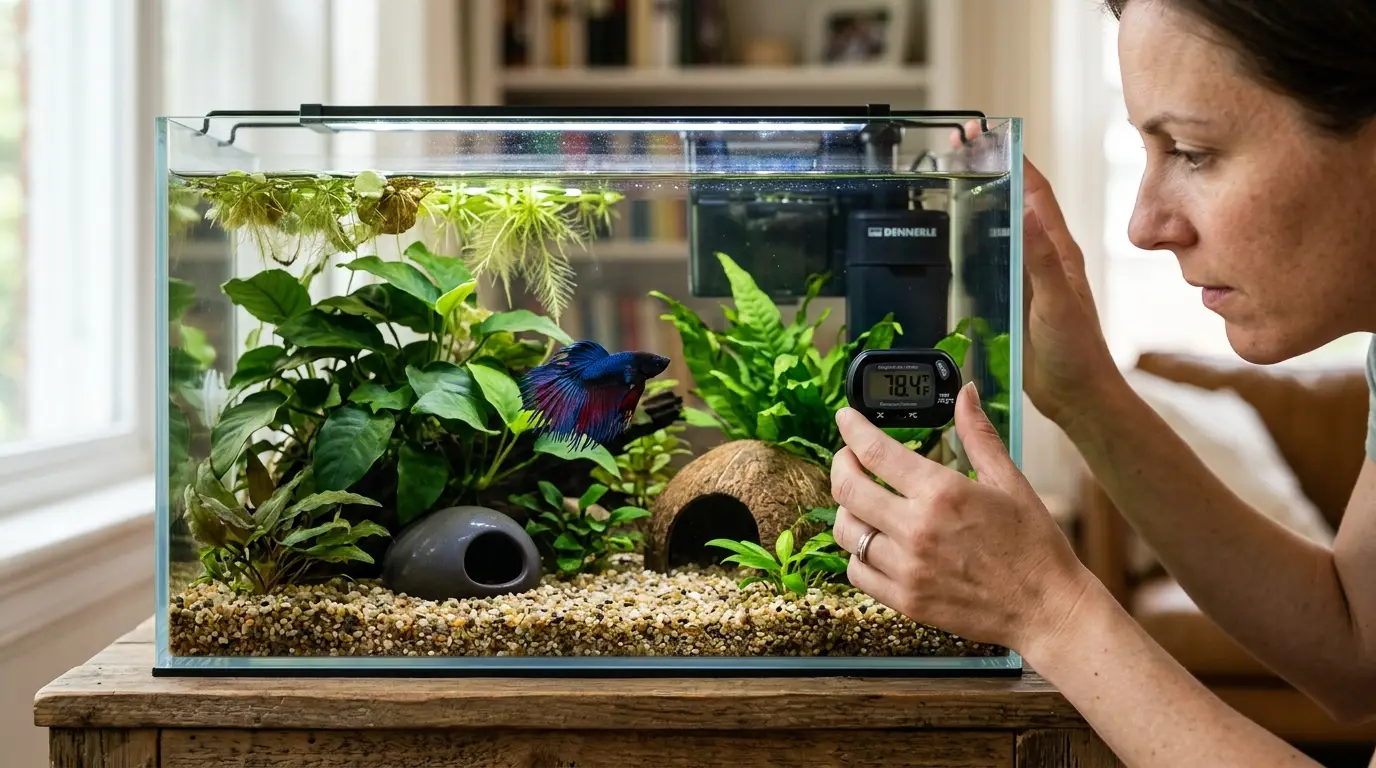
If you are thinking why is my betta fish hiding, run this fast check.
- Test water. Ammonia 0 ppm. Nitrite 0 ppm. Nitrate under 20–40 ppm.
- Check temperature. Aim for a stable 78–80°F.
- Watch breathing. Fast gill movement can mean toxins or low oxygen.
- Look for clamped fins, dull color, or white spots.
- Reduce flow. If plants sway hard, it is too much.
- Dim the lights. Add shade with floaters or a floating ring.
- Scan for bullies. Note any chasing or nipping.
- Review feeding. Tiny meals, twice a day, no leftovers.
- Confirm tank size. At least 5 gallons with hides and plants.
- Note changes. New decor, sprays, soaps, or perfumes near the tank can stress fish.
How to Fix a Hiding Betta: Step-by-Step
These steps have helped my shy rescues turn bold.
- Stabilize water quality
Do a 25–50% water change if ammonia or nitrite are above zero. Dose a good conditioner that detoxes chlorine and chloramine. Keep up with small, regular changes. - Set and hold the right temperature
Use a heater and a separate thermometer. Raise or lower temp slowly, not more than 1–2°F per day. - Tame the filter flow
Use a baffle, a spray bar, or a sponge filter. Aim flow at the glass to diffuse it. - Build a safe layout
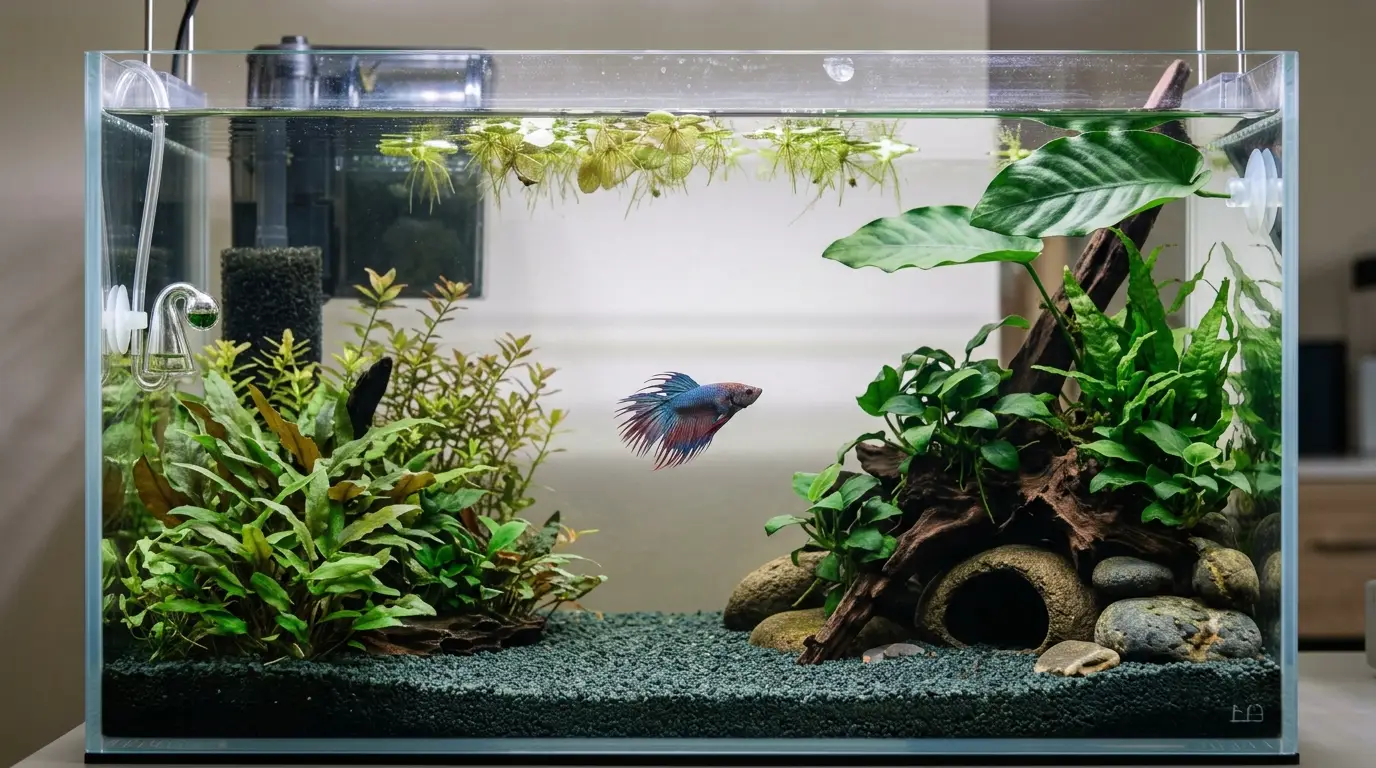
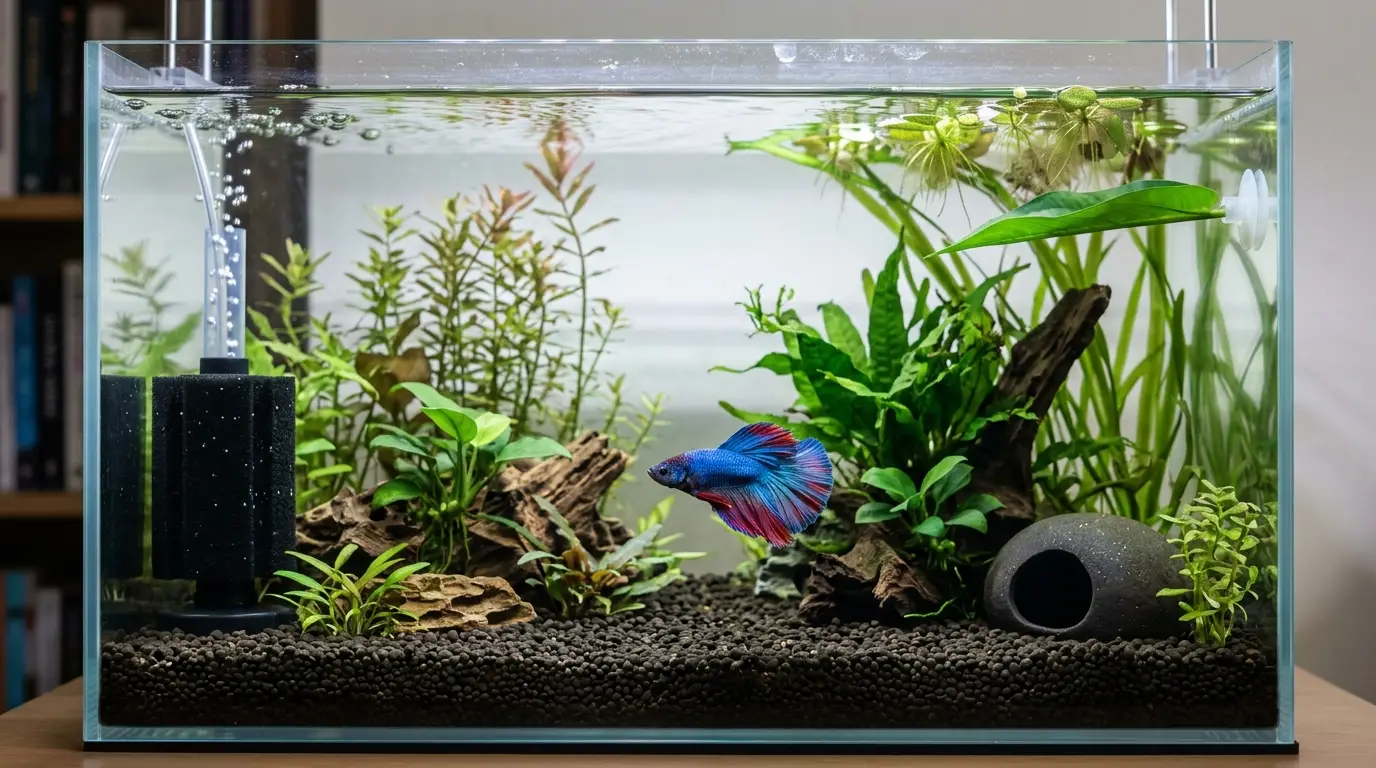
Add at least three hides: a cave, a leaf hammock near the surface, and thick plants. Live plants like Anubias, Java fern, and floaters work well.
- Fix the light schedule
Run 8–10 hours of soft light. Keep a clear day-night cycle. Cover the tank at night with the room dark. - Remove stress from tank mates
If there is chasing, rehome or move the other fish. A betta-only tank is often best. - Improve diet and routine
Use high-quality betta pellets. Mix in frozen daphnia or brine shrimp a few times a week. Feed what he eats in 1–2 minutes. - Reduce reflections
Add a dark background. Adjust room lighting to stop mirror-like glass. - Observe and, if needed, isolate
If illness signs persist, set up a simple hospital tank. Seek fish-vet guidance for any meds. Do not dose the display tank without a plan.
With these steps, you will answer why is my betta fish hiding and help him feel safe again.
Long-Term Prevention and Enrichment
Once your betta is out and about, keep him that way.
- Keep a weekly routine. Test water and log numbers.
- Change 20–30% of water each week in a cycled tank.
- Vacuum gently to remove waste without uprooting plants.
- Offer a varied diet and one rest day per week.
- Enrich the space. Rotate decor. Add safe leaves or a betta log.
- Train short target sessions for fun. One minute is enough.
- Keep lids tight. Warm, humid air above the water helps their labyrinth organ.
- Keep noise down near the tank. Avoid strong scents and sprays.
If friends ask why is my betta fish hiding, you will know how to prevent it for good.
Real-Life Examples and Lessons Learned
I once took in Blue, a halfmoon betta who hid nonstop. Tests showed nitrite present and the room was cold. I raised the temp to 79°F, baffled the filter, and added floating plants. In four days, Blue was out at feeding time. Lesson learned: water and flow changes can flip the script fast.
Nova, a koi plakat, hid after I added bright white LEDs. His glass turned into a mirror. I lowered light intensity, added a black background, and placed Red Root Floaters. Nova stopped pacing and started exploring. Lesson learned: light and reflections can feel like a rival in the room.
Sunny, a rescue from a tiny bowl, hid even in a big tank. He was weak and old. I set up a leaf hammock near the surface and used tall, soft plants. He still hid more than a young fish, but he ate well and built small nests. Lesson learned: sometimes the answer to why is my betta fish hiding is age, and comfort is the goal.
Frequently Asked Questions of Why Is My Betta Fish Hiding? Common Causes Explained
Why is my betta fish hiding all of a sudden?
Sudden hiding often means a new stressor. Check water, temperature, flow, and light first, then watch for signs of illness.
Why is my betta fish hiding behind the filter?
He may be escaping strong current or bright light. Reduce flow, add plants, and give a cave or log nearby.
How long is normal for a betta to hide in a new tank?
One to three days is common while they settle. Keep the room calm, dim the lights, and avoid tapping the glass.
Why is my betta fish hiding and not eating?
This points to stress or illness. Test water at once and consider isolating the fish if you see clamped fins, rapid breathing, or spots.
Can tank mates cause my betta to hide?
Yes. Nippy or fast fish can push a betta to the shadows. Separate them if you see chasing or damaged fins.
Does a small tank make my betta hide more?
Often, yes. Bettas feel safer with space and cover, so aim for 5 gallons or more with plants and caves.
Why is my betta fish hiding at the bottom?
It could be cold water, constipation, or illness. Check temperature, adjust feeding, and look for labored breathing or swelling.
Conclusion
If you have been asking why is my betta fish hiding, you now know the common causes and fixes. Start with water, temperature, and flow. Add shade and safe hides. Watch for illness. Small changes can turn a shy fish into a bold, curious friend.
Take action today. Run the 10-minute checklist, make one upgrade, and observe for a week. Share your results, drop your questions, or request my sample maintenance schedule in the comments.