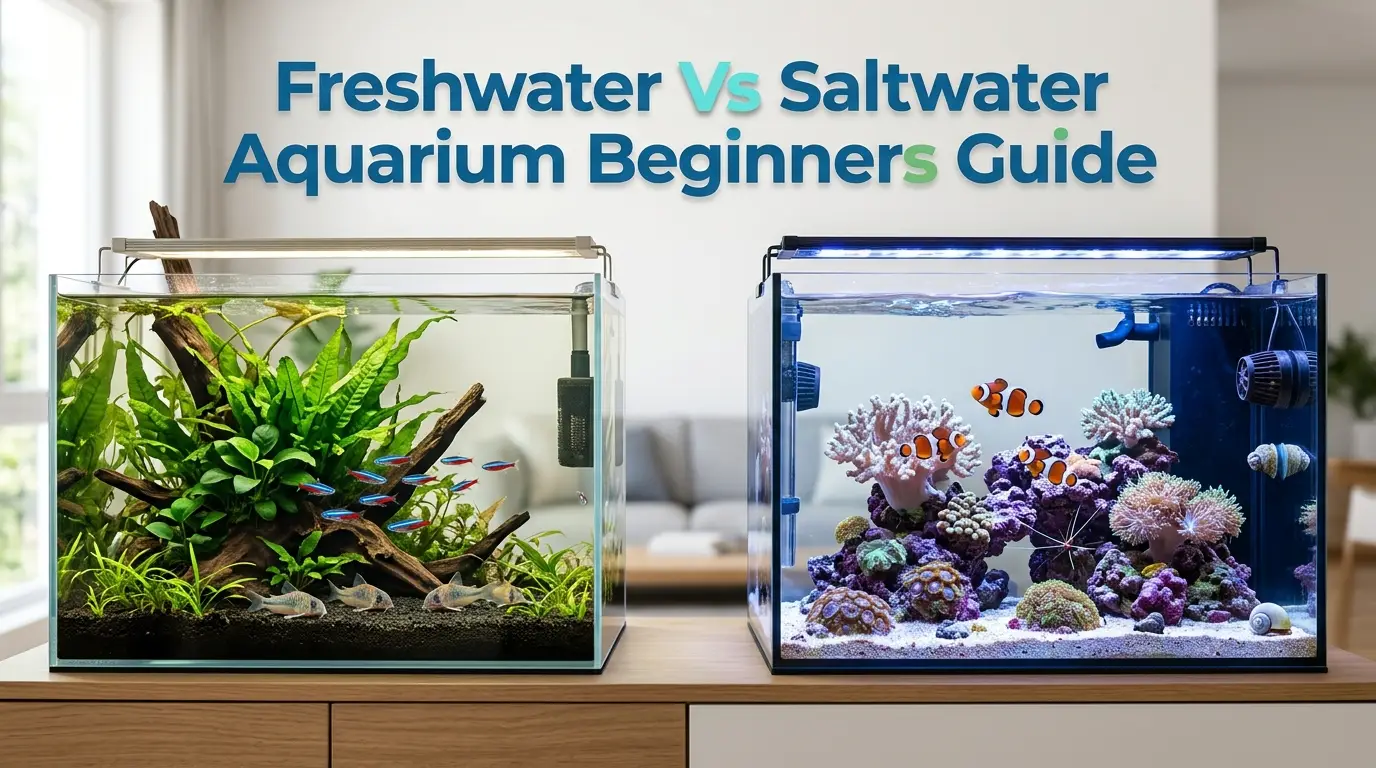
Freshwater is simpler and cheaper; saltwater is stunning but demands more care.
If you want a clear path from empty glass box to thriving tank, you’re in the right place. In this freshwater vs saltwater aquarium beginners guide, I’ll share proven steps, budget tips, and hard-won lessons from years of building both types of tanks, so you can start smart and enjoy the journey.
Freshwater vs Saltwater: The Real Differences
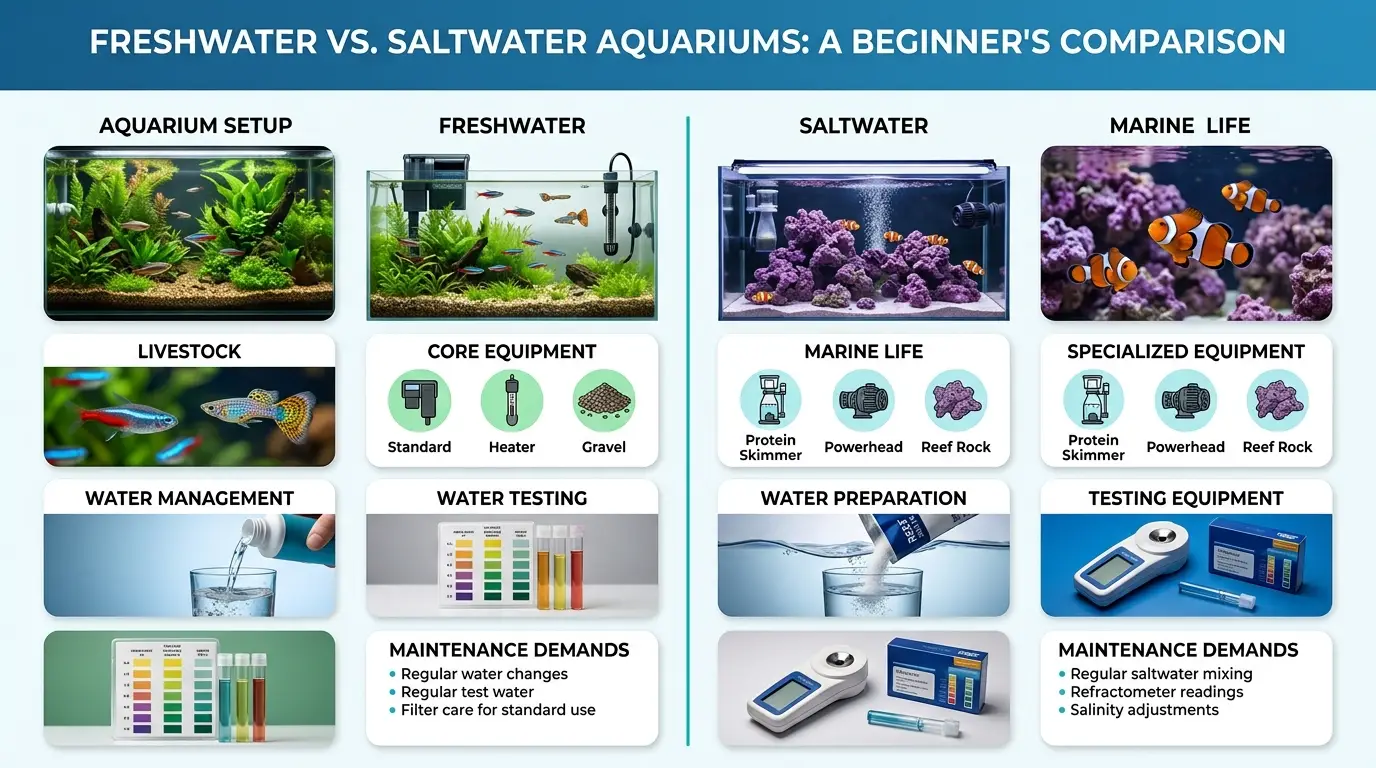
Freshwater tanks are flexible, budget friendly, and great for first setups. Saltwater tanks are bright, diverse, and full of life, but they need tighter control. Both can be stable and beautiful with good habits.
The main gap sits in water chemistry and cost. Freshwater lets you learn the basics with low risk. Saltwater needs extra gear and stable salinity, yet it rewards you with color and movement you cannot find in most freshwater tanks.
Your choice should match your time, budget, and goals. If you want a calm start and fast success, go freshwater. If you enjoy a challenge and love reef color, you can go marine. This freshwater vs saltwater aquarium beginners guide will help you weigh every trade-off.
Cost and Equipment: What You’ll Actually Need
You can build a safe setup at many price points. Here is a simple breakdown for a first tank around 20–40 gallons.
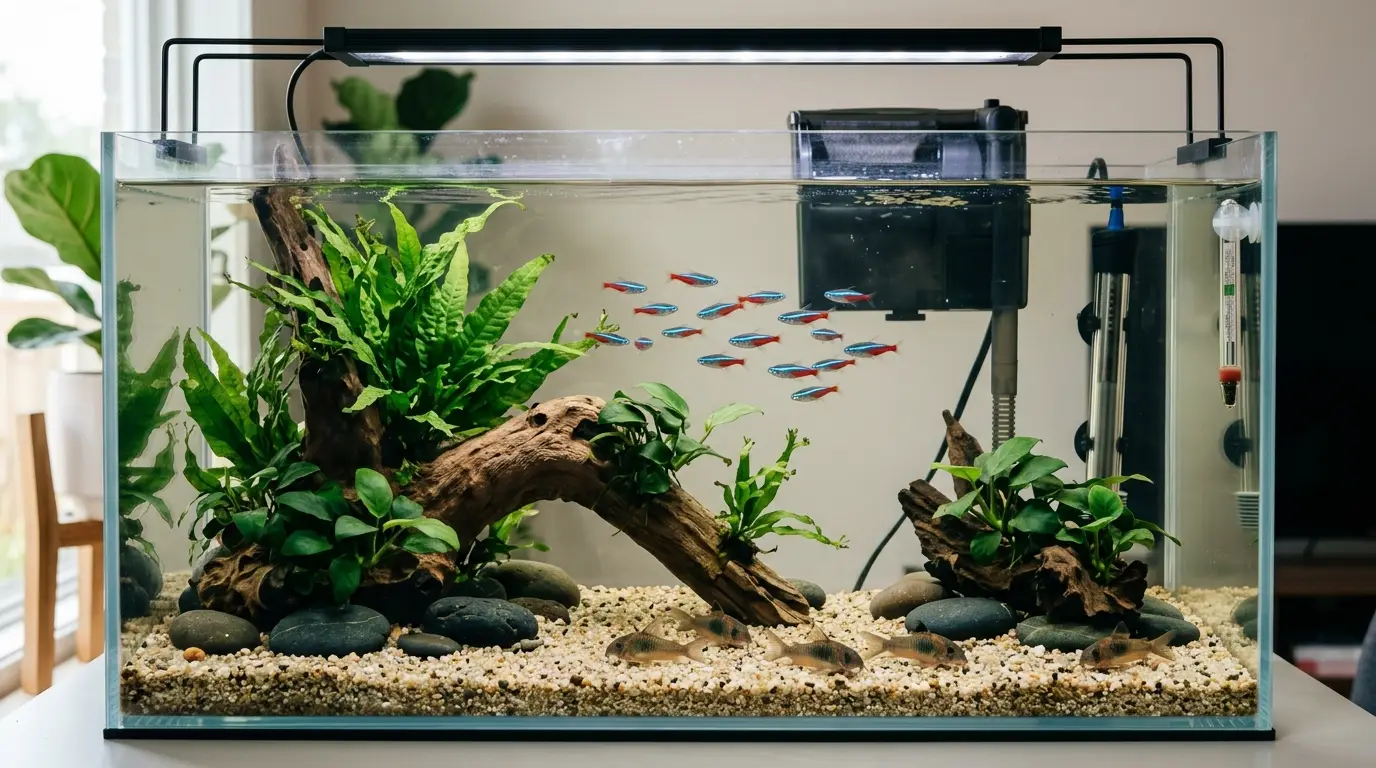
Freshwater essentials:
- Tank, lid, and stand: Basic kits are affordable and easy to find.
- Filter and media: Hang-on-back or canister filters work well.
- Heater and thermometer: Stable heat is key for tropical fish.
- Substrate and decor: Inert gravel or sand, plus safe rocks and wood.
- Test kit and water conditioner: Check ammonia, nitrite, nitrate, and pH.
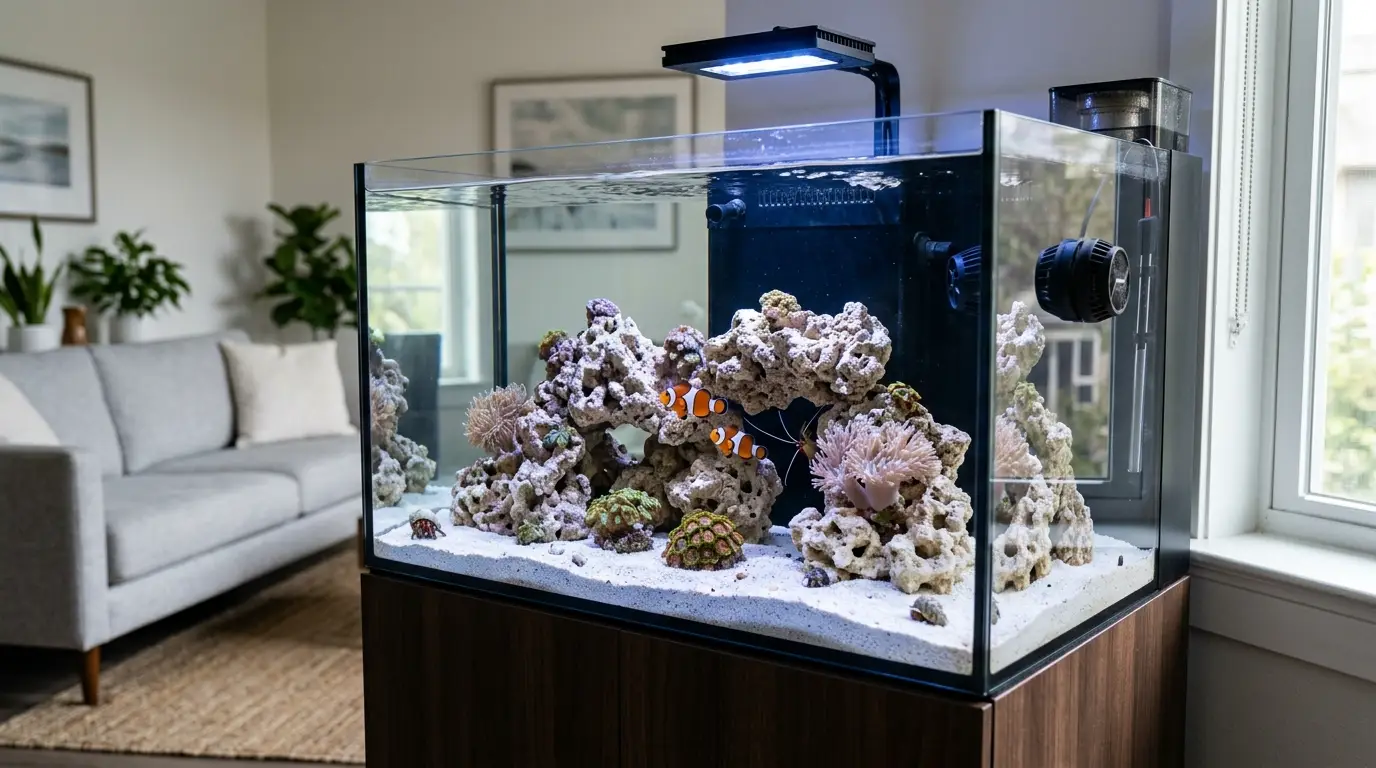
Saltwater essentials:
- Tank, lid, and stand: Braced tanks help reduce salt creep.
- Filter or sump: Add a protein skimmer for better export.
- Heater, thermometer, and powerheads: Flow matters in marine tanks.
- Reef salt mix and refractometer: Keep salinity stable at 1.023–1.026 SG.
- Live rock and sand: These add surface for helpful bacteria.
- Test kits: Ammonia, nitrite, nitrate, pH, and salinity as a must; alkalinity, calcium, magnesium become key if you keep corals.
Used gear can be fine if it is clean and safe. Focus on steady filtration and good test tools. In this freshwater vs saltwater aquarium beginners guide, I keep costs real and steps clear.
Setup Timeline and Maintenance Routine
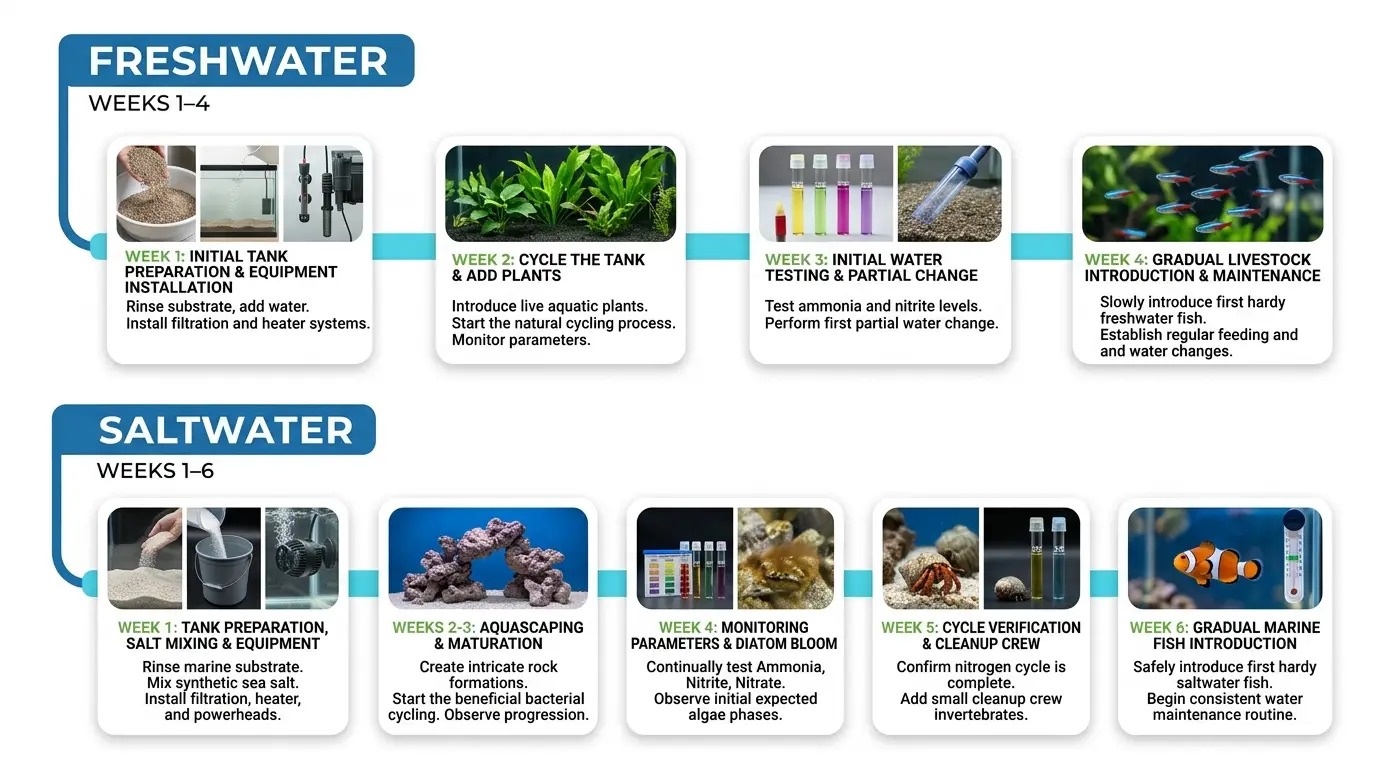
Every tank needs a cycle. This is when helpful bacteria grow and make waste safe. It takes time, so be patient.
Freshwater setup timeline:
- Week 1: Rinse substrate, fill, dechlorinate, start filter and heater, add starter bacteria.
- Weeks 2–4: Test often. Ammonia and nitrite should rise then fall to zero. Add hardy fish slowly.
- Ongoing: Do 20–30% water changes weekly or biweekly. Vacuum light.
Saltwater setup timeline:
- Week 1: Mix saltwater, add sand and rock, start filter, heater, and flow. Seed bacteria.
- Weeks 2–6: Track ammonia, nitrite, nitrate, and salinity. Add clean-up crew first. Add hardy fish after parameters are stable.
- Ongoing: Do 10–20% water changes weekly. Top off with fresh water to hold salinity.
Weekly care for both:
- Test basics, wipe glass, and check gear.
- Rinse filter media in tank water, not tap water.
- Feed small amounts to avoid waste spikes.
A calm pace prevents stress and losses. This freshwater vs saltwater aquarium beginners guide favors slow, steady steps that work in the real world.
Livestock Choices and Compatibility
Start with hardy species. Pick fish that match your tank size, water, and each other’s mood.
Beginner-friendly freshwater fish:
- Livebearers like guppies and platies are bright and active.
- Cory catfish are peaceful bottom cleaners.
- Small tetras are pretty and school well.
- Betta in a solo setup works if filtered and heated.
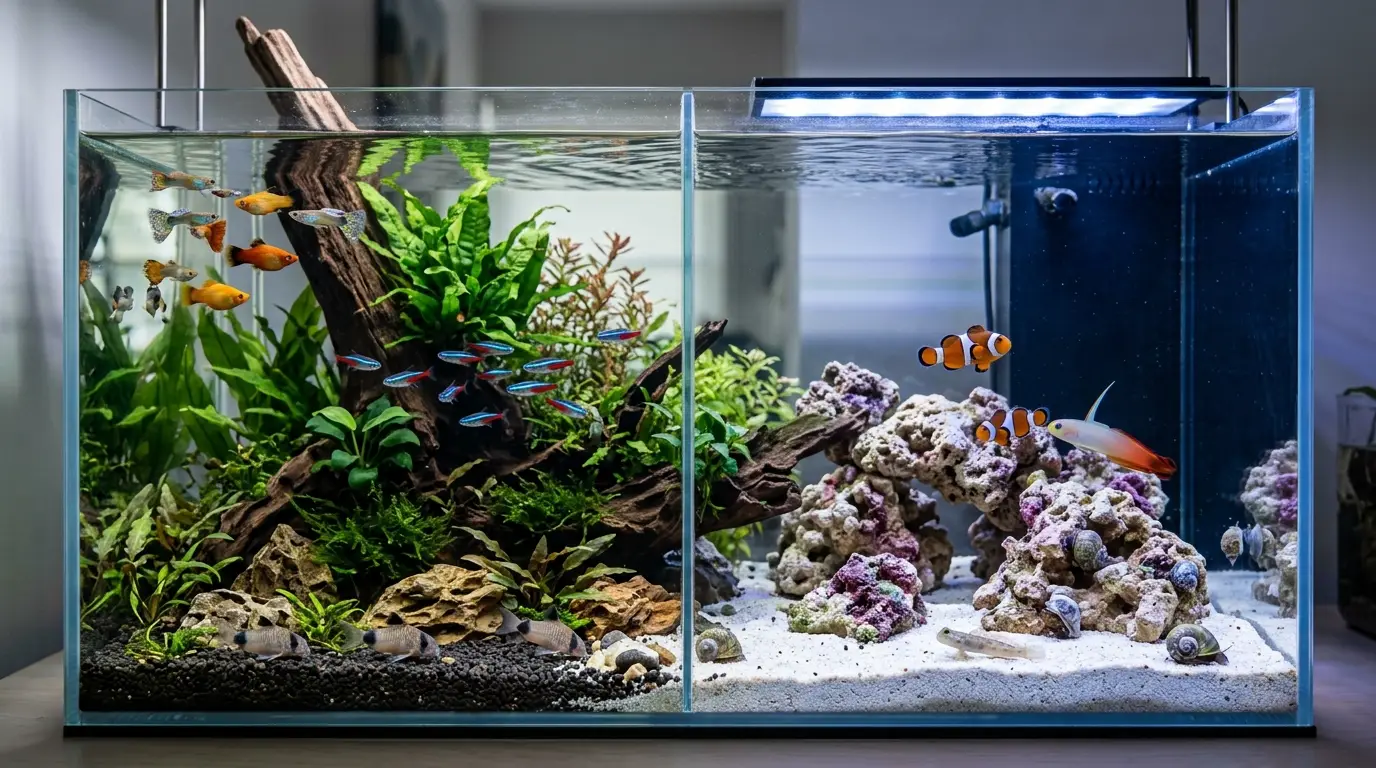
Beginner-friendly saltwater fish and inverts:
- Clownfish are tough and fun to watch.
- Firefish are shy but hardy jumpers, so add a lid.
- Blennies and gobies help with algae and sand.
- Clean-up crew like snails and hermits handle leftover food and film.
Research each species before you buy. Avoid mixing bullies with shy fish. Feed light and varied. In this freshwater vs saltwater aquarium beginners guide, I suggest stocking slow and stable to avoid shock.
Water Chemistry Made Simple
Great water keeps fish safe. Keep tests simple and steady.
Core freshwater targets:
- Temperature: 74–78°F for most community fish.
- pH: 6.5–7.8 based on your fish mix.
- Ammonia and nitrite: Always zero.
- Nitrate: Under 20–40 ppm is safer for most fish.
Core saltwater targets:
- Temperature: 76–79°F for stability.
- Salinity: 1.023–1.026 specific gravity.
- pH: 8.0–8.4 in most marine tanks.
- Ammonia and nitrite: Always zero.
- Nitrate: Under 20 ppm for fish-only, lower for reefs.
Do not chase numbers every day. Aim for stable ranges. Use a good test kit and log your results. This freshwater vs saltwater aquarium beginners guide keeps chemistry clear and easy to track.
Aquascaping, Substrates, and Lighting
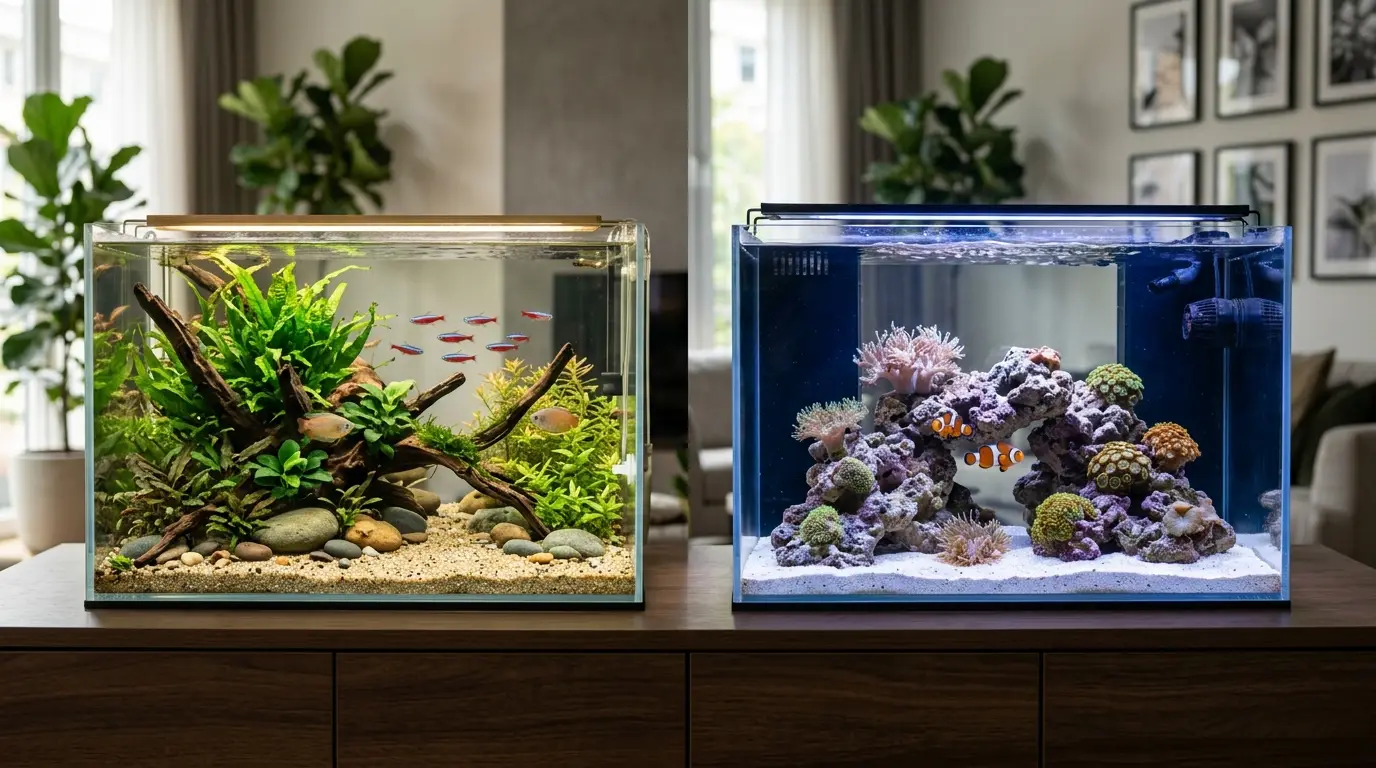
Your layout affects fish health and your joy. Make caves, open swim rooms, and safe zones.
Freshwater ideas:
- Sand or fine gravel helps bottom fish.
- Use hardy plants like Java fern and Anubias on wood and rock.
- Low to medium lights are fine for many plants.
Saltwater ideas:
- Build strong rock arches and islands with good flow paths.
- Use reef-safe sand that will not blow in strong flow.
- Start with soft corals if you try a reef. Use a light made for corals.
Keep tools clean and avoid sharp edges. Tie plants or secure rocks so they do not shift. This freshwater vs saltwater aquarium beginners guide teaches layouts that look good and feel safe for your fish.
Common Mistakes and How to Avoid Them
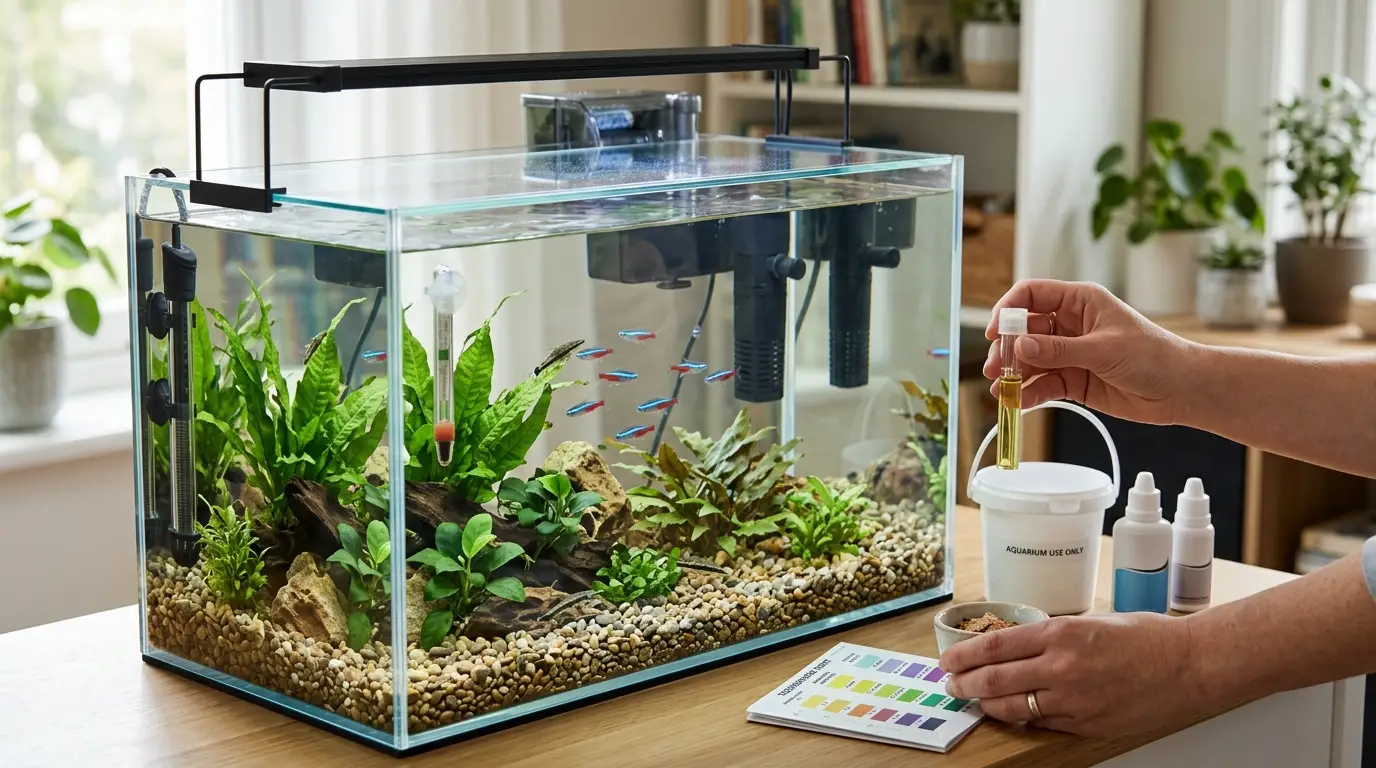
I have made almost every mistake once. Learn from mine.
Top traps to skip:
- Rushing the cycle leads to fish stress and losses.
- Overfeeding causes algae and bad water.
- Skipping tests hides slow issues until it is too late.
- Buying gear twice costs more than getting it right once.
- Mixing fish that do not match adds fights and stress.
- For saltwater, ignore salinity swings at your peril.
Set a simple schedule for tests and water changes. Use a checklist. This freshwater vs saltwater aquarium beginners guide favors habits that prevent problems.
Two Starter Plans You Can Trust
Plan A: 29-gallon planted freshwater community
- Rinse substrate, set hardscape, fill, dechlorinate, and start gear.
- Add hardy plants and a timer for lights, about 8 hours.
- Seed bacteria and cycle for 2–4 weeks.
- Add fish in groups over time. Start with small tetras and corys.
- Feed light and keep weekly water changes.
Plan B: 32-gallon saltwater with hardy fish
- Mix saltwater to 1.025 SG, set rockscape, and start heater, filter, and flow.
- Seed bacteria and wait 3–5 weeks while testing.
- Add a clean-up crew first, then two clownfish or a clown and a goby.
- Hold salinity with fresh top-offs. Do weekly 10–15% water changes.
- Add more fish slowly. Add easy soft corals only after months of stability.
Each plan fits a living room and a busy week. This freshwater vs saltwater aquarium beginners guide gives you steps that work without stress.
Budget, Time, and Skill Checklist
Pick the path that fits your life today. You can always level up later.
Freshwater checklist:
- Lower startup and running costs.
- Simple gear and faster setup.
- Good for kids, small rooms, and first-time keepers.
Saltwater checklist:
- Higher startup budget and more tests.
- Needs stable salinity and flow.
- Great if you want bold color and a showpiece.
If you are unsure, start with freshwater, learn the cycle, and build habits. Then use this freshwater vs saltwater aquarium beginners guide again when you switch to saltwater.
Frequently Asked Questions of freshwater vs saltwater aquarium beginners guide
Is freshwater or saltwater better for a first tank?
Freshwater is better for most first tanks because it is cheaper and simpler. It builds skills you can use later in saltwater.
How big should my first aquarium be?
Aim for 20–40 gallons. Larger volumes are more stable and forgive small mistakes.
Do I need a sump for saltwater?
No, but a sump adds water volume, hides gear, and helps filtration. Many first tanks run fine with a simple filter and a skimmer.
How often should I change water?
For most tanks, once a week works well. Do 20–30% for freshwater and 10–20% for saltwater, based on your test results.
Can I switch a freshwater tank to saltwater later?
Yes, but you must clean, re-scape, and add marine-safe gear. Many parts can carry over, like the tank and stand.
Are live plants or corals required?
No. Plants help freshwater tanks but are optional. Corals are optional in saltwater; fish-only marine tanks look great too.
What is the biggest cause of beginner failure?
Rushing the cycle and overstocking. Go slow, test often, and add life in small steps.
Conclusion
Both paths can lead to a vibrant, healthy tank that relaxes you every day. Freshwater is the wiser first step for most people, while saltwater can be a bold goal once your skills grow. Use this freshwater vs saltwater aquarium beginners guide to match your dream to your time, budget, and comfort.
Start today with a clear plan, a small test kit, and a steady routine. If this helped, share it with a fellow aquarist, subscribe for more guides, or drop your questions in the comments so we can build better tanks together.