Introduction
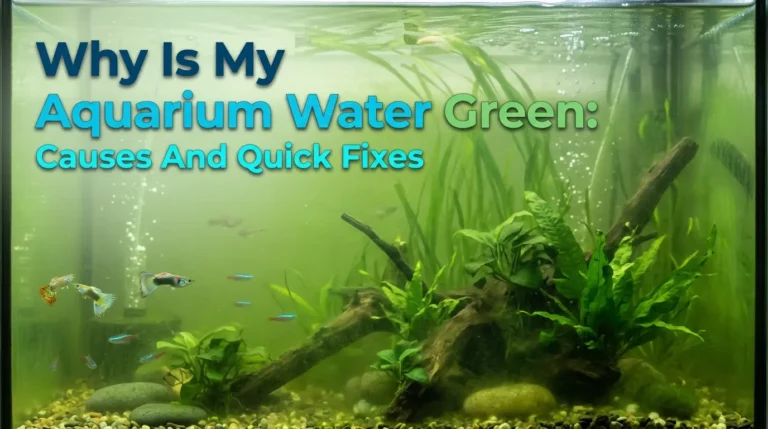
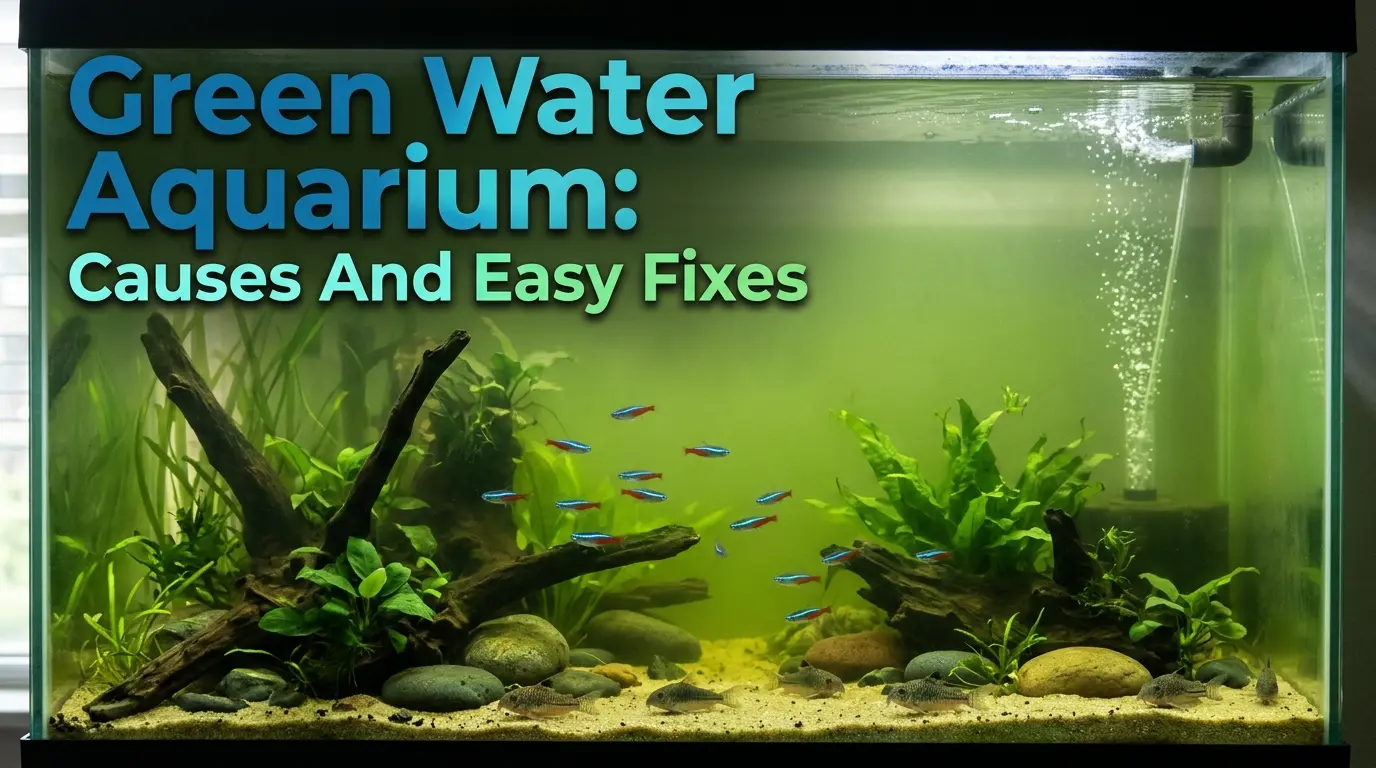
If your aquarium water looks like pea soup, you are likely seeing a green water algae bloom. In most U.S. freshwater tanks, this comes from tiny free-floating algae called phytoplankton. The usual triggers are too much light, excess nutrients, or a new tank that has not yet reached a stable balance.
Green water is often unattractive, but it is not always an emergency. Fish may tolerate it for a short time. Still, a heavy bloom can lower oxygen at night, hide signs of illness, and point to a water-quality problem. The safest fix is to reduce light, control nutrients, keep the filter running, and use a properly sized UV clarifier when fast results matter.
What Is Green Water in an Aquarium?
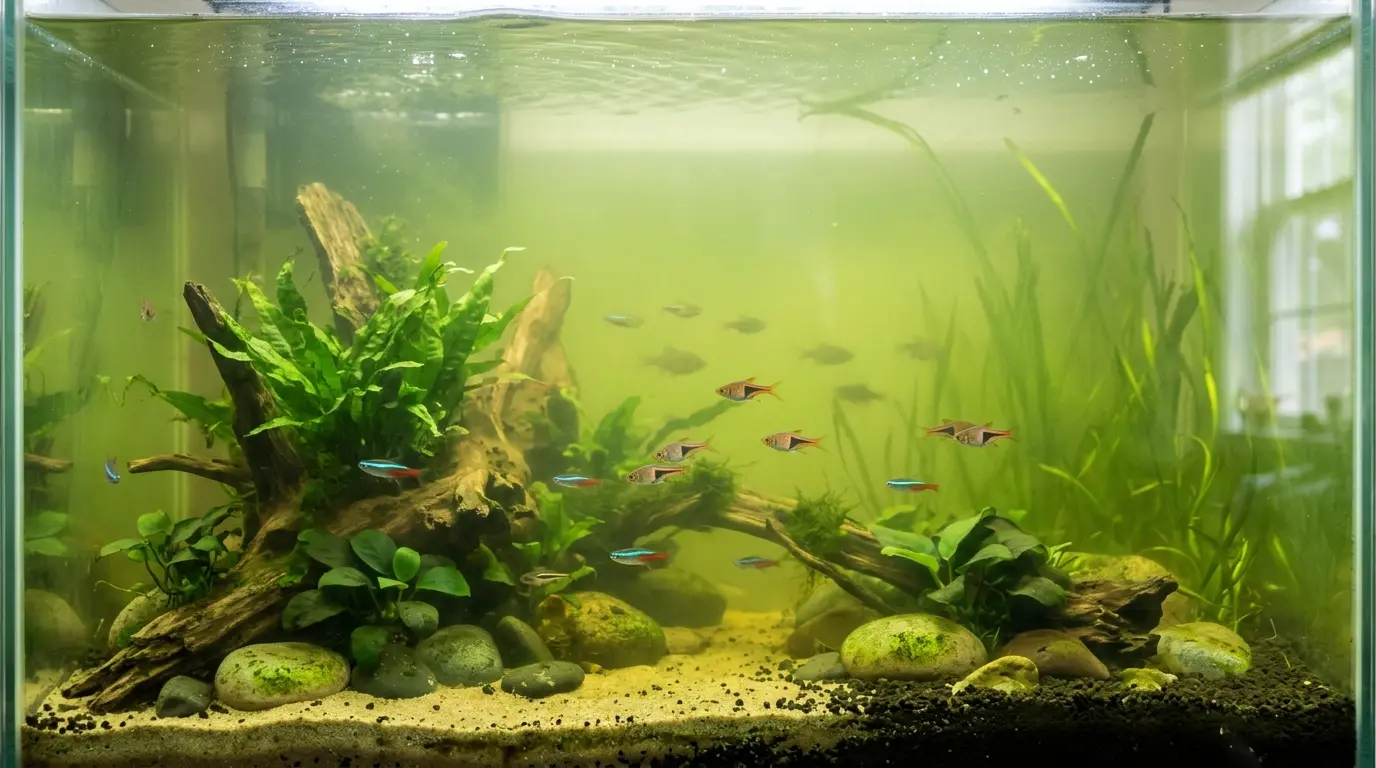
Green water is a cloud of microscopic algae suspended throughout the water column. Unlike green film on the glass, this algae floats freely and can make the tank look cloudy, yellow-green, or opaque.
The bloom needs three basic resources:
- Light
- Nutrients, mainly nitrogen and phosphorus compounds
- Water and time
Aquarium plants and algae compete for many of the same resources. A planted tank can still develop green water if it receives long periods of strong light or if nutrients enter faster than plants and beneficial microbes can use them.
Green water is different from several other aquarium problems:
| Water or algae problem | What it looks like | Main location |
|---|---|---|
| Green water | Cloudy green water | Throughout the tank |
| Green spot algae | Hard green dots | Glass, leaves, and décor |
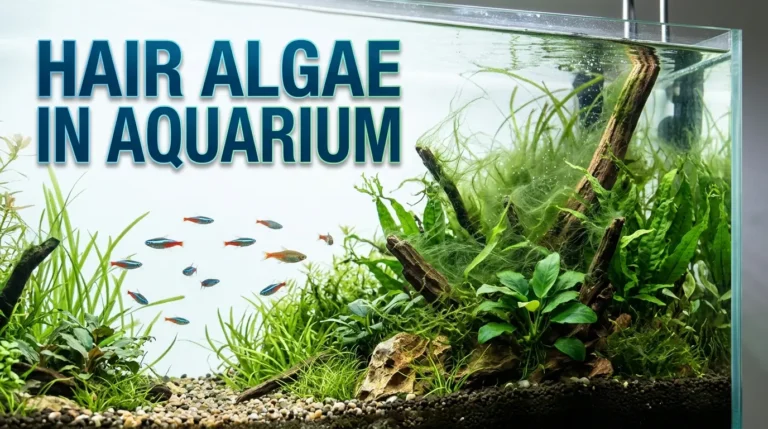
| Hair algae | Long green strands | Plants, wood, and rocks |
| Bacterial bloom | White or gray cloud | Throughout the water |
| Diatom algae | Brown dust or film | Glass, sand, and décor |
The treatment depends on the type. A water change alone may not remove green water because the algae remain suspended and can quickly multiply again.
Why Does Aquarium Water Turn Green?
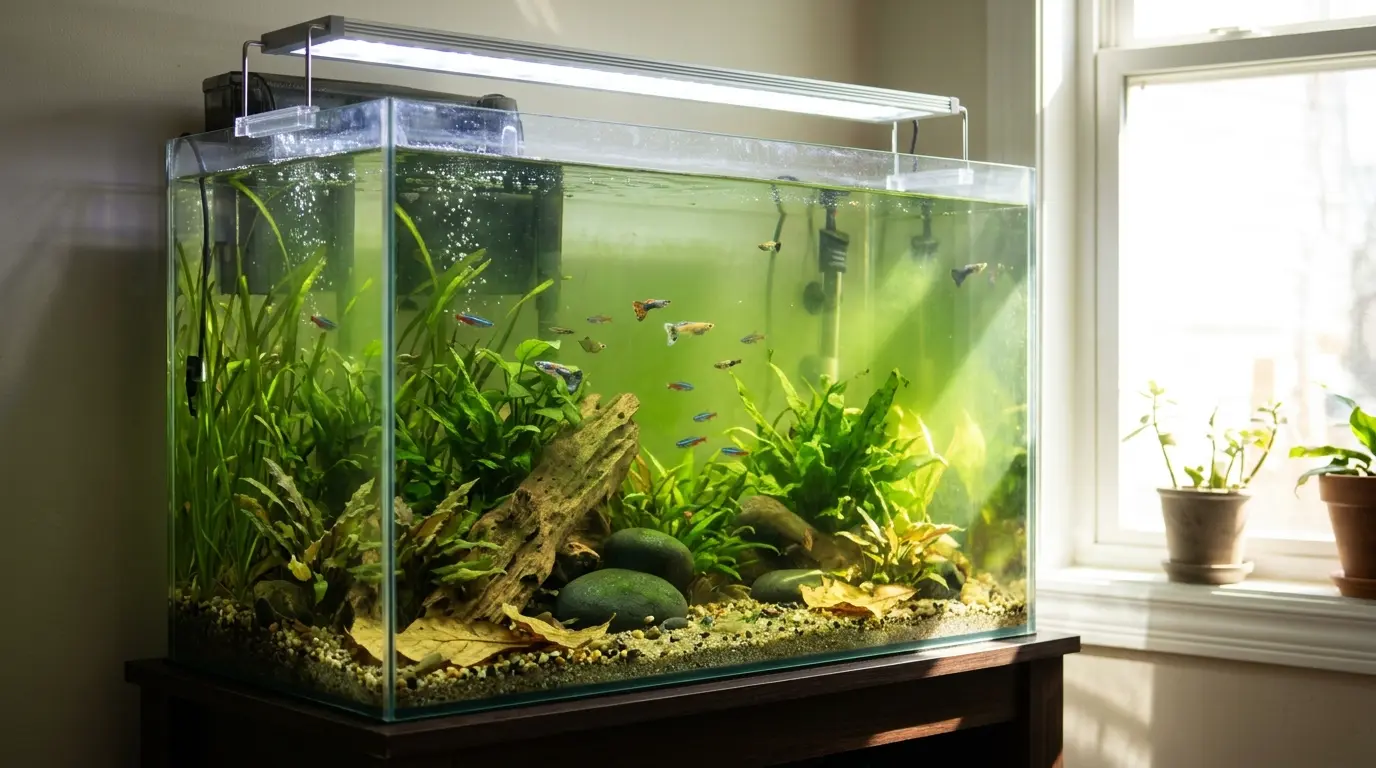
Green aquarium water usually appears when light and dissolved nutrients are both available. The problem may start after a tank is placed near a window, a light schedule is increased, or a large amount of food or organic waste enters the system.
Common causes
Too much light is one of the most common triggers. Direct sunlight is especially strong and can change during the day. Even aquarium lights can cause a bloom when they run for too many hours or at high intensity.
Excess nutrients can come from:
- Overfeeding
- Uneaten food
- Fish waste
- Decaying leaves
- Dead animals
- Dirty filter media
- Overcrowding
- Tap water with measurable nitrate or phosphate
- New substrate or additives that release nutrients
A new aquarium may also develop green water while its biological filter matures. Beneficial bacteria help process ammonia and nitrite, but they do not directly remove every nutrient that algae can use.
Why green water can become a safety issue
Algae produce oxygen during the day when light is present. At night, algae and other organisms use oxygen. A dense bloom may therefore create a larger oxygen swing, especially in a warm, crowded, or poorly aerated aquarium.
Watch more closely if fish:
- Gasp at the surface
– Breathe very fast - Stay near the filter outlet
- Become weak or inactive
- Hide more than usual
If these signs appear, increase surface movement with an air stone or by aiming the filter outlet toward the surface. Test ammonia and nitrite at once. If either is above zero in a stocked tank, perform a partial water change with temperature-matched, conditioned water.
Is Green Water Harmful to Fish and Plants?
A mild green-water bloom is not automatically harmful. Some fish may live in it without immediate problems, and the algae may absorb some dissolved nutrients. However, green water can still create poor conditions if the bloom is thick or if the tank is overstocked.
The main risks are:
- Low oxygen at night
- Ammonia or nitrite problems hidden by cloudy water
- Poor visibility when checking fish
- Reduced light reaching live plants
- Unstable water conditions after a sudden bloom or crash
Shrimp and other small invertebrates may be more vulnerable to sudden changes. Do not assume that green water is safe just because fish are still swimming normally.
The safest short-term approach is to keep the filter running, improve surface movement, stop overfeeding, and test the water. Do not turn off all circulation for long periods. Removing filtration can make oxygen and ammonia problems worse.
How to Clear Green Water Fast
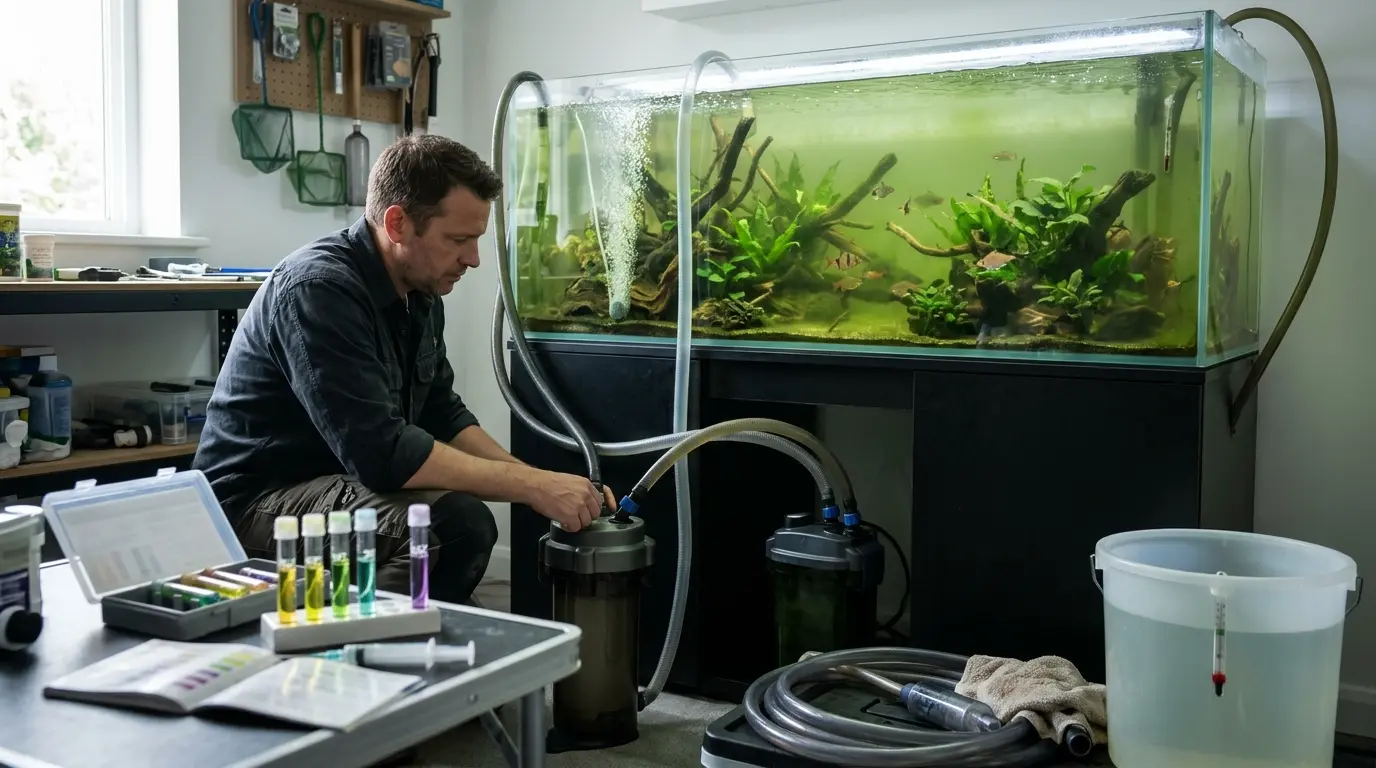
The fastest reliable method is usually a UV clarifier combined with basic nutrient and light control. A UV unit exposes suspended algae to ultraviolet light as water passes through it. It does not remove the cause of the bloom, but it can clear the visible algae from the water column.
Step 1: Test the water
Before changing the tank, test:
- Ammonia
- Nitrite
- Nitrate
- pH
- Temperature
In a cycled freshwater aquarium, ammonia and nitrite should normally read zero. Nitrate should remain within a range suitable for the fish and plants in the tank. There is no single nitrate target that fits every aquarium, but a rising reading signals that waste is entering faster than the system can manage it.
Step 2: Reduce or block light
For a mild bloom, reduce the aquarium light to about six hours per day and block direct sunlight.
For a severe bloom, a short blackout may help:
- Turn off the aquarium light.
- Cover the tank so normal room light does not reach it.
- Keep the filter and heater running.
- Add an air stone or increase surface movement.
- Avoid feeding, or feed very lightly, during the blackout.
- Check fish behavior at least once each day.
- Remove the cover after two to four days and restart a shorter light schedule.
A blackout does not fix excess nutrients. It only removes the light that fuels the algae. Keep an eye on fish, especially in small tanks or tanks with high stocking levels.
Step 3: Use a UV clarifier when speed matters
Choose a unit rated for your aquarium size, and follow its flow-rate instructions. A UV clarifier works best when water passes through it slowly enough for the algae to receive enough exposure.
Important limits:
- It will not remove algae growing on glass or décor.
- It will not correct overfeeding or overstocking.
- It may reduce free-floating organisms, so some aquarists avoid running it continuously in tanks that rely on live plankton.
- It must be installed and maintained according to the manufacturer’s instructions.
- Replace the lamp or UV source on the schedule stated by the manufacturer, even if it still appears to produce light.
Never look directly at an exposed UV lamp. Use only a closed aquarium UV unit designed to prevent eye and skin exposure.
Step 4: Perform a sensible water change
A partial water change can remove nutrients and waste. Use a gravel vacuum to remove debris without stripping all substrate at once.
Avoid repeated, very large water changes unless ammonia or nitrite is at an unsafe level. Large changes can cause sudden temperature, pH, or mineral shifts. Always use water conditioner for municipal tap water when the product is needed for chlorine or chloramine, and match the new water temperature closely.
Step 5: Clean the filter correctly
Rinse mechanical filter media in a bucket of removed aquarium water. Do not rinse biological media under untreated tap water, because chlorine or chloramine can damage beneficial bacteria.
Do not replace every filter component at the same time. A clean filter is useful, but an aggressively sterilized filter can remove much of the tank’s biological support.
How long does green water take to clear?
With light control alone, improvement may take several days to a few weeks. A properly used UV clarifier can often clear suspended algae much faster, but the exact time depends on tank volume, water flow, bloom density, and lamp condition.
A clear tank is not proof that the underlying cause is gone. If feeding, light, or waste levels stay high, the green water may return.
How to Prevent Green Water From Returning
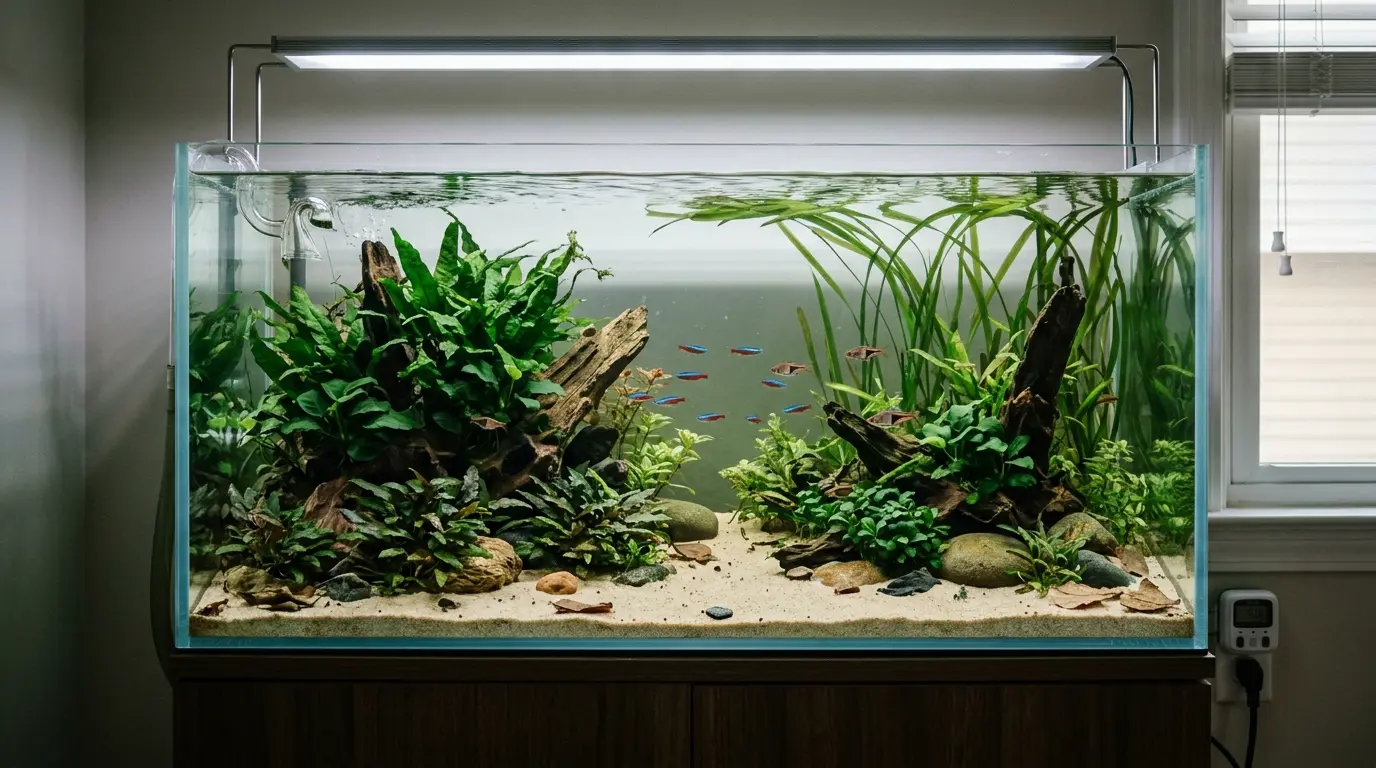
Prevention works best when you control light and nutrients together. Removing algae without changing the conditions that caused it is like sweeping snow from a driveway while leaving the door open during a storm.
Use a stable light schedule
Put the aquarium light on a timer. Start with a moderate schedule, such as six to eight hours daily, then adjust based on plant growth and algae.
Keep the aquarium away from direct sunlight. If moving the tank is not possible, use curtains or blinds during the brightest part of the day.
Feed less
Give fish only what they can eat in a short period. Remove food that remains after feeding. Feeding a smaller amount is safer than adding large portions on a fixed schedule.
Fast-growing fish, fry, and herbivores may need different feeding plans. The goal is not to starve fish. The goal is to avoid food becoming waste.
Maintain the filter and substrate
Clean mechanical media when flow drops or debris builds up. Vacuum portions of the substrate during routine water changes. Remove dead leaves and decaying plant material.
Do not deep-clean the entire aquarium at once unless there is a specific emergency. Beneficial bacteria live on surfaces throughout the tank, not only in the filter.
Keep stocking reasonable
More fish create more waste. A tank may appear fine for months and then develop algae after additional fish are added. Consider the adult size of each fish, swimming behavior, filtration, plant growth, and maintenance capacity.
Grow healthy plants
Healthy plants can compete with algae for light and nutrients. Give them the light, carbon source, and nutrients they actually need. Avoid adding fertilizer by guesswork. In a low-light tank with slow-growing plants, excess fertilizer may feed algae without producing strong plant growth.
Check the source water
Test tap water if green water keeps returning. Some U.S. municipal water supplies contain measurable nitrate or phosphate, and levels may vary by location and season. Your local water provider’s annual water quality report can provide useful background, but an aquarium test gives information about the water entering your tank.
If source water contains nutrients that affect the aquarium, options may include:
- Mixing with purified water
- Using a suitable reverse osmosis system
- Increasing plant growth
- Reducing the amount of source water added at one time
- Adjusting maintenance and stocking
Do not use purified water without considering mineral content. Fish and plants need appropriate hardness and minerals, and sudden changes can stress aquatic life.
Green Water Treatment Options Compared
The best method depends on how fast you need results and whether fish safety is at risk.
| Method | Speed | Best use | Main limitation |
|---|---|---|---|
| Reduce light | Slow to moderate | Mild blooms and prevention | Does not remove nutrients |
| Blackout | Moderate | Dense blooms in stable tanks | Requires close observation |
| Partial water change | Immediate but temporary | Waste and nutrient reduction | Bloom can return |
| UV clarifier | Often fast | Severe suspended algae blooms | Does not fix the cause |
| More plants | Slow | Long-term nutrient competition | Plants need suitable care |
| Algaecide | Variable | Specific labeled situations | Can harm plants, invertebrates, or oxygen levels |
Should you use an algaecide?
Use caution. Algaecides may kill algae quickly, but a large amount of dead algae can decay and reduce oxygen. Some products can harm shrimp, snails, sensitive fish, plants, or beneficial organisms if used incorrectly.
Copper-based products are especially risky for many invertebrates. Read the entire label, confirm that the product is approved for your animals, and never exceed the stated dose. Do not combine treatments unless the labels clearly allow it.
For most green-water blooms, light control and a UV clarifier are more predictable than adding a chemical product.
Can a water clarifier fix green water?
A chemical water clarifier may clump small particles so the filter can catch them. This can help with some cloudy water, but it is not the same as removing a living algae bloom. If the product does not target free-floating algae, it may have little effect.
A UV clarifier is designed for suspended microorganisms. A mechanical clarifier is designed to help the filter trap particles. Know which problem you have before choosing a treatment.
What to Do If Green Water Keeps Coming Back
Recurring green water usually means one of the main drivers remains. Check the system in this order:
- Light: Is the aquarium receiving sunlight or more than eight hours of artificial light?
- Feeding: Is food left after meals?
- Waste: Are dead leaves, fish waste, or detritus building up?
- Stocking: Is the tank heavily stocked for its size and filter?
- Source water: Do nitrate or phosphate enter with each water change?
- Filter flow: Is the filter clogged or too weak for the tank?
- Plant health: Are plants growing, or are they melting and decaying?
- Testing: Are ammonia, nitrite, and nitrate being measured during the bloom?
Do not chase a zero-nitrate reading without context. Plants need nitrogen, and a fully planted aquarium may use nitrate quickly. The better goal is stable water, healthy growth, and no detectable ammonia or nitrite in a mature stocked tank.
If the aquarium smells bad, fish gasp, or tests show ammonia or nitrite, treat water quality as the urgent issue. Add aeration and perform a careful, conditioned water change. Seek help from an aquatic veterinarian or an experienced aquarium professional if fish are seriously ill or dying.
Common Green Water Aquarium Mistakes
Turning off the filter
This can reduce circulation and oxygen. Keep filtration running unless the equipment itself is unsafe.
Replacing all filter media
This can remove much of the biological filtration. Clean media in removed tank water and replace only damaged or exhausted media.
Leaving the light on longer for plants
Plants need light, but more light is not always better. Increase light only when plant growth and nutrient levels support it.
Doing large water changes every day
This may create unstable temperature, pH, or mineral conditions. Use large changes when test results or an emergency justify them, not as the only response to cloudy green water.
Adding several treatments at once
Multiple chemicals make it hard to identify what worked and can increase risk. Change one major variable at a time when the fish are stable.
Adding algae-eating fish as a cure
Algae eaters generally do not solve green water because the problem is suspended microscopic algae. They also add waste and may have specific space, diet, and water needs.
Ignoring oxygen
A dense bloom can affect oxygen, especially after dark. Surface movement and an air stone are simple safeguards during treatment.
Key Takeaways
- Green water is usually a bloom of free-floating microscopic algae.
- Strong light and excess nutrients are the main drivers.
- Test ammonia, nitrite, nitrate, pH, and temperature before treatment.
- Reduce light, block sunlight, control feeding, and keep filtration running.
- A properly used UV clarifier is often the fastest practical option.
- Improve aeration during a dense bloom or blackout.
- Avoid unneeded algaecides, especially when the tank contains shrimp, snails, live plants, or sensitive fish.
- Prevention requires stable light, moderate feeding, regular maintenance, and reasonable stocking.
Frequently Asked Questions
Is green water good for a fish tank?
Green water may provide some natural food for tiny organisms, but it is not automatically good for an aquarium. A dense bloom can reduce visibility and contribute to low oxygen at night. Test the water and monitor fish behavior rather than treating the green color as harmless.
Will a water change remove green water?
A water change can remove some algae and nutrients, but it may not stop the bloom. The remaining algae can multiply again when light returns. Combine water changes with reduced light, better maintenance, and UV treatment when needed.
Can green water kill fish?
It can contribute to fish loss when the bloom is heavy, oxygen falls, or ammonia and nitrite rise. Gasping, rapid breathing, and surface-hanging are warning signs. Increase aeration and test the water immediately.
How long should I black out my aquarium?
A blackout commonly lasts about two to four days, but the safe length depends on the fish, plants, aeration, and tank stability. Keep filtration and heating on, inspect the fish daily, and stop if they show stress.
Will aquarium plants remove green water?
Healthy plants may reduce nutrients over time, but they usually do not clear an established green-water bloom quickly. Plants are best used as part of long-term prevention, not as the only emergency treatment.
Should I remove fish during a green-water treatment?
Usually, fish do not need to be removed for light reduction or a properly installed closed UV clarifier. Moving fish can create extra stress. Remove them only when water quality, disease, equipment failure, or a product label requires it.
Conclusion
A green water aquarium is usually a sign of an imbalance between light, nutrients, and biological demand. Start with water tests, reduce light, improve aeration, limit excess food, and maintain the filter. For a thick bloom that needs to clear quickly, a correctly sized UV clarifier is often the most direct solution.
Once the water clears, keep the new light schedule and review feeding, stocking, plant health, and source water. Clear water is the result; stable conditions are the real cure.