
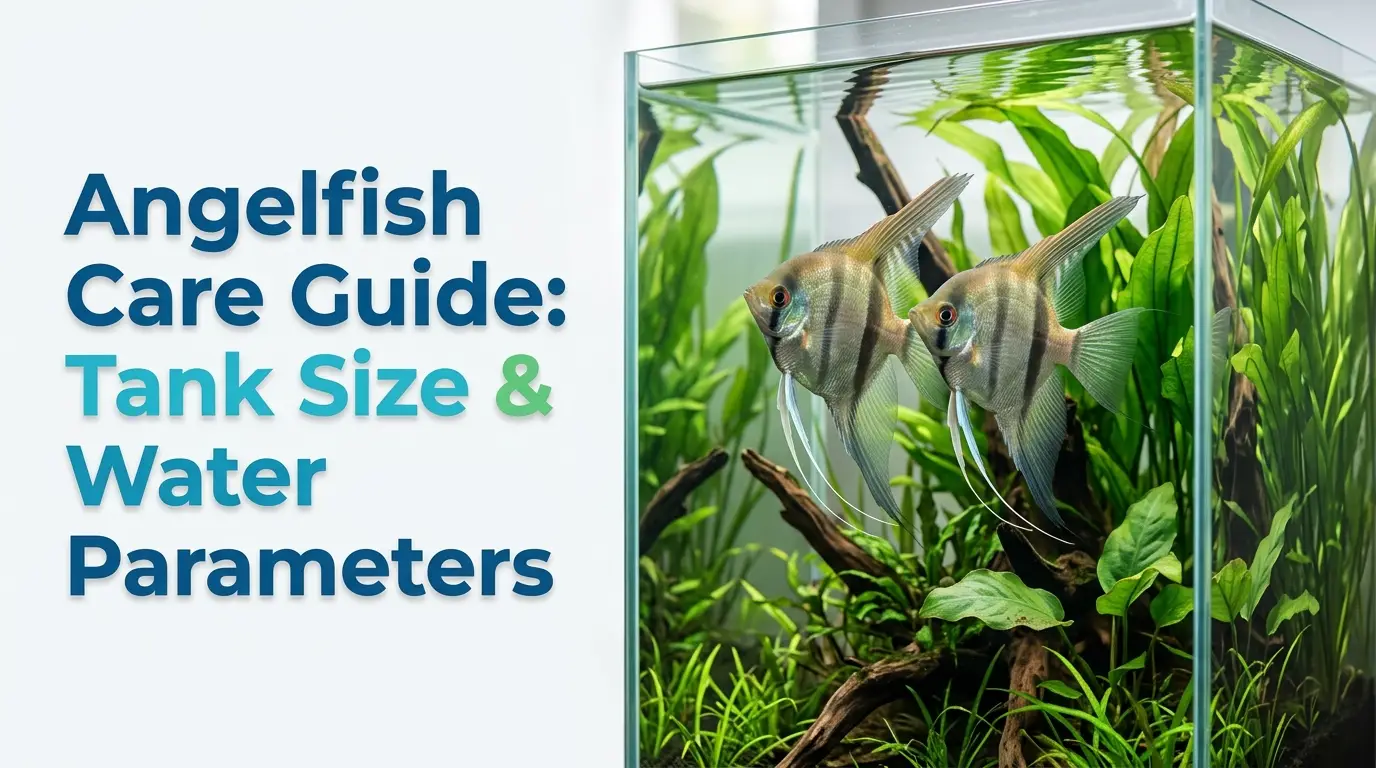
Angelfish thrive in tall, stable tanks with warm, clean, soft water.
If you want graceful, healthy angelfish, start with the right tank size and steady water parameters. In this angelfish care guide tank size water parameters article, I’ll share expert advice and real tips from years of keeping and breeding angels. You’ll learn how to size the tank, dial in water chemistry, and avoid the common mistakes that shorten lifespans and cause stress.
Angelfish at a Glance
Angelfish are tall, elegant cichlids from slow, warm Amazon waters. They like calm flow, clean water, and room to turn. The core of any angelfish care guide tank size water parameters plan is simple: give them height, keep water steady, and feed a mixed diet. I learned this fast after my first pair got stressed in a short tank with strong current.
Ideal Tank Size and Stocking Strategy
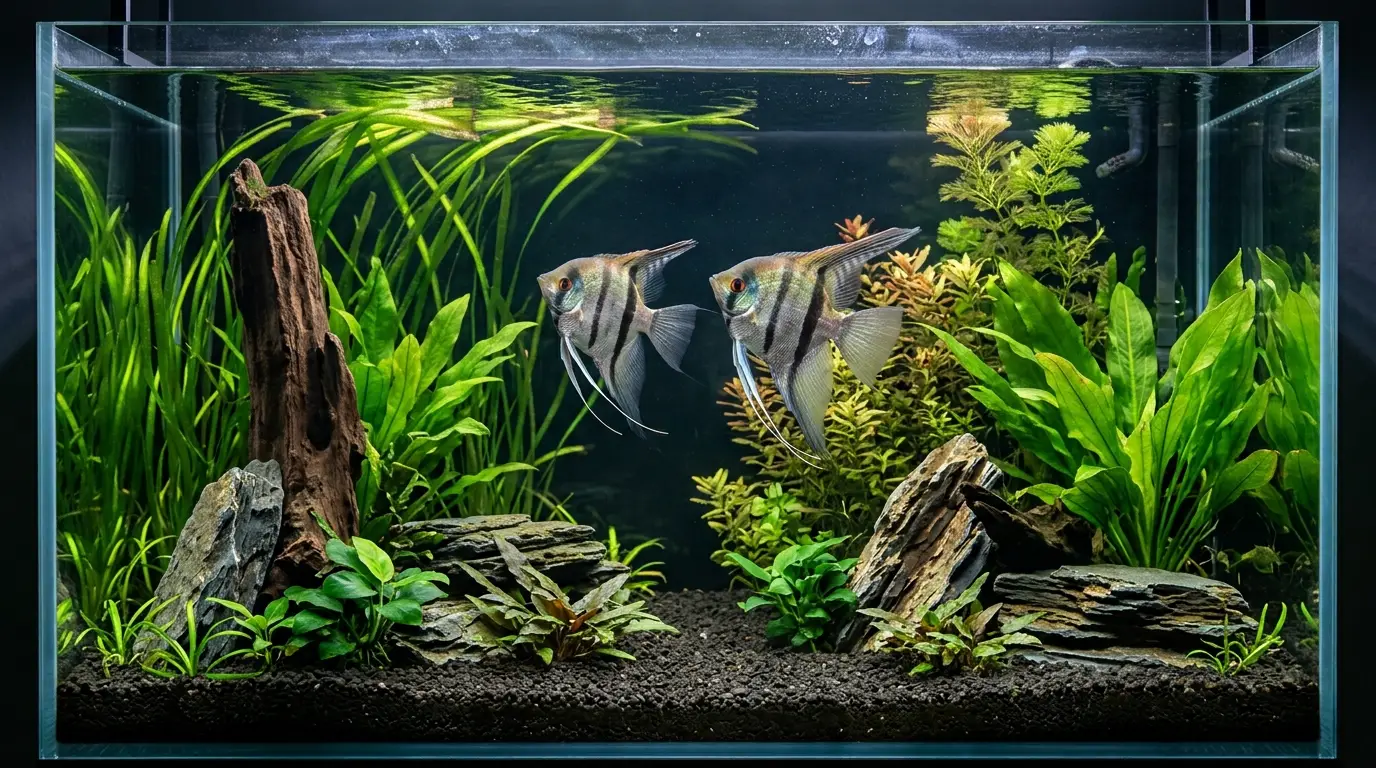
Tank size matters more than most people think. Angelfish are tall and need height to stretch their fins. A longer, taller tank also eases territorial spats. Use this as a quick guide and tailor it to your goals.
- One adult pair: 29 gallons minimum, 18 inches tall or more
- Small group of 4 to 6 juveniles: 40–55 gallons, 20 inches tall or more
- Community with angels: 55 gallons or larger for best results
- Rule of thumb: more surface area and height beat bare gallons
I often suggest a 55-gallon as the best start. It gives you room for plants, mates, and a safe pecking order. In any angelfish care guide tank size water parameters plan, a taller footprint reduces nips and split fins.
Water Parameters You Can Trust
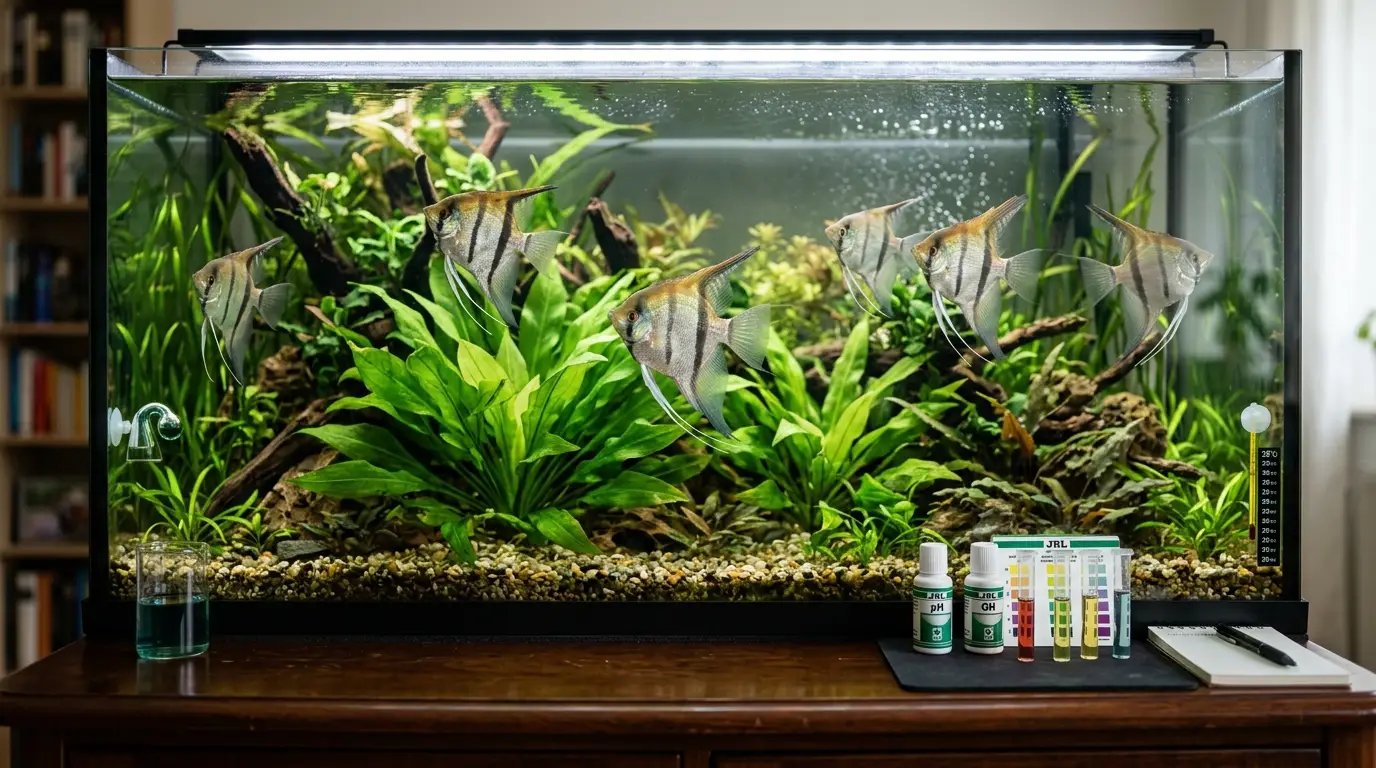
Angels handle a range, but they thrive when water is warm, soft, and stable. Stability beats “perfect” numbers. Test often and make small changes.
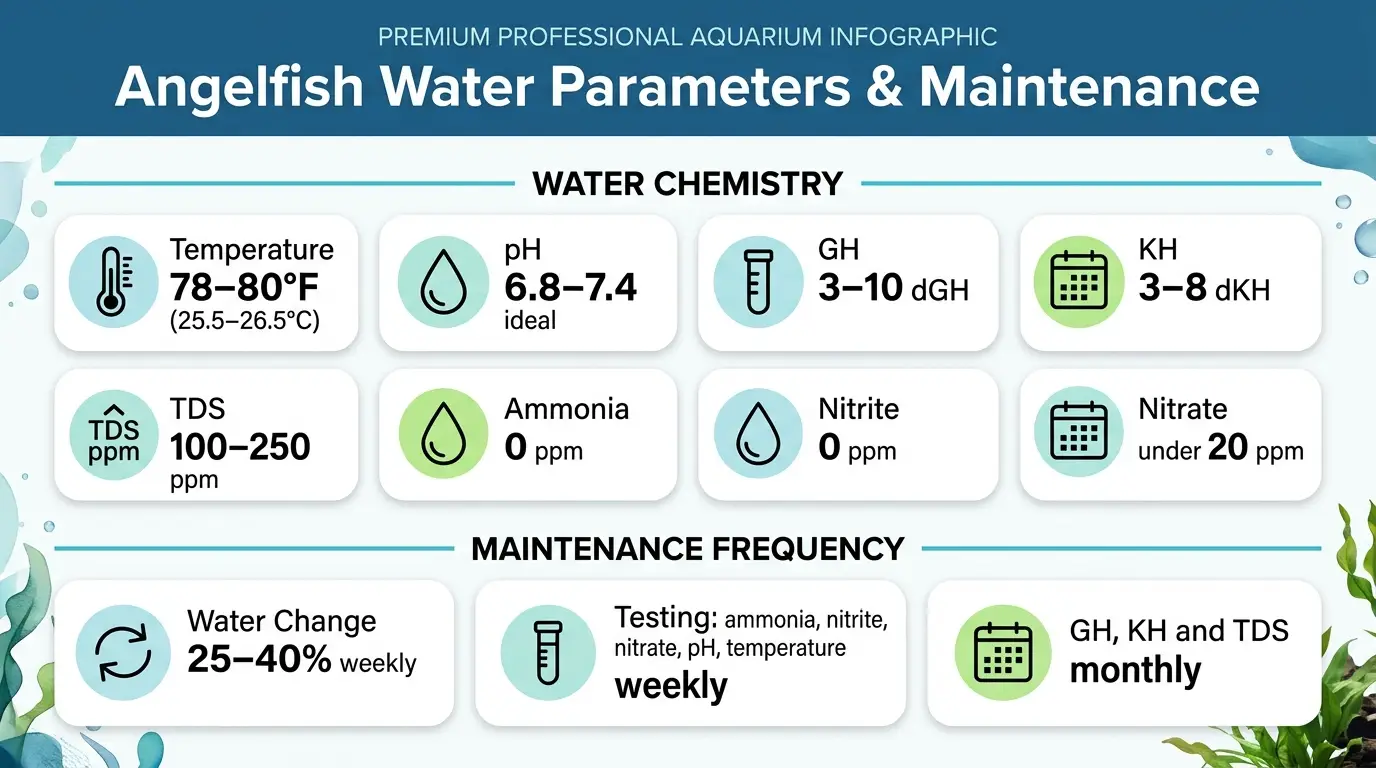
- Temperature: 78–80°F (25.5–26.5°C) sweet spot, 76–82°F safe range
- pH: 6.8–7.4 ideal, 6.5–7.8 acceptable if stable
- GH: 3–10 dGH (soft to moderately hard)
- KH: 3–8 dKH for pH stability
- TDS: 100–250 ppm target range
- Ammonia: 0 ppm
- Nitrite: 0 ppm
- Nitrate: under 20 ppm; under 30 ppm if heavily planted
Do 25–40% water changes weekly. Use dechlorinator every time. In this angelfish care guide tank size water parameters section, the key is steady inputs and slow tweaks. Rapid shifts cause clamped fins and flashing.
Source: aquariumcoop.com
Filtration, Flow, and Aeration
Angels prefer clean water with gentle movement. Too much flow stresses them and shreds fins. Aim for smooth, even circulation.
- Turnover rate: 4–6x tank volume per hour
- Filters: canister or HOB plus a sponge filter for bio and fry safety
- Baffle outflow or use spray bars to soften current
- Add an airstone if oxygen dips at night or in hot weather
I once ran a strong powerhead for algae control. My angels hid all day. After I baffles the flow, they resumed normal cruising. Any angelfish care guide tank size water parameters setup should keep flow soft and steady.
Aquascape and Equipment Setup
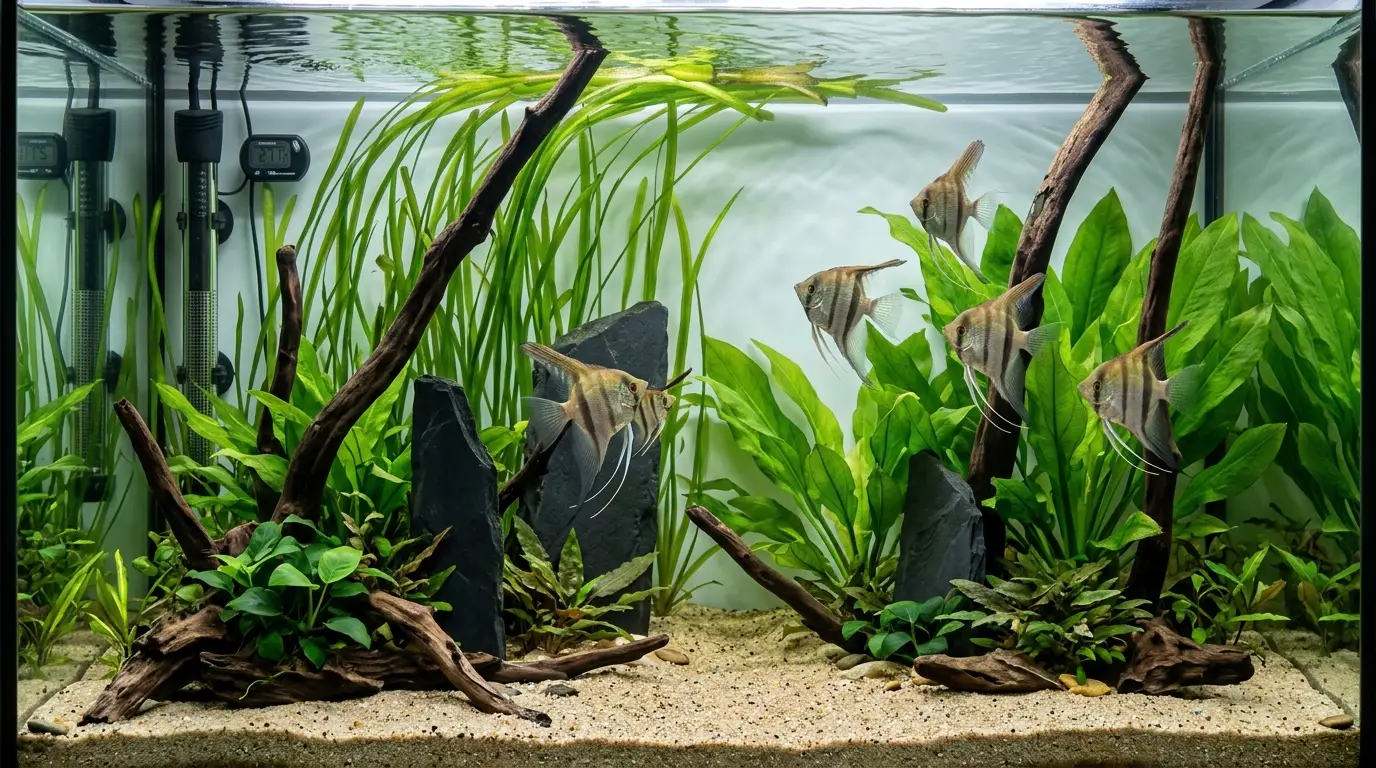
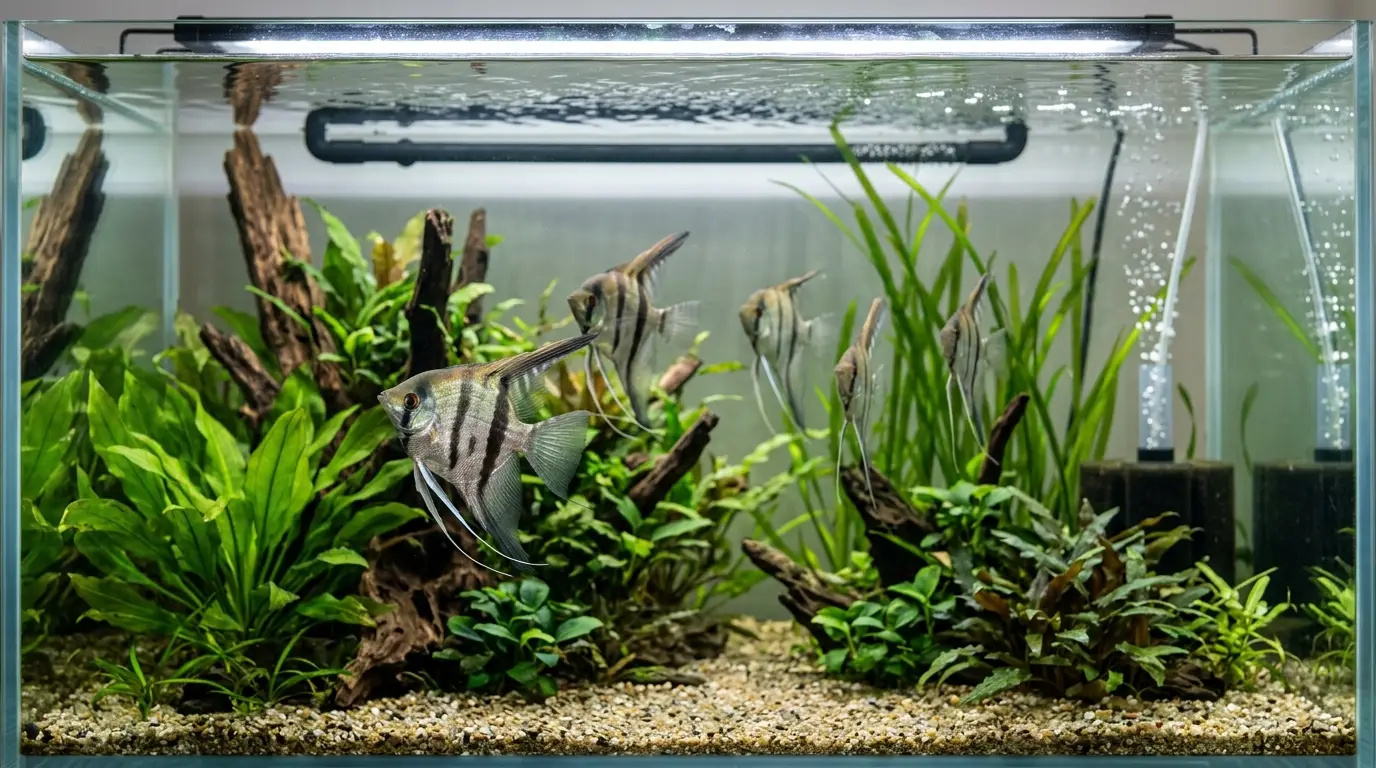
Build a calm, tall space. Give them plants for cover and open water to glide. Keep gear safe for long fins.
- Use tall plants like Amazon swords and vallisneria
- Add driftwood and vertical slate for breaks and egg sites
- Leave open midwater lanes for swimming
- Substrate: sand or fine gravel
- Heater: reliable, guarded, sized for your tank
- Thermometers: one on each side to catch hot spots
- Tight lid: angels jump when startled
A planted scape buffers stress and helps nitrates. That is a quiet win in any angelfish care guide tank size water parameters plan.
Diet and Feeding Routine
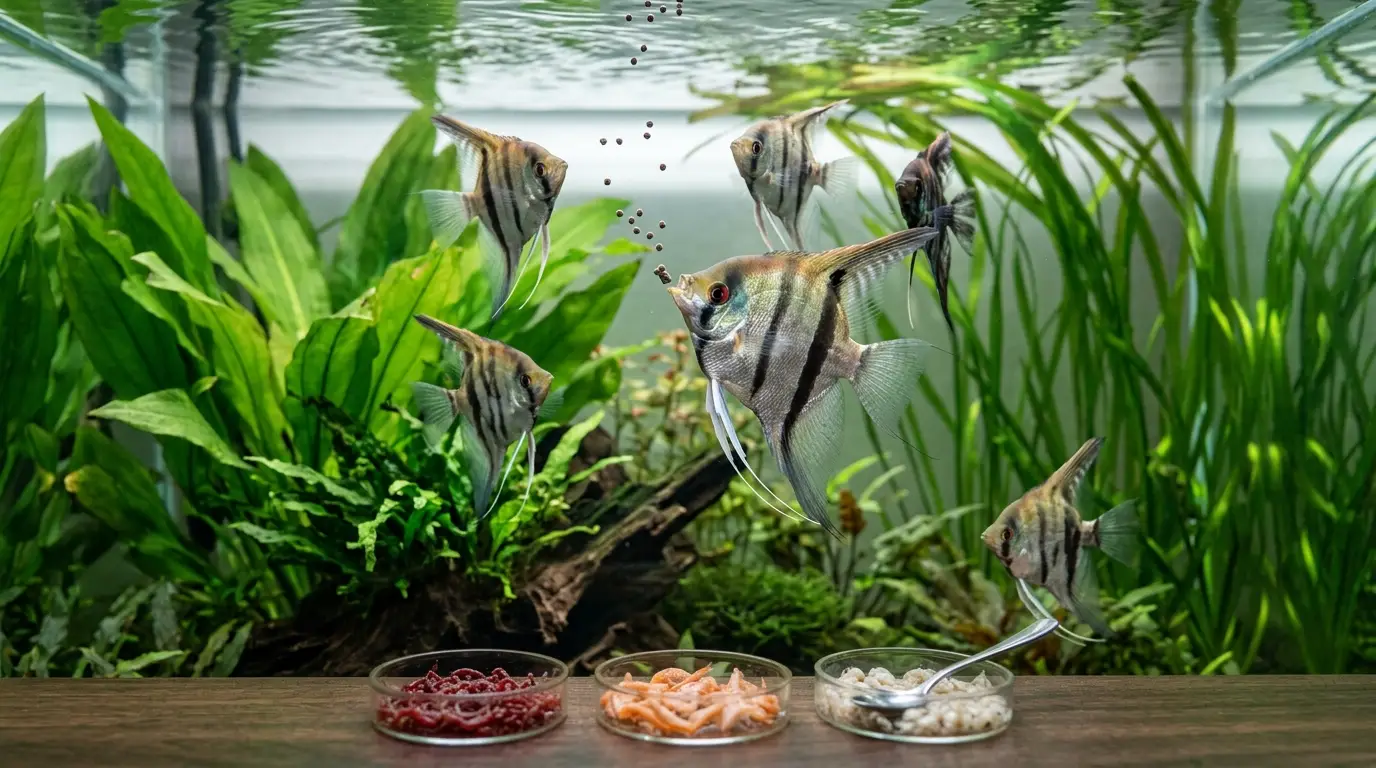
Angelfish are omnivores with a taste for protein. Feed a mix for color, growth, and breeding health.
- Base: quality flakes or slow-sinking pellets
- Protein: frozen or live brine shrimp, bloodworms, daphnia
- Greens: spirulina flakes or blanched peas (skinned) as treats
- Schedule: 2–3 small meals a day, one light or fasting day per week
I rotate foods to keep them keen and reduce waste. Overfeeding wrecks water fast. This ties right back to our angelfish care guide tank size water parameters focus.
Tank Mates, Temperament, and Community Planning
Angels are semi-aggressive. They form pairs and claim space. Choose calm, mid-to-bottom dwellers, and avoid nippers.
- Good picks: corydoras, larger tetras (not tiny fry-sized), peaceful rainbowfish, plecos like bristlenose
- Use caution: small neons or shrimp may become snacks
- Avoid: tiger barbs, red-tailed sharks, large aggressive cichlids
- Add groups at once to spread attention
In my community tanks, cardinals worked well with adult angels when raised together. Match size and watch behavior. That is the heart of an angelfish care guide tank size water parameters decision tree.
Health, Quarantine, and Early Warning Signs
Quarantine new fish for 2–4 weeks. This single step prevents most problems. Watch daily for small changes.
- Early signs: clamped fins, hiding, loss of color, labored breathing
- Common issues: ich, fin rot, internal parasites, hole-in-the-head
- Tools: liquid test kit, hospital tank, gentle meds, extra air, heat control
Data from experienced keepers shows stable water stops most disease flare-ups. Again, the angelfish care guide tank size water parameters theme saves time, money, and fish.
Breeding Basics for Curious Keepers
A bonded pair will lay eggs on a vertical surface. Parents may fan the eggs and guard fry. Good water wins here too.
- Tune water: 80°F, pH 6.5–6.8, soft water on the lower end of GH
- Provide: slate, broad leaves, calm flow
- Watch for: egg fungus, parents eating early spawns (common for first-timers)
- Option: move eggs to a rearing tank with methylene blue and air stone
My first pair ate their first two clutches. By the third, with calmer flow and fewer visitors, they raised fry. That was a major angelfish care guide tank size water parameters lesson on stress control.
Maintenance Schedule and Testing Habits
A steady routine keeps numbers flat and fish calm. Keep it simple and repeatable.
- Weekly: test ammonia, nitrite, nitrate, pH, temperature; change 25–40% water
- Biweekly: vacuum substrate, rinse filter media in tank water
- Monthly: check GH, KH, TDS; inspect equipment and seals
- Always: dechlorinate and match temperature on new water
Log your results. Trends matter more than a single spike. This habit is the backbone of any angelfish care guide tank size water parameters program.
Troubleshooting Water Swings and Algae Spikes
When numbers drift, act slow and steady. Quick fixes do more harm than good.
- High ammonia or nitrite: stop feeding, add bacteria, change water daily until zero
- High nitrate: more plants, less feeding, bigger weekly changes
- pH crash: raise KH with baking soda or a commercial buffer in tiny steps
- Hard water: cut with RO/DI and remineralize to a stable target
- Algae: reduce light hours, add fast plants, improve flow paths, clean filters
I once fought green water after a sunny week. Cutting light, adding floaters, and a couple of larger changes fixed it. Smart moves like these support your angelfish care guide tank size water parameters goals.
Frequently Asked Questions of angelfish care guide tank size water parameters
What is the minimum tank size for a pair of angelfish?
A 29-gallon tall tank works for one adult pair. More space reduces stress and improves behavior.
What pH and temperature are best for angelfish?
Aim for pH 6.8–7.4 and 78–80°F. Keep both stable with regular testing and small, steady changes.
How often should I change water for angelfish?
Change 25–40% weekly. Test first and adjust based on nitrate and stocking.
Can I keep angelfish with tetras and shrimp?
Yes, with larger tetras. Small shrimp and tiny tetras may get eaten by adult angels.
What filtration is best for angelfish?
Use a canister or HOB with a sponge filter. Keep flow gentle with a spray bar or baffle.
How many angelfish can I keep in a 55-gallon?
Four to six works well with good scape and filtration. Watch for aggression as pairs form.
Do angelfish need live plants?
They do not need them, but live plants reduce stress and help water quality. Tall plants fit their body shape.
Conclusion
Healthy angelfish start with space, steady water, and calm flow. Choose a tall tank, test weekly, and feed a varied diet. Keep the angelfish care guide tank size water parameters basics at the center of every choice you make.
Set one goal for this week: test, log, and tune one parameter toward the ideal range. Small steps add up fast. If you found this helpful, subscribe for more care guides, or drop a comment with your setup and questions.

One Comment