Limit light, balance nutrients, add algae-eaters, and scrub gently for natural algae control.
I have kept aquariums for years and helped hobbyists stop green algae without harsh chemicals. This guide explains how to remove green algae from aquarium naturally with clear steps, simple tools, and proven habits. You will learn what causes green algae, safe natural fixes, step-by-step cleaning, useful plants and animals, and practical prevention tips so your tank stays clean and healthy.
Why green algae appears and what it is
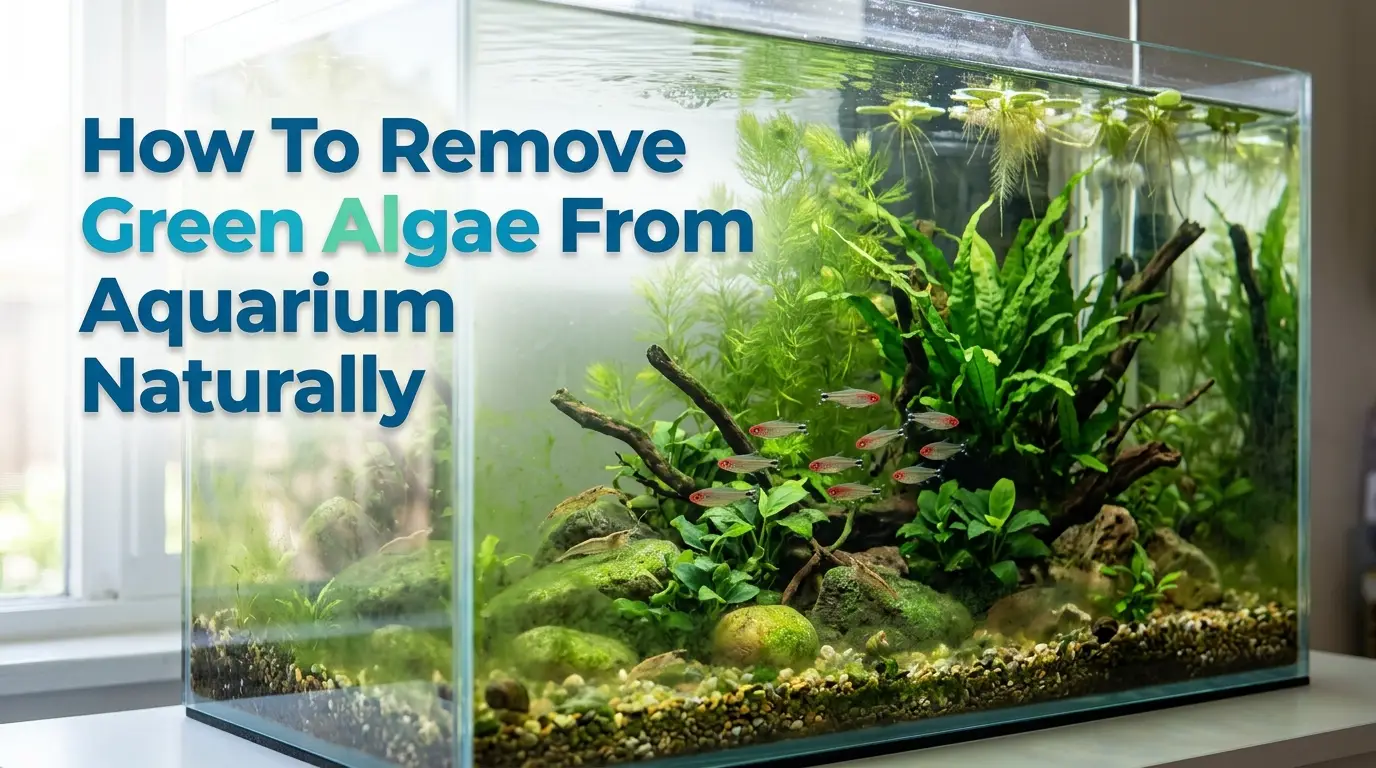
Green algae is a common, photosynthetic growth that can coat glass, plants, and decor. It ranges from free-floating green water to tiny green spots on leaves and hard surfaces. Understanding why it shows up helps you act fast and use natural methods that work.
Key causes include excess light, high nutrients (especially nitrates and phosphates), poor water flow, and an imbalance of plants and grazers. When you learn why green algae appears, you can choose the right natural controls. This reduces repeat outbreaks and keeps your fish healthy.
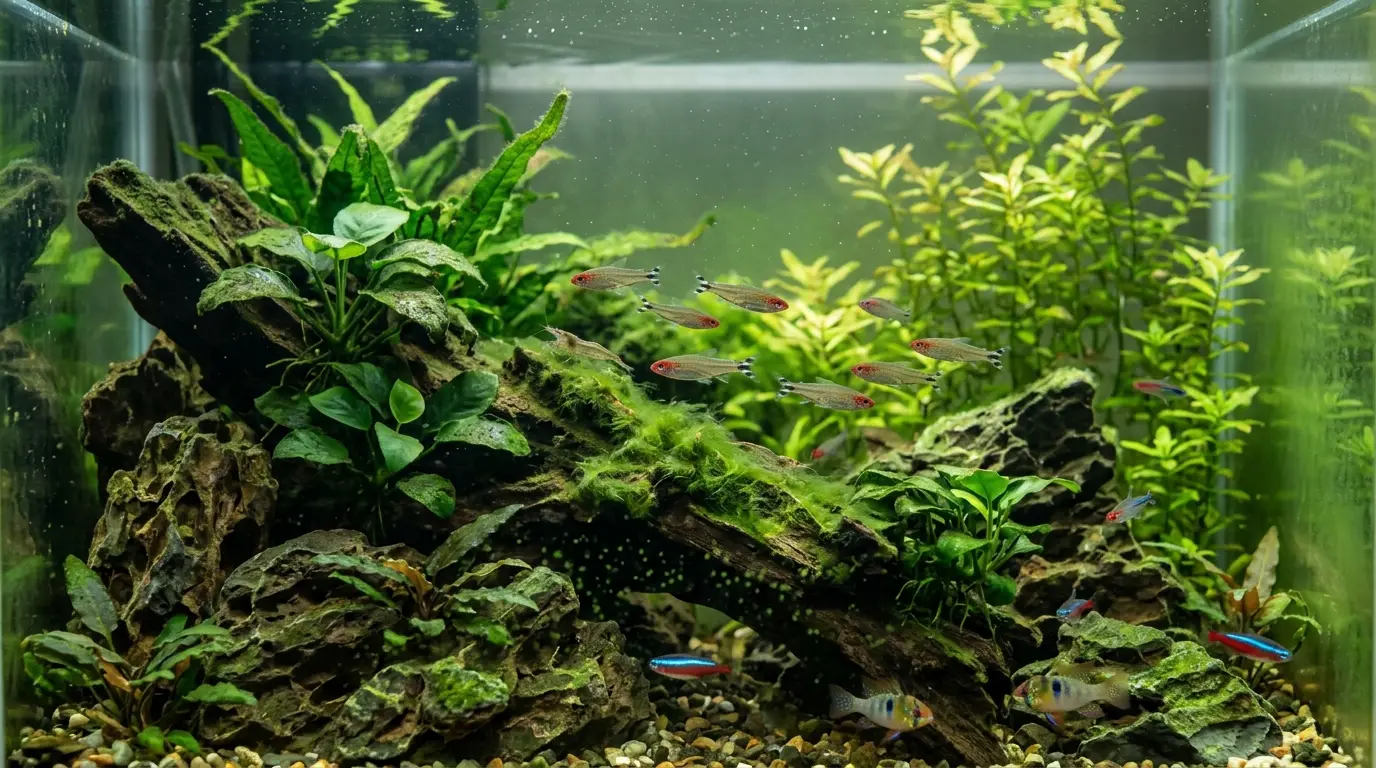
Natural methods to remove green algae from aquarium
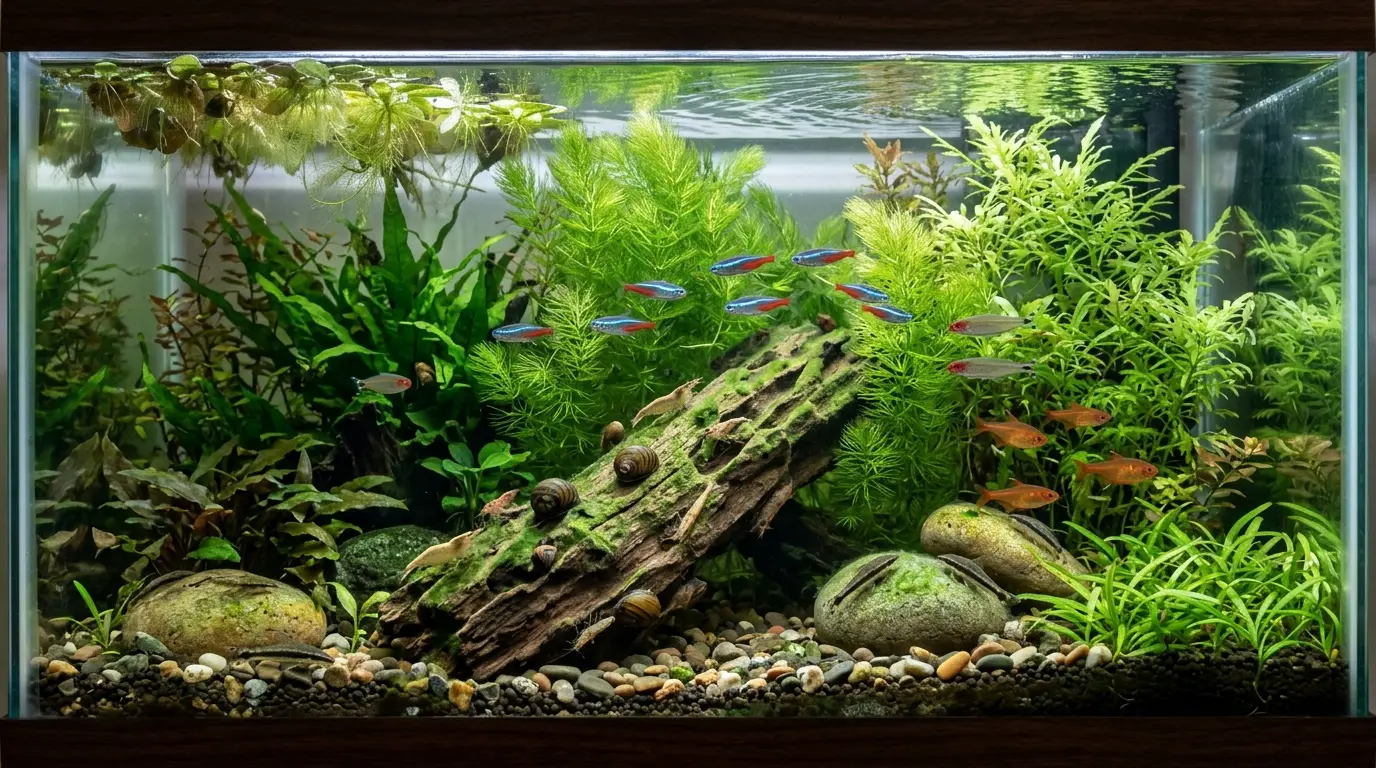
Here are safe, natural ways to remove green algae from aquarium naturally. Use multiple methods together for best results.
- Reduce light
- Cut daily light to 6–8 hours and avoid direct sunlight.
- Use a timer to keep light consistent and steady.
- Do regular water changes
- Change 20–30% weekly to lower nutrients that feed algae.
- Use siphons to clean substrate and remove detritus.
- Add algae-eating animals
- Nerite snails, Amano shrimp, Otocinclus, and some plecos eat green algae.
- Introduce species that match your tank size and plants.
- Manual cleaning
- Gently scrub glass, rocks, and ornaments with an algae pad or soft brush.
- Remove stubborn algae by rubbing with a clean toothbrush or blade for tough spots.
- Increase live plants
- Fast-growing plants outcompete algae for nutrients.
- Use stem plants like hornwort, water wisteria, or floating plants to soak up excess nitrates.
- Improve water flow and filtration
- Better flow stops dead zones where algae thrives.
- Clean filter media and avoid overfeeding to reduce waste.
- Safe spot treatment with dilute hydrogen peroxide
- Use 3% hydrogen peroxide applied with a syringe for algae patches on plants or decor.
- Rinse treated items and watch plants for stress; do one small area at a time.
Combine these tactics to remove green algae from aquarium naturally without toxic chemicals. Each tank is different, so test one change at a time.
Step-by-step cleaning routine to remove green algae from aquarium naturally
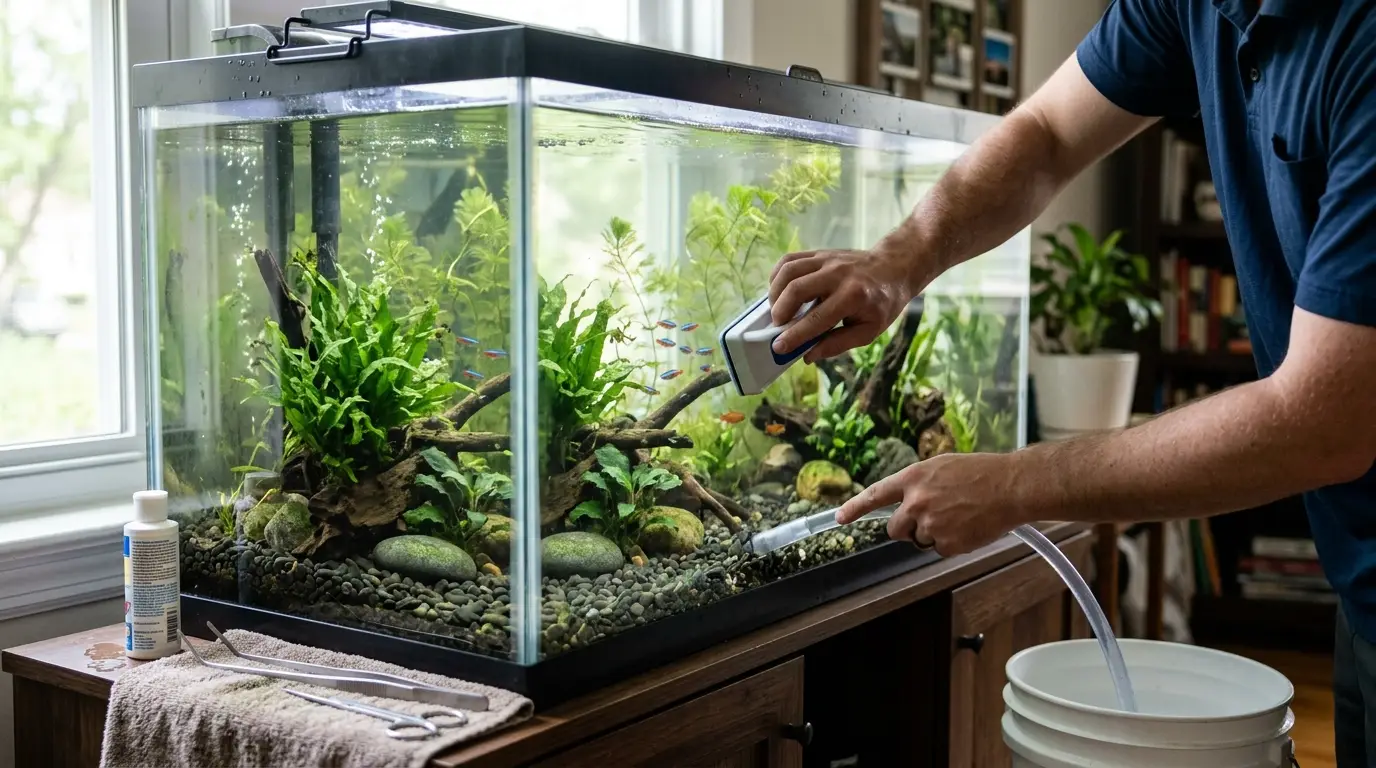
Follow this simple routine when you see algae build-up.
- Turn off lights and remove any direct sunlight sources.
- Remove visible algae by hand and scrub glass and décor.
- Do a 25% water change and vacuum the substrate.
- Check and adjust filtration and flow; clean filter media gently in tank water.
- Add or increase live plants and introduce appropriate algae-eaters.
- Monitor tank for a week and repeat water changes as needed.
Stick to this routine for several weeks for lasting results. Patience is key; rapid fixes often fail.
Best algae-eating species and plants that help
Choose the right species to control algae naturally. These animals and plants are proven helpers.
- Animals that eat green algae
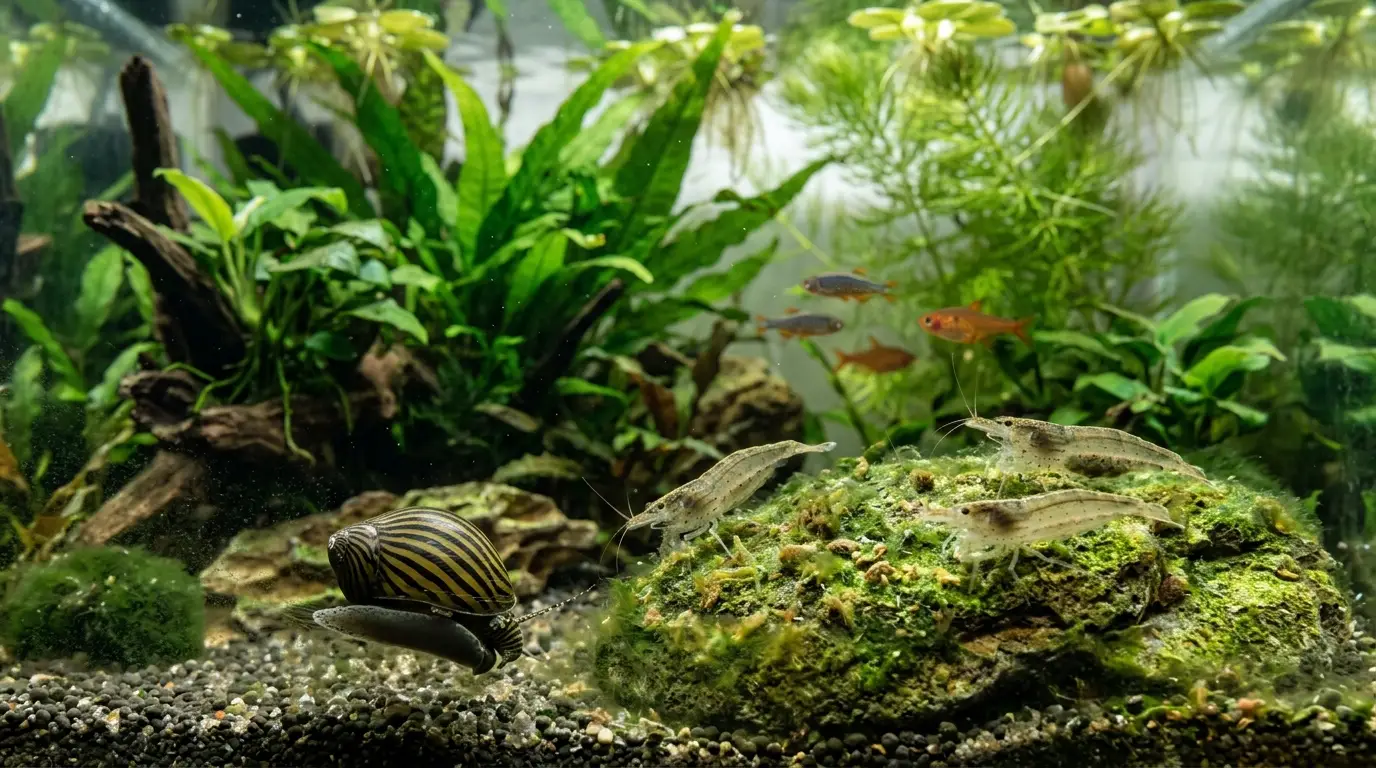
- Nerite snails — eat many algae types and do not reproduce in freshwater.
- Amano shrimp — clear film and fine threads of algae.
- Otocinclus catfish — graze gently on soft algae and plant leaves.
- Siamese algae eater — effective for many algae types in larger tanks.
- Plants that reduce algae
- Hornwort and Elodea — fast growers that use nitrates.
- Java fern and Anubias — hardy plants that tolerate low light and reduce algae niches.
- Floating plants like duckweed — shade the tank and cut light to algae.
Introducing these natural cleaners helps you remove green algae from aquarium naturally and keeps the balance steady.
Water parameters and maintenance tips
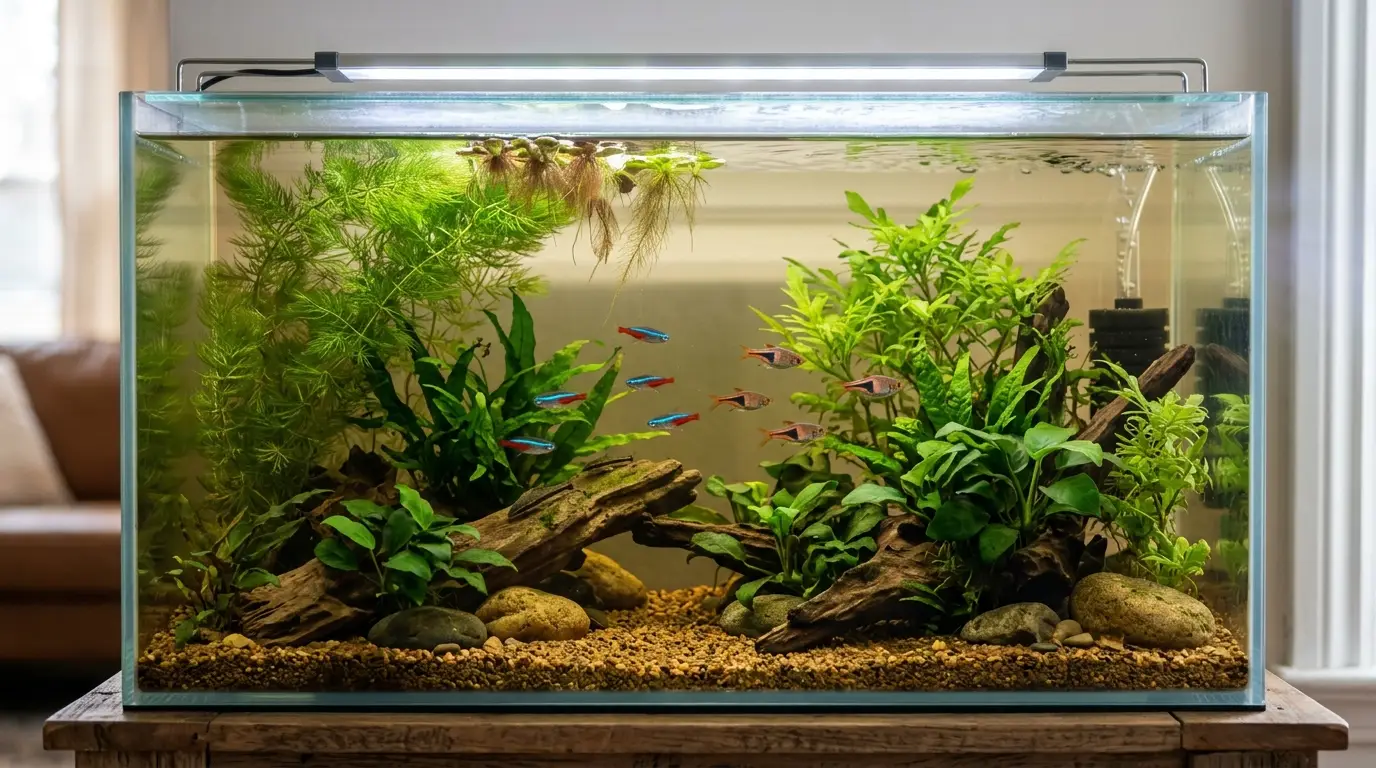
Good water care prevents algae. Keep checks quick and regular.
- Test weekly for nitrate and phosphate levels.
- Keep nitrate under 20 ppm and phosphate low; target near zero for low algae.
- Maintain stable temperature and pH for your species.
- Avoid overfeeding; feed small portions fish eat in two minutes.
- Clean filter pads monthly and replace carbon or chemical media as needed.
These steps cut the food source algae needs and make it easier to remove green algae from aquarium naturally.
Common mistakes and how to avoid them
Many beginners try one quick fix and get frustrated. Learn from common errors.
- Mistake: Turning up the filter too much
- Fix: Balance flow—too strong flow can stress plants and fish.
- Mistake: Over-cleaning plants or beneficial biofilm
- Fix: Clean gently and not all at once to preserve bacteria.
- Mistake: Relying only on algae-eaters
- Fix: Pair grazers with nutrient control and light limits.
- Mistake: Frequent, full cleanings
- Fix: Do partial water changes; full resets harm biological balance.
Avoiding these mistakes helps you remove green algae from aquarium naturally and keeps your tank stable.
Troubleshooting: persistent green water or stubborn spots
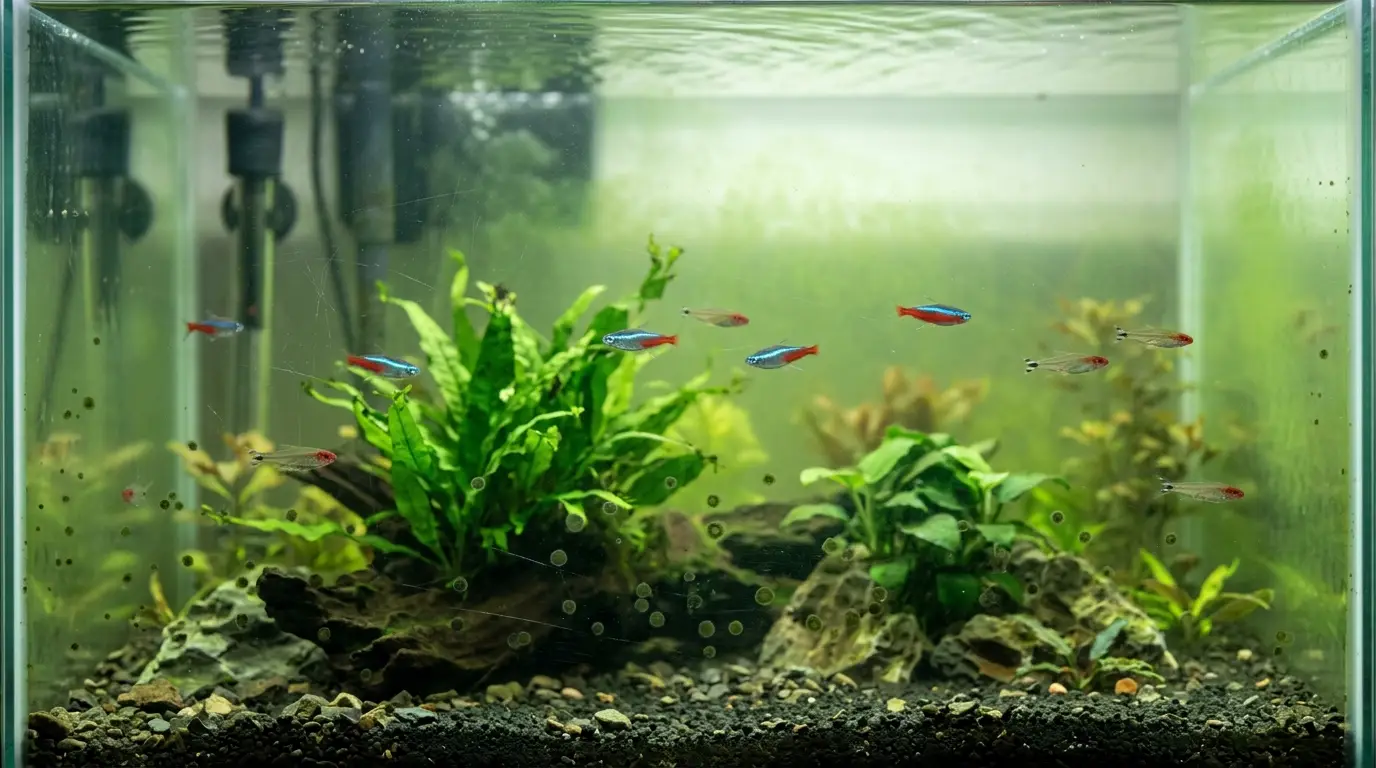
If green water (floating algae) or hard green spots persist, try these fixes.
- For green water
- Use a UV sterilizer or increase water changes and add a fine mechanical filter.
- Reduce light and lower feeding; green water often means too many free-floating algae cells.
- For green spot algae on glass and rock
- Use a magnet algae cleaner and introduce grazers known for scraping.
- Boost CO2 or plant growth so plants outcompete algae.
If problems continue after three weeks, review all factors and make small, steady changes.
Personal experience and lessons learned
I once battled green algae in a 20-gallon planted tank after moving it to a brighter room. I reduced light by two hours, added hornwort and an Amano shrimp, and did weekly 25% water changes. Algae faded in three weeks and never returned. The main lesson: small, consistent changes beat big, sudden fixes.
Another tip from experience: when using hydrogen peroxide, treat very small areas first. I tested on a single leaf and waited a day before wider use. That prevented plant damage.
PAA-style quick questions
How long does it take to remove green algae naturally?
It can take from a few days to several weeks depending on the cause and methods used. Combine light control, water changes, and grazers for faster results.
Can plants alone stop green algae?
Healthy and fast-growing plants can outcompete algae for nutrients, but plants alone may not be enough if light or nutrients are extreme. Pair plants with maintenance steps for best effect.
Is hydrogen peroxide safe for aquarium use?
Dilute hydrogen peroxide can be safe for small spot treatments when used carefully and rinsed off. Test on a small area and avoid overdosing the whole tank.
Frequently Asked Questions of how to remove green algae from aquarium naturally
What is the fastest natural way to remove green algae from aquarium naturally?
The fastest natural approach is to reduce light, do immediate partial water changes, and manually scrub visible algae. Adding algae-eaters speeds up the cleanup.
Can I use vinegar to remove green algae from aquarium naturally?
Vinegar can remove algae on decor outside the tank, but it can harm fish and plants if added directly. Rinse any vinegar-treated items thoroughly before returning them to the tank.
Do algae-eating fish remove all types of green algae?
Algae-eating fish and invertebrates remove many types but not all kinds equally. Some algae, like hair algae, may need additional control methods.
How often should I do water changes to prevent green algae?
Do at least weekly 20–30% water changes to keep nutrients low and control algae growth. Increase frequency if algae recurs quickly.
Will stopping the light remove green algae from aquarium naturally?
Reducing light helps but usually does not remove all algae by itself. Combine light reduction with nutrient control, cleaning, and algae-eaters for full control.
Conclusion
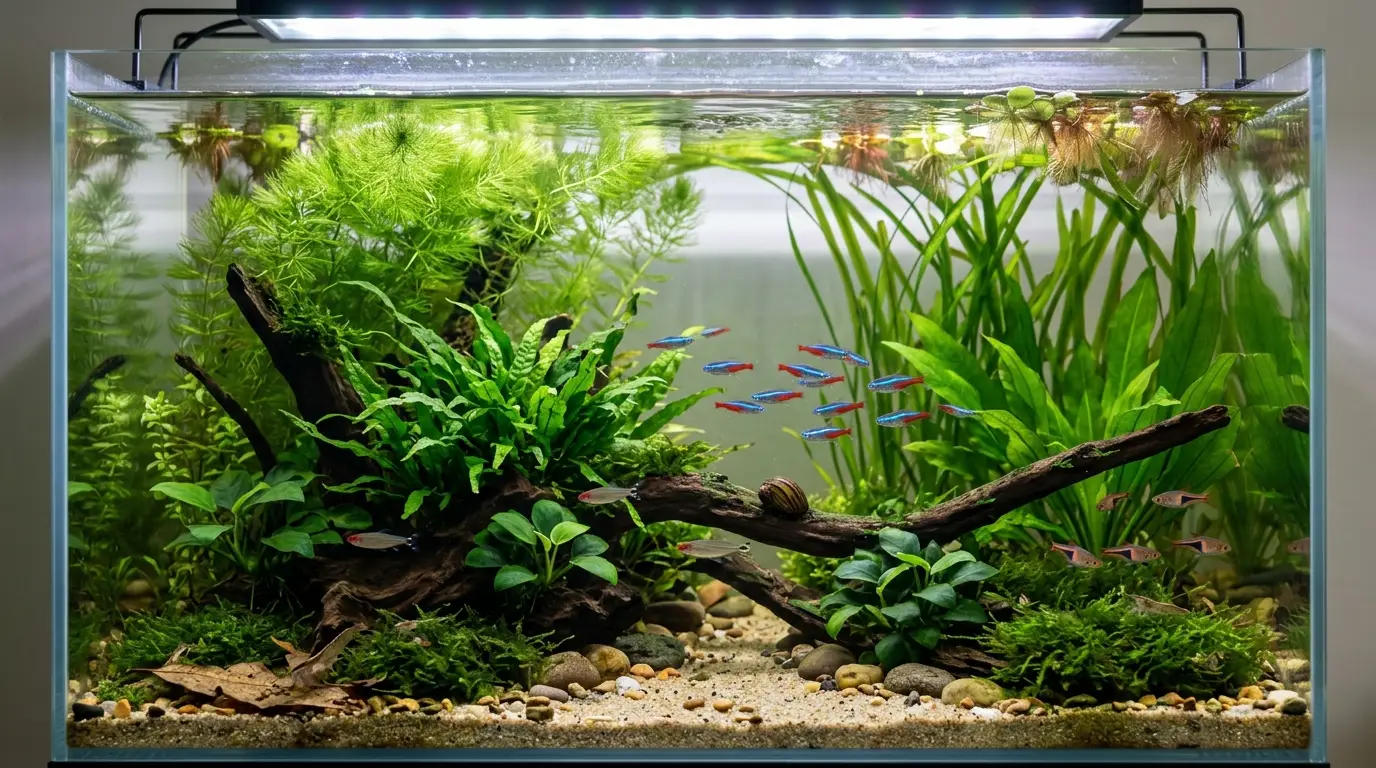
Natural control of green algae is about balance: limit light, cut nutrients, add live plants and grazers, and follow a steady cleaning routine. Small, consistent actions work far better than harsh chemicals or one-time fixes. Try the steps here, track results, and adjust slowly until your aquarium stays clear. If this guide helped, subscribe for more aquarium tips or leave a comment with your tank size and algae problem so I can offer tailored advice.