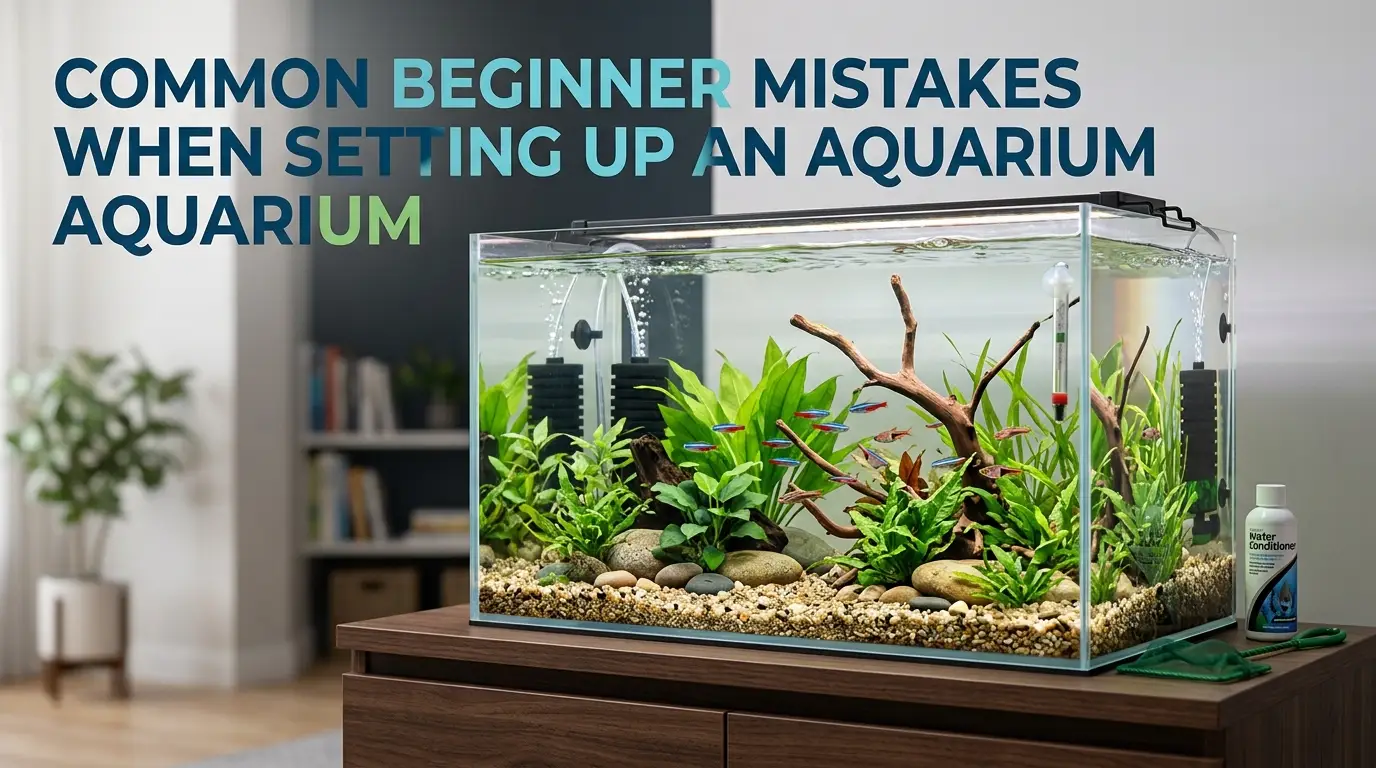
Beginners often rush, overstock, skip cycling, and misuse gear, stressing fish.
If you want a calm, clear tank, avoid the common beginner mistakes when setting up an aquarium. I’ve helped hundreds of new aquarists build healthy tanks from day one. This friendly guide breaks down common beginner mistakes when setting up an aquarium, shows you what actually works, and gives simple steps you can follow today. Read on to save time, money, and fish.
Start Smart: Planning Your First Tank
A good plan prevents most problems. The biggest common beginner mistakes when setting up an aquarium start before you even add water. New keepers often pick a tiny tank, place it in the wrong spot, and buy fish first.
Start with a tank that holds at least 20 gallons. Small tanks swing in pH and temperature fast. A stable tank is kind to fish and to you.
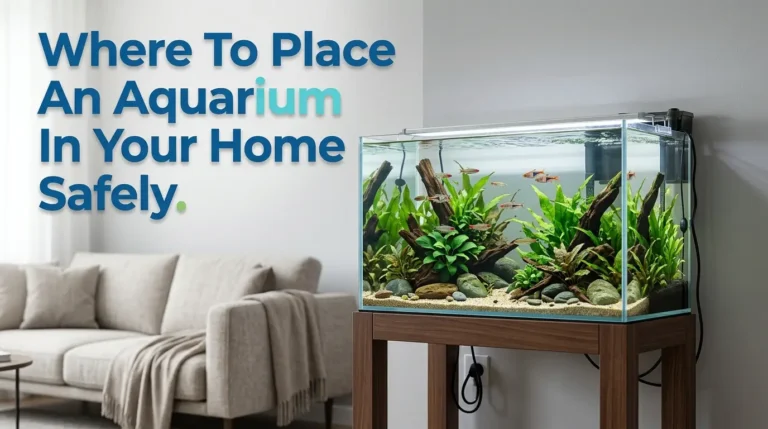
Pick a quiet, stable spot. Keep it away from direct sun, air vents, and busy doors. An easy spot for water changes helps a lot.
Simple plan to start right:
- Choose the largest tank you can maintain.
- Use a sturdy, level stand.
- Map your weekly care time and budget.
- Match fish to your water, not the other way around.
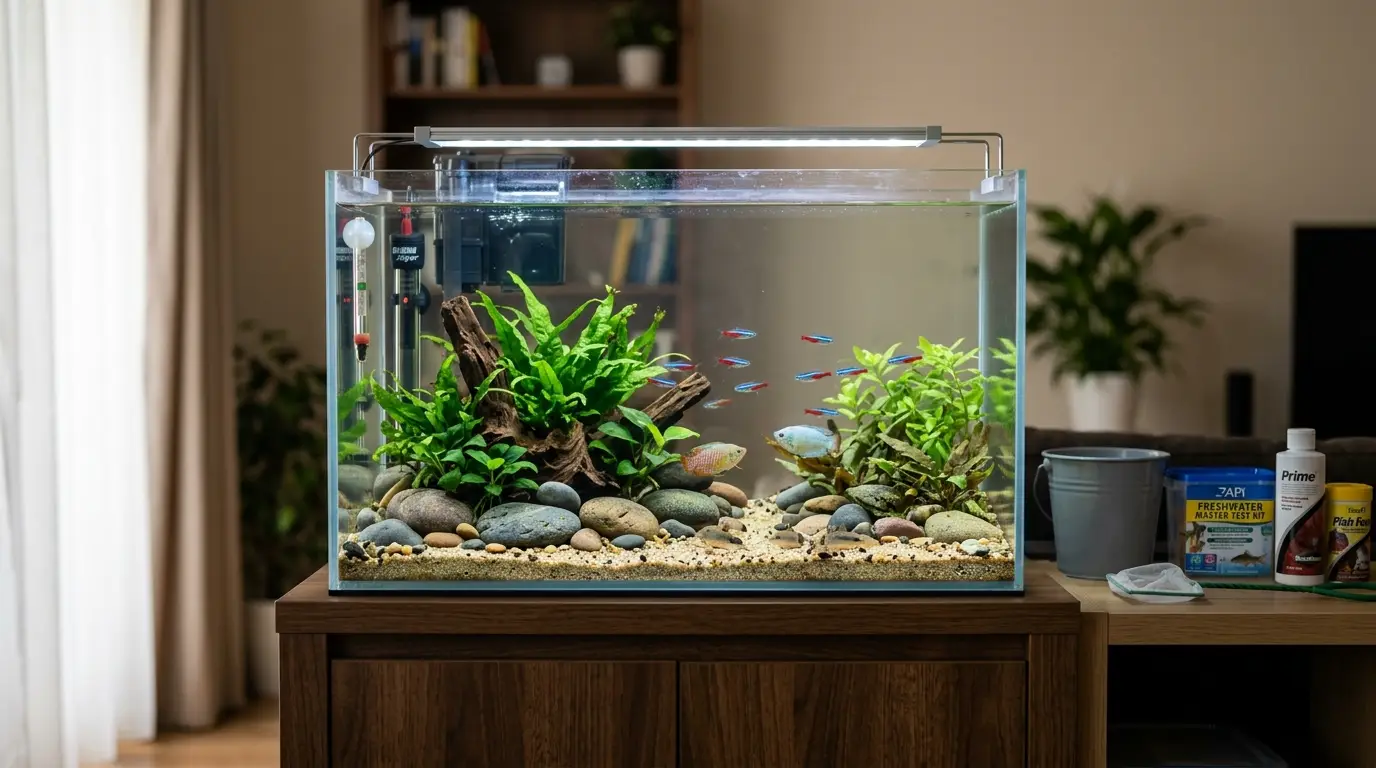
I once set a nano tank on a windowsill. Algae bloomed in a week. Moving it fixed the issue. Skip that headache.
These steps tackle common beginner mistakes when setting up an aquarium and build a strong base.
The Nitrogen Cycle: The Step Most Beginners Skip
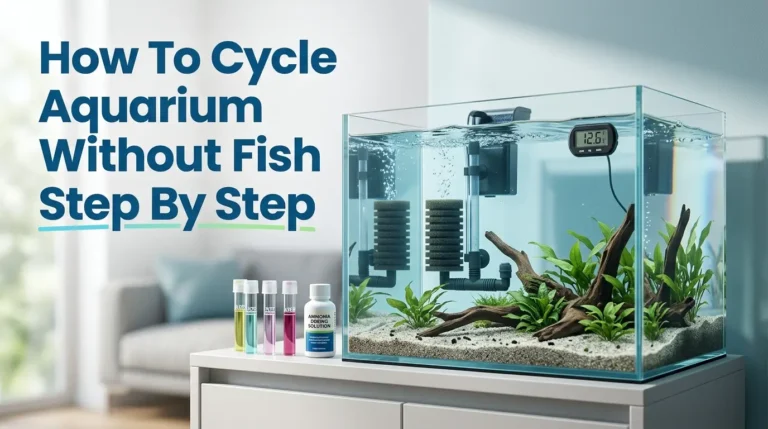
Skipping the cycle harms fish. It is one of the most common beginner mistakes when setting up an aquarium. Your filter grows bacteria that turn toxic ammonia into nitrite, then into nitrate. This is the nitrogen cycle.
What to do:
- Add a bottled bacteria starter to new media.
- Feed a bacteria source. Use fish food or pure ammonia.
- Test daily for ammonia, nitrite, and nitrate.
- Wait until ammonia and nitrite read zero for a full week.
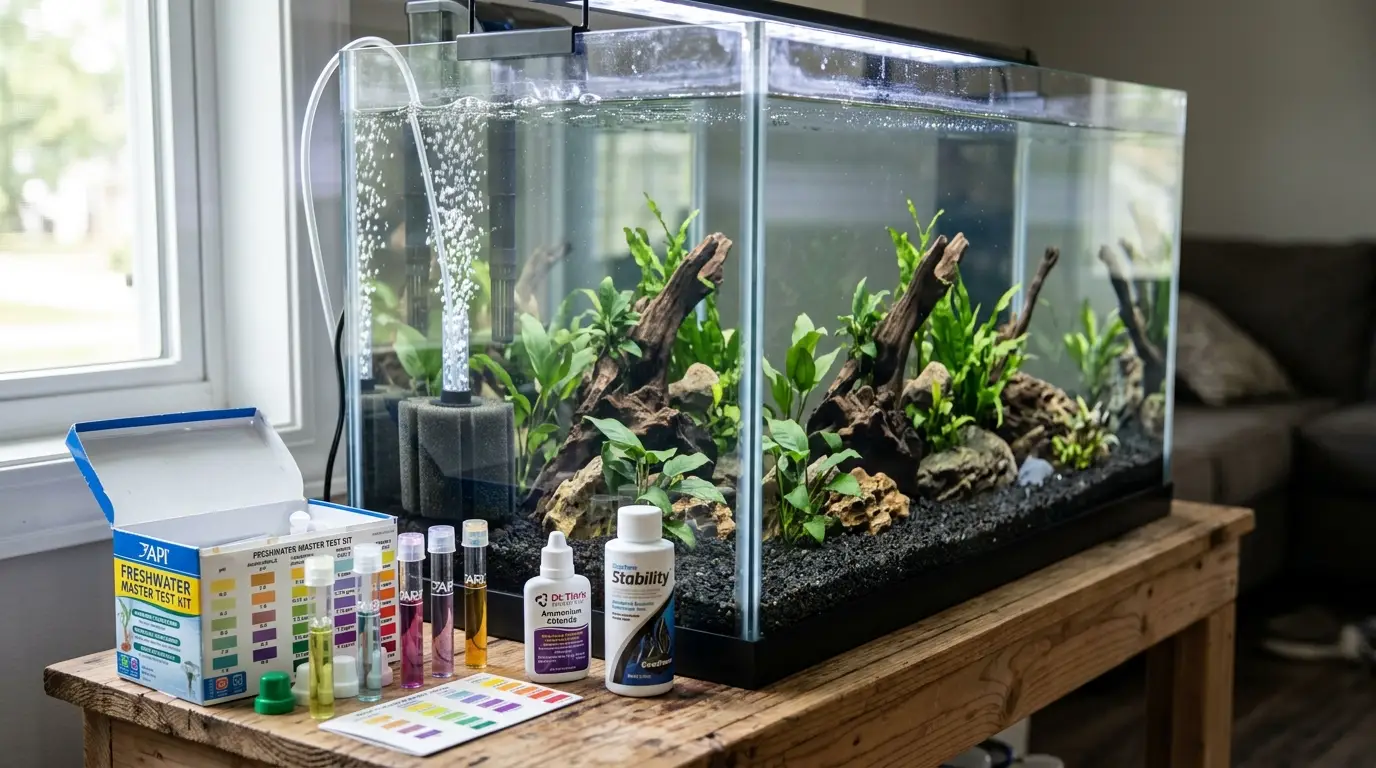
Most tanks cycle in 3 to 6 weeks. Speed varies by temperature, pH, and surface area. Warmth and oxygen help. Do not add a full fish load during this time.
Safe numbers to aim for:
- Ammonia: 0 ppm
- Nitrite: 0 ppm
- Nitrate: under 20 to 40 ppm
Industry guidelines and lab data back this process. It is biology, not a guess. Follow it and you avoid common beginner mistakes when setting up an aquarium.
Stocking Wisely: Bioload, Space, and Temperament
Overstocking is a classic trap. So is mixing fish that do not get along. Both are common beginner mistakes when setting up an aquarium.
Smart stocking tips:
- Research adult size, not store size.
- Add fish in small groups over weeks.
- Match temperament. Do not pair fin-nippers with long-finned fish.
- Think bioload. A big messy fish equals many small fish.
I once added a school of tiger barbs to a tank with a betta. The barbs nipped the betta nonstop. I had to rehome the barbs fast. Lesson learned.
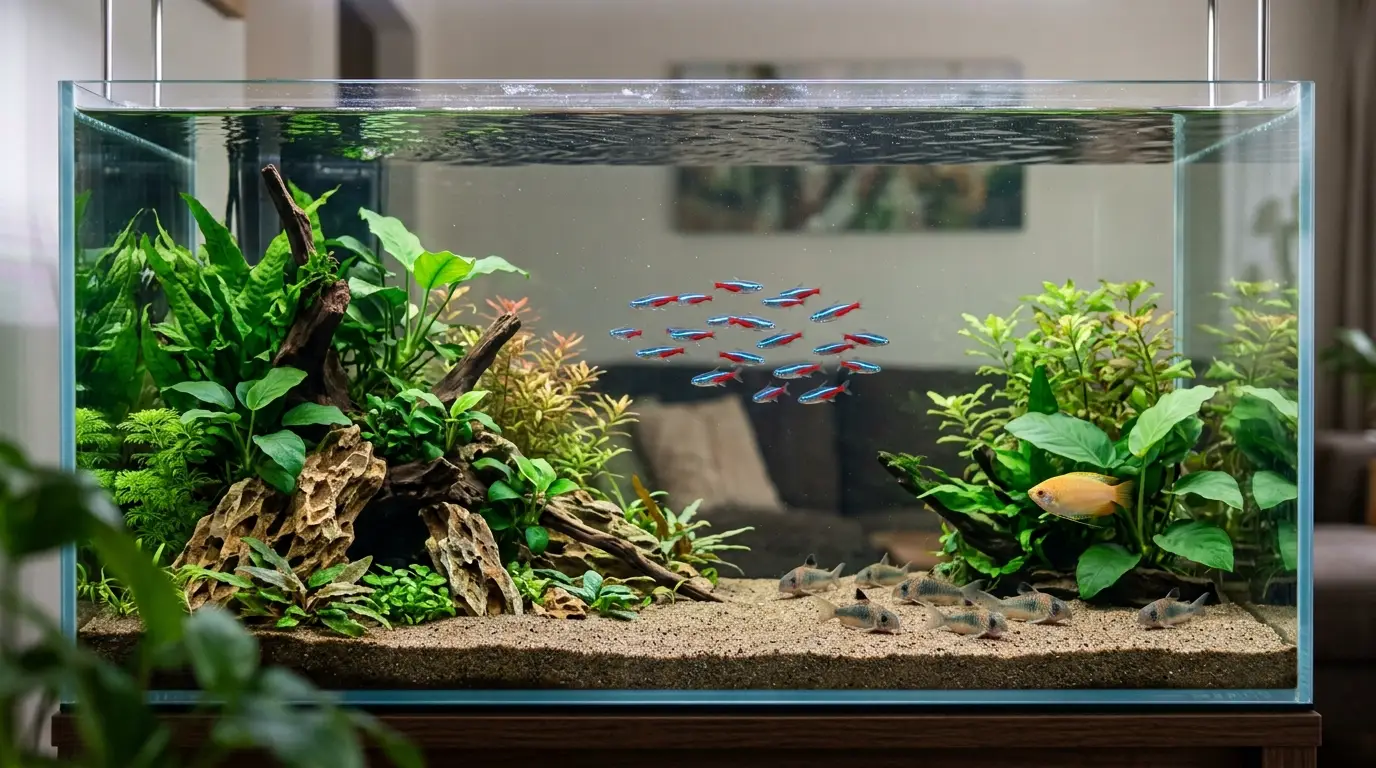
Better rules than the old “inch per gallon” myth:
- Base stock on adult size, swim space, and filter capacity.
- Provide hiding spots and line-of-sight breaks.
- Plan for growth and breeding.
These steps help prevent common beginner mistakes when setting up an aquarium and keep the peace.
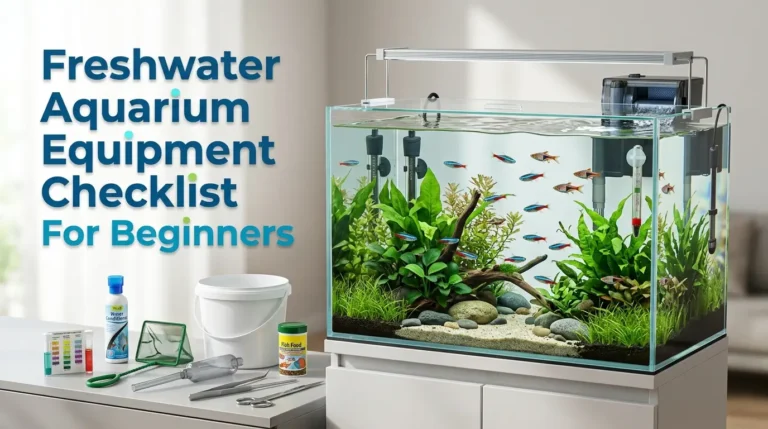
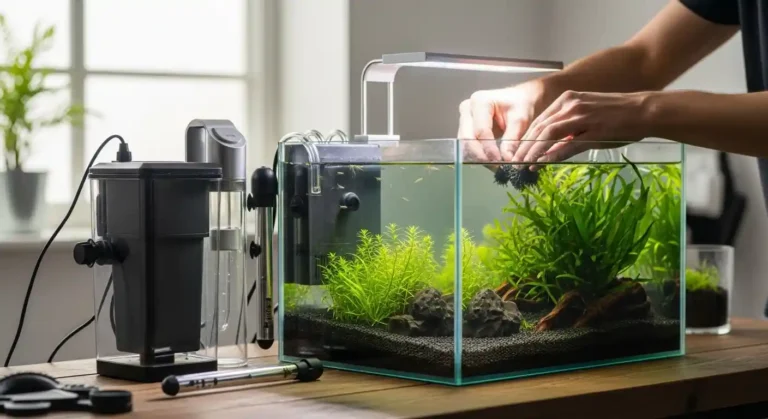
Equipment Pitfalls: Filters, Heaters, and Lights
The right gear makes life easy. The wrong gear causes stress. Mismatched equipment is one of the common beginner mistakes when setting up an aquarium.
Filter tips:
- Aim for 5 to 10 times tank volume per hour.
- Use media in this order: mechanical, biological, then chemical if needed.
- Rinse media in tank water, not tap water.
Heater tips:
- Use 3 to 5 watts per gallon, depending on room temp.
- Place near flow for even heat.
- Use a thermometer and check daily.
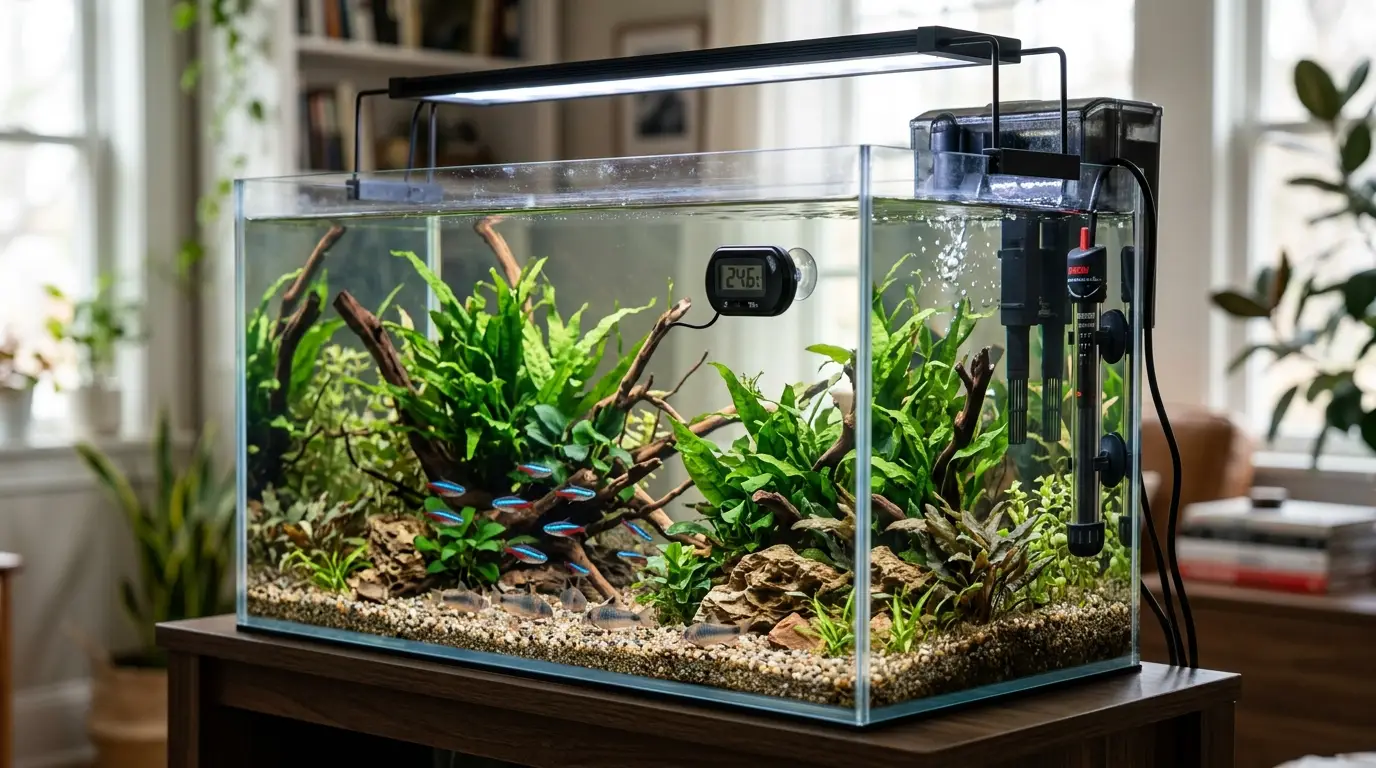
Light tips:
- 6 to 8 hours a day for new tanks.
- Use a timer to prevent algae.
- Choose spectrum suited to fish and plants.
A canister filter with a spray bar fixed my dead spots in a 40-gallon tank. Flow balance stopped debris buildup. Good gear choices reduce common beginner mistakes when setting up an aquarium.
Water Quality: Testing, Changes, and Conditioners
Clear water is not always clean water. Many new keepers skip tests and changes. That is one of the most common beginner mistakes when setting up an aquarium.
Do this every week:
- Test pH, ammonia, nitrite, nitrate.
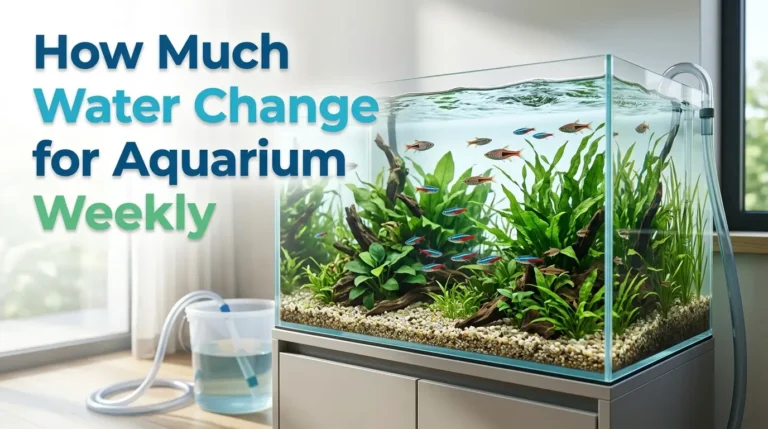
- Change 25 to 40 percent of the water.
- Dose a dechlorinator for the full tank volume.
- Vacuum the substrate in sections.
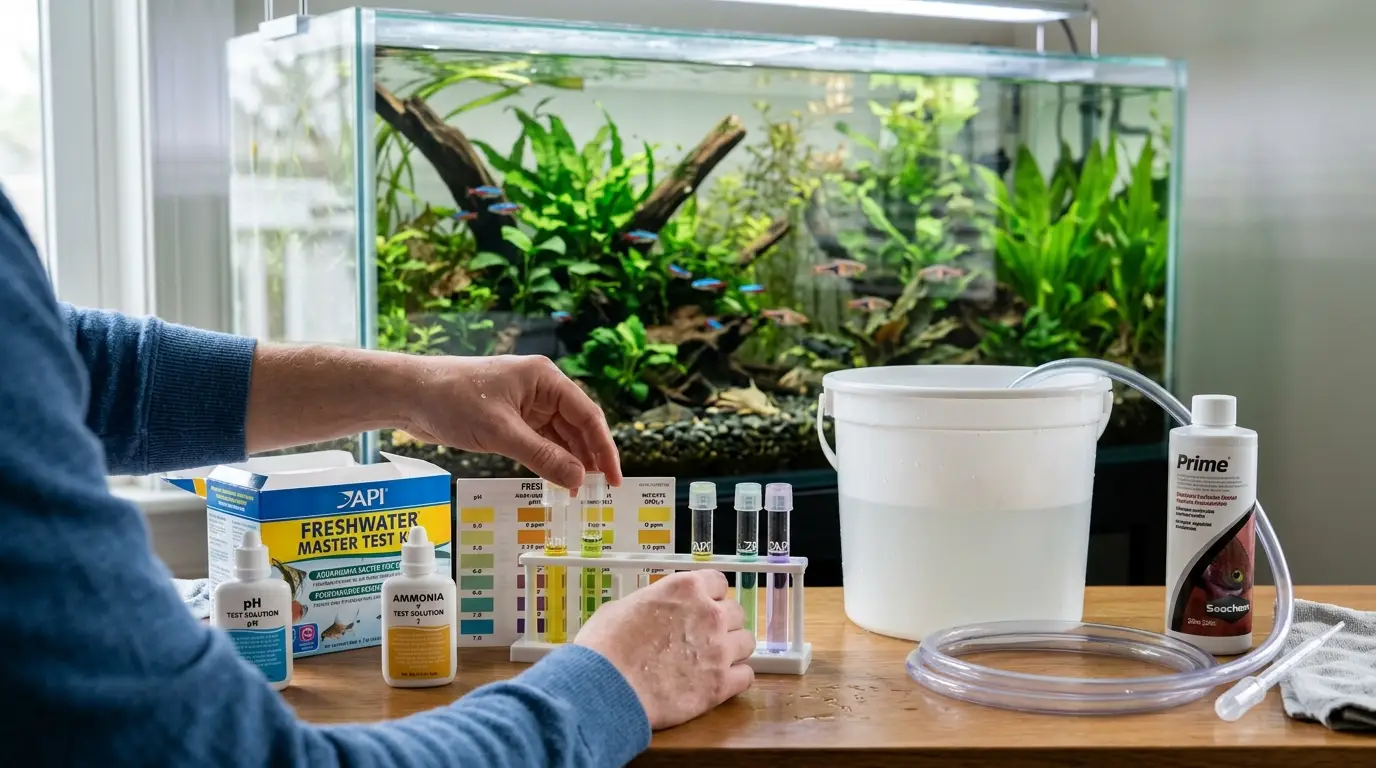
Know your basics:
- pH: keep stable within your fish’s range.
- KH: buffers pH. Low KH can cause pH crash.
- GH: guides fish health and breeding.
Use tap water reports and a reliable test kit. Stable beats perfect. Follow these steps to avoid common beginner mistakes when setting up an aquarium.
Feeding and Routine Care
Overfeeding is a silent killer. It fuels ammonia and algae. Skipping care is another of the common beginner mistakes when setting up an aquarium.
Feed rules:
- Offer only what fish eat in 30 to 60 seconds.
- Vary foods: quality pellets, frozen, live, and veggies.
- Fast one day per week for many species.
Simple weekly routine:
- Check fish behavior and appetite.
- Wipe glass. Clean prefilters.
- Test water. Log your results.
I cut feeding in half in a client’s tank. Algae cleared in two weeks. Less food, better health. These habits prevent common beginner mistakes when setting up an aquarium.
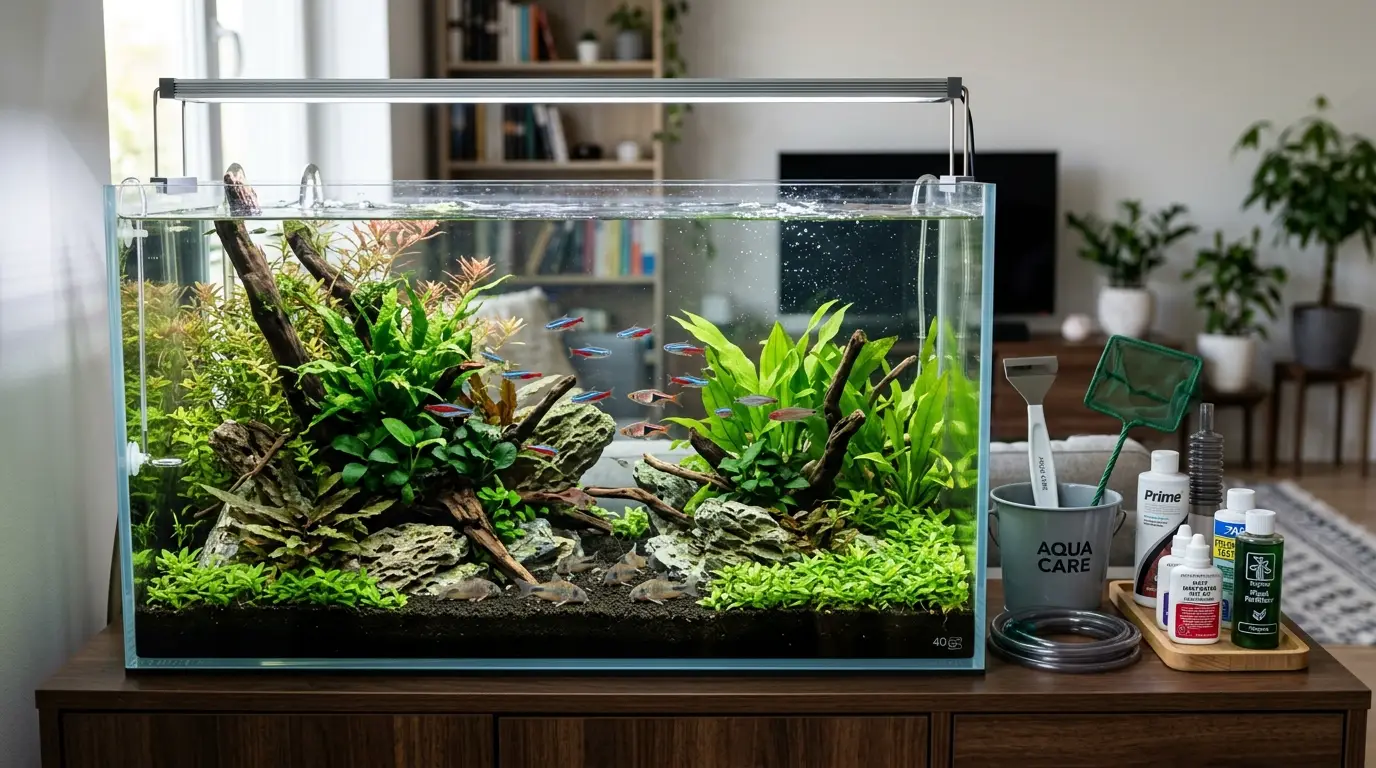
Aquascape and Substrate Choices
Decor is not just looks. It shapes flow, hides waste, and sets territory. Poor layout is one of the common beginner mistakes when setting up an aquarium.
Good layout tips:
- Leave open swim lanes at the front.
- Build hardscape from big to small pieces.
- Create caves and tall plants to break sight lines.
Substrate tips:
- Sand is great for bottom fish but needs gentle vacuuming.
- Fine gravel is easy for most tanks.
- Plant soils feed roots but may change pH and KH.
Anchor wood and rocks before filling. Soak driftwood to reduce tannins. Test rocks for hardness if you keep soft-water fish. A smart scape helps avoid common beginner mistakes when setting up an aquarium.
Quarantine, Acclimation, and Disease Prevention
New fish can bring disease. Skipping quarantine is one of the common beginner mistakes when setting up an aquarium.
Do this when adding fish:
- Use a 10 to 20-gallon quarantine tank with a sponge filter.
- Observe for 2 to 4 weeks.
- Acclimate slowly. Float bags to match temp, then drip to match water.
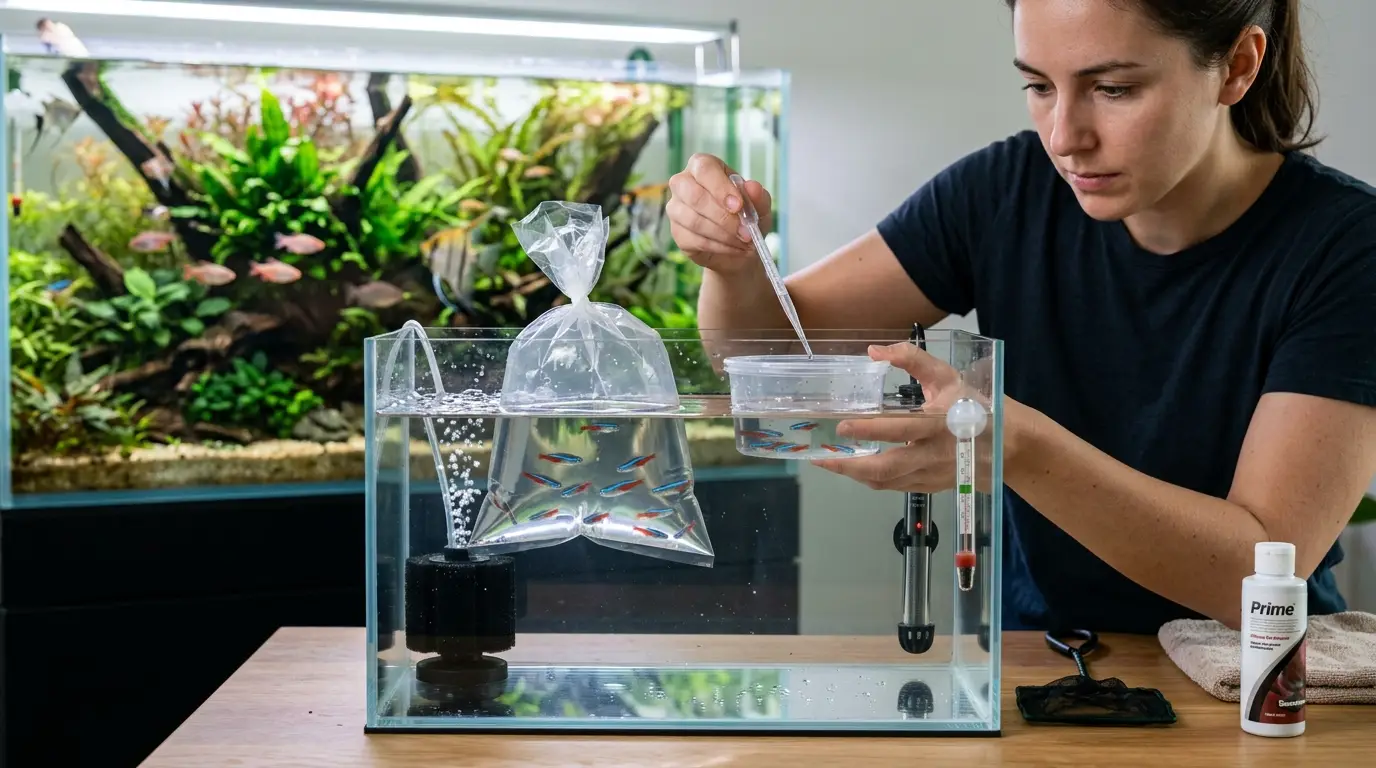
Watch for signs:
- Clamped fins, gasping, white spots, stringy feces.
- Treat in quarantine, not in the display tank.
I once added unquarantined neons to a healthy tank. Ich spread to all fish. It took weeks to fix. A simple quarantine would have saved time and stress. Avoid this by planning ahead. This reduces common beginner mistakes when setting up an aquarium.
Budget and Time Mistakes to Avoid
Rushing to buy everything at once is risky. Underestimating time is common too. Both are common beginner mistakes when setting up an aquarium.
Smart budget tips:
- Spend more on the tank, stand, and filter.
- Buy a test kit before fancy decor.
- Keep spare parts: heater, air pump, media.
Time tips:
- Plan 15 to 30 minutes a week for a small tank.
- Larger or planted tanks may need more.
- Automate lights and top-offs if possible.
Track costs and time for a month. Adjust your plan. This simple act helps you avoid common beginner mistakes when setting up an aquarium and keeps the hobby fun.
Frequently Asked Questions of Common Beginner Mistakes When Setting Up an Aquarium
How long should I cycle a new aquarium?
Most tanks take 3 to 6 weeks to cycle. Test until ammonia and nitrite read zero for a full week before adding more fish.
Can I add all my fish at once after cycling?
No. Add fish in small groups over weeks. This lets your bacteria grow with the new bioload.
How often should I change water?
Do a 25 to 40 percent water change every week. Test nitrate to fine-tune your schedule.
What is the best beginner tank size?
A 20 to 29-gallon tank is a sweet spot. It stays more stable than tiny tanks and is easy to maintain.
Do I need a quarantine tank?
Yes, if you can manage it. A simple spare tank prevents disease from entering your main tank.
Is tap water safe for aquariums?
Yes, with a dechlorinator. Always treat new water and try to match temperature and pH.
How much should I feed my fish?
Feed what they eat in 30 to 60 seconds, once or twice a day. Remove leftovers to prevent waste buildup.
Why is my new tank cloudy?
It is often a bacterial bloom. Do not panic. Keep filters running, avoid overfeeding, and the water clears as the cycle stabilizes.
Can I keep different species together?
Yes, if they share water needs and temperament. Research adult size and behavior before mixing.
Do live plants help beginners?
Yes. Plants absorb nitrate, provide cover, and improve stability. Start with hardy plants like Java fern or Anubias.
Conclusion
A thriving tank is not luck. It is a plan. Avoid the big traps: rushing, skipping the cycle, overstocking, poor gear choices, and weak care habits. These are the most common beginner mistakes when setting up an aquarium, and each has a simple fix.
Start slow. Test often. Change water weekly. Feed less. Quarantine new fish. Do these things, and you will enjoy clear water and calm, happy fish.
Ready to build your best tank? Put these steps to work this week, subscribe for more guides, and share your setup questions in the comments.