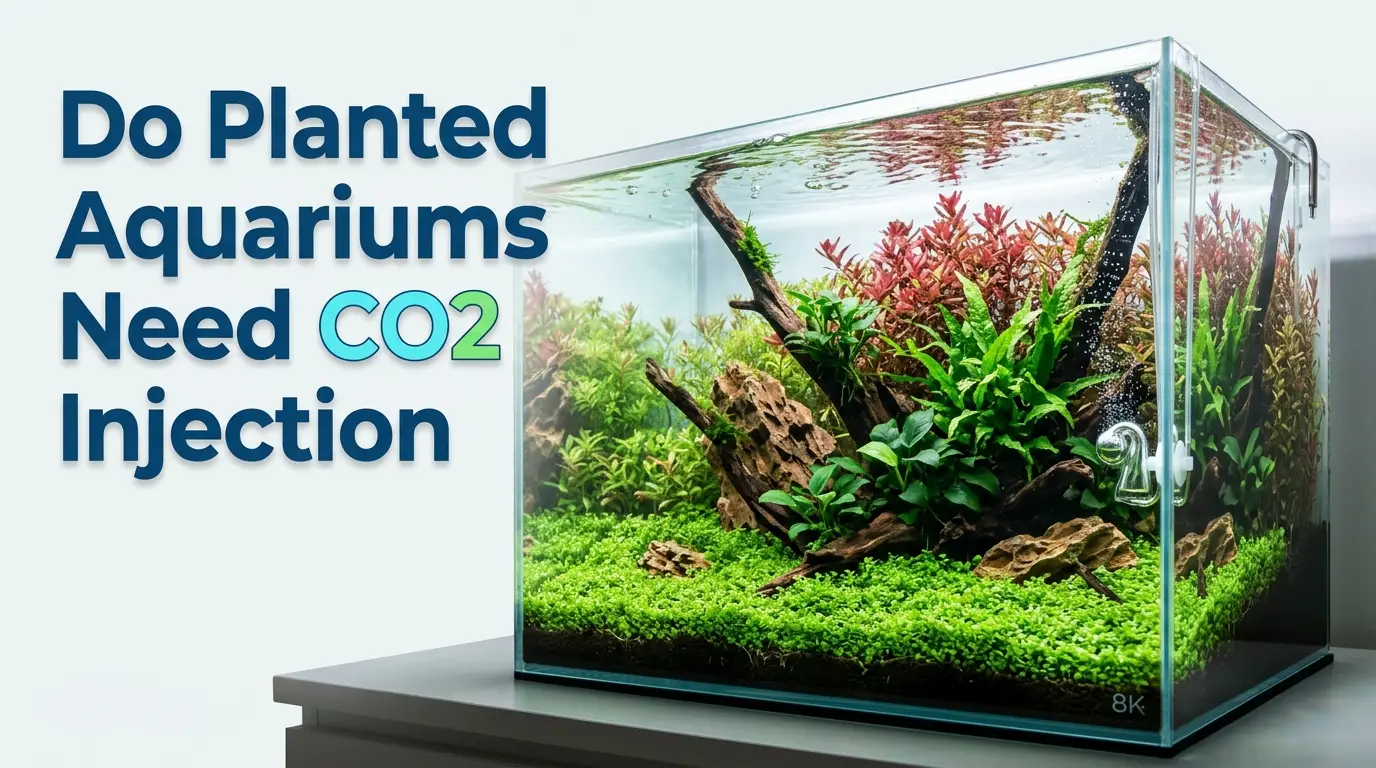
Not always; low tech tanks work, but CO2 supercharges plant growth and color.
If you have asked yourself, Do Planted Aquariums Need CO2 Injection, you are not alone. I have set up dozens of tanks for clients and for fun. Some ran lush without CO2. Others needed it to shine. In this guide, I will break down when CO2 helps, when it is optional, and how to use it the right way. You will get clear steps, real examples, and pro tips you can trust.
What CO2 Does In A Planted Tank
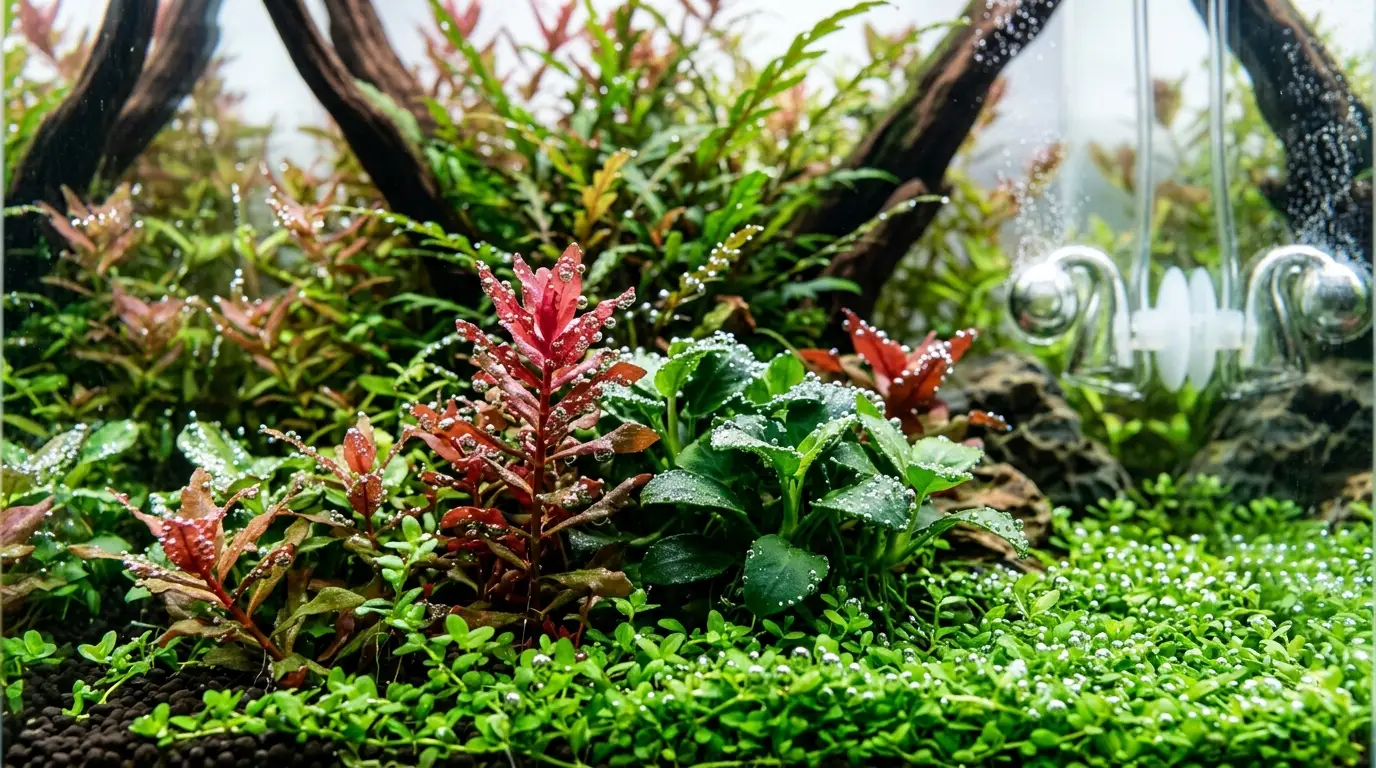
Plants build themselves from carbon. In water, usable carbon is scarce, and that limits growth. CO2 injection solves this by feeding plants the carbon they crave for photosynthesis. When levels are right, leaves pearl, colors pop, and growth is steady.
Do Planted Aquariums Need CO2 Injection in every case? No. But carbon is often the first limit in bright, fast tanks. Studies in aquatic plant physiology show that when light is high, more CO2 speeds up photosynthesis and reduces stress.
Key takeaways
- CO2 is plant food. It is about 40 to 45 percent of plant dry mass.
- Tap water holds little CO2, and surface ripple lets it escape.
- A stable 20 to 30 ppm CO2 supports fast growth in many aquascapes.
When You Do Not Need CO2 Injection
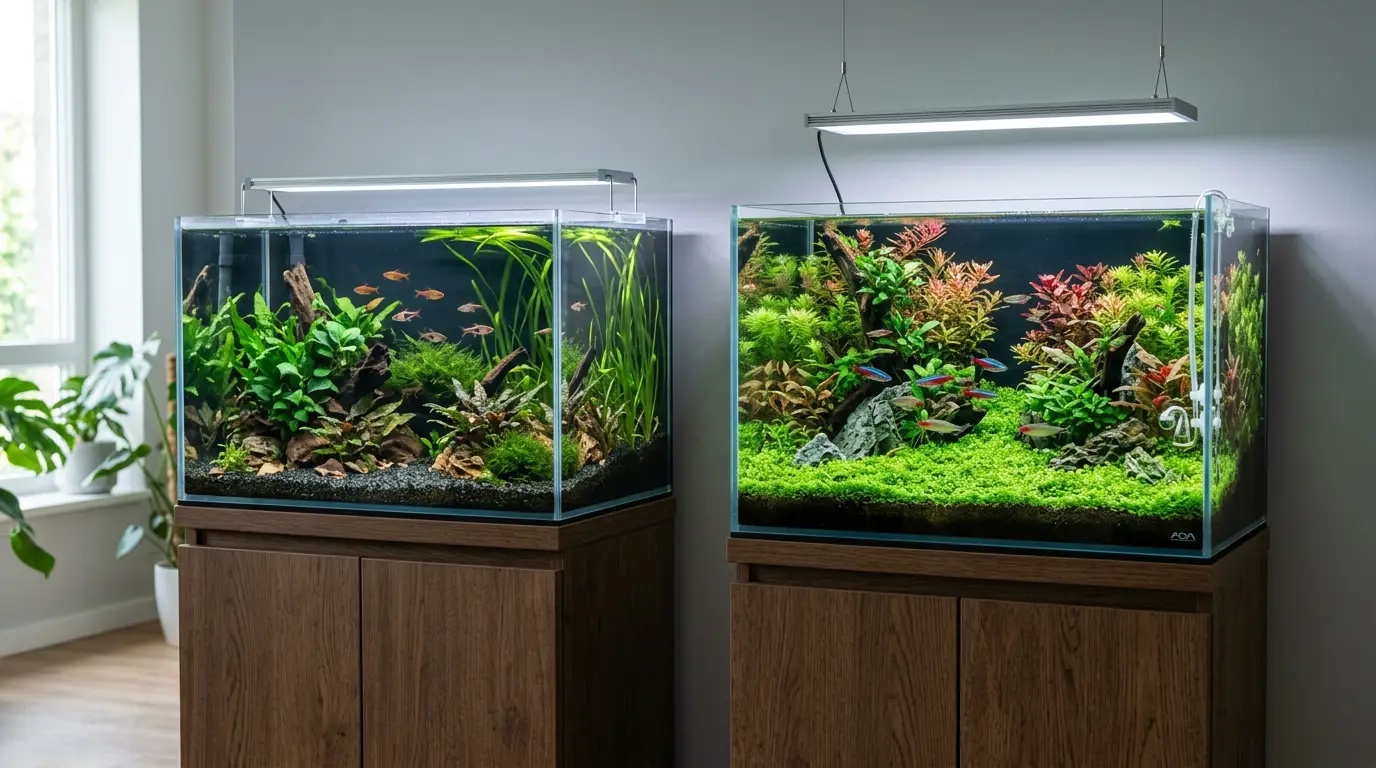
Do Planted Aquariums Need CO2 Injection if you keep a calm, easy tank? Often no. A low light, slow growth setup can thrive without gas.
Setups that work well without CO2
- Light at a low to medium level, with a 6 to 7 hour photoperiod.
- Hardy plants like Anubias, Java fern, crypts, moss, and vallisneria.
- Moderate fish load that adds natural CO2 through breathing.
- Simple fertilizing once or twice a week and weekly water changes.
Real example from my room
- A 15 gallon with a budget LED at 30 percent.
- Plants were Anubias and crypts on wood and sand.
- No CO2. I dosed all in one fertilizer twice a week.
- Results were steady growth, zero algae, and happy shrimp.
When You Do Need CO2 Injection
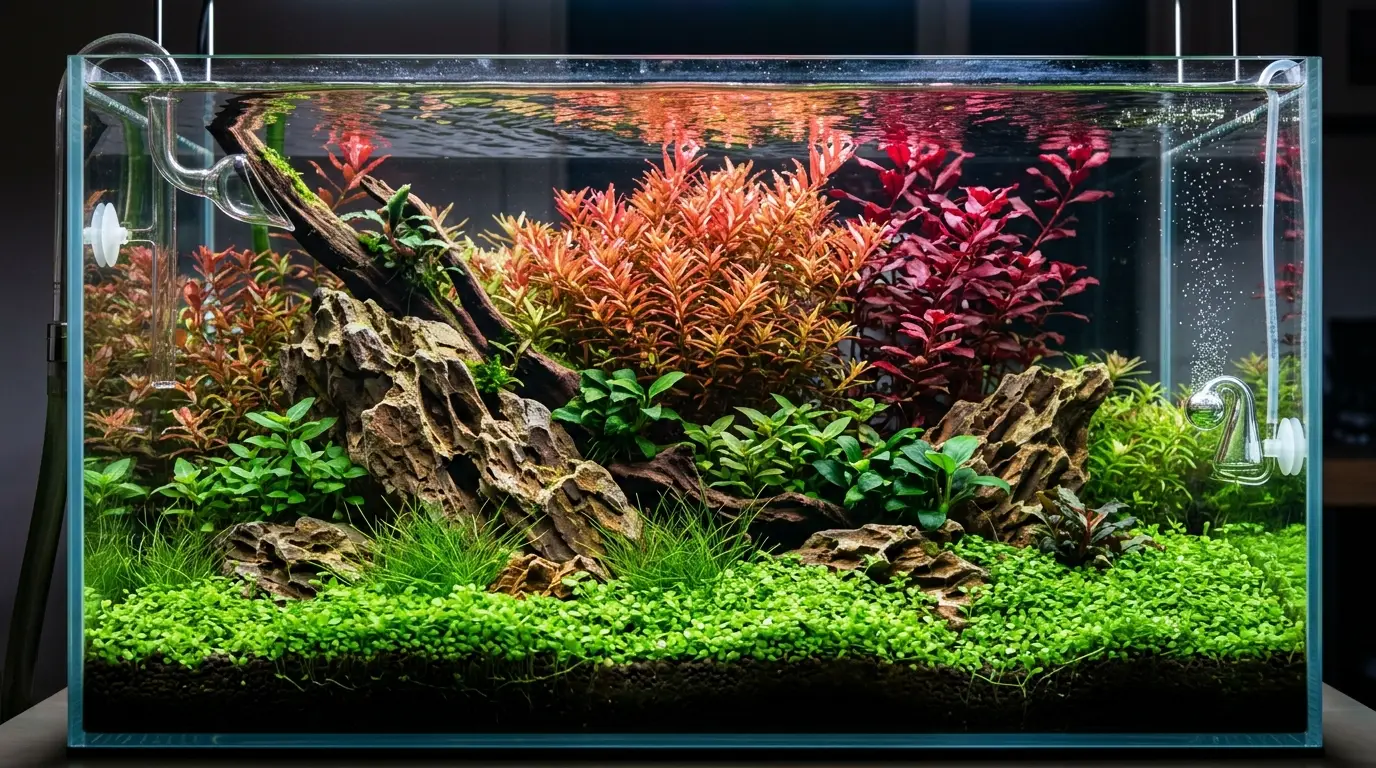
Do Planted Aquariums Need CO2 Injection for high energy tanks? Most of the time, yes. Bright light drives demand for carbon. Without CO2, plants stall. Algae then takes the chance to spread.
Signs your tank wants CO2
- You use strong light. PAR over 50 at the substrate is a clue.
- You want carpets like Monte Carlo, dwarf hairgrass, or glossostigma.
- You grow red stems that fade or stunt without extra carbon.
- You see algae blooms after a light increase.
- New leaves are small, curled, or full of pinholes.
My client’s 75 gallon had this issue. Bright light, dense stems, no CO2. Growth stalled and black beard algae spread. We added CO2 at 25 ppm and trimmed. Within two weeks, new growth was clean and bold.
CO2 Delivery Options Compared
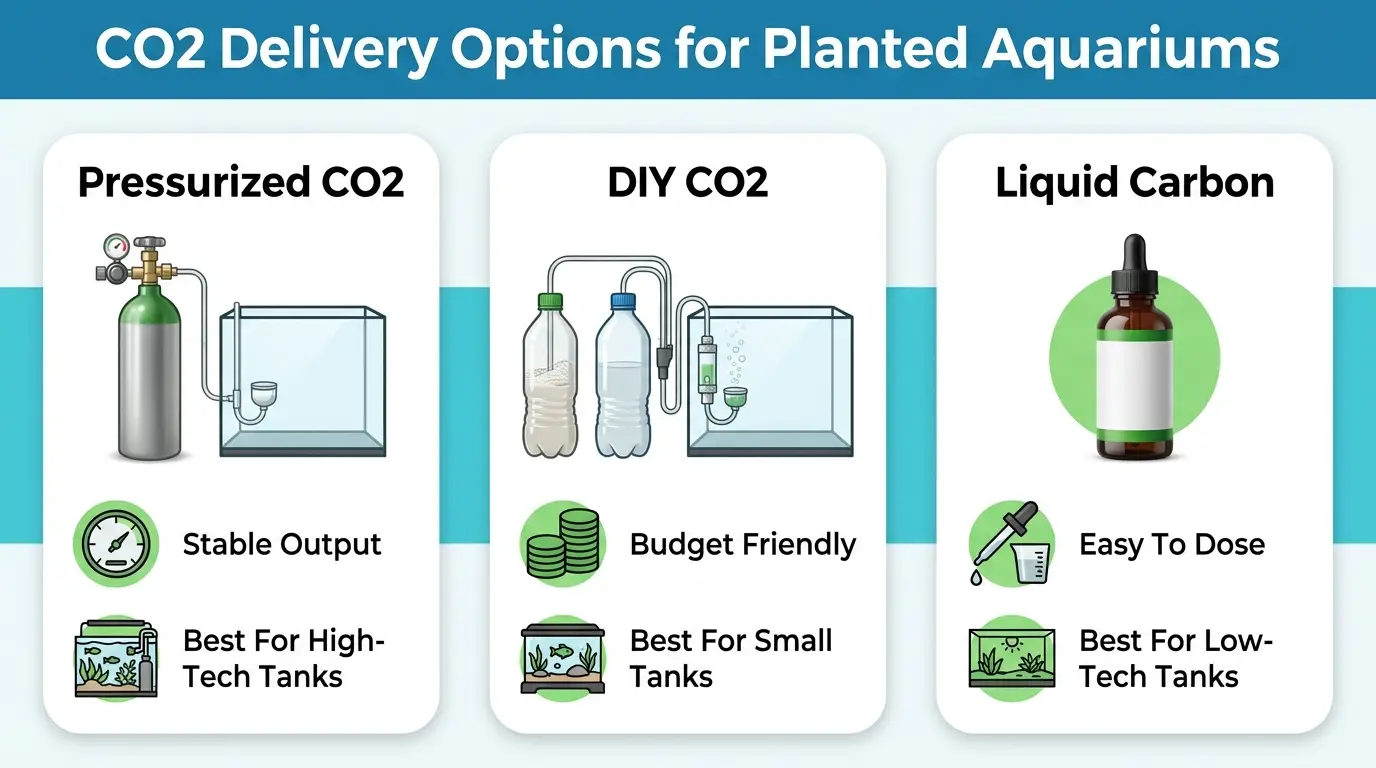
Do Planted Aquariums Need CO2 Injection from pressurized gear or simple hacks? Pick the method that fits your goals, budget, and time.
Pressurized CO2 systems
- Pros: Stable, adjustable, great for any tank size and serious scapes.
- Cons: Higher upfront cost, needs safe handling and refills.
- Best for: Medium to large tanks, carpets, contest grade layouts.
DIY yeast or citric acid
- Pros: Cheap, fun to learn, okay for small tanks.
- Cons: Unstable output, frequent resets, risk of mess.
- Best for: Small tanks under 10 gallons, test runs, tight budgets.
Liquid carbon products
- Pros: Easy dose, no gas gear, good as algae spot treatment.
- Cons: Not actual CO2, limited carbon source, can hurt some plants like vallisneria and moss if overdosed.
- Best for: Low tech tanks and local algae control.
Essential safety gear for gas systems
- Dual stage regulator with a solenoid, bubble counter, check valve.
- Quality diffuser or reactor, CO2 safe tubing, and a drop checker.
Balancing Light, Nutrients, and CO2
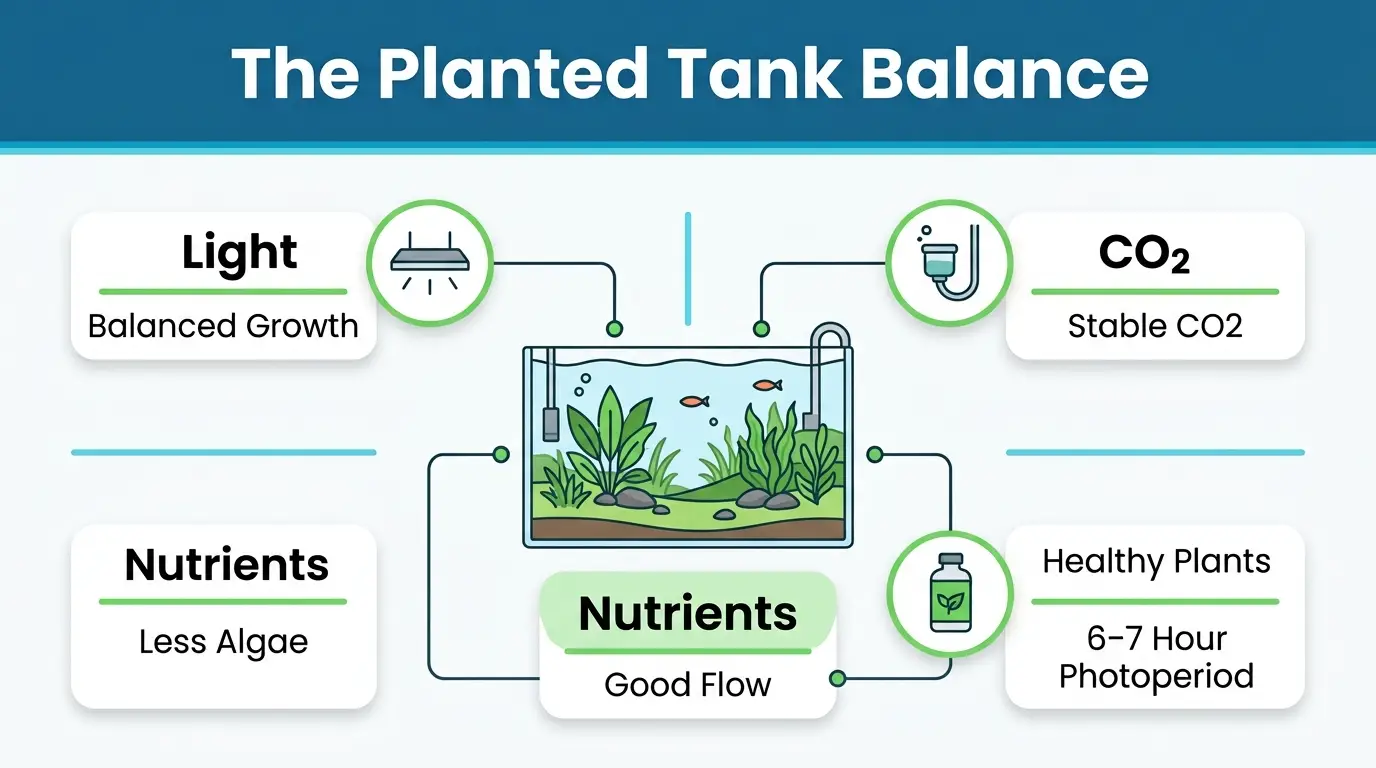
Do Planted Aquariums Need CO2 Injection if you already feed and light well? Think of a three leg stool. Light, nutrients, and CO2 must match. If one is off, the stool wobbles and algae slips in.
Simple rules that work
- Start with light. Keep a short 6 to 7 hour photoperiod at first.
- Add CO2 1 to 2 hours before lights on. Turn it off at lights out.
- Aim for a 1.0 pH drop from degassed water. That is near 30 ppm CO2.
- Dose macros and micros in line with plant mass. The EI method is fine. Lean dosing is fine too. Pick one and stay steady.
- Keep flow strong and even so all leaves get CO2 and food.
Tip from the field
- A slight ripple is good for oxygen and fish. Just avoid splashing that drives off too much CO2.
Common Problems And How To Fix Them
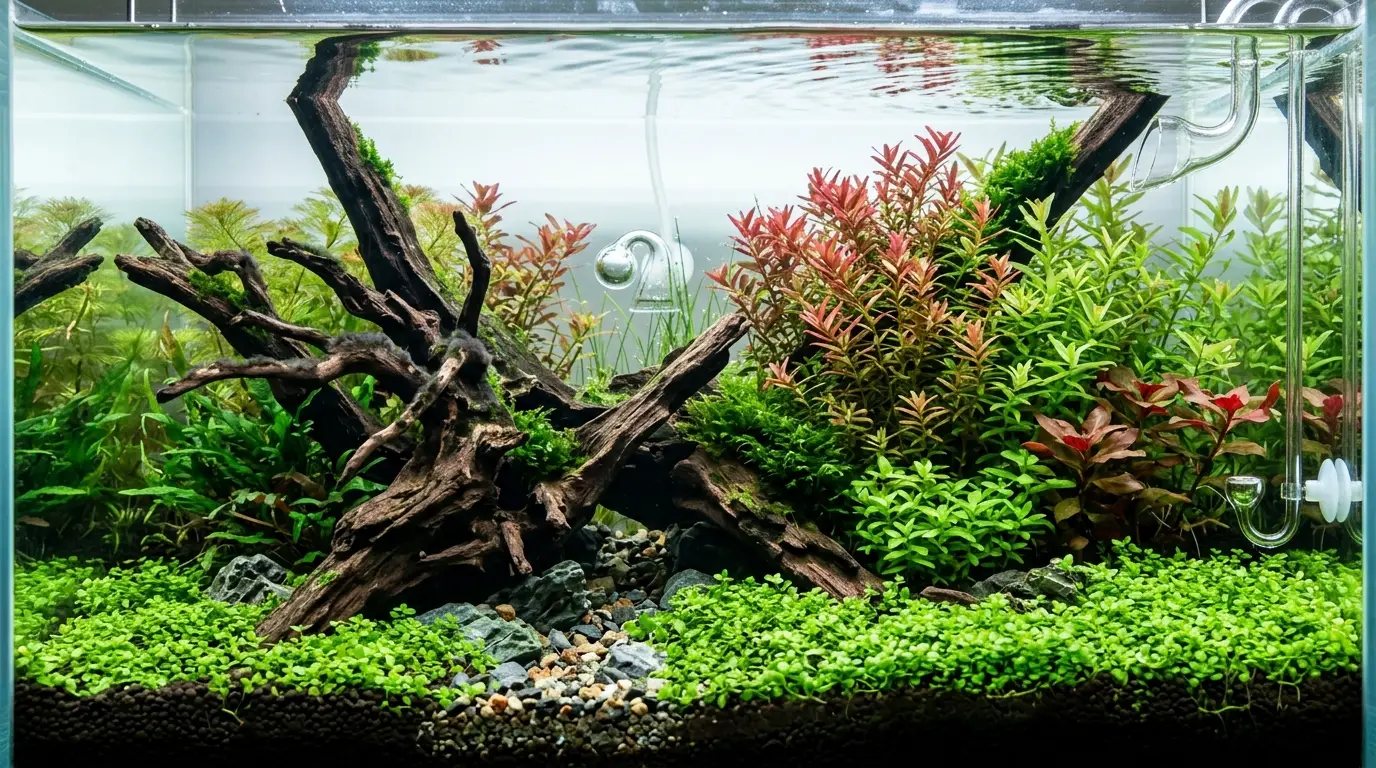
Do Planted Aquariums Need CO2 Injection to stop algae? Not by itself. Algae is a symptom of imbalance. Fix the cause and algae fades.
Frequent issues
- Black beard algae. Often from unstable CO2 or low flow. Fix by stabilizing CO2, pruning hard, and spot treat if needed.
- Green spot algae. Often low phosphate or low CO2 on slow leaves. Trim old leaves and balance PO4 and carbon.
- Diatoms in new tanks. Normal. Improve biofilter, add otos, and wait.
- Fish gasping at the surface. CO2 too high or poor oxygen. Lower CO2 at once and add surface ripple.
Simple checks
- Watch plants at lights on. If pearling starts fast and is steady, CO2 is likely in range.
- New leaf shape tells the truth. Healthy tips mean the balance is right.
Step By Step: Setting Up CO2 Safely
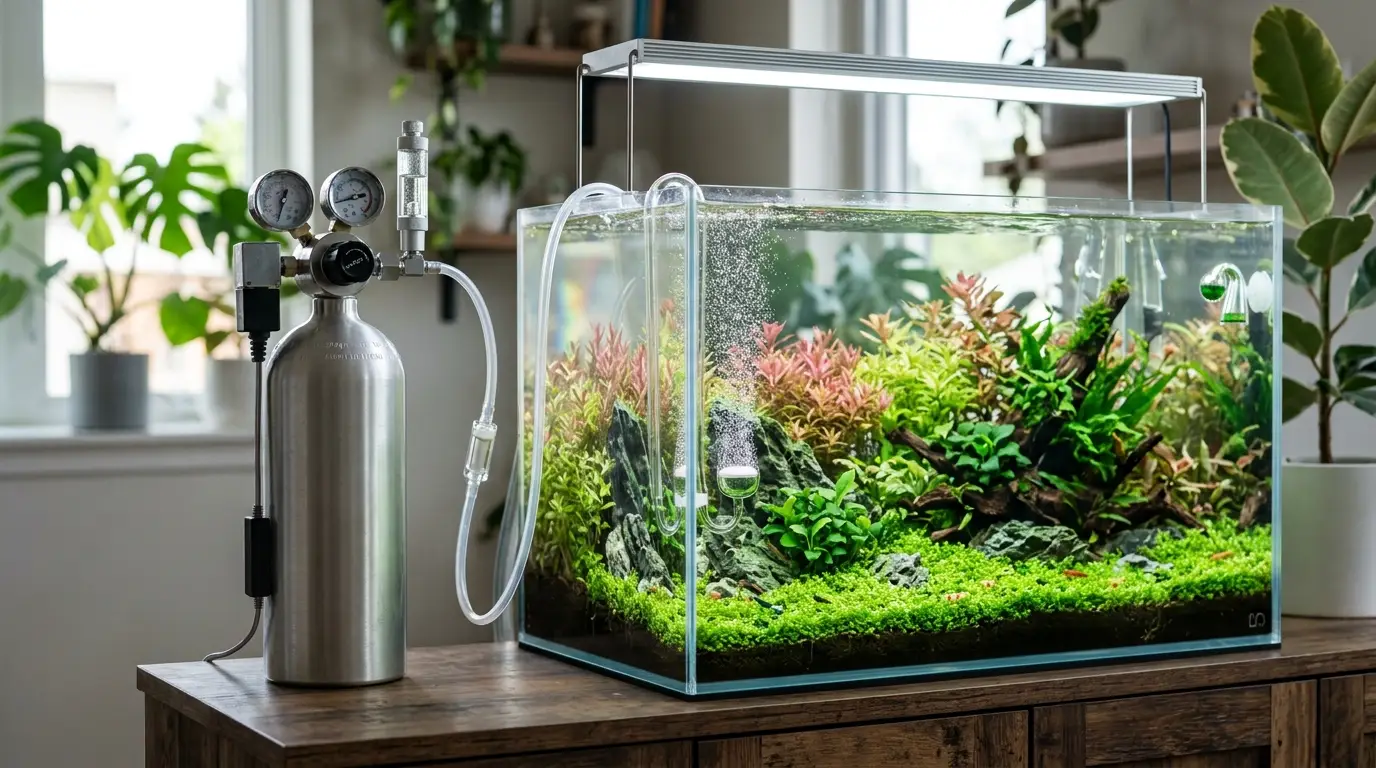
Do Planted Aquariums Need CO2 Injection in your case? If yes, set it up with care. Here is a safe path I use for clients.
Steps
- Define your goal. Carpet, red stems, or just faster growth.
- Gather gear. Cylinder, dual stage regulator with solenoid, bubble counter, check valve, diffuser or reactor, CO2 tubing, drop checker.
- Leak test. Use soapy water on joints. Bubbles show leaks. Fix before use.
- Start low. One bubble per second in small tanks, two to three in larger ones.
- Time it. Turn CO2 on 1 to 2 hours before lights. Off at lights out.
- Tune by pH. Test a cup of tank water after 24 hours of aeration to get the baseline pH. During CO2, aim for a stable 1.0 pH drop.
- Watch livestock. If fish breathe fast or hover at the top, reduce CO2 and raise surface movement.
- Maintain weekly. Clean diffusers, check bubble rate, and trim plants.
Real World Scenarios And Examples
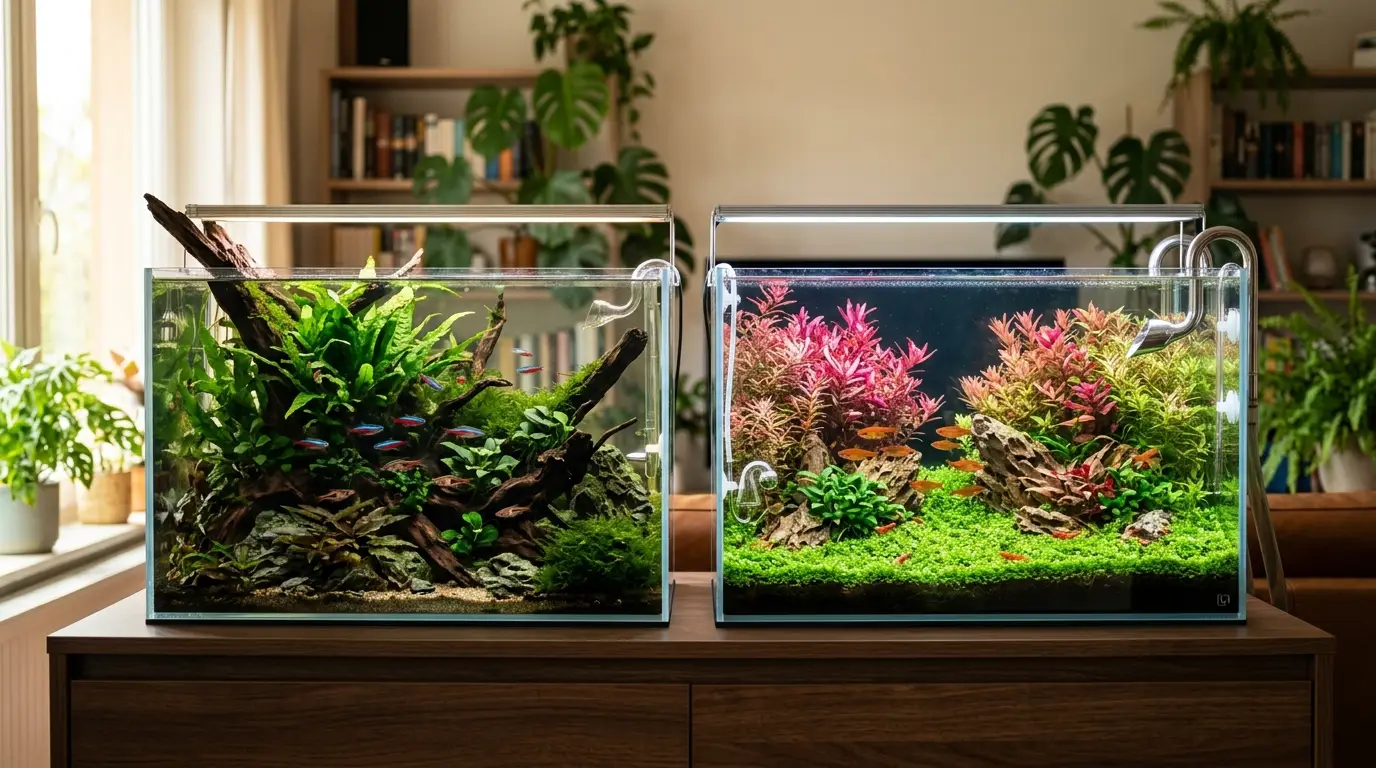
Do Planted Aquariums Need CO2 Injection for every style? These snapshots show how I decide.
Low tech jungle
- 20 gallon, easy LED, crypts and Java fern.
- No CO2. Fish load and light match plant demand.
- Result: Slow, rich growth and low care.
High energy carpet
- 40 breeder, bright LED, Monte Carlo carpet, red stems.
- Pressurized CO2 at 25 to 30 ppm with good flow.
- Result: Tight carpet in six weeks, vivid colors.
Common mistakes I made early on
- I raised light first and hoped plants would adapt. Algae did instead.
- I let CO2 swing day to day. Plants stalled and black beard algae spread.
- I skipped filter cleaning. Flow dropped and CO2 coverage suffered.
Cost And Maintenance Breakdown
Do Planted Aquariums Need CO2 Injection enough to justify the cost? For high energy scapes, yes. For simple tanks, not always.
Costs to expect
- Pressurized setup. Regulator, cylinder, diffuser, and parts can cost a few hundred dollars.
- Refills vary by region. Many tanks need refills every 2 to 6 months based on use.
- Time. Plan 10 to 20 minutes a week for checks and cleaning.
Value check
- With CO2, plants grow faster, so you trim and replant more. This saves you money on new plants and speeds scape resets.
- For show tanks and carpets, CO2 is the most effective upgrade per dollar.
Frequently Asked Questions of Do Planted Aquariums Need CO2 Injection
Is CO2 required for every planted tank?
No. Low light tanks with slow plants can thrive without added CO2. Focus on steady light, modest feeding, and good maintenance.
How much CO2 should I aim for?
Most aquascapes do well near 20 to 30 ppm. Use a pH drop of about 1.0 from degassed water as a practical guide.
Can I use liquid carbon instead of gas?
Liquid carbon helps in low tech setups and as an algae spot fix. It is not a full replacement for gas CO2 in high light tanks.
Will CO2 harm my fish or shrimp?
CO2 is safe when stable and not excessive. If fish gasp or gather at the surface, lower CO2 and increase surface movement.
What plants demand CO2 the most?
Fine carpets and fast red stems depend on stable CO2. Examples include Monte Carlo, dwarf hairgrass, and rotala species.
How long should the lights be on with CO2?
Start at 6 to 7 hours and increase only if growth is clean and algae free. Match light to your CO2 and nutrient levels.
Conclusion
Do Planted Aquariums Need CO2 Injection is a smart question because the answer depends on your goals. If you want a calm, low care tank, you can skip it and still enjoy a green view. If you dream of fast carpets, rich reds, and show grade scapes, stable CO2 unlocks that level.
Pick your path, match light to carbon and food, and make changes slowly. Ready to take the next step? Try a small test tank or set up a solid CO2 system with care. Share your results, ask questions, and subscribe for more hands on aquascaping tips.