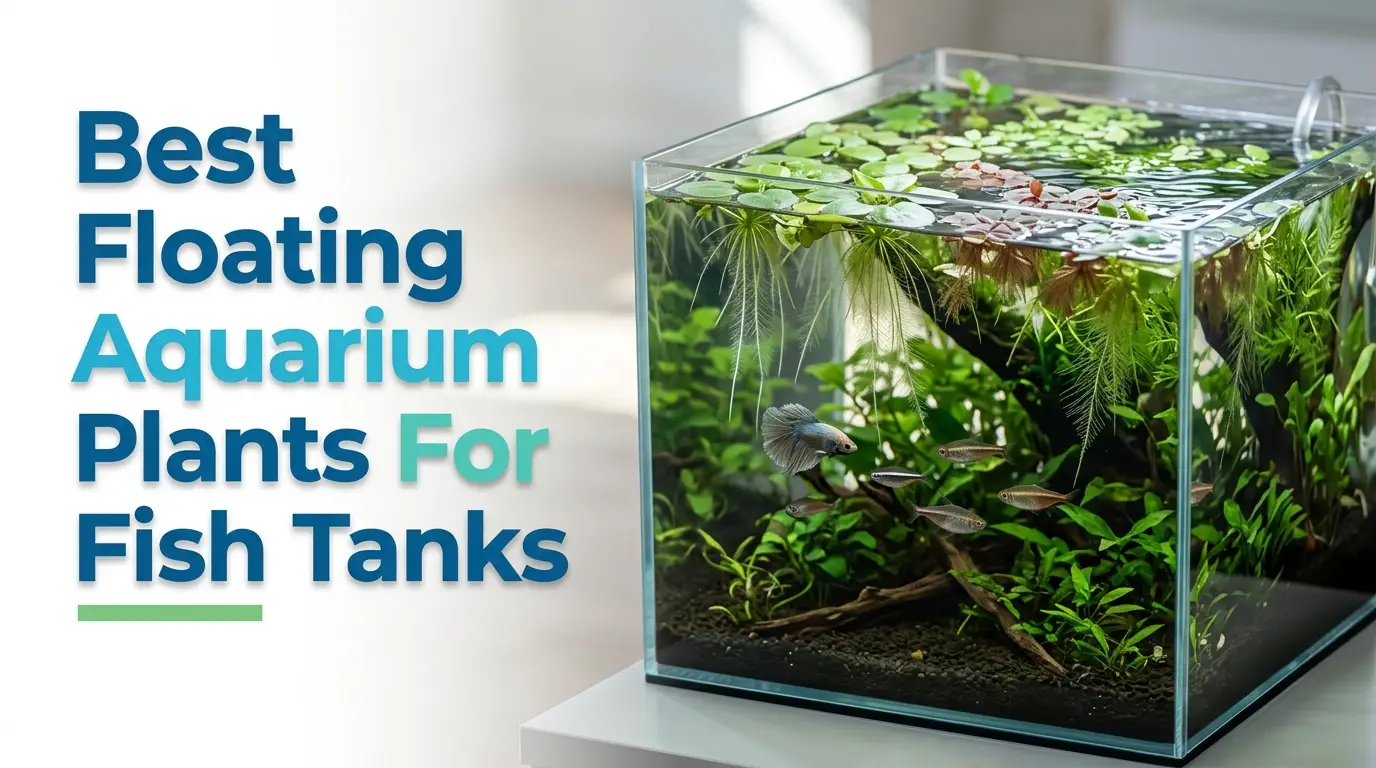
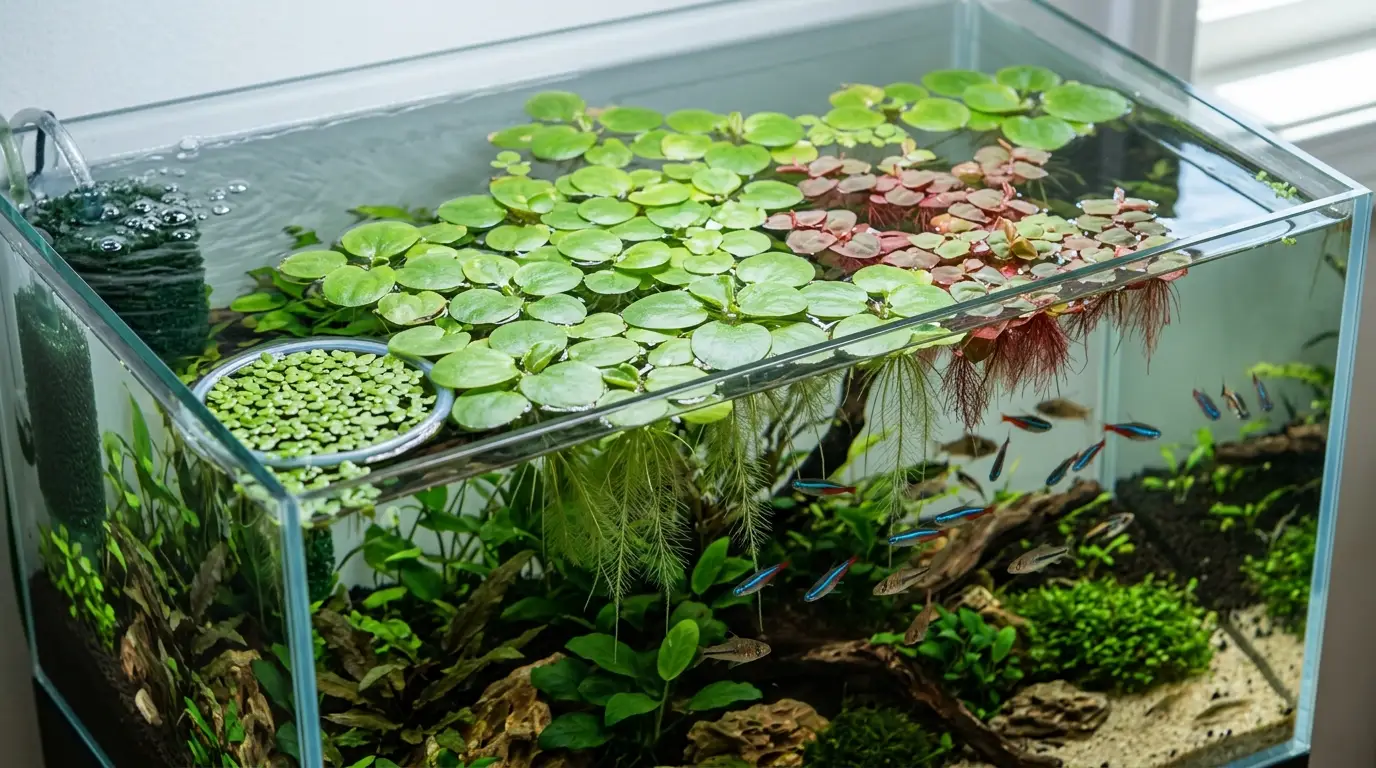
The best floating aquarium plants for fish tanks are frogbit, red root floater, hornwort, water sprite, duckweed, and pennywort.
If you want a healthier, calmer tank with less algae and happier fish, you need the best floating aquarium plants for fish tanks. I’ve grown, trimmed, and tested floaters across dozens of setups. In this guide, I’ll show you what works, what fails, and how to keep the best floating aquarium plants for fish tanks thriving with simple care anyone can follow.
What Are Floating Aquarium Plants?
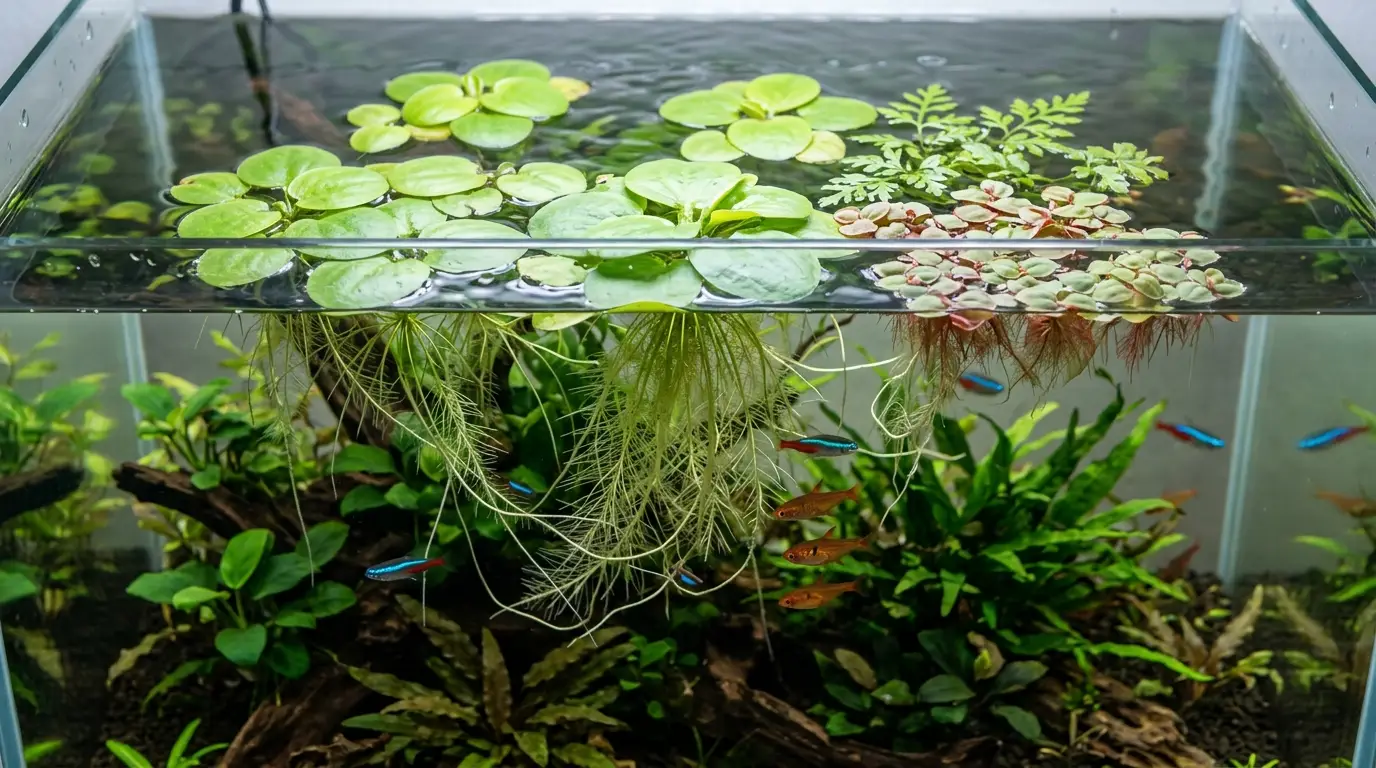
Floating aquarium plants live at the surface. They do not need to be planted in substrate. Their roots hang down and soak up nutrients right from the water.
These plants grow fast. They block harsh light. They offer cover for shy fish and fry. They also soak up nitrate, which helps fight algae.
Key traits to know:
- They use surface light well and do not need CO2.
- They prefer gentle flow and clean surfaces.
- They can shade lower plants, so balance is important.
I like floaters in nano tanks, betta tanks, and community tanks. They are easy, cheap, and dramatic. They make the tank look full and alive.
Why Choose Floating Plants: Benefits and Trade-offs
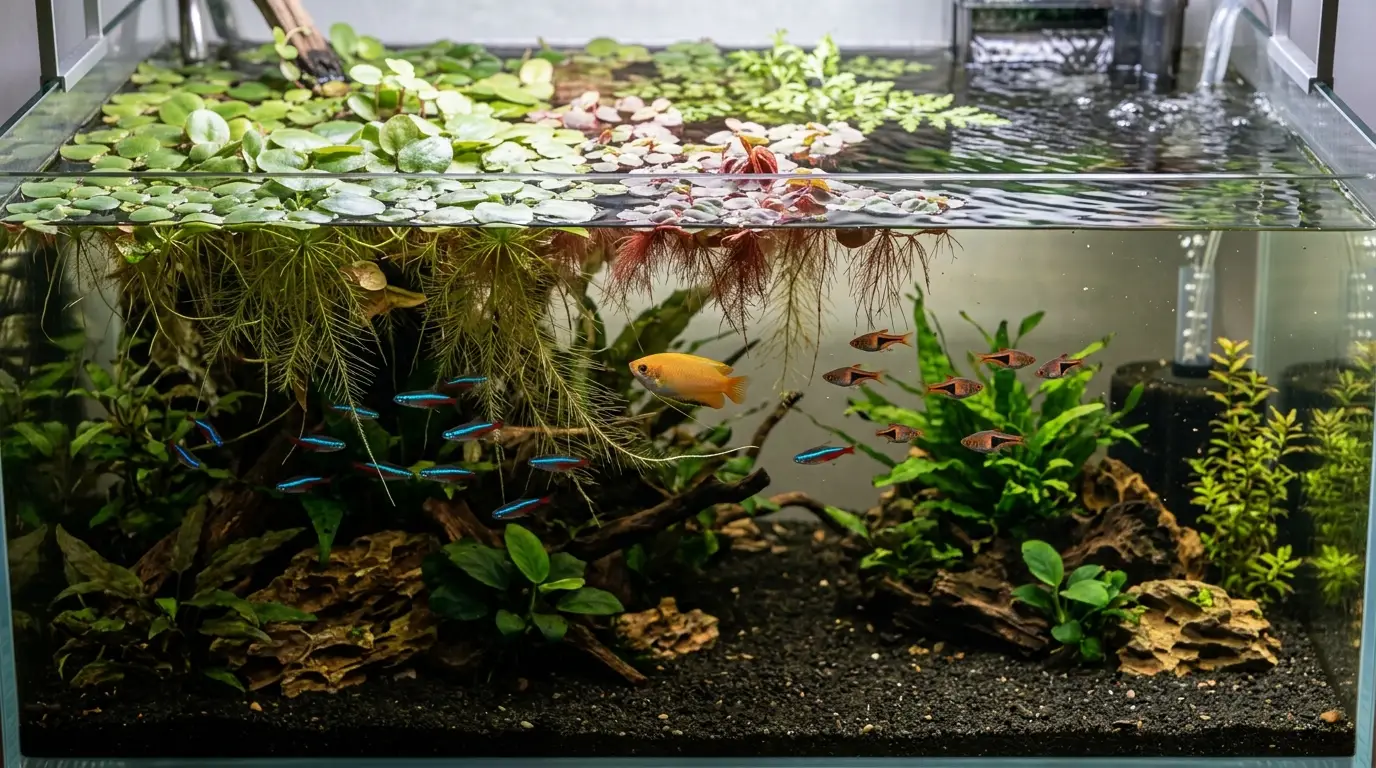
Benefits you will notice fast:
- Better water quality. Fast growth pulls out nitrate and phosphate.
- Fish comfort. Bettas, gouramis, tetras, and fry love the cover.
- Less algae. Shade reduces excess light and starves algae.
- Zero planting. No digging or root tabs needed.
Trade-offs to manage:
- Too much shade. Stem plants below can suffer without pruning.
- Flow issues. Strong surface agitation can damage floaters.
- Maintenance. You must thin them often to keep gas exchange strong.
From my own tanks, the sweet spot is 30–60% surface coverage. This keeps fish calm while leaving room for oxygen exchange. That balance also helps your filter work well.
How to Choose the Best Floating Aquarium Plants for Fish Tanks
Match plants to your setup. The right pick saves time and stress.
Consider these points:
- Light level. Frogbit and red root floater love bright light. Duckweed copes with low light.
- Flow and splash. Water lettuce and frogbit hate splashing. Use a baffle.
- Fish behavior. Goldfish, cichlids, and silver dollars will eat many floaters.
- Tank size. Pennywort and hornwort suit small tanks. Water lettuce suits larger tanks.
- Water type. Most floaters handle pH 6.0–8.0 and GH 3–12. Stability matters more.
- Local laws. Some species are invasive and restricted. Check your state rules.
If you keep bettas, focus on plants with long roots and soft shade. If you raise fry, choose dense mats for safety. The best floating aquarium plants for fish tanks should fit your goal, not just your taste.
Top 10 Best Floating Aquarium Plants for Fish Tanks
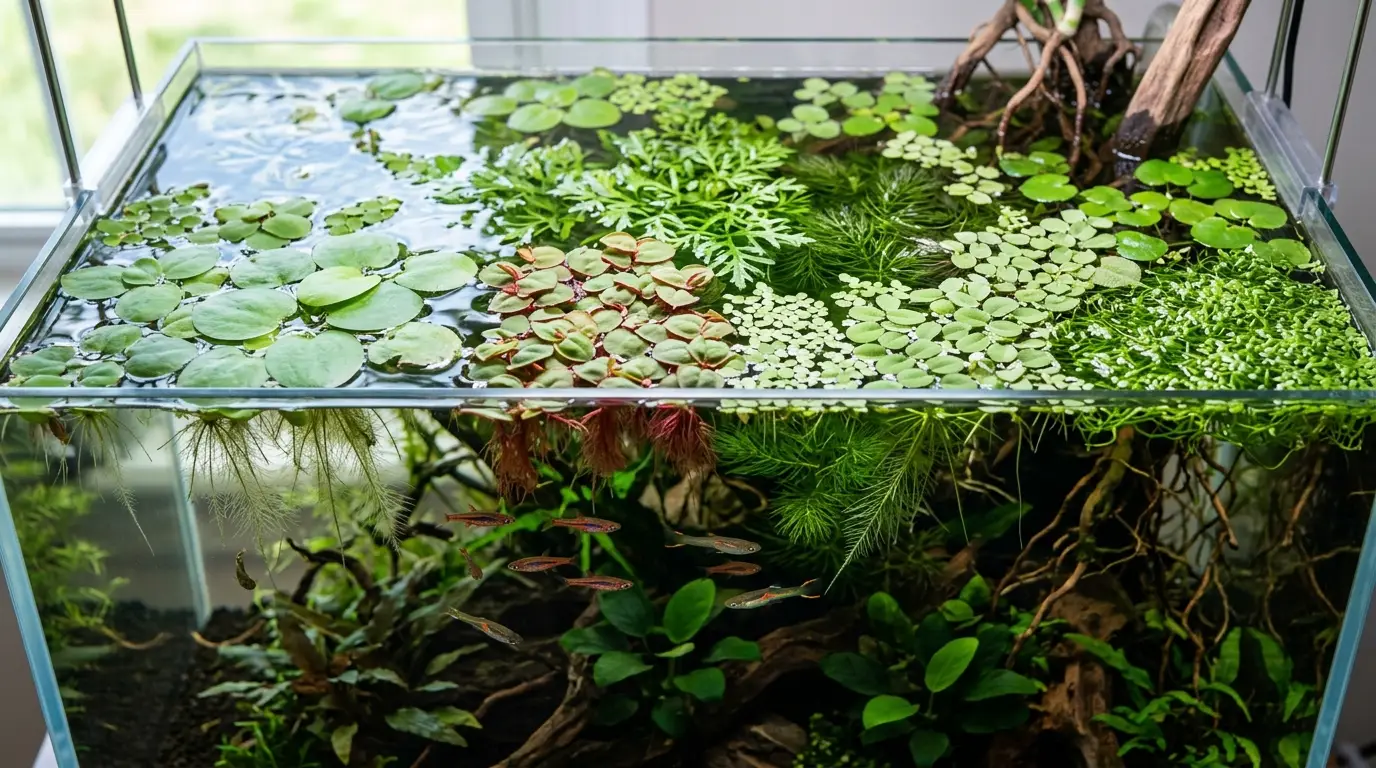
Amazon Frogbit (Limnobium laevigatum)
This is my go-to for easy success. It has round leaves and long, white roots. It hates splash and strong flow. Trim extra leaves weekly. Keep the surface calm.
Pros: Great shade, strong nitrate uptake, pretty roots
Cons: Melts with splash, can block light fast
Care tip: Use a floating ring to keep it in place.
Red Root Floater (Phyllanthus fluitans)
It glows red under bright light and good iron. The roots are vivid. It likes warm water and soft to medium hardness. Lower flow helps.
Pros: Stunning color, fast growth
Cons: Sensitive to big swings, needs iron for best red
Care tip: Dose a complete liquid fertilizer with iron.
Water Sprite (Ceratopteris thalictroides)
You can plant it or float it. Floating form grows fast and bushy. Great for fry. It tolerates many conditions.
Pros: Very adaptable, fast nitrate soak
Cons: Can tangle filters if not trimmed
Care tip: Thin weekly to keep it airy.
Hornwort (Ceratophyllum demersum)
A classic, tough plant. It can float or be anchored. It does well in cooler water too. It drops needles if shocked.
Pros: Hardy, algae-fighting, good for outdoor tubs
Cons: Sheds if light is low or water swings
Care tip: Keep light steady and avoid sudden changes.
Duckweed (Lemna minor)
Tiny, super fast-growing leaves. It eats nitrate like a sponge. Many aquarists avoid it because it spreads everywhere. If you want maximum nutrient control, it works.
Pros: Ultra fast growth, low light friendly
Cons: Hard to remove once in, clogs everything
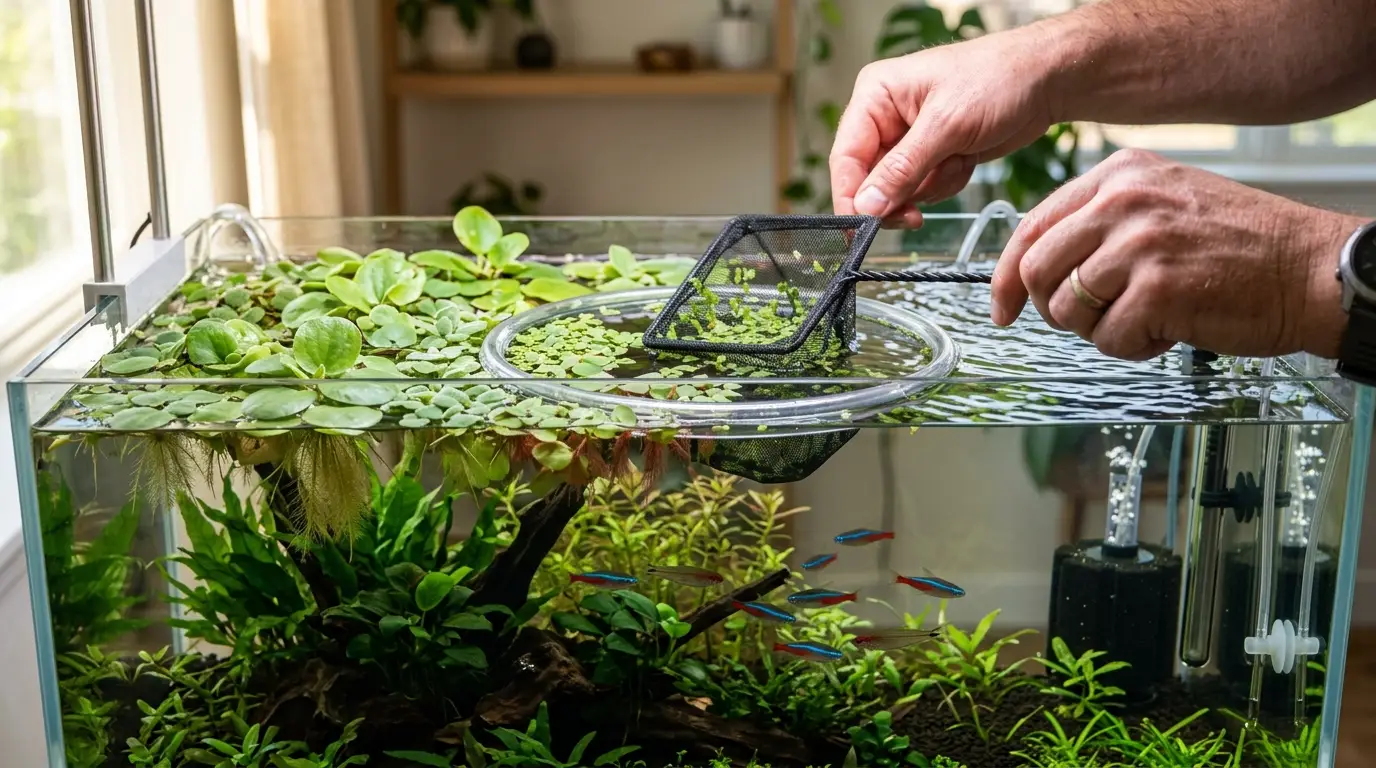
Care tip: Use a surface skimmer net for control.
Giant Duckweed (Spirodela polyrhiza)
Larger than common duckweed. Easier to net out. Good for ponds and larger tanks.
Pros: Easy to harvest, good shade
Cons: Still spreads fast, can block light
Care tip: Keep coverage under 60%.
Salvinia (S. minima or S. auriculata)
Soft velvety leaves. Good in calm water. Note that some Salvinia species are regulated in parts of the US. Check laws first.
Pros: Gentle shade, tidy look
Cons: Illegal in some regions, hates splash
Care tip: Quarantine and confirm species before use.
Brazilian Pennywort (Hydrocotyle leucocephala)
A flexible plant. It can float or creep. The coin leaves look lovely at the surface. Fast but manageable.
Pros: Versatile, good for scaping lines
Cons: Can shade stems beneath if too dense
Care tip: Wrap a few nodes around airline tubing to make a floating ring.
Guppy Grass (Najas guadalupensis)
Light, feathery stems. Great for fry. It grows with low to medium light and no CO2. It can break apart if bumped.
Pros: Excellent cover, easy nutrient export
Cons: Messy if neglected
Care tip: Harvest clumps weekly to avoid tangles.
Riccia fluitans (Crystalwort)
A bright green mat. It loves clean water and strong light. It can be tied to wood or left to float.
Pros: Brilliant color, fun textures
Cons: Dislodges easily, needs good light
Care tip: Confine it with a floating ring for neat edges.
My field notes: I have raised guppy fry under hornwort and water sprite with near 100% survival. Red root floater turned deep red only after I raised light and added iron. Frogbit melted when my filter spray bar hit the surface. A simple baffle fixed it. These real bumps taught me what makes the best floating aquarium plants for fish tanks thrive.
The best floating aquarium plants for fish tanks combine beauty, speed, and ease. Pick two or three from this list and you will see fast wins.
Setup, Planting, and Care Routine
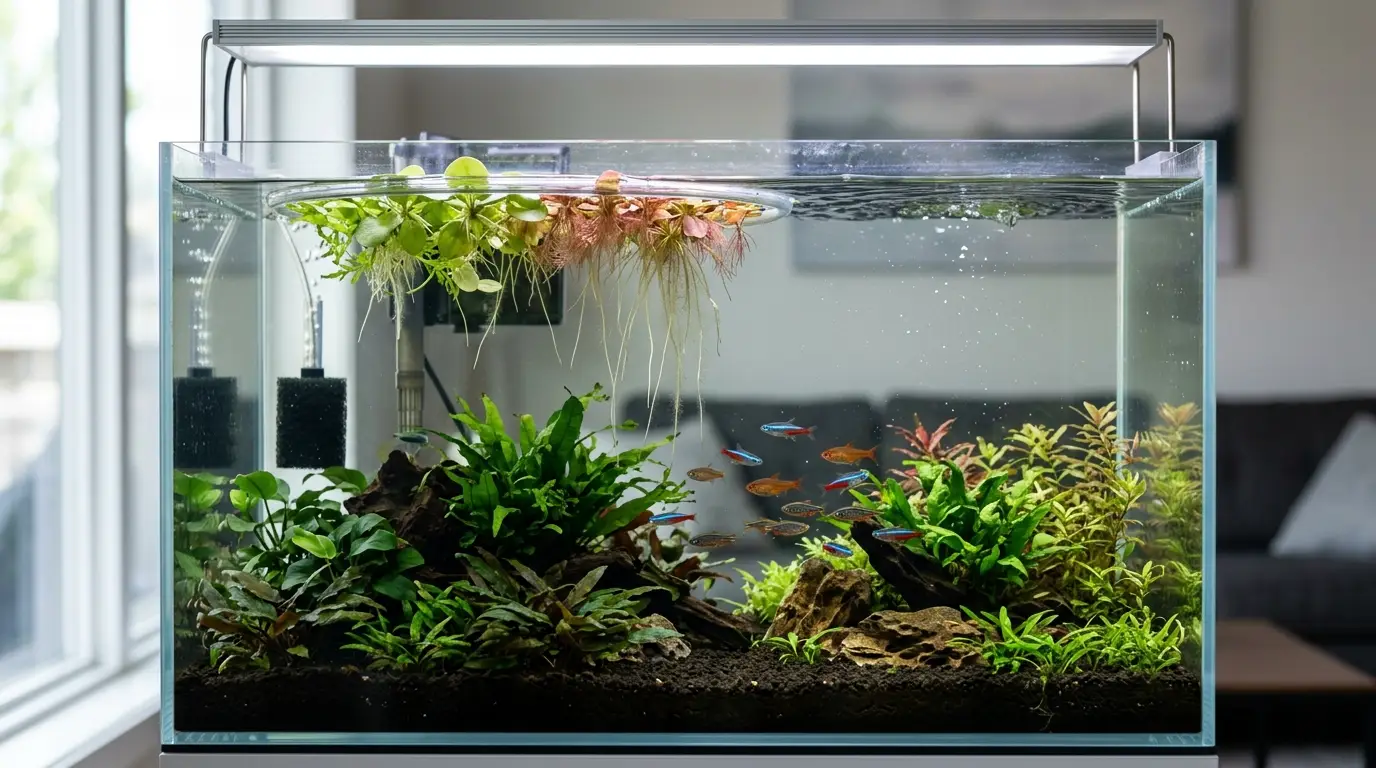
Follow this easy routine:
- Rinse and quarantine new plants for 1–2 weeks.
- Reduce surface agitation. Add a baffle or lower your outflow.
- Use a floating ring to corral plants away from the filter intake.
- Start with 30% surface cover. Thin weekly to maintain airflow.
- Provide 8–10 hours of light. Bright but not scorching.
- Dose a complete liquid fertilizer 1–3 times per week. Focus on nitrogen and iron.
- Aim for pH 6.5–7.8, GH 4–10, KH 2–6. Keep changes gentle.
- Remove dying leaves at once. Do a light water change weekly.
If algae appears, reduce light and increase plant mass. The best floating aquarium plants for fish tanks work as living filters. They win the algae war with time and good care.
Common Problems and Fixes
Yellow leaves
- Cause: Low nitrogen or iron.
- Fix: Dose fertilizer. Increase feeding lightly. Add iron.
Melting or rot
- Cause: Splash, harsh flow, or sudden changes.
- Fix: Calm the surface. Trim damaged parts. Stabilize temperature.
Plants stuck to glass top
- Cause: No room or low humidity.
- Fix: Leave a small air gap. Vent the lid.
Algae on roots
- Cause: Too much light or excess nutrients.
- Fix: Shorten photoperiod. Add more floaters. Clean roots gently.
No growth or pale color
- Cause: Not enough light or micronutrients.
- Fix: Raise light. Dose a complete fertilizer.
Filter clogging
- Cause: Loose stems or duckweed spread.
- Fix: Use a pre-filter sponge. Coral floaters in rings.
Fish eating plants
- Cause: Goldfish or hungry cichlids.
- Fix: Choose tougher plants like hornwort. Offer blanched veggies.
I have made all these mistakes. The fix is almost always the same: stable light, gentle flow, and steady nutrients. That is how the best floating aquarium plants for fish tanks stay healthy.
Stocking Ideas and Aquascape Inspiration
For bettas and gouramis
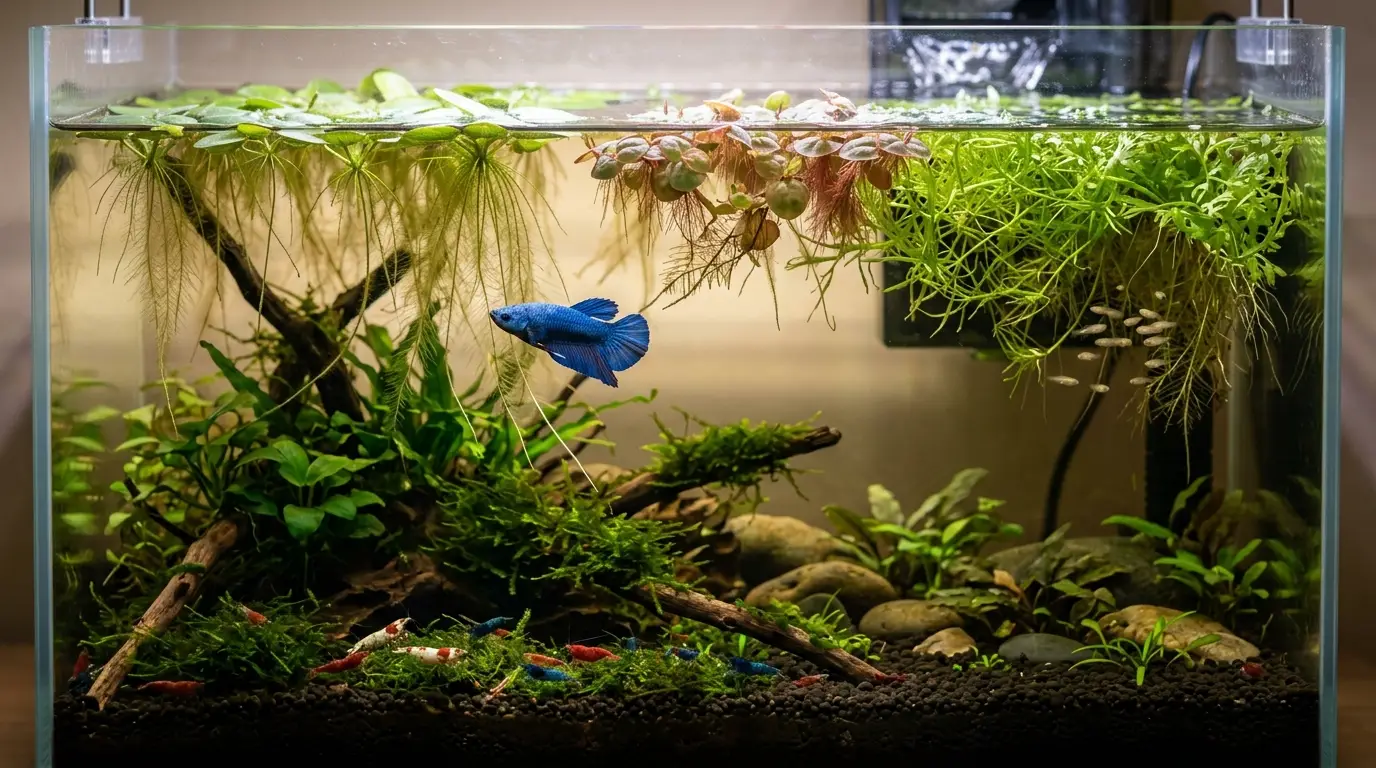
- Use frogbit or red root floater. They love quiet shade and long roots.
For community nano tanks
- Try pennywort and water sprite. Keep mid-water open for schooling fish.
For shrimp colonies
- Float hornwort and riccia. The fine roots catch biofilm that shrimp eat.
For fry grow-out
- Dense guppy grass and water sprite. It boosts survival and reduces stress.
For blackwater tanks
- Red root floater adds color over tannins. Use warm light for a cozy glow.
These setups make the best floating aquarium plants for fish tanks shine. They look natural. They keep fish calm. They keep algae in check.
Safety, Legal, and Maintenance Notes
Be a responsible hobbyist. Some floaters are invasive outside. Check local rules before you buy or trade. Never release plants into the wild.
Quarantine all new plants. Rinse well. Check for snails and pests. Avoid algaecides when possible. Many harm plants and inverts. If you use meds, read labels and dose with care.
Dispose of extras in a sealed bag in the trash. Do not compost if regulations advise against it. The best floating aquarium plants for fish tanks should bring joy, not risk.
Frequently Asked Questions
Are floating plants good for bettas?
Yes, they calm bettas and reduce stress. Keep 40–60% surface cover so your fish can still breathe at the top.
Do I need CO2 for floating aquarium plants?
No. Floaters get CO2 from the air at the surface. Good light and simple liquid fertilizer are enough.
How much light do floating plants need?
Most need medium to bright light for 8–10 hours. Red root floater needs brighter light to show deep red tones.
Will floating plants stop algae?
They help a lot by taking up nutrients and blocking extra light. Pair them with regular water changes for best results.
Can I use floating plants in a goldfish tank?
You can, but many goldfish will eat them. Try hornwort and expect to replace plants often.
How do I keep floaters away from the filter?
Use floating rings made from airline tubing. Place them where you want calm surface zones.
Are floating plants safe with shrimp and snails?
Yes, they are shrimp-safe. Snails may nibble weak leaves, so keep plants healthy with nutrients.
Conclusion
Floating plants make tanks stable, calm, and beautiful. Start small, keep the surface gentle, and feed your plants well. The best floating aquarium plants for fish tanks will reward you with clear water and relaxed fish.
Pick two species from this guide, set a weekly trim day, and watch your tank transform. If you found this helpful, subscribe for more care tips, or leave a comment with your favorite floater combo.