
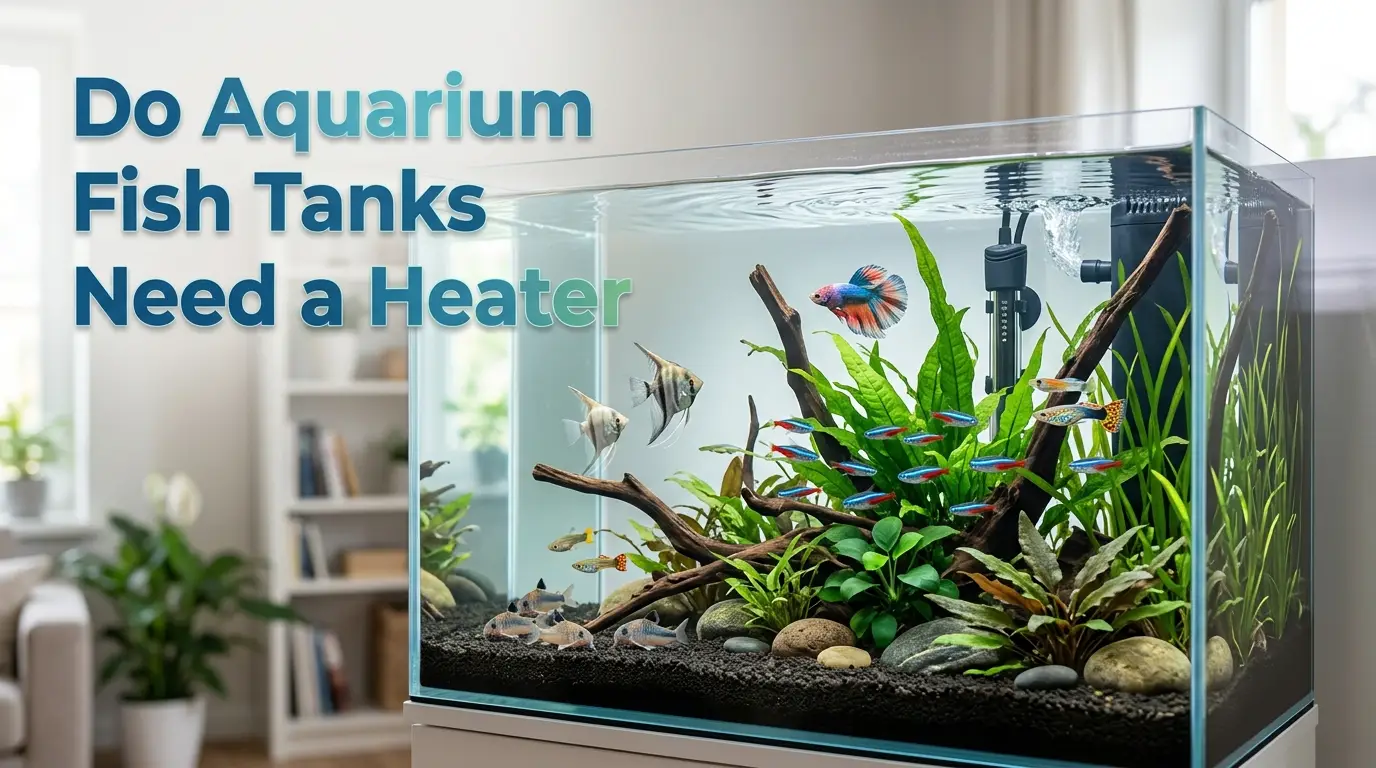
Most aquariums need a heater to keep fish healthy, calm, and active.
If you keep tropical fish, steady heat is not a luxury. It is life support. In this guide, I’ll unpack Do Aquarium Fish Tanks Need a Heater with clear steps, real numbers, and simple tips. You’ll learn when a heater is essential, when you can skip it, and how to size, place, and maintain one like a pro. I’ve set up hundreds of tanks—from bettas to reefs—and I’ll share what actually works.
Do Aquarium Fish Tanks Need a Heater? The science made simple
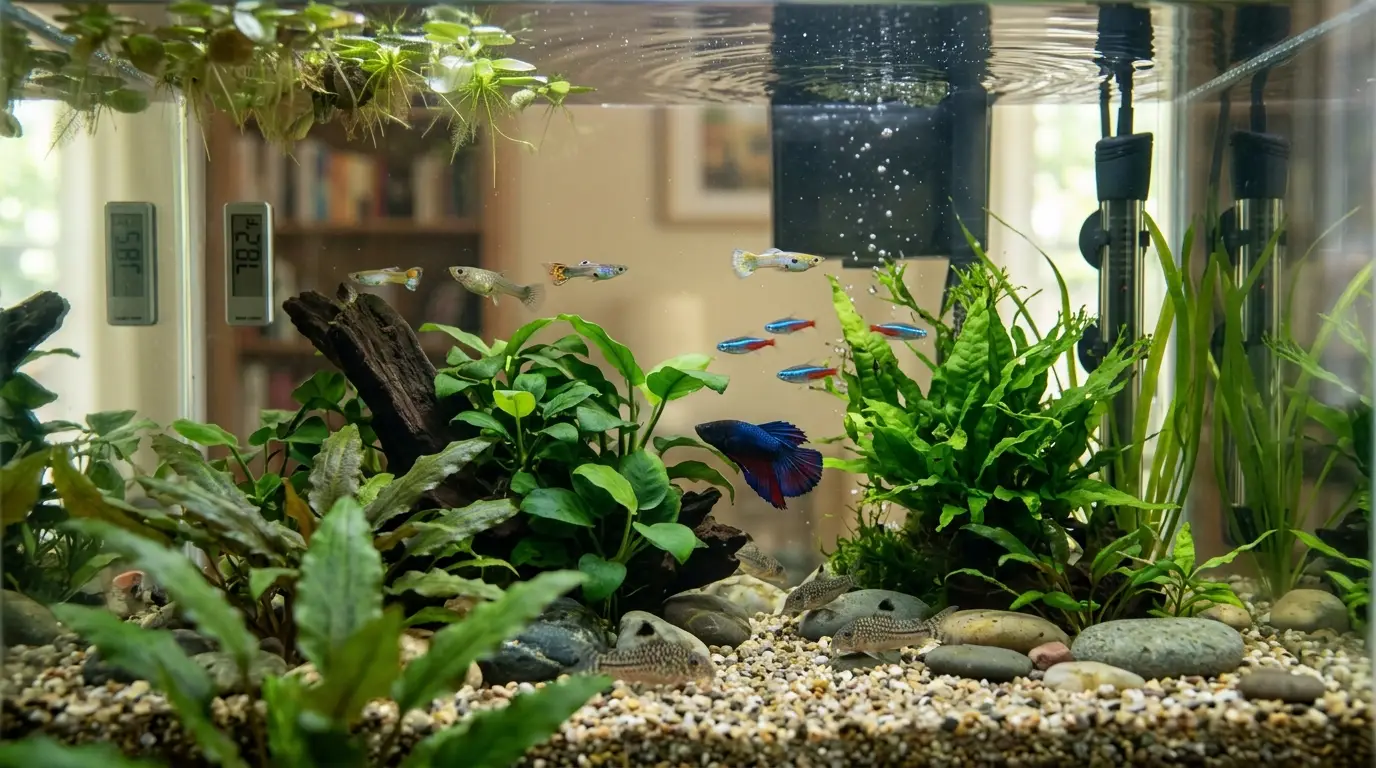
Fish are ectotherms. Their body temp follows the water. When water is too cold or swings fast, fish get stressed. Stress weakens the immune system and opens the door to ich and fin rot. A heater keeps water steady, so fish eat, swim, and heal well.
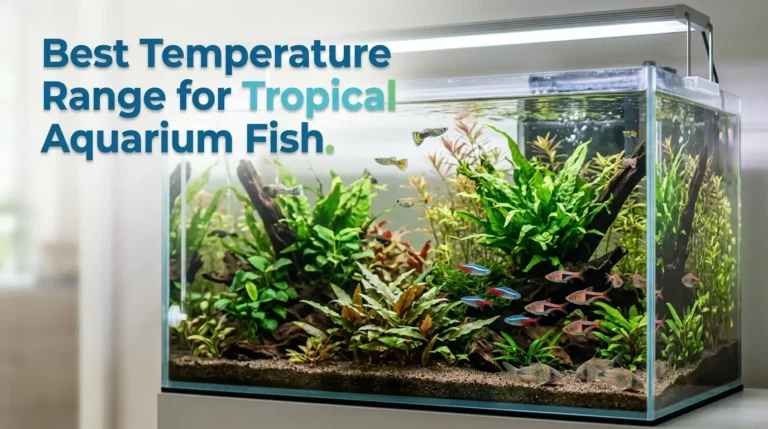
Most tropical species thrive at 75–80°F. Bettas do best near 78–80°F. Saltwater reef tanks are happy around 77–79°F. In many homes, room temperature dips at night or in winter. That drop can be enough to harm fish. That is why many people ask, Do Aquarium Fish Tanks Need a Heater? For tropical fish, the answer is almost always yes.
Large tanks hold heat better than small ones. But even big tanks drop in a cold snap. I once skipped a heater in a 20‑gallon guppy tank during a mild fall. A cold front hit. The temp fell 6°F overnight. Two days later, ich showed up. A simple 100‑watt heater fixed it and kept it stable.
If you keep true coldwater fish, you may not need heat. But you still need stability. That is the core reason behind the question, Do Aquarium Fish Tanks Need a Heater?
When you do not need a heater
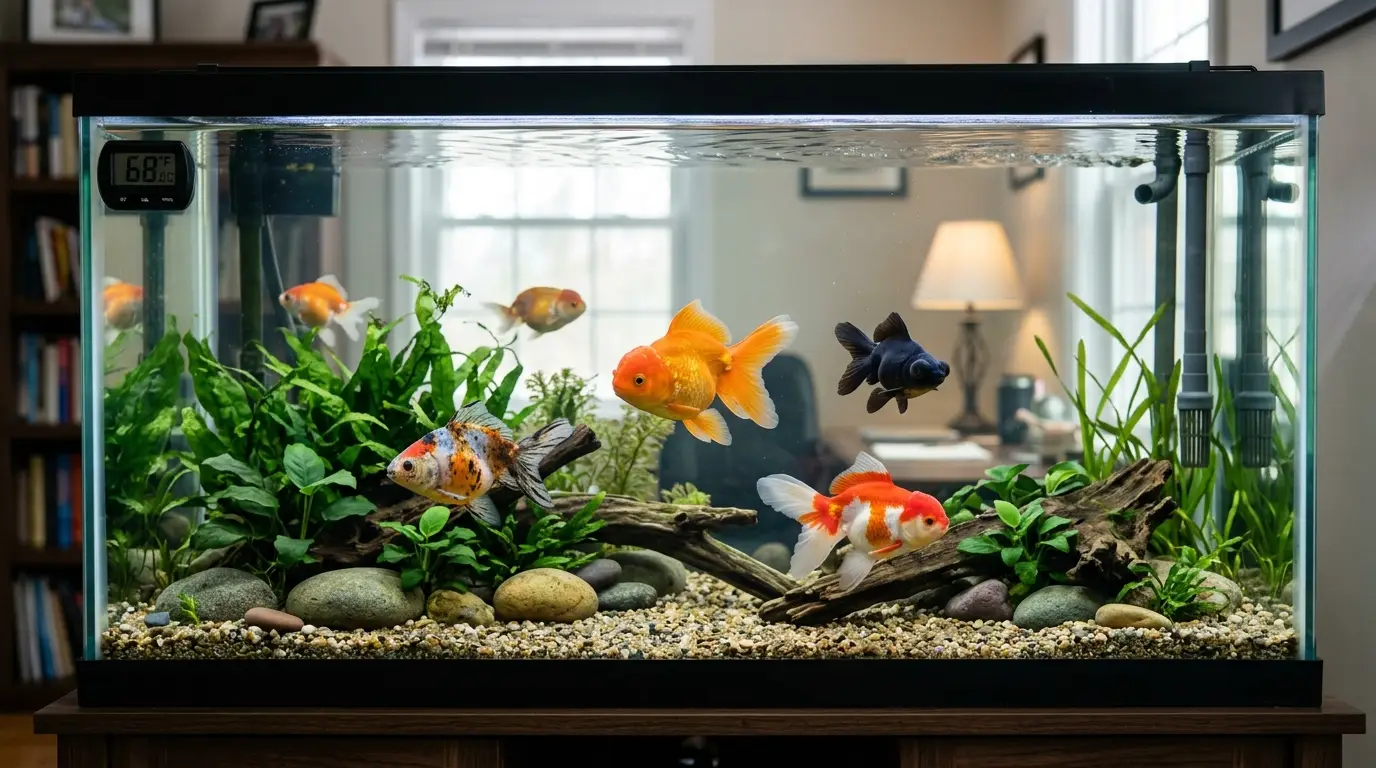
You may skip a heater if all three are true:
- Your fish are coldwater or temperate species like goldfish or white cloud mountain minnows.
- Your room is stable year‑round within the fish’s safe range.
- Your tank is large and away from drafts, windows, and vents.
Typical safe ranges:
- Goldfish: 65–72°F. Many homes run warmer than this in summer, so watch heat stress.
- White cloud mountain minnows: 64–72°F. They can handle cooler rooms.
- Hillstream loaches, some dojo loaches, and temperate shrimp: cooler ranges work with stable rooms.
Times you still want heat:
- Tropical freshwater (tetras, guppies, bettas, corydoras, angelfish).
- Saltwater fish and reefs (stability is vital).
- Rooms with big swings, strong AC, or winter drafts.
I also have a 55‑gallon goldfish tank in a heated office. That room stays 69–70°F all year. I do not use a heater there. But I still log temps once a day in winter. The moment it drifts down, I’m ready to add a low‑watt heater. If you are wondering, Do Aquarium Fish Tanks Need a Heater in a warm, steady room? Often no—for true coldwater fish. For tropical fish, it is still a yes.
Choosing the right aquarium heater
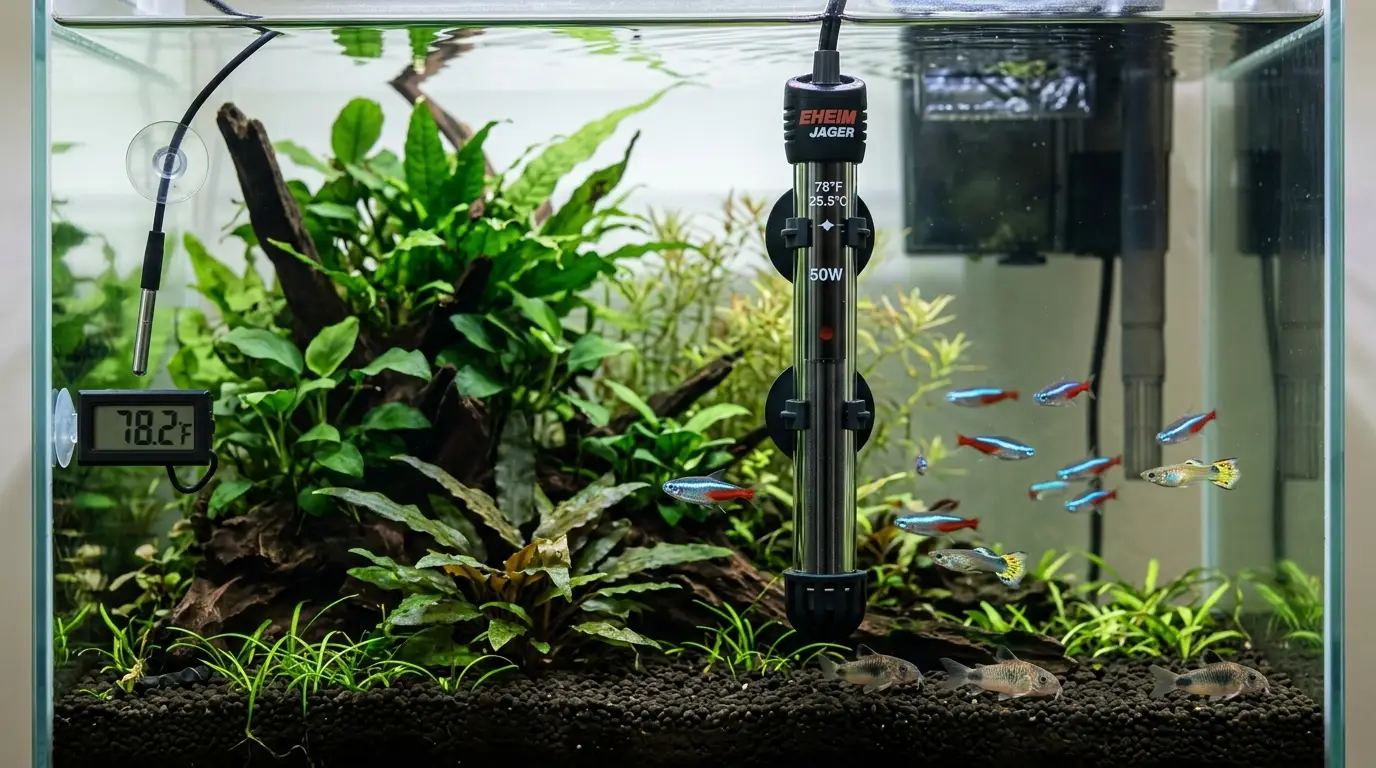
Pick a heater that can hold your set temp even on a cold night. That means looking at wattage, type, and control.
Heater types:
- Submersible glass or quartz: common, affordable, easy to place.
- Titanium submersible: tough and shatter‑resistant; needs a separate controller if not built‑in.
- In‑line (on canister return): hidden, even heat, great for larger tanks.
- In‑filter heaters: neat for some internal filters on small tanks.
Wattage rules of thumb:
- Mild homes (small temp boost): about 3 watts per gallon.
- Cooler homes (bigger boost): about 5 watts per gallon.
- 5 gallons: 25 watts
- 10 gallons: 50 watts
- 20 gallons: 100 watts
- 40 gallons: 150–200 watts
- 75 gallons: 250–300 watts
- 100+ gallons: 300–500 watts (often split across two heaters)
Pro tip: Use two smaller heaters instead of one big one. If one fails, the other prevents a crash. I run two 150‑watt heaters on a 75‑gallon tank with a controller. When one stuck “on,” the controller cut power and saved the tank.
Controllers and thermometers:
- Always use a reliable thermometer. Digital probes are easy to read.
- A smart controller adds a safety cutoff and gives alerts.
- Calibrate if your model allows it.
If you are still thinking, Do Aquarium Fish Tanks Need a Heater for nano tanks? Yes, most nanos swing fast. A small, adjustable heater is your best friend.
Setup, placement, and maintenance
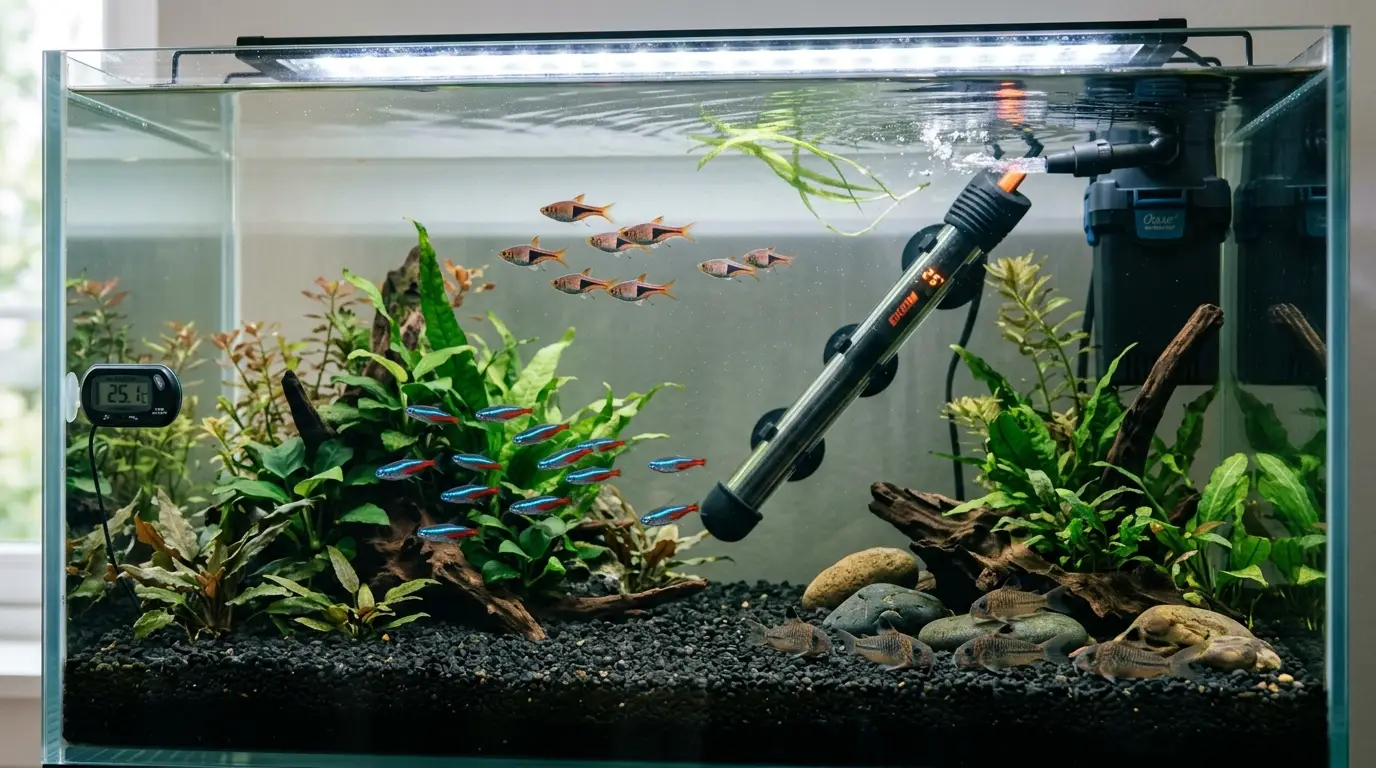
Good setup beats raw power. Aim for even flow and safe handling.
Placement:
- Put the heater near filter outflow for even heat.
- Place it horizontal or at a slight angle for better sensing.
- Keep it off the gravel and decorations. Use the suction cups or a heater guard.
Start‑up:
- Submerge the heater first. Wait 20–30 minutes before turning it on.
- Set the dial to your target temp.
- Check temp after 2–3 hours. Fine‑tune as needed.
Maintenance:
- Unplug the heater before water changes or moving it.
- Wipe off slime and algae monthly so the sensor reads right.
- Test your heater each season. A frozen water bottle can simulate a cold room.
- Replace older heaters every 2–3 years if they run 24/7.
For anyone asking, Do Aquarium Fish Tanks Need a Heater in a busy home? If doors open often or vents blow on the tank, a heater and a lid help a lot.
Temperature management and seasonal tips
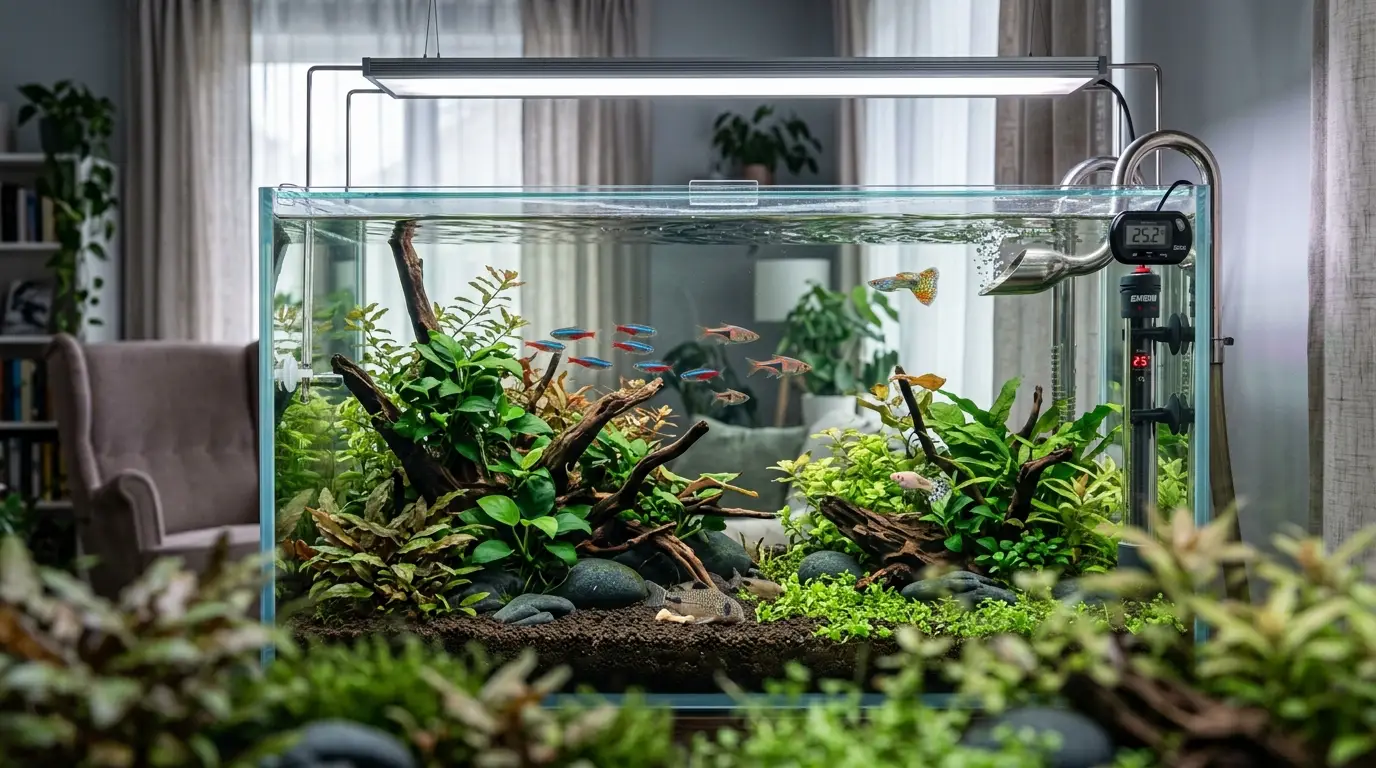
Season change is the main reason tanks drift. Plan for both cold and heat.
Winter:
- Rooms drop at night. Insulate the back and sides with foam board.
- Use a lid to slow evaporation and heat loss.
- Aim for small, slow rises. A 1–2°F change per hour is a safe max.
Summer:
- Heat waves can push temps too high. Use a fan across the surface.
- Increase surface agitation for oxygen. Warm water holds less oxygen.
- If needed, float a bag of cool water. Avoid fast swings.
Power outages:
- Wrap the tank in a blanket. Keep room doors shut.
- Use battery air pumps for oxygen.
- For heat, float sealed bags of warm water and swap them often.
Monitoring:
- Log temps morning and night during seasonal shifts.
- Smart plugs and controllers send alerts if temps drift outside your set range.
When readers ask, Do Aquarium Fish Tanks Need a Heater year‑round? In many places, yes. Even in summer, a heater set slightly below room temp stops dips on stormy nights.
Common mistakes and safety tips
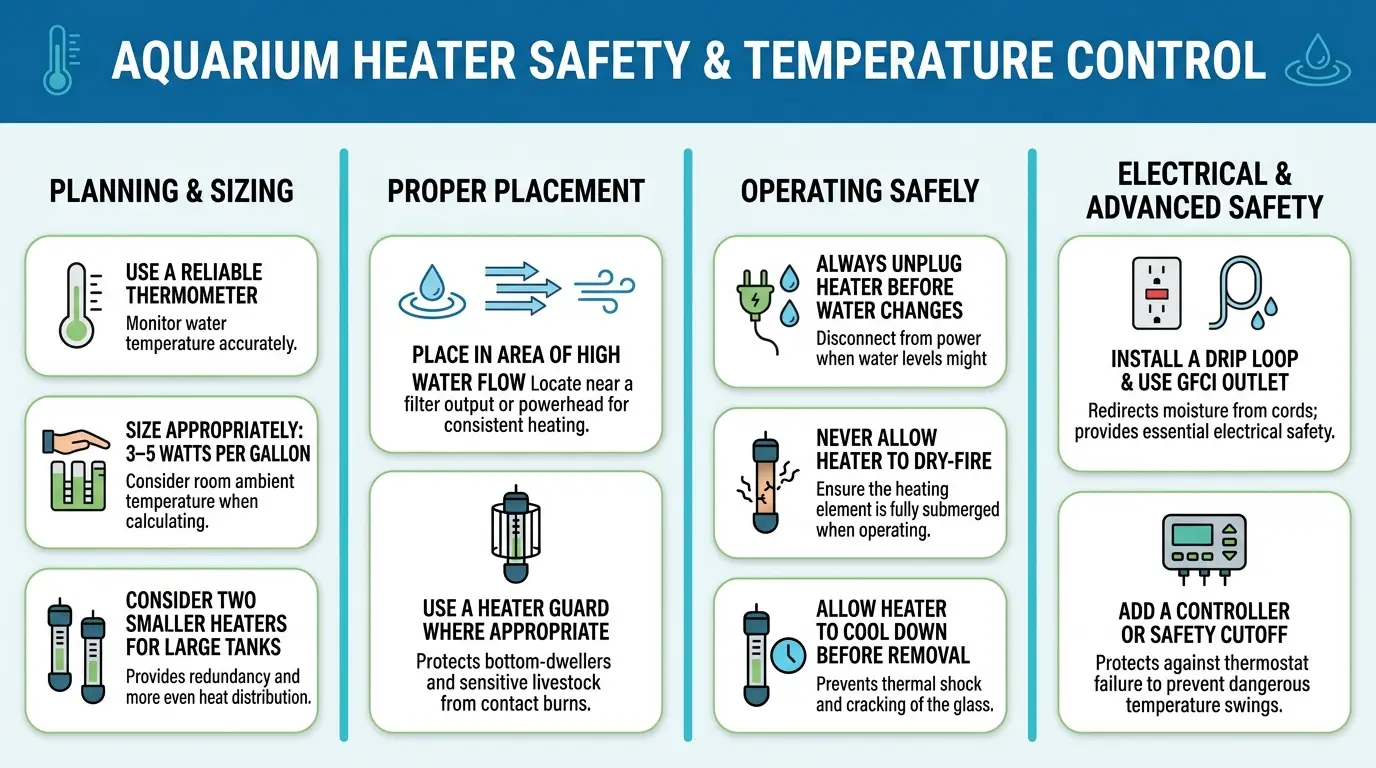
Avoid these pitfalls. They cause most temp problems I see.
Mistakes to avoid:
- Using a fixed‑temp “betta heater” in a cold room. Many underheat.
- Oversizing one huge heater. Two smaller units are safer.
- No thermometer. “Feels warm” is not data.
- Placing the heater in a dead zone with no flow.
- Leaving it on during a water change. Dry‑firing can crack it.
Safety tips:
- Use a GFCI outlet and a drip loop on the cord.
- Unplug, cool, then move. Do not pull a hot heater out of water.
- Use a heater guard with active fish or plecos.
- Keep spares. Heaters fail more often than filters.
- If a heater sticks on, a controller prevents a boil.
Do Aquarium Fish Tanks Need a Heater if your house is “always warm”? Test it for a full week, mornings and nights. Most homes dip more than you think.
Frequently Asked Questions
Do Aquarium Fish Tanks Need a Heater for bettas?
Yes. Bettas prefer 78–80°F. A small, adjustable heater and a thermometer will keep your betta happy and active.
Can goldfish live without a heater?
Usually yes, if the room stays 65–72°F and is stable. Watch for summer heat and winter dips and adjust with fans or a low‑watt heater if needed.
What size heater do I need for my tank?
Aim for 3–5 watts per gallon based on how cool your room runs. Split the total across two heaters for safety in medium and large tanks.
Is a heater necessary in a warm climate?
Often yes, because nights and storms still cause dips. Set the heater near your target temp so it holds steady when the room cools.
How do I know if my heater is accurate?
Use a separate digital thermometer and check daily for a week. If it drifts, recalibrate or replace the heater.
Can temperature swings make fish sick?
Yes. Swings stress fish, slow immunity, and trigger ich. A stable heater and good flow stop most swings.
Do saltwater tanks need heaters?
Yes, almost always. Corals and marine fish need tight stability, often 77–79°F, which a heater and controller can hold.
Conclusion
Stable heat keeps fish calm, hungry, and healthy. For tropical species and most saltwater setups, a heater is essential gear. Coldwater fish can skip it in a room that stays within their safe range, but even then, steady temps matter more than anything.
If you took one step today, make it this: match your fish’s range, size the heater right, and add a thermometer you trust. Ready to dial in your setup? Subscribe for more clear, tested aquarium tips—or drop a comment with your tank size, room temp, and fish list, and I’ll help you choose the perfect heater.
2 Comments