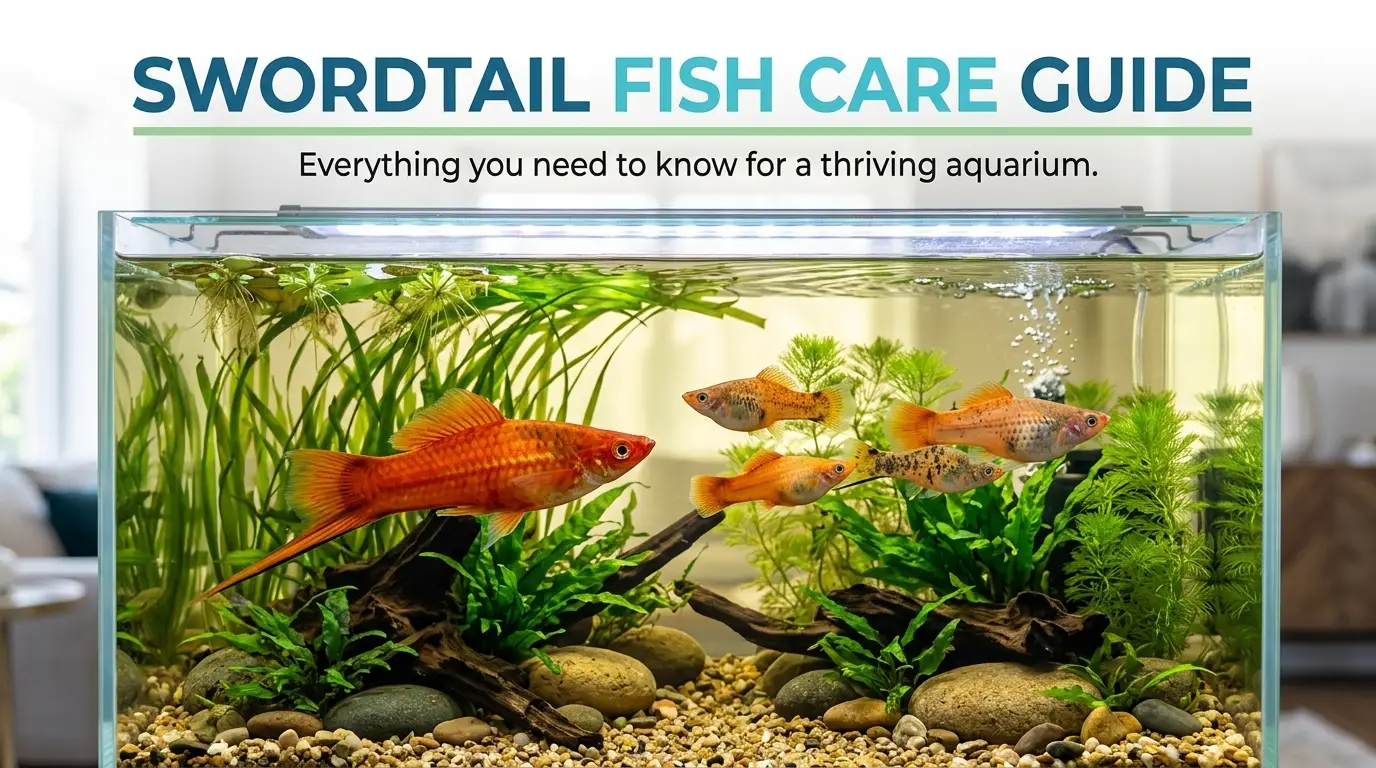
Swordtails thrive in stable, clean, planted tanks with gentle, alkaline water.
If you want bold color, lively movement, and easy breeding, this swordtail fish care guide is for you. I have kept swordtails for years, from shy juveniles to big adults with long swords. I’ll walk you through setup, water, food, health, and breeding with practical steps you can follow today.
What makes swordtails special
Swordtails, Xiphophorus hellerii, are hardy livebearers in the Poeciliidae family. They grow to 4–5.5 inches, with males showing the classic sword-like lower tail. Females are fuller and often larger.
They come in many colors and fin types. Expect an active mid-to-top swimmer that likes some current. This swordtail fish care guide keeps things simple, clear, and proven from real tanks.
Ideal tank setup and water parameters
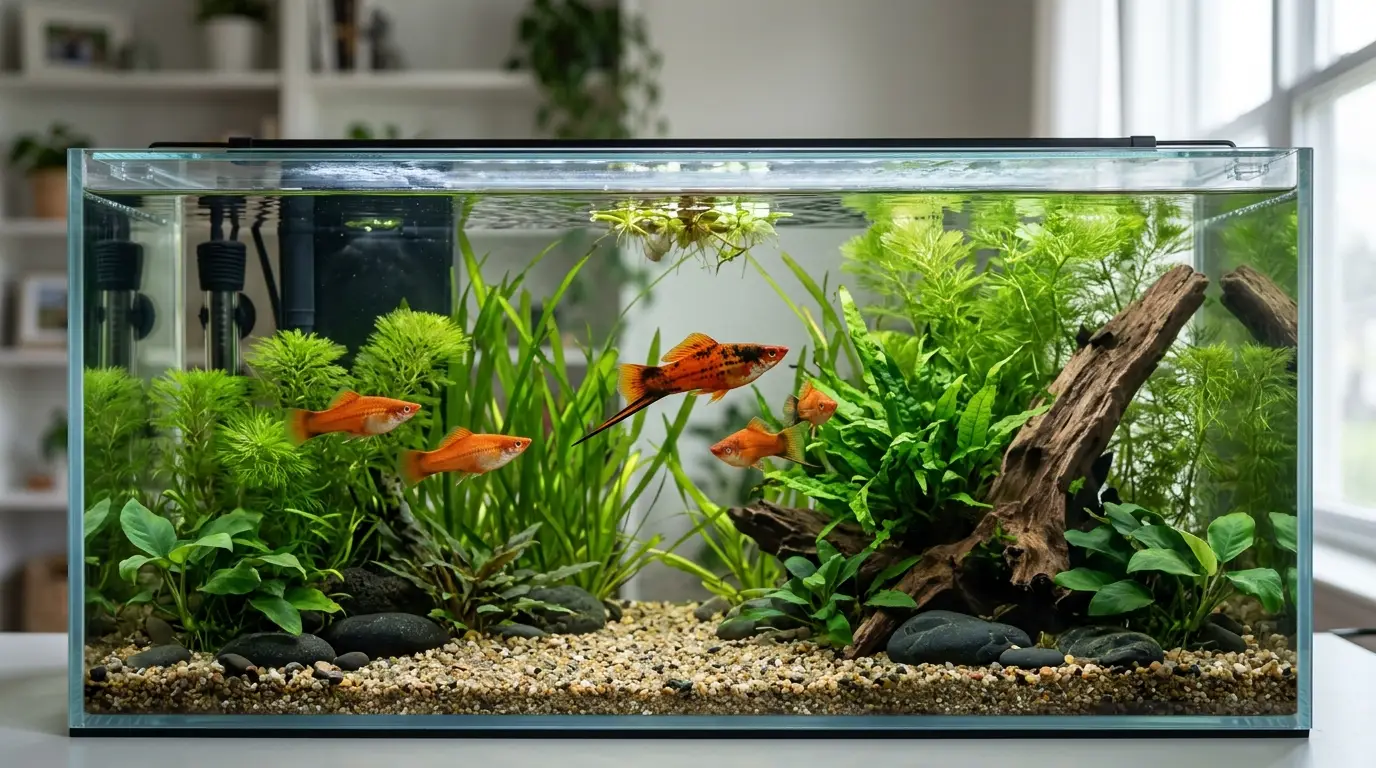
Give them space. A 20-gallon long tank works for one male and three females. A 29–40 gallon tank is better for mixed groups. Cover the tank. Swordtails jump when startled.
They prefer hard, alkaline water. Target pH 7.2–8.2, GH 10–20 dGH, KH 6–12 dKH. Keep temperature at 72–79°F (22–26°C). Ammonia and nitrite must be 0 ppm. Keep nitrate under 20 ppm if you can.
Use a filter with steady, not harsh, flow. Add live plants like Vallisneria, hornwort, and java fern. Leave open space for swimming. Add a tight lid and gentle light.
Step-by-step setup:
- Rinse substrate and add 2–3 inches for rooted plants.
- Place a seasoned filter and heater. Set 76°F to start.
- Plant the back and sides. Keep the center open.
- Cycle the tank fully. Confirm 0 ammonia/0 nitrite with a test kit.
- Acclimate fish slowly. Dim lights for the first day.
Personal tip: My swordtails grew bolder when I added floating plants. They felt safe near cover and explored the whole tank. This swordtail fish care guide recommends that easy tweak for shy groups.
Diet and feeding routine
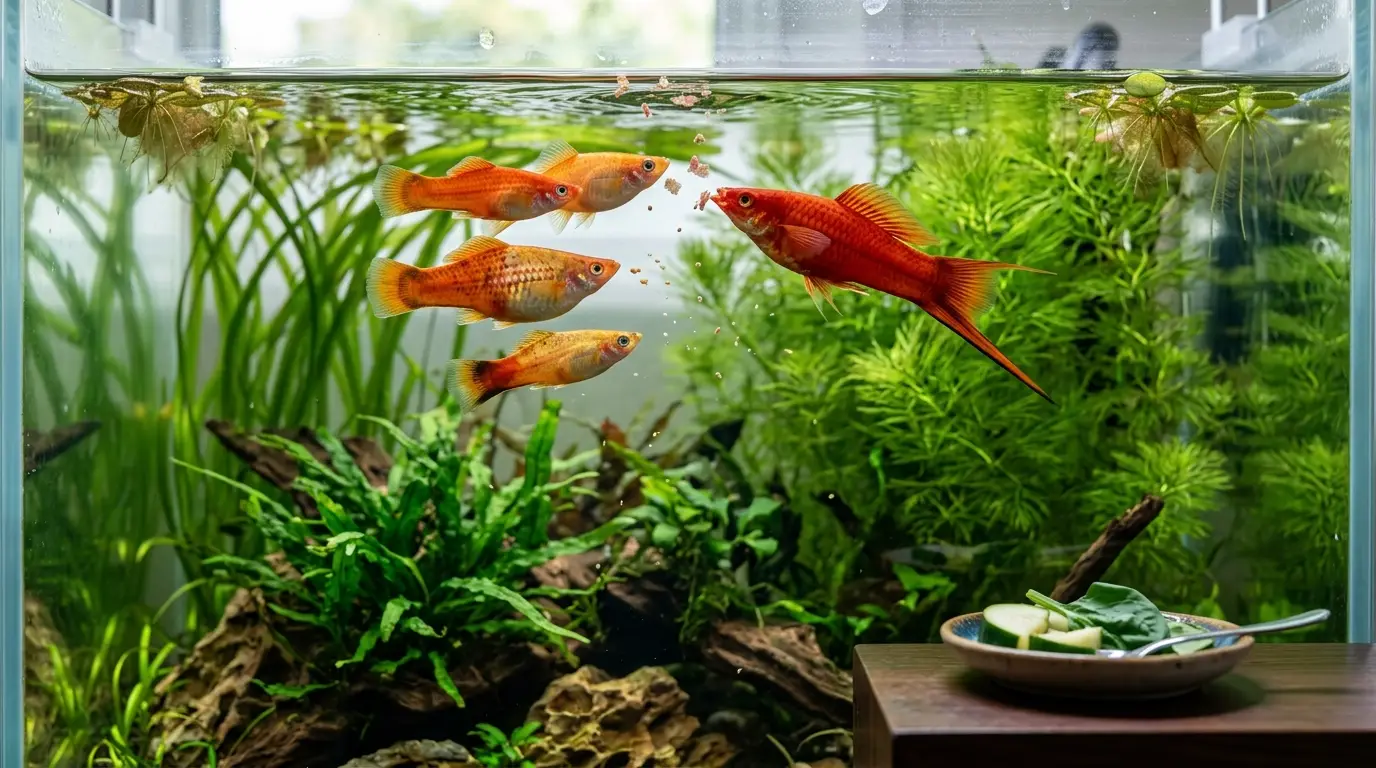
Swordtails are omnivores. Offer a quality flake or micro-pellet with plant content. Add spirulina, blanched spinach, and occasional frozen or live foods like brine shrimp and daphnia.
Feed small amounts two to three times per day. Only what they finish in about two minutes. Add one light fast day each week. This keeps digestion smooth and colors bright.
Watch body shape and waste. Long white strings can signal a diet issue or parasites. This swordtail fish care guide favors variety to prevent gaps in nutrition.
Field note: My red swords show deeper color when I add spirulina and baby brine shrimp twice a week. The mix keeps them lean and active.
Temperament and tank mates
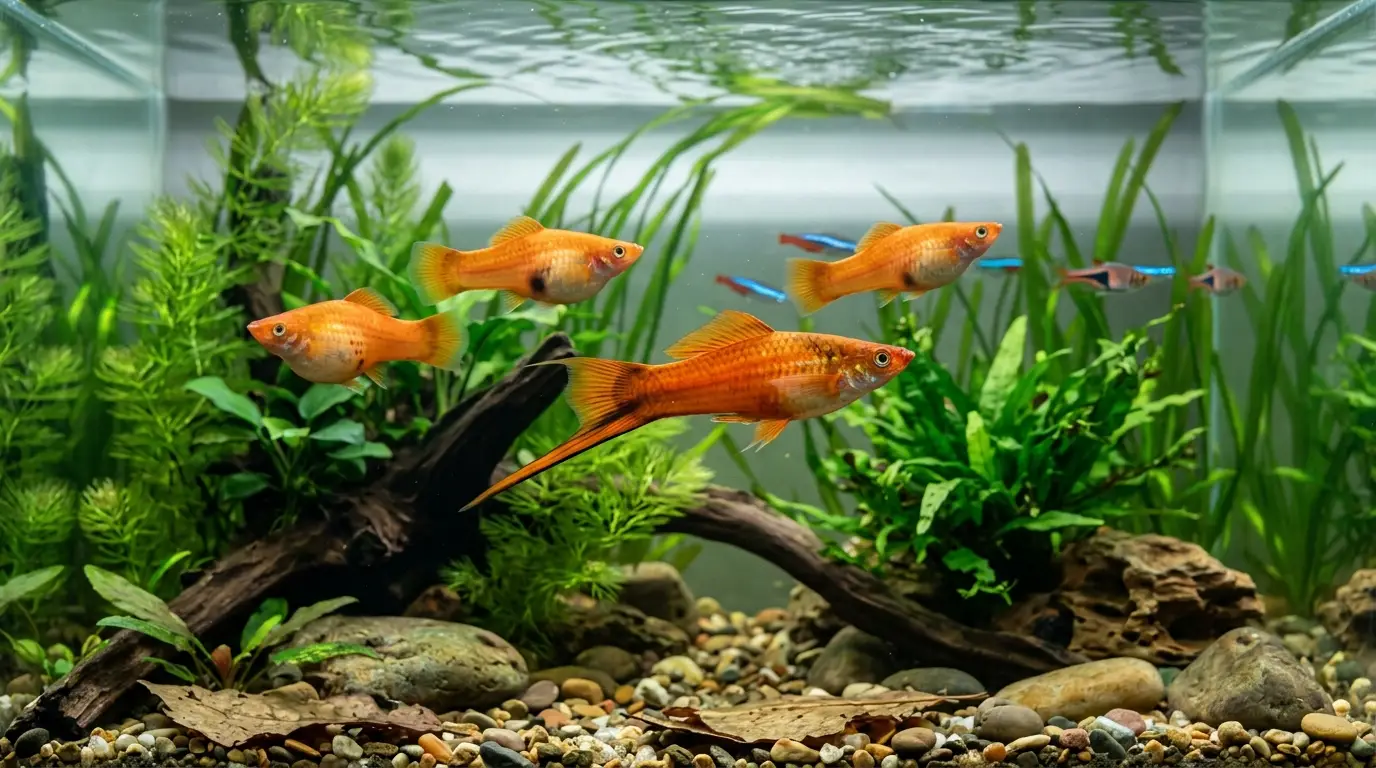
Swordtails are lively and mostly peaceful. Males can chase. Keep one male for every two or three females. If you want more than one male, use a larger tank with plants that break line of sight.
Good tank mates:
- Peaceful livebearers like mollies and guppies
- Corydoras catfish
- Larger tetras and rasboras
- Danios and rainbowfish
Use caution with platies. Swordtails can hybridize with them. Avoid fin nippers, large cichlids, and anything that bites flowing tails. This swordtail fish care guide aims for harmony, not stress.
Health, quarantine, and disease prevention
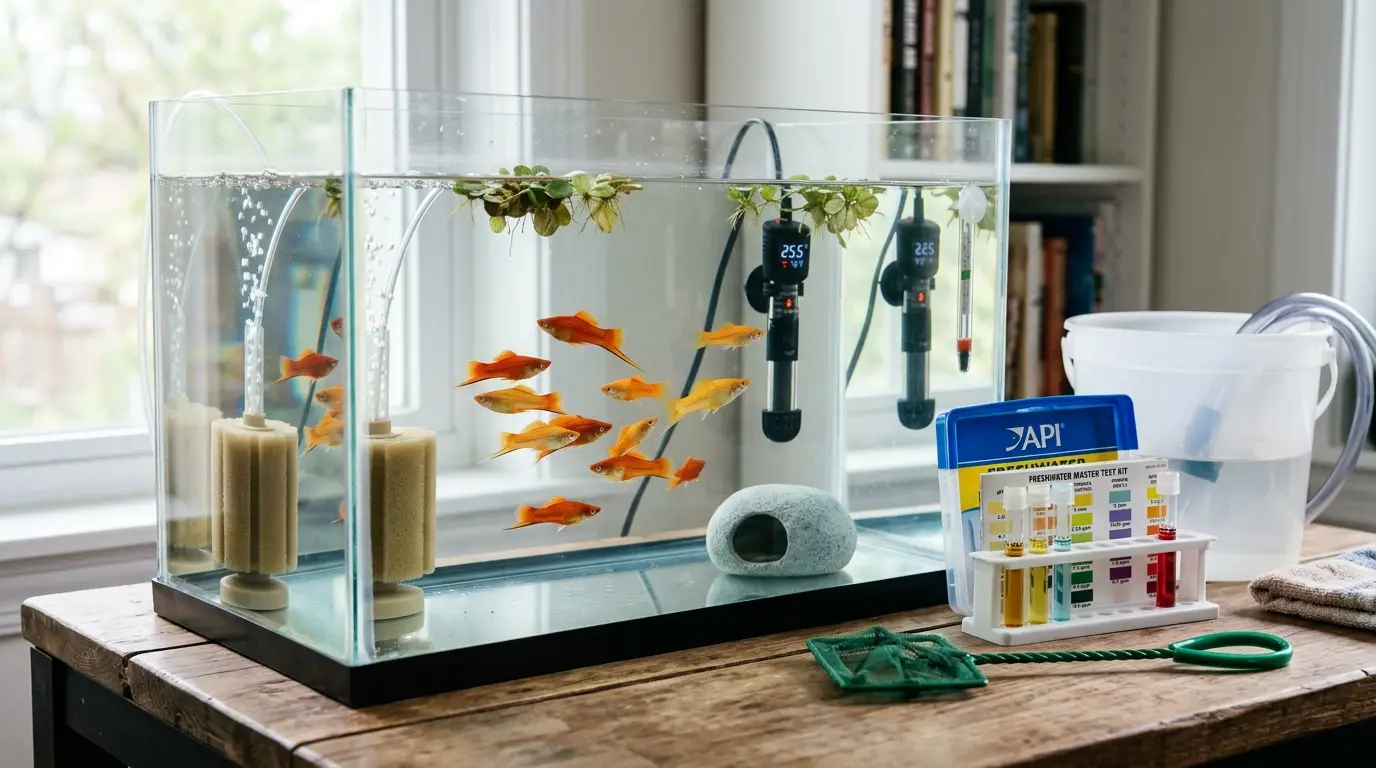
Quarantine new fish for 2–4 weeks. Use a cycled sponge filter and daily checks. Slow-drip acclimate to your main tank’s water. Test water weekly. Stable water beats most medicines.
Watch for common issues:
- Ich shows as white spots and flashing.
- Fin rot and columnaris show ragged fins or fuzzy patches.
- Internal parasites cause weight loss and stringy waste.
- Stress shows as clamped fins, gasping, and hiding.
Prevention basics:
- Keep water clean and oxygen high.
- Do not overfeed.
- Rinse new plants to avoid hitchhikers.
- Treat early if you spot illness.
Some hobbyists use a small amount of aquarium salt for mild stress. Use it only if your plants and tank mates can handle it. This swordtail fish care guide suggests salt as a tool, not a habit.
Breeding swordtails the right way
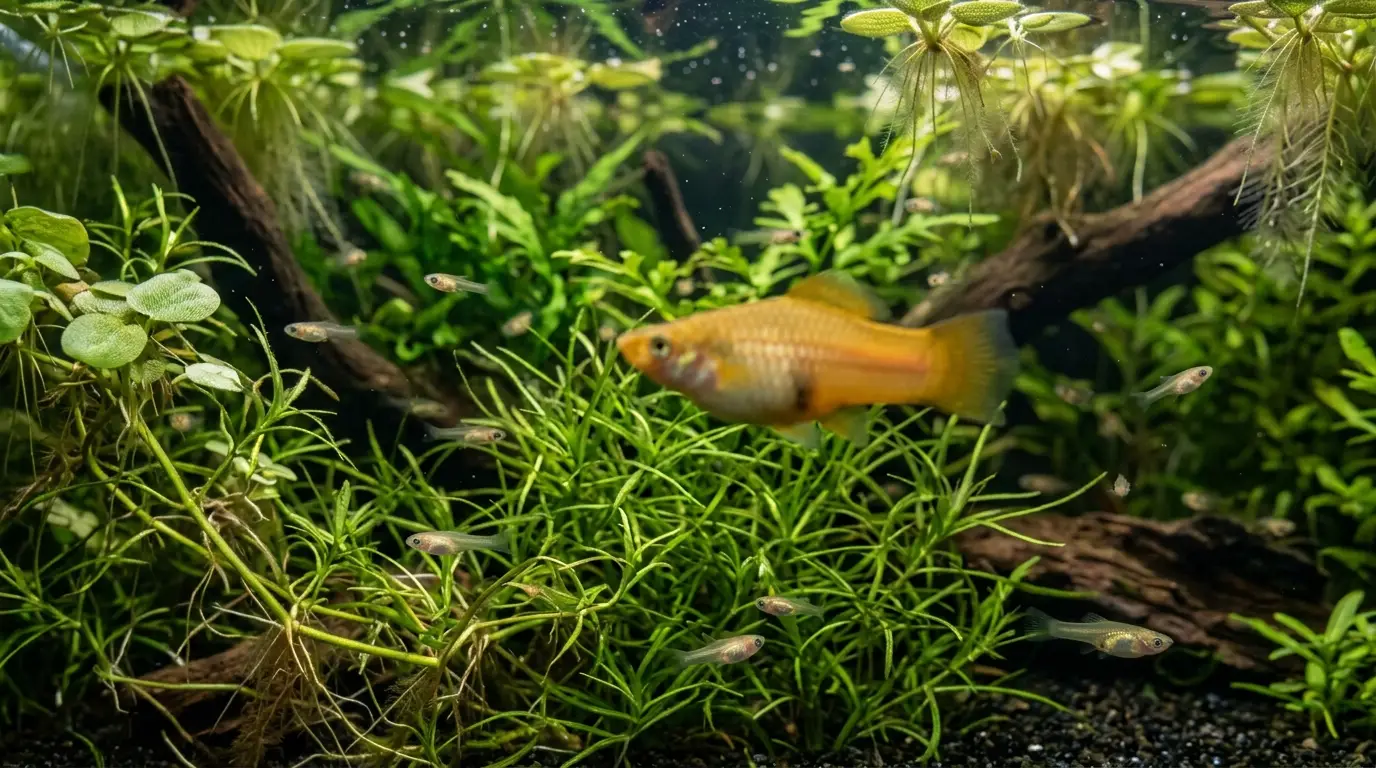
Swordtails are livebearers. Females can drop 20–150 fry every 4–6 weeks. A gravid female looks boxy from the side. She may hide near plants before birth.
Protect fry with cover. Dense plants like guppy grass and water sprite work well. You can move the mother to a nursery tank before birth, then return her. Parents may eat fry, so give the babies shelter.
Feeding fry:
- Crushed flakes and high-protein fry food
- Baby brine shrimp once or twice daily
- Many small meals and clean water
Avoid inbreeding. Trade juveniles with other keepers. This swordtail fish care guide promotes strong lines and healthy growth. In my tanks, dense floating plants alone raised fry survival from 10% to about 60%.
Maintenance schedule and water change routine
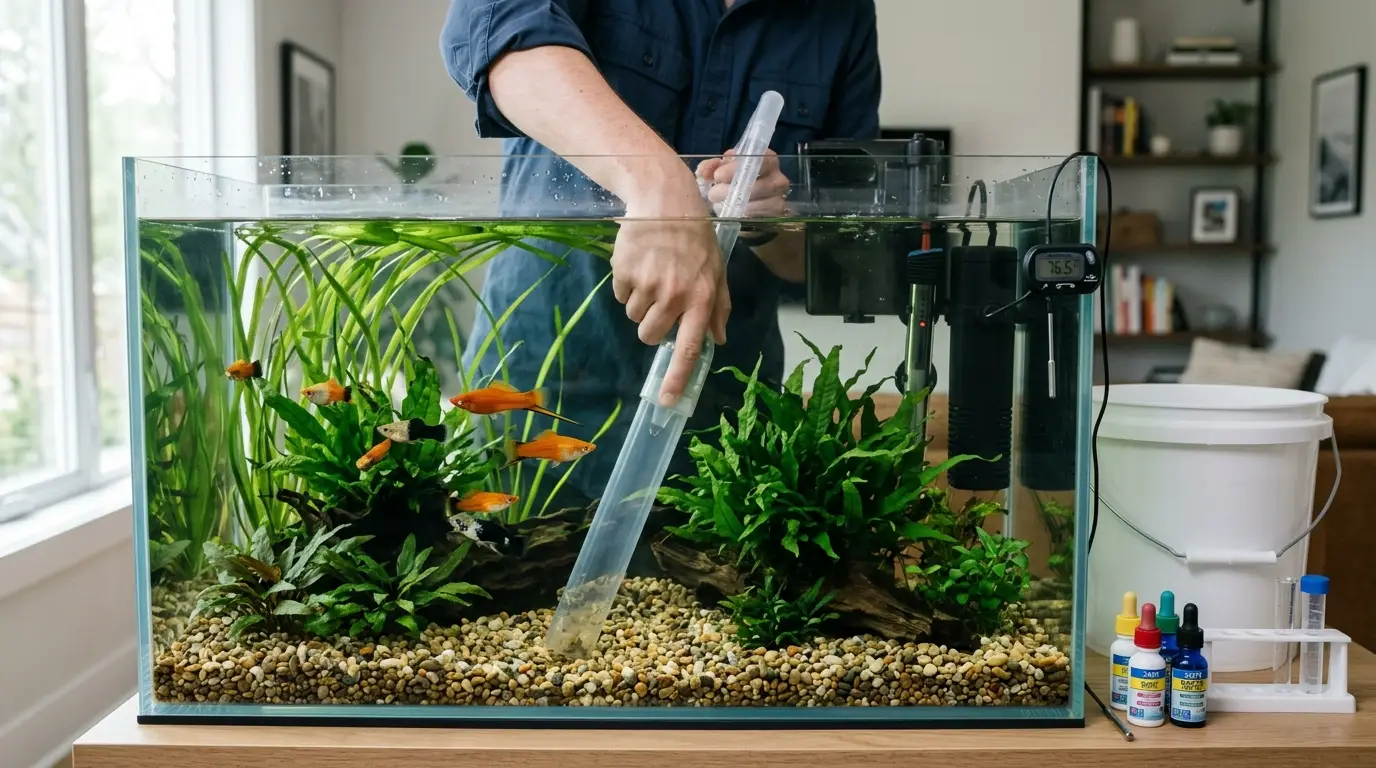
A clean tank is your best medicine. Aim for steady, simple habits. Keep a log.
Weekly tasks:
- Test ammonia, nitrite, nitrate, and pH.
- Change 25–40% of the water with dechlorinator.
- Vacuum light debris without uprooting plants.
- Wipe glass to keep light bright.
Monthly tasks:
- Rinse filter media in old tank water.
- Check heater accuracy.
- Prune plants for flow and light.
Pro tip: Match new water temperature within 1–2°F. This swordtail fish care guide keeps swings small to avoid stress.
Common mistakes and how to avoid them
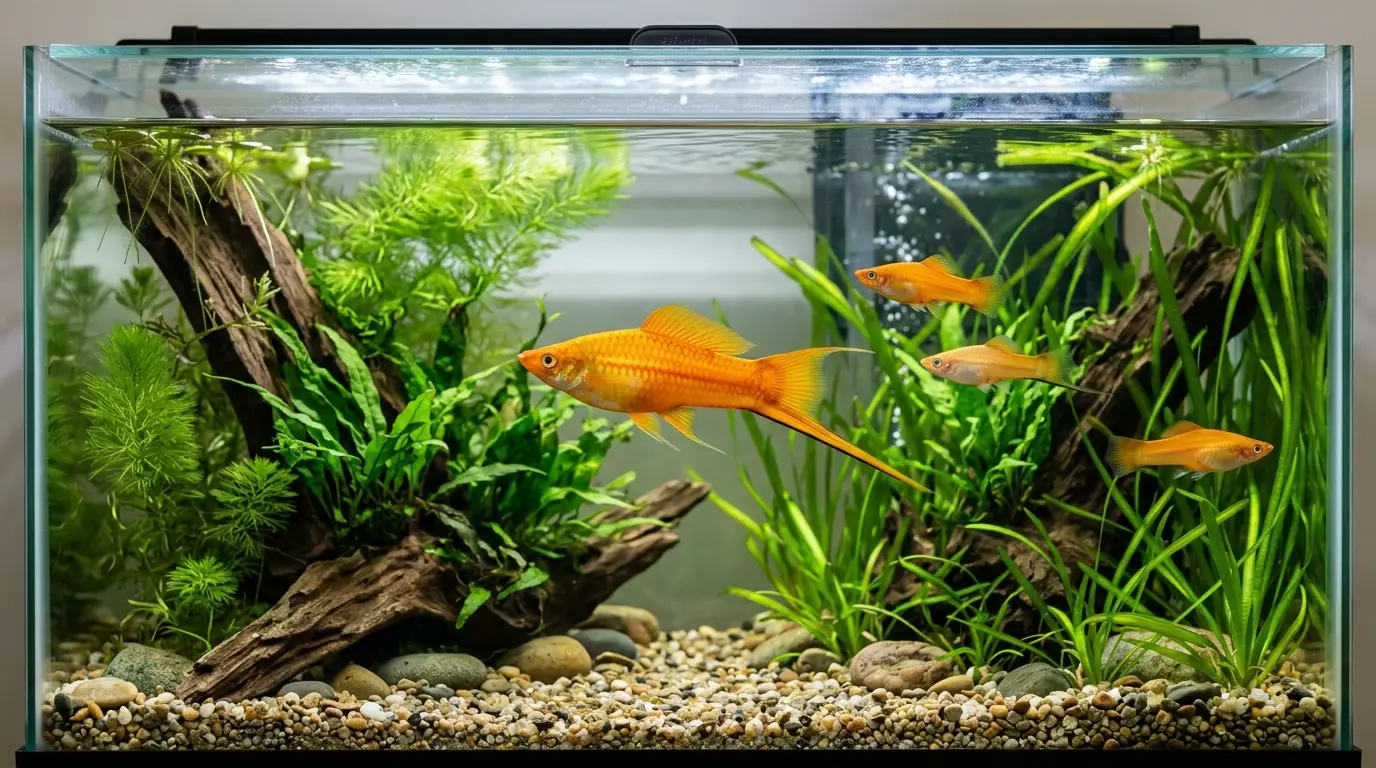
Mistakes to watch for:
- Tank too small for active swimmers
- Skipping a lid on a known jumper
- Soft, acidic water without buffers
- All-male setups in tight quarters
- Overfeeding rich foods with no veggies
- No quarantine for new fish
Quick fixes:
- Upgrade space and add cover.
- Raise KH with crushed coral if needed.
- Use a plant-heavy, varied diet.
- Add more females or more room to spread chasing.
- Start a simple quarantine tub. It saves fish and money.
This swordtail fish care guide focuses on prevention, not rescue.
Troubleshooting: quick answers to common problems
Common problems and simple actions:
- Fins clamped and dull color. Check ammonia and nitrite. Do a partial water change and add extra aeration.
- Flashing on decor. Test water and look for ich. Raise temperature slowly to 78–79°F and treat as directed.
- Sudden fry losses. Improve cover, feed tiny meals often, and boost biofiltration.
- Aggressive chasing. Add plants, rearrange decor, and adjust male-to-female ratio.
- Cloudy water. Reduce feeding, clean filter, and increase water changes.
For deeper dives, this swordtail fish care guide includes steps that work in real home tanks.
Frequently Asked Questions of swordtail fish care guide
How many swordtails can I keep in a 20-gallon tank?
Start with one male and two or three females. Add more only if you have strong filtration and plants.
Do swordtails need a heater?
Yes, unless your room stays in the mid-70s. Stable heat in the 72–79°F range keeps them healthy.
Can swordtails live with shrimp and snails?
Yes, with larger shrimp and most snails. Small shrimp babies may be eaten.
How often should I feed swordtails?
Two to three small meals per day works well. Add a light fast day weekly to prevent bloating.
Will swordtails eat their fry?
They can. Use dense plants or a nursery tank to improve survival.
Can I keep only females to avoid fry?
Yes, an all-female group is calm and still colorful. Watch for rare stored sperm in new females.
What water hardness do swordtails prefer?
Moderate to hard water is ideal. Aim for 10–20 dGH and 6–12 dKH for stable pH.
Can swordtails mix with platies?
They can, but they may hybridize. Keep them apart if you want pure lines.
How long do swordtails live?
About 3–5 years with good care. Clean water and a varied diet help them reach the upper range.
Conclusion
Swordtails reward steady care with color, motion, and easy breeding. Give them space, hard alkaline water, a lid, plants, and a varied diet. Keep to simple weekly habits, and you will see bold fish with bright fins and confident behavior. This swordtail fish care guide is your roadmap to a lively, low-stress community. Start with one small upgrade today, like extra plants or a better lid, and share your results. Subscribe for more step-by-step guides and leave a comment with your swordtail wins and questions.