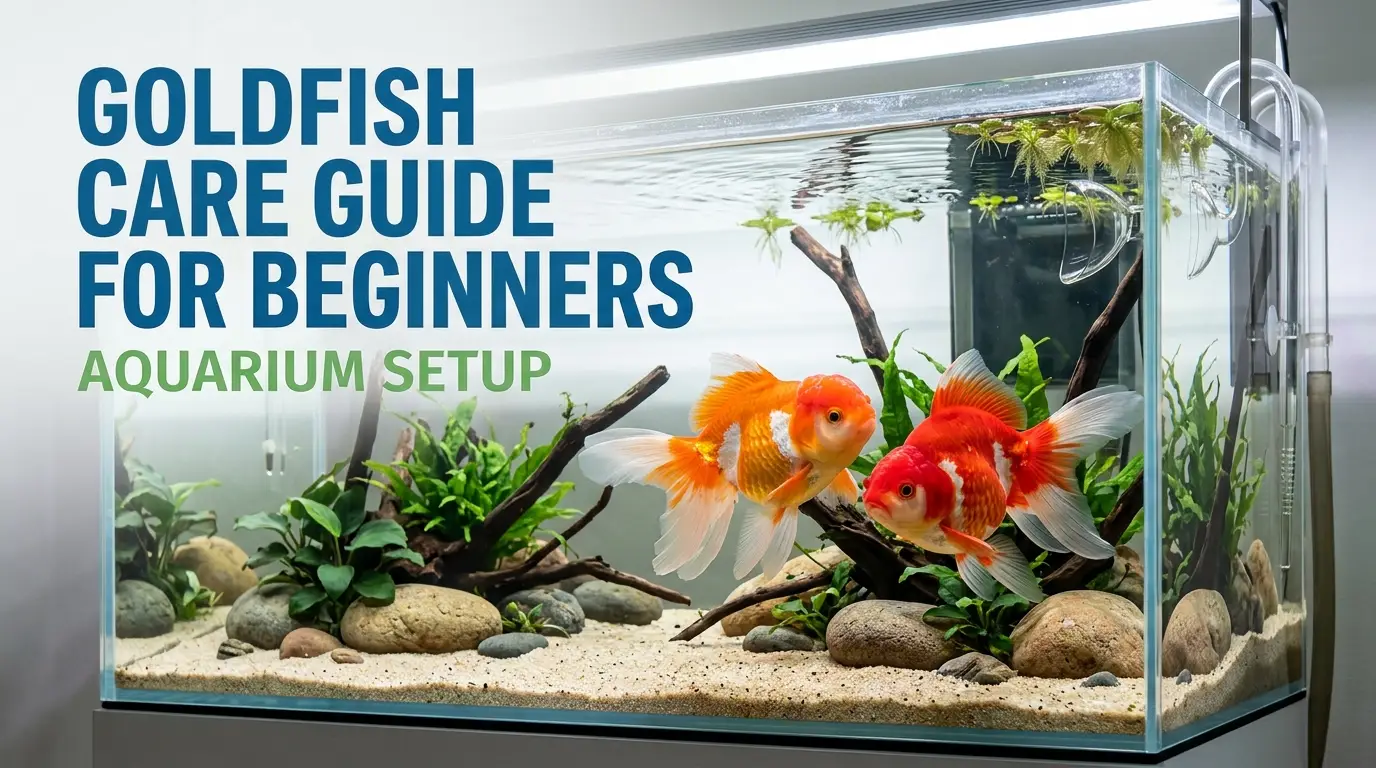
Start with a big tank, stable water, strong filter, and patient cycling.
If you want a healthy, low-stress home for your fish, this goldfish care guide for beginners aquarium setup gives you a clear, step-by-step plan. I’ve set up many goldfish tanks for families and first-time keepers, and I’ll show you what works, what fails, and how to avoid common mistakes. Follow along to build a clean, stable aquarium your goldfish will thrive in for years.
How to Choose the Right Tank and Goldfish
Tank size is the first big choice. Goldfish grow fast and produce lots of waste. A larger tank keeps water stable and reduces stress. For fancy goldfish, start with at least 20 gallons for one, then add 10–20 gallons per extra fish. For common, comet, or shubunkin goldfish, plan 40–75 gallons or a pond.
Pick your type:
- Fancy goldfish move slow and prefer 68–74°F with gentle flow.
- Common and comet goldfish are strong swimmers and need more space and current.
Choose a sturdy stand and place the tank away from windows and heaters. Stable room temps help your goldfish care guide for beginners aquarium setup run smooth.
Essential Equipment for a Healthy Goldfish Aquarium
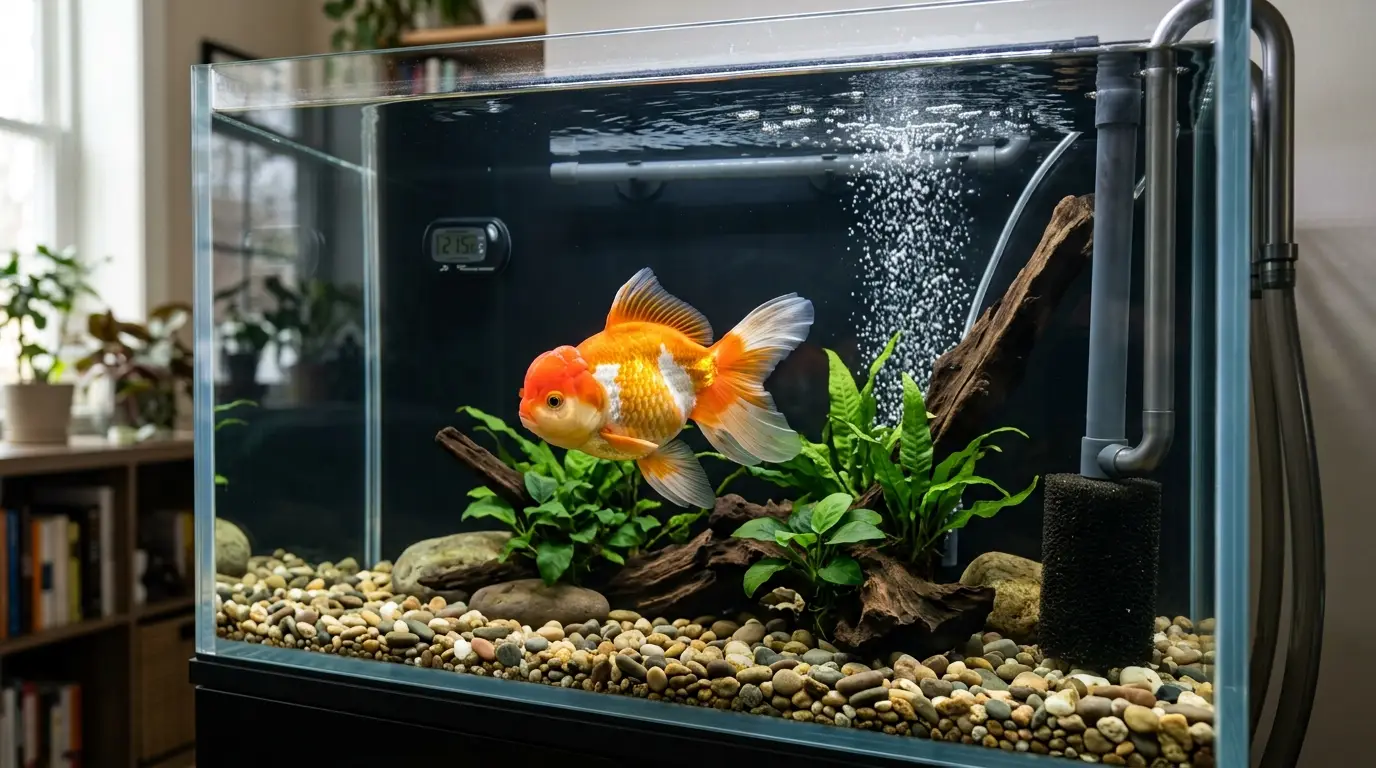
Goldfish need strong filtration and steady oxygen. This list covers must-haves for clear water and happy fish.
- Filter with 8–10x tank turnover per hour for goldfish waste.
- Sponge pre-filter to protect fins and save baby fish from intake.
- Air pump and airstone for extra oxygen.
- Dechlorinator that treats chlorine and chloramine.
- Liquid test kit for ammonia, nitrite, nitrate, pH, and KH.
- Heater only if room temps swing. Aim for steady 68–72°F.
- Substrate: bare-bottom or large, rounded gravel. Avoid small gravel they can swallow.
- LED light on a timer for 6–8 hours to limit algae.
- Net, algae scraper, and dedicated bucket for water changes.
Good gear cuts problems in half. It also keeps your goldfish care guide for beginners aquarium setup simple and repeatable.
Step-by-Step Aquarium Setup for Beginners
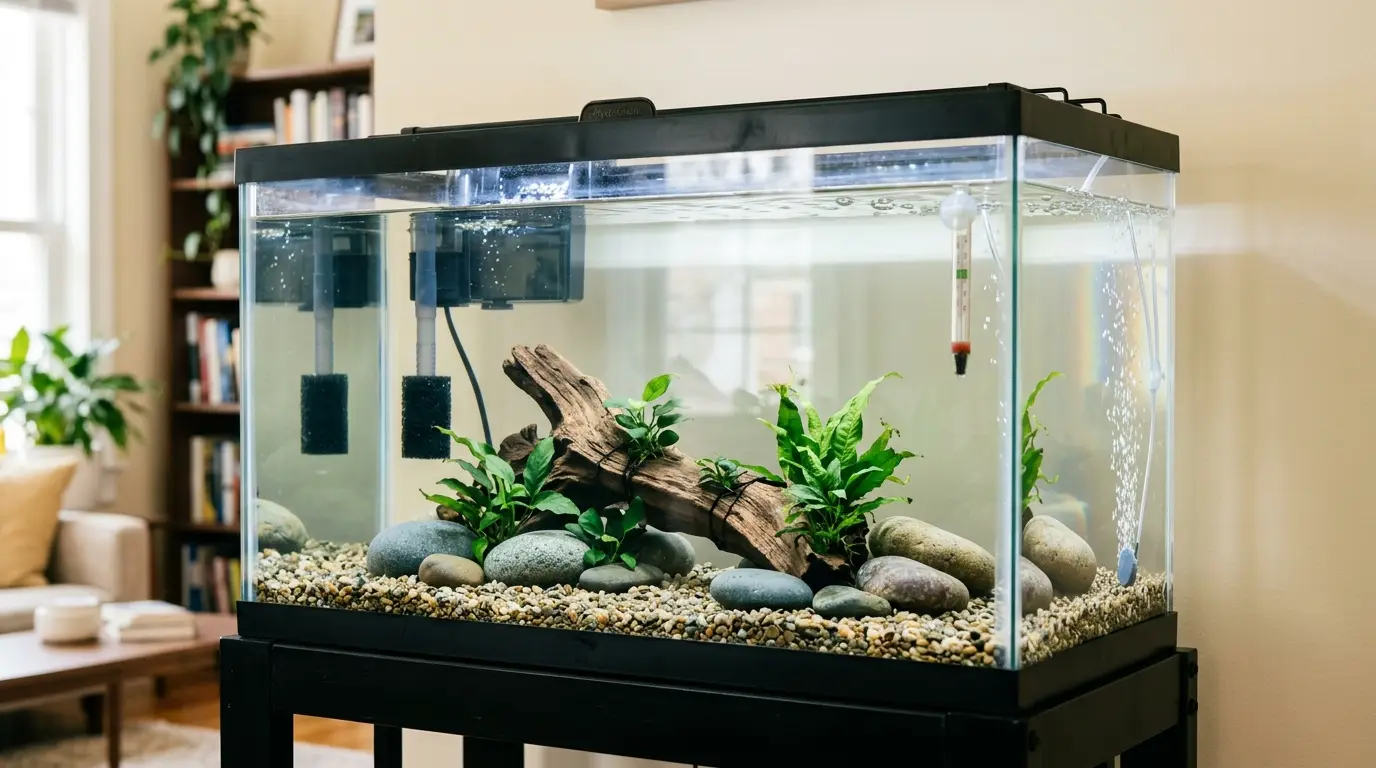
Set up the tank before buying fish. This keeps stress low and avoids early losses.
- Rinse the tank and equipment with plain water. No soap.
- Place the tank, add substrate, rocks, and safe decor with no sharp edges.
- Install filter, air pump, and heater if needed.
- Fill with tap water and add dechlorinator for the full volume.
- Plant hardy species like anubias or java fern on rocks or wood.
- Start the filter and air. Check for leaks and stable temperature.
- Begin a fishless cycle. Dose bottled bacteria and a small amount of household ammonia.
Take your time. A careful start makes a strong goldfish care guide for beginners aquarium setup that lasts.
Water Cycling and Parameters You Must Master
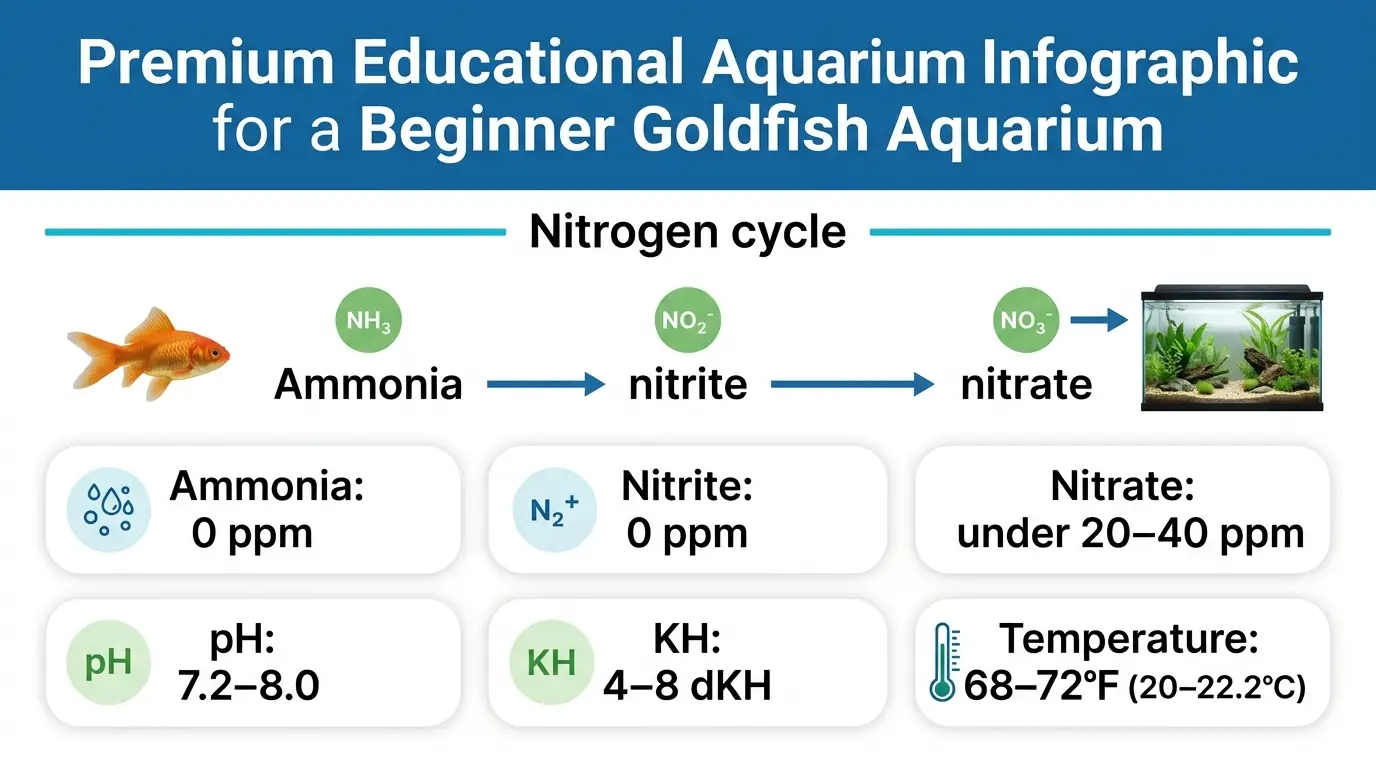
Cycling builds good bacteria that turn toxic ammonia into nitrite, then nitrate. This process takes 2–6 weeks. Test every few days. Keep ammonia and nitrite at 0 ppm before adding fish. Keep nitrate under 20–40 ppm with water changes.
Key targets:
- Ammonia: 0 ppm
- Nitrite: 0 ppm
- Nitrate: under 20–40 ppm
- pH: 7.2–8.0
- KH: 4–8 dKH to stabilize pH
- Temperature: 68–72°F for most setups
Tip from experience: If nitrite stalls, add a little aquarium salt (1 tablespoon per 5 gallons) to protect gills while the bacteria catch up. Learning this cycle is the heart of any goldfish care guide for beginners aquarium setup.
Feeding Goldfish the Right Way
Overfeeding is the fastest way to foul water. Goldfish are grazers but do best with small, steady meals.
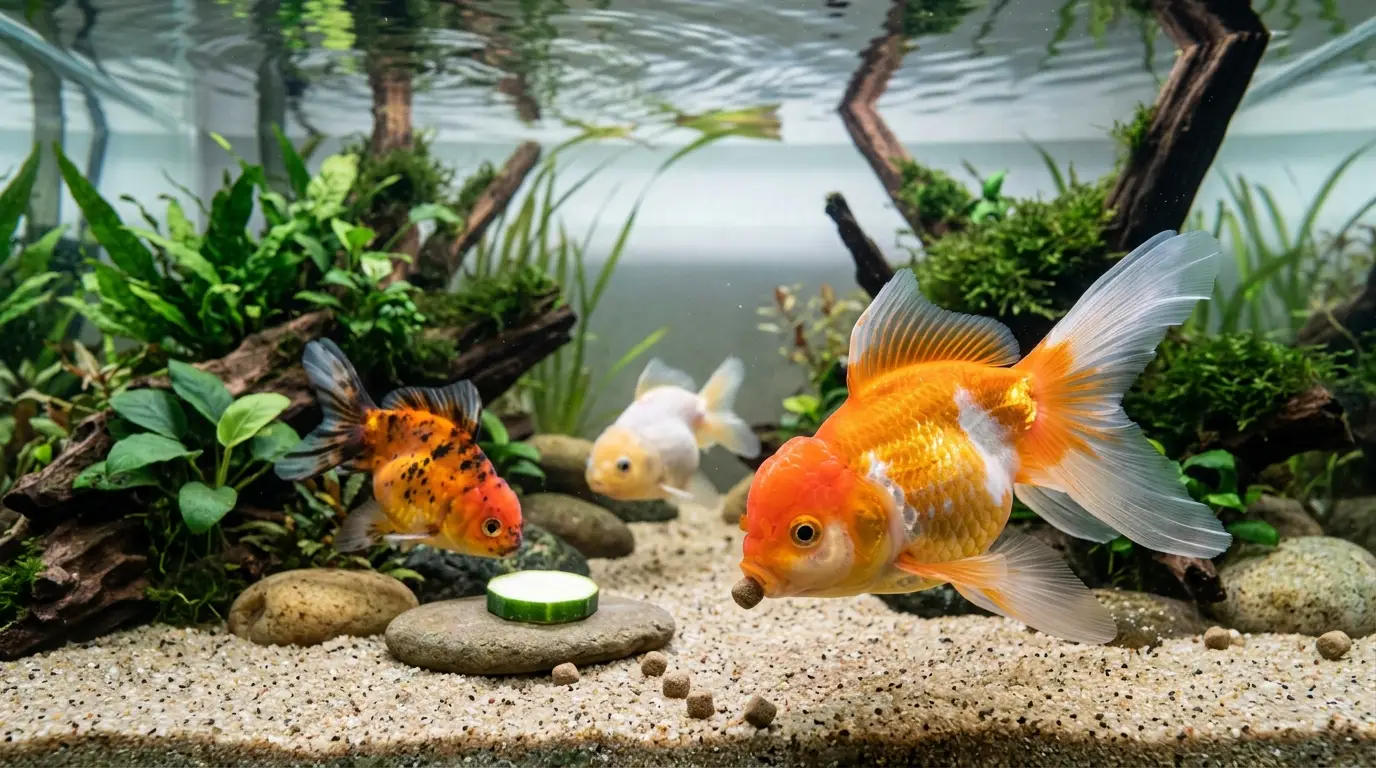
- Feed 1–2 times per day, only what they eat in 1–2 minutes.
- Use high-quality sinking pellets to reduce air gulping.
- Rotate in blanched greens like spinach or peas, and gel food.
- Skip one feeding per week to rest their gut.
In my first year, I fed too much and battled cloudy water. Cutting portions and using sinking pellets fixed it. Good feeding is a quiet engine behind a clean goldfish care guide for beginners aquarium setup.
Weekly and Monthly Care Routine
A steady routine keeps water safe and fish lively. Keep it simple and quick.
Weekly:
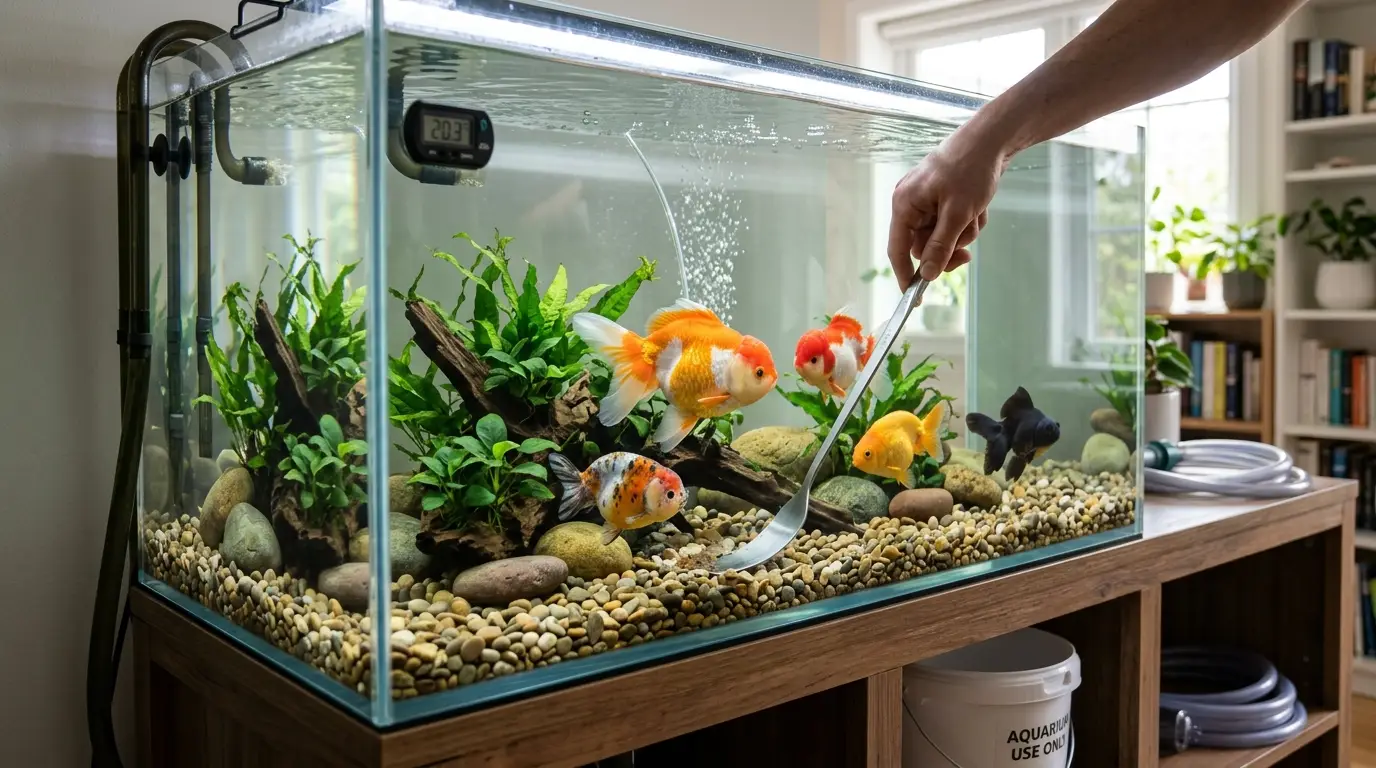
- Test water. Change 30–50% with dechlorinated water matched to temp.
- Vacuum debris off bare bottoms or lightly over gravel.
- Squeeze-rinse sponge filter media in a bucket of tank water.
Monthly:
- Deep clean decor if algae builds up, but not the biofilter.
- Check filter flow, air pump output, and all seals.
Track your steps in a notebook or app. A short list you repeat is the backbone of any goldfish care guide for beginners aquarium setup.
Health Checks, Common Problems, and Safe Treatments
Daily health checks take one minute. Look for clear eyes, smooth swimming, steady appetite, and even fins. Sudden changes mean trouble.
Common issues:
- Ich shows as white salt-like spots. Treat with heat at the safe end of range and a proven ich med.
- Fin rot shows frayed edges. Improve water, then use a broad-spectrum antibacterial if needed.
- Swim issues often relate to diet or gulped air. Switch to sinking food and smaller meals.
- Ammonia burn causes red gills and gasping. Test water and change water fast.
Quarantine new fish 2–4 weeks in a spare tub with a sponge filter. This extra step has saved my main tanks more than once. Health basics should sit at the center of your goldfish care guide for beginners aquarium setup.
Decor, Plants, and Enrichment That Work
Goldfish explore and dig, so use safe, sturdy decor. Skip sharp plastic. Go for smooth stones, driftwood, and hardy plants attached to hardscape.
Great picks:
- Anubias and java fern on rocks or wood
- Floating hornwort for shade and nitrate uptake
- Fine sand in a thin layer if you want natural foraging
Add a feeding ring to reduce mess. Rotate decor every few weeks to keep them curious. Smart enrichment makes your goldfish care guide for beginners aquarium setup more fun for you and your fish.
Stocking Rules and Compatibility Basics
Avoid crowding. It raises waste and stress. Stick to these simple rules.
- Fancy with fancy. Common with common. Their speeds and needs differ.
- Start with one or two fish while you learn the tank.
- Add new fish only after several stable weeks of good tests.
Goldfish do best without small tropical tankmates. Snails or larger, cool-water minnows may work in big, stable systems, but always quarantine first. Wise stocking keeps your goldfish care guide for beginners aquarium setup calm and clean.
Troubleshooting Common Setup Issues
Cloudy water after setup usually means a bacterial bloom. Do not tear down the tank. Keep the filter running, feed lightly, and it will clear as the cycle matures.
Green water or heavy algae means too much light or nitrate. Cut lights to 6 hours, feed less, and add more water changes. Fish gasping at the surface often means low oxygen or ammonia. Boost aeration and test right away. Quick response keeps a goldfish care guide for beginners aquarium setup on track.
Frequently Asked Questions of goldfish care guide for beginners aquarium setup
How many goldfish can I keep in a 20-gallon tank?
One fancy goldfish is the limit for 20 gallons. Plan more space as it grows and add 10–20 gallons for each extra fancy.
Do goldfish need a heater?
Not always. They like cool, stable water, but a heater helps in cold rooms to prevent swings.
How often should I change the water?
Change 30–50% weekly. Test nitrates and adjust if levels climb past 20–40 ppm.
Can I cycle a tank with fish?
It is possible but risky for the fish. A fishless cycle with bottled bacteria and ammonia is safer and easier.
What should I feed goldfish every day?
Use quality sinking pellets as a staple. Add veggies and gel food, and keep portions small to protect water quality.
Conclusion
A great goldfish tank starts with space, strong filtration, and a slow, patient cycle. Feed small portions, test weekly, and change water on schedule. Keep decor safe, stock lightly, and quarantine new arrivals before they join the main tank.
Start today: gather your gear, set the tank, and begin the cycle. Your fish will thank you with bright colors, smooth swims, and long lives. If this guide helped, share it with a friend, subscribe for more tips, or leave a comment with your setup progress.
One Comment