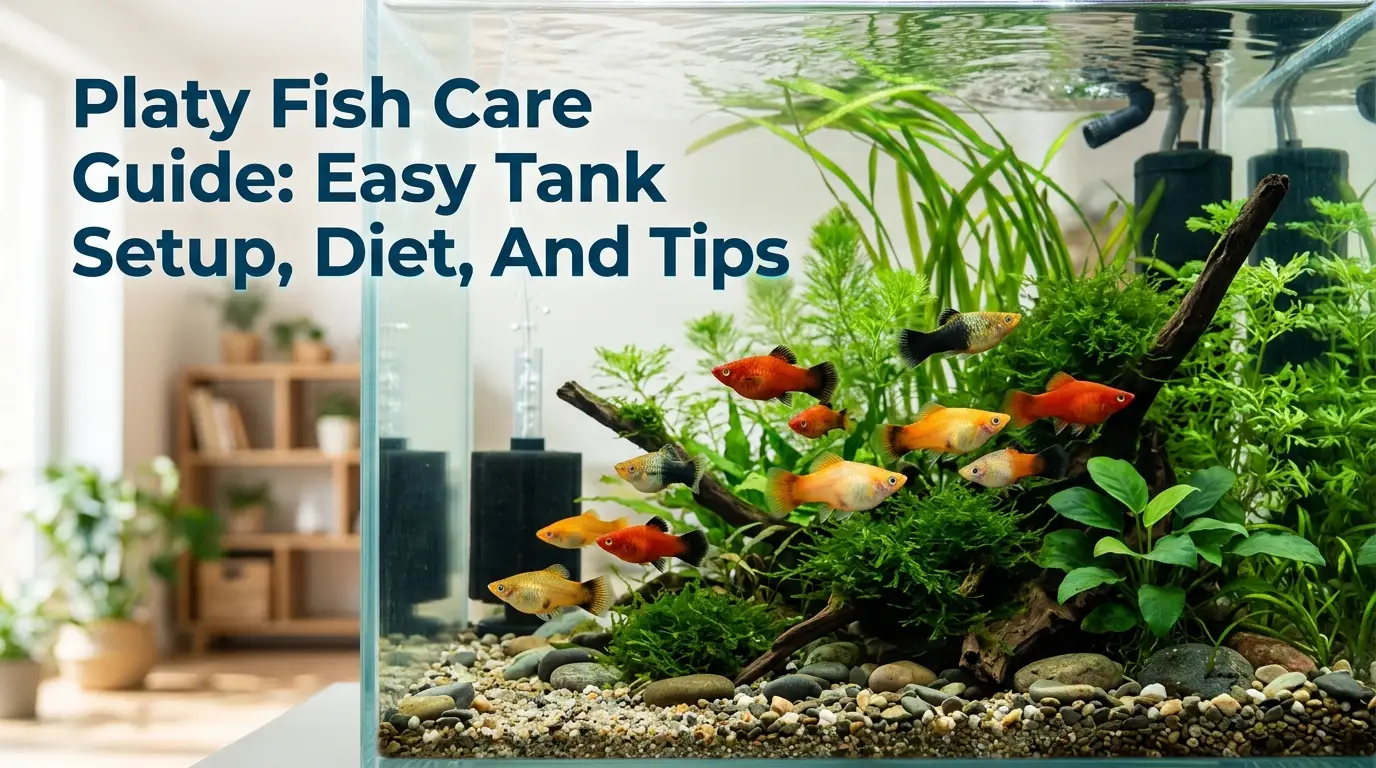
Platies thrive in clean, hard, alkaline water with steady heat and plants.
If you want a bright, easy, and active pet fish, platies are a joy. I have kept them for years and seen what works, what fails, and what saves the day during a mini-crisis. In this platy fish care guide, I will show you clear steps, simple checks, and proven tips so you can keep your fish healthy, breed them with ease, and enjoy a calm, colorful tank.
Meet the platy: friendly, hardy, and full of color
Platies are small livebearers from Central America. Most in stores are Xiphophorus maculatus or Xiphophorus variatus. They grow to about 2 to 3 inches and live 2 to 4 years with good water.
They are social, peaceful, and busy mid to top swimmers. Males have a thin, pointed anal fin (gonopodium). Females have a fan-shaped anal fin and a rounder body. This platy fish care guide applies to both common and high-fin forms.
Platies love plants and open space to swim. They like hard, alkaline water and handle small swings well. Still, stable water is the secret. This platy fish care guide will help you lock that in.
Tank setup and water parameters
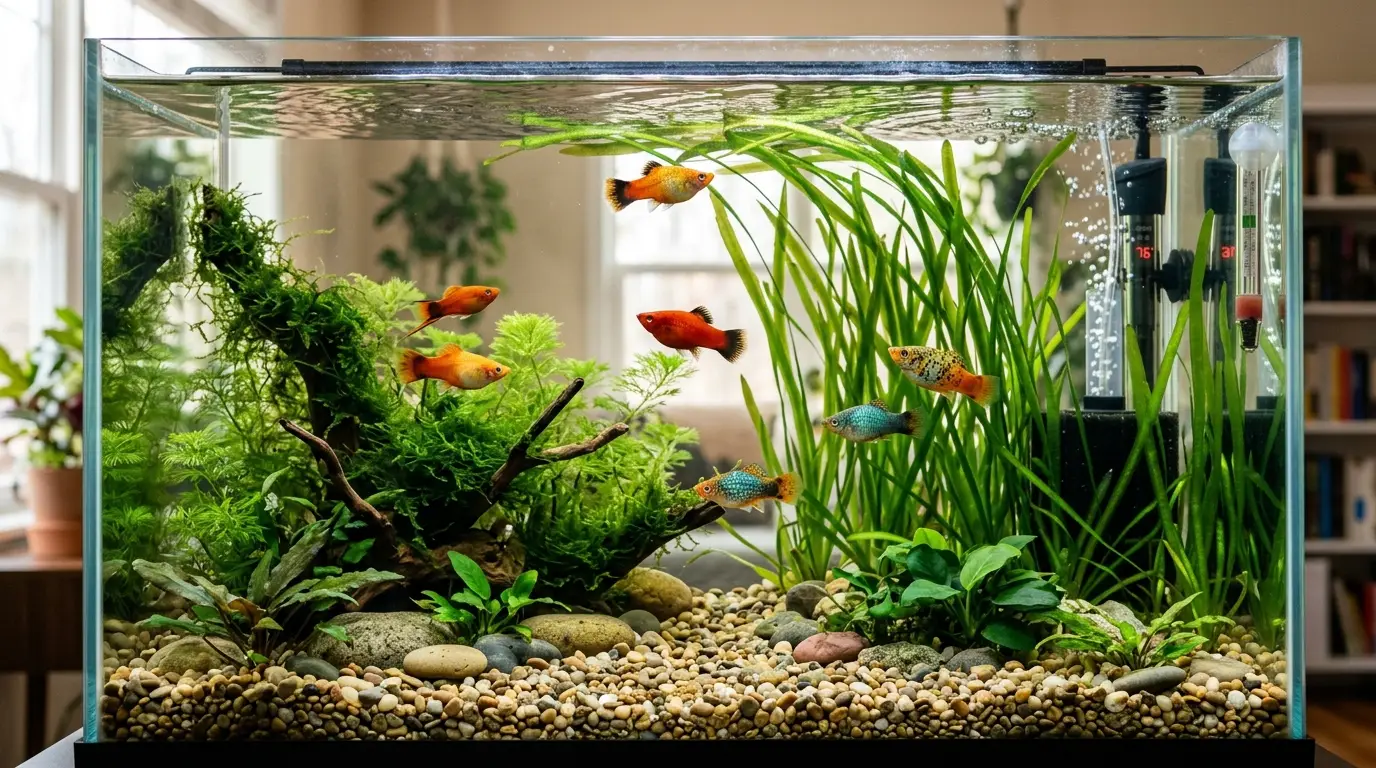
Set the tank to match their needs before you add fish. A cycled filter is a must. Aim for steady, clean water with gentle flow.
Key parameters:
- Tank size: 10 gallons for a trio, 15–20 gallons for 5–6 platies
- Temperature: 72–78°F (22–26°C); keep it steady
- pH: 7.0–8.2; stability beats chasing a number
- Hardness: GH 10–28 dGH; KH 6–12 dKH for pH stability
- Ammonia and nitrite: 0 ppm; nitrate: under 20–30 ppm
Gear checklist:
- Filter: sponge or hang-on-back with 4–6x tank volume per hour
- Heater: reliable, with a guard if you keep plants
- Light: 8–10 hours per day; use a timer
- Substrate: sand or fine gravel
- Plants: hornwort, water sprite, java moss, vallisneria
- Water conditioner: dechlorinate every new batch of tap water
- Test kit: check ammonia, nitrite, nitrate, pH, GH, and KH
Setup tips:
- Cycle the tank first. Add bottled ammonia and seed the filter. Wait for 0 ammonia, 0 nitrite, and some nitrate.
- Keep the surface active for good gas exchange.
- Add floaters or tall plants to break line-of-sight and calm the fish.
This platy fish care guide favors hard water. If your tap is soft, add crushed coral in a filter bag or use a remineralizer.
Stocking, sex ratios, and safe tank mates
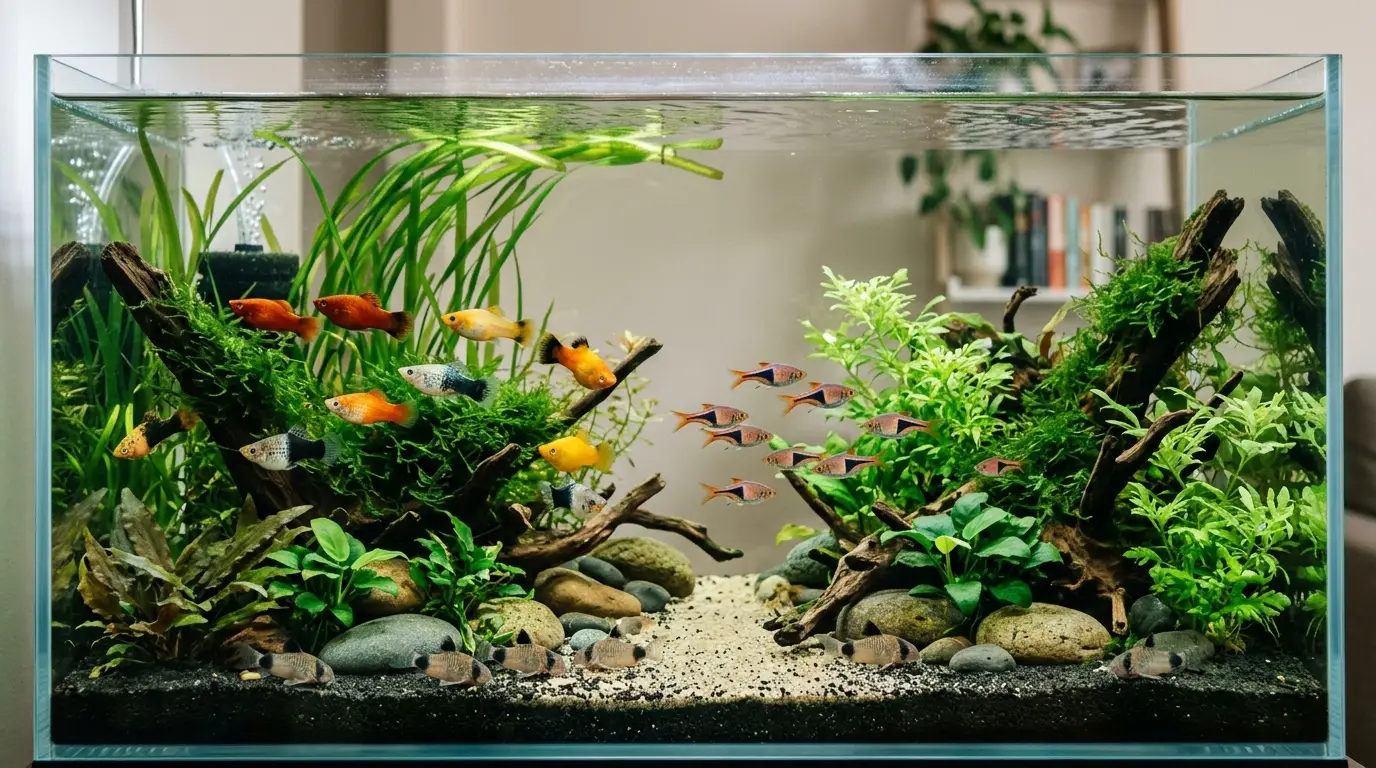
Platies are social but can pester each other, mainly when males outnumber females. The fix is simple.
Best practices:
- Start with 1 male to 2–3 females, or an all-female group
- Keep groups of 5 or more to spread attention and stress
- Add fish slowly, and quarantine new fish for 2–4 weeks
Good tank mates:
- Peaceful livebearers like mollies and guppies
- Corydoras catfish and bristlenose plecos
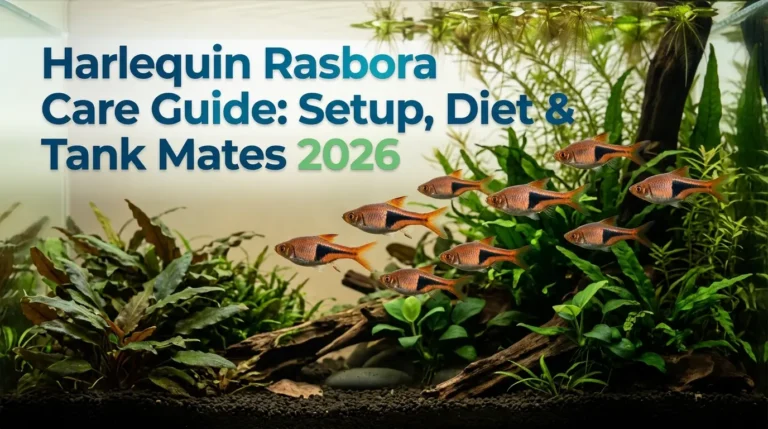
- Harlequin rasboras, neon tetras, and white cloud minnows
- Shrimp may work, but adults may eat baby shrimp
Avoid fin nippers or aggressive fish. Choose similar size, temp, and water needs. This part of the platy fish care guide helps you prevent stress and torn fins.
Feeding and nutrition
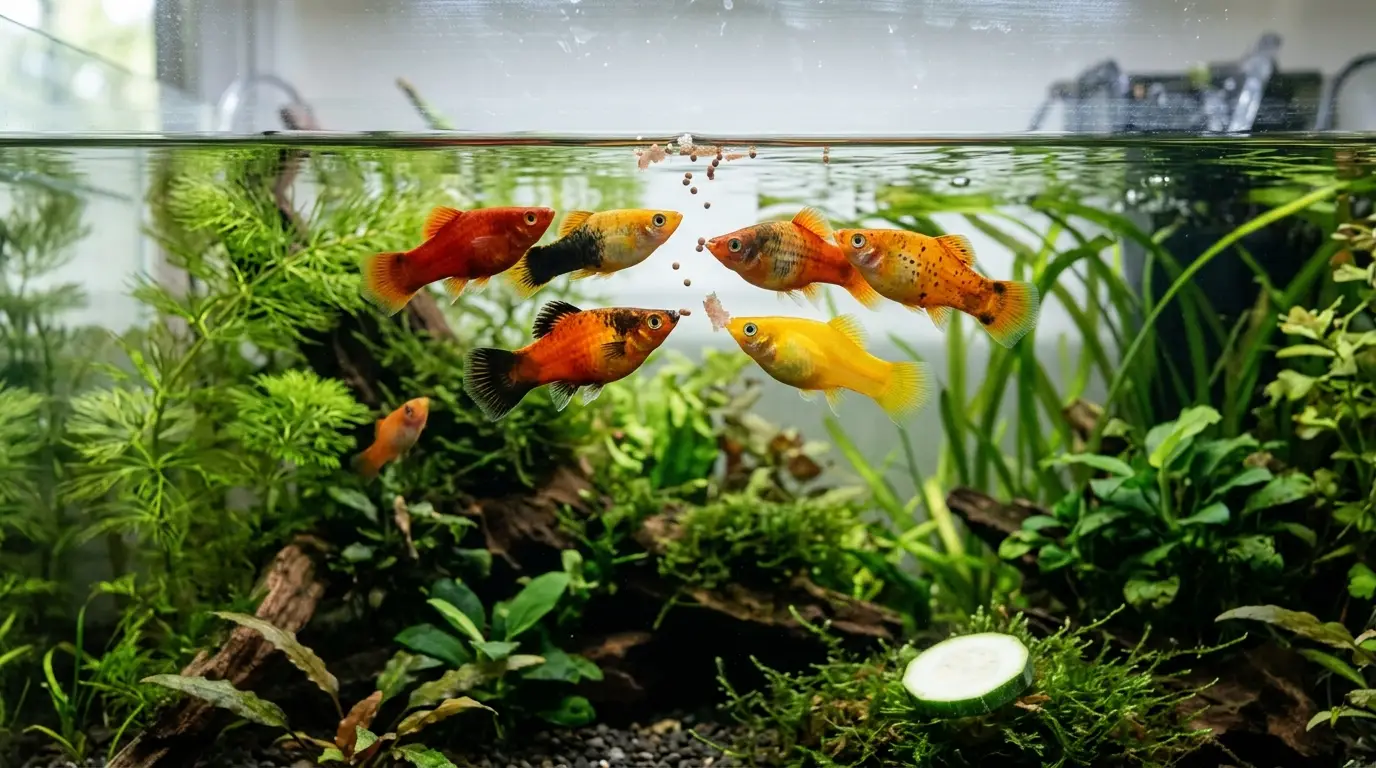
Platies are omnivores. Offer a mix of plant and protein foods. Keep meals small and varied.
- Feed 2 times per day, only what they eat in 30–60 seconds
- Use a quality micro pellet or flake as the base
- Add frozen or live treats like brine shrimp, daphnia, or bloodworms 2–3 times per week
- Offer greens like spirulina flakes, blanched zucchini, or peas
Avoid overfeeding. It clouds water and spikes ammonia. Rotate brands and food types. Think of it like a colorful salad bar. Your platy fish care guide is not complete without a smart diet.
Routine care and maintenance schedule
Small, steady steps beat big, rare fixes. This plan is easy to keep.
Daily:
- Quick look for clear eyes, open fins, and normal swim
- Count fish and note appetite
Weekly:
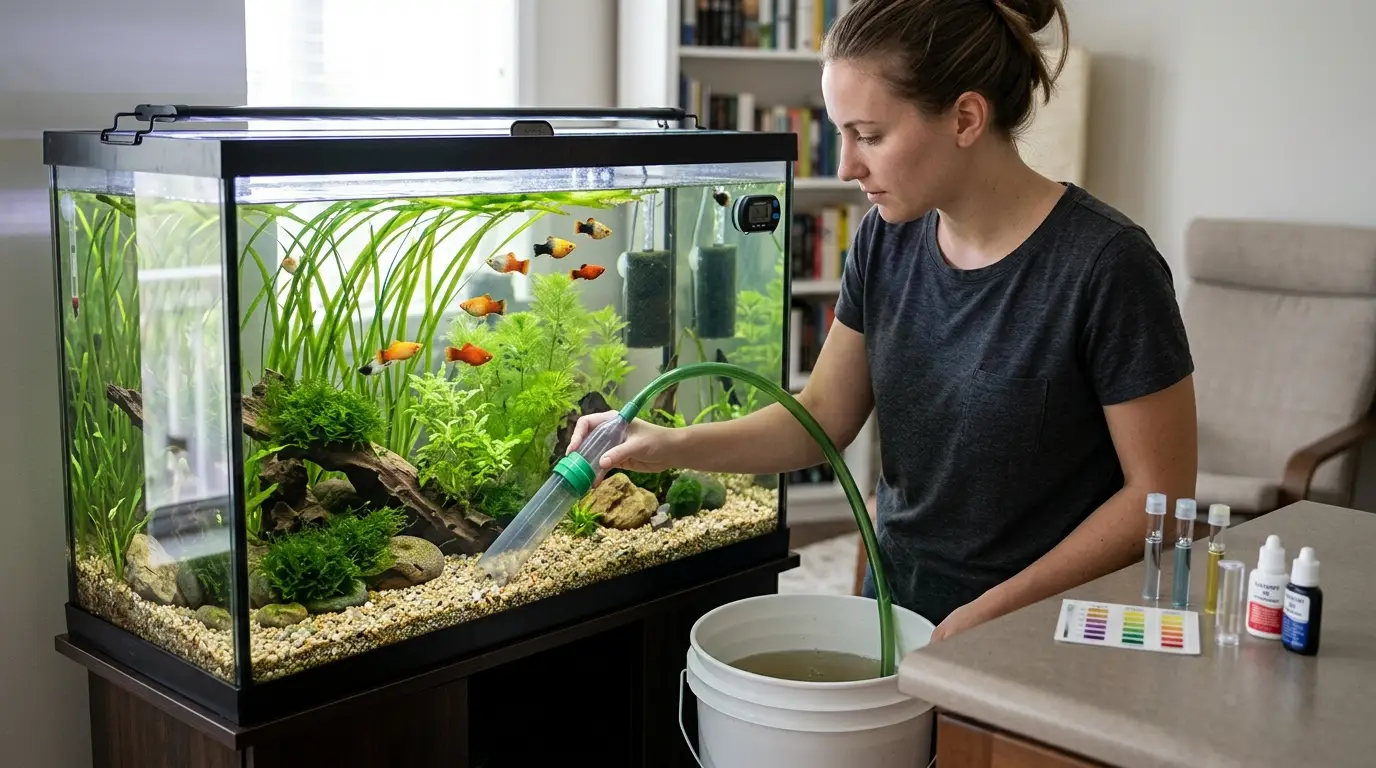
- Test water for ammonia, nitrite, nitrate, and pH
- Change 25–35% of the water and vacuum the substrate
- Rinse filter sponges in old tank water if flow slows
Monthly:
- Trim plants and clear any clogged intake
- Verify heater and thermometer readings match
Pro tip from my tanks: I keep a log. Date, tests, changes, and notes. It takes one minute and saves many headaches. A track record makes this platy fish care guide far easier to follow.
Breeding and fry care
Platies are livebearers. Females give birth to free-swimming fry.
Key facts:
- Gestation: about 24–35 days
- Brood size: 15–40+, based on age and care
- Females can store sperm for months after a single mating
To raise more fry:
- Add dense plants like java moss or guppy grass
- Feed adults well to reduce snacking on fry
- Move pregnant females to a calm, planted area if needed, then return them after birth
- Feed fry with powdered food, baby brine shrimp, or crushed flakes 3–4 times per day
From my tanks: A clump of moss near a sponge filter raised my survival rate from a handful to a lively school. That simple plant trick beats any plastic breeder box in this platy fish care guide.
Health, quarantine, and disease prevention
Healthy platies are alert, bright, and curious. Trouble shows up as clamped fins, white spots, flashing, or gulping at the surface.
Prevention steps:
- Quarantine new fish 2–4 weeks
- Keep hands and tools clean between tanks
- Do not add salt by default; use it only as a short treatment when advised
- Maintain stable heat, hard water, and low nitrate
Common issues:
- Ich (white spots): raise temp slowly to 80°F and treat per label
- Fin rot: improve water and use a broad-spectrum antibacterial if needed
- Velvet or columnaris: dim lights and treat fast; both spread quick
This platy fish care guide leans on clean water first. Meds help, but water quality wins most fights.
Troubleshooting: quick fixes to common problems
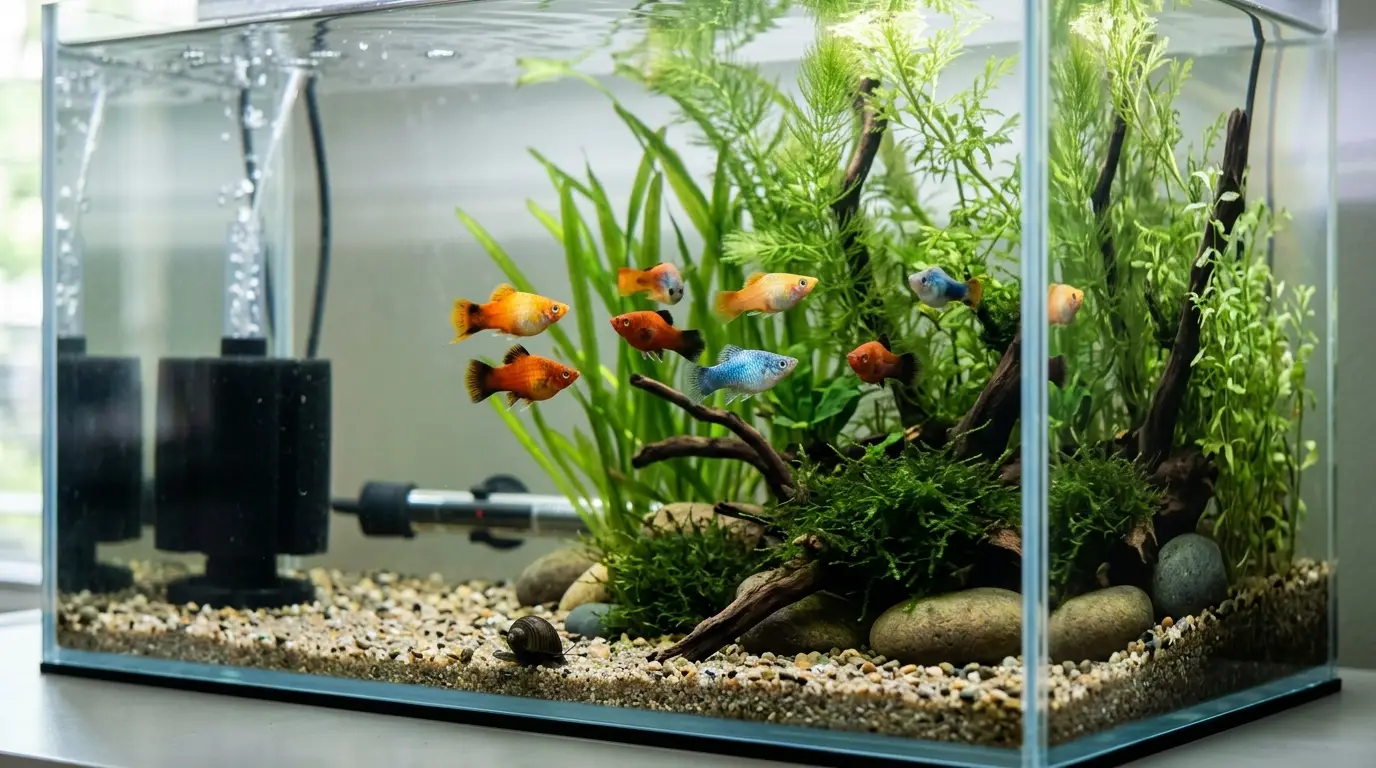
Cloudy water after setup:
- Cause: new tank bloom or overfeeding
- Fix: light feeding, extra water changes, and patience as the biofilter matures
Nipping or stress chasing:
- Cause: too many males or low cover
- Fix: adjust the sex ratio and add plants or décor
Algae bloom:
- Cause: too much light or excess nutrients
- Fix: shorten light to 8 hours, add fast plants, feed less, and change water
pH crash in soft water:
- Cause: low KH
- Fix: raise KH with crushed coral or a buffer; aim for 6–12 dKH
I once had a pH dip after a big rain changed my tap. My platies sulked, and colors dulled. The fix was simple buffer and smaller, more frequent changes. This is why the platy fish care guide stresses KH.
Budget, gear, and setup blueprint
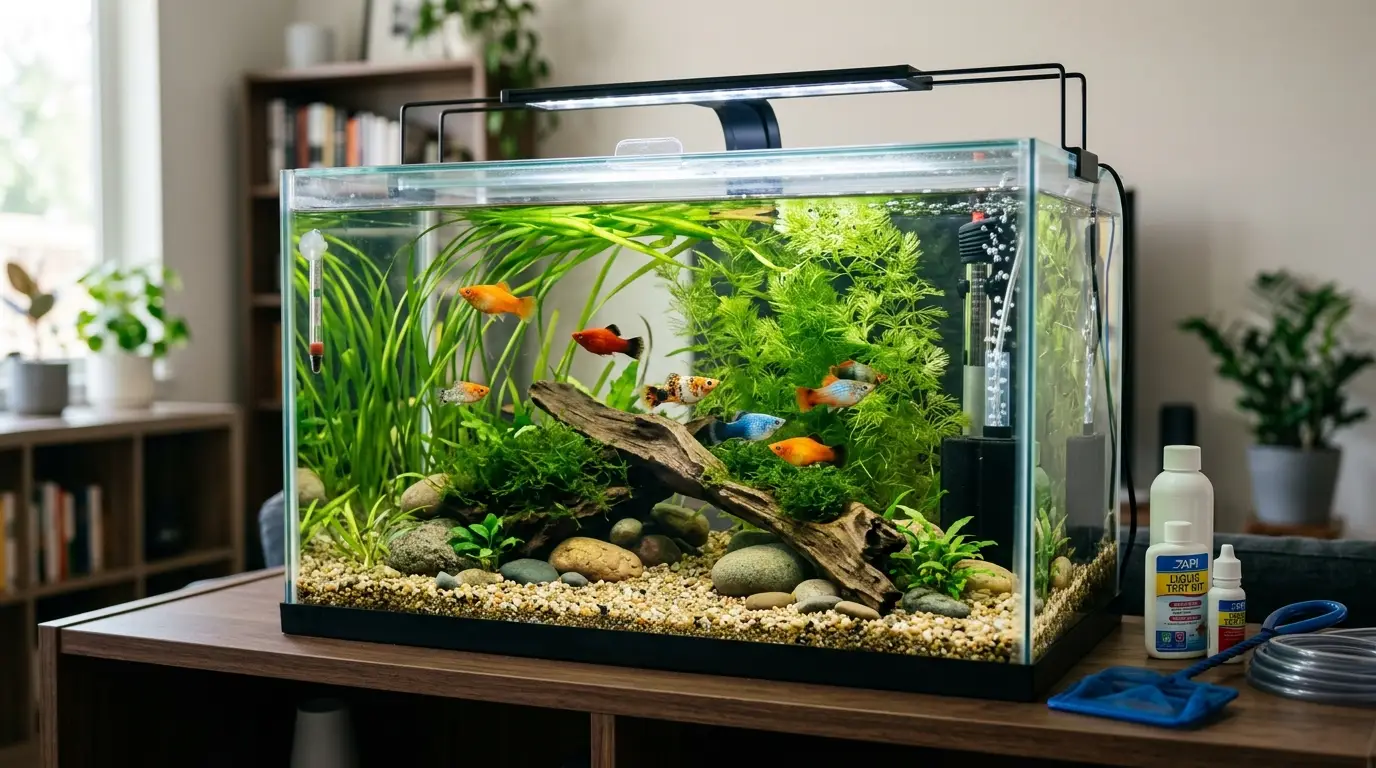
Starter build for 5–6 platies:
- 20-gallon tank with lid and heater
- Sponge filter and an air pump with a valve
- LED light on a timer for 8–10 hours
- Substrate, driftwood, and easy plants
- Liquid test kit, dechlorinator, and a gravel vacuum
Why this works:
- Extra water volume keeps things stable
- Plants and wood add cover and soak up waste
- Sponge filters are safe for fry and easy to clean
Set it up once, and it runs smooth. This platy fish care guide focuses on stable, simple gear you can rely on.
Frequently Asked Questions
How many platies can I keep in a 10-gallon tank?
A trio works best in a 10-gallon tank, with 1 male and 2 females. For long-term ease, a 15–20-gallon tank is better for a group of 5–6.
Do platies need a heater?
Yes, in most homes. Keep them at 72–78°F with little swing, as steady heat helps immunity and color.
Can platies live with shrimp?
Yes, but adult platies may eat baby shrimp. Add lots of plants and moss so shrimp can hide and breed.
How often should I feed platies?
Twice a day is ideal. Offer small portions they finish in 30–60 seconds to avoid waste and cloudy water.
Why is my platy hiding?
It may be stress from poor water, bullying, or new tank shock. Test the water, add cover, and fix any mismatch in sex ratio.
Conclusion
Platies reward steady, simple care with bold color, calm motion, and easy breeding. Focus on clean, hard water, steady heat, live plants, and a good mix of food. Keep notes, make small weekly changes, and your fish will show you when you get it right.
Use this platy fish care guide to set up, stock, feed, and grow a thriving school. Ready to build your best platy tank yet? Try the 20-gallon plan, plant it heavy, and share your results or questions in the comments.