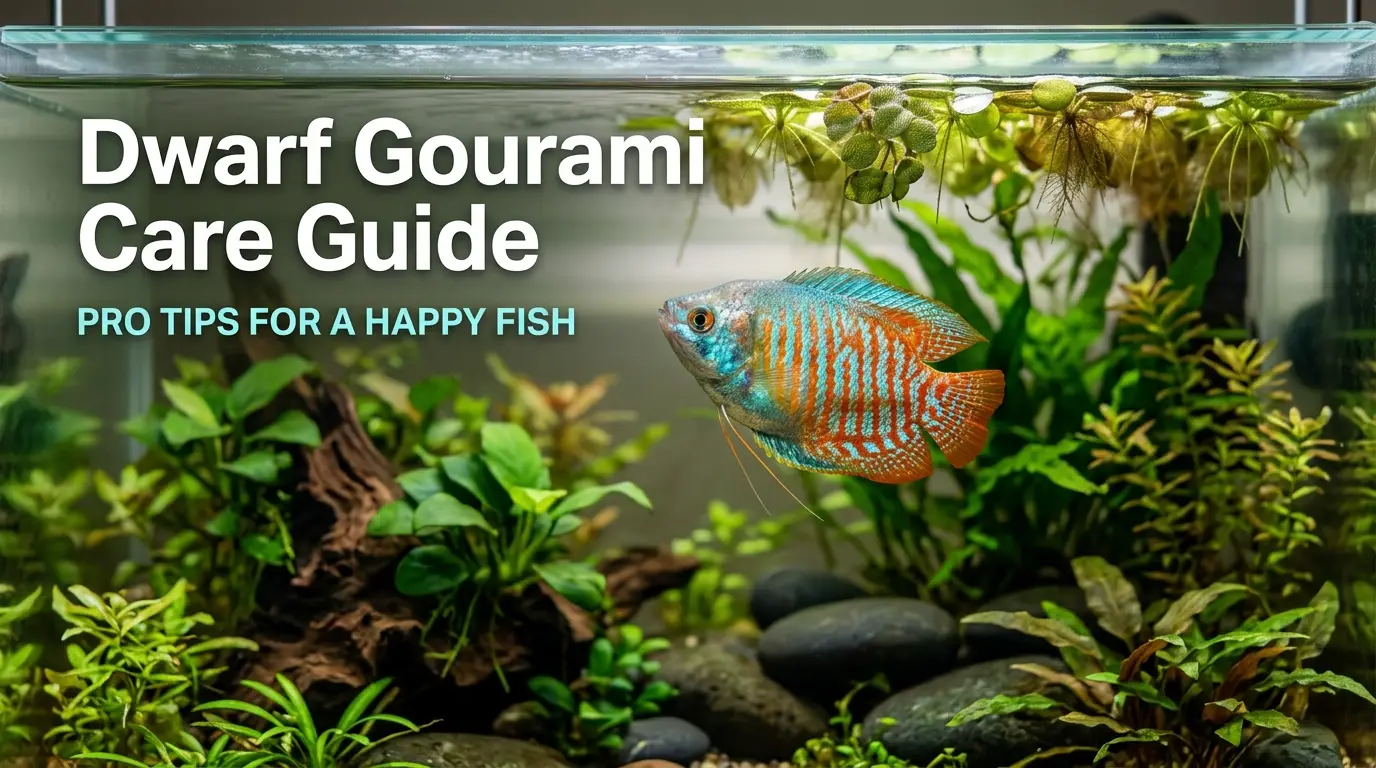
Keep warm, stable water, gentle flow, plants, and peaceful mates for dwarf gouramis.
If you want a clear, expert dwarf gourami care guide, you’re in the right place. I’ve kept and bred Trichogaster lalius for years, and I’ll show you what actually works. This friendly dwarf gourami care guide covers tank setup, water parameters, diet, behavior, health, and breeding—step by step—so you can enjoy calm, colorful, healthy fish without guesswork.
Dwarf gourami basics: size, behavior, and personality
The dwarf gourami (Trichogaster lalius) is a small, peaceful labyrinth fish. It grows to about 2.5–3.5 inches. Males show bright reds and blues. Females are silver with softer tones.
They breathe air using a labyrinth organ. So they need access to the surface and a tight lid. They prefer calm water, dense plants, and dim, dappled light. A relaxed dwarf gourami explores, browses leaves, and may build bubble nests.
I learned early that fast flow stresses them. In one of my first tanks, a strong filter made my male hide for days. I switched to a sponge filter and floating plants. He was out and flashing color in an hour. This dwarf gourami care guide leans on those small but key details.
Dwarf gourami care guide: tank size and water parameters
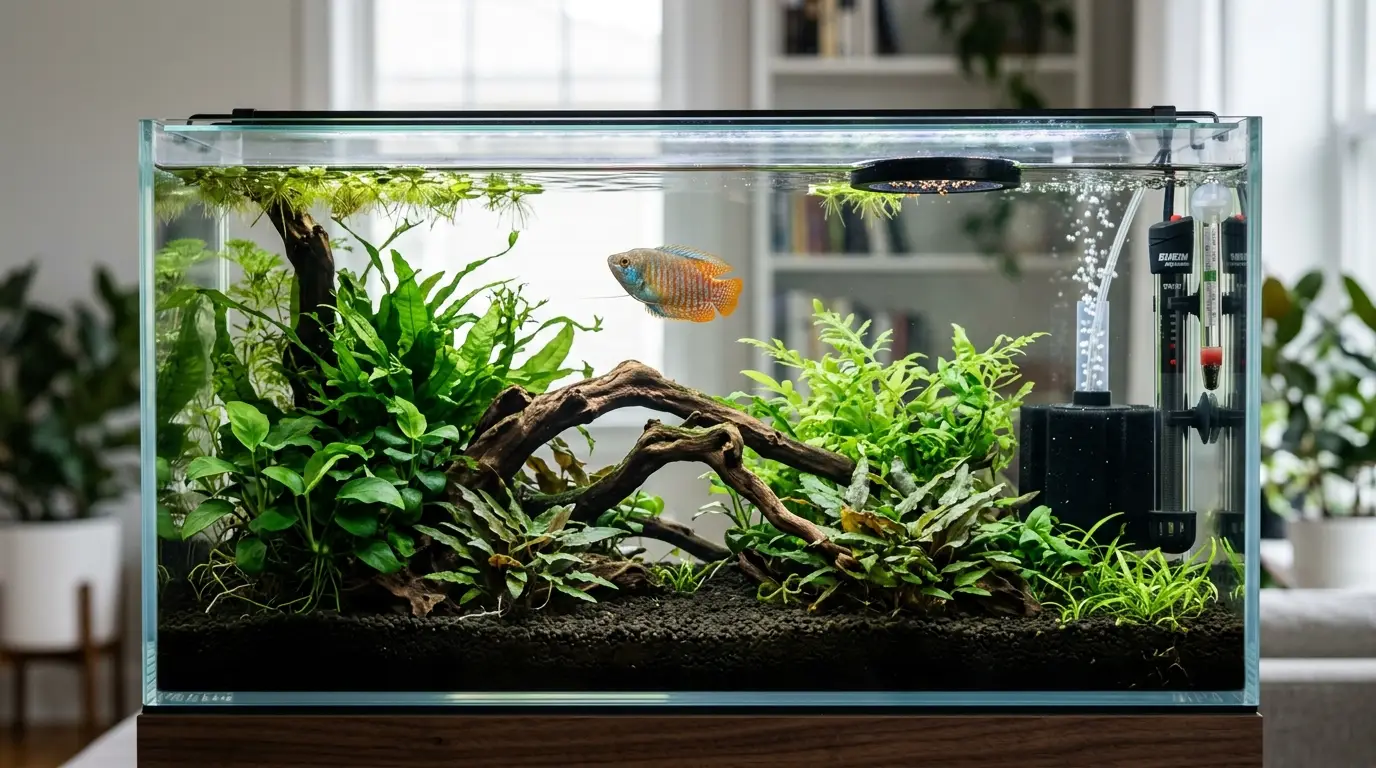
Aim for stable, soft, warm water. Stability beats perfection. Test weekly and avoid big swings.
- Tank size: 10 gallons for one dwarf gourami. 15–20 gallons for a pair or a quiet community.
- Temperature: 76–82°F. Many thrive at 78–80°F.
- pH: 6.0–7.5. A gentle 6.5–7.2 is ideal for most homes.
- Hardness: 4–10 dGH. KH 3–8 helps buffer pH.
- Ammonia and nitrite: 0 ppm. Nitrate: under 20 ppm, lower is better.
- Flow: Low. Use a spray bar or sponge filter to soften current.
- Surface access: Keep a lid. They breathe warm, humid air. A cold draft at the surface can cause stress.
Tip from this dwarf gourami care guide: float a feeding ring. It prevents food from scattering into the filter, keeps the surface calm, and trains shy fish to eat on cue.
Equipment that makes care easier: filter, heater, light, and cycling
Use a reliable heater and a gentle filter. A preset heater can drift. Get an adjustable one with a thermometer you can read at a glance.
- Filter: Sponge filter or a HOB with a baffle. If the fish struggles to hold position, flow is too strong.
- Heater: Set to 78–80°F. Check temperature morning and evening for a week.
- Light: Moderate. Bright light is fine if you use plants and floaters for shade.
- Lid: Tight-fitting with no gaps. They jump when startled.
- Cycle first: Seed with media from a mature tank if possible. Test daily until ammonia and nitrite read zero. Then add fish.
When I mentor new keepers, I share one rule: change one thing at a time. If you tweak light, flow, and food in one day, you won’t know what caused a reaction. This dwarf gourami care guide favors slow, steady steps.
Aquascape and enrichment they love
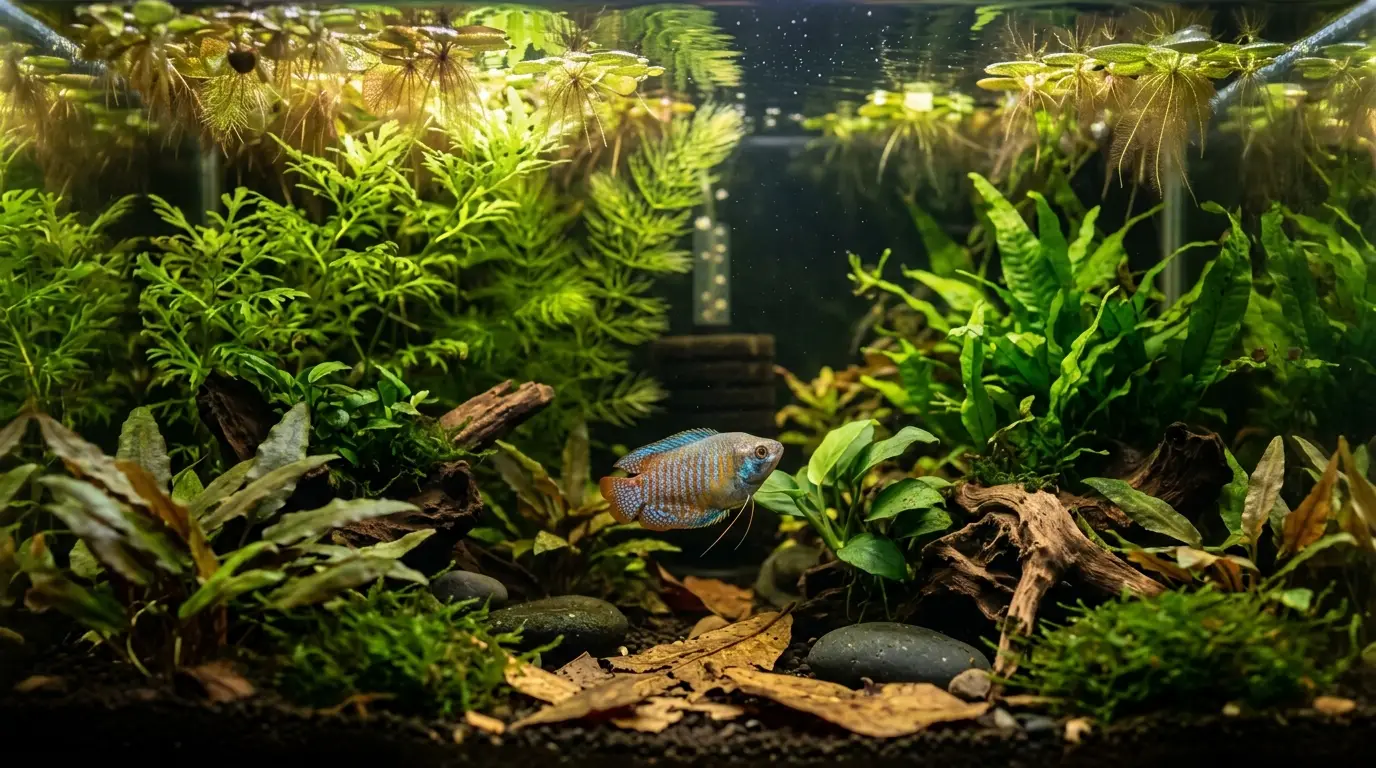
Think calm creek with leaves and vines overhead. Plants and sight breaks cut stress and reduce chasing.
Great plant picks:
- Floating: Salvinia, frogbit, red root floaters, or water lettuce. They diffuse light and help with bubble nests.
- Midground: Water sprite, hornwort, Hydrocotyle, Java fern, Anubias, crypts.
- Background: Vallisneria, Ludwigia, or stem plants to frame a quiet zone.
Smart extras:
- Indian almond leaves for tannins and cover.
- Mopani or spider wood to break line of sight.
- Dark substrate to boost color and reduce glare.
One mistake I made early was using a mirror back. My male flared all day and tired out. A plant wall fixed it. Keep this in mind as you follow this dwarf gourami care guide.
Diet and feeding schedule
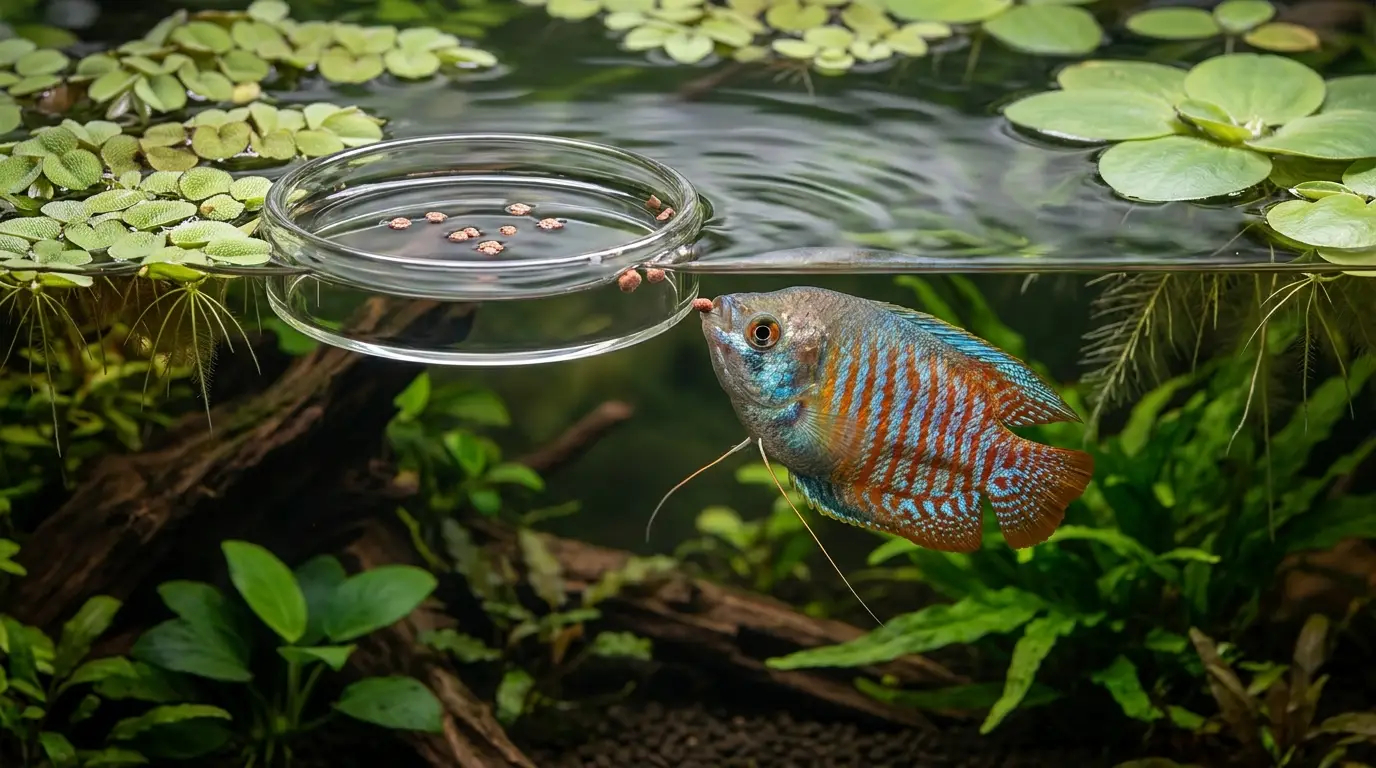
Dwarf gouramis are omnivores. They need small, frequent meals and clean water. Variety is key for color and health.
Feed mix:
- Daily staple: High-quality micro pellets or fine flakes.
- 3–4 times per week: Frozen or live foods like brine shrimp, daphnia, or mosquito larvae.
- Once weekly: Bloodworms as a treat only. They are rich and can cause bloat.
- Plant matter: Spirulina-based flakes or blanched greens now and then.
Schedule:
- Two small meals per day. Only what they eat in 60 seconds.
- One fasting day per week to reset digestion.
I rotate three pellet brands and swap frozen foods. It keeps picky eaters engaged. In this dwarf gourami care guide, that simple rotation is a game-changer for color and appetite.
Social dynamics and safe tank mates
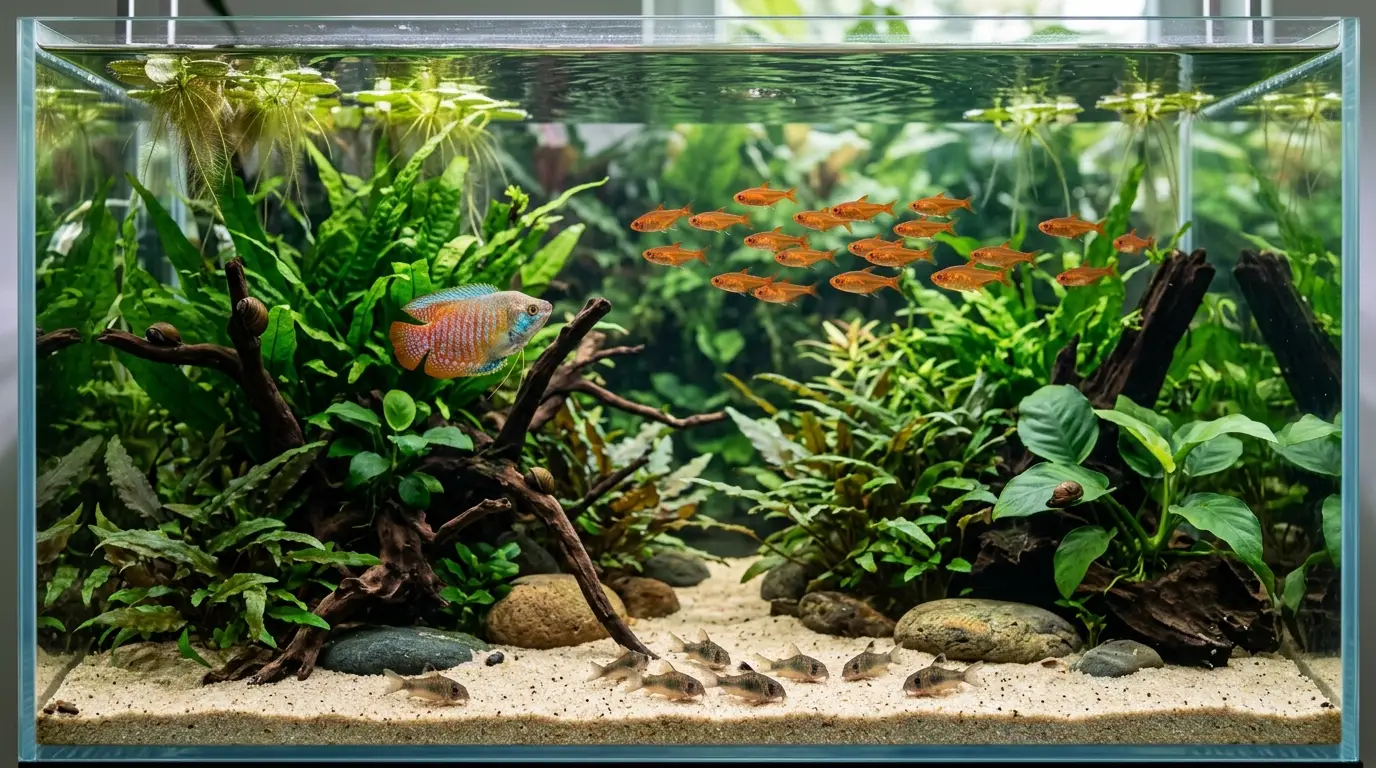
Males can be territorial, especially in tight spaces. Keep one male per tank unless the tank is large and well-scaped. A single male with peaceful schooling fish works best.
Good companions:
- Small rasboras, ember or neon tetras, pencilfish.
- Corydoras, kuhli loaches, otocinclus.
- Peaceful snails. Shrimp may be snacks, so use large colonies if you try.
Avoid:
- Fin nippers like tiger barbs or serpae tetras.
- Aggressive fish and large cichlids.
- Other gourami species and bettas in small tanks.
A simple rule from this dwarf gourami care guide: if the tank mate is flashy, fast, or fin-nippy, skip it. Calm fish help your gourami shine.
Health, quarantine, and common issues
Quarantine new fish for 2–4 weeks. This step protects your display tank and reduces stress.
Key risks:
- Dwarf Gourami Iridovirus (DGIV). It can cause lethargy, color loss, lesions, and sudden decline. There is no proven cure. Prevention is vital. Buy from trusted sources. Avoid crowded, stressed stock.
- Mycobacteriosis (fish TB). Signs include weight loss despite eating, sores, and bent spine. It is rare but serious. Use gloves if you must handle sick fish or tank gear.
Prevention tips:
- Test water weekly and change 25–35% weekly.
- Keep nitrates low and temperature steady.
- Use Indian almond leaves for gentle tannins.
- Do not add salt routinely. These are not brackish fish. Use salt dips only if a diagnosis supports it.
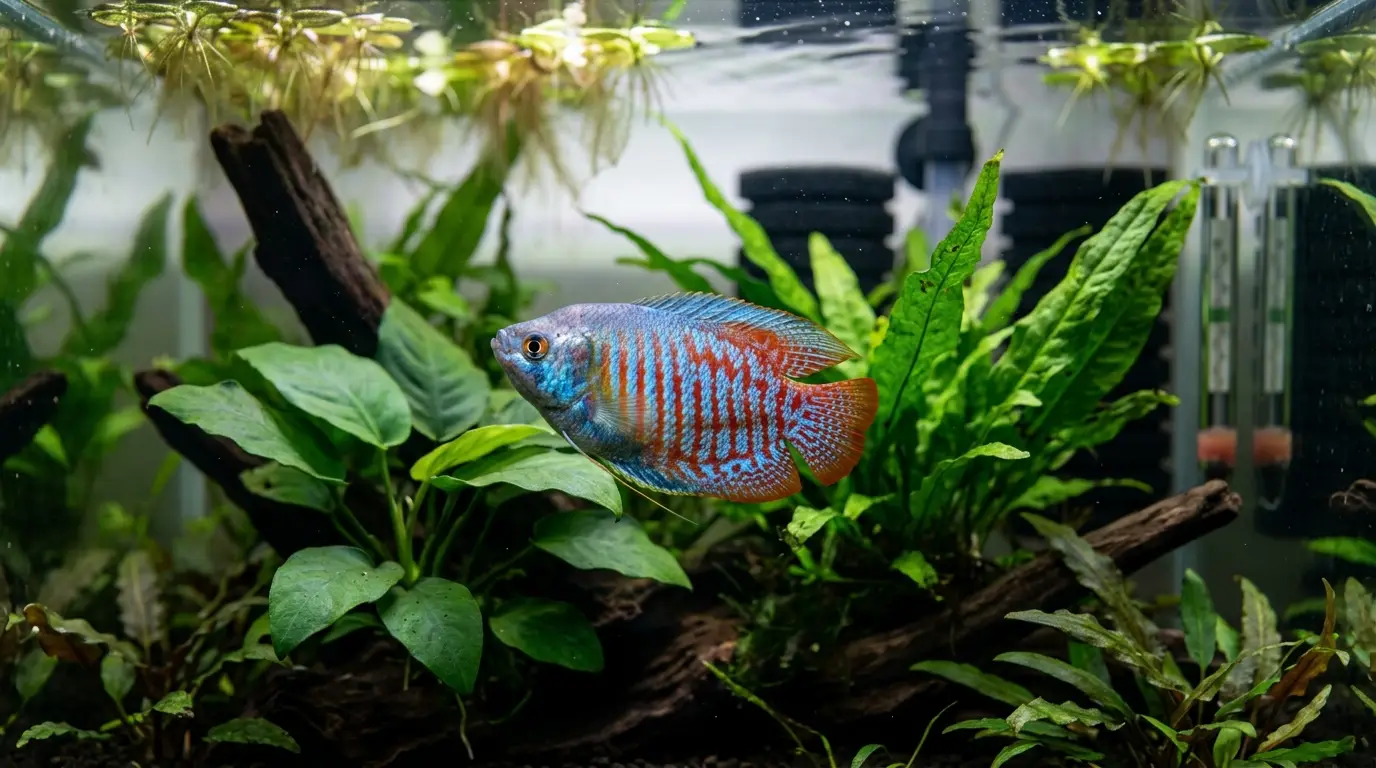
A quick health check I use:
- Clear eyes, even breathing, good appetite.
- Full fins, no flashing, bold color.
- Curious behavior. Hiding all day is a red flag.
This dwarf gourami care guide puts health first. Early action saves fish and money.
Breeding basics for dwarf gouramis
Dwarf gouramis are bubble nest builders. Males make a foamy raft under floating plants. Spawning is tender and short.
Setup:
- Separate 10–15 gallon breeding tank. Soft, warm water at 80°F.
- Low water level, about 6–8 inches deep.
- Floating plants or a bubble wrap square for nesting.
Process:
- Condition pair with rich foods for a week.
- Add female to the male’s tank and watch. The male courts and builds a nest.
- After spawning, remove the female. The male guards eggs.
- Eggs hatch in 24–36 hours. Fry are free-swimming a few days later. Remove the male then.
- Feed infusoria or commercial liquid fry food at first, then baby brine shrimp.
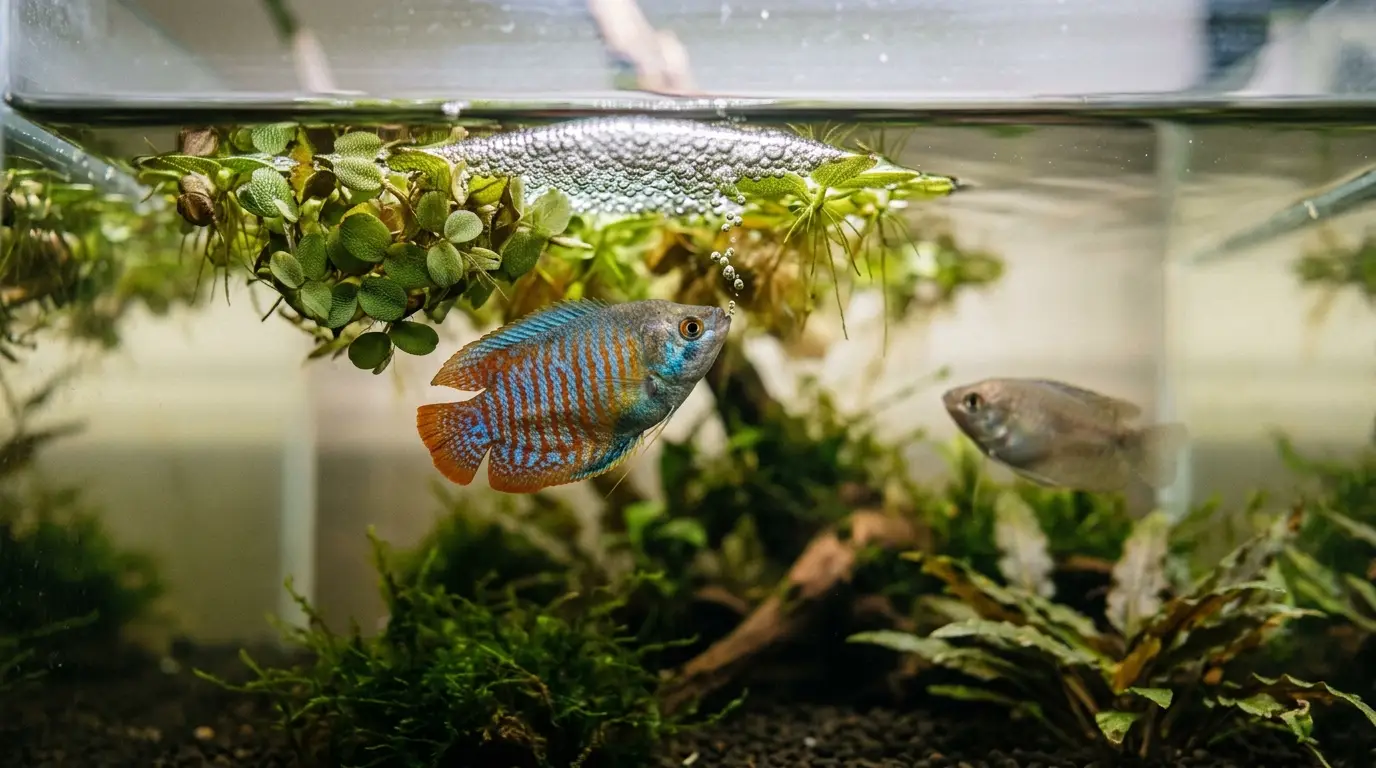
Keep a lid on the breeding tank. Warm, humid air is key for healthy labyrinth organ growth. This dwarf gourami care guide keeps the focus on gentle flow and warm air for fry success.
Maintenance routine and troubleshooting
A simple routine keeps stress low and colors bright.
Weekly:
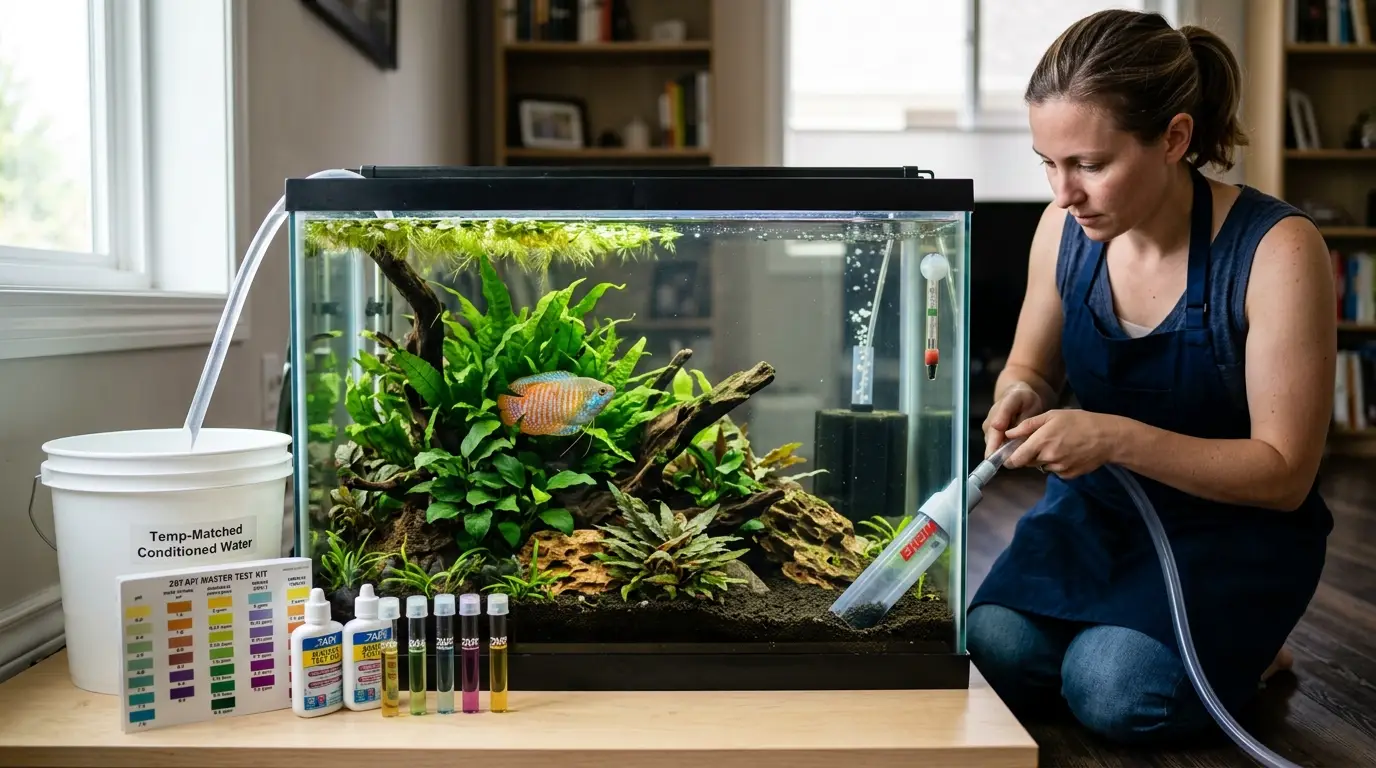
- Test pH, KH, GH, ammonia, nitrite, and nitrate.
- Change 25–35% of water. Match temperature and dechlorinate.
- Vacuum lightly. Do not strip all biofilm.
Monthly:
- Rinse filter media in tank water. Never under a tap.
- Trim plants. Thin floaters to keep gas exchange.
If problems pop up:
- Clamped fins or hiding: Check ammonia, nitrite, temp, and flow. Fix water first.
- Not eating: Try live foods and reduce flow and light. Watch for disease.
- Gasping at the surface: Check oxygen and temperature. Ensure the lid holds warm, humid air but still allows gas exchange.
I keep a simple log. It shows trends and helps me act early. This dwarf gourami care guide works best when you track small changes.
Smart buying and ethical sourcing
Healthy fish start at the store. Take your time and watch the group before you buy.
What to look for:
- Active, curious fish with smooth swimming.
- Full bellies, no sores, no frayed fins.
- Even color. Some stress paling is normal, but blotches are not.
Best practices:
- Ask how long the fish have been in the store. Longer is better.
- Choose captive-bred when possible.
- Avoid dyed or hormone-boosted stock.
- Transport warm. Acclimate slowly. Drip for 30–45 minutes.
Quarantine every new fish. It is the most important part of any dwarf gourami care guide and saves you from heartbreak later.
Frequently Asked Questions of dwarf gourami care guide
What is the best tank size for a dwarf gourami?
A single dwarf gourami does well in a 10-gallon tank. For a pair or a peaceful community, plan for 15–20 gallons with dense plants.
Can I keep two male dwarf gouramis together?
Not in small tanks. Males often fight. Keep one male per tank unless you have a large, well-scaped setup with many sight breaks.
What temperature should I keep for dwarf gouramis?
Aim for 78–80°F. Keep it steady and use a lid so surface air stays warm and humid.
Are dwarf gouramis good with bettas?
Usually no. Both are territorial labyrinth fish. They often clash, especially in smaller tanks.
How often should I feed a dwarf gourami?
Feed two small meals per day. Offer a mix of quality pellets and frozen or live foods and add one fasting day each week.
Do dwarf gouramis need a filter?
Yes, but keep flow gentle. A sponge filter or baffled HOB keeps water clean without stressing the fish.
Why is my dwarf gourami hiding and not eating?
Check water quality, temperature, and flow first. Reduce stress with plants and floating cover, then try live foods to spark appetite.
Conclusion
Care for dwarf gouramis is simple when you focus on stable water, gentle flow, and a calm, planted scape. Feed small, varied meals, keep the lid tight, and choose peaceful tank mates. Quarantine new fish and act early on any health signs.
Start with one well-planned 10–20 gallon tank and follow this dwarf gourami care guide step by step. Your reward will be a bright, curious fish that glides through leaves like a tiny lantern. If this helped, subscribe for more guides, leave a question in the comments, or share your own dwarf gourami tips.