Introduction
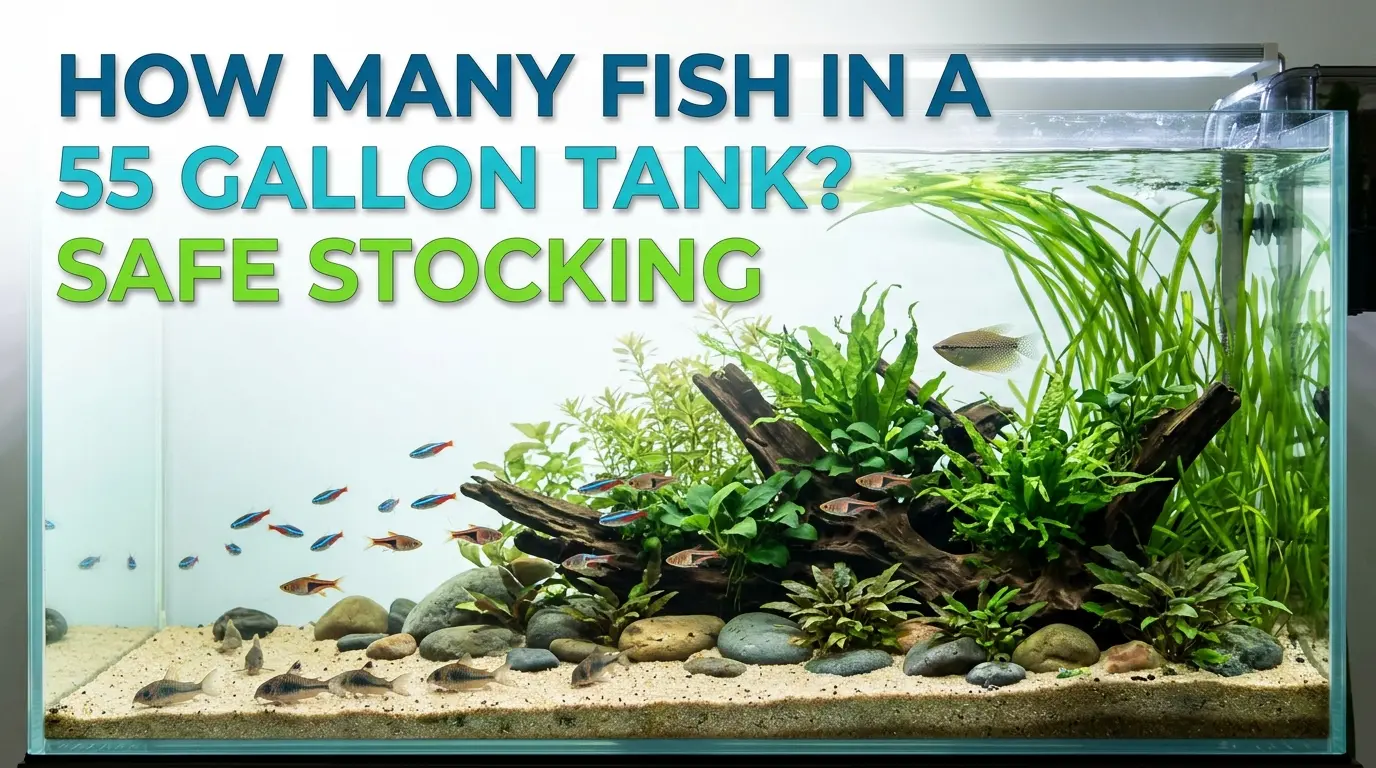
For aquarists in the United States, a 55-gallon aquarium can usually support about 12 to 20 small community fish, if the tank is cycled, filtered, and maintained well. The safe number can be lower or higher based on the fish species, adult size, body shape, waste output, swimming space, and temperament.
A 55-gallon tank holds about 208 liters before gravel, rocks, wood, and equipment take up space. That sounds like a large volume, but fish do not all use the tank in the same way. A group of tiny rasboras needs a different setup from one large cichlid, a goldfish, or an angelfish.
The best answer is not simply “one inch of fish per gallon.” That old rule can lead to overcrowding. Instead, plan the tank around adult fish size, behavior, territory, filtration, and water quality.
The Short Answer: How Many Fish Fit in a 55-Gallon Tank?
A well-maintained 55-gallon aquarium may hold one of these general stocking plans:
| Aquarium style | Example stocking level |
|---|---|
| Small community fish | 12–20 small fish |
| Nano community | 20–30 very small fish, with care |
| Medium community | 6–12 medium fish |
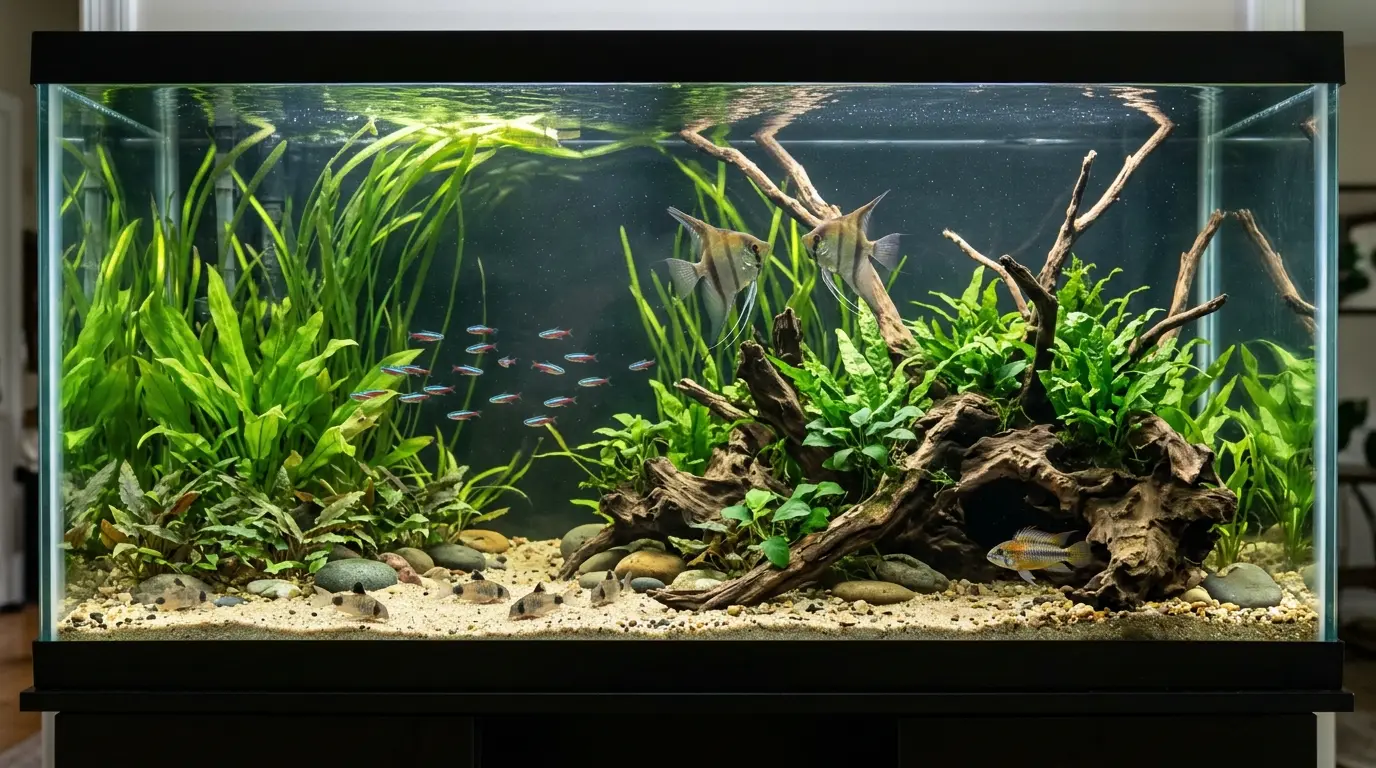
| Angelfish community | 1 angelfish with a compatible school |
| African cichlid setup | About 10–15, depending on species and layout |
| Fancy goldfish setup | Often 1–2, depending on variety and filtration |
| Large or aggressive fish | Usually far fewer |
These are planning ranges, not fixed limits. A 55-gallon tank with heavy plants, strong biological filtration, and regular water changes may support more fish than a bare tank. A tank with messy fish, poor water movement, or territorial species may safely hold fewer.
When in doubt, start with fewer fish. You can add stock slowly after the aquarium proves stable.
Why the “One Inch per Gallon” Rule Falls Short
The one-inch rule says that one inch of adult fish needs one gallon of water. It is easy to remember, but it ignores several major factors.
A five-inch slender fish does not create the same waste as a five-inch deep-bodied fish. A calm bottom fish does not use the same space as an active midwater swimmer. A territorial fish may need more room even when it produces little waste.
The rule also fails to account for:
- The fish’s adult length and body mass
- Waste production and feeding habits
- Oxygen demand
- Swimming speed and activity
- Territorial behavior
- Schooling needs
- Water temperature
- Filtration and water changes
- Plants, rocks, wood, and other decor
- The tank’s footprint, not just its gallon rating
A better method is to choose compatible fish first, then confirm that the full-grown group fits the tank and its maintenance plan.
Actual water volume matters
A 55-gallon aquarium rarely contains a full 55 gallons of open water. Gravel, decor, equipment, and a lower fill line reduce the water volume. The actual amount may be closer to 45–50 gallons, depending on the setup.
This difference matters when you add medication, salt, or water conditioner. Follow the product label and calculate the dose from the actual water volume when possible.
The tank’s shape affects stocking
many standard 55-gallon aquariums are long and narrow. They offer good swimming length but less front-to-back space than some wider tanks.
That shape works well for:
- Tetras
- Rasboras
- Danios
- Barbs
- Corydoras
- Rainbowfish, depending on species
- Some angelfish setups
It may be less suitable for fish that need a wide bottom area or large territories. Always check the adult size and footprint needs of the species.
A Practical Way to Calculate Stocking
Use this four-step method before buying fish.
1. Check the adult size
Use the expected adult length, not the size of the fish at the store. Fish sold as small juveniles may grow several inches.
Reliable species references include FishBase, university extension resources, and care information from established aquarium organizations. Do not plan a tank around a fish’s temporary juvenile size.
2. Group fish by water level
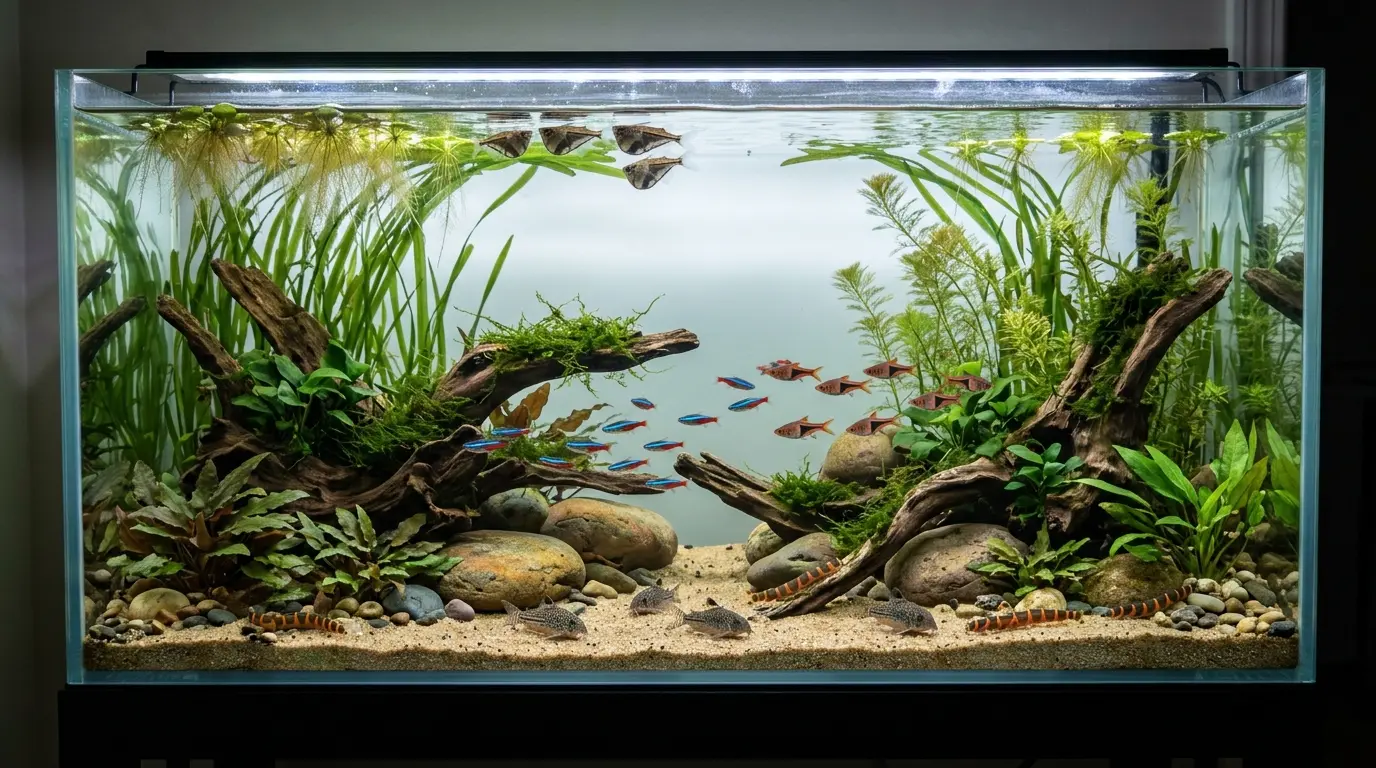
A balanced community often includes fish that use different areas:
- Top level: Hatchetfish, some surface-feeding livebearers
- Middle level: Tetras, rasboras, danios, and many barbs
- Bottom level: Corydoras, kuhli loaches, and some plecos
Using separate areas can reduce crowding. It does not make incompatible fish safe, though. Temperament and water needs still come first.
3. Account for social needs
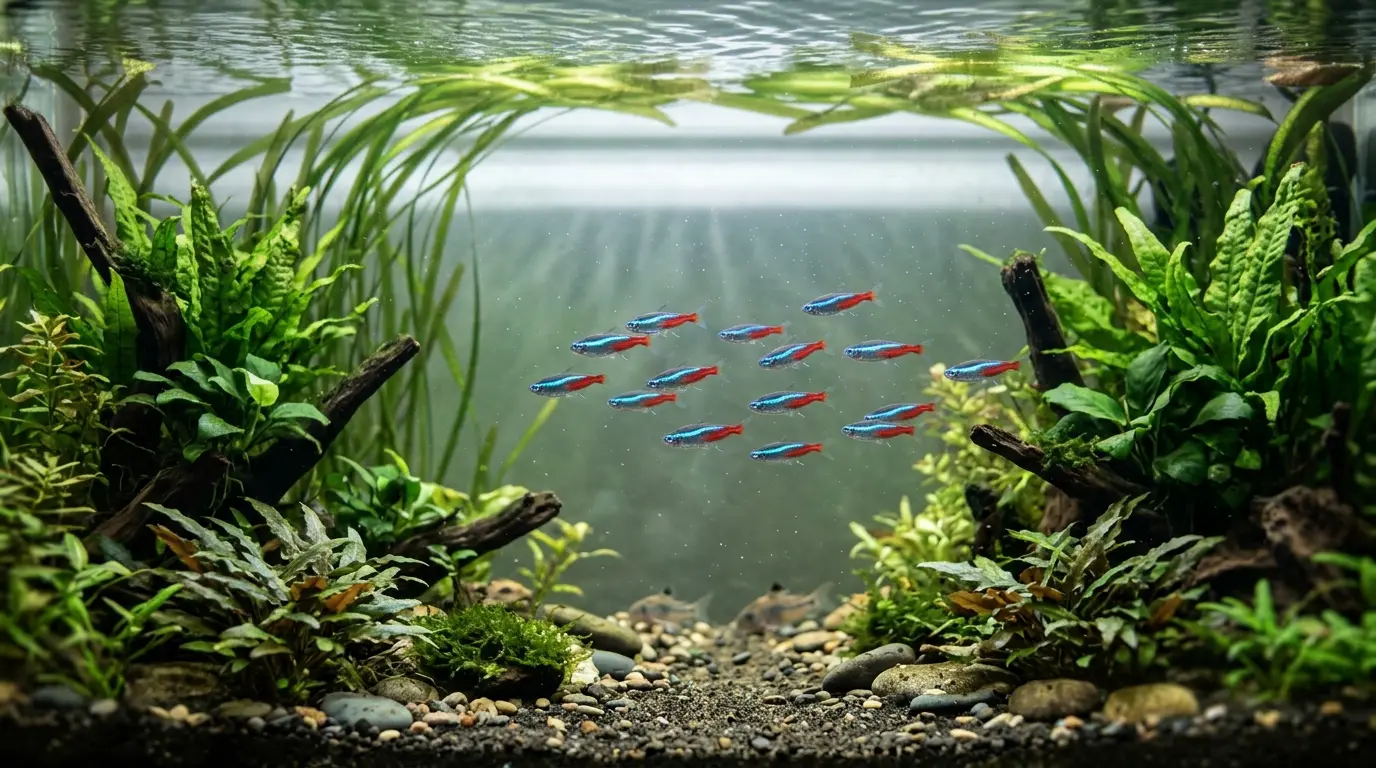
Many small fish are schooling or shoaling species. They should not be kept alone just to save space.
Examples:
- Tetras often look and behave better in groups of at least six.
- Rasboras generally need a group.
- Corydoras should usually be kept with several of their own kind.
- Some danios and barbs need groups but may be very active.
- A single schooling fish may become stressed or withdrawn.
A group of six appropriate fish is often better than six unrelated “centerpiece” fish.
4. Add fish slowly
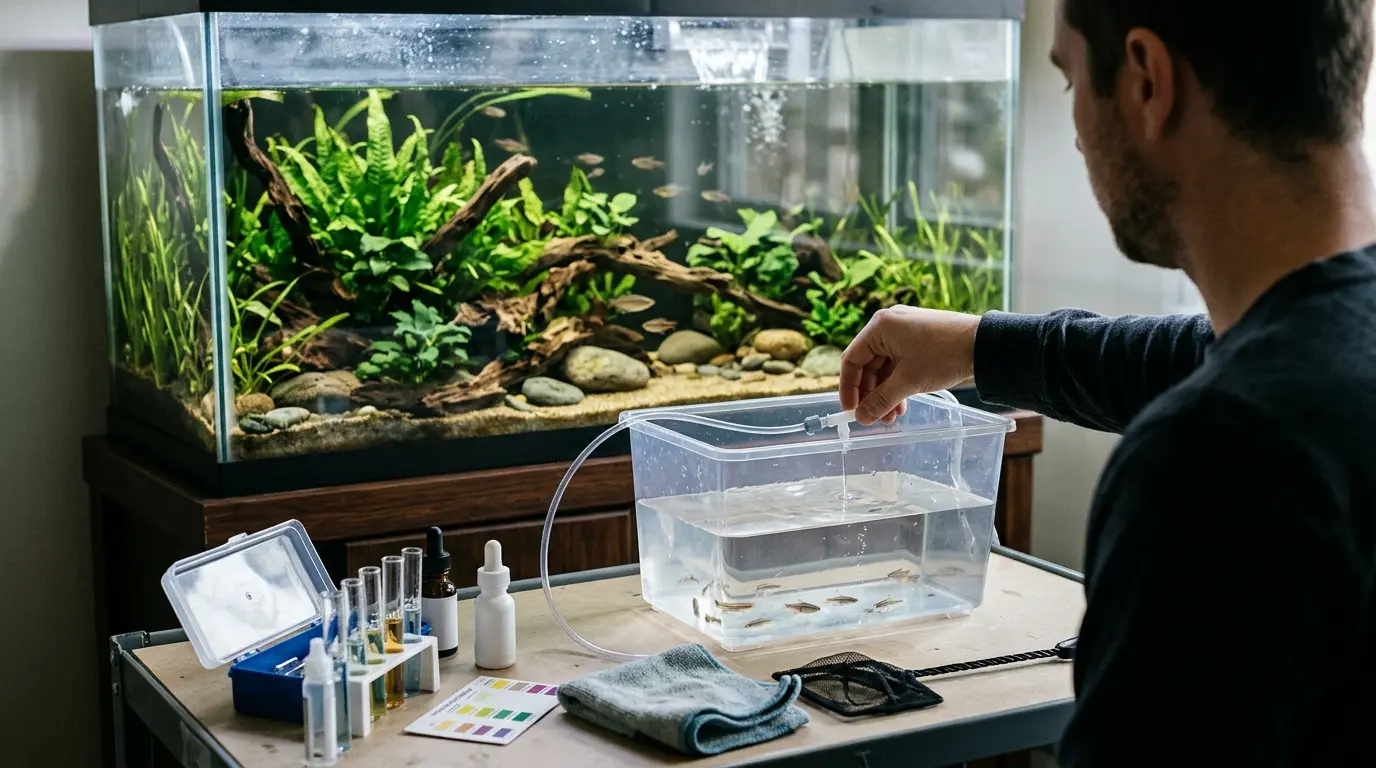
Do not fill a new aquarium in one day. Add one group at a time, then allow the biological filter to adjust.
Test the water after each addition. If ammonia or nitrite rises above zero, stop adding fish and perform a partial water change. A stable tank should have:
- Ammonia: 0 ppm
- Nitrite: 0 ppm
- Nitrate kept at a reasonable level through water changes and plant growth
The exact nitrate target can vary by species, but rising nitrate is a sign that waste is building faster than the maintenance routine can remove it.
Stocking Examples for a 55-Gallon Community Tank
The following examples are hypothetical plans. They are not meant to be combined.
Example 1: Peaceful tropical community
A balanced community might include:
- 10–15 small tetras or rasboras
- 6–8 corydoras of one species
- 1 small peaceful centerpiece fish, if compatible
This plan uses the upper and middle water levels well while giving the bottom group its own space. Corydoras need smooth sand or another safe substrate so their barbels are not damaged.
Example 2: A larger schooling display
A simple display can be easier to manage:
- 15–20 small tetras or rasboras
- A few hardy plants
- No territorial centerpiece fish
This can create a calm, active tank without mixing many species. A single large school is often less complicated than several small groups.
Example 3: Angelfish community
A 55-gallon tank may house:
- One adult angelfish
- A compatible school of medium-sized community fish
- Bottom-dwelling fish that tolerate the same water conditions
Angelfish are cichlids. They can become territorial, especially when paired or breeding. Very small fish may also be viewed as prey. Avoid adding tiny schooling fish without considering the adult angelfish’s mouth size and temperament.
Example 4: Livebearer tank
Platies, mollies, guppies, and swordtails can produce many fry. A tank that begins with six fish may become crowded if the young survive.
Male and female livebearers also need careful planning. Keeping mixed sexes can lead to frequent births. A single-sex group may be easier for people who do not want to manage extra fish.
Example 5: Goldfish tank
Goldfish are not ideal for a typical tropical community aquarium. They produce substantial waste and often need cooler water than tropical fish.
A 55-gallon tank may work for one or two fancy goldfish in some setups, but the answer depends on the variety, adult size, filtration, and maintenance routine. Common and comet goldfish grow large and are often better suited to much larger systems or ponds. Do not use the one-inch rule for goldfish.
How Many Specific Fish Can Live in a 55-Gallon Tank?
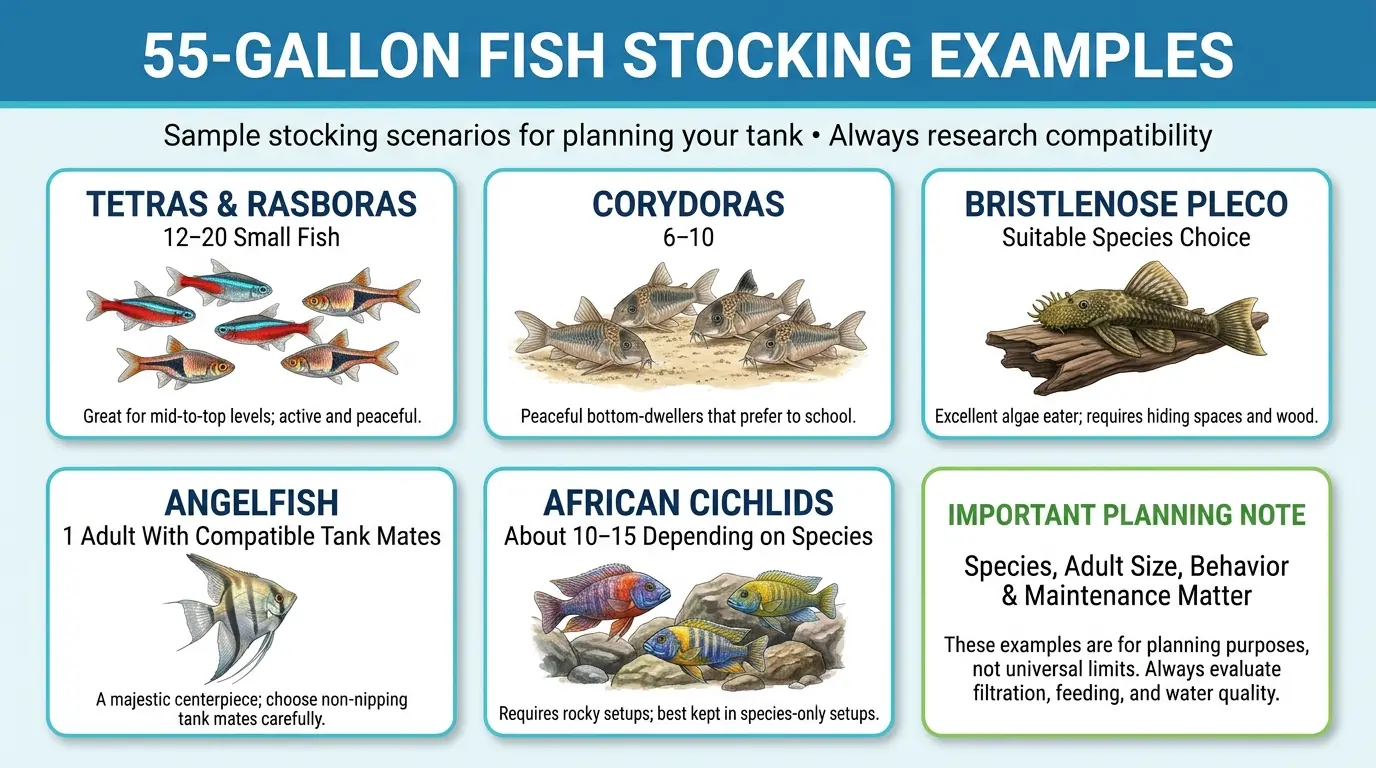
Tetras and rasboras
A 55-gallon aquarium can often support 12–20 small tetras or rasboras, provided the fish are compatible and the filter is mature.
Good planning choices include one larger school rather than many tiny groups. Avoid mixing fish with very different temperature or water chemistry needs.
Corydoras
A group of 6–10 corydoras can work well in a 55-gallon tank. Keep one species together when possible so they show natural group behavior.
Corydoras are peaceful, but they are not a substitute for an aquarium cleaner. They still need proper food, clean water, and safe substrate.
Plecos
“Pleco” describes many species with very different adult sizes. A bristlenose pleco may suit a 55-gallon aquarium, while a common pleco can grow far too large for long-term housing.
Never buy a pleco based only on its small store size. Confirm the exact species before adding it.
Angelfish
A 55-gallon tank can often support one adult angelfish with carefully selected tank mates. A bonded pair may need more territory, especially if they spawn.
Tall plants and decor can help divide sight lines, but they do not remove aggression. Watch for chasing, torn fins, hiding, or a fish being pushed away from food.
African cichlids
Some African cichlid communities use a higher stocking level to spread aggression, but this method is species-specific and not beginner-friendly. The fish must have compatible behavior, rockwork, filtration, and frequent maintenance.
Do not apply a general “more fish reduces aggression” rule to every cichlid tank. It can fail when the species, sex ratio, or layout is wrong.
What Changes the Safe Number of Fish?
The safe stocking level depends on more than tank size.
Filtration
A filter supports the biological process that converts toxic ammonia into nitrite and then nitrate. A larger filter does not make overcrowding safe, but weak filtration can make a reasonable stocking plan fail.
Choose filtration that creates good circulation without exhausting fish that prefer calm water. Clean filter media in removed aquarium water rather than untreated tap water, which may damage helpful bacteria.
Water changes
Regular partial water changes remove nitrate and replace some minerals. They also help control dissolved waste.
A common starting routine is a weekly partial water change, followed by water testing. The correct schedule depends on fish load, plants, feeding, filter capacity, and test results.
Feeding
Overfeeding is one of the fastest ways to raise waste. Feed only what the fish can eat within a short period, and remove uneaten food.
Fish should not look constantly swollen after meals. Uneaten food can break down into ammonia and make a tank appear “overstocked” even when the fish count seems modest.
Plants and decor
Live plants can use some nutrients and provide cover. They do not cancel out fish waste or replace filtration.
Rocks and wood create shelter, but they also reduce swimming space and water volume. Build the layout around the adult fish, not just the appearance of an empty tank.
Fish temperament
A peaceful species can become aggressive when crowded, breeding, or placed with the wrong tank mates. Look for signs such as:
- Repeated chasing
- Torn fins
- Fish hiding all day
- One fish guarding a large area
- Fish missing meals
- Persistent surface breathing
- Sudden deaths after adding new stock
These signs mean the setup needs attention, even if the fish count appears reasonable.
Signs That a 55-Gallon Tank Has Too Many Fish
Water tests are the clearest early warning. Ammonia and nitrite should remain at zero in a cycled aquarium.
Other warning signs include:
- Nitrate rises quickly between water changes
- Cloudy water that does not settle
- Strong odor
- Fish gasping at the surface
- Fast gill movement
- Frequent disease
- Stunted growth or poor body condition
- Constant aggression
- Filter flow dropping because of heavy debris
If ammonia or nitrite is present, stop feeding for a short period, test the water, and perform a partial water change with conditioned water. Check for a dead fish, uneaten food, clogged equipment, or a recent addition of too many fish.
Do not add more fish until the readings return to safe levels and remain stable.
Common Stocking Mistakes to Avoid
Adding fish based on store size
A juvenile fish may look ideal for a 55-gallon tank but grow far beyond the planned size. Research the adult form before purchase.
Mixing incompatible water needs
Fish from cool water, tropical water, soft water, and hard water may not thrive together. Temperature and water chemistry should overlap.
Treating bottom fish as cleanup tools
Bottom feeders still produce waste. They need food, space, and suitable care.
Adding too many species
A tank with five fish from five different species may be less natural and harder to manage than a tank with one or two well-sized groups.
Ignoring quarantine
New fish can carry parasites or disease. Quarantining new arrivals in a separate tank can reduce the risk to an established aquarium.
Measuring only fish length
A long, deep-bodied fish creates a different load from a slim fish of the same length. Consider mass, activity, and feeding behavior.
Key Takeaways
- A 55-gallon aquarium commonly suits 12–20 small community fish.
- The correct number depends on adult size, behavior, water needs, and waste output.
- The one-inch-per-gallon rule is only a rough starting idea and should not guide complex stocking.
- Schooling fish need proper groups.
- Large, messy, or territorial fish require more space than their length suggests.
- Add fish slowly and test ammonia, nitrite, and nitrate.
- Start understocked rather than overcrowded.
Frequently Asked Questions
Can I put 30 fish in a 55-gallon tank?
You may be able to keep 30 very small fish in a mature, well-filtered 55-gallon aquarium, but the species and maintenance plan matter. Thirty small rasboras are very different from thirty medium barbs or livebearers that produce many fry.
Is a 55-gallon tank good for beginners?
Yes. Its larger water volume is often more forgiving than a small aquarium. It still needs a completed nitrogen cycle, suitable filtration, regular water changes, and careful stocking.
How many betta fish can live in a 55-gallon tank?
Usually one male betta should be kept alone as the centerpiece fish. Female betta groups are not automatically safe and can have serious aggression. A community setup must also avoid fin-nipping or highly active tank mates.
How many goldfish can live in a 55-gallon tank?
The answer depends on the goldfish type. One or two fancy goldfish may fit in some well-maintained 55-gallon setups, while common and comet goldfish can outgrow it. Goldfish also need strong filtration and produce considerable waste.
Should I fully stock a new 55-gallon aquarium at once?
No. Add fish in stages after the tank has cycled. Test the water between additions. If ammonia or nitrite appears, stop adding fish and correct the water quality first.
What is the safest number for a first community tank?
A conservative starting plan is 10–15 small schooling fish, followed later by a compatible bottom group if the water remains stable. This gives the biological filter time to adjust and makes problems easier to identify.
Conclusion
A 55-gallon tank can support a lively community, but there is no single fish count that works for every aquarium. For many US hobbyists, 12–20 small, compatible fish is a practical starting range.
Choose fish by their adult size, social needs, temperament, and water conditions. Add them slowly, maintain the filter, test the water, and leave room for natural growth. A lightly stocked tank with healthy fish is a better goal than a crowded tank filled to its limit.